
行业周期

Search documents
豪鹏科技:公司股价波动受宏观经济环境等多重因素影响
Zheng Quan Ri Bao Wang· 2025-10-17 10:44
Core Viewpoint - The stock price fluctuations of Haopeng Technology (001283) are influenced by multiple factors including macroeconomic environment, industry cycles, and market sentiment [1] Group 1 - The company emphasizes adherence to information disclosure rules and fulfilling obligations [1] - Specific performance and business conditions should be referenced from the company's announcements [1]
老登启示:看懂“规律”比追逐“热点”更重要
Sou Hu Cai Jing· 2025-10-16 17:25
Market Overview - The Shanghai and Shenzhen indices showed mixed results, with 4,171 stocks declining and 1,177 stocks rising, indicating cautious market sentiment as trading volume fell below 2 trillion [1] - The market is currently in a "sensitive period" due to upcoming stock index futures settlement and ETF options expiration, which historically leads to increased volatility [1] Industry Analysis: Coal Sector - The coal mining and washing industry is experiencing a complete cycle from 2021 to 2024, with revenues peaking at 3.56 trillion in 2022 and projected to decline to 3.16 trillion by 2024, reflecting a drop of over 40% in profits [4][11] - The economic growth rate in China is expected to slow from 8.1% in 2021 to around 5.0% in 2024, significantly impacting coal demand due to structural adjustments in the economy [6][8] Industry Analysis: Alcohol Sector - The "old liquor stocks," characterized by declining performance, have seen a rebound, but the underlying issues remain unchanged, with most companies in this category failing to capitalize on the broader market rally [2] - The high-end liquor segment maintains stability due to brand strength, while mid-tier and lower-tier segments face challenges from shrinking demand and high inventory levels, leading to increased industry polarization [2] Investment Strategy - Investors are advised to be cautious during the upcoming volatility window and to avoid chasing trends without thorough analysis [11] - The focus should be on identifying structural opportunities within industries, particularly those adapting to the "dual carbon" goals, rather than relying solely on traditional price increases [11]

白酒还有希望吗?
雪球· 2025-10-10 08:09
Core Viewpoint - The white liquor industry has become a safe haven during the current bull market, despite various negative news and a challenging economic environment [3]. Group 1: Historical Performance - The China Securities White Liquor Index experienced a rollercoaster ride over the past decade, initially showing steady growth before entering a phase of extreme volatility starting in 2019 [4][5]. - Before 2019, the index was characterized as a "healthy bull," with gradual price increases driven by company performance. However, from 2019 onwards, it transformed into a "crazy bull," with stock prices soaring due to heightened market sentiment rather than actual earnings growth [5][6]. - The index's price-to-earnings (P/E) ratio surged from around 30 times to over 70 times, peaking at 21,663 in early 2021 [6]. Group 2: Recent Challenges - Following the peak, the market faced a prolonged period of correction, with the P/E ratio plummeting to 18.7 times, indicating a significant valuation bubble burst [7]. - The volatility in white liquor prices has been much more pronounced than changes in the underlying fundamentals, primarily driven by the drastic shift in valuation [8]. Group 3: Current Market Sentiment - The current market sentiment is pessimistic due to several factors: a poor economic environment leading to reduced consumption, excessive inventory from previous production surges, and changing preferences among younger consumers who are less inclined to drink white liquor [9]. - The industry is currently in a "winter" phase, focusing on inventory clearance and bubble deflation, which is a painful but necessary process [10]. Group 4: Positive Outlook - Despite the challenges, there are positive factors to consider: the current low valuation (P/E of 18.7 and a dividend yield of 3.8%) provides a safety cushion, reflecting most negative news already [9]. - The business model of leading white liquor brands remains robust, characterized by high profit margins and strong cash flow, supported by deep-rooted cultural practices [9]. - As the market has largely priced in potential bad news, opportunities may arise amidst the prevailing pessimism, suggesting a potential rebound in demand as economic conditions improve [11].



选择哪行哪行凉?清北人才深陷行业“魔咒”,如今扎堆挤进教育界
Sou Hu Cai Jing· 2025-10-09 13:18
Core Viewpoint - The phenomenon of "Tsinghua and Peking University graduates causing industry downturns" is a misinterpretation of their role, as they are not industry "terminators" but rather "precise catchers" of industry cycles [2][7][19] Group 1: Industry Trends and Graduate Impact - The influx of Tsinghua and Peking University graduates into a sector often coincides with the sector's peak, leading to a decline shortly after their entry [4][9] - Historical examples include the decline of foreign enterprises after 2005, the internet sector's layoffs post-2015, and the collapse of the online education sector following the "double reduction" policy in 2021 [5][9] - Graduates tend to enter industries only after they have matured, indicating a pattern of late-stage entry rather than causing downturns [7][19] Group 2: Warning Signals in Industries - Three clear warning signals indicate when Tsinghua and Peking University graduates enter an industry: 1. Short-term profits reaching their peak, leading to a focus on existing market share rather than growth [9] 2. Overabundance of resources, particularly in talent density, resulting in intense competition and internal strife [10][11] 3. Stagnation of innovation, where top talent focuses on optimizing existing frameworks rather than exploring new opportunities [13] Group 3: Education Sector Attraction - The education sector has become a significant choice for graduates, with 43.21% of Peking University’s 2022 doctoral graduates entering education, reflecting a shift towards stability and risk aversion [15][17] - The demand for quality education and the stability of public education systems have increased, especially post-2020, making it an attractive field for top talent [15][17] - Local governments are offering substantial incentives to attract graduates, such as housing subsidies and annual talent rewards, further enhancing the appeal of the education sector [17]

一本股市老司机实战总结而成的投资宝典!从碎片化到体系化炒股,这个假期,一次学透!
雪球· 2025-10-02 13:00
Group 1: Macro Perspective on A-shares - The essence of A-shares is cyclical, driven by economic growth, valuation changes, and liquidity [3][6][13] - A-shares experience distinct bull and bear cycles, characterized by short bull markets and prolonged bear markets, necessitating timing strategies for investment [11][5] - Key indicators can help investors determine their current position within the cycle, as extreme market conditions are rare [8][7] Group 2: Industry Cycles - Industry cycles are influenced by supply-demand mismatches, with two main types: demand-driven cycles and supply-driven cycles [22][23] - The perception of stability in certain growth industries often proves misleading, as they too are subject to cyclical fluctuations [22][26] - Understanding the cyclical nature of industries is crucial for making informed investment decisions [24][28] Group 3: Individual Stock Analysis - Analyzing individual stocks involves understanding the company's fundamentals, including its business model, competitive advantages, growth potential, and financial health [45][52] - Different investment strategies apply to various types of companies, emphasizing the importance of aligning analysis with the company's lifecycle stage [46][47] - High-dividend strategies can provide stability in volatile markets, with a focus on companies with strong cash flow and consistent dividend history [56][57] Group 4: Trading Strategies and Tools - Various trading strategies exist, including value investing, growth investing, and high-dividend strategies, each suited to different investor profiles [63][65] - Tools like ETFs and convertible bonds offer unique advantages for investors, allowing for diversified exposure and risk management [66][68] - Understanding the mechanics of options trading can provide investors with leverage and risk management opportunities [70]

32亿债务压顶,751万股遭司法冻结,生猪出栏缩水超4成!又一上市猪企出事了!
Sou Hu Cai Jing· 2025-09-29 03:19
Core Viewpoint - Shandong Longda Food is facing significant financial challenges, including a judicial freeze on shares held by its controlling shareholder and a sharp decline in net profit, raising concerns about liquidity and governance risks [2][3]. Group 1: Shareholder and Governance Issues - The controlling shareholder, Blue Run Development, has had 7,513,417 shares frozen, representing 2.56% of its holdings and 0.70% of the company's total shares, with the freeze effective from September 23, 2025, to September 22, 2028 [2]. - The freeze occurs during a period of high debt and tight cash flow, potentially leading to market concerns regarding the controlling shareholder's liquidity and the company's governance risks [2][3]. Group 2: Financial Performance and Debt Situation - Longda Food's net profit is projected to drop nearly 40% by mid-2025, with total interest-bearing debt reaching 3.219 billion yuan, of which over 57% is short-term debt [3]. - For the first half of 2025, the company reported revenue of 4.975 billion yuan, a decrease of 1.38% year-on-year, and a net profit of 35.17 million yuan, down 39.52% year-on-year [3]. Group 3: Strategic Adjustments - The company has decided to abandon the acquisition of Wucang Agriculture due to its high debt ratio of 98.73% and insufficient cash flow, which would pose significant repayment risks [4]. - Longda Food has also postponed the expected completion dates for two major investment projects to August 31, 2026, citing slower-than-expected construction progress and the need for further evaluation [6].

茅台酒的“镜像”与轮回
Xin Lang Cai Jing· 2025-09-17 15:47
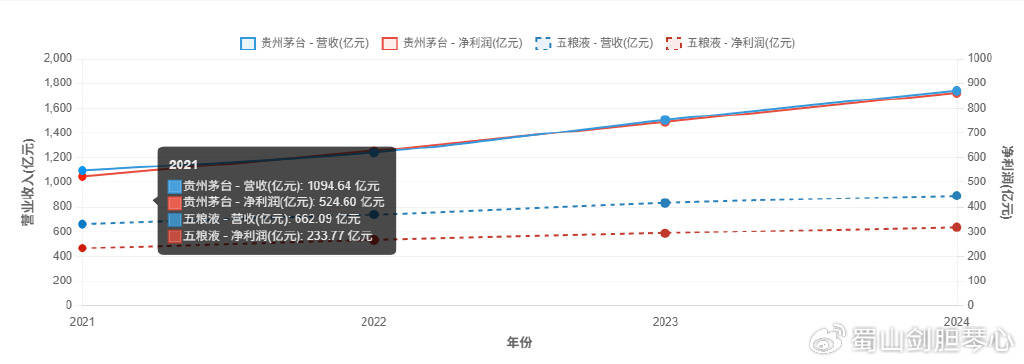
Core Viewpoint - The article discusses the dynamics of the market, particularly focusing on the demand and pricing of Moutai liquor, drawing parallels with the Japanese spirits market and emphasizing the importance of consumer behavior and economic conditions in shaping market trends [1][3][19]. Group 1: Market Dynamics - The capital market is influenced by major funds, while consumer purchasing behavior significantly impacts product value in the consumer market [1][2]. - Moutai has been labeled as the "young people's Moutai," reflecting its popularity, but the company denies its association with impulsive consumption [1][3]. - Recent data indicates a recovery in the restaurant industry, which is crucial for Moutai's market performance, especially ahead of the Mid-Autumn Festival [3][10]. Group 2: Historical Context and Comparisons - The article draws a comparison between Moutai and the historical consumption patterns of Japanese spirits, noting similar age demographics in liquor consumption [3][7]. - Historical data shows that Moutai's price and consumption have experienced significant fluctuations, influenced by macroeconomic factors and consumer income levels [11][13][19]. - The price of Moutai has seen rapid adjustments in the past, with notable declines following periods of economic overheating, similar to the current market adjustments [14][19]. Group 3: Future Outlook - The company is adapting its market strategies to maintain stability amid industry adjustments and changing consumer trends, focusing on long-term sustainable development [19]. - The historical performance of Moutai suggests that demand will eventually recover, even in challenging market conditions, as price adjustments align with consumer purchasing power [19].
华峰化学20250917
2025-09-17 14:59
Summary of Huafeng Chemical Conference Call Industry Overview - **Industry**: Spandex (Polyurethane Synthetic Fiber) - **Growth Rate**: The compound annual growth rate (CAGR) for spandex from 2017 to 2024 is over 10%, driven by demand for outdoor clothing and leisure sports trends, indicating potential for increased per capita consumption in China [2][7] - **China's Position**: China is the largest producer and consumer of spandex globally, with a production of 890,000 tons in 2023 and only 70,000 tons exported, highlighting a domestic demand-driven market [8] Company Insights - **Company**: Huafeng Chemical - **Production Capacity**: Expected to reach 325,000 tons in 2024 and 400,000 tons in 2025, positioning it as a leader alongside Xiaoxin Group [2][11] - **Sales Performance**: Anticipated spandex sales of 368,000 tons in 2024 with an operating rate close to 110%, significantly above the industry average of 80% [19] - **Financial Health**: Despite a challenging environment, Huafeng is projected to achieve approximately 3 billion yuan in cash flow and 2.3 billion yuan in net profit, with a cash reserve of 5.5 billion yuan [28] Market Dynamics - **Current Market Conditions**: Spandex profitability is near the bottom, with current earnings around 2,000 yuan per ton. A price increase to 40,000-50,000 yuan per ton could yield significant profit increments of 4-8 billion yuan [24] - **Inventory and Pricing**: High inventory levels and declining prices are current challenges, but a recovery in valuation is expected by 2025, with potential profit reversals by 2026 [15][24] Competitive Landscape - **Competitors**: Xiaoxin Group is considering asset sales, which could further solidify Huafeng's market position. Other competitors like Taehwa and Xinyang Chemical are facing significant challenges, with some potentially exiting the market [12][15] - **Market Share**: Huafeng controls over 70% of the heart liquid market, indicating a monopolistic position despite current weak demand [26] Future Outlook - **Growth Potential**: By 2026, Huafeng anticipates an increase in earnings per share (EPS) and overall growth, with potential profits reaching 10 billion yuan if market conditions improve [29] - **Valuation**: The company is currently undervalued at a market cap of 40 billion yuan, with projections suggesting a target market cap of 660 billion yuan by 2025 based on a conservative 20x price-to-earnings ratio [28][29] Additional Insights - **Technological Advancements**: Huafeng has achieved significant scale effects through technological improvements, allowing for lower investment per ton compared to industry averages [22] - **Raw Material and Energy Costs**: Proximity to raw material sources and strong bargaining power have enabled Huafeng to maintain lower costs, enhancing profitability [23] This summary encapsulates the key points from the conference call, highlighting the current state and future potential of Huafeng Chemical within the spandex industry.

国泰海通·洞察价值|钢铁李鹏飞团队
国泰海通证券研究· 2025-09-12 08:52
Group 1 - The core viewpoint is that the steel industry is expected to enter a turning point year, with a positive outlook for long-term investment opportunities in leading companies [4][7]. - The analysis emphasizes the importance of identifying sector opportunities from a macroeconomic and industry cycle perspective, while also focusing on individual company growth and turnaround potential from an operational and strategic standpoint [4][7]. Group 2 - The report titled "Embracing a Turning Point Year" was published on December 8, 2024, by analyst Li Pengfei [7]. - The report highlights potential risks, including supply-side contraction not meeting expectations and significant demand decline [7].

大摩周期:市场对宁德锂矿复工有误解,原材料反内卷5天调研,保险油运工业的投资机会_纪要
2025-09-10 14:38
Summary of Conference Call Records Industry or Company Involved - **Copper Smelting Industry** [3] - **Aluminum Industry** [4] - **Steel Industry** [5] - **Cement Industry** [6] - **Cruise Transportation Market** [8][10] - **Logistics Industry (Aneng Logistics)** [13][14][16] - **Insurance Industry (China Pacific Insurance)** [17][18][19][20][21] - **Engineering Machinery Industry** [22] - **Lithium Battery Equipment Industry** [23] - **Automation Sector** [24] - **Heavy Truck Industry** [25] - **Railway Equipment Sector** [26] - **Photovoltaic Equipment Industry** [27] Core Points and Arguments Copper Smelting Industry - The industry faces increased domestic costs and limited imports due to policy changes, leading to a monthly supply reduction of approximately 50,000 to 55,000 tons [3] - Processing fees have dropped to negative values, but the industry is not expected to engage in reverse competition [3] Aluminum Industry - The alumina sector is in an overall surplus, while electrolytic aluminum maintains high profitability due to rigid capacity limits and restricted overseas supply [4] Steel Industry - Production cuts have been implemented in several provinces, but Tangshan has not mandated reductions yet. If profitability turns negative, self-initiated cuts may occur [5] Cement Industry - Cement demand is declining, prompting leading companies to discuss production reduction funds to accelerate the exit of small private enterprises [6] Cruise Transportation Market - The cruise market has seen a significant increase in freight rates, rising from around 30,000 to 60,000 recently, driven by seasonal demand and reduced capacity [8][10] - Factors supporting future price increases include seasonal demand in Q4, sanctions, and increased production [10] Logistics Industry (Aneng Logistics) - Aneng Logistics leads the express delivery market, benefiting from flexible supply chains and increased penetration of large-item e-commerce [13] - The company has seen a 20% to 30% growth in mini-ticket volumes, indicating strong competitive advantages [14] - The upcoming Q4 peak season may act as a catalyst for stock price increases, with a target price of 11.7 HKD [16] Insurance Industry (China Pacific Insurance) - The company reported its best half-year performance in a decade, with a significant improvement in the combined cost ratio due to fewer domestic disaster losses and effective cost control [17] - New energy vehicle insurance pricing is currently insufficient, but regulatory changes are expected to align it with traditional vehicles, enhancing profitability [18] Engineering Machinery Industry - The sector is nearing the bottom of a three-year downturn and is expected to enter an upward cycle starting in 2025, driven by domestic replacement cycles and infrastructure projects [22] Lithium Battery Equipment Industry - The industry is projected to enter a new growth phase starting in 2025, with expected growth rates of 46%, 24%, and 21% over the next three years [23] Automation Sector - The automation sector is anticipated to see a slight upturn in 2026-27, supported by equipment replacement needs and technological advancements [24] Heavy Truck Industry - The heavy truck sector is rated neutrally, with expectations of modest growth in the second half of 2025, but a slowdown is anticipated thereafter [25] Railway Equipment Sector - The railway equipment sector is also rated neutrally, with stable demand expected but no significant catalysts in the near term [26] Photovoltaic Equipment Industry - The photovoltaic equipment sector remains in a downturn with severe overcapacity, and a pessimistic outlook on development due to declining installation demand [27] Other Important but Possibly Overlooked Content - The cruise market's performance has exceeded lowered market expectations, indicating a potential recovery despite not yet entering the peak season [9] - The logistics sector's competitive landscape is improving due to industry consolidation and the exit of smaller players, leading to a rapid growth phase for major express companies [15] - The engineering machinery sector's recovery is supported by both domestic and international market growth, particularly in emerging markets [22]