行业洗牌

Search documents
A股继续大涨,两大关键因素引爆市场!
Sou Hu Cai Jing· 2025-08-29 07:45
Group 1: A-Share Market Performance - The A-share market continues to rise strongly, with the Shanghai Composite Index up 0.37%, the Shenzhen Component Index up 0.99%, and the ChiNext Index up 2.23% [1] - The total market turnover was 2.7983 trillion yuan, a decrease of 172.5 billion yuan compared to the previous trading day [1] - Nearly 3,300 stocks in the market closed lower, indicating a mixed performance among individual stocks [1] Group 2: Key Drivers of Market Movement - The appreciation of the RMB is a significant factor, with the exchange rate reaching 7.13 yuan, driven by expectations of interest rate cuts by the US Federal Reserve and a decline in the US dollar index [1] - Sector rotation has also contributed to the index's rise, with consumer stocks and rare earths supporting the market despite a pullback in technology stocks [1] Group 3: Sector Performance - Lithium battery stocks have shown strong performance, with significant gains leading the market [1] - The liquor sector is experiencing a rebound, supported by the upcoming traditional consumption peak in autumn and improved liquidity in the A-share market [3] - The insurance sector is active, benefiting from policy support and a favorable market environment, leading to rapid growth in capital scale and improved investment returns [4] - The rare earth sector is also seeing renewed activity, with prices for praseodymium oxide and dysprosium oxide increasing significantly [6]
华峰化学(002064):上半年业绩承压 底部盈利韧性强 产能持续扩张
Xin Lang Cai Jing· 2025-08-27 12:38
Core Viewpoint - The company has a current capacity of 325,000 tons for spandex and plans to expand by 300,000 tons, with the first phase of 100,000 tons already in production. Future industry expansion will mainly focus on leading enterprises, ensuring an orderly release of supply. Additionally, the company has significant cost advantages in raw material procurement, energy, labor, and equipment at its Chongqing base, leading to superior cost control [1] Group 1: Financial Performance - In the first half of 2025, the company achieved revenue of 12.137 billion yuan, a year-on-year decrease of 11.70%, and a net profit attributable to shareholders of 983 million yuan, down 35.23% year-on-year. Revenue for Q1 and Q2 was 6.314 billion and 5.823 billion yuan, with net profits of 504 million and 479 million yuan respectively [2] - The average market prices for spandex 40D and adipic acid in the first half of 2025 were 23,725 yuan/ton and 7,622 yuan/ton, reflecting year-on-year declines of 15% and 22%. The price spread for spandex and adipic acid decreased by 11% and 21% year-on-year, respectively, impacting the company's overall performance [3] Group 2: Industry Dynamics - The spandex and adipic acid price spreads have narrowed, putting pressure on the company's performance in the first half of 2025. Revenue from spandex was 4.215 billion yuan, down 9.43% year-on-year, with a gross margin of 18.65%, up 3.68 percentage points. Adipic acid revenue was 4.471 billion yuan, down 15.01%, with a gross margin of 4.37%, down 11.08 percentage points [3] - The company currently has a spandex capacity of 325,000 tons, and once the Chongqing base's 300,000 tons of differentiated spandex project is fully operational, annual capacity will exceed 500,000 tons, solidifying its leading position in the global spandex industry. The Chongqing base has clear cost advantages in energy, labor, and transportation [4] Group 3: Future Growth Prospects - The domestic adipic acid capacity is expected to reach 4.1 million tons by 2024, with an overall operating rate of 60%-70%. The demand for adipic acid is anticipated to grow rapidly due to breakthroughs in domestic hexamethylenediamine production technology and the large-scale production of biodegradable materials [4] - The company is planning projects for 300,000 tons of hexamethylenediamine and 300,000 tons of PBAT, which are expected to drive future demand for adipic acid by nearly 1 million tons [5] - The company is also investing in projects to enhance its industrial chain, including a 1.204 billion yuan investment for a 120,000-ton PTMEG project and a 5.02 billion yuan investment for a 1.1 million-ton natural gas integration project, which will strengthen its competitive advantage and profitability [6]

猛料!传买广州二手房,开始不收中介费了?
Sou Hu Cai Jing· 2025-08-21 06:50
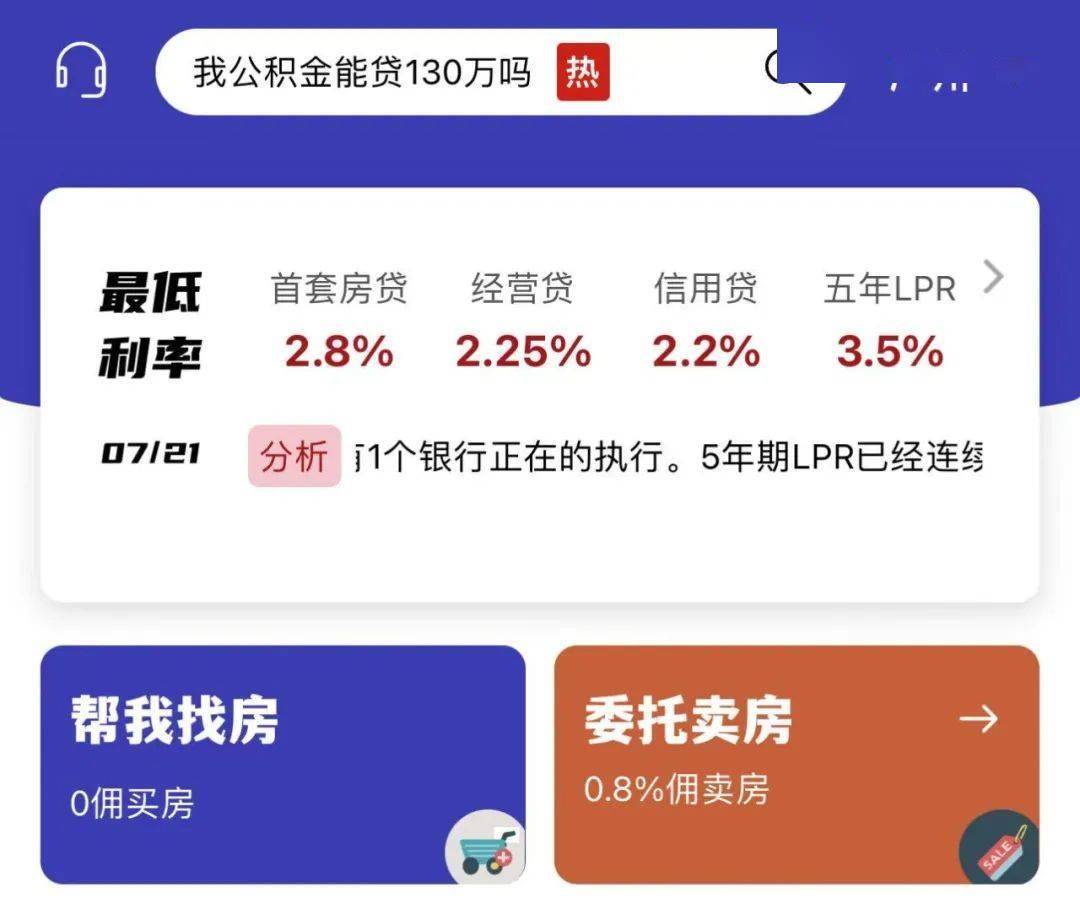
Core Insights - The second-hand housing market is experiencing significant changes, with a new commission model introduced by a local intermediary platform in Guangzhou, offering buyers zero commission and sellers only 0.8% [1][3] Group 1: New Commission Model - The new commission structure allows buyers to avoid paying the typical commission fee, which can be substantial, while sellers benefit from a reduced fee [1][4] - For example, on a property priced at 1 million, traditional platforms like Lianjia would charge 10,000 from both buyer and seller, whereas the new platform allows the buyer to save 10,000 and the seller to pay only 2,000 [4] Group 2: Market Dynamics - The second-hand housing market is largely dominated by major platforms like Lianjia and Beike, with Beike projected to surpass 2.2 trillion yuan in transaction volume in 2024, accounting for two-thirds of total transactions [4][6] - Recent data from the Guangzhou Real Estate Intermediary Association indicates a significant decline in second-hand residential transactions, with July's net signed contracts falling below 9,000, a decrease of nearly 10% from the previous month and over 10% year-on-year [6] Group 3: Competitive Landscape - The current market conditions, characterized by a high number of unsold properties and reduced buyer activity, have prompted intermediaries to adopt aggressive pricing strategies to attract clients [6][9] - The competitive environment is forcing intermediaries to innovate and provide better value to both buyers and sellers, as the market dynamics shift towards cost-saving measures [9]

新能源高管,失业大半年了
投资界· 2025-08-16 08:09
Core Viewpoint - The current state of the new energy industry is marked by significant layoffs, salary reductions, and increased competition among job seekers, particularly affecting mid to high-level management positions [1][2][3]. Group 1: Employment Trends - Many mid to high-level executives in the new energy sector are experiencing prolonged unemployment, with some remaining jobless for over six months [3]. - The industry is undergoing severe restructuring, leading to a high concentration of market share among the top companies, which leaves little room for smaller players [3][4]. - The number of companies in the sector has decreased significantly, resulting in fewer available positions for experienced professionals [10]. Group 2: Salary and Job Market Dynamics - Salary reductions are becoming common, with reports of executives accepting offers significantly lower than their previous earnings [9][10]. - The competition for entry-level positions has intensified, with companies increasingly demanding higher educational qualifications from new graduates [12][14]. - The average salary for fresh graduates in the industry ranges from 10,000 to 20,000 per month, with potential year-end bonuses [12]. Group 3: Industry Challenges - The volatility in raw material prices, particularly lithium carbonate, has severely impacted the financial health of many companies, leading to closures and layoffs [4][10]. - The barriers between different segments of the battery industry, such as power and storage, have become more pronounced, complicating transitions for professionals seeking to switch fields [6][9]. - The trend of long working hours and high performance expectations is prevalent, with many companies adopting a culture similar to that of the tech industry, albeit with lower compensation for overtime [14][15].

多晶硅价格降幅近两成 行业进入洗牌阶段
Xin Hua Wang· 2025-08-12 05:47
Core Insights - The recent decline in silicon material prices is attributed to a significant reduction in demand from downstream silicon wafer manufacturers, with production cuts exceeding 50% [1][3] - The price of N-type silicon material has decreased more sharply than P-type, reflecting a growing price gap between large and small manufacturers [1][3] - The industry is entering a consolidation phase, where less competitive players may be eliminated, leading to a stronger market position for companies with advanced technology and cost management [3] Price Trends - The average transaction price for N-type silicon material is 75,200 CNY/ton, down 19.23% from two weeks ago, while single crystal dense material averages 67,900 CNY/ton, down 15.23% [1] - InfoLink Consulting reports a smaller price drop for dense material, with an average of 74,000 CNY/ton, and a price range for second-tier and new entrants between 61,000 CNY and 68,000 CNY/ton [2] Market Dynamics - The pressure on silicon material companies is increasing due to inventory accumulation and the need to secure orders amid low demand [1] - The silicon wafer market shows a significant price drop, with M10 single crystal wafers averaging 2.39 CNY/piece, N-type at 2.50 CNY/piece, and G12 at 3.35 CNY/piece, reflecting weekly declines of 5.91%, 3.47%, and 3.46% respectively [4] - There is a notable price differentiation between first-tier and second-tier silicon wafer manufacturers, particularly for N-type wafers [4][6] Downstream Impact - The prices for mainstream battery sizes are also declining, with P-type M10 and G12 batteries trading between 0.47-0.5 CNY/W and 0.52-0.53 CNY/W respectively [5] - The component prices are approaching 1.1 CNY/W, primarily fulfilling previous orders, indicating ongoing downward pressure in the photovoltaic supply chain [6] - The overall price decline in the photovoltaic industry suggests an impending reshuffle, highlighting the varying capabilities of companies in market expansion and cost control [6]


深圳华强:大部分电子元器件的价格已经处于底部
Zheng Quan Shi Bao Wang· 2025-08-12 03:23
人民财讯8月12日电,深圳华强(000062)在机构调研时表示,电子元器件的价格在2023年和2024年经 历了两年的下行,大部分电子元器件的价格已经处于底部,而且这几年激烈的价格竞争,不断推动上游 芯片设计行业加速洗牌和过剩产能出清进程。在这种背景下,行业内优质原厂有调涨价格的动因和可能 性,但涨价时间、能否形成广泛趋势有待进一步观察。 ...

上半年业绩预计腰斩 股东拟减持1.25%股份 福斯特如何应对双重考验?
Xi Niu Cai Jing· 2025-08-11 12:42
Core Viewpoint - Foster, a leading photovoltaic film manufacturer, is facing significant challenges due to a planned share reduction by its shareholder, Tongde Industrial, and a substantial decline in expected profits for the first half of 2025 [2][3]. Group 1: Shareholder Actions - Tongde Industrial plans to reduce its holdings by up to 32.52 million shares, representing 1.25% of Foster's total share capital, with a cash-out amounting to approximately 470 million yuan based on the closing price of 14.5 yuan per share [2]. - The reduction window is set from August 11 to November 10, raising concerns among investors about Foster's market outlook during a sensitive period following the profit warning [3]. Group 2: Financial Performance - Foster anticipates a net profit of 473 million yuan for the first half of 2025, a decline of 49.05% year-on-year, marking the worst semi-annual performance since 2021 [2]. - The company's gross profit margin has significantly decreased, with a 46.72% drop in gross profit due to falling prices of photovoltaic film products, which have decreased more than the raw material costs [3]. Group 3: Industry Context - The photovoltaic industry is undergoing a severe restructuring, with domestic production capacities for key components exceeding 1100 GW, while global demand is only expected to reach 600 GW in 2025 [4]. - The oversupply has led to a drastic price drop, with polysilicon prices falling by 39% and module prices dropping below the industry cost line [4]. Group 4: Strategic Responses - In response to declining performance and shareholder actions, Foster is accelerating the development of high-value-added products like POE films to combat homogenization in the market [4]. - The company is expanding its global production capacity, with projects in Thailand and Vietnam expected to increase overseas output to 600 million square meters, enhancing its market presence and mitigating trade barriers [5]. - Foster's photolithographic dry film business is targeting high-end applications, with a market potential exceeding 20 billion yuan, and is expected to maintain a growth rate of over 30% [5].

动力电池业务挤压欣旺达谋港上市补血
Xin Lang Cai Jing· 2025-08-05 21:08
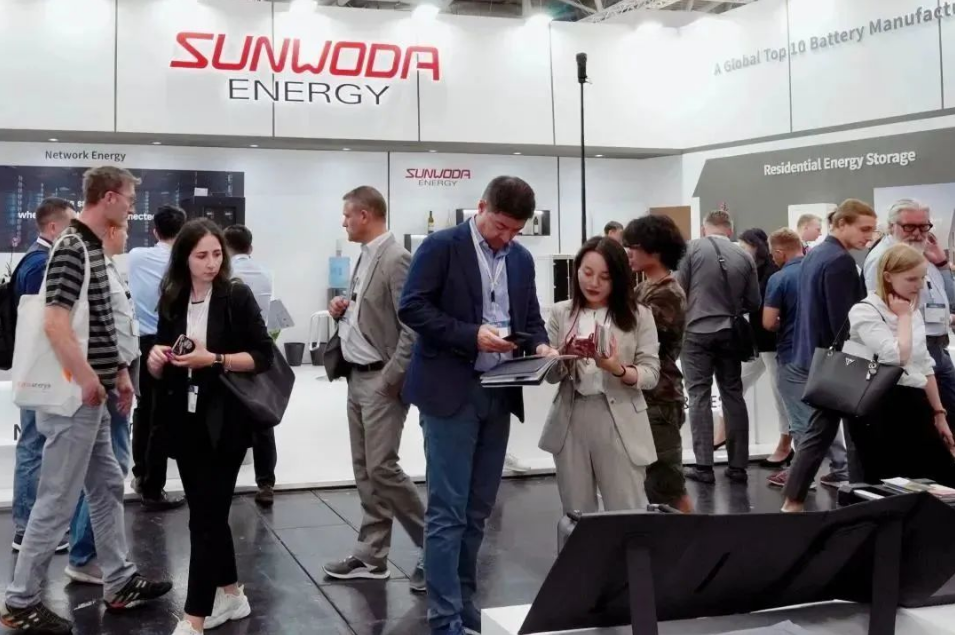
Core Viewpoint - The company is seeking to raise funds through a Hong Kong IPO to support its struggling power battery business amid fierce price competition in the Chinese market [2][3]. Group 1: Company Overview - XINWANDA Electronics Co., Ltd. was founded in 1997 and initially focused on consumer batteries, later entering the power battery sector in 2014 [4]. - The company has become a leading player in consumer batteries and has seen significant growth opportunities in the rapidly developing Chinese electric vehicle (EV) market [4]. - XINWANDA's power battery revenue is projected to grow from 12.7 billion yuan in 2022 to 15.1 billion yuan (approximately 2 billion USD) by 2024 [4]. Group 2: Market Position and Challenges - The company currently holds a 2.87% market share in the Chinese EV battery market, ranking seventh, while CATL and BYD dominate with a combined market share of 67% [5]. - Despite maintaining profitability through its consumer battery business, XINWANDA's power battery segment has been struggling, with a gross margin of only 12.9% compared to 20.2% for consumer batteries [5]. - The power battery business has incurred losses, with a reported loss of 1.56 billion yuan in 2023 alone [5]. Group 3: Strategic Initiatives - To navigate the challenging market landscape, XINWANDA plans to accelerate its overseas expansion, particularly as the domestic EV market becomes saturated [6]. - The company has initiated a global production capacity layout, including a significant battery production base in Thailand with an investment exceeding 10 billion yuan [6]. - XINWANDA aims to enhance its competitive edge by increasing R&D investments to create differentiated technology barriers [6].

动力电池业务挤压 欣旺达谋港上市补血
Xin Lang Cai Jing· 2025-08-05 13:55
Core Viewpoint - The company, XINWANDA, is seeking to raise funds through a Hong Kong IPO to support its struggling power battery business amid fierce price competition in the industry [2][3]. Group 1: Company Overview - XINWANDA was founded in 1997 and initially focused on consumer batteries, becoming a leading manufacturer in the mobile phone battery sector by 2020 [3]. - The company entered the power battery market in 2014 and has seen significant growth opportunities due to the rapid development of China's new energy vehicle industry [3]. - In 2022, XINWANDA's power battery business generated revenue of 12.7 billion yuan, projected to grow to 15.1 billion yuan (approximately 2 billion USD) by 2024 [3]. Group 2: Financial Performance - Despite overall profitability, XINWANDA's power battery segment has been operating at a loss, with a reported loss of 1.56 billion yuan in 2023 [5]. - The gross margin for the power battery business was only 12.9% in Q1 2023, compared to 20.2% for its consumer battery segment [5]. - The company has maintained profitability over the past decade, with Q1 2023 revenue of 12.3 billion yuan and a net profit of 387 million yuan, reflecting a year-on-year increase of 21% [5]. Group 3: Market Position and Competition - XINWANDA holds a 2.87% market share in China's electric vehicle battery market, ranking seventh behind industry leaders CATL and BYD, which together account for 67% of the market [4]. - The company faces intense competition and pricing pressures, leading to a challenging environment for profitability in the power battery sector [5]. Group 4: Strategic Initiatives - XINWANDA plans to accelerate its overseas expansion due to the saturation of the domestic electric vehicle market, with 40% of its overall sales coming from international markets in Q1 2023 [6]. - The company is investing over 10 billion yuan in a large battery production facility in Thailand, which has received local government approval [7]. - To navigate the price war, XINWANDA aims to increase R&D investment to build differentiated technology and achieve a pricing advantage [7].
拯救医疗独角兽
投资界· 2025-08-04 07:28
Core Insights - The Chinese healthcare investment market has experienced significant fluctuations over the past decade, peaking at over 380 billion yuan in 2021 before entering a period of stagnation [6][7] - Many healthcare unicorns emerged during the investment boom, but high valuations and slow conversion rates have led to persistent losses and challenges in achieving IPOs [6][10] - The industry is undergoing a transformation from a focus on high valuations and rapid growth to a more sustainable approach centered on survival and cash flow [12][17] Investment Trends - Since 2021, several companies, including Yuanxin Technology and Yingsi Intelligent, have struggled to enter the secondary market despite multiple IPO attempts [7] - The withdrawal of dollar funds and the cautious approach of domestic RMB funds have changed the funding landscape, leading to difficulties in financing and exits for many startups [7][10] - In the first half of this year, nearly 40 healthcare companies submitted IPO applications in Hong Kong, indicating a potential recovery in the market [7][9] Mergers and Acquisitions - Major acquisitions have gained attention, with companies like CR Sanjiu and Ant Group making significant purchases, suggesting a shift from IPO aspirations to M&A strategies for some unicorns [9][11] - The Hong Kong healthcare sector is showing signs of recovery, with several unicorns reapplying for IPOs after a period of dormancy [9][10] - Many companies are opting for mergers as a means to exit, although this often results in losses for investors due to previously inflated valuations [20][21] Market Dynamics - The healthcare industry is experiencing a profound reshaping, with a collective recalibration of expectations among entrepreneurs and investors [10][12] - The focus has shifted from visionary narratives to practical cash flow and profitability, with investors now prioritizing immediate financial returns over long-term potential [16][17] - Companies are adopting survival strategies, including layoffs and product line reductions, to maintain cash flow and navigate the current market challenges [11][12] Future Outlook - While IPOs remain a preferred exit strategy, not all companies are equipped to pursue this path, leading to a reliance on mergers as an alternative [19][20] - The market is expected to reward companies that can demonstrate sustainable business models and adaptability to policy changes, rather than those that merely tell compelling stories [21] - The healthcare sector is characterized by a slow evolution, requiring patience and resilience from companies as they adapt to the new market realities [21]