
碳达峰碳中和

Search documents
多措并举 推动我国绿色贸易高质量发展
Xin Hua Wang· 2025-10-28 14:33
Core Viewpoint - Developing green trade is a crucial measure to promote trade optimization and upgrading, assist in achieving carbon peak and carbon neutrality goals, and accelerate the construction of a strong trading nation [1] Group 1: Policy and Institutional Framework - The State Council's executive meeting proposed to accelerate the improvement of the green trade policy system and strengthen coordination with industrial, technological, fiscal, and financial policies to create a favorable environment for green trade development [1] Group 2: Role of Enterprises - Enterprises play a vital role in the process of exploring green trade development, exemplified by Inner Mongolia Daxing'anling Carbon Sink Technology Co., Ltd., which focuses on forestry's response to climate change and promotes the marketization of forestry carbon sink resources [1] Group 3: Trade Statistics and Trends - According to customs statistics, in the first three quarters of this year, China's export products have shifted towards higher quality, with high-end equipment related to new quality productivity increasing by 22.4% year-on-year, and green products such as wind turbine sets and parts, "new three types" products, and electric locomotives also experiencing double-digit growth [1] - Capturing the new trend of global energy transition, Chinese foreign trade enterprises will continue to increase the supply of high-quality green products and accelerate the exploration of new fields and tracks [1]

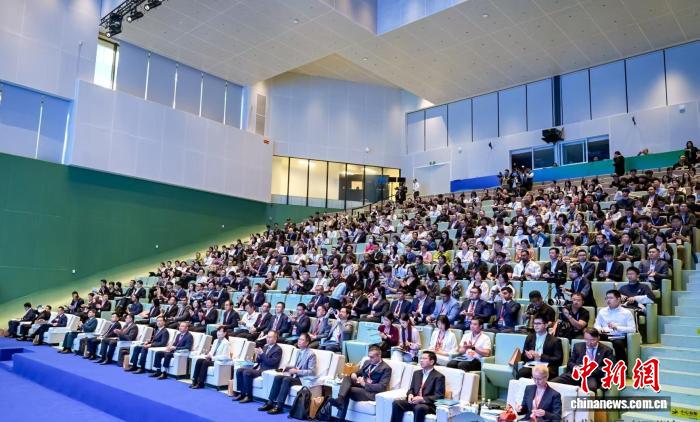
2025碳达峰碳中和论坛暨深圳国家低碳城论坛启幕
Zhong Guo Xin Wen Wang· 2025-10-28 13:45
Core Viewpoint - The forum focuses on "AI Empowering Urban Green Development" and discusses new solutions for achieving carbon peak and carbon neutrality goals [1][3]. Group 1: Government Initiatives - Guangdong Province is leading carbon peak and carbon neutrality efforts, promoting ecological construction and modern industrial systems for green low-carbon development [1]. - Shenzhen is pioneering a dual control system for carbon emissions, advancing energy green low-carbon transformation, and promoting electric vehicles and green building clusters [3]. Group 2: Key Publications and Achievements - The "2025 Shenzhen Green Low-Carbon Development White Paper" showcases actions and achievements in carbon reduction, pollution reduction, green expansion, and economic growth [3]. - The release of carbon footprint certification results and white papers in the Guangdong-Hong Kong-Macao Greater Bay Area marks significant progress in international green trade compliance and regional carbon reduction collaboration [3]. Group 3: Technological Insights - The construction of a new energy system involves developing wind and solar energy, flexible coal power, hydrogen energy, and other energy collaborations [3]. - Key technologies for new energy include deep-sea wind power, carbon capture and storage (CCUS), new grid forms, and digital technologies for supply-demand interaction [3]. Group 4: Urban Carbon Neutrality - Urban carbon emissions are critical for achieving carbon neutrality, necessitating attention to renewable energy use, low-carbon industrial processes, zero-carbon buildings, and green transportation [5]. Group 5: Recognition and Awards - The forum included the awarding of "2025 Urban Green Low-Carbon Scenario Demonstration Base" and "2025 Shenzhen ESG Practice Pioneer Enterprise" to various projects and companies, highlighting successful initiatives in sustainability [5].
深耕赣鄱大地 绘就生态长卷
Zhong Guo Xin Wen Wang· 2025-10-28 10:01
Core Viewpoint - The development of green finance is essential for transforming ecological advantages into economic benefits and promoting high-quality development in Jiangxi Province [1] Group 1: Green Finance Initiatives - Agricultural Bank of China Jiangxi Branch has actively supported green finance, focusing on clean energy, low-carbon transformation of traditional industries, and energy conservation [1] - As of September 2025, the bank's green credit balance reached 118.22 billion yuan, with a net increase of 12.8 billion yuan since the beginning of the year [1] - The county-level green credit balance was 66.25 billion yuan, with a net increase of 8.765 billion yuan [1] Group 2: Renewable Energy Projects - The integration of fish farming and solar energy in Yichun City represents a significant step towards clean energy development, optimizing the energy structure and promoting sustainability [2] - Agricultural Bank of China Yichun Branch provided 264 million yuan in project financing loans, addressing funding shortages and ensuring project progress [2] - During the "14th Five-Year Plan" period, Jiangxi's energy structure has changed significantly, with a 1.6-fold increase in new energy installed capacity, surpassing coal power for the first time [2] Group 3: Environmental Protection Efforts - Jiangxi's Jiujiang City has implemented systematic governance to improve water quality and enhance ecological environments, supported by financial backing from Agricultural Bank of China Jiujiang Branch [3] - The bank has formed a syndicate loan to provide comprehensive financial support for ecological projects, integrating environmental indicators into the credit evaluation system [3] Group 4: Low-Carbon Transformation of Traditional Industries - The introduction of a 10 million yuan green transformation loan enabled a technology company in Yingtan to upgrade its production lines, increasing efficiency by 30% while reducing energy consumption [4][5] - The bank has issued a total of 490 million yuan in loans for the low-carbon transformation of traditional industries, supporting various sectors including copper processing and cement manufacturing [5] - The focus on green development during the "14th Five-Year Plan" period aims to achieve a balance between ecological and economic benefits, with plans for continued financial support in the future [5]

“十五五”规划建议全文发布:大力发展新型储能,加快智能电网和微电网建设
中关村储能产业技术联盟· 2025-10-28 09:09
Core Viewpoint - The article outlines the key proposals and objectives of China's 15th Five-Year Plan, emphasizing the importance of modernizing the economy, enhancing energy systems, and achieving high-quality development while addressing environmental concerns and social equity [4][5]. Energy and Environment - Accelerate the construction of a new energy system, increasing the share of renewable energy and ensuring a reliable transition from fossil fuels [3]. - Implement a dual control system for carbon emissions, focusing on peak coal and oil consumption, and develop a comprehensive carbon trading market [3]. Economic Development Goals - The 15th Five-Year Plan aims for significant achievements in high-quality development, with economic growth maintained within a reasonable range and increased domestic consumption driving growth [10][13]. - The plan emphasizes the importance of technological self-reliance and innovation, aiming to enhance the national innovation system and improve the integration of technology and industry [19][20]. Industrial and Infrastructure Development - Focus on building a modern industrial system, optimizing traditional industries, and fostering emerging industries such as new energy and advanced manufacturing [16][18]. - Strengthen infrastructure planning and development, ensuring resilience and sustainability in transportation and energy systems [18]. Social and Cultural Development - Promote cultural innovation and the development of a strong socialist culture, enhancing the influence of Chinese civilization globally [40][41]. - Address social equity by improving living standards, ensuring high-quality employment, and optimizing income distribution mechanisms [44][45]. Regional Coordination and Rural Development - Enhance regional economic coordination, promoting balanced development across different areas of the country [36][37]. - Focus on rural revitalization, improving agricultural productivity, and ensuring modern living conditions in rural areas [33][34].

受权发布丨中共中央关于制定国民经济和社会发展第十五个五年规划的建议
证券时报· 2025-10-28 08:54
Core Viewpoint - The "15th Five-Year Plan" period is crucial for achieving basic socialist modernization, building on the significant achievements of the "14th Five-Year Plan" period, and addressing complex domestic and international challenges to secure strategic advantages in global competition [2][3][4]. Group 1: Achievements and Challenges - The "14th Five-Year Plan" period saw major accomplishments in economic stability, high-quality development, technological innovation, and social governance, despite facing severe challenges such as the pandemic [2]. - The "15th Five-Year Plan" period is characterized by profound changes in the development environment, with both strategic opportunities and risks, including geopolitical tensions and domestic economic imbalances [4]. Group 2: Economic and Social Development Goals - The guiding principles for the "15th Five-Year Plan" include adhering to Marxist-Leninist principles, promoting high-quality development, and ensuring that modernization benefits all citizens [6][7]. - Key goals include achieving significant results in high-quality development, enhancing self-reliance in technology, and improving social governance and public services [10][11][12]. Group 3: Modern Industrial System - The plan emphasizes the importance of a modern industrial system as the foundation for Chinese-style modernization, focusing on the development of advanced manufacturing and the optimization of traditional industries [13][14]. - There is a strong push to cultivate emerging industries and enhance the quality of service sectors, ensuring they align with modern economic needs [14][15]. Group 4: Technological Innovation - The "15th Five-Year Plan" prioritizes technological self-reliance and innovation, aiming to strengthen the national innovation system and enhance the integration of technology and industry [16][17]. - Key areas of focus include original innovation, critical core technology breakthroughs, and fostering a culture of innovation within enterprises [18][19]. Group 5: Domestic Market Development - Strengthening the domestic market is seen as a strategic foundation for modernization, with initiatives aimed at boosting consumption and investment while ensuring a stable economic environment [21][22]. - The plan outlines measures to enhance consumer spending, improve investment efficiency, and eliminate barriers to market integration [23]. Group 6: High-Level Opening Up - The plan advocates for expanding high-level openness and cooperation, promoting trade and investment, and enhancing international economic collaboration [28][29]. - It emphasizes the importance of aligning with international trade rules and fostering a favorable environment for foreign investment [30]. Group 7: Agricultural Modernization - Agricultural modernization is highlighted as essential for overall modernization, with a focus on improving production capacity, quality, and rural living conditions [31][32]. - The plan aims to ensure sustainable agricultural practices and enhance the integration of various agricultural sectors [33]. Group 8: Cultural Development - Cultural prosperity is identified as a key indicator of modernization, with efforts to promote socialist core values and enhance cultural confidence [38][39]. - The plan encourages the development of a robust cultural industry and the preservation of cultural heritage [40]. Group 9: Social Welfare and Employment - The plan emphasizes improving social welfare systems and ensuring high-quality employment opportunities, with a focus on equitable income distribution and enhancing living standards [41][42]. - It aims to strengthen the social safety net and promote inclusive growth to achieve common prosperity [43].

受权发布|中共中央关于制定国民经济和社会发展第十五个五年规划的建议
Xin Hua She· 2025-10-28 08:35
Core Viewpoint - The "15th Five-Year Plan" period is crucial for achieving basic socialist modernization, building on the significant achievements of the "14th Five-Year Plan" and addressing complex domestic and international challenges [1][2][3] Economic and Social Development Goals - The guiding ideology for the "15th Five-Year Plan" emphasizes Marxism, Xi Jinping's thoughts, and the goal of building a modern socialist country, focusing on high-quality development and comprehensive reforms [6][7] - Key principles include maintaining the Party's leadership, prioritizing people's needs, promoting high-quality development, and ensuring effective market and government collaboration [7][8] - Major goals include achieving significant high-quality development, enhancing self-reliance in technology, deepening reforms, improving social civilization, and increasing the quality of life for citizens [9][10][11] Modernization of the Industrial System - The plan emphasizes the importance of a modern industrial system as the material and technical foundation for Chinese-style modernization, focusing on optimizing traditional industries and fostering emerging sectors [12][13] - It aims to enhance the quality and efficiency of the service sector and build a modern infrastructure system to support economic growth [14] Technological Self-Reliance - The plan highlights the need for technological modernization, focusing on original innovation and breakthroughs in key technologies, while promoting the integration of technology and industry [15][16] - It calls for strengthening the role of enterprises in innovation and fostering a supportive environment for research and development [17] Domestic Market Development - The strategy emphasizes the importance of a strong domestic market as a strategic foundation for modernization, advocating for increased consumption and effective investment [20][21] - It aims to eliminate barriers to a unified national market and enhance the efficiency of resource allocation [22] High-Level Socialist Market Economy - The plan seeks to enhance the socialist market economy by stimulating the vitality of various economic entities and improving the market-oriented allocation of resources [22][23] - It emphasizes the need for effective macroeconomic governance and sustainable fiscal policies to support high-quality development [24] Opening Up and International Cooperation - The strategy promotes expanding high-level openness and cooperation, enhancing trade and investment, and fostering a fair international economic order [25][26] - It aims to strengthen the Belt and Road Initiative and enhance international collaboration in various sectors [27] Agricultural and Rural Modernization - The plan prioritizes agricultural modernization and rural revitalization, focusing on improving agricultural productivity and quality of life in rural areas [28][29] - It emphasizes the importance of integrating urban and rural development and ensuring sustainable agricultural practices [30] Regional Economic Coordination - The strategy aims to optimize regional economic layouts and promote coordinated development across different regions, enhancing infrastructure connectivity and regional collaboration [31][32] Cultural and Social Development - The plan emphasizes the importance of cultural innovation and social development, aiming to enhance the quality of life and promote common prosperity for all citizens [34][37] - It focuses on improving education, social security, and public services to meet the needs of the population [39][40]
为钢铁行业近零碳排放努力攻关
Huan Qiu Wang· 2025-10-28 03:51
Core Insights - The article highlights the successful launch of the world's first 10,000-ton green electricity and green hydrogen fluidized bed hydrogen metallurgy pilot line by Ansteel Group, which significantly reduces carbon emissions in iron production [1][4] - The transition from traditional carbon metallurgy to hydrogen metallurgy is emphasized as a crucial step for the steel industry to achieve green transformation and reduce carbon emissions [3][4] Group 1: Technological Innovations - Ansteel Group's pilot line utilizes green electricity generated from wind power to electrolyze water for hydrogen production, achieving near-zero carbon emissions per ton of iron produced [1] - The project involved overcoming challenges in raw material reaction performance and developing iron ore pelletizing modification technology to produce stable spherical particles [2] - The pilot line has achieved a metalization rate of over 95% in the produced direct reduced iron, meeting the quality requirements for high-end materials such as automotive and electrical steel [2] Group 2: Operational Challenges and Solutions - Maintaining continuous and stable operation of the reduction system was a significant challenge, requiring 24-hour emergency repairs and innovative solutions to prevent blockages [2] - Various operational issues were encountered during the trial runs, including hydrogen supply disruptions and equipment malfunctions, which were systematically resolved through optimization efforts [2] Group 3: Future Directions - Ansteel Group plans to advance the industrialization of fluidized bed hydrogen metallurgy technology to a scale of 500,000 tons, aiming to enhance the economic viability of the technology [3] - The company has implemented over 1,100 ultra-low emission transformation projects during the 14th Five-Year Plan period, significantly reducing major pollutant emissions and energy consumption per ton of steel [4]

人工智能赋能中国企业“绿色竞争力”
Zhong Guo Xin Wen Wang· 2025-10-28 02:54
Core Viewpoint - The integration of new digital technologies, particularly artificial intelligence, is accelerating innovation and supporting the green transformation necessary for achieving carbon peak and carbon neutrality goals in China [1][2]. Group 1: ESG and Economic Transition - China's economy has shifted from high-speed growth to high-quality development, making ESG a critical issue for Chinese enterprises [2]. - There is a historical opportunity for companies to transform compliance costs into sustainable competitive advantages, although structural challenges remain [2]. Group 2: Technological Integration in ESG - The integration of technologies such as artificial intelligence, blockchain, and the Internet of Things is addressing issues related to the fragmentation, lag, and credibility of traditional ESG data collection [2]. - Digital twin technology can simulate and optimize energy consumption, logistics, and assets in a virtual space, contributing to carbon reduction and efficiency [2]. Group 3: Internationalization of ESG Standards - There are differences between international ESG standards and Chinese standards due to varying development stages and regulatory frameworks, which necessitates the promotion of "Chinese solutions" globally [4]. - The fusion of digital technologies with the TIC industry is at a critical stage, focusing on sectors like automotive and new energy to enhance China's participation in global ESG governance [4]. Group 4: Building ESG Support Systems - There is a need to establish an international ESG support system for Chinese enterprises to enhance their voice in global sustainable development agendas [4]. - Emphasis on top-level design and collaboration in ESG initiatives is crucial for building a systematic approach to ESG capabilities within enterprises [4].
黑色建材日报-20251028
Wu Kuang Qi Huo· 2025-10-28 01:54
Report Industry Investment Rating - No relevant content provided. Core View of the Report - The report maintains an optimistic view of the future of the black sector. In the medium to long - term, the logic of rising steel prices remains unchanged under the gradually easing macro - environment, but the real demand for steel is still weak in the short term. For specific varieties, each has different supply - demand situations and price trends, and it is necessary to pay attention to factors such as Sino - US negotiations and overseas macro - environment changes [1][4][9]. Summary by Related Catalogs Steel Market Information - The closing price of the rebar main contract was 3100 yuan/ton, up 54 yuan/ton (1.772%) from the previous trading day. The registered warehouse receipts were 128,819 tons, and the position of the main contract was 1.953001 million lots, a decrease of 97,544 lots. In the spot market, the aggregated price in Tianjin was 3140 yuan/ton, up 30 yuan/ton, and in Shanghai was 3210 yuan/ton, up 10 yuan/ton. The closing price of the hot - rolled coil main contract was 3299 yuan/ton, up 49 yuan/ton (1.507%). The registered warehouse receipts were 104,667 tons, a decrease of 2398 tons, and the position of the main contract was 1.48273 million lots, a decrease of 18,766 lots. In the spot market, the aggregated price in Lecong was 3300 yuan/ton, up 30 yuan/ton, and in Shanghai was 3330 yuan/ton, up 40 yuan/ton [1]. Strategy View - The overall atmosphere in the commodity market was positive, and the prices of finished steel products fluctuated strongly. Sino - US relations were moderately eased, and the results of the trade negotiations needed to be focused on. The supply and demand of rebar both increased, and the inventory continued to decline. The output of hot - rolled coils decreased slightly, the demand improved marginally, and the inventory contradiction was slightly alleviated. The profitability of steel mills declined significantly, and the supply - side pressure was reduced. In the medium to long - term, the logic of rising steel prices remained unchanged, but the real demand was still weak in the short term [1]. Iron Ore Market Information - The main contract of iron ore (I2601) closed at 786.50 yuan/ton, with a change of +2.01% (+15.50). The position changed by - 6796 lots to 558,800 lots. The weighted position was 944,200 lots. The price of PB powder at Qingdao Port was 792 yuan/wet ton, with a basis of 55.75 yuan/ton and a basis rate of 6.62% [3]. Strategy View - The market sentiment improved, and the iron ore futures rebounded at the technical support level. The overseas iron ore shipments continued to increase, and the recent arrival volume was at a low level. The daily average pig iron output dropped below 2.4 million tons. The demand for iron ore weakened, and the port inventory continued to accumulate. The macro - environment had a certain positive impact, and the iron ore price fluctuated [4]. Manganese Silicon and Ferrosilicon Market Information - On October 27, the main contract of manganese silicon (SM601) rose 0.52% to close at 5802 yuan/ton. The spot price in Tianjin was 5720 yuan/ton, with a premium of 108 yuan/ton over the futures. The main contract of ferrosilicon (SF601) rose 0.40% to close at 5564 yuan/ton. The spot price in Tianjin was 5650 yuan/ton, with a premium of 86 yuan/ton over the futures. The prices of both were in the shock range and needed to pay attention to the support level and the direction selection near the trend line [7]. Strategy View - The Fourth Plenary Session of the Central Committee had positive statements, but there was no content exceeding market expectations. It was necessary to pay attention to Sino - US economic and trade negotiations and the APEC meeting. The fundamentals of the black sector were worrying due to high supply and low demand, and there was a risk of "negative feedback" in steel mills. The report was still not pessimistic about the black sector, and it was more cost - effective to look for rebound opportunities. Manganese silicon and ferrosilicon were likely to follow the black sector's trend [8][9]. Industrial Silicon and Polysilicon Market Information - The main contract of industrial silicon (SI2601) closed at 8965 yuan/ton, up 0.50% (+45). The weighted position increased by 7556 lots to 435,130 lots. The spot price of 553 in East China was 9300 yuan/ton, and the basis was 335 yuan/ton; the spot price of 421 was 9650 yuan/ton, and the basis was - 115 yuan/ton. The main contract of polysilicon (PS2601) closed at 54,500 yuan/ton, up 4.20% (+2195). The weighted position increased by 19,404 lots to 251,023 lots. The average prices of N - type granular silicon, N - type dense material, and N - type re - feeding material were flat, and the basis was - 1520 yuan/ton [11][14]. Strategy View - The price of industrial silicon was slightly up. The supply pressure continued, and the demand support weakened. The cost provided some support, and it was expected to fluctuate in the short term. The polysilicon futures rose due to downstream buying and news rumors. The supply pressure might be alleviated marginally, and the supply - demand pattern might improve, but the short - term de - stocking amplitude was limited. It was necessary to pay attention to the implementation of news and control risks [12][15]. Glass and Soda Ash Market Information - The main contract of glass closed at 1095 yuan/ton, up 0.27% (+3). The prices in North China and Central China decreased. The weekly inventory of float glass sample enterprises was 66.613 million cases, up 2.3374 million cases (3.64%). The top 20 long - position holders increased 36,011 lots, and the top 20 short - position holders increased 73,350 lots. The main contract of soda ash closed at 1246 yuan/ton, up 1.38% (+17). The price in Shahe increased. The weekly inventory of soda ash sample enterprises was 1.7021 million tons, up 0.16 million tons (3.64%), with the heavy - soda inventory decreasing and the light - soda inventory increasing. The top 20 long - position holders increased 10,679 lots, and the top 20 short - position holders decreased 11,314 lots [17][19]. Strategy View - The glass market mainly traded low - price goods, and the demand recovery was slow. The raw material soda ash price provided support, and the glass price was expected to fluctuate widely. The soda ash supply was stable, the cost pressure increased, and the downstream demand was mainly low - price rigid demand. The soda ash price was expected to consolidate narrowly in the short term, and it was necessary to pay attention to the start - up of equipment and downstream procurement [18][20].
谁将成为绿色贸易“新主力”
Jin Rong Shi Bao· 2025-10-28 00:34
Core Viewpoint - The Chinese government is prioritizing the development of green trade as a strategic initiative to enhance trade optimization, achieve carbon neutrality goals, and accelerate the construction of a strong trade nation in response to climate change and international competition [1][2]. Group 1: Green Trade Development in China - The State Council, led by Premier Li Qiang, has outlined measures to expand green trade, positioning it as essential for economic transformation and international competitiveness [1]. - China's green trade exports have seen significant growth, with high-end equipment related to new production capabilities increasing by 22.4% year-on-year in the first three quarters of the year [1]. - In 2022, China's green trade import and export total reached $1,079.28 billion, accounting for 12.2% of global green trade, an increase of 2.3 percentage points since 2013 [2]. Group 2: Global Green Trade Trends - Global green trade has shown stable growth, with an average annual growth rate of 0.85% from 2013 to 2022, reaching $6.5 trillion in the first three quarters of 2023 [2]. - Green trade accounted for approximately 18.17% of total global trade in 2022, reflecting a slight decrease despite overall trade growth [2]. Group 3: Challenges in Green Trade Mechanisms - Existing green trade mechanisms face challenges, including limited effectiveness and slow progress, with non-tariff barriers becoming significant obstacles to green trade liberalization [3][4]. - Non-tariff barriers, such as inconsistent technical standards and complex certification processes, are major hindrances to the free trade of green products, particularly in the electric vehicle sector [4][7]. Group 4: RCEP as a Platform for Green Trade - The Regional Comprehensive Economic Partnership (RCEP) is seen as a potential optimal platform for promoting regional green trade due to its members' consensus on trade liberalization and diverse economic structures [5][6]. - Experts suggest that RCEP can facilitate the establishment of green product standards and streamline customs processes for electric vehicles and related components [6][7]. Group 5: Recommendations for Enhancing Green Trade - Recommendations include eliminating tariffs on green and low-carbon products, as current tariffs can be as high as 20% in the RCEP region [7]. - Reducing non-tariff barriers is crucial, with suggestions for measures such as simplifying import/export quotas, coordinating standards, and utilizing digital tools for data sharing [7].