人民币升值

Search documents
人民币持续走强 上市公司扎堆套保对冲汇率波动风险
Zheng Quan Shi Bao· 2025-12-10 18:53
Group 1 - The US dollar index has declined by over 8% this year, leading to increased demand for foreign exchange hedging among companies involved in overseas business as the RMB approaches the critical 7.0 exchange rate [1][2] - Several A-share companies have significantly increased their foreign exchange hedging limits, with China Shipbuilding announcing a trading limit of up to $24 billion and CATL adjusting its hedging limit to a maximum of 410 billion yuan [2] - Over 30 A-share companies have announced plans to engage in foreign exchange hedging to mitigate risks associated with currency fluctuations, particularly in light of concerns over potential reductions in foreign exchange earnings from exports [2][3] Group 2 - The demand for currency risk management is rising as companies face various risks related to policies, demand, exchange rates, and supply chains in different regions [3] - For export-dependent manufacturing firms, RMB appreciation may weaken price competitiveness, while industries reliant on imported raw materials could benefit from lower procurement costs due to currency fluctuations [3] - The primary currencies for pricing and settlement in foreign-related business among listed companies remain USD, EUR, GBP, and JPY, with the SWIFT data indicating that as of September 2025, the international payment shares for USD, EUR, and GBP are 47.79%, 22.77%, and 7.38% respectively [3] Group 3 - The RMB has strengthened against the USD since late November, driven by expectations of a rate cut by the Federal Reserve, which has led to a significant decline in the dollar's value [4] - Analysts predict that the RMB may experience a strong performance in 2025, potentially breaking the 7.0 mark against the USD due to a favorable external environment and a projected current account surplus [4] - By the end of 2026, if the annualized exchange rate volatility remains between 3.0% and 4.0%, the RMB/USD exchange rate could rise to the range of 6.70 to 6.80 [4]
“十五五”应实施 人民币升值战略
Sou Hu Cai Jing· 2025-12-10 16:53
[ 若以2015年"8·11汇改"为起点,到2025年上半年累计贬值约15%。 ] 过去二十多年,中国汇率政策会依据客观环境的变化而相机调整,具有很强的自主性和灵活性。当前和 未来一个时期,国际经济环境依然严峻复杂,人民币稳定运行的外部环境依然存在不确定性。未来应从 我国实际出发,对汇率政策做出新的布局,使人民币汇率合理回归,引导市场理性看待由基本面驱动的 汇率波动趋势,更好发挥汇率政策在经济高质量发展过程中的积极作用。 1 人民币汇率被低估了吗 近十年来,人民币对美元呈总体性贬值态势。若以2015年"8·11汇改"为起点,到2025年上半年累计贬值 约15%。这一时期,中国经济增速明显高于美国,经常账户连续多年维持较高顺差,国际收支基本面稳 健,外汇储备充足;相比之下,美国经常账户逆差持续扩张,财政赤字不断扩大,政府债务屡创新高。 同时,尽管人民币相对美元走弱,但对一篮子货币保持相对稳定。可见,这一时期,人民币的持续贬值 并非经济基本面的真实反应,而是短期市场情绪、单边预期和外部冲击叠加导致的过度反应。 再从相对购买力平价角度看,两国货币之间的汇率变动应大致抵消其通货膨胀率的差异。疫情后美国物 价一度大幅上 ...
在岸人民币对美元开盘小幅上涨,报7.0643
Sou Hu Cai Jing· 2025-12-10 02:07
华泰证券研报表示,随着近期美联储降息预期的下修基本到位,中国表观经济数据短期走弱的迷雾逐渐 消散,出口增长保持强劲,春节前结汇高峰来临,人民币升值有望渐入佳境。维持2026年底美元兑人民 币汇率6.82的预测。虽然短期走势仍有不确定性,但这一预测隐含的路径假设是人民币临近"破7"。 上证报中国证券网讯(记者 黄冰玉)12月10日,Wind数据显示,在岸人民币对美元开盘小幅上涨,报 7.0643,前一交易日16时30分收盘报7.0693。截至9时30分,离岸人民币对美元报7.06354。 同日,人民币对美元中间价7.0753,较前一日上调20个基点。 与此同时,美元指数在99关口上方震荡,截至9时30分,报99.2401。 ...
人民币升值趋势下各行业影响分析
Sou Hu Cai Jing· 2025-12-10 01:17
▍汇率升值对贸易收支的影响呈现双刃剑效应: 文|明明 孙毓铭 近期,中国人民币汇率出现明显的升值态势。11月底,人民币兑美元中间价升破7.08,创下近一年来的 新高。这一汇率变化引发广泛关注:对于高度出口导向的制造业来说,人民币升值可能削弱其价格竞争 力;而对依赖进口原材料的行业而言,汇率上涨则有望降低成本、改善利润。宏观经济层面,汇率升值 还会通过影响贸易差额、通货膨胀和资本流动等渠道,对中国经济运行产生深远影响。我们在宏观经济 学视角下,分析近期人民币升值的成因及其对主要行业的影响机制。 ▍人民币汇率升值背景: 2025年以来,中国经济温和复苏,宏观基本面稳健,为人民币汇率提供了有力支撑。根据国家统计局公 布的数据,今年前三季度GDP累计同比增长5.2%,物价方面仍然在低位运行,10月CPI同比上涨 0.2%,核心CPI上涨1.2%。虽然受到外部关税扰动,但是外贸展现韧性。根据中国人民银行公布的数 据,截至11月末,中国外汇储备稳定在3.3万亿美元以上。国内经济结构调整取得进展,新兴产业增长 强劲,根据国家统计局数据,今年前10个月高技术制造业增加值累计同比增长9.3%,为经济长期竞争 力提供保障。 ▍外 ...
美联储降息遇上日本加息,人民币竟成意外走强?这波操作太狠了
Sou Hu Cai Jing· 2025-12-09 17:40
Core Viewpoint - The article discusses the contrasting monetary policies of the US and Japan, highlighting the potential market impacts of Japan's anticipated interest rate hike and the US Federal Reserve's expected rate cut. Group 1: Japan's Monetary Policy - Japan's central bank is expected to raise interest rates by 25 basis points on December 19, following a strong indication from Governor Kazuo Ueda [1][7] - The market's expectation for Japan's rate hike increased significantly from 50% to over 70% after Ueda's statement, with the 2-year Japanese government bond yield rising by 3 basis points [7] - Previous rate hikes in Japan have been managed with better communication, reducing panic in the markets compared to the sudden hike in July 2024 [5][7] Group 2: Impact on Currency and Global Markets - The anticipated rate hike in Japan aims to strengthen the yen, which has been weak against the dollar, thus alleviating imported inflation pressures [9] - The US Federal Reserve has cut rates by a total of 75 basis points since September, leading to a decline in the dollar index from around 100 to approximately 98 [9] - The depreciation of the dollar has lessened external pressure on the Chinese yuan, which has only slightly declined by 1.77% against the dollar this year [9] Group 3: Effects on A-shares and Hong Kong Market - The strengthening of the yuan is expected to enhance the attractiveness of Chinese assets to foreign investors, as they can purchase more assets with converted dollars [13] - The Hong Kong market, particularly the Hang Seng Tech Index, has shown signs of recovery as the dollar weakens, making dollar-denominated assets more valuable in yuan terms [11] - The upcoming Central Economic Work Conference is anticipated to set a positive tone for economic policies, historically leading to an increase in market indices [13] Group 4: Bond Market Dynamics - The bond market, particularly the 30-year government bonds, has seen declines due to changing market expectations regarding interest rate cuts by the Chinese central bank [15] - Despite recent declines, there is potential for support in the bond market due to expectations of further rate cuts in the coming year [15][16] - The emphasis on "macro-prudential management" by the central bank suggests a focus on preventing financial risks, indicating lower volatility for government bonds [16] Group 5: Investment Strategy Outlook - The article suggests a potential shift in investment focus from bonds to equities, driven by the expected strengthening of the yuan and global liquidity conditions [18] - Investors are advised to monitor key upcoming meetings, including the Federal Reserve's meeting on December 11 and the Central Economic Work Conference, for insights into future policy directions [18] - Recommendations include reallocating funds from government bonds to sectors benefiting from yuan appreciation and policy expectations, such as resource, technology, and dividend-paying stocks [18]

美联储降息预期升温,哪类资产将会领涨?
Sou Hu Cai Jing· 2025-12-09 02:32
Group 1 - The Federal Reserve's interest rate cut expectations have risen significantly, with the probability of a 25 basis point cut on December 10 reaching 89.2% from 32.8% on November 20 [2] - The U.S. consumer confidence index dropped sharply in November, falling to 88.7 from a revised 95.5 in October, marking the lowest level since April [2] - The unemployment rate increased to 4.4% in September, exceeding market expectations and reaching the highest level since October 2021 [3] Group 2 - The U.S. dollar index has declined approximately 1.3%, falling from 100.18 on November 21 to 98.85 on December 3 [5] - The Chinese yuan has strengthened significantly, reaching a 13-month high against the U.S. dollar, with the onshore and offshore yuan both surpassing the 7.07 mark [12][17] - The precious metals market is experiencing a historic bull market, with gold prices up nearly 60% year-to-date and silver futures up over 95% [23] Group 3 - U.S. stock indices have shown positive trends, with the Dow Jones up over 4.6%, the S&P 500 up over 4.7%, and the Nasdaq up over 6.2% since November 20 [27] - The 10-year U.S. Treasury yield has decreased, falling below the 4% mark, indicating a strong inverse relationship with bond prices [4][20] - Analysts suggest that the Federal Reserve's monetary policy will positively impact global risk asset valuations and liquidity, benefiting stocks, bonds, and commodities [4][20]
美元走弱人民币走强,年内已涨千点,专家称未来升值空间惊人
Sou Hu Cai Jing· 2025-12-08 18:52
Core Viewpoint - The recent appreciation of the Renminbi (RMB) against the US dollar is supported by strong domestic exports and a weakening US dollar index, indicating a robust fundamental backing for the currency's strength [2][4][6]. Group 1: RMB Appreciation Factors - The RMB has appreciated by 1000 basis points this year, reaching a nearly one-year high, primarily due to a 6.2% year-on-year increase in exports over the first ten months [2][4]. - The resilience of the RMB is attributed to the stability of China's supply chain and the ongoing positive impact of foreign trade on the economy [4][6]. - The weakening of the US dollar, driven by policy uncertainties in the US, has also contributed to the RMB's appreciation, as global capital preferences shift away from dollar-denominated assets [6][8]. Group 2: Short-term vs Long-term Outlook - In the short term, the RMB may experience volatility influenced by capital flows and market sentiment, with potential for periodic corrections [10]. - Over the long term, the RMB is expected to appreciate further, potentially breaking the 7 mark against the dollar, driven by valuation differences between US and Chinese assets [12][14]. - The attractiveness of Chinese financial assets and the ongoing economic recovery in China are likely to support this long-term appreciation trend [14]. Group 3: Regulatory Environment for Stablecoins - Recent regulatory measures have tightened oversight on stablecoins, with the central bank emphasizing the prohibition of virtual currency trading to prevent financial risks [20][22]. - The focus of regulation includes preventing money laundering and maintaining currency sovereignty, ensuring that the stability of the RMB is not compromised by virtual currency transactions [22][24]. - The regulatory approach suggests a potential for controlled experimentation with stablecoins in specific applications, while speculative activities will face strict limitations [24][26].
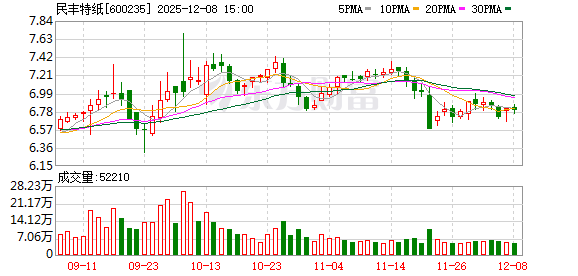
民丰特纸:人民币升值有利于降低公司成本
Zheng Quan Ri Bao· 2025-12-08 12:11
Group 1 - The core viewpoint is that the appreciation of the RMB is beneficial for the company as it helps to reduce costs under the same conditions [2]

美元跌势不止!人民币在岸价逼近7.2大关,或成更值钱的全球资产
Sou Hu Cai Jing· 2025-12-08 03:58
Core Viewpoint - The recent appreciation of the Renminbi (RMB) against the US dollar is attributed to a combination of internal and external factors, indicating a potential shift towards a stronger currency era for China [1][3]. Group 1: External Factors - The expectation of interest rate cuts by the Federal Reserve has created a favorable environment for the RMB, as recent US employment data has shown a weaker job market, increasing speculation about future rate reductions [3]. - Potential new leadership at the Federal Reserve advocating for monetary easing could lower the federal funds rate from 3.75-4% to below 3%, which would further weaken the US dollar and allow for appreciation of non-USD currencies [3]. Group 2: Internal Factors - The improvement in trade relations, particularly the easing of tariffs on Chinese exports to the US, has significantly alleviated export pressures, especially following a new trade agreement reached in late October [5]. - The People's Bank of China has strategically reduced its holdings of US Treasury bonds and ensured sufficient dollar reserves for corporate settlement needs, while domestic companies continue to repatriate earnings from overseas operations, addressing foreign exchange concerns [5][7]. Group 3: Market Dynamics - The strong performance of the A-share market has attracted substantial foreign capital inflows, increasing demand for the RMB. The central bank's guidance through the midpoint rate and corporate currency settlement practices have amplified the appreciation momentum [7]. - The competitive landscape of manufacturing has shifted from solely relying on labor cost advantages to a focus on comprehensive cost advantages, which China excels at, thereby reducing concerns about the impact of RMB appreciation on exports [9]. Group 4: Export Trends - China's export structure is evolving, with a significant increase in high-value products such as electric vehicles and industrial robots, leading to a reduced sensitivity of exports to exchange rate fluctuations [11]. - The transition from low-cost goods to high-end manufacturing enhances China's bargaining power in global supply chains, further solidifying the RMB's position [11][14]. Group 5: Long-term Support for RMB - The long-term strength of the RMB is supported by China's unique industrial independence, allowing it to avoid reliance on external supplies in most sectors, which is rare globally [13]. - As domestic consumption and industrial upgrades progress, the RMB's global demand is expected to rise, particularly if cross-border transactions increasingly utilize the RMB, thereby enhancing its international recognition [16].
外国投资者买入A股需求增强,“下一波上涨将由全球基金驱动”
Huan Qiu Wang· 2025-12-08 01:11
【环球网财经综合报道】临近年底,部分A股投资者趋于稳健,多位分析人士表示,叠加市场短期缺乏催化因素,业 内机构倾向于短期或以震荡蓄势为主,红利、大市值风格或是较优选择。 彭博社近日发文称,全球基金管理公司如安盛集团和摩根大通看好中国市场,认为外国投资者的需求增强,而随着盈 利改善和通缩压力缓解,科技巨头和消费行业都有反弹潜力。尽管存在估值差异,市场扩张的一部分动力来自国内储 蓄和政府支持,中国家庭的巨额存款和监管支持下的保险公司需求可能成为市场上涨的关键。 报道还提出,根据摩根士丹利的数据显示,今年11月,外国长期投资基金在香港和中国内地购买了约1000亿美元的股 票,逆转了2022年1700亿美元的流出。流入资金完全来自追踪指数的被动投资者,而主动基金经理则退出了大约1500 亿美元。 对此,新加坡富达国际的组合经理乔治·埃夫斯塔休洛普洛斯认为:"中国已经走出了困境,展现出更大的韧性,投资 者越来越接受一个可以提供多元化和创新的'可投资'中国。我现在更倾向于在市场下跌时买入中国股票。" 美国银行亚太区股票策略主管吴妮则表示:"中国的下一波上涨将由全球基金驱动。" 中信证券则表示,去年"9.24行情"以来,两 ...