绿色转型

Search documents
驻马店千亿级产业集群激活制造新引擎
He Nan Ri Bao· 2026-01-11 23:28
Core Viewpoint - The city of Zhumadian is transitioning from an agricultural hub to a manufacturing powerhouse, focusing on high-quality development in the manufacturing sector and creating a diverse industrial upgrade landscape [1][4]. Group 1: Agricultural Transformation - Zhumadian is leveraging its agricultural advantages to enhance value chains, with local corn being processed into high-value products like crystalline glucose and lysine, achieving over 95% capacity utilization in its production lines [1]. - The company Wang Shouyi Thirteen Spices is modernizing traditional practices through automation and data analysis, responding to health consumption trends by developing low-salt and compound flavor products [2]. Group 2: Modern Food Industry - By November 2025, the modern food cluster in Zhumadian is projected to generate over 40 billion yuan, solidifying its role as a key foundation for the manufacturing sector [2]. - The city's industrial clusters, including equipment manufacturing and modern chemicals, have seen output from large enterprises exceed 120 billion yuan, with a year-on-year growth of 6.31% [2]. Group 3: Pharmaceutical and Life Sciences - Tianfang Pharmaceutical is advancing in the life sciences sector, with two new drugs entering clinical trials and a nearly 30% increase in R&D investment [2]. - Zhumadian is establishing a complete industrial chain from raw materials to finished pharmaceuticals, positioning itself as a significant player in the antibiotic raw material market [2]. Group 4: New Energy Sector - The company Penghui Power Technology is producing 65,000 units of 40135 large cylindrical batteries daily, with explosive growth in the energy storage sector [3]. - The establishment of leading companies in the new energy sector has attracted numerous supporting enterprises, creating a comprehensive battery industry chain in Zhumadian [3]. Group 5: Niche Markets and Innovation - The company Wanhua Livestock Equipment has developed automated farming equipment that significantly increases efficiency, with a 40% year-on-year growth in orders since December [3]. - In the violin production sector, over 150 companies in Zhumadian contribute to 80% of the national output, generating an annual output value of 830 million yuan [3]. Group 6: Overall Industrial Development - Zhumadian is enhancing innovation platforms, nurturing leading enterprises, and optimizing the business environment to support industrial growth [4]. - The rise of billion-yuan industrial clusters signifies a profound industrial transformation and indicates a promising future for high-quality development in Zhumadian [4].
财经观察:日本造船巨头并购,能追赶中韩吗
Huan Qiu Shi Bao· 2026-01-11 22:46
Core Viewpoint - The acquisition of Japan Marine United Corporation (JMU) by Imabari Shipbuilding marks a significant consolidation in Japan's shipbuilding industry, aiming to enhance competitiveness against Chinese and Korean rivals and restore Japan's global market share in shipbuilding [1][2][3] Industry Consolidation - Imabari Shipbuilding has increased its stake in JMU to 60%, making JMU a subsidiary, which will allow for deeper collaboration in procurement and production [1] - The merger is seen as the largest consolidation in Japan's shipbuilding sector in decades, occurring at a critical time for the industry's survival [1][3] - The Japanese shipbuilding industry is undergoing significant restructuring, with companies like Mitsui E&S Shipbuilding reducing operations and focusing on ship repairs [3] Government Support and Strategic Goals - The Japanese government has identified shipbuilding as a strategic industry, aiming to revitalize it as part of its economic security policy, with a target investment of 1 trillion yen (approximately 441.9 billion RMB) [2] - Japan's shipbuilding capacity is currently around 9 million gross tons, with a goal to double this to 18 million gross tons by 2035 [2] - The government aims to increase Japan's global market share from approximately 13% to around 20% [2] Challenges and Competitive Landscape - Japan's shipbuilding industry faces structural challenges, including labor shortages and higher production costs compared to competitors in China and Korea [6][7] - The industry has seen a decline in market share due to aggressive investments and strategic initiatives by Chinese and Korean shipbuilders [5][6] - Japan's shipbuilding capacity has decreased from 16 million gross tons in 2019 to 9 million gross tons in 2024, leading to concerns about meeting domestic demand [5] Technological and Market Position - Despite challenges, Japan retains strengths in specific areas such as bulk carrier design and construction, as well as advancements in green technologies like ammonia and hydrogen fuel [8][9] - The collaboration between Imabari and JMU aims to leverage their combined strengths in technology and production to enhance competitiveness in the global market [10] - The focus on integrating advanced technologies and automation is crucial for Japan to maintain its position in the shipbuilding industry [7][10]
坚持“双碳”引领,推动全面绿色转型(稳中求进、提质增效 实现“十五五”良好开局)
Ren Min Wang· 2026-01-11 22:25
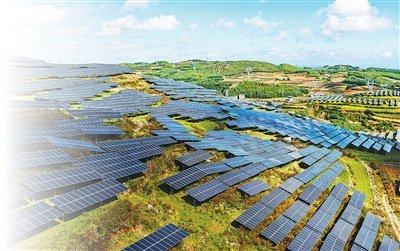
本报记者 董丝雨 蒋雪鸿 高山村,光伏板遍布山头。 罗喜贵摄 广西梧州市苍梧县六堡镇六堡村的智慧农业茶园气象监测设备。 颜桂海摄 贵州毕节市威宁彝族回族苗族自治县双龙镇 甘肃张掖市临泽县的"三北"防护林网。 王 将摄 数据来源:自然资源部、生 态环境部、水利部等 推动经济社会发展绿色化、低碳化是实现高质量发展的关键环节。 "十五五"规划建议提出,"加快经济社会发展全面绿色转型,建设美丽中国。"中央经济工作会议部 署"坚持'双碳'引领,推动全面绿色转型"的重点任务。 落实中央经济工作会议精神,各地各部门坚定不移走生态优先、节约集约、绿色低碳高质量发展道路, 协同推进降碳、减污、扩绿、增长,实现高水平保护、高品质环境、高质量发展良性互动、相得益彰。 有计划分步骤实施碳达峰行动 中央经济工作会议提出,"深入推进重点行业节能降碳改造。制定能源强国建设规划纲要,加快新型能 源体系建设,扩大绿电应用。加强全国碳排放权交易市场建设。" 在"双碳"目标引领下,我国经济社会发展绿色转型驶入快车道。 重点行业节能降碳改造进程提速。 辽宁本溪市的鞍钢集团本钢板材公司,通过"电炉+转炉"短流程低碳冶金工艺生产出的汽车钢,可实现 综合 ...

大宗商品市场品类走势泾渭分明
Jing Ji Ri Bao· 2026-01-11 21:46
Group 1: Market Overview - The global commodity market in 2025 exhibited a stark divergence, with precious metals experiencing a significant bull market while oil and black commodities faced oversupply issues [1] - Precious metals, particularly gold and silver, saw remarkable price increases, with gold rising over 60% and silver soaring 102% [2] - The agricultural market showed mixed results, with oilseeds benefiting from biofuel policies while grains remained subdued due to ample supply [1] Group 2: Precious Metals - Gold and silver emerged as the strongest sectors, driven by "de-dollarization" and interest rate cuts, leading to a substantial increase in gold purchases by central banks [2] - Central banks net purchased 634 tons of gold in the first three quarters of 2025, significantly above pre-2022 averages [2] - The global gold ETF holdings increased by over 700 tons, reaching a total of 3932 tons, marking a record annual growth [2] Group 3: Base Metals - Copper and aluminum prices strengthened due to a balanced supply-demand dynamic, with copper prices reaching a historical high of 13,387.5 USD/ton [3] - A projected cumulative copper mine deficit of 3.13 million tons from 2026 to 2029 is anticipated due to supply instability [3] - Demand for copper related to green transition initiatives is significant, with investments in electric grids and data centers driving consumption [3] Group 4: Oil and Black Commodities - The oil market is characterized by a significant oversupply, with a daily surplus of 1.795 million barrels expected in 2025 [4] - The black commodities sector, particularly steel, is struggling, with steel mill profitability dropping from 68.4% to 36.4% [4] - Diesel markets are experiencing strength due to reduced Russian exports, despite overall oil market challenges [4] Group 5: Agricultural Products - Oilseeds are performing well, driven by increased biofuel blending ratios in Indonesia and Brazil, leading to an 8% growth in industrial consumption [4] - Other agricultural products, such as corn and soybeans, are expected to see price declines due to favorable supply conditions [4] Group 6: Future Outlook - The commodity market is expected to continue its divergent trends into 2026, influenced by a "weak recovery and loose monetary policy" macroeconomic backdrop [6] - Strategic security, green transition, and emerging demand are identified as key structural opportunities for investment in 2026 [6] - Precious metals and core base metals are projected to maintain strong support, while the oil market is expected to remain under pressure [6][7]
破局与新生:企业绿色转型攻坚记
Zhong Guo Zheng Quan Bao· 2026-01-11 20:49
Core Viewpoint - The green transformation of traditional manufacturing has entered a critical phase, driven by technological innovation and the necessity for systemic restructuring in response to carbon emission controls and market demands [1][4]. Group 1: Green Production and Technological Innovation - Traditional manufacturing is undergoing a significant transformation, with companies like Beixin Building Materials showcasing a green production model that eliminates pollution and enhances resource recycling [2][3]. - Beixin Building Materials has established a comprehensive management system focusing on energy, quality, environment, and safety, leading to reduced production costs and energy consumption [3]. - The company has achieved a 5.5% reduction in mineral wool board density, saving 814,300 cubic meters of natural gas annually and reducing CO2 emissions by 1,780 tons [3]. Group 2: Market Dynamics and Competitive Advantage - The green transformation is now a mandatory requirement for businesses, as highlighted by the introduction of new standards and policies that compel companies to adopt sustainable practices [4][6]. - Danfoss has successfully transformed its green initiatives from a cost center to a value engine, achieving over a 90% reduction in carbon emissions in China since 2019 [6]. - The company's green transformation efforts have become a competitive advantage, with carbon footprint reports serving as significant factors in bidding processes [6]. Group 3: Ecological and Economic Synergy - Longyuan Power's project in the Tengger Desert exemplifies the integration of ecological restoration with economic development, utilizing a "power generation and planting" model to enhance land use efficiency [7][8]. - The project has improved vegetation coverage and reduced sand erosion, demonstrating the dual benefits of ecological and economic gains [8]. - Longyuan Power's capacity for renewable energy has significantly increased, with a net addition of 2,274.19 MW in 2025, reflecting the company's growth in the green energy sector [8]. Group 4: Strategic Implications for the Industry - The ability to transition to green practices is becoming a critical factor for long-term resilience in the face of resource constraints and regulatory pressures [9]. - The collective efforts of companies like Beixin, Danfoss, and Longyuan illustrate a comprehensive approach to green transformation, emphasizing the need for innovation and strategic investment [9][10]. - This transformation is expected to convert development pressures into innovative opportunities, enhancing competitiveness and contributing to high-quality economic growth in China [10].
【滨州日报评论员文章】重点围绕“八个方面”提质增效
Xin Lang Cai Jing· 2026-01-11 15:08
Core Viewpoint - The main task of this year's economic work is to establish a "1+1388" work framework, focusing on enhancing quality and efficiency in eight key areas: expanding domestic demand, industrial upgrading, innovation-driven development, reform and opening up, coordinated development, green transformation, social welfare, and safety development [1][2][3]. Group 1: Expanding Domestic Demand - Emphasis on tapping into consumer potential, stimulating market vitality, and enhancing investment efficiency to promote demand expansion and quality improvement [1]. - Development of new consumption formats such as rural e-commerce and instant retail to encourage consumer spending [1]. Group 2: Industrial Upgrading - Support for the "5210N" modern industrial cluster to strengthen industrial groups and promote digital transformation [2]. - Focus on high-end traditional industries, large-scale emerging industries, and collaborative future industries to build a modern industrial system centered on advanced manufacturing [2]. Group 3: Innovation-Driven Development - Implementation of a "five-pronged" approach to enhance innovation capabilities and foster high-tech enterprises with significant R&D investment and market share [2]. - Development of production capacity tailored to local conditions and establishment of industry-education integration communities [2]. Group 4: Reform and Opening Up - Commitment to deepening reforms and expanding the open economy to enhance the business environment and stimulate high-quality development [2]. - Planning for new reform initiatives to inject vitality into the economy [2]. Group 5: Coordinated Development - Promotion of urbanization and rural revitalization, enhancing urban quality and strengthening county economies [2]. - Focus on regional integration and coordinated development across different areas [2]. Group 6: Green Transformation - Adherence to "dual carbon" goals and implementation of major national strategies to build a new energy system and promote pollution prevention [2]. - Efforts to create beautiful cities, villages, and rivers as part of a comprehensive green transformation [2]. Group 7: Social Welfare - Prioritization of social welfare to enhance public services and ensure high-quality population development [3]. - Continuous improvement of social security, medical insurance, and low-income support to increase public satisfaction [3]. Group 8: Safety Development - Focus on integrating safety into development and enhancing overall national security awareness [3]. - Strengthening social governance and risk prevention to build a resilient economy and society [3].
【财经分析】复苏态势强劲 “中国元素”耀眼“出海”拓展加速——德国会展业年度观察与展望
Xin Hua Cai Jing· 2026-01-11 02:57
Core Insights - Germany is a leading country in the global exhibition industry, with over 300 exhibitions planned for 2025, attracting more than 12.8 million visitors [1][2] - The exhibition industry in Germany is recovering strongly post-COVID, with a projected increase in the number of exhibitions and participants [2][6] - The presence of Chinese exhibitors is significant, with many leading exhibitions showcasing a high number of Chinese participants, indicating China's growing influence in various sectors [4][5] Industry Overview - The exhibition industry is a crucial infrastructure for Germany's export-oriented economy and international trade cooperation [2] - Major exhibitions like Hannover Messe and IFA focus on themes such as artificial intelligence and green transformation, reflecting current industry trends [3] - The German exhibition industry contributes over €30 billion annually to the economy and creates approximately 280,000 jobs [3] Trends and Developments - The number of exhibitions is gradually returning to pre-pandemic levels, with 320 exhibitions planned for 2026 [6] - There is a growing interest among exhibitors in emerging markets, with some shifting focus away from traditional German exhibitions [6][7] - German exhibition groups are expanding their operations internationally, with events planned in the Middle East and Asia, indicating a strategic shift towards global outreach [7] Chinese Participation - Chinese exhibitors are increasingly prominent in major German exhibitions, with significant numbers reported at events like Hannover Messe and the Munich Auto Show [4][5] - The influence of Chinese companies is recognized, with their innovative products attracting international attention [4] - Small and medium-sized Chinese enterprises are becoming key players in various sectors at these exhibitions [5]
2025年中国截止阀行业产业链、市场规模及未来趋势分析:存量设备更新与新项目扩建释放稳定需求,推动行业增长[图]
Chan Ye Xin Xi Wang· 2026-01-11 01:03
Core Viewpoint - The Chinese shut-off valve industry is projected to reach a market size of approximately 27.438 billion yuan in 2024, with a year-on-year growth of 7.29%, driven by both traditional industry upgrades and the expansion into emerging sectors [1][4]. Industry Overview - Shut-off valves, also known as gate valves, are essential control components in industrial pipeline systems, operating by moving a valve disc along a central line to control fluid flow [3]. - The main types of shut-off valves include straight-through, Y-type, angle, and three-way valves, each suited for different applications and flow conditions [3]. Market Size - The market size of the Chinese shut-off valve industry is expected to grow to approximately 27.438 billion yuan in 2024, reflecting a 7.29% increase from the previous year, supported by stable demand from traditional sectors and emerging industries [4][1]. Key Enterprises - The competitive landscape of the shut-off valve industry is characterized by leading companies such as Suzhou Neway, China Nuclear Suvalve, and Jiangsu Shentong, which hold significant market shares [4]. - Jiangsu Shentong reported a revenue of 1.638 billion yuan in the first three quarters of 2025, with a slight year-on-year increase of 0.22% [5]. - China Nuclear Suvalve achieved a revenue of 1.083 billion yuan in the same period, marking a 5.60% increase [6]. Industry Development Trends - The industry is accelerating towards smart and high-end transformation, integrating IoT, AI, and 5G technologies for real-time monitoring and adaptive control [7]. - Emerging sectors such as renewable energy, semiconductors, and hydrogen energy are driving new demand for shut-off valves, particularly in hydrogen storage and semiconductor gas applications [7]. - Environmental policies and regulations are promoting a green transition in the industry, with increased demand for energy-efficient and low-leakage valves [8].

实施节能降碳改造 聚焦重点环节赋能 江苏徐州推动工业增绿添智
Jing Ji Ri Bao· 2026-01-10 21:52
Group 1 - Jiangsu Province's Xuzhou City is focusing on cultivating innovative industrial clusters to accelerate the transformation and upgrading of the manufacturing industry, shifting from resource dependence to innovation-driven development [1] - Greer Digital Technology Co., Ltd. in Xuzhou High-tech Zone has installed photovoltaic power generation equipment on its roof, generating an average of 2.5 million kilowatt-hours annually, which meets over 60% of the plant's electricity needs [1] - The company has improved the efficiency of its new energy power generation system to 98% by integrating advanced artificial intelligence algorithms and blockchain technology, while reducing production energy consumption by over 30% [1] Group 2 - Traditional high-energy-consuming industries in Xuzhou are achieving green and intelligent transformation through technological innovation, with Xuzhou Steel Group reporting a 13.82% reduction in particulate emissions and a 12.98% reduction in sulfur dioxide emissions due to low-emission upgrades [2] - The city has implemented 548 "smart transformation and digital networking" projects and established a dynamic cultivation database for green factories, creating 92 provincial-level green factories and 5 green parks [2] - Xuzhou has also set up an energy-saving and carbon-reduction project database, rolling out hundreds of energy-saving and carbon-reduction projects annually to promote the green transformation of traditional industries and enhance efficiency [2]
利好来了!上海重磅发布,事关商业航天、机器人……
Zheng Quan Shi Bao· 2026-01-10 08:38
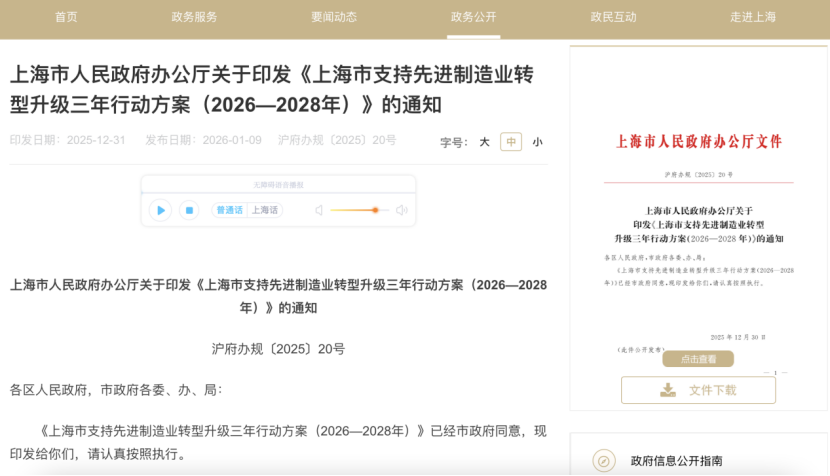
Core Viewpoint - The Shanghai Municipal Government has released a three-year action plan (2026-2028) to support the transformation and upgrading of advanced manufacturing, focusing on structural optimization, innovation, and resource support. Group 1: Action Plan Overview - The action plan aims to add 100 manufacturing enterprises with an annual output value exceeding 1 billion yuan by 2028, totaling over 600 such enterprises, and to drive the addition of 500 large-scale industrial enterprises in the supply chain [2] - The plan emphasizes the development of new-generation electronic information, smart connected vehicles, high-end equipment, advanced materials, and green low-carbon industries [2][3] Group 2: Key Industry Focus - The action plan encourages investment in emerging fields such as low-altitude economy, commercial aerospace, embodied intelligence, biomanufacturing, and smart terminals, aiming to overcome bottlenecks in the industrial scale development of innovative products like eVTOLs, commercial rockets, and humanoid robots [1][2] - It supports integrated circuit companies to achieve breakthroughs across the entire industry chain, focusing on equipment, advanced processes, and materials [2] Group 3: Innovation and Research Support - The plan proposes financial incentives for companies increasing their basic research investments, with subsidies ranging from 200,000 to 1 million yuan based on the level of investment [4][5] - It encourages the establishment of research centers and collaboration with universities and research institutions to enhance technological innovation [5] Group 4: Digital and Intelligent Manufacturing - The action plan includes initiatives to promote AI in manufacturing, aiming for large enterprises to achieve full coverage of digital applications by 2027 and to increase robot density to 600 units per million people by 2028 [5][6] - It outlines a new round of smart factory initiatives, targeting a 70% digitalization level for smart manufacturing equipment by 2028 [5] Group 5: Green Transformation and Financial Support - The plan emphasizes green transformation, encouraging the development of low-carbon products and providing financial rewards for energy-saving upgrades [6] - It aims to create over 100 national-level green factories by 2028, with initial recognition receiving a one-time reward of 200,000 yuan [6] - Financial institutions are encouraged to offer lower-interest loans and customized insurance services for key technological equipment and new materials [6]