智能汽车

Search documents
均胜电子系列十三-中报点评:单二季度毛利率同环比双升,汽车电子及机器人关键零部件加速发展【国信汽车】
车中旭霞· 2025-09-02 16:03
Core Viewpoint - Junsheng Electronics is focusing on automotive safety and electronic systems, with a strong emphasis on profitability recovery and accelerated development in automotive electronics and robotics [2][4][11]. Financial Performance - In Q2 2025, the company achieved a revenue of 15.771 billion yuan, a year-on-year increase of 14.27% and a quarter-on-quarter increase of 8.20%, with a net profit of 367 million yuan, up 11.18% year-on-year and 7.85% quarter-on-quarter [4][11]. - For H1 2025, the total revenue reached 30.347 billion yuan, a year-on-year increase of 12.07%, with a net profit of 708 million yuan, up 11.13% year-on-year [11][12]. - The gross margin for Q2 2025 was 18.4%, up 2.7 percentage points year-on-year and 0.5 percentage points quarter-on-quarter [4][17]. Business Segments - The automotive safety system revenue for H1 2025 was 18.977 billion yuan, with a gross margin of 15.93%, up 1.99 percentage points year-on-year [4][11]. - The automotive electronics system revenue was 8.356 billion yuan, with a gross margin of 21.54%, up 2.17 percentage points year-on-year [4][11]. Order Growth - The company has a robust order backlog, with a total new order lifecycle amounting to 39.3 billion yuan, of which over 66% are related to new energy vehicles [6][41]. - In H1 2025, the new awarded projects had a total lifecycle value of approximately 31.2 billion yuan, with automotive safety business accounting for about 17.4 billion yuan and automotive electronics for about 13.8 billion yuan [6][41]. Strategic Initiatives - Junsheng Electronics is positioning itself as a "Tier 1" supplier in both automotive and robotics sectors, actively expanding into the embodied intelligent robotics industry [8][65]. - The company has established a wholly-owned subsidiary for humanoid robotics and is developing key components such as brain controllers and energy management modules [8][67]. Innovation and R&D - The company is committed to continuous innovation in automotive electronics, focusing on smart cockpit, intelligent driving, and new energy vehicle technologies [43][44]. - In the smart cockpit domain, Junsheng Electronics has successfully launched integrated solutions and is collaborating with leading automotive brands for product development [45][47]. Market Positioning - Junsheng Electronics is leveraging its global presence to support Chinese automotive brands in their international expansion and to provide intelligent solutions to overseas manufacturers [59][62].



拓邦股份(002139):25H1营收稳健增长,智能汽车、机器人相关新业务成长迅速
Great Wall Securities· 2025-09-02 10:52
Investment Rating - The investment rating for the company is "Buy" with a target of outperforming the industry index by more than 15% over the next six months [4][17]. Core Views - The company has shown steady revenue growth in the first half of 2025, with a revenue of 5.502 billion yuan, representing a year-on-year increase of 9.70%. However, the net profit attributable to the parent company decreased by 15.11% to 330 million yuan [2][3]. - The company is transitioning from a focus on functional implementation to providing scenario-based and intelligent solutions, leveraging its full-stack technical capabilities in smart control [2]. - The laser radar motor has achieved scale production, and the robotics-related business is growing rapidly, with a revenue increase of 22.72% in the robotics segment [3]. Financial Performance Summary - Revenue projections for the company are as follows: 8,992 million yuan in 2023, increasing to 15,959 million yuan by 2027, with a compound annual growth rate (CAGR) of approximately 15.9% [1]. - The net profit attributable to the parent company is expected to grow from 516 million yuan in 2023 to 1,177 million yuan in 2027, with a notable increase of 30.2% in 2024 [1][8]. - The company's return on equity (ROE) is projected to improve from 8.0% in 2023 to 12.6% in 2027, indicating enhanced profitability [1]. Business Segment Performance - The tools and home appliances segment generated revenue of 4.377 billion yuan in the first half of 2025, up 16.15%, with a gross margin of 22.22% [2]. - The digital energy and smart automotive business reported a revenue of 848 million yuan, down 16.98%, while the smart automotive segment saw a significant growth of 86.03% [3]. - The robotics segment achieved a revenue of 277 million yuan, reflecting a year-on-year increase of 22.72%, with a gross margin of 26.95% [3].

比亚迪(002594):2025年半年报点评:Q2利润有所下滑,出海业务稳步推进
Dongguan Securities· 2025-09-02 08:58
Investment Rating - The investment rating for BYD (002594) is "Buy" (maintained) [2][6]. Core Insights - The report highlights that BYD's total revenue for the first half of 2025 reached 371.28 billion yuan, a year-on-year increase of 23.3%, while the net profit attributable to shareholders was 15.51 billion yuan, up 13.8% year-on-year. However, the net profit for Q2 saw a decline of 29.9% year-on-year due to ongoing price wars in the domestic electric vehicle market [6]. - The report emphasizes the steady progress of BYD's overseas business, with a significant increase in export sales of new energy vehicles, which reached 545,000 units from January to July, marking a 133.5% year-on-year growth. The overseas revenue accounted for 36.5% of total revenue, with a gross margin of 19.8%, higher than the domestic market [6]. - The report also notes that BYD's R&D investment for the first half of 2025 was 30.9 billion yuan, a 53% increase year-on-year, supporting innovations in various advanced technologies [6]. Summary by Sections Financial Performance - In H1 2025, BYD's total revenue was 371.28 billion yuan, with a year-on-year growth of 23.3%. The net profit attributable to shareholders was 15.51 billion yuan, up 13.8% year-on-year. Q2 revenue was 200.92 billion yuan, a 14.0% year-on-year increase, but net profit fell by 29.9% year-on-year [6]. - The gross margin for Q2 2025 was 16.3%, down 2.4 percentage points year-on-year and 3.8 percentage points quarter-on-quarter [6]. Overseas Business - BYD's overseas sales of new energy vehicles reached 545,000 units from January to July, a 133.5% increase year-on-year. The overseas revenue for H1 2025 was 135.36 billion yuan, a 50.5% increase year-on-year [6]. R&D Investment - The company invested 30.9 billion yuan in R&D in H1 2025, which is nearly double its net profit, indicating a strong commitment to innovation in the automotive sector [6]. Future Profit Projections - The projected net profits for BYD from 2025 to 2027 are 47.64 billion yuan, 61.17 billion yuan, and 73.38 billion yuan, respectively, with corresponding PE ratios of 20.99, 16.35, and 13.63 [6][8].

赛力斯涨2.02%,成交额30.82亿元,主力资金净流出1828.82万元
Xin Lang Cai Jing· 2025-09-02 02:59
Core Viewpoint - The stock price of Seres has shown significant growth this year, with a notable increase in both short-term and long-term trading periods, indicating strong market interest and performance [2]. Company Overview - Seres Group Co., Ltd. is located in Shapingba District, Chongqing, and was established on May 11, 2007, with its listing date on June 15, 2016. The company primarily engages in the research, production, sales, and service of complete automobiles and their engines and components [2]. - The main revenue composition of Seres is 94.72% from complete automobiles and 5.28% from auto parts and others [2]. - The company is classified under the automotive industry, specifically in electric passenger vehicles, and is associated with concepts such as smart cars and solid-state batteries [2]. Stock Performance - As of September 2, Seres' stock price increased by 10.86% year-to-date, with a 9.09% rise over the last five trading days, 14.90% over the last 20 days, and 10.28% over the last 60 days [2]. - On September 2, the stock price reached 146.80 CNY per share, with a total market capitalization of 239.78 billion CNY [1]. Financial Performance - For the first half of 2025, Seres reported a revenue of 62.40 billion CNY, a year-on-year decrease of 4.06%, while the net profit attributable to shareholders was 2.94 billion CNY, reflecting a year-on-year increase of 81.03% [2]. - Since its A-share listing, Seres has distributed a total of 2.70 billion CNY in dividends, with 2.08 billion CNY distributed over the past three years [3]. Shareholder Information - As of June 30, 2025, the number of shareholders for Seres was 177,500, a decrease of 20.44% from the previous period, with an average of 8,505 circulating shares per person, an increase of 25.68% [2]. - Major institutional shareholders include Hong Kong Central Clearing Limited, which holds 54.83 million shares, and several ETFs, indicating a growing institutional interest in the company [3].

三花智控跌2.01%,成交额17.11亿元,主力资金净流出1.64亿元
Xin Lang Cai Jing· 2025-09-02 02:59
Company Overview - Zhejiang Sanhua Intelligent Control Co., Ltd. is primarily engaged in the business of refrigeration and air conditioning electrical components and automotive components, with a revenue composition of 63.88% from refrigeration and air conditioning parts and 36.12% from automotive parts [2] - The company operates through two segments: refrigeration and air conditioning electrical components, and automotive components, focusing on HVAC systems and automotive thermal management [2] Financial Performance - For the first half of 2025, the company achieved a revenue of 16.263 billion yuan, representing a year-on-year growth of 18.91%, and a net profit attributable to shareholders of 2.110 billion yuan, up 39.31% year-on-year [3] - The company has distributed a total of 8.321 billion yuan in dividends since its A-share listing, with 3.494 billion yuan distributed in the last three years [4] Stock Market Activity - As of September 2, the company's stock price was 31.25 yuan per share, with a market capitalization of 131.529 billion yuan [1] - The stock has increased by 34.35% year-to-date, with a 1.92% rise over the last five trading days and a 16.08% increase over the last 20 days [1] - The company has appeared on the "龙虎榜" (a list of stocks with significant trading activity) twice this year, the latest being on January 10 [1] Shareholder Structure - As of June 30, 2025, the number of shareholders increased to 258,000, with an average of 14,231 circulating shares per person, a decrease of 3.97% from the previous period [3] - Major shareholders include Hong Kong Central Clearing Limited and various ETFs, with some holdings increasing while others decreased [4]

智界及问界秋季新品发布会召开,英伟达发布全新机器人计算平台 | 投研报告
Zhong Guo Neng Yuan Wang· 2025-09-02 02:06
Core Insights - The retail volume of narrow passenger cars in August is estimated at approximately 1.94 million units, representing a month-on-month increase of 6.2% and a year-on-year increase of 2.0%, with new energy vehicle (NEV) retail expected to reach around 1.1 million units, achieving a penetration rate of 56.7% [1][2] Passenger Vehicles - From August 1 to 24, retail sales of passenger vehicles reached 1.285 million units, showing a year-on-year growth of 3% and a month-on-month growth of 3%; cumulative retail sales for the year stand at 14.031 million units, up 10% year-on-year [3] - Related stocks include BYD (002594), Geely Automobile (0175.HK), Xpeng Motors (9868.HK), Li Auto (2015.HK), Changan Automobile (000625), and Leap Motor (9863.HK) [3] New Energy Vehicles - During the same period, NEV retail sales were 727,000 units, reflecting a year-on-year increase of 6% and a month-on-month increase of 7%, with a penetration rate of 53.0%; cumulative retail sales for the year are 7.182 million units, up 27% year-on-year [3] - Related stocks include BYD (002594), Geely Automobile (0175.HK), Xinquan Co., Ltd. (603179), Xingyu Co., Ltd. (601799), Doli Technology (001311), Chuanhuan Technology (300547), and Wuxi Zhenhua (605319) [3] Smart Vehicles - On August 25, the launch event for new smart vehicles was held, introducing new models such as the Zhijie R7, Zhijie new S7, and the AITO M8 electric version; the new M5 was also unveiled [4] - The Smart Car Conference 2025 took place on August 28, focusing on new business opportunities, technological breakthroughs, and ecosystem development in the smart vehicle industry [4] - Related stocks include Seres (601127), Xpeng Motors (9868.HK), and Li Auto (2015.HK) [4] Heavy Trucks - In July, the actual sales of new energy heavy trucks reached 16,600 units, marking a year-on-year increase of 151.6%; from January to July, cumulative sales reached 95,900 units, up 179.3% year-on-year [5] - Related stocks include Weichai Power (2338.HK/000338), China National Heavy Duty Truck Group (000951/3808.HK), and Foton Motor (600166) [5] Robotics - NVIDIA launched the new Jetson Thor robotics computing platform, enabling real-time processing of high-speed sensor data and executing visual reasoning while running multiple generative AI models, enhancing the capabilities of robots for intelligent interaction with humans and the physical world [6] - Related stocks include Top Group (601689), Sanhua Intelligent Control (002050), Aikodi (600933), Zhongding Sealing Parts (000887), Jingzhan Technology (300258), Fuda Co., Ltd. (603166), Junsheng Electronics (600699), Haoneng Co., Ltd. (603809), and New Coordinates (603040) [6]

汽车行业周报:智界及问界秋季新品发布会召开 英伟达发布全新机器人计算平台
Xin Lang Cai Jing· 2025-09-01 10:47
Group 1: Passenger Vehicles - In August, the retail sales of narrow passenger vehicles are estimated to be approximately 1.94 million units, representing a month-on-month increase of 6.2% and a year-on-year increase of 2.0%, with new energy vehicle retail expected to reach around 1.1 million units and a penetration rate of 56.7% [1] - From August 1 to 24, retail sales of passenger vehicles reached 1.285 million units, a year-on-year increase of 3% and a month-on-month increase of 3%, with cumulative retail sales for the year at 14.031 million units, a year-on-year increase of 10% [2] Group 2: New Energy Vehicles - From August 1 to 24, retail sales of new energy passenger vehicles reached 727,000 units, showing a year-on-year increase of 6% and a month-on-month increase of 7%, with a penetration rate of 53.0% and cumulative retail sales for the year at 7.182 million units, a year-on-year increase of 27% [2] Group 3: Smart Vehicles - On August 25, a new product launch event for smart vehicles was held, introducing new models including the Zhijie R7 and the AITO M8 electric version, with the new AITO M5 also being released [3] - The Smart Vehicle Conference 2025 took place on August 28, focusing on new business opportunities, technological breakthroughs, and ecosystem development in the smart vehicle industry, indicating rapid development in automotive intelligence [3] Group 4: Heavy Trucks - In July, the actual sales of new energy heavy trucks in China reached 16,600 units, a year-on-year increase of 151.6%, with cumulative sales from January to July at 95,900 units, a year-on-year increase of 179.3% [4] - The sales of new energy heavy trucks are expected to continue to rise due to technological maturity and improved infrastructure [4] Group 5: Robotics - NVIDIA launched a new robotic computing platform, Jetson Thor, which enables real-time processing of high-speed sensor data and execution of visual reasoning, allowing robots to run multiple AI workflows and interact intelligently with humans and the physical world [4]
汽车行业周报:小鹏全新P7验证产品力,量变已现,质变可期-20250901
Shanghai Aijian Securities· 2025-09-01 10:41
Investment Rating - The automotive industry is rated as "Outperform" compared to the market index [3][11]. Core Insights - The automotive sector saw a weekly increase of 0.35%, with the A-share automotive index closing at 7,839.3 points, ranking 14 out of 31 sectors. In comparison, the CSI 300 index rose by 2.71% to 4,496.8 points [3][4]. - The new XPeng P7 has demonstrated strong product capabilities, achieving over 10,000 pre-orders within 7 minutes of its launch. The vehicle is positioned in the mid-to-high-end electric market, featuring advanced AI technology and impressive performance metrics [3][6]. - The sales structure of XPeng is improving, with Q2 2025 revenue reaching 18.27 billion yuan, a year-on-year increase of 125.3%. The gross margin for vehicles is 14.3%, with an overall gross margin of 17.3% [3][6]. - XPeng plans to expand its presence internationally, targeting 60 countries by 2025 and aiming to become one of the top three exporters of new energy vehicles from China by 2027 [3][6]. - The potential for Robotaxi deployment is significant, with plans for mass production of L4 level autonomous vehicles by 2026 [3][6]. Summary by Sections Industry Performance - The automotive sector's weekly performance was +0.35%, with commercial vehicles leading at +1.33% and automotive services declining by -3.93% [4][6]. - The top-performing stocks in the A-share automotive sector included Tianpu Co. (+61.06%) and Haoen Electric (+58.28%) [7]. Company Insights - XPeng's new P7 model features three self-developed AI chips, achieving a computing power of 2250 TOPS, significantly surpassing industry standards [3][6]. - The company is enhancing its charging infrastructure, with a goal of over 10,000 self-operated charging stations by 2026 [3][6]. - The sales distribution indicates a shift towards higher-end models, with the G7 model achieving the highest sales in its class shortly after launch [3][6]. Market Outlook - The report suggests a focus on leading smart vehicle manufacturers that leverage AI and computing power to create user experience barriers, recommending attention to companies like Xiaomi, XPeng, and Li Auto [3][6]. - The report also highlights the potential for domestic state-owned enterprises to improve performance through reform and new product cycles, recommending companies like SAIC Motor and Dongfeng Motor [3][6].

理想汽车(02015) - 自愿公告 2025年8月交付更新资料
2025-09-01 10:00
香港交易及結算所有限公司及香港聯合交易所有限公司對本公告的內容概不負責,對其準確性 或完整性亦不發表任何聲明,並明確表示概不會就本公告全部或任何部分內容而產生或因倚賴 該等內容而引致的任何損失承擔任何責任。 Li Auto Inc. 理想汽車 (於開曼群島註冊成立以不同投票權控制的有限責任公司) (股份代號:2015) 自願公告 2025年8月交付更新資料 於2025年9月1日,中國新能源汽車市場的領導者理想汽車(「理想汽車」或「本公 司」)(納斯達克:LI;香港交易所:2015)宣佈,2025年8月,理想汽車交付新車 28,529輛。截至2025年8月31日,理想汽車歷史累計交付量為1,397,070輛。 香港,2025年9月1日 9月,理想汽車將發佈純電SUV-理想i6,定價人民幣25萬元至30萬元價格區 間。此外,隨著9月OTA 8.0版本更新,理想汽車的VLA司機大模型將全量推送給 所有理想AD Max用戶,理想同學智能體也將全面進化。 截至2025年8月31日,理想汽車在全國已有543家零售中心,覆蓋156個城市;售 後維修中心及授權鈑噴中心536家,覆蓋222個城市。理想汽車在全國已投入使用 3, ...

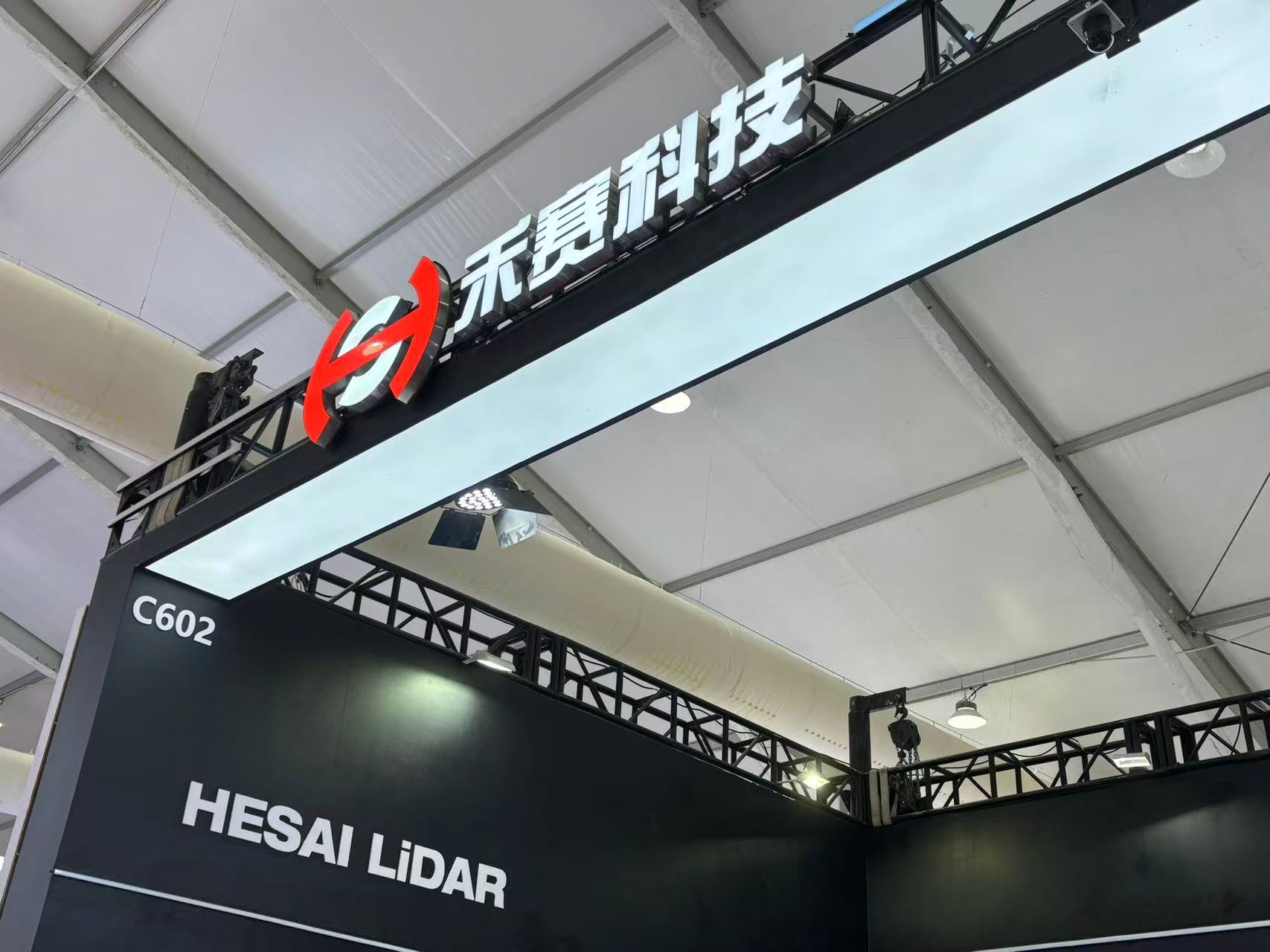
禾赛科技通过港交所聆讯 有望实现“美股+H股”双重上市
Mei Ri Jing Ji Xin Wen· 2025-09-01 08:33
Core Viewpoint - Hesai Technology is planning to go public in Hong Kong after successfully listing on NASDAQ earlier this year, aiming to establish a dual listing structure with significant growth in revenue and delivery volumes in the laser radar sector [1][2]. Company Summary - Hesai Technology has submitted an application to issue up to 51.2362 million shares for its Hong Kong listing, following its NASDAQ debut in February 2023 [1]. - The company's stock price has seen an 86.47% increase year-to-date, although it recently experienced a decline of 3.95% to $25.77 per share, with a total market capitalization of $3.414 billion [1]. - In Q2 2023, Hesai reported revenue of 706 million yuan, a year-on-year increase of 54%, and a net profit of 44 million yuan, marking a turnaround from a loss of 72 million yuan in the same period last year [1]. Industry Summary - The demand for laser radar in the automotive sector is surging, with projections indicating that the domestic installation of laser radars will exceed 1.5 million units in 2024, a year-on-year increase of 179.7%, and reach 2.5 million units by the end of 2025 [5]. - In the first half of 2025, Hesai's total laser radar deliveries reached 547,900 units, a remarkable year-on-year growth of 276.2%, surpassing the total deliveries for 2024 [2]. - The average price of laser radars has decreased significantly, with Hesai's ATX model seeing a price drop of 50%, now available at $200 per unit, making it more accessible for automotive manufacturers [5]. - Despite the declining prices, automotive companies are still weighing the benefits of multi-sensor fusion against pure vision solutions, with laser radar providing an additional layer of safety for intelligent driving systems [5][6]. - The CEO of Yuanrong Qihang emphasized that while laser radar remains irreplaceable for obstacle recognition in the short term, advancements in model capabilities may lead to a gradual replacement by vision-based solutions in the long term [5][6].