智能驾驶

Search documents
周观点 | 2025Q4前瞻:以旧换新政策延续 板块表现分化【国联民生汽车 崔琰团队】
汽车琰究· 2026-01-18 15:41
Market Performance - The automotive sector outperformed the market this week, with the A-share automotive sector rising by 0.5%, ranking 12th among Shenwan sub-industries, compared to the CSI 300 which fell by 0.9% [3] - Within the sub-sectors, automotive services and automotive parts increased by 4.5% and 1.8% respectively, while commercial passenger vehicles, commercial freight vehicles, motorcycles, and passenger cars saw declines of -1.1%, -1.3%, -1.7%, and -1.9% respectively [3] Investment Recommendations - The core investment recommendations for this month include Geely Automobile, Xpeng Motors, BYD, Berteli, Top Group, New Spring Co., and Chunjun Power [4] 2025Q4 Outlook - Total wholesale sales of passenger vehicles are expected to be 8.748 million units in 2025Q4, a year-on-year decrease of 1.3% but a quarter-on-quarter increase of 13.8% [5] - In the new energy sector, wholesale sales of new energy passenger vehicles are projected to reach 4.46 million units, a year-on-year increase of 3.1% and a quarter-on-quarter increase of 10.9% [5] - Price competition is expected to ease, with discounts stabilizing and profitability improving [5] - Companies expected to perform well year-on-year in 2025Q4 include Seres, Xiaomi Motors, NIO, Leap Motor, and Geely [5] Components Sector - Revenue in the components sector is expected to be driven by strong performances from Xiaomi, Geely, and BYD, while costs are anticipated to decrease due to lower raw material prices and shipping costs [36] - The average global shipping cost in 2025Q4 is projected to be $3,484, a year-on-year decrease of 2.6% [38] - The performance of the components sector is expected to diverge significantly based on customer structure, with companies like Top Group and Hu Guang expected to perform well [41] Heavy Trucks - The heavy truck sector is expected to see continued recovery in demand, with wholesale sales projected at 231,000 units in 2025Q4, a year-on-year increase of 34.7% [42] - The market competition is expected to remain stable, with companies like FAW Group and Beiqi Foton gaining market share [43] Motorcycles - The wholesale sales of large-displacement motorcycles (over 250cc) are expected to be 191,000 units in 2025Q4, a year-on-year increase of 4.3% but a quarter-on-quarter decrease of 26.3% [60] - Domestic sales are projected to be 69,000 units, a year-on-year decrease of 5.2% [60] - Export sales are expected to reach 122,000 units, a year-on-year increase of 10.5% [60] Policy Impact - The continuation of the vehicle replacement policy is expected to stimulate demand, with subsidies for scrapping old vehicles remaining in place [33][64] - The new subsidy policy for 2026 will shift to a percentage of the vehicle price, which is expected to improve the structure of subsidized models [65][70]


智驾领域催化多,岚图与引望达成深化战略合作
CMS· 2026-01-18 13:01
Investment Rating - The report maintains a "Recommendation" rating for the automotive industry, indicating a positive outlook for the sector [5]. Core Insights - The automotive industry experienced an overall increase of 0.7% from January 11 to January 17, with significant developments in the smart driving sector, including strategic partnerships and advancements in autonomous vehicle technology [1][9]. - The report highlights that China's automotive production is projected to reach 34.53 million units and sales to hit 34.4 million units in 2025, marking a historical high and maintaining its position as the world's largest automotive market [26]. - The report emphasizes the growing importance of electric vehicles, with projections indicating that over 50% of new car sales will be electric or hybrid by 2025 [26]. Market Performance Overview - The automotive sector's performance was mixed, with the automotive services segment showing the highest weekly increase of 3.4%, while motorcycle and passenger vehicle segments experienced declines of 2.0% and 1.7%, respectively [2][13]. - Individual stocks within the automotive sector saw significant fluctuations, with notable gainers including Aikelan (+40.5%) and Jiaoyun Shares (+39.3%), while Tianpu Shares (-25.3%) and Yueling Shares (-15.4%) faced substantial losses [3][17]. Industry Dynamics - Key partnerships in the smart driving field were established, such as the collaboration between Lantu and Huawei's subsidiary, focusing on the development of intelligent driving and cockpit technologies [9][28]. - The report notes that Uber is set to launch a customized autonomous taxi service in San Francisco, marking its entry into the autonomous ride-hailing market [29]. - The report also mentions that Xpeng plans to establish a localized supply chain team in Europe and ASEAN markets to enhance operational efficiency and support local production [29]. Future Projections - The report forecasts a slight increase in domestic automotive sales to 34.75 million units in 2026, reflecting a 1% growth from the previous year [26]. - The report indicates that the Chinese automotive industry is expected to maintain its competitive edge globally, with a significant portion of sales driven by the domestic market [25][26].
交通运输行业周报:2025年快递业务量同比增长13.7%,上海发布智驾利好政策-20260118
SINOLINK SECURITIES· 2026-01-18 07:29
Investment Rating - The report recommends "Buy" for the logistics sector, specifically highlighting companies such as SF Express and ZTO Express due to their valuation and operational resilience [2][3]. Core Views - The express delivery industry is expected to see a business volume growth of 13.7% year-on-year in 2025, with major companies benefiting from price increases amid reduced competition [2]. - The logistics sector is experiencing a recovery in demand, supported by favorable policies for intelligent driving in Shanghai, which is expected to enhance operational efficiency [3]. - The aviation sector is projected to benefit from improved supply-demand dynamics, with airlines like China Southern Airlines and Air China recommended for investment due to their profit potential [4]. - The shipping industry shows signs of stabilization, with container shipping rates experiencing slight increases, although overall rates remain lower compared to previous years [5]. Summary by Sections Transportation Sector Overview - The transportation index fell by 1.2% during the week of January 10-16, 2026, underperforming the Shanghai Composite Index by 0.6% [12]. Express Delivery - In 2025, the express delivery business volume is projected to reach 1.5 trillion yuan, with a year-on-year growth of 6.5% in revenue [2]. - The total volume of postal express collected was approximately 4.107 billion pieces, with a week-on-week increase of 7.1% [2]. Logistics - The chemical product price index (CCPI) was reported at 4024 points, with a year-on-year decrease of 7.7% [3]. - The opening rates for key chemicals such as paraxylene and methanol showed slight increases, indicating a stable production environment [3]. Aviation - The average daily flights in China decreased by 5.66% year-on-year, with domestic flights down by 6.18% [4]. - The Brent crude oil price was reported at $64.13 per barrel, reflecting a year-on-year decrease of 19.76% [4]. Shipping - The China Containerized Freight Index (CCFI) was at 1209.85 points, showing a week-on-week increase of 1.3% but a year-on-year decrease of 22.5% [5]. - The Baltic Dry Index (BDI) was reported at 1586.4 points, with a year-on-year increase of 51.2% [5]. Road and Rail - National highway freight traffic saw a week-on-week increase of 17.3%, although year-on-year figures showed a decline of 2.02% [5]. - The total railway freight volume for November 2025 was 4.6 billion tons, reflecting a year-on-year increase of 1.16% [78].
全球仅2家!广东1.85万亿产业托底,杀出美股+港股双上市智驾巨头
2 1 Shi Ji Jing Ji Bao Dao· 2026-01-18 00:57
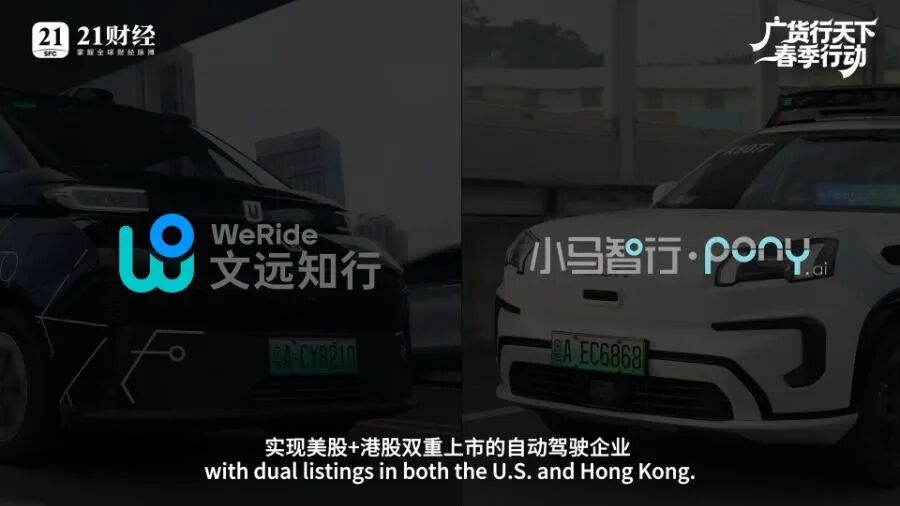
智能驾驶早就不是未来概念 而是刻进日常的出行标配 在广州黄埔、南沙 无论是晚高峰的车流 人流 还是城中村的复杂道路 在广州 它都能像老司机一般从容穿梭 在全球智驾赛道强势突围 自动驾驶车也可以成为 机场到市中心的通勤标配 这里 诞生了引领世界的 智驾双雄 刚刚结束的十五运会 让这里的智驾技术 在世界面前集中亮相 广东正以 "双雄引领 全域协同" 的姿态 双雄崛起 从几个共享工位起步 小马智行在南沙开启了它的第一步 从2016年入驻南沙 2020年拿下一线城市测试许可 2025年11月6日 香港交易所迎来历史性一刻 小马智行与文远知行同日敲钟 成为全球仅有的两家 实现美股+港股双重上市的自动驾驶企业 九年间 小马智行成为中国首个 在北京、上海、广州、深圳四大一线城市 均提供自动驾驶出行服务的企业 截至2025年底 小马智行自动驾驶出租车车队规模超千台 与此同时 文远知行在全球11个国家 超40个城市 开展自动驾驶研发、测试及运营 其中,运营天数超2300天 这两家从广州科创土壤中 成长起来的企业 正在成为全球智驾赛道上的中国名片 更是"新广货"走向世界的亮丽代表 解码湾区 双雄崛起的背后是 广东1.85万亿元汽 ...
全球仅2家!广东1.85万亿产业托底,杀出美股+港股双上市智驾巨头
21世纪经济报道· 2026-01-18 00:51
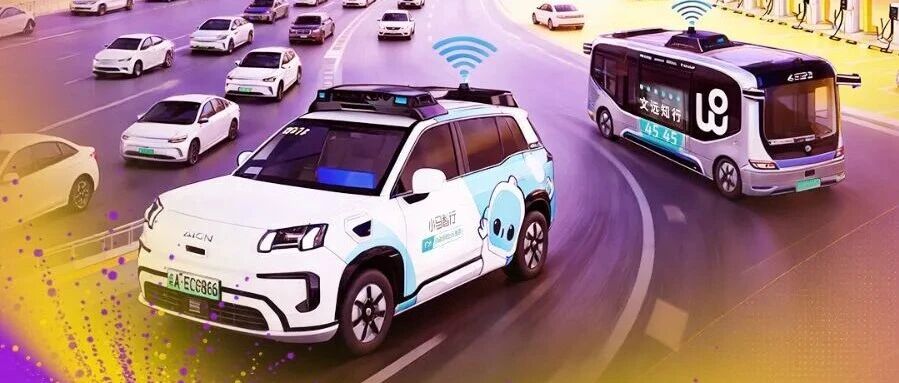
在广州 智能驾驶早就不是未来概念 而是刻进 日常 的出行标配 在广州黄埔、南沙 无论是晚高峰的车流 人流 还是城中村的 复杂道路 它都能像老司机一般 从容穿梭 自动驾驶车也可以成为 机场到市中心的 通勤标配 这里 诞生了引领世界的 智驾双雄 刚刚结束的十五运会 让这里的 智驾技术 在世界面前集中亮相 广东正以 "双雄引领 全域协同" 的姿态 在全球智驾赛道强势突围 双雄崛起 从几个共享工位起步 小马智行在南沙开启了它的第一步 在北京、上海、广州、深圳四大一线城市 均提供自动驾驶出行服务的企业 截至2025年底 小马智行自动驾驶出租车车队规模 超千台 与此同时 文远知行在全球 11 个国家 超 40 个城市 开展自动驾驶研发、测试及运营 其中,运营天数超2300天 是全球唯一旗下产品同时拥有 从2016年入驻南沙 2020年拿下一线城市测试许可 2025年11月6日 香港交易所迎来历史性一刻 小马智行与文远知行同日敲钟 成为全球仅有的两家 实现 美股+港股 双重上市的自动驾驶企业 九年间 小马智行成为中国首个 8个国家自动驾驶牌照的科技公司 这两家从广州科创土壤中 成长起来的企业 正在成为全球智驾赛道上的中国名 ...
回眸2025年,看见中国汽车业的向上力量
Bei Jing Ri Bao Ke Hu Duan· 2026-01-18 00:25
Core Insights - In 2025, China's automotive industry achieved record production and sales figures, with 34.53 million vehicles produced and 34.40 million sold, marking year-on-year growth of 10.4% and 9.4% respectively, showcasing resilience and vitality in the sector [1] - The year marked a significant shift in the market, with new energy vehicles (NEVs) surpassing 50% of domestic new car sales, indicating their transition from niche products to mainstream market leaders [2][3] - The automotive export volume exceeded 7 million units, with NEV exports reaching 2.615 million units, reflecting a robust growth trajectory and the establishment of overseas markets as new growth drivers [2][11] New Energy Vehicles (NEVs) as Market Leaders - NEVs accounted for 50.8% of domestic new car sales in 2025, with production and sales reaching 16.626 million and 16.49 million units respectively, representing year-on-year growth of 29% and 28.2% [3] - The competitive landscape has shifted, with domestic brands capturing nearly 70% of the passenger car market share, marking a significant reversal against joint venture brands [3][4] Technological and Policy Support - The growth of NEVs is attributed to supportive policies, technological advancements, and a well-structured supply chain, with over 11.5 million vehicles replaced under the trade-in policy, contributing to a sales boost of over 1.6 trillion yuan [5] - Innovations in technology have led to improved vehicle performance, with average electric vehicle ranges reaching around 500 kilometers and significant reductions in battery costs and charging times [6] Smart Driving Developments - The approval of the first L3-level conditional autonomous driving vehicles in December 2025 marks a pivotal moment in China's autonomous driving sector, transitioning from technology validation to mass production [7][9] - The penetration rate of vehicles equipped with L2-level driving assistance features reached 64% in the first three quarters of 2025, driven by decreasing costs and increased availability in lower-priced models [9] Global Expansion and Localization - China's automotive exports reached 7.098 million units in 2025, with a year-on-year increase of 21.1%, highlighting the importance of overseas markets for growth [11] - Localization efforts are intensifying, with over 20 Chinese automotive brands establishing manufacturing facilities in Thailand and Brazil, enhancing local production capabilities and supply chain integration [12] Market Competition Restructuring - The introduction of compliance guidelines aims to curb price wars and establish a more orderly competitive environment, shifting focus from price competition to quality and service [13][15] - The automotive industry is transitioning from a phase of scale expansion to one of quality enhancement, necessitating a comprehensive approach to governance and market regulation [15][16]

智驾双雄:大湾区杀出全球智驾新势力
2 1 Shi Ji Jing Ji Bao Dao· 2026-01-18 00:15
Core Insights - The article highlights the emergence of autonomous driving as a standard in daily transportation in Guangzhou, showcasing the capabilities of autonomous vehicles in complex urban environments [2][6] - It emphasizes the significant achievements of two leading companies, Pony.ai and WeRide, which have recently become the only two autonomous driving firms globally to achieve dual listings on both the US and Hong Kong stock exchanges [3][5] Group 1: Company Achievements - Pony.ai has become the first company in China to provide autonomous driving services in all four first-tier cities: Beijing, Shanghai, Guangzhou, and Shenzhen, with a fleet of over 1,000 autonomous taxis expected by the end of 2025 [5] - WeRide operates in over 40 cities across 11 countries, with more than 2,300 days of operational experience, holding autonomous driving licenses in eight countries, making it a unique player in the global market [5][6] Group 2: Industry Context - The growth of these companies is supported by Guangdong's robust automotive industry ecosystem, valued at 1.85 trillion yuan, which includes nine vehicle manufacturers and over a thousand parts suppliers [6] - The region has produced 2.25 million smart connected new energy vehicles during the 14th Five-Year Plan period, contributing to the establishment of a comprehensive ecosystem for autonomous driving technology [6][7] Group 3: Global Expansion - Guangdong's autonomous driving enterprises are expanding globally, with applications ranging from ground transportation to aerial vehicles, exemplified by XPeng's flying cars [7][10] - The article notes that the combination of a complete industrial chain and open application scenarios is reshaping the global smart driving industry landscape [10]
【回眸二〇二五】看见中国汽车业的向上力量
Jing Ji Ri Bao· 2026-01-17 23:13
Core Insights - In 2025, China's automotive industry demonstrated resilience and growth, achieving record production and sales figures, with production reaching 34.53 million vehicles and sales at 34.40 million, marking year-on-year increases of 10.4% and 9.4% respectively [1] - The year marked a significant shift in the market, with new energy vehicles (NEVs) accounting for over 50% of domestic new car sales, indicating a transition from niche to mainstream [2] - The automotive export sector also thrived, with exports surpassing 7 million vehicles, driven by technological innovation and a robust supply chain [10] New Energy Vehicles - NEVs achieved a domestic sales share of 50.8%, with production and sales figures of 16.63 million and 16.49 million respectively, reflecting year-on-year growth of 29% and 28.2% [2] - The competitive landscape shifted dramatically, with domestic brands capturing nearly 70% of the passenger car market, reversing the dominance of joint ventures [2][3] Technological Advancements - The automotive industry is undergoing a transformation driven by electrification and intelligent technology, with significant advancements in product performance and consumer acceptance [4][5] - Innovations in battery technology have led to a 30% reduction in battery costs and a 40% increase in lifespan, enhancing the competitiveness of Chinese automotive products [5] Intelligent Driving - The approval of L3-level conditional autonomous driving vehicles marks a pivotal moment in China's autonomous driving sector, transitioning from technical validation to mass production [6] - The penetration rate of vehicles equipped with Level 2 autonomous driving features reached 64%, with a year-on-year growth of 21.2% in the first three quarters of 2025 [8] Export Growth and Localization - China's automotive exports reached 7.1 million units in 2025, with NEV exports doubling to 2.615 million units, showcasing the global competitiveness of Chinese automotive products [10] - Localization strategies are being implemented, with over 20 Chinese automotive brands establishing manufacturing facilities in Thailand and other regions to enhance local production capabilities [11] Market Competition Dynamics - The introduction of compliance guidelines aims to curb price wars and establish a more orderly competitive environment, shifting the focus from price competition to quality and service [12] - The automotive industry is transitioning from a focus on volume to an emphasis on quality, with a profit margin of only 4.4% in the first eleven months of 2025, below the manufacturing industry average [12][13]
现代汽车计划将旗下高端化品牌引入中国市场;特斯拉在美国全自动驾驶交通违规调查中获准延期5周丨汽车交通日报
创业邦· 2026-01-17 11:05
Group 1 - Tesla has been granted a five-week extension by the U.S. National Highway Traffic Safety Administration to respond to an investigation regarding potential traffic violations by its Full Self-Driving (FSD) system, with the new deadline set for February 23 [2] - Hyundai plans to introduce its premium brand to the Chinese market, emphasizing its commitment to the region as a core part of its global strategy, with a goal of selling 500,000 vehicles annually by 2025 [2] - The automotive export structure in China is expected to optimize significantly by 2025, with a focus on enhancing core technology development and local production to improve global supply chain influence [2] Group 2 - A research team from Xi'an University of Electronic Science and Technology has developed a high-precision millimeter-wave radar antenna that enhances the perception capabilities of intelligent driving systems, based on foundational theories proposed by an academician from the Chinese Academy of Engineering [2]

半导体材料概念取得开门红 机构预测高增长半导体材料概念股梳理
Zheng Quan Shi Bao Wang· 2026-01-17 10:29
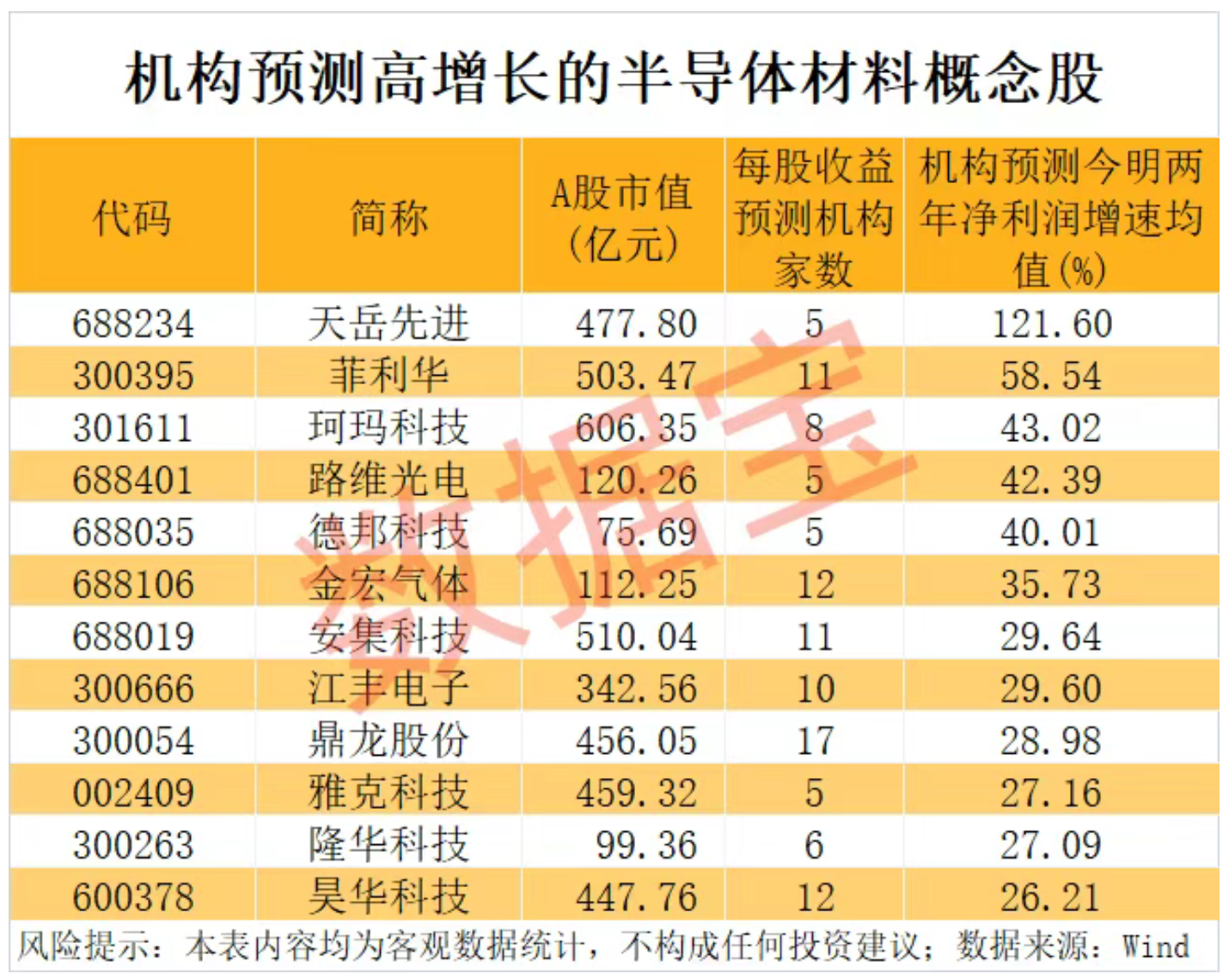
Group 1 - The semiconductor materials sector has shown strong performance in the secondary market, with an average increase of 21.15% since the beginning of 2026, significantly outperforming major indices such as the Shanghai Composite Index, ChiNext Index, and STAR Market 50 Index [1] - The current earnings forecast period has shifted investor focus towards performance, particularly in the context of rapid expansion in AI computing power, data centers, and smart driving sectors [1] - According to data, there are 12 semiconductor material stocks expected to achieve a net profit growth rate exceeding 20% in both 2026 and 2027, based on consensus forecasts from five or more institutions [1] Group 2 - Among the 12 high-growth semiconductor material stocks, Debang Technology and Haohua Technology have significant upside potential, with respective increases of 39.21% and 10.86% compared to their target prices as of January 16 [1] - The table lists several semiconductor material stocks along with their market capitalization in billions and the number of institutions providing earnings forecasts, indicating a diverse range of companies in this sector [2] - Notable companies include Tianyue Advanced, Feili Hua, and Kema Technology, with market capitalizations of 477.80 billion, 503.47 billion, and 606.35 billion respectively, highlighting the scale of these firms within the industry [2]