电动化转型

Search documents
观车 · 论势 || 跨国车企放缓,不影响全球电动化进程
Zhong Guo Qi Che Bao Wang· 2025-07-02 01:21
Core Viewpoint - The automotive industry, particularly multinational companies, is facing challenges in the profitability of electric vehicles (EVs), leading to a slowdown in their electrification efforts [1][2]. Group 1: Market Trends - Recent data indicates that global markets outside of China are experiencing declines in electric vehicle sales, with Europe seeing a 5.9% drop and South Korea's sales falling by 21.1% [2]. - The European Union has modified its "2035 ban on combustion engines," providing a three-year buffer for car manufacturers to meet carbon emission compliance targets [2]. Group 2: Company Performance - In Q1, Mercedes-Benz sold 529,200 vehicles globally, with only 45,500 being electric, while Audi delivered 388,800 vehicles, with electric models accounting for just 4.64 million [2]. - Despite the challenges, companies like Audi and Volvo are adapting their strategies, offering a diversified product mix that includes electric, hybrid, and internal combustion engine vehicles [3]. Group 3: China Market Dynamics - The Chinese market remains a critical focus for multinational companies, with expectations of over 31 million vehicles produced and sold in 2024, highlighting its strategic importance [2]. - Companies are increasing investments in China, as seen with Toyota's new Lexus factory in Shanghai and Mercedes-Benz's additional investment of 14 billion yuan [3].
BBA大幅降价 豪车格局要重新洗牌
Xi Niu Cai Jing· 2025-07-01 04:03
Core Viewpoint - The luxury automotive market, particularly the German trio of BBA (Benz, BMW, Audi), is experiencing a significant price drop due to the rise of electric vehicles and strong competition from domestic brands, leading to a collective price war that undermines their traditional premium positioning [3][4][6]. Price Cuts and Market Dynamics - Since 2025, BBA has engaged in aggressive price reductions, with Mercedes-Benz GLC seeing discounts up to 199,000 yuan, and the EQC dropping from 620,000 yuan to 220,000 yuan, a staggering decrease of 400,000 yuan [4][5]. - Audi's A4L has seen its price drop to the 200,000 yuan range, while the Q7's entry price has fallen below 500,000 yuan for the first time [4]. - BMW's 525Li has dropped to below 290,000 yuan, representing a 34% discount from its original price [5]. - The overall luxury car market is witnessing a collapse in pricing, with models like the Porsche Cayenne and Macan also seeing significant price reductions [5]. Impact of Electric Vehicles and Domestic Brands - The price decline is primarily driven by the competitive pressure from domestic electric vehicle brands, which are advancing rapidly in technology and market share [6][10]. - Domestic brands like Li Auto and AITO are offering advanced features that BBA's models lack, such as superior intelligent driving systems [7][8]. - BBA's sales in China are declining, with Mercedes-Benz down 7% to 683,600 units, BMW down 13.3% to 714,500 units, and Audi down 10.9% to 649,000 units in 2024 [10]. Challenges in Transformation - BBA is struggling with the transition to electric and smart vehicles, with significant investments required while their net profits are declining: Mercedes-Benz down 28.4%, BMW down 36.9%, and Audi down 33.1% [12]. - The lack of in-house battery production capabilities forces BBA to rely on expensive external suppliers, impacting their cost structure [12]. - BBA's attempts to collaborate with tech companies like Huawei for smart driving solutions may lead to a loss of brand identity and autonomy [13]. Strategic Responses - In response to the crisis, BBA plans to launch 36 new products from 2025 to 2027, with BMW aiming for a 20% efficiency improvement and Audi collaborating with Porsche on a new electric platform [11][12]. - Initial signs of recovery are noted, with models like the Audi Q4 e-tron and BMW i3 seeing increased orders after integrating advanced technologies [13]. Conclusion - The luxury car market's definition is shifting, and BBA's ability to reclaim its former status is increasingly uncertain, suggesting a potential long-term decline in brand value and consumer trust [14].

又一中国电池企业或拿下大众新订单!
起点锂电· 2025-06-30 11:24
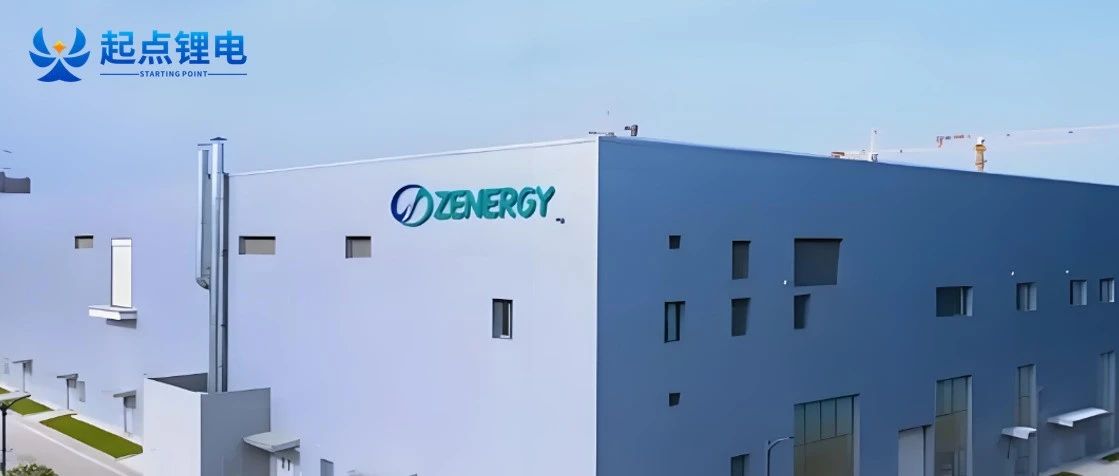
Group 1 - The article discusses the upcoming 2025 Fifth Electric Two-Wheeler Battery Swap Conference and Lightweight Power Battery Technology Summit, emphasizing the theme "Swap City, Smart Two-Wheelers" [2] - The event will take place on July 10-11, 2025, at the International Hall of the DENGXILU International Hotel in Bao'an, Shenzhen [2] - Various sponsors and partners are involved, including major companies like Yadea Technology Group, Tailling Group, and others in the battery and electric vehicle sectors [2] Group 2 - The article highlights the diversification of suppliers in Volkswagen's localization strategy, with the addition of Zhengli New Energy Battery Technology Co., Ltd. as a new battery supplier [3][4] - BYD's chairman predicts that the market share of joint venture brands will drop from 40% to 10% in the next 3-5 years due to the aggressive push of domestic brands [4] - Volkswagen's sales in China fell by 10% to 2.742 million units in 2024, with operating profit dropping 35% to €1.7 billion, marking a ten-year low [4] Group 3 - The article notes that Volkswagen plans to launch 40 new models in China from 2025 to 2027, with over half being electric vehicles [4] - The introduction of range-extended vehicles is highlighted, with over 50 models expected to be launched in 2024, addressing consumer concerns about range anxiety [5] - Zhengli New Energy's battery pack is identified as a core component for Volkswagen's upcoming range-extended SUV, ID.ERA, which will have a pure electric range of 350 km and a total range exceeding 1000 km [5] Group 4 - Zhengli New Energy's entry into the supply chain of a German automotive giant is seen as a significant opportunity for the company to expand its market share in the growing passenger vehicle segment [8] - The company went public in Hong Kong on April 14, with a market capitalization of approximately 25.888 billion [9] - Zhengli New Energy ranked ninth among domestic battery manufacturers in terms of installed capacity, with a total of 9.9 GWh in 2024 [9] Group 5 - The article mentions that over 60% of Zhengli New Energy's revenue in 2024 will come from lithium iron phosphate batteries, with significant contributions from plug-in hybrid electric vehicle (PHEV) batteries [10] - Zhengli New Energy has established partnerships with several major automakers, including SAIC-GM and others, to supply power batteries [10] - The company is expanding its production capacity, with a total design capacity of 25.5 GWh, and plans to increase this through new factory construction [11]
玛莎拉蒂品牌竟然也要被出售,国外市场豪华车开始“退潮”?
Zhong Guo Qi Che Bao Wang· 2025-06-30 08:46
Core Viewpoint - The luxury automotive brand Maserati, under Stellantis, is facing unprecedented challenges, leading to speculation about a potential sale as the company grapples with significant financial losses and strategic disagreements within its board [3][4][5]. Group 1: Maserati's Performance - Maserati's sales plummeted over 50% in 2024, with only 11,300 units sold, resulting in an operating loss of approximately $298 million [4][6]. - The brand's operational losses adjusted to €260 million, with a 48% decline in sales in the first three months of 2025 [6]. - Historically, Maserati achieved a peak global sales figure of 49,000 units in 2017, but has since seen a drastic decline in sales performance [7]. Group 2: Internal and External Challenges - Internal factors include a limited product line and slow model updates, which hinder Maserati's competitiveness against rivals like Porsche [7][8]. - External pressures stem from increasing competition in the luxury market, including traditional brands and the rise of electric vehicle manufacturers like Tesla, which are capturing market share [8][10]. - Economic instability and changing consumer preferences are also contributing to the decline in luxury vehicle sales, as consumers become more price-sensitive and practical in their purchasing decisions [9][10]. Group 3: Strategic Considerations - Stellantis is under pressure from investors to streamline its brand structure and improve profitability, with stock prices dropping nearly two-thirds since March 2024 [5]. - The board is divided on whether to sell Maserati, with some members advocating for a sale due to the brand's inability to recover, while others believe in its long-term value [4][5]. - Experts suggest that luxury brands must invest in electric vehicle development and enhance their product offerings to remain competitive in a rapidly evolving market [11].


奥迪躺回舒适区
3 6 Ke· 2025-06-26 09:33
Core Viewpoint - Audi has retracted its plan to stop selling internal combustion engine vehicles by 2033, opting for a parallel development of fuel, plug-in hybrid, and electric vehicles over the next decade, indicating a shift from its previously aggressive electrification strategy [1][19]. Group 1: Electrification Strategy - Audi's CEO, Markus Duesmann, initially aimed to transform Audi into a fully electric brand by 2033, with a target for zero emissions by 2050 [3]. - The company planned to launch approximately 20 new models by 2025, with over 10 being fully electric [4]. - Despite ambitious plans, Audi's electric vehicle sales have not translated into significant profits, with fuel vehicles still being the primary revenue source [1][16]. Group 2: Market Performance - Audi's global sales from 2020 to 2022 were 1.69 million, 1.68 million, and 1.61 million vehicles, while competitors like BMW and Mercedes maintained sales above 2 million [5]. - In China, Audi's sales have declined from 726,000 in 2021 to 643,000 in 2023 [6]. - For 2024, Audi's global sales are projected to drop by 11.8% to 1.67 million vehicles, with electric models accounting for only 9.8% of total sales [9]. Group 3: Operational Adjustments - Audi has announced plans to cut costs and increase efficiency, including the closure of its Brussels plant and a workforce reduction of 7,500 employees by 2029 [9]. - The company is shifting focus back to fuel vehicles, with new models like the Audi A5, A6, and Q7 set to launch in 2025 and 2026 [16]. - Audi aims to maintain the appeal of fuel vehicles until the end of their product lifecycle while gradually transitioning to electric models [19]. Group 4: Strategic Partnerships and Investments - Audi has established a new brand, AUDI, in collaboration with SAIC to target younger, tech-savvy consumers in China [1]. - The company is investing approximately 35 billion yuan in a new plant in Changchun for electric vehicle production, with an annual capacity of 150,000 units [10]. - Audi's software subsidiary, CARIAD, is expanding its presence in China, establishing a local development team to enhance its software capabilities [12].
GNEV2025上海|王静:通用汽车要保持全球领先,必须充分参与中国市场竞争
Zhong Guo Jing Ji Wang· 2025-06-26 08:49
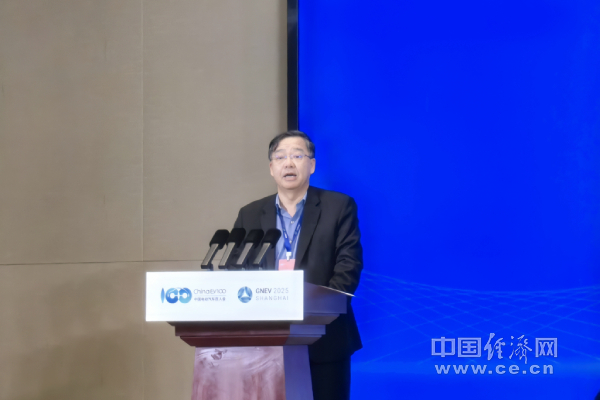
Core Viewpoint - General Motors is committed to deepening its presence in China, focusing on its core joint venture business to enhance product competitiveness in the Chinese market [1][3]. Group 1: Sales Performance - In 2023, General Motors experienced a reversal in sales, with the U.S. becoming its largest single market again. Global sales in 2024 are projected to exceed 6 million units, with approximately 2.7 million units sold in the U.S. and around 1.8 million units in China [3]. - The market share and profitability of General Motors in China have improved, with a successful turnaround in the fourth quarter of the previous year after facing losses in the first three quarters [3][4]. Group 2: Strategic Focus - The company is transitioning from a strategy of "in China, for China" to "in China, for the world," indicating a broader global strategy that leverages its operations in China [4][5]. - General Motors aims to enhance its competitiveness globally by fully participating in the Chinese market, which is seen as a core element of its global competitiveness [4]. Group 3: Export and Growth - In 2024, General Motors plans to utilize a differentiated strategy to enhance its export competitiveness, with the Wuling brand expected to export 225,000 units, a 6.4% increase year-on-year, including over 40,000 units of electric vehicles, marking a 72% increase [5]. - The company acknowledges the competitive pressures faced by foreign automakers in China due to geopolitical, trade, and economic factors but remains committed to deepening its engagement in the market [5].

谁能接过复兴雷诺的接力棒?
Zhong Guo Qi Che Bao Wang· 2025-06-26 01:24
Core Points - Luca de Meo, CEO of Renault Group, announced his resignation after five years to seek new challenges outside the automotive industry [2][6] - His departure introduces uncertainty regarding Renault's future revival efforts, including electric transformation and the restructuring of the Alpine brand [2][7] - Renault Group is in the process of searching for a new CEO, considering both internal promotions and external hires [2][10] Group 1: Background and Achievements - Under de Meo's leadership, Renault Group transitioned from a period of crisis to recovery, restoring a healthy growth foundation and impressive product lineup [3][4] - De Meo was appointed CEO in July 2020 during a time when Renault faced significant challenges, including a €1.41 billion loss in 2019 and a net loss of €8 billion in 2020 [3][4] - He launched the "Renaulution" five-year strategic plan in January 2021, shifting the focus from sales volume to value creation [4][5] Group 2: Financial Performance - Renault Group's financial performance improved significantly, with a net loss reduced to €354 million in 2022 and a net profit of €2.198 billion in 2023 [5] - By the end of 2024, the automotive net financial position reached €7.1 billion, nearly doubling from the previous year, driven by the performance of Renault, Dacia, and Alpine brands [5] Group 3: Future Challenges - De Meo's departure raises concerns about the continuity of Renault's strategic initiatives, particularly in electric vehicle development and partnerships in China [7][9] - The new CEO will face challenges in maintaining the momentum of the "Renaulution" strategy and managing the relationship with Nissan, which has seen improvements under de Meo [8][9] - Potential candidates for the CEO position include internal executive Denis Le Vot and external candidate Carlos Tavares from Stellantis [10][11]

当奥迪、奔驰开始“倒车”
和讯· 2025-06-25 10:17
Core Viewpoint - Audi has decided to abandon its plan to stop producing internal combustion engine vehicles by 2033, influenced by the strong rise of the Chinese automotive industry [4][8]. Group 1: Industry Trends - Major automotive companies, including Mercedes-Benz and Volvo, are also reconsidering their electric vehicle (EV) strategies, delaying their transition away from internal combustion engines [6][8]. - The initial push towards electrification by traditional luxury car manufacturers occurred in 2021, coinciding with the EU's stringent environmental regulations and China's burgeoning EV market [6][7]. Group 2: Market Performance - Despite the rapid growth of EVs, traditional automakers are facing challenges in the Chinese market, where their EV sales have not met expectations [8][10]. - In 2023, the sales figures for pure electric vehicles were relatively low: Mercedes sold 185,000 units (10% of total sales), Audi sold 164,000 units (10%), and BMW sold 427,000 units (17%) [10][11]. Group 3: Strategic Adjustments - The automotive giants are reassessing their timelines for phasing out internal combustion engines due to disappointing EV sales and profitability challenges [11][12]. - Companies like Audi and Mercedes are extending the production cycles of their internal combustion engine models while also planning to introduce new hybrid models [12][15]. Group 4: Hybrid Technology Focus - The shift towards hybrid vehicles is seen as a strategic response to market conditions, with companies planning to offer a mix of internal combustion, hybrid, and electric vehicles [15][17]. - The market share for hybrids is projected to grow significantly, with estimates suggesting that by 2025, hybrid vehicles could capture around 40% of the market [17][18]. Group 5: Future Outlook - Experts predict a future automotive market divided among pure electric, hybrid, and internal combustion vehicles, with a potential balance of 30% each for electric and hybrid, and 40% for combustion by 2030 [18].
豪掷千金 美最大车企要“更美国”
Zhong Guo Qi Che Bao Wang· 2025-06-25 01:31
Group 1 - General Motors (GM) plans to invest approximately $4 billion in three U.S. factories located in Michigan, Kansas, and Tennessee over the next two years to expand production of its best-selling models in the domestic market [2][5] - The investment reflects a trend among multinational automakers to increase investments in the U.S. to avoid automotive tariffs [2][3] - GM's CEO, Mary Barra, emphasized the company's commitment to manufacturing in the U.S. and supporting American jobs, aiming to provide consumers with a diverse product lineup [2][3] Group 2 - Despite being the largest automaker in the U.S., GM's localization rate is lower than that of competitors like Tesla and Ford, with only about 52% of vehicles sold in the U.S. being assembled domestically [3][4] - In 2024, GM is projected to sell 2.6893 million vehicles in the U.S., a year-on-year increase of 4.3%, maintaining its position as the sales leader in the U.S. automotive market [3][4] Group 3 - The investment will involve relocating the assembly of gasoline versions of the Chevrolet Blazer and Equinox from Mexico to the U.S. and repurposing a large idle factory in Michigan to produce fuel SUVs and pickups by 2027 [5][6] - GM's strategy includes shifting some production capacity from Mexico back to the U.S. due to the impact of U.S. automotive tariffs [6][7] Group 4 - The U.S. government has imposed a 25% tariff on imported vehicles and key components, which has significantly affected automakers' profits, with GM estimating a loss of $4 billion to $5 billion due to these tariffs [4][6] - GM plans to offset at least 30% of the tariff impact by increasing domestic production [4][6] Group 5 - The focus of GM's new investment is primarily on fuel vehicles, with plans to produce fuel full-size SUVs and light pickups in Michigan, rather than electric vehicles as previously planned [9][11] - GM's electric vehicle sales saw a significant increase of 94% in Q1 2025, selling approximately 32,000 electric vehicles, ranking second in the U.S. electric vehicle market [11]

奥迪,撑不住了
商业洞察· 2025-06-23 09:04
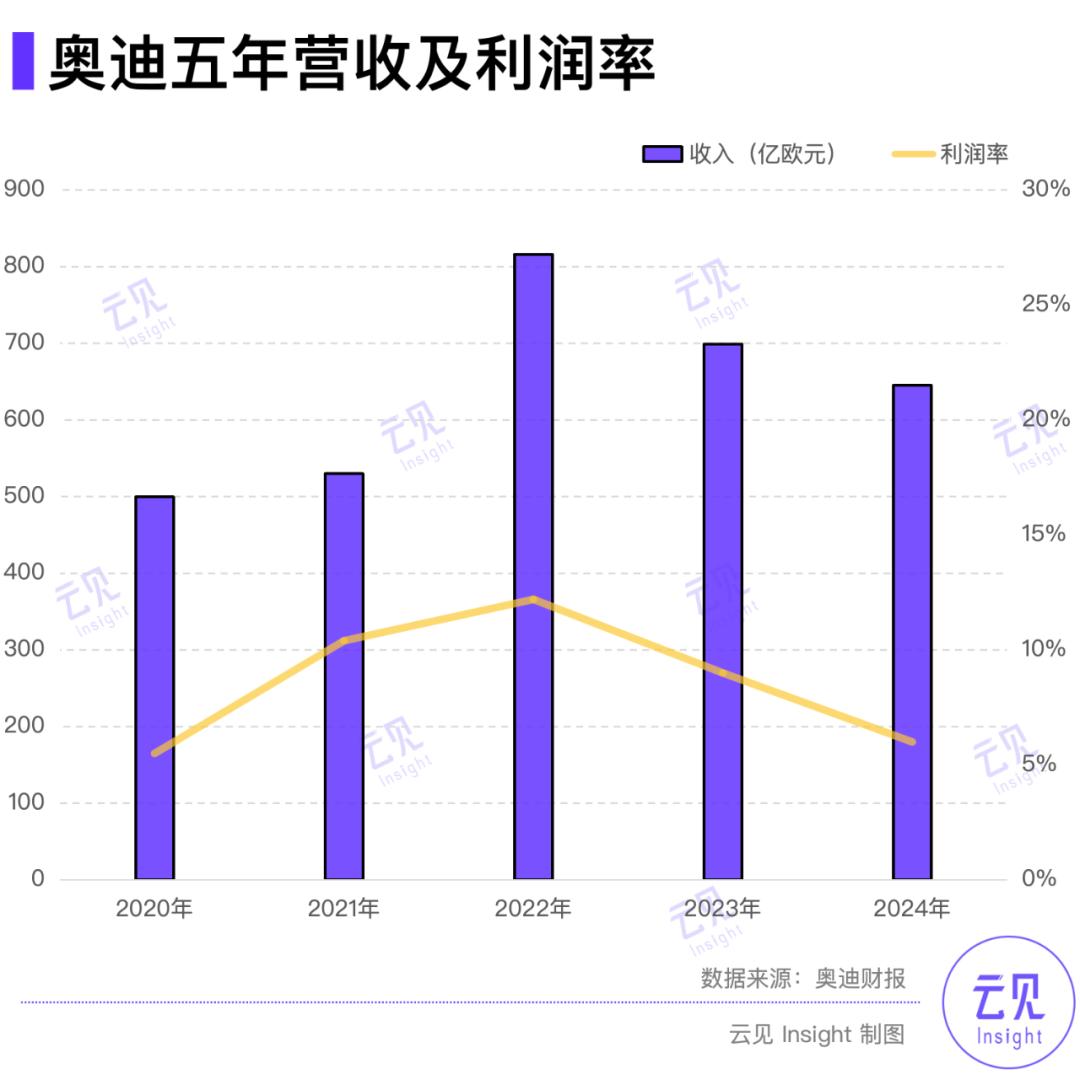
Core Viewpoint - Audi has officially retracted its goal for full electrification by 2033, indicating a shift in strategy under the new CEO Gernot Döllner, who plans to continue producing combustion engine vehicles until around 2035 or longer, while maintaining a parallel development of combustion, hybrid, and electric vehicles until 2035 [1][2][3]. Group 1: Strategic Decisions - The previous CEO's aggressive electrification timeline is deemed outdated, leading to a more flexible approach to product offerings that includes combustion, hybrid, and electric vehicles [1][2]. - Other German luxury car manufacturers, including BMW and Mercedes-Benz, have also adjusted their electrification plans, indicating a collective shift among major players in the industry [2]. - Audi's financial performance has suffered due to strategic missteps, with a projected revenue of €64.5 billion in 2024, a 7.6% decline year-on-year, and a significant drop in operating profit by 37.8% to €3.903 billion [3][11]. Group 2: Market Performance - Audi's electric vehicle sales have not met expectations, with global sales of pure electric vehicles at 118,200 units in 2022 and 178,000 units in 2023, accounting for less than 10% of total sales [5][9]. - The launch of the Q6 e-tron has been delayed due to software development issues, resulting in a projected delivery of only 15,000 units in 2024 [5][6]. - In 2024, Audi's global sales are expected to decline by 11.8%, with significant drops in major markets: China down 10.9%, the U.S. down 14%, and Germany down 21.3% [9][11]. Group 3: Operational Changes - Audi has initiated a series of reforms, including the closure of its Brussels plant, which produced 53,000 electric vehicles in 2023, representing about 30% of its total electric vehicle deliveries [9][13]. - The company plans to cut 7,500 jobs in Germany by 2029 and aims to reduce material costs by €8 billion and labor costs by €10 billion by 2030 [13]. - Audi's new CEO has emphasized the need for a more competitive product lineup, with plans to launch over 20 new models in the next two years, including the Q6 e-tron and Q3 [15][16].