风险管理

Search documents
告别“躺平”利息,你的存款或许可以“动”起来了!
中国基金报· 2025-10-15 00:32
Core Insights - The bond market's risk-free returns are being reshaped due to the onset of the Federal Reserve's interest rate cut cycle and a simultaneous loosening of domestic interest rates, making traditional bond investments less attractive [1][2] - The equity market is experiencing increased investment difficulty characterized by high volatility and rapid rotations, making it challenging to rely solely on a single asset class for returns [3][4] Bond Market Analysis - The safety net provided by pure bond assets is diminishing, indicating a narrowing space for stable returns from high coupon rates [2] - The proposed investment strategy emphasizes a high allocation to fixed income assets, particularly short-duration, high-grade credit bonds, to mitigate volatility and manage interest rate risks effectively [5][6] Investment Strategy - The 富国智悦稳健90天持有期混合型FOF (A类: 025509, C类: 025510) is designed to address current market challenges by combining a solid fixed income foundation with diversified asset allocation to enhance returns [3][9] - The fund employs a "core + satellite" strategy, using bonds as the core to stabilize the portfolio while allocating a portion to equities and commodities for additional yield and risk diversification [9][10] Performance Metrics - The 万得偏债混合型FOF指数 has shown a cumulative increase of 29.5% from January 2019 to June 2025, outperforming various other indices, indicating a favorable risk-return profile for fixed income-focused strategies [5][11] Fund Management - The fund will be managed by Zhang Ziyan, a seasoned fund manager with 14 years of experience, who will focus on dynamic asset allocation and selecting top-performing sub-funds [12][18] - Historical performance of Zhang's other funds demonstrates a strong ability to navigate market fluctuations, with notable outperformance during periods of market stress [15][17]


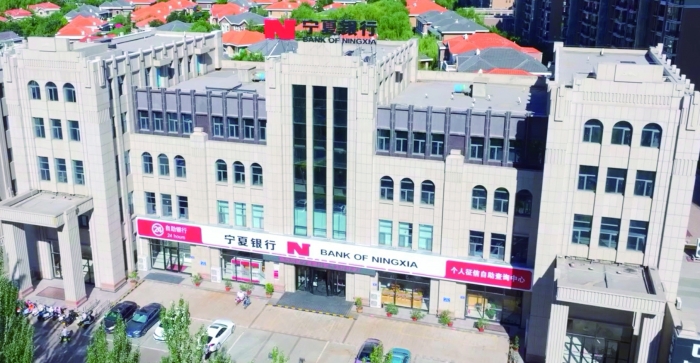
从“风险机构”到“生力军” 中小银行“改”出新活力
Shang Hai Zheng Quan Bao· 2025-10-14 18:30
Core Insights - The article discusses the revitalization of small and medium-sized banks in China, highlighting their transformation from "risk institutions" to "new forces" in the financial sector [4][10]. Group 1: Capital Strength - Capital strength of small and medium-sized banks has significantly improved, with local governments injecting substantial funds to support their development [7]. - For instance, the issuance of secondary capital bonds and perpetual bonds has reached a five-year high, with over 1 trillion yuan issued in the first seven months of the year [7]. Group 2: Governance and Efficiency - Governance structures of small banks have been reformed for better efficiency, with significant improvements in management effectiveness, reportedly increasing by over 30% [8]. - The restructuring of banks, such as the merger of He Lan Village Bank with Ningxia Bank, has led to a more centralized management approach [8]. Group 3: Risk Management - Risk management capabilities have been notably enhanced, with banks engaging in innovative asset management strategies, including the first structured transfer of non-performing assets in Ningxia [9]. - The overall risk control systems have been optimized, allowing banks to better monitor and manage credit risks associated with small and micro enterprises [9]. Group 4: Service to the Real Economy - The article emphasizes that the ultimate goal of these reforms is to better serve the real economy, with small banks providing more efficient financial services to local businesses [11]. - As of August, the loan balance of Ningxia's banking sector reached 1.06 trillion yuan, reflecting a year-on-year growth of 3.75%, while Inner Mongolia's banking sector reported a loan balance of 3.28 trillion yuan, growing by 2.51% [12]. Group 5: Future Outlook - Experts suggest that ongoing reforms will continue to enhance the governance and operational capabilities of small and medium-sized banks, enabling them to better serve the real economy while achieving higher quality development [12].
港交所最新宣布!又一对冲工具来了,涉及最火赛道
券商中国· 2025-10-14 12:22
Core Viewpoint - Hong Kong Exchanges and Clearing Limited (HKEX) plans to launch the Hang Seng Biotechnology Index Futures on November 28, 2025, providing effective risk management tools for the rapidly growing biotechnology sector [2][3][4]. Group 1: Product Details - The new futures contract will have the code HBI, with a contract multiplier of HKD 50 per index point, and will be available for trading in the current month, the next three months, and the following three quarterly months [3]. - The first six months of trading will be exempt from the Securities and Futures Commission transaction fees, with the margin rate to be announced later [3][4]. Group 2: Market Context - The biotechnology sector is currently one of the hottest and fastest-growing industries in the Hong Kong capital market, driven by technological innovation and global healthcare demand [4]. - The Hang Seng Biotechnology Index has recorded a 63.61% increase over the past year, significantly outperforming the Hang Seng Index, which rose by 20.62% [4]. - Year-to-date, the Hang Seng Biotechnology Index has surged by 90.33%, surpassing the Hang Seng Technology Index's increase of 37.54% [4]. Group 3: Major Constituents - The index tracks the 30 largest biotechnology, pharmaceutical, and medical device companies listed on the Hong Kong Stock Exchange, with major constituents including WuXi Biologics, BeiGene, and Innovent Biologics [4][5]. - The top ten weighted stocks in the index include: - WuXi Biologics (10.83% weight, market cap HKD 120.825 billion) - BeiGene (10.21% weight) - Innovent Biologics (9.18% weight, market cap HKD 139.0 billion) - And others, contributing to a diverse representation of the sector [5]. Group 4: Industry Growth - Since the listing reforms in 2018, the biotechnology and healthcare sectors have become the fastest-growing industries in Hong Kong, with over 260 companies listed and a total market capitalization exceeding HKD 4.8 trillion, quadrupling from approximately HKD 1.2 trillion at the end of 2018 [6].

战略理念领航 高质量发展蹄疾步稳 —从业务转型看渤海银行的战略突围
Xin Lang Cai Jing· 2025-10-14 11:05
Core Viewpoint - The announcement of a large asset transfer by Bohai Bank is seen as a positive move to optimize asset structure and mitigate potential risks, reflecting the bank's strategic adaptability in a challenging environment [1] Group 1: Asset Transfer and Strategy - The asset transfer is beneficial for banks as it helps in optimizing asset structure and shedding potential risks [1] - Bohai Bank has actively adapted to new trends in the banking industry by restructuring its strategies to focus on stabilizing scale, adjusting structure, increasing revenue, and reducing costs [1] - The bank's proactive asset transfer has effectively reduced risks while optimizing its business structure and enhancing efficiency [1] Group 2: Financial Performance - In 2024, Bohai Bank achieved a revenue of RMB 25.482 billion, a year-on-year increase of 1.94%, and a net profit of RMB 5.256 billion, up 3.44% [3] - For the first half of 2025, the bank reported a revenue of RMB 14.215 billion, a growth of 8.14%, and a net profit of RMB 3.830 billion, increasing by 3.61% [3] - The cost-to-income ratio for the first half of 2025 was 32.17%, a reduction of 6.52 percentage points compared to the same period in 2023 [3] Group 3: Risk Management - Bohai Bank has enhanced its risk management by actively addressing challenges and increasing the disposal of non-performing assets, achieving a record high in problem asset recovery [4] - The bank has taken the lead in clearing high-risk internet lending businesses, demonstrating a proactive approach to risk management [4] - Standard & Poor's has upgraded the bank's rating outlook from negative to stable due to its effective risk control strategies [4] Group 4: Strategic Positioning - Bohai Bank emphasizes long-term development over short-term gains, focusing on quality improvement rather than scale [2][3] - The bank has aligned its business positioning with national strategies and technological trends, enhancing its competitive advantages [5][6] - As of the first half of 2025, the bank's loans to technology enterprises reached RMB 71.252 billion, a 51.28% increase from the previous year, while loans to the manufacturing sector and green loans also saw significant growth [6]
山东聚丙烯产业链的场外期权创新应用
Qi Huo Ri Bao Wang· 2025-10-14 00:56
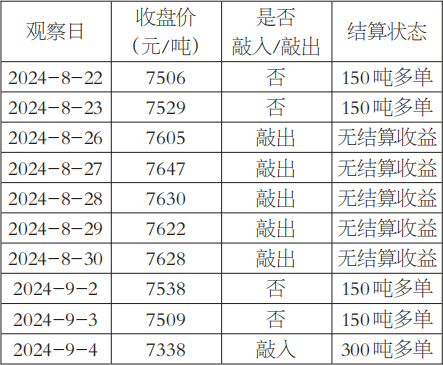
Core Insights - The article highlights the innovative application of derivative tools in the polypropylene industry chain in Shandong, showcasing how companies are utilizing customized over-the-counter options to manage risks in a complex market environment [1][2]. Industry Background - The polypropylene industry is facing challenges due to global economic uncertainties, including fluctuations in crude oil prices and supply-demand imbalances [2]. - In 2024, the price range for polypropylene in East China is projected to be between 7265 to 7795 yuan/ton, with significant price volatility observed throughout the year [2]. - The industry is characterized by high costs, high production rates, and high maintenance rates, coupled with weak orders and cash flow [2]. Case Studies - A plastic packaging company in Linyi utilized a strategy of selling out-of-the-money put options to hedge against inventory devaluation, achieving a net gain of 32,000 yuan [4][5]. - A medical products manufacturer employed a zero-cost cumulative purchase option to manage raw material costs, successfully locking in 900 tons of low-priced raw materials [6][8]. Implementation Process - The plastic packaging company sold a put option with a strike price of 7605 yuan/ton, receiving a premium of 102 yuan/ton for a contract of 500 tons [4][5]. - The medical products company bought a cumulative purchase option with a trigger mechanism to dynamically lock in procurement costs, ultimately securing a purchase price of 7500 yuan/ton for 900 tons of polypropylene [6][7]. Advantages and Highlights - Selling put options requires less capital compared to traditional futures trading, allowing companies to enhance inventory value while mitigating devaluation risks [10]. - The cumulative purchase option optimizes procurement processes, enabling companies to lock in low-cost raw materials without needing to predict market timing [11]. Summary and Outlook - The case studies demonstrate how structured derivative solutions can effectively address risk management challenges in the chemical industry, enhancing companies' ability to hedge against market risks [12]. - This practice not only supports the transformation and upgrading of the chemical industry but also illustrates the positive role of financial instruments in stabilizing commodity prices and ensuring the smooth operation of the industry chain [12].
工业硅企业风险管理的“法宝”
Qi Huo Ri Bao Wang· 2025-10-14 00:54
Core Viewpoint - The industrial silicon industry is experiencing a transformation and market restructuring, with financial derivatives playing a crucial role in risk management and operational efficiency for related enterprises [2][5]. Group 1: Industry Context - Industrial silicon is a key resource supporting high-end manufacturing, deeply integrated into sectors like photovoltaic new energy, organic silicon, and aluminum alloys [2]. - The rapid expansion of industrial silicon production capacity, coupled with price volatility and dynamic policy adjustments, has increased uncertainty for enterprises in the sector [2]. - The Chinese government is promoting the orderly exit of backward production capacity and addressing low-price competition in the photovoltaic industry, signaling a shift in market dynamics [3]. Group 2: Financial Derivatives Application - Financial derivatives, such as futures and options, provide various risk management strategies for industrial silicon enterprises, including price risk hedging, procurement cost optimization, and inventory value management [2][5]. - In a rising price environment, enterprises using a "order-first, purchase-later" model may face profit compression, necessitating the use of futures markets to lock in procurement prices [3]. - A case study illustrates that a downstream grinding enterprise utilized options to reduce costs, selling a put option on July 10, 2025, which provided a premium of 181 yuan/ton, effectively lowering their costs [4]. Group 3: Operational Challenges - Industrial silicon grinding enterprises are facing thin profit margins due to increased raw material price volatility, low technical barriers in processing, and intense competition [4]. - The lack of pricing power and challenges in passing cost pressures downstream further compress profit margins, making the use of financial derivatives essential for stabilizing operations [4]. - By employing futures and options, companies can lock in raw material costs and sales prices, mitigate price fluctuation risks, and enhance capital efficiency [4]. Group 4: Future Outlook - The application of financial derivatives in the industrial silicon sector is expected to expand, becoming a core driver for optimizing risk management and resource allocation [5]. - This strategic use of financial tools will help the industry seize development opportunities amid the global energy transition and achieve high-quality growth [5].

汇控私有恒生捡平货
Xin Lang Cai Jing· 2025-10-13 07:16
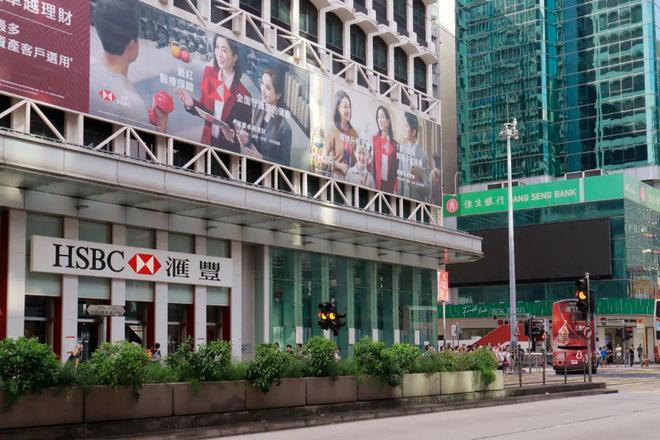
来源:市场资讯 事缘汇控全资附属公司汇丰亚太突然作为要约人,要求恒生银行董事会向计划股东提呈建议,以协议安 排(Scheme of Arrangement)方式将恒生银行私有化。倘若计划生效,计划股份将予以注销,有关股东 可每股获现金155元,较恒生前收市价119元溢价约三成。私有化完成后,恒生银行会撤销上市地位。 01 主动化解商业地产坏账危机 上市公司私有化有两种常见方法,一是协议安排,二是全面要约(General Offer)。前者需要召开股东 特别大会,由亲身或委派代表的无利害股东至少75%投票赞成,以及投票反对票数不得超过无利害股东 的10%,并须获得法院批准。后者全面要约则需要满足要约人收购到超过90%股份(以所有股东计), 才能触发强制收购。 以股权架构来看,汇控持有恒生银行63.34%权益,母公司持股比例算不上高度集中,若采用全面要约 收购余下股份,预计难度会比较高。取易不取难之下,汇控当然识得拣,选择以协议安排方式私有化恒 生银行,舍弃全面要约。 高仁认为,汇控管理层大多数是外国资深银行家,相信提出每项交易前都会深思熟虑,并且以理性和合 理性行事,不排除私有化恒生银行是以风险管理(risk ...


财通资管宫志芳:回撤有底线,以大类资产配置思维做投资
Zhong Guo Ji Jin Bao· 2025-10-13 03:33
Core Viewpoint - The current market environment presents a favorable opportunity for investing in multi-strategy fixed income products, emphasizing risk control and sustainable returns over maximizing short-term gains [1][2]. Group 1: Investment Strategy - The investment philosophy prioritizes risk management, with a focus on controlling drawdowns and ensuring accumulative returns [2][4]. - The approach involves setting predetermined stop-loss and take-profit points for each trade, balancing between profit-taking and risk management [3]. - The company emphasizes a top-down asset allocation strategy, making macro-level judgments to guide investment decisions [4][5]. Group 2: Market Outlook - The bond market is expected to have limited further adjustments, with potential opportunities for allocation in the fourth quarter [7]. - The equity market is anticipated to continue its structural rally, with a focus on selecting next-tier leaders or broad-based ETFs to reduce portfolio volatility [7]. - Convertible bonds are viewed as a significant source of yield enhancement, with a focus on stocks with strong growth potential and themes like "anti-involution" and AI-related sectors [7][8]. Group 3: Team and Product Development - The fixed income team at the company consists of nearly 70 professionals with an average of 7 years of experience, covering a wide range of asset classes and investment strategies [5][6]. - Since 2016, the company has developed a mature management system for multi-strategy fixed income products, currently offering 14 different products [6]. - The company aims to balance volatility and return sources while allowing fund managers to leverage their strengths and meet investors' risk preferences [6].
智汇铝业 共绘发展新蓝图
Qi Huo Ri Bao Wang· 2025-10-12 16:12
Core Insights - The forum titled "2025 Futures and Spot Integration to Promote High-Quality Development of the Aluminum Industry" will be held on October 16 in Zhengzhou, focusing on the future development paths of the aluminum industry [1] - The event aims to create a complete ecological loop covering research, production, trade, and finance by gathering industry leaders, experts, and traders [1] - The forum addresses the challenges and opportunities in the aluminum industry amid global economic adjustments and domestic industrial upgrades, emphasizing the importance of high-quality development and risk management through futures and derivatives [1] Group 1 - The forum will feature keynote speeches from industry experts, including Dr. Wei Hongjie from China Aluminum International Trade Group, who will analyze the development trends of China's aluminum industry under complex international and domestic conditions [2] - Analyst Jiang Xinbin from Zheshang Futures will focus on market dynamics, identifying core factors influencing aluminum price fluctuations and potential trading opportunities for risk management and investment decisions [2] - Chen Penghui, Chairman of Gongyi City Kangyi Material Trade Co., will share insights on how companies can enhance resilience and innovate business models through futures-spot integration strategies [2] Group 2 - A roundtable discussion will involve representatives from leading aluminum processing companies, exploring the current state of the aluminum industry and the practical applications of futures tools in stabilizing raw material supply, optimizing inventory management, and mitigating price risks [2] - The forum will also present the "Golden Great Wall" awards for outstanding risk management cases and service providers, recognizing exemplary applications of futures-spot integration in supporting the real economy and promoting innovative models [3] - The awards aim to set industry benchmarks and encourage more companies to adopt risk management tools for high-quality development [3]
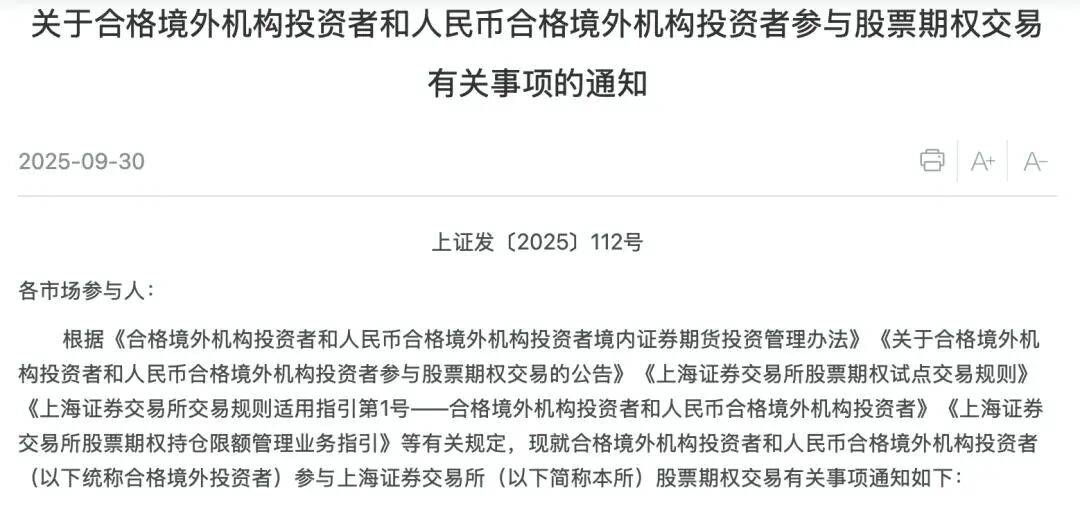
昨日起!合格境外投资者可参与ETF期权交易正式开启
Sou Hu Cai Jing· 2025-10-10 12:45
Core Viewpoint - The China Securities Regulatory Commission (CSRC) has announced that starting from October 9, 2025, qualified foreign institutional investors (QFIIs) will be allowed to participate in on-exchange ETF options trading, primarily for hedging purposes [1][3] Group 1: Regulatory Changes - The Shanghai Stock Exchange (SSE) and Shenzhen Stock Exchange (SZSE) have begun accepting applications from QFIIs for stock options trading as of September 30, 2023, with SZSE starting on October 9, 2023 [1][5] - The CSRC has progressively relaxed restrictions on QFIIs' participation in domestic commodity futures, commodity options, and ETF options this year, aiming to expand the investment scope for foreign investors [1][7] Group 2: Trading Mechanism - QFIIs can engage in trading of exchange-traded fund options (ETF options) listed on the Shanghai and Shenzhen exchanges, with the trading purpose limited to hedging [3][5] - QFIIs must report their planned use of A-share securities accounts through authorized options operating institutions before opening corresponding derivative contract accounts for hedging [3][5] Group 3: Market Impact - The introduction of ETF options is expected to attract more long-term capital into the A-share market, as both domestic and foreign institutional investors require more comprehensive hedging and investment tools [8][9] - The presence of foreign institutional investors in the top holdings of listed funds has increased, with significant investments noted from major firms such as Barclays and UBS [9]