
绿色消费

Search documents
119.7亿元、破1万家……多组数据感受我国消费市场活力奔涌
Yang Shi Wang· 2025-09-23 06:57
Group 1 - The overall consumption market in China remained stable in August, according to the Ministry of Commerce [1] - Service consumption showed significant growth, with a 5.1% year-on-year increase in service retail sales from January to August, driven by tourism and leisure activities during the summer [3] - The film market was robust, with total box office revenue during the summer season reaching 11.97 billion, a 2.8% year-on-year increase [3] Group 2 - Commodity retail sales grew steadily, with a 3.6% year-on-year increase in August, and sales of products related to trade-in programs saw rapid growth [4] - Key retail enterprises reported significant year-on-year sales increases in tablets (20.7%), smart air conditioners (17.7%), and mobile phones (8.2%) in August [4] - New consumption trends such as digital, green, and health-related consumption are expanding, with inbound consumption also increasing; the number of tax refund stores exceeded 10,000 by the end of August, and tax refund sales grew by 97.5% year-on-year [6]


上海南京西路功能区与CGF共同探索打造绿色消费场景试点
Sou Hu Cai Jing· 2025-09-22 14:48
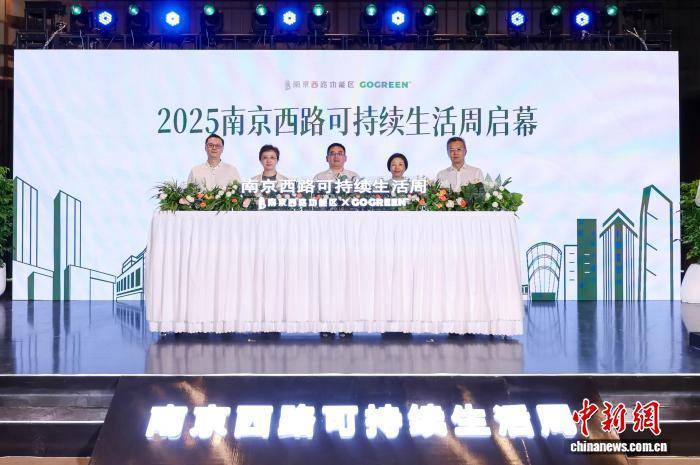
中新网上海9月22日电 (记者 陈静)22日,2025"南京西路可持续生活周"在上海开幕。南京西路功能区与 消费品论坛(CGF)将共同探索打造绿色消费场景试点。这一试点项目旨在为静安区可持续消费发展注入 新动能,推动绿色消费从理念走向实践。 在南京西路街区,"美丽街区"建设持续推进,花园城区图景随处可见。政府部门积极探索以可持续消费 助推高质量发展,在推动消费模式绿色转型、创新多元化消费场景等的同时,让更多国内外品牌进一步 了解静安区可持续消费发展趋势,为区域经济发展持续注入新活力。 当天,上海交通大学安泰经济与管理学院营销系副教授张铄分享了由南京西路功能区与上海交通大学 ESG研究院合作编制的"可持续消费指南"。该指南基于"绿色选品指南",结合了静安区与南京西路商圈 品牌的可持续案例分析,为消费者和企业提供实用的可持续消费参考。 据悉,未来,南京西路功能区将培育"国际人才引力场",进一步改善营商环境,吸引更多全球企业、前 沿人才汇聚;打造"全球街区创新实验室",探索街区发展的创新模式。(完) 2025"南京西路可持续生活周"在上海开幕。(静安区新闻办供图) 记者当日获悉,位于上海市中心闹市区的南京西路功能区 ...
服务消费亮点纷呈、入境消费持续扩大……从8月份消费数据看活力中国
Yang Shi Wang· 2025-09-22 10:58
Group 1 - The overall consumption market in China remained stable in August, with a year-on-year growth of 3.6% in retail sales of goods [1] - Key retail enterprises saw significant sales increases in specific categories: tablet computers up 20.7%, smart air conditioners up 17.7%, and mobile phones up 8.2% [1] Group 2 - Service consumption experienced rapid growth, driven by summer tourism and leisure activities, with a year-on-year increase of 5.1% in service retail sales from January to August [2] - Notable growth was observed in cultural and recreational services, tourism consulting and leasing, and transportation services; the summer box office reached 11.97 billion yuan, a 2.8% increase year-on-year [2] Group 3 - New consumption trends such as digital, green, and health-related consumption are expanding, with inbound consumption also increasing; the number of tax refund shops exceeded 10,000 by the end of August [4] - Sales of tax refund goods grew by 97.5% year-on-year in the first eight months, with the number of individuals enjoying tax refunds increasing by 2.5 times [4]

棉花专题:纺织行业消费情况分析
Chang Jiang Qi Huo· 2025-09-22 06:30
Group 1: Report Summary - The textile industry maintained stable overall operations in H1 2025, with high export and domestic demand, good cotton consumption, but weak profit growth and high business pressure. The overall performance of listed companies showed some resilience [1][3]. - The industry showed a stable revenue but faced significant profit pressure, with differences among sub - industries. Exports demonstrated resilience due to Sino - US trade disputes. Listed companies generally performed well, but individual stocks varied, and the sportswear industry led the market [25]. Group 2: H1 2025 Textile Industry Overall Operation Production Situation - The textile industry's capacity utilization was in a reasonable range. The industrial added - value of above - scale textile enterprises increased by 3.1% year - on - year (1.5 percentage points slower than the previous year). Most parts of the industrial chain had stable production. Some sub - industries had high growth rates, and 9 out of 15 major textile products saw output growth [4]. Consumption Market - Textile and clothing domestic sales had a mild recovery. Per capita clothing consumption expenditure increased by 2.1% year - on - year (0.9 percentage points faster than Q1). The retail sales of clothing, footwear, and textiles above the quota increased by 3.1% year - on - year (1.8 percentage points faster than the previous year). Online clothing sales increased by 1.4% year - on - year (1.5 percentage points higher than Q1). Consumption trends included a shift towards quality, personalization, and culture [5]. Foreign Trade Situation - Despite challenges, textile exports maintained a slight increase. Total textile and clothing exports were $143.98 billion, a 0.8% year - on - year increase. Textile exports were $70.52 billion, up 1.8% year - on - year, while clothing exports were $73.46 billion, down 0.2% year - on - year. Exports to the US declined, but those to other trading partners increased [10]. Benefit Situation - Textile enterprises faced increased operating pressure. The operating income of 38,000 above - scale textile enterprises decreased by 3% year - on - year, and the total profit decreased by 9.4% year - on - year. The operating income profit margin dropped to 3%. However, there were differences among sub - industries [12]. Group 3: Listed Company Performance H1 2025 Financial Report - In terms of revenue, the textile manufacturing and clothing home textile sectors had year - on - year growth rates of +7.8% and - 6.4% respectively. In terms of profit, the textile manufacturing sector had a stable gross profit margin of 19.4% and a net profit margin of 8.5%. The clothing home textile sector had a gross profit margin of 46.1% and a net profit margin of 8.5%. In terms of inventory, the textile manufacturing sector's inventory - to - sales ratio was about 3.9 months, and that of the clothing home textile sector dropped to about 6.7 months [17]. Q2 2025 - In terms of revenue, the textile manufacturing sector's growth rate slowed to 6.6% year - on - year, and the clothing home textile sector's decline narrowed to 4.6% year - on - year. In terms of profit, the textile manufacturing sector's gross profit margin was 19.4%, and the net profit margin was 9.5%. The clothing home textile sector's gross profit margin was 45.4%, and the net profit margin was 5.8%. In terms of inventory, the textile manufacturing sector's inventory - to - sales ratio increased to 4.1 months, and that of the clothing home textile sector decreased to 6.7 months [21]. Sector Companies - In the clothing home textile sector, the sportswear track was booming, with leading companies like Anta Sports, 361 Degrees, and Li Ning having good revenue and profit growth. Non - sportswear companies generally faced challenges. In the textile manufacturing sector, contract manufacturing enterprises had stable order growth, and cotton - spinning enterprises performed well [22][24].
消费市场平稳增长 消费结构不断优化
Yang Shi Wang· 2025-09-21 12:30
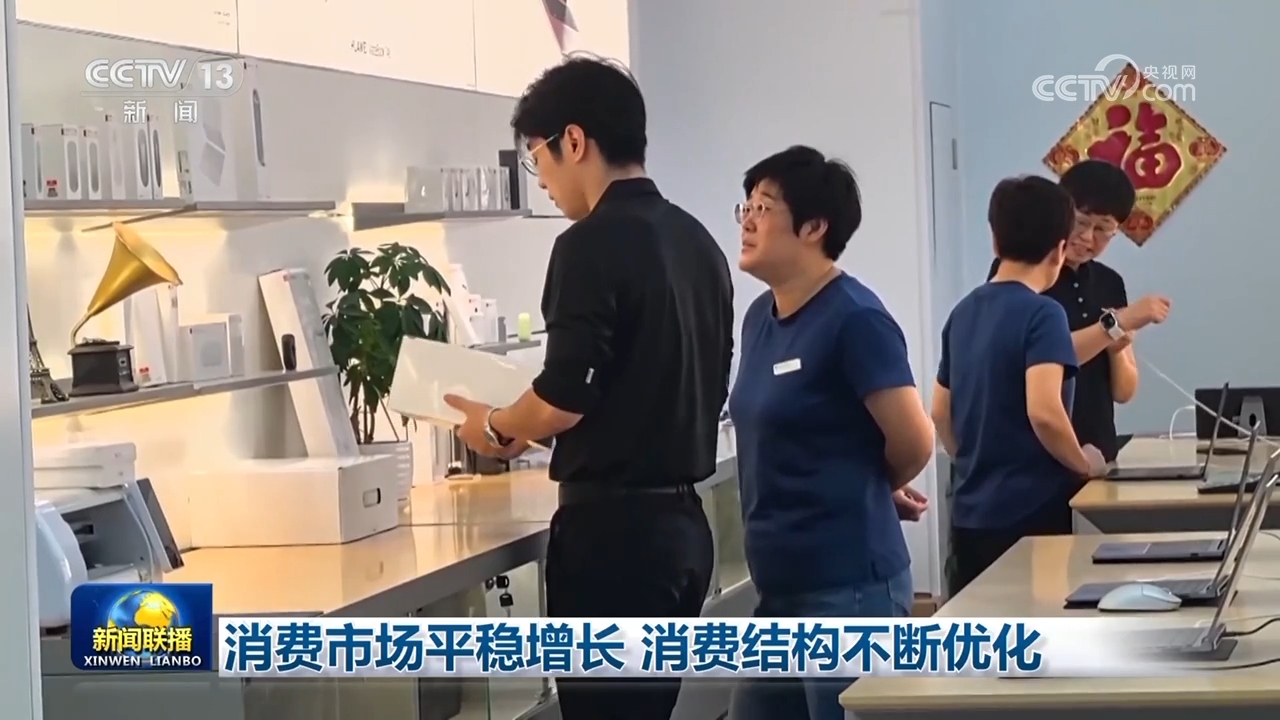
Group 1 - The core viewpoint is that a series of policies aimed at boosting consumption have led to stable growth in the consumer market, with an optimization in the sales structure of goods and a continuous release of service consumption demand [1] Group 2 - In August, the total retail sales of consumer goods increased by 4.1% year-on-year in real terms, accelerating by 0.2 percentage points compared to the previous month, indicating stable growth in the consumption market [1] - Nearly 80% of retail categories in limited enterprises saw growth in August, with retail sales of household appliances and audio-visual equipment, as well as furniture, exceeding a 10% year-on-year growth rate [3] Group 3 - Online consumption has accelerated continuously, with online retail sales growing by 9.6% year-on-year from January to August, marking a 0.4 percentage point increase compared to the previous month, reaching a new high for the year [5] - Emerging fields such as digital consumption and green consumption are maturing and becoming new growth drivers for consumption [5]
中信证券杨清朴:新零售行业生态重塑 把握结构性机遇
Zhong Guo Zheng Quan Bao· 2025-09-18 00:11
Core Viewpoint - The new retail industry is undergoing a multi-dimensional transformation driven by consumer demand, technological innovation, and policy guidance, creating structural opportunities within the sector [1][2]. Industry Dynamics - The new retail sector is showing strong growth, with offline and online integration becoming the core driver of performance. The rapid expansion of offline formats like IP derivatives and hard discount retail, along with the notable growth of instant retail, is propelling the retail industry forward [2]. - Three forces are driving this trend: the evolution of consumer emotional needs, technological advancements, and innovative business models. These factors enable new retail to better match current consumer demands compared to traditional retail [2]. - Cross-border new retail is reshaping the industry landscape by integrating domestic supply chains into the global market, enhancing the efficiency of Chinese manufacturing in reaching overseas consumers [2]. Competitive Landscape - The new retail industry has developed a differentiated competitive landscape with three main types of players: 1. Traditional retail companies, which leverage solid physical networks and mature supply chains, focusing on digital transformation and supply chain optimization [3]. 2. Internet giants, which utilize technological barriers and vast data resources to achieve low-cost customer acquisition and enhance operational efficiency through big data and AI [3]. 3. Emerging brands that capture niche consumer demands with agile business models and strong IP operations, driving innovation within the industry [3]. Market Opportunities - AI technology is increasingly penetrating various industries, with its impact on new retail focusing on cost reduction and efficiency enhancement. AI applications, such as AI customer service, are becoming industry standards, significantly improving operational efficiency [4]. - The combination of green consumption and new retail is creating new opportunities, particularly in the "second-hand economy," driven by policies encouraging recycling and trade-in programs. Companies need to build integrated online and offline networks for second-hand transactions and leverage big data for efficient matching of supply and demand [5]. - The lower-tier markets and county economies represent another key growth point for new retail, with a rising demand for quality and cost-effectiveness. Retail formats that emphasize value and emotional engagement are well-positioned to meet these needs [5]. Future Outlook - Companies are encouraged to enhance product quality, optimize after-sales service, and improve supply-demand matching precision to attract capital and shift valuation logic from short-term performance to long-term brand value [6]. Structural Investment Opportunities - The new retail sector exhibits significant differences in value across various sub-sectors. Offline discount retail and instant retail align well with key market trends, offering a favorable balance between growth potential and valuation safety [7]. - Investors should focus on core indicators rather than single dimensions when evaluating companies, considering financial health and transformation effectiveness as critical factors [7]. - Different types of investors should adopt tailored strategies: individual investors should prioritize mature products and stable cash flows, while institutional investors can explore innovative business models with low penetration rates or undervalued internet platforms [8].

中信证券杨清朴: 新零售行业生态重塑 把握结构性机遇
Zhong Guo Zheng Quan Bao· 2025-09-17 20:30
Core Viewpoint - The new retail industry is undergoing a multi-dimensional transformation driven by consumer demand, technological innovation, and policy guidance, creating structural opportunities within the sector [1] Group 1: Industry Dynamics - The new retail sector is showing strong growth, with offline and online integration becoming the core driver of performance [2] - The rapid development of cross-border new retail is reshaping the overall industry landscape, pushing domestic supply chains to further integrate into the global market [2] - The industry has formed a differentiated competitive landscape with three main types of players: traditional retailers, internet giants, and emerging brands, each with unique core competencies [3] Group 2: Technological Impact - AI technology is gradually penetrating various industries, with its core benefits for new retail being cost reduction and efficiency enhancement [4] - AI applications, such as AI customer service, are becoming industry standards, significantly improving operational efficiency and reducing costs [4] Group 3: Market Opportunities - The combination of green consumption and new retail is creating new opportunities, particularly through the "second-hand economy" [5] - The lower-tier markets and county economies represent another key growth point for new retail, with increasing demand for quality upgrades and cost-effectiveness [5][6] Group 4: Investment Insights - Different segments within the new retail sector exhibit significant differences in cost-performance ratios, with offline discount retail and instant retail being highlighted as particularly attractive investment opportunities [7] - Investors are advised to focus on core indicators of companies rather than relying on a single dimension for evaluation, emphasizing the importance of stable cash flow and the effectiveness of digital transformation [7][8]

金秋促消费持续上“新” 市场活力倍增
Zheng Quan Ri Bao· 2025-09-16 16:10
Core Viewpoint - The "3.15 Golden Autumn Shopping Festival" is a nationwide public welfare event aimed at promoting consumption, running for 31 days and covering key consumption periods like the Mid-Autumn Festival and National Day [1] Group 1: Event Overview - The event includes both online and offline activities, with online activities starting from September 15 and offline activities conducted under the supervision of local consumer associations [1] - The inaugural event in September 2024 lasted for 6 days, involving 26 consumer associations and 9 large enterprises, benefiting approximately 141 million consumers and generating a total consumption amount of 7.538 billion yuan [1] Group 2: Market Impact - The shopping festival is expected to significantly stimulate market vitality by gathering consumer interest, releasing consumption demand, and boosting sales of goods and services [2] - It encourages collaboration in production and operations among enterprises, fostering innovation in products and services, and enhancing brand competitiveness [2] - The event is also anticipated to create job opportunities, establishing a positive cycle of "employment—income—consumption" [2] Group 3: Regional Features - Various regions are designing unique activities based on local industrial advantages, such as agricultural product exhibitions in resource-rich areas and cultural markets showcasing traditional crafts in culturally rich cities [3] - Tourist-rich areas are offering special travel packages with discounts on hotels and dining to attract visitors [3] - Industrial cities are promoting local industrial products with exclusive discounts, showcasing advanced manufacturing capabilities [3] Group 4: Future Directions - Future efforts to enhance consumption quality and expansion will focus on optimizing government subsidies, improving consumption infrastructure, and exploring new business models that integrate online and offline channels [3] - There will be an emphasis on nurturing green consumption and live-streaming e-commerce as new business formats [3] - Strengthening market regulation and consumer education will be crucial to maintaining consumer rights and creating a safe consumption environment [3]
权威发布|8月生产、内需、外贸等运行平稳 经济转型升级稳步推进
Ren Min Ri Bao· 2025-09-16 03:29
Economic Overview - The overall economic operation in August is stable, with steady progress and no change in the growth stability [2][4][11] - Industrial production shows rapid growth, with the industrial added value increasing by 5.2% year-on-year and 0.37% month-on-month [4] - The service sector also performs well, with a production index growth of 5.6% year-on-year, surpassing industrial growth [4] Consumption and Investment - Social retail sales from January to August increased by 4.6% year-on-year, with service retail sales growing by 5.1% [5] - Fixed asset investment rose by 0.5% year-on-year, while excluding real estate, it grew by 4.2% [5] - Consumer goods retail sales in August increased by 3.6% year-on-year, with significant growth in furniture and home appliances [8] Employment and Prices - The urban unemployment rate in August was 5.3%, unchanged from the previous year [7] - The Consumer Price Index (CPI) decreased by 0.4% year-on-year, primarily due to falling food prices, while core CPI rose by 0.9% [7] Trade Performance - In August, the total import and export value of goods increased by 3.5% year-on-year, with both exports and imports achieving three consecutive months of growth [6] Industrial and Technological Development - The manufacturing sector shows positive trends, with high-tech manufacturing and equipment manufacturing increasing by 9.3% and 8.1% year-on-year, respectively [10] - New energy vehicles and related components saw significant production increases, with new energy vehicle production up by 22.7% [10] Policy Impact - The Producer Price Index (PPI) showed signs of improvement, with a narrowing year-on-year decline, reflecting the effectiveness of macroeconomic policies [11] - Policies aimed at boosting consumption and stabilizing the economy are showing positive results, with various sectors experiencing growth [12] Future Outlook - Despite external challenges, the foundation for economic growth remains strong, with potential for continued stable and progressive development [12][13]
前8个月社会消费品零售总额同比增长4.6%
Chang Jiang Shang Bao· 2025-09-15 09:14
Core Insights - The total retail sales of consumer goods increased by 4.6% year-on-year from January to August, with service retail sales growing by 5.1%, indicating a continuous expansion in market sales [1] - Various regions and departments have implemented special actions to boost consumption, supported by targeted policies and funding, leading to an increase in market sales scale and structural optimization [1] Retail Sales Performance - In August, the retail sales of goods grew by 3.6% year-on-year, showing stable growth, supported by policies encouraging consumers to replace old products and the upgrading of consumer spending [1] - Service consumption showed stable growth, with significant demand for travel and leisure activities during the summer, resulting in a 5.1% year-on-year increase in service retail sales from January to August, outpacing the growth rate of goods retail sales [1] New Consumption Trends - Online retail sales increased by 9.6% year-on-year from January to August, surpassing the growth rate of total retail sales of consumer goods, indicating a positive trend in new consumption [1] - Emerging sectors such as digital consumption, green consumption, and health consumption are maturing and becoming new growth drivers, with the retail volume of new energy passenger vehicles increasing by over 20% year-on-year in the first eight months [1]