物理AI

Search documents
从“四轮”到“双翼”与“双腿”,车企创新狂飙新赛道
Zhong Guo Qi Che Bao Wang· 2025-11-24 06:47
Core Insights - The emergence of humanoid robots, flying cars, and the integration of these technologies into the automotive industry is a significant trend, with companies like XPeng and Tesla leading the charge [2][4][10] - XPeng's new humanoid robot, IRON, has garnered attention for its advanced capabilities, including a lifelike appearance and improved interaction systems, reflecting the company's commitment to innovation [3][8] - The automotive industry is witnessing a shift towards a multi-dimensional business model that includes robotics and aerial vehicles, indicating a broader transformation in transportation [2][11] Group 1: XPeng's Developments - XPeng's IRON robot features upgrades in bionic structure, intelligent systems, and energy architecture, making it more human-like [3] - The company has successfully trialed its flying car production line, marking a milestone in the mass production of flying vehicles [3][8] - XPeng plans to launch three Robotaxi models by 2026, utilizing a vision-based system for navigation without relying on Lidar [3][12] Group 2: Industry Trends - Tesla has been a pioneer in the integration of automotive and robotics, launching its Cybercab Robotaxi and expanding its humanoid robot production [4][10] - Other automakers, such as GAC and Chery, are also advancing in the fields of autonomous driving and flying vehicles, indicating a competitive landscape [5][6] - The collaboration between companies and research institutions is becoming a common strategy to enhance capabilities in these emerging sectors [9][10] Group 3: Market Dynamics - The integration of automotive, robotics, and flying vehicles is seen as a necessary evolution in response to changing transportation needs and technological advancements [11][12] - Experts suggest that while the current focus is on innovation, traditional automotive manufacturing remains crucial for sustaining competitive advantages [15] - The development of a cohesive ecosystem for these technologies is still in its early stages, with challenges in achieving a self-sustaining business model [14][15]


570亿营收也救不了股价!机构正在疯狂抛售英伟达
首席商业评论· 2025-11-24 04:10
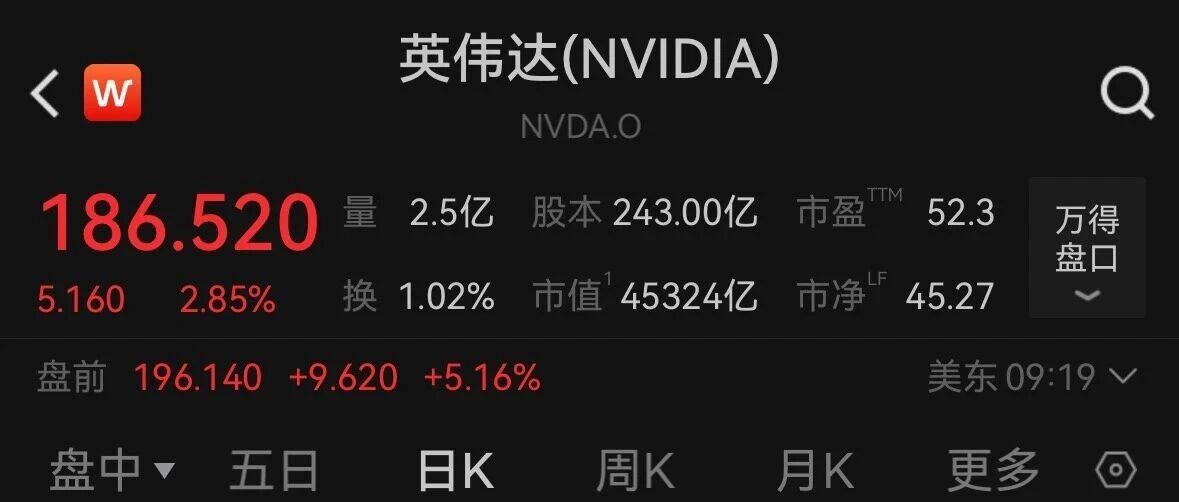
Core Viewpoint - Nvidia's recent earnings report for Q3 FY2026 showcased impressive revenue growth, with a 62% year-over-year increase to $57 billion and a 65% rise in adjusted net profit to $31.9 billion, significantly surpassing Wall Street expectations, thus countering the "AI bubble" narrative [3][4][10]. Financial Performance - Revenue reached $57.006 billion, up 62% year-over-year and 22% quarter-over-quarter [4]. - Gross margin stood at 73.4%, slightly down from 74.6% year-over-year [4]. - Operating expenses increased by 36% year-over-year to $5.839 billion [4]. - Operating income was $36.01 billion, reflecting a 65% year-over-year growth [4]. - Diluted earnings per share rose to $1.30, a 67% increase compared to the previous year [4]. Market Reaction - Despite strong earnings, Nvidia's stock fell over 3% after initially rising 5%, indicating market skepticism about future growth sustainability [4][21]. - The stock closed at $178.88, with a market capitalization of $4.35 trillion [4]. Business Segments Performance - Data center revenue was the highlight, contributing $51.2 billion, a 66% year-over-year increase, accounting for nearly 90% of total revenue [10][18]. - Gaming revenue reached $4.265 billion, up 30% year-over-year, driven by RTX 40/50 series sales [16]. - Professional visualization revenue grew by 56% to $760 million, serving clients like Pixar and Disney [16]. - Automotive and robotics revenue increased by 32% to $592 million, with clients including BYD and Xiaomi [16]. Structural Challenges - Nvidia faces three major structural challenges: 1. Changing valuation logic as the market repositions it as a cyclical hardware supplier [11]. 2. Core customers like Microsoft and Google developing their own chips, threatening Nvidia's competitive edge [11]. 3. Geopolitical issues, particularly export restrictions to China, limiting growth opportunities [11][27]. Future Outlook - Nvidia is focusing on rapid technology iteration with the upcoming Rubin platform and promoting its CUDA software platform to deepen developer engagement [33]. - The company is expanding into new areas such as robotics and healthcare, aiming to extend AI applications beyond data centers [34]. - Concerns about the sustainability of capital expenditures and potential market corrections are prevalent among investors [40][42]. Market Sentiment - A significant portion of institutional investors is reducing their holdings in Nvidia, reflecting a shift towards risk management amid concerns of an AI bubble [36][42]. - The debate centers on whether AI represents a transformative opportunity or if current valuations are unsustainable, with implications for Nvidia's future growth trajectory [42].

香港汽车ETF(520720)涨超1.3%,汽车板块科技属性强化
Mei Ri Jing Ji Xin Wen· 2025-11-24 02:52
Group 1 - The current market has weak expectations for automotive stimulus policies and total production and sales volume for next year, indicating a weakening of the automotive cyclical attributes, while technology and emerging growth directions are the core focus [1] - Xiaopeng Motors' Technology Day showcased the second-generation VLA large model, Robotaxi, and humanoid robot Iron, which boosted market expectations. By 2026, with the iteration and mass production of technologies like Tesla's FSD V14, Robotaxi, and Optimus, the automotive and robotics sectors are expected to experience a turning point in industry trends, leading to a potential revaluation of the technology attributes of automotive stocks [1] - The Hong Kong Automotive ETF (520720) tracks the Hong Kong Stock Connect Automotive Index (931239), which selects listed companies involved in vehicle manufacturing, components, and intelligent driving from the Stock Connect range. This index reflects the overall performance of listed companies related to the automotive industry and features high R&D investment and growth characteristics, with the vehicle sector accounting for over 60% of its weight, demonstrating strong market elasticity and international characteristics [1] Group 2 - The Hong Kong Automotive ETF (520720) can be traded directly through A-share accounts without the need to open a Stock Connect account, effectively addressing the pain point of ordinary investors lacking investment tools [1]
小鹏第100万台下线,首批X9超级增程车主交付
Chang Sha Wan Bao· 2025-11-22 05:29
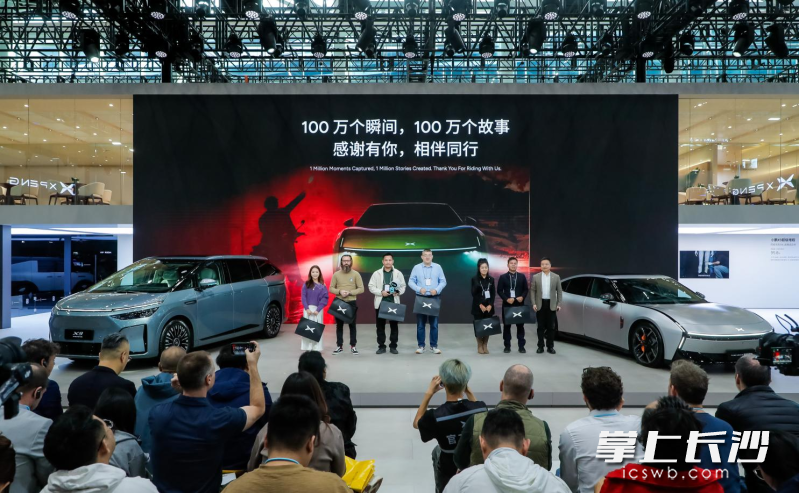
Core Insights - Xiaopeng Motors showcased multiple popular models, including the Xiaopeng X9 Super Extended Range and the new Xiaopeng P7, at the Guangzhou Auto Show, emphasizing the theme "AI Changes the World" [1] - The company announced the production of its 1 millionth vehicle on the same day, with the first deliveries of the newly launched X9 Super Extended Range [1] Group 1: Product Launch and Features - The Xiaopeng X9 Super Extended Range, as the first mass-produced model of the Kunpeng series, features a "large battery + large fuel tank" design, achieving a CLTC comprehensive range of 1602 kilometers and a pure electric range of 452 kilometers, making it the "world's longest-range large seven-seater" [3] - The X9 Super Extended Range is available in two versions, priced at 309,800 yuan for the 1602 Max version and 329,800 yuan for the 1602 Ultra version, with additional promotional offers including up to 60,000 yuan in configuration value and a maximum of 23,500 yuan in repurchase benefits for existing car owners [3] - Within one hour of its launch, the X9 broke the record for daily pre-orders, with over 50% of orders coming from northern regions and 79% for the 1602 Ultra version [3] Group 2: Future Plans and Market Strategy - Xiaopeng Motors plans to launch a total of seven models with Super Extended Range configurations by 2026, covering various market segments, with three models expected to debut in the first quarter of 2026 [3] - The company aims to address user pain points in the extended range market with longer pure electric ranges and faster 5C ultra-fast charging [3] Group 3: Global Expansion and AI Technology - The Xiaopeng P7+ is set to officially launch in overseas markets in January 2026, following its global debut at the Paris Auto Show in October 2024, and will be showcased at various international events [4] - Xiaopeng Motors will introduce three new models to overseas markets next year, including a highly anticipated compact SUV to meet diverse consumer needs [4] - The company reiterated its new brand positioning as a "physical AI world mobility explorer" and shared breakthroughs in physical AI technology, with four AI applications expected to enter mass production by 2026 [4] Group 4: Robotics Development - After seven years of exploration, Xiaopeng Motors has completed multiple iterations of humanoid robots, with the new generation IRON receiving significant attention for its human-like appearance and agile movement [5] - The company aims to make humanoid robots accessible to households, targeting a sales price comparable to that of cars and projecting annual sales exceeding 1 million units by 2030 [5] Group 5: Sales and Service Network - Xiaopeng Motors is rapidly expanding its global sales service and charging network, currently covering 52 countries and regions, with 690 stores in China across 242 cities and 321 sales service points established overseas [7]
小鹏第100万台下线暨首批X9超级增程车主交付,开启“一车双能”新纪元
Zhong Guo Qi Che Bao Wang· 2025-11-21 14:48
Core Insights - Xiaopeng Motors showcased multiple models at the 2025 Guangzhou International Auto Show, emphasizing its theme "AI Changes the World" and highlighting its technological innovations [1][3][30] - The company celebrated the production of its 1 millionth vehicle, achieving this milestone in just 14 months from the previous 500,000 units, marking a significant acceleration in production [1][19][30] Product Launch and Sales - The Xiaopeng X9 Super Range, the first mass-produced model of the Kunpeng Super Range, boasts a CLTC comprehensive range of 1602 kilometers and a pure electric range of 452 kilometers, making it the "world's longest-range large seven-seater" [3][5] - The X9 Super Range was launched with two versions priced at 309,800 yuan and 329,800 yuan, and it quickly broke the record for daily orders within an hour of its launch [3][5] - A "New Year Purchase Tax Subsidy" program was introduced for customers who place orders by December 31, 2025, offering up to 15,000 yuan in tax rebates [3][5] Technological Advancements - Xiaopeng Motors is set to launch seven models with Super Range configurations in 2026, addressing user pain points in the range-extender market with longer pure electric ranges and faster charging capabilities [5][7] - The company announced that its second-generation VLA model will be rolled out in the first quarter of 2026, aiming to transition from L2 to L4 level autonomous driving [8][10] Global Expansion and Market Performance - Xiaopeng Motors reported a significant increase in deliveries, with a total of 355,209 vehicles delivered from January to October 2025, representing a 190% year-on-year growth [14][16] - The company has expanded its global sales and service network to cover 52 countries and regions, with 690 stores in China and 321 overseas [16][30] Manufacturing and Sustainability - The Guangzhou smart manufacturing plant will open for public tours in December 2025, showcasing advanced manufacturing capabilities and adherence to Industry 4.0 standards [28][30] - The plant integrates AI technology throughout the production process, achieving zero emissions and earning the highest MSCI ESG "AAA" rating for two consecutive years [28][30] Future Outlook - Xiaopeng Motors aims to focus on safety, quality, service, and operational systems while promoting the integration of physical and AI technologies to enhance user experience [21][30] - The company is committed to establishing a comprehensive global presence in sales, research, production, and service, reinforcing its long-term competitive advantage [21][30]

480亿新势力首富,终于要“熬出头”了
Sou Hu Cai Jing· 2025-11-21 14:19
Core Insights - Xiaopeng Motors has reported significant improvements in its third-quarter performance, including a doubling of revenue and a substantial reduction in losses, indicating a potential turnaround for the company [2][4][8] - The company achieved a record delivery of 116,000 vehicles in the third quarter, a year-on-year increase of 149.3%, and aims for a total delivery of between 125,000 and 132,000 vehicles in the fourth quarter [8][14] - CEO He Xiaopeng highlighted the company's focus on "physical AI" applications and ambitious plans for future product launches, including a new range of vehicles and advanced technologies [15][18] Financial Performance - Xiaopeng Motors reported a revenue of 54.466 billion yuan for the first three quarters of the year, a year-on-year increase of 119.96%, with a net loss reduced by 65.86% to 1.523 billion yuan [4][5] - In the third quarter alone, the company achieved a revenue of 20.38 billion yuan, up 101.8% year-on-year, with a net loss of 380 million yuan, down from 1.81 billion yuan in the same period last year [4][5] - The overall gross margin improved to 20.1%, up from 15.3% year-on-year, driven by effective cost control and increased sales [5][11] Delivery and Sales Growth - The company delivered 116,000 vehicles in the third quarter, with a significant contribution from the MONA M03 model, which has seen over 200,000 units delivered since its launch [8][9] - In October, Xiaopeng Motors set a new monthly delivery record of 42,000 vehicles, marking a 76% year-on-year increase [8][9] - The total vehicle deliveries for the year exceeded 355,000 units by the end of October, reflecting a 190% increase compared to the previous year [8] Research and Development - R&D expenses reached 2.43 billion yuan in the third quarter, a 48.7% increase year-on-year, as the company expanded its product offerings and technology development [6] - The company is also investing in technology services for other automakers, which has contributed to its gross margin improvement [12][13] Future Outlook - Xiaopeng Motors aims to achieve breakeven in the fourth quarter, with projected revenues between 21.5 billion and 23 billion yuan, representing a year-on-year growth of 33.5% to 42.8% [14] - The company plans to launch seven new products in the extended-range vehicle market by 2026, further diversifying its offerings [15][18] - He Xiaopeng emphasized the company's commitment to becoming a leader in the field of embodied intelligence and physical AI applications [18]
2025新汽车年度盛典:中国汽车如何破局存量市场
21世纪经济报道· 2025-11-21 04:10
Core Viewpoint - The Chinese automotive industry is at a critical juncture, facing both opportunities and challenges, necessitating a transformation from traditional practices to a new paradigm centered on user value and technological integration [3][5]. Group 1: Industry Overview - In 2025, Chinese brands have captured over 60% market share, transitioning from followers to leaders, yet the industry faces declining profits and intense price wars [3]. - The theme of the "2025 New Automotive Annual Ceremony" is "Breaking the Old and Establishing the New," focusing on user value, technology, ecology, and strategy to navigate the competitive landscape [3][5]. Group 2: User Value and Design - Automotive design is evolving to become a key differentiator, merging emotional and rational elements to enhance user experience [8]. - The concept of "new luxury" in automotive experiences is highlighted, with companies like AITO achieving significant sales milestones, indicating a shift in consumer expectations [15]. Group 3: Technological Innovation - Companies are adopting a "soft and hard dual repair" approach in the intelligent driving sector, emphasizing the integration of AI and traditional automotive technologies [10]. - Safety remains a top priority in technological advancements, with companies like Li Auto reporting significant accident avoidance statistics through their AEB systems [12]. Group 4: Market Expansion and Challenges - The overseas market is becoming essential for long-term growth, with challenges such as regulatory barriers and cultural differences being addressed through initiatives like NESTA-Global [34]. - The automotive industry is transitioning from a growth phase to a competitive phase, requiring companies to listen to user feedback and adapt accordingly [18][20]. Group 5: Future Directions - The integration of AI and smart technologies is reshaping user interactions and driving the evolution of automotive experiences [24][26]. - The industry is moving towards a model where electric vehicles and charging infrastructure evolve together, with a focus on smart home integration and high-power charging solutions [27]. Group 6: Recognition and Awards - The ceremony recognized various companies for their contributions, including Xiaopeng for design, Horizon Robotics for AI, and AION for manufacturing excellence, showcasing the industry's diverse strengths [46].


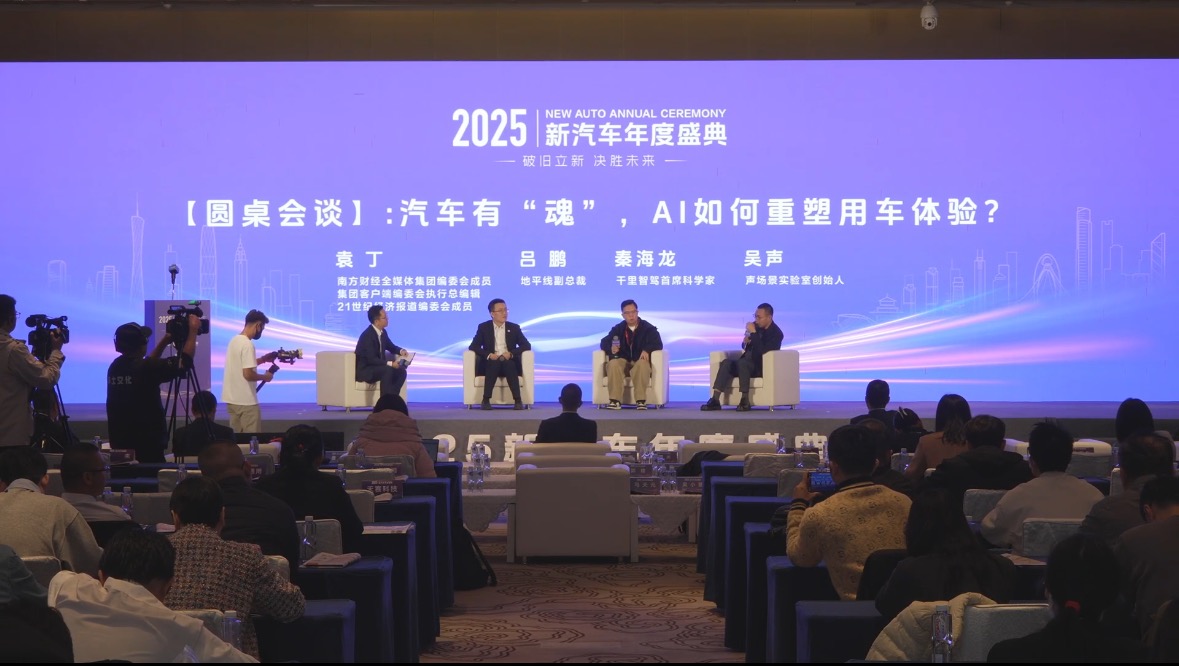
汽车有“魂”,AI如何重塑用车体验?
2 1 Shi Ji Jing Ji Bao Dao· 2025-11-21 00:30
当人工智能的浪潮从虚拟世界涌向物理现实,汽车产业正站在这场变革的最前沿。自动驾驶领域技术路线纷繁复杂,"端到端"、"世界模型"、"VLA"等术语 层出不穷,业界对于何为"最优解"莫衷一是。 在由南方财经全媒体集团指导、21世纪经济报道主办的2025新汽车年度盛典上,南方财经全媒体集团编委会成员、集团客户端编委会执行总编辑、21世纪经 济报道编委会成员袁丁主持题为《汽车有"魂",AI如何重塑用车体验?》的圆桌论坛,邀请到地平线副总裁吕鹏、千里智驾首席科学家秦海龙和场景实验室 创始人吴声三位业界专家,旨在穿透技术路线的迷雾,深入探讨AI如何超越工具属性,为汽车注入可进化、可感知的"灵魂",从而彻底重塑人类的用车体 验。 场景实验室创始人吴声旗帜鲜明地指出,AI驾驶已超越"工具"范畴,正成为一种真实的生活方式,是通向AGI(通用人工智能)的最佳实践。 袁丁:当AI加速渗透物理世界,自动驾驶领域正处在充满分歧的路口。端到端、世界模型、VLA路线,哪条路线是自动驾驶的"最优解"?我们还要等待多久 才能迎来物理AI的曙光?吴声老师曾提出"AI场景革命元年"的概念,在汽车行业,AI场景应如何定义?目前是处于元年,还是已进入 ...
nv+
小熊跑的快· 2025-11-20 14:21
Core Insights - Nvidia reported strong financial results for FY26Q3, with revenue of $57.006 billion, a year-over-year increase of 62% and a quarter-over-quarter increase of 22%, exceeding market expectations [1] - The company achieved a net profit of $31.910 billion, up 65% year-over-year and 21% quarter-over-quarter, also surpassing market forecasts [1] - Earnings per share (EPS) reached $1.30, reflecting a 67% increase year-over-year and a 20% increase quarter-over-quarter, exceeding the expected $1.26 [1] Financial Performance - FY26Q4 revenue is projected to be $65 billion, representing a 65% year-over-year increase and a 14% quarter-over-quarter increase, surpassing market expectations of $61.6 billion [3] - Gross margin for FY26Q3 was reported at 73.4%, exceeding the previous guidance of 72.4%, with guidance for FY26Q4 set at 74.8% [4] Business Segments - Data Center revenue reached $43.028 billion, a 56% year-over-year increase and a 57% quarter-over-quarter increase, exceeding expectations [3] - Gaming revenue for FY26Q3 was $4.265 billion, falling short of the expected $4.425 billion [3] - Automotive revenue was $0.592 billion, also below the expected $0.622 billion [3] Market Outlook - Nvidia's CEO emphasized that AI investments are not in a bubble, citing three major paradigm shifts in the information technology sector that will drive infrastructure growth in the coming years [5] - The company has established strong partnerships across its supply chain, ensuring effective planning and management of resources [5] - The global AI infrastructure market is projected to reach $3-4 trillion by 2030, indicating significant growth potential [3]
小鹏汽车Q3业绩和Q4指引均不及预期 新P7上市次月下滑、G9/X9月销双双跌破千台
Xin Lang Zheng Quan· 2025-11-20 10:07
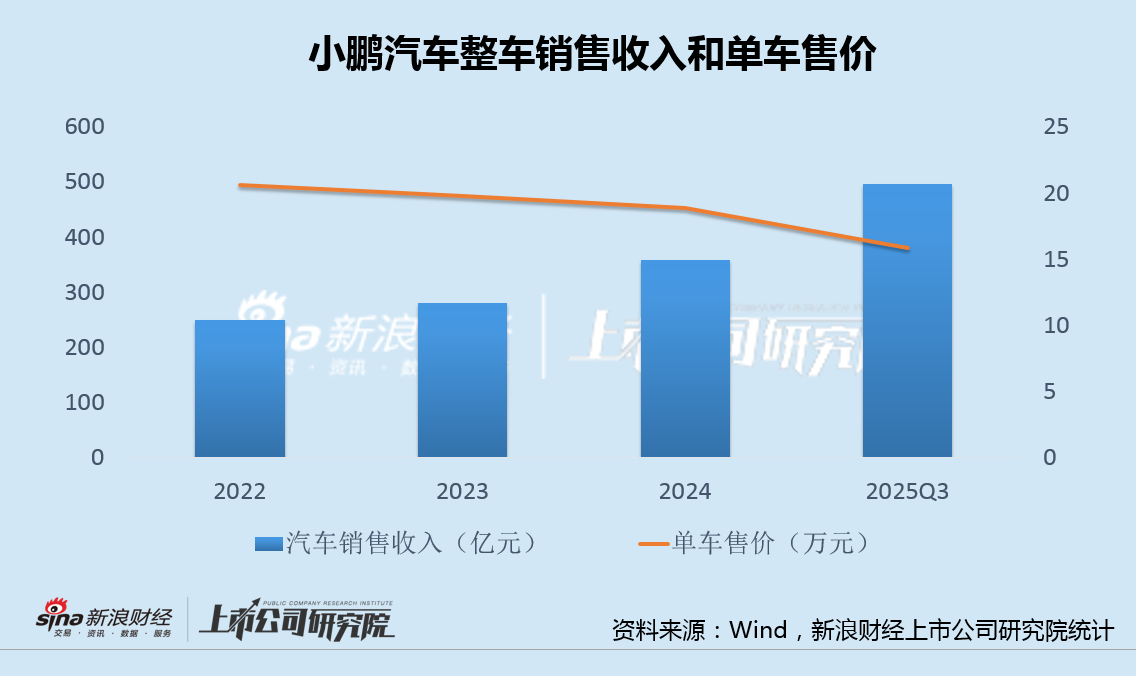
Core Viewpoint - XPeng Motors reported a significant increase in delivery volume and revenue for Q3, but the market reacted negatively due to lower-than-expected guidance for Q4 and concerns over declining vehicle prices and sales of higher-end models [1][4][12] Financial Performance - In Q3, XPeng Motors delivered 116,000 vehicles, a year-on-year increase of 149.3%, with revenue reaching 20.38 billion yuan, up 101.8% year-on-year [1] - The net loss for the quarter was 380 million yuan, a significant reduction from 1.81 billion yuan in the same period last year [4] - The company expects Q4 revenue to be between 21.5 billion and 23 billion yuan, representing a growth of approximately 33.5% to 42.8% [1] Market Reaction - Following the earnings report, XPeng's stock fell 6% in the US and 10.47% in Hong Kong, with continued declines over the next two days, indicating market disappointment [2][4] Sales Structure and Pricing - The MONA M03 model, positioned in the mid-to-low-end market, accounted for about 40% of sales, contributing to revenue growth but leading to a decline in average selling prices [2][4] - The average selling price of XPeng vehicles dropped from 205,700 yuan in 2022 to 188,500 yuan in 2024, with further declines noted in Q3 to 156,000 yuan [6][4] High-End Model Performance - Sales of higher-end models, such as the new P7, showed a decline after initial success, with October sales dropping over 30% from the previous month [9] - The G9 and X9 models also experienced significant sales drops, with monthly sales falling below 1,000 units [9][11] Strategic Diversification - Despite poor performance in the automotive sector, XPeng is expanding into new areas such as robotics and flying cars, which raises concerns about the focus on its core business [3][12] - The company aims to accelerate the development of AI and Robotaxi technologies, with plans for mass production by 2026 [11][12] Profitability and Margins - XPeng's gross margin reached 20.1% in Q3, but the automotive business gross margin fell to 13.1%, down from 14.3% in the previous quarter, raising further concerns about future profitability [12]