
新能源转型

Search documents
沃尔沃渠道变革背后的焦虑:降价带不动销量,Q2首现季度亏损
凤凰网财经· 2025-08-01 13:48
Core Viewpoint - Volvo is undergoing significant changes in response to the dual pressures of the rising tide of new energy vehicles and intensified market competition, including a reform of its dealer management processes and a global workforce reduction of 3,000 employees [1][6]. Group 1: Response to New Energy Rise - Volvo will reform its dealer management processes in the second half of this year, shifting the focus from sales and management to the quality of consumer service [2]. - The company will implement a "one price" model, ensuring uniform pricing across all dealers, which aims to eliminate the price negotiation space that dealers traditionally relied on [2]. - The reform is a response to the increasing market share of new energy brands, which have rapidly gained traction with differentiated products and models [2]. Group 2: Operational Challenges and Cost-Cutting Measures - Volvo has initiated a global layoff plan affecting approximately 3,000 employees, with 1,200 positions in Sweden and 1,800 in other markets, as part of a broader cost-cutting strategy [6]. - The company reported a revenue decline of 11.7% to 82.9 billion Swedish Krona in Q1, with operating profit plummeting by 59.5% to 1.9 billion Swedish Krona [6][7]. - In Q2, Volvo experienced a further revenue drop of 8% to 93.5 billion Swedish Krona, marking the first quarterly operating loss since its IPO in 2021, primarily due to a one-time non-cash impairment charge of 11.4 billion Swedish Krona [7][8]. Group 3: Struggles in Electric Vehicle Transition - Volvo's sales performance is hindered by a lack of product updates and a slow transition to electric vehicles, with the company recently lowering its 2030 electrification target to 90%-100% electric and hybrid models [11][13]. - In the first half of this year, Volvo's electric vehicle sales in China fell by 57% to 940 units, while overall new energy vehicle sales accounted for only 9.97% of total sales [10][12]. - The company has shifted its strategy to focus on hybrid models, launching a new hybrid architecture to address the shortcomings in its electric vehicle offerings [12].

隆盛科技(300680):EGR老牌供应商混动再成长,马达铁芯、机器人布局加速正当时(机器人系列深度报告之三十)
Shenwan Hongyuan Securities· 2025-08-01 12:10
Investment Rating - The report initiates coverage with a "Buy" rating for the company [7][8]. Core Views - The company is a core supplier of EGR systems and is actively exploring potential business opportunities in various sectors, including aerospace and humanoid robotics. It has established three main business segments: EGR systems, new energy electric drive core components, and precision parts. The company is expected to benefit from the growing demand for PHEV vehicles and the expansion of its new energy segment [7][15][25]. Financial Data and Profit Forecast - The company is projected to achieve total revenue of CNY 3,015 million in 2025, with a year-on-year growth rate of 25.8%. The net profit attributable to the parent company is expected to reach CNY 296 million, reflecting a growth rate of 32.1% [2][8]. - Earnings per share (EPS) is forecasted to be CNY 1.30 in 2025, with a gross margin of 18.3% [2][8]. Business Segments - EGR Systems: The EGR system is a core component for commercial vehicles and new energy PHEVs, with stable demand driven by stricter emission standards. The company has a strong market position, serving major clients such as BYD, Geely, and Chery [7][18][51]. - New Energy Segment: The new energy electric drive core components segment is expected to see significant growth, with a market size projected to exceed CNY 10 billion by 2025. The company has established strong competitive advantages in manufacturing processes and customer relationships [7][9][18]. - Precision Parts: This segment, primarily driven by the subsidiary Weiyan Precision, is also expected to contribute significantly to revenue, with a focus on electric vehicle components and thermal management systems [18][20]. Growth Drivers - The company is well-positioned to benefit from the increasing penetration of PHEV vehicles, which require EGR systems as standard components. The anticipated growth in the new energy market and the company's strategic investments in humanoid robotics and aerospace manufacturing are expected to open new growth avenues [7][10][25]. - The report highlights the company's successful transition to new energy and precision parts, which has led to a steady increase in revenue and profitability since 2018 [25][30]. Valuation - The company is valued at a projected PE ratio of 38x for 2025, with a target market capitalization of CNY 11.1 billion, indicating a potential upside of 36% from current levels [8][9].
湘财证券晨会纪要-20250801
Xiangcai Securities· 2025-08-01 06:41
Industry Overview - The report focuses on the public utility sector, specifically highlighting Jingneng Power's regional advantages supporting electricity prices and the potential for coal price improvements [2] - Jingneng Power's business model includes coal-fired power generation, accelerated transition to renewable energy, cross-regional collaboration, and synchronized growth in heating services [2] Company Performance - As of the end of 2024, Jingneng Power's installed capacity reached 23.44 million kilowatts, a year-on-year increase of 16.03%, with coal-fired capacity at 21.39 million kilowatts [2] - The company has seen a significant increase in renewable energy capacity, reaching 2.05 million kilowatts, up 382.94% from the end of 2023 [3][4] - In 2024, the company reported a revenue of 35.428 billion yuan, a year-on-year increase of 6.54%, and a net profit of 1.723 billion yuan, up 95.52% [5] Electricity Generation and Pricing - In Q1 2025, Jingneng Power's revenue was 9.885 billion yuan, a year-on-year growth of 4.59%, with a net profit of 1.063 billion yuan, up 129.84% [6] - The company completed an electricity generation of 21.661 billion kilowatt-hours in Q1 2025, a decrease of 4.2% year-on-year, with a notable increase in renewable energy generation [6] - The electricity pricing environment is favorable, particularly in regions with high energy consumption, which is expected to support revenue growth [6] Cost Structure and Coal Procurement - The majority of Jingneng Power's coal procurement is through long-term contracts, with 94% of total coal consumption sourced this way [7] - The average price of coal has decreased, with a reported decline of 11.6% year-on-year for 2024, indicating potential for further cost optimization [7] Profit Forecast and Investment Recommendation - The report forecasts Jingneng Power's net profit for 2025, 2026, and 2027 to be 3.754 billion, 4.005 billion, and 4.554 billion yuan respectively, with year-on-year growth rates of 117.87%, 6.67%, and 13.73% [8] - The report assigns a "buy" rating for the company based on its favorable operational and market conditions [8]

华能国际(600011):成本改善释放煤电盈利,风光装机增长支撑业务持续扩张
EBSCN· 2025-08-01 05:41
Investment Rating - The investment rating for the company is maintained as "Buy" [4][6]. Core Views - The company reported a revenue of 1120.32 billion yuan for the first half of 2025, a decrease of 5.7% year-on-year, while the net profit attributable to shareholders was 92.62 billion yuan, an increase of 24.3% year-on-year [1]. - The significant growth in Q2 net profit by 50% year-on-year was primarily driven by a decrease in fuel costs and an expansion in renewable energy capacity [1][2]. - The company’s coal power generation showed a marginal improvement in growth rate, with a notable decrease in costs, enhancing profitability [3]. Summary by Sections Financial Performance - In the first half of 2025, the company’s domestic power plants generated 2056.83 billion kWh, a decrease of 2.37% year-on-year, with coal power generation down by 7.06% [2]. - The total profit from coal power generation increased by 84% year-on-year, reaching 73.10 billion yuan [2]. Cost and Profitability - The average coal price for the first half of 2025 was 917.05 yuan/ton, down 9.23% year-on-year, which significantly buffered the impact of electricity prices on profitability [3]. - The profit per kWh from coal power generation improved to 0.046 yuan, an increase of 0.023 yuan year-on-year [3]. Renewable Energy Expansion - The company added 1.9 GW of wind power and 4.3 GW of solar power capacity in the first half of 2025, contributing to a total profit of 57.33 billion yuan from renewable energy, a year-on-year increase of 4.58 billion yuan [3]. Earnings Forecast and Valuation - The forecast for net profit attributable to shareholders for 2025-2027 has been revised upwards to 122.93 billion yuan, 130.82 billion yuan, and 139.13 billion yuan respectively [4]. - The expected EPS for the same period is projected to be 0.78 yuan, 0.83 yuan, and 0.89 yuan, with corresponding P/E ratios of 10, 9, and 9 [4][5].

被苹果选中的电池公司赴港IPO,动力电池出货量进入全球前十
3 6 Ke· 2025-08-01 01:12
Core Viewpoint - XINWANDA is expanding its business from consumer batteries to power batteries and energy storage systems, showing significant growth in revenue and market position despite challenges in the consumer electronics sector [2][12][34]. Financial Performance - In 2024, XINWANDA achieved total revenue of 56.021 billion RMB, an increase of over 8 billion RMB compared to the previous year, with a net profit growth of nearly 400 million RMB [2][7]. - The company experienced a net profit margin of less than 1% in 2024, indicating challenges in profitability despite revenue growth [2]. - The revenue from consumer batteries has decreased from 61.4% in 2022 to 54.3% in 2024, reflecting a shift in business focus [12][14]. Business Segments - Consumer batteries remain the largest revenue source, but their market share is declining due to weak demand in the consumer electronics industry [2][12]. - Power battery shipments doubled in 2024, reaching 25.29 GWh, placing XINWANDA among the top ten global power battery manufacturers [2][17]. - The revenue from power batteries increased by 4.3 billion RMB in 2024, driven by a 125.9% year-on-year growth in shipments [17][19]. Market Position - XINWANDA holds a leading position in the global smartphone battery market with a market share of 34.3% and is the second-largest manufacturer of notebook and tablet batteries with a 21.6% market share [14][16]. - The company has established partnerships with major automotive clients, including Li Auto, XPeng, and Renault, enhancing its position in the power battery sector [2][19]. Research and Development - XINWANDA has invested significantly in R&D, with expenditures of 2.742 billion RMB in 2022, 2.711 billion RMB in 2023, and 3.330 billion RMB in 2024 [9][11]. - The company employs approximately 9,722 R&D personnel, accounting for 16.3% of its total workforce [31][32]. Strategic Goals - The upcoming IPO aims to enhance XINWANDA's international brand image, core competitiveness, and operational management [33]. - The company is focused on balancing scale expansion with profitability to strengthen its position in the global new energy market [34].
别人降价我涨价!解放董事长李胜:我们只卷价值,不卷价格 | 头条
第一商用车网· 2025-07-31 07:48
Core Viewpoint - The article emphasizes that FAW Jiefang is navigating a competitive commercial vehicle market by focusing on quality over price, successfully transitioning to new energy vehicles, and expanding its international presence [2][6][12]. Group 1: Market Position and Performance - Since 2025, the commercial vehicle industry in China has faced intensified competition and accelerated new energy transitions. FAW Jiefang has achieved impressive results, holding the top market share in various segments including heavy trucks and new energy vehicles [6][14]. - FAW Jiefang's brand value is reported at 145.03 billion yuan, maintaining its position as the leading brand in the commercial vehicle sector for 14 consecutive years [6]. Group 2: Quality Focus - FAW Jiefang's chairman, Li Sheng, highlighted the company's commitment to quality, stating that quality is prioritized over sales volume. The term "quality" was mentioned over 80 times during the media exchange, indicating its significance to the company [8][9]. - The company is currently undergoing a three-year quality improvement initiative, which has already resulted in a 30% reduction in vehicle compensation frequency and a 26.6% decrease in after-sales fault rates [9]. Group 3: Pricing Strategy - FAW Jiefang has adopted a strategy of not participating in price wars, even increasing prices for all models in the first quarter of the year. This approach, while potentially leading to a slight decline in market share, is viewed as a long-term benefit [12][9]. - The company believes that maintaining high quality justifies its pricing strategy, as customers continue to value the brand's reputation for quality [12]. Group 4: New Energy Transition - FAW Jiefang has successfully transitioned to new energy vehicles, with significant growth in market share for new energy heavy trucks and traction vehicles, increasing by 7.67 and 7.89 percentage points respectively [14][16]. - The company has developed a comprehensive strategy for new energy, focusing on product, capacity, and model layouts, and has established partnerships with major players in the energy sector [19][17]. Group 5: International Expansion - FAW Jiefang plans to invest 498 million yuan to establish eight wholly-owned subsidiaries in countries such as Uzbekistan, Indonesia, and Mexico, as part of its "SPRINT 2030" international strategy [20][21]. - Despite a decline in commercial vehicle exports due to the Russian market, FAW Jiefang reported a 60% growth in other overseas markets, indicating strong performance and a positive outlook for future international sales [23][24].


每天解读一家上市企业:全球水电龙头—中国电建
Sou Hu Cai Jing· 2025-07-31 06:00
Company Overview - China Power Construction Group Co., Ltd. (China Power Construction) was established on November 30, 2009, and listed on the Shanghai Stock Exchange in 2011 under the stock code 601669 [2][3] - The company is a subsidiary of China Power Construction Group, a large state-owned enterprise approved by the State Council in September 2011, headquartered in Haidian District, Beijing [2] Industry Position - China Power Construction ranks first globally in integrated hydropower construction capabilities and performance [2] - The company has been listed among the top 150 of the Fortune Global 500 for four consecutive years and has consistently topped the ENR Global Engineering Design Companies list [3][5] - The company has a domestic hydropower engineering market share exceeding 90% and operates in over 130 countries [5] Business Development - The company aims to become a "world-class green and low-carbon energy supplier" by 2024, with a target of over 90% of its installed capacity coming from clean energy by 2025 [3] - Major projects include the Three Gorges Project and the Baihetan Hydropower Station, as well as international collaborations such as the Poland railway restoration project and the Laos hydropower station [3] Financial Performance - In 2024, the company reported revenue of 633.685 billion yuan, a year-on-year increase of 4.07%, and a net profit of 12.015 billion yuan [11] - The company’s operating cash flow increased by 10.34% year-on-year, reaching 24.546 billion yuan [11] - The total contract backlog was 2.13 trillion yuan, reflecting a 15.37% year-on-year growth [11] Market Dynamics - The announcement of the 1.2 trillion yuan investment in the Yarlung Tsangpo River downstream hydropower project has generated significant interest in the capital market, leading to a three-day stock price surge [10][9] - The company’s market capitalization reached approximately 120 billion yuan as of July 30, 2025 [11] Technological and Competitive Advantages - The company holds a leading position in the engineering contracting sector, ranking 6th among global contractors and leading in the domestic market [11] - It has a comprehensive service model that integrates surveying, design, construction, and operation across the entire industry chain [11] - The company has a strong focus on R&D, with 24.3 billion yuan allocated for research expenses in 2024, marking a 4.3% increase [11]

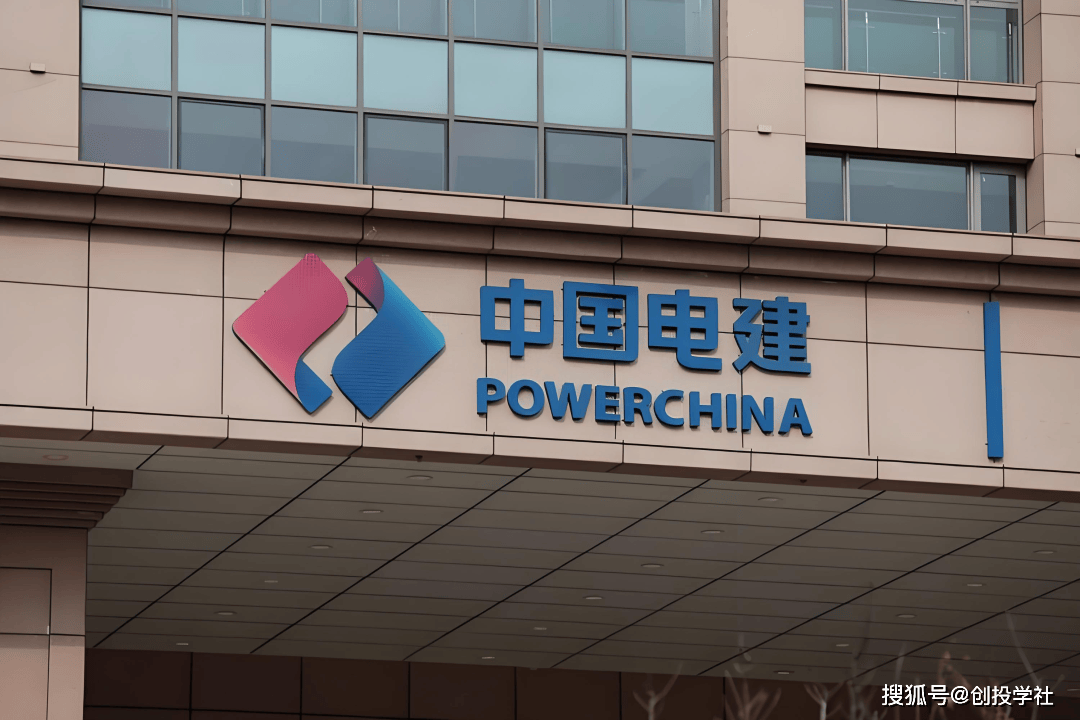
沃尔沃渠道变革背后的焦虑:降价带不动销量,Q2首现季度亏损,电动化转型乏力
Zheng Quan Zhi Xing· 2025-07-31 02:36
Core Viewpoint - Volvo is undergoing significant adjustments in response to the dual pressures of the new energy wave and intensified market competition, including a reform of its dealer management processes and a global workforce reduction of 3,000 employees, indicating severe challenges faced by the company [1][4]. Group 1: Dealer Management Reform - Volvo will reform its dealer management processes in the second half of this year, shifting the focus of dealer assessments from management and sales to the quality of consumer service [2]. - The company will implement a "one price" model, ensuring uniform pricing across all dealers, which aims to eliminate the price negotiation space that has traditionally benefited dealers [2]. - This reform is a response to the increasing market share of new energy brands that have rapidly emerged, forcing Volvo to adjust its sales strategy to remain competitive [2][3]. Group 2: Workforce Reduction - The global workforce reduction plan involves approximately 3,000 employees, with 1,200 positions in Sweden and 1,800 in other markets, as part of a broader cost-cutting initiative [4]. - This initiative is part of a 18 billion Swedish Krona cost and cash action plan aimed at optimizing cost structures and investment efficiency to counteract declining sales and increased competition [4][6]. - The company reported a significant drop in revenue and operating profit in Q1, with revenue down 11.7% to 82.9 billion Swedish Krona and operating profit down 59.5% to 1.9 billion Swedish Krona [4][5]. Group 3: Sales Performance and Challenges - Volvo recorded its first quarterly operating loss since going public in 2021, primarily due to a one-time non-cash impairment charge of 11.4 billion Swedish Krona, linked to tariffs and market demand issues [6]. - The company’s sales in China have faced significant challenges, with a 10% decline in cumulative sales in the first half of the year compared to the previous year [7][8]. - Despite attempts to boost sales through price reductions, including a 138,000 Yuan drop for the 2026 XC60 model, the company continues to struggle with a lack of product updates and a slow transition to new energy vehicles [7][8]. Group 4: New Energy Transition - Volvo's new energy vehicle sales, including plug-in hybrids, saw an 11% decline to 155,000 units, with the share of new energy vehicles in total sales at only 43.82% [8]. - The company’s fully electric vehicle sales in China plummeted by 57% to 940 units in the first half of the year, indicating a significant gap in performance compared to new energy brands [8][10]. - Volvo has adjusted its 2030 electrification strategy, now aiming for 90%-100% of its sales to be from new energy vehicles, including both fully electric and plug-in hybrid models [10].

一汽解放股价微跌0.14% 上半年中重卡市场份额23.2%居首
Jin Rong Jie· 2025-07-30 17:23
Group 1 - The stock price of FAW Jiefang is reported at 7.12 yuan as of July 30, 2025, with a slight decrease of 0.01 yuan, representing a drop of 0.14% from the previous trading day [1] - FAW Jiefang is a leading enterprise in the commercial vehicle industry in China, specializing in the research, production, and sales of commercial vehicles and core components, including heavy trucks, medium trucks, and light trucks [1] - The company holds a dominant market share, with a terminal market share of 23.2% in the domestic medium and heavy truck market for the first half of the year, maintaining its position as the industry leader [1] Group 2 - FAW Jiefang has accelerated its transition to new energy vehicles, achieving a continuous doubling of sales for three consecutive years [1] - The company is expanding its overseas presence with the establishment of eight wholly-owned subsidiaries, maintaining a leading market share in key markets such as South Africa [1] - FAW Jiefang has signed a strategic cooperation agreement with Telai Electric, collaborating with CATL and the State Grid to develop a charging network [1]
积极破解“内卷”困局 打造民族汽车品牌——专访一汽解放董事长、党委书记李胜
Zhong Guo Jin Rong Xin Xi Wang· 2025-07-30 09:19
Core Viewpoint - In the first half of the year, FAW Jiefang maintained its leading position in the domestic medium and heavy truck market with a market share of 23.2%, emphasizing a commitment to quality, technological innovation, and ecological collaboration to address industry challenges and pursue long-term growth [1][2]. Group 1: Strategic Response to Market Challenges - FAW Jiefang is facing operational pressures in the commercial vehicle industry but remains focused on strategic stability, emphasizing the potential for growth despite competition from new entrants like Great Wall and BYD [2]. - The company is implementing a three-year quality improvement project, resulting in a 30.3% year-on-year reduction in external quality losses and a 26% decrease in after-sales claims frequency within three months [2]. - FAW Jiefang is enhancing its core technology capabilities by focusing on independent research and development of key powertrain components, creating a unique competitive edge through a collaborative innovation system [2]. Group 2: Value Orientation and Market Stability - The company refuses to engage in price wars, maintaining its market share while focusing on brand value and long-term competitiveness [3]. - FAW Jiefang has implemented a price increase strategy across its entire model range to protect brand value and second-hand vehicle retention rates, despite short-term sales impacts [3]. - The company is leveraging big data from its vehicle networking platform to optimize operational fuel consumption and enhance after-market services, offering original parts at a 30% lower price than installed components [3]. Group 3: Long-term Vision and Ecosystem Collaboration - FAW Jiefang is accelerating global R&D and talent acquisition, establishing a "four countries, nine locations" R&D network to enhance local adaptability and focus on new technologies [4]. - The company plans to launch new products in the second half of the year, including upgrades to traditional vehicles and smart vehicle products [4]. - FAW Jiefang is restructuring its marketing system to a user co-creation model and has formed strategic partnerships to enhance the development of new energy commercial vehicles and charging networks [5].