
物理AI

Search documents
Why big pharma is teaming up with AI giants to speed up drug discovery and make work easier for health care workers
Fortune· 2025-11-19 17:36
Core Insights - Nvidia's partnerships with Eli Lilly and Johnson & Johnson highlight a growing trend in the pharmaceutical industry to leverage AI for accelerating drug discovery and enhancing healthcare operations [1][4]. Group 1: AI in Drug Discovery - Eli Lilly aims to expedite drug discovery processes by creating a new Nvidia-chip powered "supercomputer" and "AI factory" set to launch by early 2026, utilizing AI models trained on extensive experimental data [3]. - The average cost and time for new drug discovery exceed $2 billion and over a decade, respectively, indicating a significant opportunity for AI to streamline these processes [2]. Group 2: Applications in Healthcare - Johnson & Johnson's partnership with Nvidia focuses on using AI to create simulated environments for surgical teams, enhancing training and improving clinical outcomes [4]. - The potential for generative AI in the pharmaceutical and medical products sectors could unlock tens of billions in value by improving drug discovery, clinical trials, and treatment administration [5]. Group 3: Customization and Specificity - There is a growing demand for AI solutions tailored to specific business needs within the pharmaceutical industry, moving away from generic platforms [7][8]. - Eli Lilly's Chief AI Officer emphasizes the importance of proprietary data and customized AI models to drive significant advancements in drug discovery [8]. Group 4: Future of AI in Surgery - The integration of physical AI in surgical settings could lead to a hybrid model where human surgeons collaborate with robots and digital agents, potentially transforming surgical techniques [10][11]. - The World Health Organization projects a global shortfall of 11 million health workers by 2030, underscoring the need for AI to assist in healthcare delivery [10].



智能汽车系列报告(四):小鹏25Q3亏损收窄,盈利拐点在望
Shanghai Aijian Securities· 2025-11-19 12:50
Investment Rating - The report assigns an investment rating of "Outperform the Market" for the automotive industry, indicating a positive outlook compared to the relevant market index [5]. Core Insights - The report highlights that Xiaopeng Motors reported a narrowing net loss of 380 million yuan in Q3 2025, with a gross margin exceeding 20%. The company anticipates Q4 2025 vehicle deliveries to be approximately 125,000 to 132,000 units, representing a year-on-year growth of about 36.6% to 44.3% [2]. - Xiaopeng's total revenue for Q3 2025 reached 20.38 billion yuan, with a year-on-year increase of 101.8%. The automotive sales revenue was 18.05 billion yuan, up 105.3% year-on-year [2]. - The report emphasizes the strong growth in vehicle deliveries, with Q3 2025 deliveries reaching 116,007 units, a year-on-year increase of 149.3% [2]. - The company is focusing on dual-energy products and plans to launch several long-range extended-range models in 2026, aiming to capture the traditional fuel vehicle market in northern and inland cities [2]. - Xiaopeng is advancing its technology strategy centered on physical AI, with plans for significant upgrades in smart driving capabilities and the introduction of Robotaxi models by 2026 [2]. Summary by Sections Financial Performance - Xiaopeng's Q3 2025 total revenue was 20.38 billion yuan, with a gross margin of 20.1%, reflecting a year-on-year increase of 4.8 percentage points. The net loss narrowed to 380 million yuan, showcasing improved cost control [2]. Market Expansion - The company reported a strong increase in overseas deliveries, surpassing 5,000 units in September 2025, with a year-on-year growth of 79%. The global sales network now covers 52 countries and regions [2]. Technological Development - Xiaopeng is focusing on the development of its self-researched Turing AI chip and plans to launch the VLA 2.0 model in Q1 2026, which is expected to enhance the smart driving experience significantly [2].
小鹏汽车-W(9868.HK):三季度亏损进一步收窄 物理AI与新车周期共振
Ge Long Hui· 2025-11-19 11:55
Core Insights - The company reported its Q3 2025 earnings, achieving a revenue of 20.38 billion yuan, with year-on-year and quarter-on-quarter increases of 101.8% and 11.5% respectively, while the net profit attributable to shareholders was -0.38 billion yuan, narrowing by 78.9% year-on-year and 20.3% quarter-on-quarter [1] Group 1: Financial Performance - In Q3, the company delivered 116,000 vehicles, representing a year-on-year growth of 149.3% and a quarter-on-quarter increase of 12.4% [1] - The automotive business revenue reached 18.05 billion yuan, with year-on-year and quarter-on-quarter growth of 105.3% and 6.9% respectively [1] - The average selling price (ASP) per vehicle in Q3 was 156,000 yuan, showing a slight decline of 0.8 thousand yuan quarter-on-quarter [1] - The automotive gross margin for Q3 was 13.1%, down by 1.2 percentage points from the previous quarter, attributed to product upgrades [1] Group 2: Strategic Partnerships and Revenue Growth - The overall gross margin for the company in Q3 was 20.1%, an increase of 4.8 and 2.8 percentage points year-on-year and quarter-on-quarter respectively, driven by improved profitability from service and other income [2] - Revenue from service and other income reached 2.33 billion yuan, with year-on-year and quarter-on-quarter increases of 78.1% and 67.3% respectively, and a gross margin of 74.6%, up by 14.5 and 21.1 percentage points [2] - The company expanded its collaboration with Volkswagen, which became a strategic partner for the second-generation VLA, indicating potential for increased revenue from R&D services [2] Group 3: Product Development and Future Outlook - The company launched the Kunpeng Super Range Extender, featuring a fast-charging lithium iron phosphate battery with a pure electric range exceeding 450 km, and plans to release seven new models with super range extender configurations by 2026 [3] - The second-generation VLA model was introduced, enabling direct output from visual signals to action commands, with a full rollout planned for Q1 2026 [3] - The company aims to launch three Robotaxi models in 2026 and initiate trial operations in cities like Guangzhou, with plans to open the SDK for global partners [3] Group 4: Profit Forecast and Investment Recommendations - The company adjusted its net profit forecasts for 2025-2027 to -1.4 billion, +2 billion, and +4.5 billion yuan respectively, reflecting expectations for growth driven by the new range extender models and AI capabilities [4] - The company maintains a "recommended" rating, anticipating new business models emerging from advancements in AI and mass production capabilities [4]
小鹏汽车-W(09868):看好强势产品周期,物理AI商业化推进中
GOLDEN SUN SECURITIES· 2025-11-19 08:16
Investment Rating - The report maintains a "Buy" rating for the company [7][9]. Core Insights - The company is expected to benefit from a strong product cycle, overseas expansion, advancements in autonomous driving, and emerging business opportunities in robotics and Robotaxi [7]. - The company delivered 116,007 vehicles in Q3, a year-on-year increase of 149%, leading to a revenue growth of 102% to 20.38 billion yuan [1]. - The gross margin for Q3 was 20.1%, with a notable improvement in profitability as the net loss narrowed significantly [1][2]. Financial Performance - For Q3, the company achieved a revenue of 20.38 billion yuan, with automotive sales revenue of 18.1 billion yuan and service revenue of 2.3 billion yuan, reflecting year-on-year growth of 105% and 78% respectively [1]. - The company’s Q3 net loss was 380 million yuan, a significant reduction compared to previous periods, with a Non-GAAP net loss of 150 million yuan, narrowing by 90% year-on-year [1]. - The projected total revenue for Q4 is expected to be between 21.5 billion and 23 billion yuan, representing a year-on-year increase of 33.5% to 42.8% [2]. Product and Market Outlook - The company plans to launch the X9 super range extender model on November 20, with additional models set to be released in early 2026 [3]. - The overseas market is showing strong growth, with Q1-Q3 overseas deliveries reaching 29,706 units, a 79% increase year-on-year [4]. - The company is enhancing its autonomous driving capabilities with the introduction of the VLA 2.0 model, which significantly improves performance in complex driving scenarios [5]. Future Projections - The company forecasts total vehicle sales of approximately 440,000, 700,000, and 910,000 units for the years 2025, 2026, and 2027 respectively, with total revenues projected to reach 773 billion yuan by 2025 [7][8]. - The gross margin is expected to remain around 20% for Q4, with a long-term target of achieving a Non-GAAP net profit margin of 5.1% by 2027 [2][8].
融资数亿、营收过亿!黄仁勋频频关注的具身赛道隐形冠军浮出水面
量子位· 2025-11-19 06:20
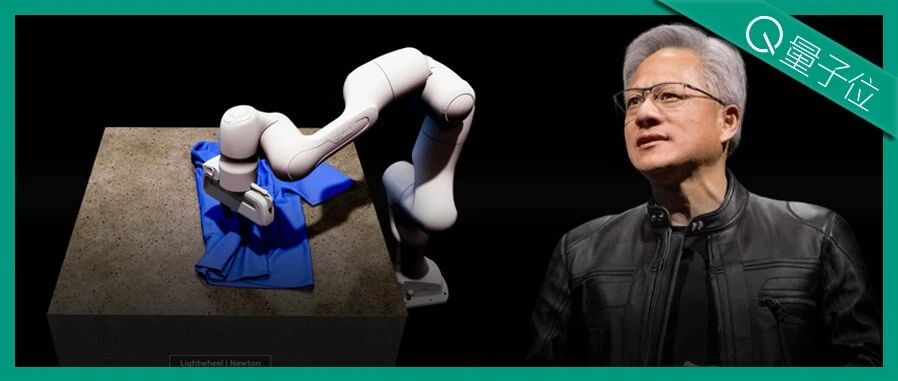
衡宇 发自 凹非寺 量子位 | 公众号 QbitAI 刚刚,一家AI公司的融资引发了圈内热议。 Why?因为它与具身智能息息相关,也与通往物理AI的世界模型密不可分。更准确来说,完成融资的这家公司是站在二者相关生态上的关键供 应链公司——仿真合成数据公司。 量子位最新获悉, 仿真合成数据公司光轮智能,刚刚完成数亿元A轮、A+轮融资 。 此次披露的投资方里,既有东方富海、九派资本等机构投资者,也有三七互娱、琥珀资本等产业方。老股东辰韬资本也持续加注。 而同样受关注的是它合作的客户,既有英伟达、谷歌、阿里、字节,也有Figure AI、1X Technology、智元机器人、银河通用,还有 Toyota,BOSCH、比亚迪、吉利…… 一己之力,串起了整个AI生态 。 有消息称,这家全球唯一专注仿真合成数据的技术公司, 营收已突破亿元大关 。 而作为全球首家把生成式AI融入仿真技术的公司, 光轮智能的创始人是圈内声名卓著的大佬谢晨 ——之前英伟达、Cruise及蔚来的仿真负责 人。 最近一次出圈,则因为与黄仁勋女儿Madison Huang的首秀对谈,谈论的话题还是风口上的物理AI…… 物理AI是黄仁勋在2025年 ...
年销量100万台:老实人何小鹏,搞AI比李想更激进
3 6 Ke· 2025-11-19 02:09
Core Insights - Xiaopeng Motors aims to produce over 1 million humanoid robots annually by 2030, indicating a belief in a market potential that surpasses that of automobiles [1][2] - The company has gained significant market attention and stock price increases due to its ambitious plans for Robotaxi and humanoid robots, surpassing competitors like Li Auto and NIO in market capitalization [1][5] Group 1: Company Strategy and Vision - Xiaopeng Motors is recognized for setting ambitious goals, such as developing flying cars and humanoid robots, positioning itself as a leader in AI-driven automotive technology [2][6] - The company has established a strategic focus on AI, launching "Pengxing Intelligent" in 2020 and committing to an "AI-driven" strategy, with plans to transition from software-defined to AI-defined vehicles [2][3] - The second-generation VLA (Vision-Language-Action) model is positioned as a foundational technology for various applications, including Robotaxi and humanoid robots, aiming to create a cross-hardware ecosystem [11][18] Group 2: Market Position and Competition - Xiaopeng Motors is seen as a direct competitor to Tesla, with a focus on innovative products like Robotaxi and humanoid robots, while also facing challenges from other automakers entering the robotics space [6][10] - Despite being in a loss-making position, Xiaopeng's market valuation has surpassed that of profitable competitors, highlighting the importance of narrative and vision in attracting investor interest [5][20] - The company faces competition not only from traditional automakers but also from established players in the robotics field, with at least 20 other car manufacturers announcing plans to develop humanoid robots [15][20] Group 3: Technological Challenges and Development - The humanoid robot IRON is set for mass production by the end of 2026, but its high cost (estimated around $30,000) may limit its competitiveness against cheaper alternatives [15][20] - The VLA model has undergone significant changes, with a shift to an end-to-end approach that aims to enhance its capabilities in understanding and interacting with the physical world [18][19] - The commercial viability of Robotaxi and humanoid robots remains uncertain, with challenges such as high costs, regulatory hurdles, and public safety concerns impacting the broader adoption of these technologies [20][21]
61岁贝佐斯创业物理AI!亲任CEO,首轮获投62亿美元融资
具身智能之心· 2025-11-19 00:34
贝佐斯亲身下场物理AI了,亲自担任CEO的那种。 纽约时报消息,这名前世界首富创立了一家新公司并亲自担任联席CEO。 而且资金实力雄厚,包括贝佐斯本人出资在内,该公司已获得62亿美元资金。 编辑丨 量子位 点击下方 卡片 ,关注" 具身智能之心 "公众号 >> 点击进入→ 具身 智能之心 技术交流群 更多干货,欢迎加入国内首个具身智能全栈学习社区: 具身智能之心知识星球(戳我) ,这里包含所有你想要的! 这也是贝佐斯卸任亚马逊CEO之后,首次担任正式的运营职务。 贝佐斯入局物理AI 去年,贝佐斯投资了具身大牛 Sergey Levine 创立的顶尖AI机器人公司Physical Intelligence,现在他又亲自下场创立了 Project Prometheus ,进军物理AI。 有贝佐斯的下场,这个公司一创立就资金雄厚,获得了62亿美元,约合人民币440亿。 员工规模也达到了上百人,其中包括从OpenAI、DeepMind等顶级人工智能公司挖来的研究人员。 Project Prometheus的研究项目包括将人工智能应用于机器人、药物设计和科学发现等物理任务,明确将重点放在计算机、汽车、航空航天 等高科技 ...


中信建投:汽车科技属性重估 把握结构性成长
Zheng Quan Shi Bao Wang· 2025-11-19 00:04
Core Viewpoint - The current market expectations for automotive stimulus policies and total production and sales volume for next year are weak, indicating a diminished cyclical attribute of the automotive sector. The core focus is shifting towards technology attributes and emerging growth directions [1] Group 1: Automotive Industry Insights - Xpeng Technologies recently launched its second-generation VLA large model, Robotaxi, and humanoid robot Iron, which have boosted market expectations [1] - By 2026, with the technological iterations and mass production of Tesla's FSD V14, Robotaxi, and Optimus, the automotive and robotics sectors are expected to experience a pivotal industry trend [1] - The core applications of physical AI in vehicles and robots may lead to a reassessment of the technology attributes of automotive stocks [1]


腾讯研究院AI速递 20251119
腾讯研究院· 2025-11-18 16:01
Group 1: AI Developments - xAI's Grok 4.1 model has achieved the highest ranking on LMArena with an Elo score of 1483 for the Thinking version and 1465 for the non-reasoning version, surpassing Gemini 2.5 Pro [1] - The model scored 1586 Elo on the EQ-Bench emotional intelligence test, showing a significant improvement in creative writing and a threefold reduction in hallucination rates [1] - Google is developing a multi-agent system for Gemini Enterprise that can generate and rank around 100 ideas through a tournament-style evaluation, demonstrating L3-level AI capabilities [3] Group 2: New Ventures and Funding - Jeff Bezos has launched Project Prometheus, serving as co-CEO, with an initial funding round of $6.2 billion, focusing on applying AI to robotics, drug design, and scientific discovery [2] - MiniMax M2 has introduced a programming package for only 9.9 yuan, achieving a top-five position in token usage on the OpenRouter platform, with performance comparable to Claude Sonnet 4.5 [6] Group 3: Robotics and Automation - Physical Intelligence has released the π*0.6 robot model, which significantly improves success rates and processing efficiency in complex tasks, achieving over 90% success in tasks like coffee making and clothing folding [4] - Ant Group has launched a multi-modal AI assistant named "Lingguang," capable of generating small applications in 30 seconds and supporting various forms of content output [8] Group 4: Gaming Innovations - Gambo AI has introduced the world's first "atmospheric programming" agent, allowing users to create a complete game from a single sentence input within 5-10 minutes, integrating art, animation, and monetization features [9] Group 5: Climate Prediction - DeepMind has launched WeatherNext 2, a climate prediction model that generates forecasts at eight times the speed of its predecessor, with a resolution of up to one hour [10][11] Group 6: Market Trends - A CB Insights report indicates that AI agent startups are projected to raise $3.8 billion in 2024, with Voice AI being the fastest-growing sector, having raised $400 million by 2025 [12]

小鹏汽车-W(09868):三季度亏损进一步收窄,物理AI与新车周期共振
Ping An Securities· 2025-11-18 11:59
Investment Rating - The investment rating for the company is "Recommended" [1] Core Views - The company reported a narrowing loss in Q3 2025, with a revenue of 20.38 billion yuan, representing a year-on-year increase of 101.8% and a quarter-on-quarter increase of 11.5%. The net profit attributable to shareholders was -0.38 billion yuan, narrowing by 78.9% year-on-year and 20.3% quarter-on-quarter [3][6] - The company achieved a vehicle delivery volume of 116,000 units in Q3, a year-on-year increase of 149.3% and a quarter-on-quarter increase of 12.4%. The automotive business revenue reached 18.05 billion yuan, with a year-on-year increase of 105.3% and a quarter-on-quarter increase of 6.9% [6] - The company is expanding its collaboration with Volkswagen, which has become a strategic partner for the second-generation VLA model, indicating potential growth in revenue from R&D services [6][7] - The launch of the Kunpeng Super Range Extender is expected to open new growth opportunities in the new energy vehicle sector [6][7] - The second-generation VLA model was released, which enhances the company's capabilities in physical AI, with plans to launch three Robotaxi models in 2026 [7] Financial Summary - The company’s projected revenues for 2025 to 2027 are 76.93 billion yuan, 117.47 billion yuan, and 144.84 billion yuan, respectively, with year-on-year growth rates of 88.2%, 52.7%, and 23.3% [5][10] - The net profit is expected to improve from -1.4 billion yuan in 2025 to 4.5 billion yuan in 2027, reflecting a significant turnaround [5][10] - The gross margin for the automotive business is projected to increase from 18.2% in 2025 to 20.5% in 2027, indicating improved profitability [5][10] Delivery and Revenue Guidance - The company has provided a Q4 delivery guidance of 125,000 to 132,000 units, corresponding to a revenue guidance of 21.5 billion to 23 billion yuan [6] - In October, the company delivered 42,013 vehicles, with an expected average monthly delivery of 41,000 to 45,000 units for November and December [6]