贸易保护主义

Search documents
美国高盛集团等研究报告显示——关税政策对美国消费者影响日渐凸显
Ren Min Ri Bao· 2025-10-14 22:09
据美国彭博新闻社报道,美国高盛集团10月12日发布的最新研究显示,关税对美国消费者价格的传导已 进入加速期,这不仅给美国国债市场增添不确定性,更意味着美国消费者正成为关税成本的最终主要承 担者。高盛经济学家埃尔西·彭与戴维·梅里克尔在报告中测算,截至今年6月,除了美国企业为维持市场 份额仍承担64%的关税成本,消费者承担22%;若最新一轮关税延续既往模式,到年底消费者负担比例 将飙升至55%,企业承担比例则降至22%。 高盛集团的报告还指出,美国政府通过一系列关税及贸易限制措施打乱了全球贸易秩序,尽管美国政府 官员坚称贸易伙伴会承担关税成本,但实际情况是美国进口商需向美国海关及边境保护局缴纳关税,而 当企业将关税成本转嫁时,消费者将面临更高的商品价格。 耶鲁大学预算实验室日前发布研究显示,新加征关税已将美国平均有效关税率推升至18.3%,创1934年 以来最高水平。该实验室评估,这些加征关税预计今年将使美国家庭平均额外支出增加2400美元,其中 服装、鞋类价格短期内可能分别上涨38%和40%。更值得关注的是,关税本质上属于累退税,在短期内 尤为明显。这意味着,如果以税负占收入的比例衡量,收入最低的家庭承担的关 ...

智利林业部门认为美加征木材关税将是一场灾难
Shang Wu Bu Wang Zhan· 2025-10-14 15:49
Core Viewpoint - The Chilean forestry sector views the U.S. tariff increase on timber imports as a potential disaster for the industry, particularly affecting small and medium-sized enterprises [1] Summary by Relevant Categories Tariff Details - Starting from October 14, the U.S. will impose a 10% tariff on imported softwood and lumber, and a 25% tariff on wood products [1] - If no new agreement is reached by the Chilean government with the U.S., these tariffs could escalate to 30% and 50% respectively by January 2026 [1] Impact on Chilean Forestry Sector - The U.S. is a significant export market for Chilean timber, and the high tariffs are expected to severely impact the country's forestry industry [1] - Small and medium-sized enterprises within the sector are particularly vulnerable and may struggle to cope with the financial burden imposed by these tariffs [1]
全球媒体聚焦|美国关税谁买单?路透社直言:美国自己
Sou Hu Cai Jing· 2025-10-14 13:55
"早期迹象表明,美国企业和消费者正承受着美国新关税的冲击,这与美国总统特朗普的说法相矛盾,并使美联储抗击通胀变得 更加复杂。" 路透社近日的一篇报道指出,美国总统特朗普曾预言,外国将为其"保护主义政策"买单——他赌别国出口商为了在美国消费市场 站稳脚跟,宁愿自行消化这部分成本。 然而学术研究、市场调查和企业评论都表明,在特朗普政府新贸易政策实施的头几个月,美国企业承担了贸易费用,并将部分费 用转嫁给美国消费者,而且商品价格可能会进一步上涨。 路透社网站报道截图 谁在承担关税? 报道指出,哈佛大学教授阿尔贝托·卡瓦洛和其他两名研究人员持续追踪了美国主要线上及线下零售商超过30万种商品的价格变 动,涵盖从地毯到咖啡等各类商品。 他们发现,自美国政府3月初开始征收关税以来,进口商品价格上涨了4%,而美国国内产品价格上涨了2%。其中,进口增幅最大 的是美国国内无法生产的商品,比如咖啡。或来自土耳其等受到严重关税"惩罚"国家的商品。 路透社网站报道截图 报道认为,这一切都为美国通胀上升埋下了伏笔。波士顿联邦储备银行的一项"粗略估算"预测,关税将使核心通胀率上升75个基 点。彼得森国际经济研究所估计,如果不开征关税,未来 ...

IMF:上调今年全球经济增速至3.2%,美国通胀下半年将上升
Di Yi Cai Jing· 2025-10-14 13:05
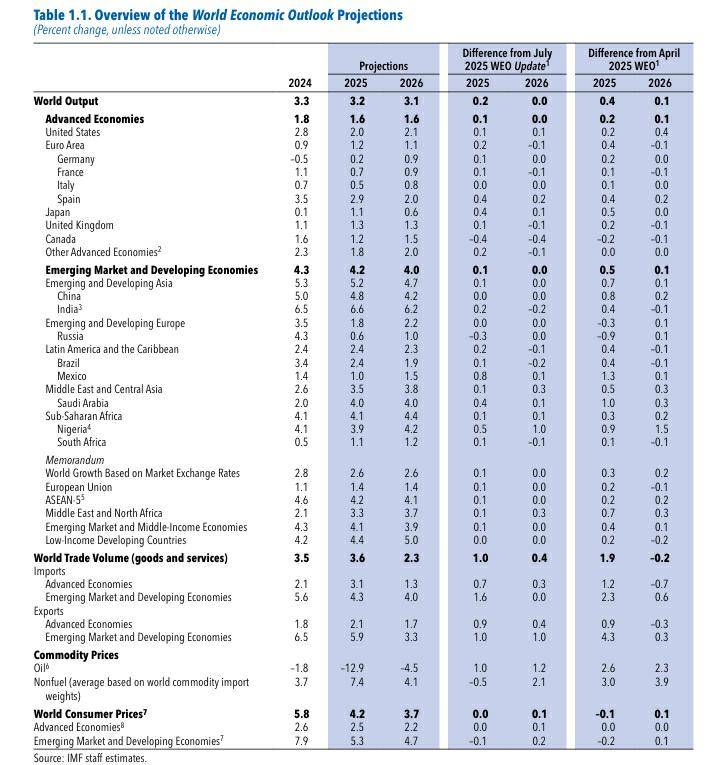
此次,IMF预计,全球经济增长将从2024年的3.3%降至2025年的3.2%,比7月上调了0.2个百分点; 2026年则会降至3.1%,与此前预期没有变化。虽然此次预测较4月和7月的展望有所上调,但比作为基 准的2024年10月的展望均有大幅下调,意味着IMF预计全球经济仍将显著低于疫情前3.7%的平均水平。 此前,4月美国特朗普政府的关税冲击及其带来的不确定性促使2025年4月的展望报告将2025年全球增长 预测下调0.5个百分点至2.8%。随后,在7月的展望中,主要由于关税税率的降低及其对金融状况的影 响,IMF又将2025年全球增长预测小幅上调0.2个百分点至3.0%。 在IMF看来,虽然全球经济对贸易政策冲击表现出了弹性,但越来越多迹象表明,贸易保护主义措施的 不利影响开始显现。比如,美国核心通胀率上升,失业率小幅上升。其他多个国家的通胀也长期处于央 行目标之上,通胀预期仍然脆弱,随着不确定性和关税开始对经济活动造成压力,货币政策制定者的权 衡更加恶化。此外,随着全球经济陷入更加碎片化的格局,前景下行风险也在增加。从长远来看,生产 资源的再分配、技术脱钩和知识扩散的限制必然会抑制增长。 IMF认为, ...
IMF:全球经济动荡不安,关税影响尚未完全显现
2 1 Shi Ji Jing Ji Bao Dao· 2025-10-14 13:04
Group 1: Global Economic Outlook - The International Monetary Fund (IMF) predicts global growth to slow from 3.3% in 2024 to 3.2% in 2025 and 3.1% in 2026, reflecting a gradual adaptation to trade tensions [1] - The global economic growth rate is significantly below the pre-pandemic average of 3.7%, with a projected annualized growth rate of 3.0% from the second half of 2025 to 2026 [1] - The IMF emphasizes that the current economic environment is influenced by geopolitical conflicts, debt pressures, and climate change, leading to increased uncertainty [2] Group 2: Trade and Tariff Impacts - The U.S. has implemented new tariffs on various imported goods, including a 50% tariff on kitchen cabinets and a 100% tariff on patented drugs, which has drawn strong opposition from multiple countries [2][3] - The IMF warns that the full impact of tariff policies has yet to manifest, with rising corporate profits potentially leading to increased inflationary pressures [3] - The world trade volume is expected to see a moderate decline over the next five years, with a projected average growth rate of 2.9% for 2025-2026, lower than previous forecasts [3] Group 3: Regional Economic Predictions - The U.S. economic growth is forecasted at 2.0% and 2.1% for the next two years, reflecting improvements due to lower effective tariff rates and fiscal stimulus from legislation [5] - The Eurozone is expected to see moderate growth, with predictions of 1.2% in 2025 and 1.1% in 2026, influenced by high uncertainty and increased tariffs [5] - Emerging markets and developing economies are projected to slow from 4.3% in 2024 to 4.2% in 2025 and 4.0% in 2026, with significant downgrades for low-income countries compared to middle-income economies [6] Group 4: Inflation and Monetary Policy - Global inflation is expected to decrease to 4.2% in 2025 and 3.7% in 2026, with significant variations across countries [8] - The U.S. inflation is projected to rise again in late 2025 due to the impact of tariffs being passed on to consumers, with a return to the Federal Reserve's 2% target expected by 2027 [8] - The IMF anticipates that the U.S. federal funds rate will decline to a range of 3.50% to 3.75% by the end of 2025, while the Eurozone's policy rate is expected to remain at 2% [8] Group 5: Currency and Trade Balance - The U.S. dollar has depreciated significantly in 2025, with a decline of approximately 10.8% in the first half of the year, which may enhance export competitiveness and reduce import-driven inflation [10] - The IMF notes that while the weaker dollar amplifies tariff impacts, it also supports global trade and provides policymakers in emerging markets with more room to support their economies [10]
美对华造船等行业301调查限制措施落地,商务部:强烈不满,坚决反对
Di Yi Cai Jing· 2025-10-14 08:15
Core Viewpoint - The U.S. has implemented special port fees on vessels with American elements, which China views as unilateral and discriminatory actions that violate international trade rules and agreements [1][3]. Group 1: U.S. Measures and China's Response - On October 14, the U.S. officially imposed port fees on China's maritime, logistics, and shipbuilding sectors as a result of a Section 301 investigation [3]. - The Chinese Ministry of Commerce criticized these measures as protectionist and harmful to China's shipping and shipbuilding industries, asserting that they undermine fair competition [1][3]. - In retaliation, China announced special port fees on vessels associated with American flags, companies, or ownership [1]. Group 2: Impact on Global Trade and Supply Chains - The U.S. measures are expected to disrupt global supply chains, significantly increase international trade costs, and contribute to inflation in the U.S., ultimately harming its own port competitiveness and employment [3]. - The Chinese government emphasized that the U.S. actions could negatively affect the stability of global supply chains and the resilience of the U.S. supply chain [3]. Group 3: Specific Countermeasures by China - China has placed five U.S. subsidiaries of Hanwha Ocean Corporation on a countermeasure list due to their support of U.S. investigations against China, prohibiting domestic organizations and individuals from engaging in transactions with them [4][5]. - The countermeasures are based on China's national security and anti-foreign sanctions laws, reflecting a structured response to perceived threats against its maritime and shipbuilding industries [5]. Group 4: Dialogue and Negotiation Stance - The Chinese Ministry of Commerce reiterated its willingness to engage in dialogue while firmly opposing U.S. threats and unilateral actions, emphasizing the need for mutual respect and cooperation [6][7]. - China maintains that it is open to negotiations but will respond decisively to any aggressive measures from the U.S., highlighting the importance of maintaining a stable economic relationship [7].
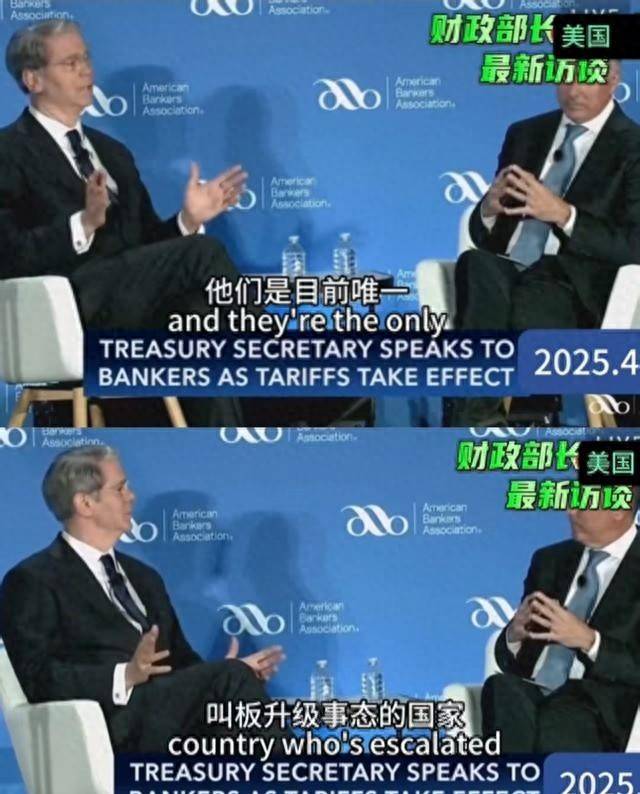
美国财长:为什么只有中国敢叫板反击美国,“这让我们感到遗憾”
Sou Hu Cai Jing· 2025-10-14 03:01
Core Viewpoint - The ongoing trade tensions between the U.S. and China are deemed unsustainable, with calls for gradual de-escalation of tariffs and trade barriers [1][6]. Group 1: U.S.-China Trade Dynamics - U.S. Treasury Secretary Scott Basset emphasizes that the current tariff standoff is problematic for both nations, leading to increased tensions and economic difficulties [1]. - The U.S. has imposed high tariffs on a wide range of Chinese goods, while China retaliated with tariffs on U.S. agricultural products, causing significant challenges for American farmers [1][3]. - Despite the trade tensions, the U.S. maintains a competitive edge in high-end exports to China, which are difficult for China to replace in the short term [3]. Group 2: China's Economic Resilience - Since the reform and opening-up in 1978, China's GDP per capita has surged from a few hundred dollars to over $10,000 by 2025, establishing it as the world's second-largest economy [3]. - China has adapted to U.S. tariffs by enhancing domestic consumption and establishing manufacturing bases in Southeast Asia, which has bolstered its service sector [3]. - The Chinese economy is projected to grow at around 5% in the first half of 2025, outperforming many developed nations [3]. Group 3: Historical Context and Response - China has a history of enduring external pressures, which has fostered a resilient national spirit and a strategic approach to trade disputes [4]. - The Chinese government views the U.S. tariffs as a familiar tactic and is committed to defending its core interests, emphasizing sovereignty and rejecting unilateralism [6][7]. - The lack of unified support from other countries for U.S. actions against China reflects a shift in the international landscape, with many nations prioritizing their economic interests [7][9]. Group 4: Strategic Implications - The trade conflict is characterized as a protracted struggle rather than a quick resolution, with China's responses being strategic rather than reactionary [9]. - Public support for domestic products in China has strengthened the government's position, allowing it to mitigate the impact of tariffs through increased internal consumption [9].
特朗普担心的一幕到来?普京给中国重要承诺,中俄头等大事稳了
Sou Hu Cai Jing· 2025-10-13 20:43
Core Insights - The president of Gazprom, Miller, predicts a significant increase in China's natural gas demand, estimating a growth rate of 45% over the next five years, with annual consumption expected to reach 618 billion cubic meters [1][3] - The "Power of Siberia-2" pipeline, with a design capacity of 50 billion cubic meters per year, is just the beginning, indicating Russia's readiness to meet China's growing energy needs [3][5] - The partnership between Russia and China in the energy sector is solidifying, with the pipeline agreement disrupting U.S. plans to export shale oil and LNG to China [5][6] Industry Implications - The anticipated surge in China's natural gas demand will reshape the global energy landscape, positioning Russia as a key supplier to the largest consumer, China [3][5] - The "Power of Siberia-2" pipeline enhances China's energy security by providing a reliable land-based supply route, mitigating risks associated with maritime transport [5] - The deepening energy ties between Russia and China are likely to lead to increased cooperation in finance, military, and diplomacy, strengthening their strategic partnership [5][6]

中美经贸再生波澜,前三季度出口逆增7.1%
Sou Hu Cai Jing· 2025-10-13 09:22
Core Points - Despite complex international circumstances, China's exports achieved a growth rate of 7.1% in the first three quarters, marking eight consecutive quarters of growth [2][3] - The U.S. announced a new round of tariffs on Chinese imports, potentially raising average tariffs to over 150% [2][8] Group 1: Export Performance - In the first three quarters, China's total goods trade reached 33.61 trillion yuan, with exports at 19.95 trillion yuan and imports at 13.66 trillion yuan [2] - High-tech product exports amounted to 3.75 trillion yuan, growing by 11.9% and contributing over 30% to overall export growth [3] - Mechanical and electrical products accounted for 60.5% of total exports, with a growth of 9.6% [3] Group 2: Product Composition - Exports of industrial robots surged by 54.9%, while wind power equipment exports grew by 23.9% [4] - Traditional cultural products like dragon boats and paper-cutting crafts have gained popularity in international markets [4] - Exports of holiday goods and toys exceeded 50 billion yuan, showcasing the influence of Chinese traditional culture [4] Group 3: Regional Performance - The western region of China saw significant export growth, with traditional manufacturing products like home appliances and motorcycles growing over 20% [4] - High-tech product exports from the western region exceeded 450 billion yuan, growing by 26.4% [4] Group 4: E-commerce and Market Diversification - Cross-border e-commerce exports reached 1.09 trillion yuan, growing by 11.6% [5] - Trade with Belt and Road Initiative countries totaled 17.37 trillion yuan, growing by 6.2% and accounting for 51.7% of total trade [5][6] - ASEAN remains China's largest trading partner, with trade volume reaching 5.57 trillion yuan, a 9.6% increase [6] Group 5: Business Confidence and Market Expansion - Export enterprise confidence index has risen for five consecutive months, indicating a positive outlook for future trade [7] - The number of foreign trade entities exceeded 700,000 for the first time, with private enterprises leading in market expansion [7] - Private enterprises accounted for 54.2% of high-tech product exports, highlighting their significant role in the export sector [7]

美国额外加征关税,墨西哥暂缓批准对中国商品加征50%关税的提案!
Sou Hu Cai Jing· 2025-10-13 08:45
Group 1 - President Trump announced a 100% additional tariff on Chinese imports starting November 1, which is significantly higher than current tariffs [1][3] - The U.S. may impose export controls on Boeing aircraft parts in response to China's restrictions on rare earth mineral exports [3][6] - The APEC summit will take place from October 31 to November 1, where discussions with Chinese leaders regarding trade agreements, including TikTok and U.S. soybean orders, are expected [5] Group 2 - Mexico has postponed the approval of a proposal to impose a 50% tariff on nearly 1,500 products from China and other Asian countries due to trade investigations initiated by China [6][8] - Concerns over inflation and negative impacts on local businesses have led to the suspension of the tariff proposal in Mexico [8][11] - The Mexican government argues that increasing tariffs is a way to protect domestic production, although it is also under pressure from the U.S. to reduce business with China [8][11]