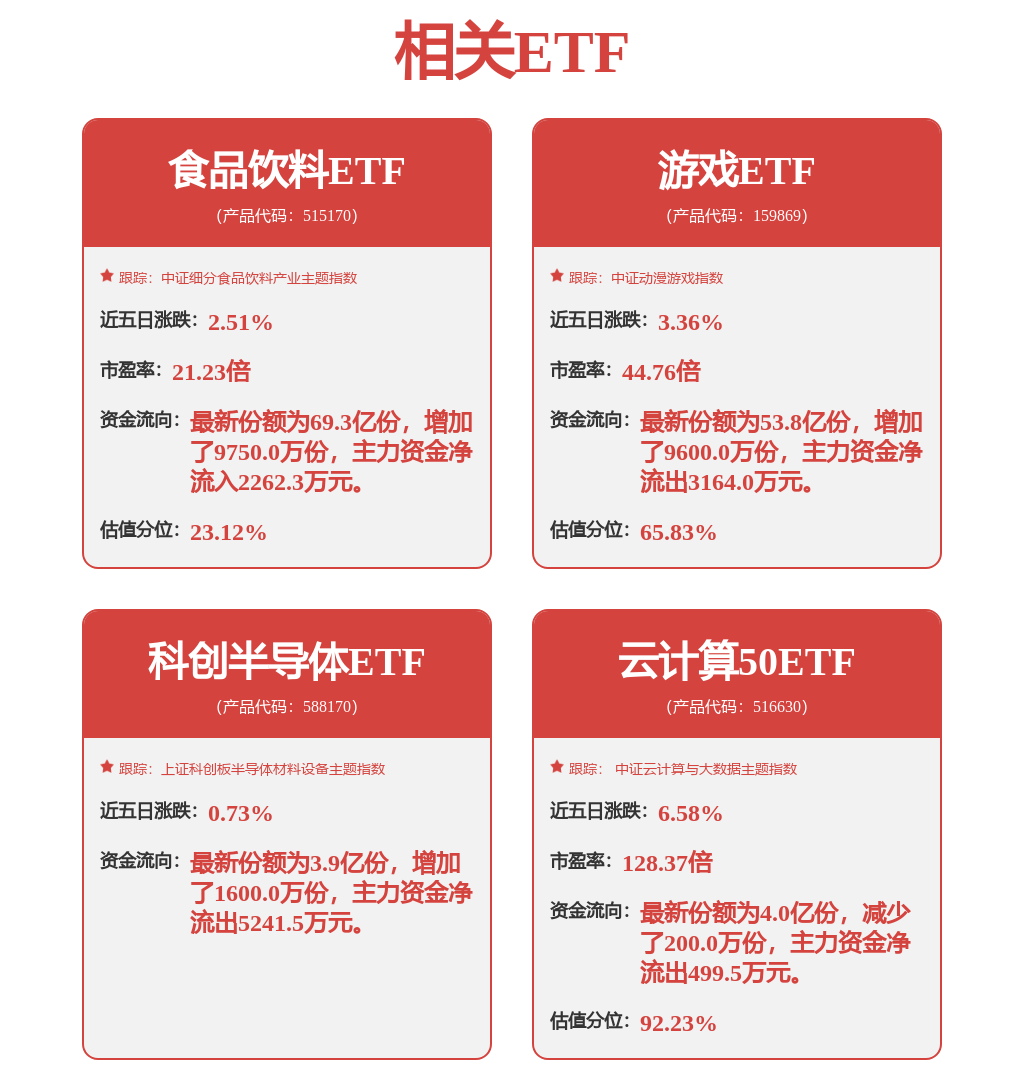
以旧换新

Search documents
中上协:上半年游戏、影视院线等代表性行业营收均实现增长,净利增速超70%
Zheng Quan Shi Bao Wang· 2025-08-31 03:30
Core Insights - The report indicates a continuous release of consumer potential in China, with significant growth in various sectors during the first half of 2025 [1] Group 1: Automotive Industry - The "old-for-new" subsidy policy has been steadily implemented, leading to sustained high growth in the production and sales of new energy vehicles [1] - The net profit of listed companies in the automotive sector has increased by over 30% [1] Group 2: Home Appliances - The trend of upgrading home appliances to smarter versions is evident, with industry revenue and net profit both growing by over 9% [1] Group 3: Consumer Electronics - The acceleration of domestic substitution in consumer electronics has resulted in a revenue growth of 24.82% for the industry [1] Group 4: Cultural Consumption - The cultural consumption sector, including gaming and film industries, has seen revenue growth, with net profit growth exceeding 70% [1] Group 5: Logistics and Delivery - The total logistics volume in society has steadily increased, with enhanced logistics activity among residents, leading to a 10% revenue growth for five listed companies in the express delivery sector [1] Group 6: Emerging Consumption Trends - New emotional consumption scenarios, such as the pet economy and IP economy, have ignited enthusiasm among younger demographics, with related industries showing significant performance growth, net profit increasing by 40.29% and 54.90% respectively [1]
帮主郑重:谈谈2025下半年投资市场的看法
Sou Hu Cai Jing· 2025-08-30 08:39
Economic Overview - The GDP growth for the first half of the year is 5.3%, with consumption contributing over half, indicating a stable economic foundation [3] - The central bank is implementing policies such as interest rate cuts and a 500 billion yuan loan to support consumption and elderly care, aiming to "stabilize confidence" [3] Investment Opportunities - **Technology Sector**: The government has launched the "Artificial Intelligence+" initiative, focusing on computing power and chips, with many companies seeing AI revenue approaching 25% [4] - **Consumer Recovery**: Retail sales increased by 5% in the first half of the year, with policies driving demand for 12 million home appliances, benefiting leading companies like Midea and Haier [4] - **Renewable Energy**: The cost of HJT solar cells has dropped to 0.15 yuan per kWh, and there is a potential surge in offshore wind installations, with companies like Mingyang Smart Energy and Daikin Heavy Industries having orders extending into next year [4] Risks to Monitor - High savings rates among consumers indicate that domestic demand may not recover quickly [5] - Rapid technological advancements in semiconductors could lead to volatility, necessitating careful monitoring of R&D investments [5] Investment Strategy - Diversification is recommended, with suggestions to allocate funds into indices like CSI 300 and STAR Market 50, as well as gold ETFs, which have seen a 50% increase in scale [7] - Following government policies in emerging sectors such as low-altitude economy and quantum computing may reveal new investment opportunities [7] - Flexibility in investment positions is crucial, with attention to upcoming events like special treasury bonds and developer conferences [8]

“金九银十”要抢抓机遇开创楼市新局丨社评
Sou Hu Cai Jing· 2025-08-30 05:34
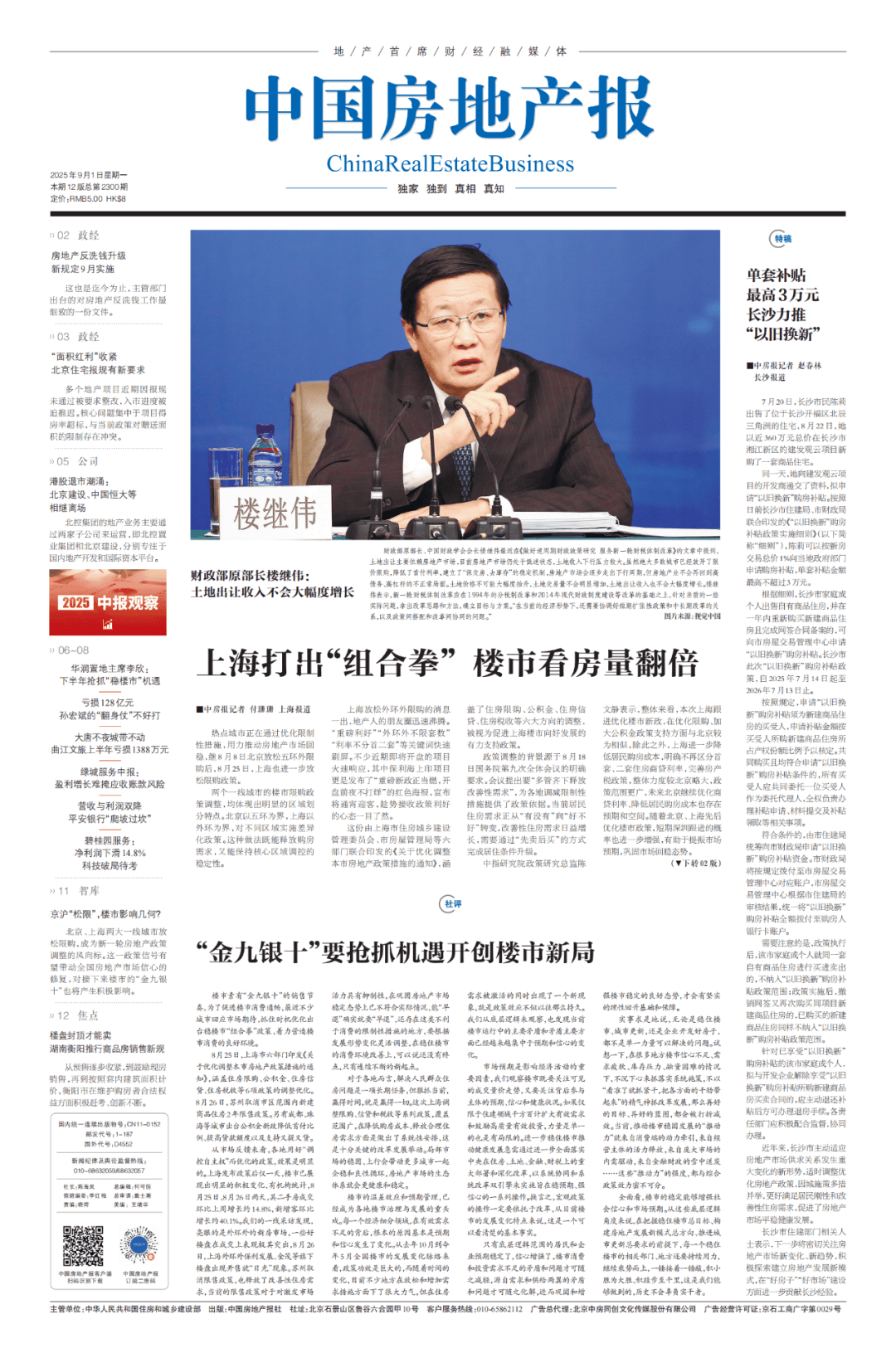
Group 1: Real Estate Policy Changes - New anti-money laundering regulations for real estate will be implemented in September 2025, marking a detailed effort by authorities to enhance oversight in the sector [2] - Beijing has introduced new requirements for residential property regulations, leading to delays in project approvals due to issues with excessive usable area [3] - Shanghai and Beijing have relaxed purchase restrictions, signaling a shift in real estate policy that may boost market confidence and activity during the "golden September and silver October" sales period [7][15] Group 2: Market Reactions and Trends - Following the policy adjustments in Shanghai, there was a notable increase in market activity, with second-hand home transactions rising approximately 14.8% and new listings increasing about 40.1% within two days [16] - The adjustments in Shanghai's real estate policies are seen as a significant move to lower housing costs and stimulate reasonable housing demand, which is crucial for market stability [16] - The ongoing changes in housing demand dynamics reflect a shift from merely having housing to seeking quality housing, necessitating a more flexible approach to policy adjustments [8][17] Group 3: Financial Implications and Future Outlook - The former Minister of Finance indicated that land transfer revenues are unlikely to see significant growth due to the current sluggish state of the real estate market, despite some cities easing restrictions [6] - The overall sentiment in the real estate market is that effective demand and confidence are critical for recovery, with a focus on systemic reforms to stabilize expectations and enhance market conditions [18] - The "old for new" housing subsidy program in Changsha aims to stimulate the market by providing financial incentives for residents to upgrade their homes, reflecting a broader trend of localized policy adaptations to meet housing needs [11][12][13]
苏宁易购上半年门店销售同比增长11.7%
Zheng Quan Ri Bao Wang· 2025-08-30 04:42
Core Insights - Suning.com achieved a revenue of 25.895 billion yuan in the first half of 2025, representing a year-on-year growth of 0.44% [1] - The net profit attributable to shareholders reached 48.693 million yuan, showing a significant year-on-year increase of 230.03% [1] Revenue and Profit Performance - The company reported a sales revenue growth of 11.7% in its stores during the first half of the year [1] - Comparable store sales in the home appliance and 3C home living specialty stores increased by 14.45%, with comparable store efficiency improving by 11.12% [1] Market Strategy and Expansion - Suning.com opened and renovated 37 SuningMax and SuningPro stores in first-tier and second-tier markets to enhance store image and consumer experience [1] - The company expanded its retail cloud franchise stores, opening 297 new stores in the second quarter, bringing the total number of retail cloud franchise stores to 10,100 as of June 30, 2025 [1] Competitive Positioning - The company aims to leverage the trade-in market opportunities and adapt to changes in consumer behavior by enhancing product variety, optimizing sales network layout, upgrading consumer experience, and improving service quality [2]

三大方向看中国银行提振消费的长期逻辑
Huan Qiu Lao Hu Cai Jing· 2025-08-30 04:39
Core Viewpoint - The Chinese government has implemented various policies to stimulate consumer spending and economic stability, with China Bank actively participating in these initiatives to enhance consumer finance and support service industries [1][2][3]. Policy Implementation - The government has introduced personal consumption loan interest subsidies and service industry loan interest subsidies, providing a 1% annual subsidy on eligible loans starting from September 1, 2025 [2]. - China Bank has committed to ensuring that these financial benefits reach consumers and service industry operators effectively [2]. Regional Initiatives - In Sichuan Province, a pilot program for personal consumption loan subsidies began in September 2023, offering a 1.5% interest subsidy on loans for specific consumer categories, with a maximum subsidy of 3,000 yuan per loan [3]. - By the end of July, China Bank's Sichuan branch had facilitated over 280,000 yuan in subsidies for more than 1,000 customers [3]. Consumer Upgrade Programs - China Bank is focusing on the "trade-in" initiative for automobiles, home appliances, and home renovations, collaborating with major electric vehicle manufacturers to offer zero-interest financing options [4]. - The bank's automotive installment loans reached 1.947 billion yuan by the end of June, with significant savings for consumers [4]. Home Appliance and Housing Support - China Bank's branches are working with local retailers to provide additional discounts on home appliances, with interest rates as low as 0.185% and loan terms up to five years [5]. - The bank has also integrated housing and consumer loans, providing 7.8 billion yuan in loans to 40,000 homebuyers for renovation and furniture purchases [5]. Cultural and Tourism Consumption - China Bank has invested over 100 million yuan in tourism consumption subsidies, creating a comprehensive financial service system for the tourism industry [7]. - The bank has partnered with various restaurants and hotels to offer discounts and promotions, benefiting millions of consumers [7][8]. Overall Impact - By mid-2025, China Bank's non-housing consumer loan balance exceeded 370 billion yuan, with significant year-on-year growth in personal consumption loans and enhanced customer service [9].

2025年Q2移动互联网行业数据研究报告
Sou Hu Cai Jing· 2025-08-29 15:08
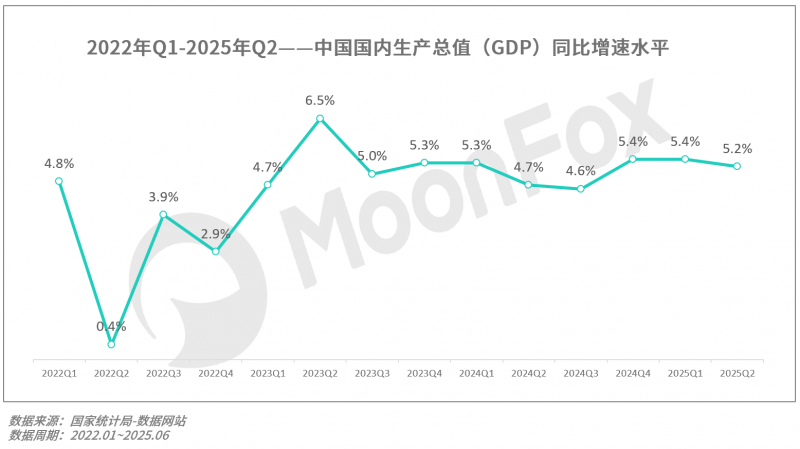
Macro Insights - The Chinese mobile internet industry continued its growth in Q2 2025, supported by a stable macroeconomic environment and ongoing policy support, with GDP growth of 5.2% year-on-year and 1.1% quarter-on-quarter [1][4] - The retail sales of consumer goods reached 24.55 trillion yuan, growing by 5.0%, with online retail sales amounting to 7.43 trillion yuan, a year-on-year increase of 8.5% [4][49] - The investment in high-tech industries showed remarkable growth, with information services, aircraft manufacturing, and computer equipment manufacturing increasing by 37.4%, 26.3%, and 21.5% respectively [4] Policy Changes - The central government emphasized stabilizing employment, businesses, and market expectations, implementing a series of policies to boost domestic demand and support economic recovery [9][11] - Key policies included the introduction of the "Private Economy Promotion Law" and measures to enhance consumer confidence and spending [10][11] Investment and Financing - The total social financing scale increased to 22.83 trillion yuan in the first half of 2025, with a notable rise in loans to the real economy [13][15] - The IPO market showed signs of recovery, with over 359 IPO applications in Q2, reflecting a significant increase compared to previous quarters [16] Mobile Traffic Overview - As of June 2025, the number of internet users in China reached 1.123 billion, with an internet penetration rate of 79.7% [18] - The average daily usage time of mobile devices approached 6 hours, indicating a growing reliance on mobile technology [18] Segment Market Insights E-commerce - The 6.18 shopping festival became a normalized event, with online retail sales exceeding 3.81 trillion yuan in Q2 2025 [49][51] - The "old-for-new" policy significantly boosted sales in the 3C digital product category, with sales surpassing 750 billion yuan [49][50] Food Delivery - The food delivery market saw intensified competition, with JD.com entering the space and implementing aggressive subsidy strategies [54][55] - JD's food delivery service achieved over 1 million daily orders within 40 days of launch, indicating rapid market penetration [55] Gaming - The gaming market maintained growth, with mobile games generating 1.253 trillion yuan in revenue in the first half of 2025, a year-on-year increase of 16.55% [64] - New game releases in Q2 included several successful titles, with some achieving over 1 billion yuan in revenue in their first month [66][67] Short Dramas - The short drama market continued to grow, with various platforms actively investing in new content and leveraging AI technology for production [72]
苏宁易购上半年盈利4869.3万元,同比增长230.03%
Zhong Jin Zai Xian· 2025-08-29 14:08
Group 1 - The core viewpoint of the articles highlights that Suning.com has shown steady growth in revenue and significant improvement in net profit during the first half of 2025, indicating a solid market position and enhanced profitability [1][2] - In the first half of 2025, the company achieved an operating income of 25.895 billion yuan, a year-on-year increase of 0.44%, and a net profit attributable to shareholders of 48.693 million yuan, reflecting a substantial year-on-year growth of 230.03% [1] - The company has actively participated in market competition by enhancing channel construction and optimizing customer experience, resulting in a 11.7% year-on-year increase in store sales revenue [1] Group 2 - Suning.com has opened and renovated 37 new Suning Max and Suning Pro stores in the first half of 2025 to improve store image and consumer experience, while also expanding its retail cloud franchise stores, reaching a total of 10,100 stores by June 30, 2025 [1] - The company is focusing on the "trade-in" market opportunities and aims to enhance its core competitiveness by optimizing product categories, sales network layout, and consumer experience [2] - Analysts note that Suning.com has stabilized its scale and increased efficiency in the first half of 2025, laying a solid foundation for long-term development and further activating growth momentum in the home appliance and 3C consumer market [2]
美凯龙: 2025年半年度报告
Zheng Quan Zhi Xing· 2025-08-29 13:12
Company Overview - Red Star Macalline Group Corporation Ltd. is a leading operator of home decoration and furniture shopping malls in China, providing comprehensive services through self-operated, commissioned, franchised, and strategic cooperative malls [4][8][9] - The company operates 76 self-operated malls, 235 commissioned malls, 7 strategic cooperative malls, and 23 franchised home building material projects, covering 189 cities across 30 provinces and municipalities, with a total operating area of 19,361,762 square meters [8][9][10] Financial Performance - For the first half of 2025, the company reported a revenue of approximately 3.34 billion yuan, a decrease of 21.01% compared to the same period last year [2] - The total profit for the period was approximately -1.99 billion yuan, with a net profit attributable to shareholders of approximately -1.90 billion yuan [2] - The company's net assets decreased by 4.49% to approximately 44.40 billion yuan compared to the end of the previous year [2] Market Environment - The Chinese economy showed signs of stability with a GDP growth of 5.3% in the first half of 2025, supported by policies aimed at boosting consumption [6][7] - The furniture retail sector experienced a significant growth of 22.9%, indicating a positive trend in consumer spending on home-related products [6] Strategic Initiatives - The company is focusing on integrating various business models, including high-end appliances and home decoration services, to enhance its market position [10][11] - The introduction of the "Mega-E Smart Electric Oasis" aims to establish 40 high-end electric ecological benchmarks across the country, enhancing the company's presence in the high-end appliance market [10][18] - The M+ design center strategy aims to create the largest home decoration design service network in China, with over 1,000 design studios and nearly 5,000 designers collaborating [11][12] Industry Trends - The home decoration and furniture industry is expected to continue its steady growth due to rising income levels, increasing demand for quality products, and ongoing urbanization [8][9] - The real estate market is stabilizing, with improved transaction volumes and prices, which is beneficial for the home decoration sector [7][8] Digital Transformation - The company is enhancing its digital capabilities by integrating AI technologies and optimizing operational processes to improve efficiency and customer engagement [13][14] - The implementation of a comprehensive online and offline marketing strategy aims to attract younger consumers and enhance the overall shopping experience [20][21][22] Competitive Advantage - The company's extensive national network and strong brand recognition provide a competitive edge in attracting quality tenants and maintaining stable rental income [17][18] - The focus on high-quality service and innovative marketing strategies positions the company as a leader in the home decoration and furniture retail industry [23]
小熊电器(002959):Q2收入快速增长,盈利能力显著改善
Guotou Securities· 2025-08-29 12:35
Investment Rating - The investment rating for the company is maintained at "Buy-A" with a target price of 66.89 CNY for the next six months [2][4]. Core Insights - The company reported a significant revenue growth of 18.9% year-on-year (YoY) in H1 2025, reaching 2.53 billion CNY, and a net profit increase of 27.3% YoY, amounting to 200 million CNY [1][2]. - In Q2 2025, the company achieved a revenue of 1.21 billion CNY, reflecting a YoY growth of 29.6%, and a net profit of 80 million CNY, which is a remarkable YoY increase of 641.5% [1][2]. - The growth in revenue is attributed to the domestic appliance replacement policy boosting demand in the kitchen small appliance sector, with online sales increasing by 15% YoY [1][2]. - The company is expanding its product categories and focusing on overseas markets, which is expected to sustain revenue growth [1][2]. Financial Performance Summary - The company's net profit margin in Q2 was 6.2%, an increase of 5.1 percentage points YoY, driven by reduced price competition and improved product mix [2]. - The overall gross margin improved by 3.2 percentage points YoY, and the company effectively controlled its expenses, leading to a decrease in management, R&D, and sales expense ratios [2]. - The operating cash flow in Q2 increased by 140 million CNY YoY, primarily due to rapid sales revenue growth [2]. Earnings Forecast - The projected earnings per share (EPS) for the company are 2.48 CNY, 2.70 CNY, and 2.91 CNY for the years 2025, 2026, and 2027 respectively [2][4]. - The expected revenue growth rates for the upcoming years are 15.4% in 2025, 8.8% in 2026, and 8.2% in 2027 [12].

广发创业板定开: 广发创业板两年定期开放混合型证券投资基金2025年中期报告
Zheng Quan Zhi Xing· 2025-08-29 09:43
Core Viewpoint - The report provides a comprehensive overview of the performance and management of the Guangfa Growth Enterprise Board Two-Year Regular Open Mixed Securities Investment Fund for the first half of 2025, highlighting its financial metrics, investment strategies, and market outlook. Fund Overview - Fund Name: Guangfa Growth Enterprise Board Two-Year Regular Open Mixed Securities Investment Fund - Fund Manager: Guangfa Fund Management Co., Ltd. - Fund Custodian: China Construction Bank Co., Ltd. - Total Fund Shares at Period End: 242,631,412.08 shares [1] - Fund Net Asset Value at Period End: 209,921,589.98 RMB [2] Financial Performance - Realized Income for the Period: -5,773,176.69 RMB [2] - Profit for the Period: 19,940,221.84 RMB [2] - Average Fund Share Profit for the Period: 0.0822 RMB [2] - Net Asset Value Growth Rate for the Period: 10.50% [2] - Cumulative Net Value Growth Rate: -13.48% [2] Investment Strategy - The fund aims to identify and utilize potential investment opportunities across major asset classes, including stocks, fixed income securities, and cash, while maintaining strict risk control and liquidity [1]. - The investment strategy is based on macroeconomic analysis, policy trends, and market liquidity, adjusting the asset allocation according to different economic cycles [1]. Market Outlook - The report indicates a cautious optimism regarding the domestic economic recovery, emphasizing the need for additional policy support to sustain growth momentum [11]. - Key investment directions include global pricing resources, Chinese manufacturing exports, dividend assets, and emerging sectors such as AI and innovative pharmaceuticals [11]. Compliance and Governance - The fund management adheres to relevant laws and regulations, ensuring that all operations are compliant and in the best interest of fund shareholders [7][13]. - The fund's valuation process is overseen by an independent valuation committee to ensure fairness and objectivity [12]. Performance Comparison - The fund's performance is benchmarked against a composite index, with the fund's net value growth rate of 10.50% significantly outperforming the benchmark's return of 0.98% during the same period [11].