物理AI

Search documents
贝索斯携62亿美元再创业,挖角百名顶尖人才押注物理AI,老对手马斯克火速嘲讽
Sou Hu Cai Jing· 2025-11-18 11:40
Core Insights - Jeff Bezos is returning to an operational role as co-CEO of the AI startup "Project Prometheus," which has secured $6.2 billion in funding, partly from Bezos himself, making it one of the most well-funded early-stage startups globally [1][3]. Group 1: Company Overview - Project Prometheus focuses on "Physical AI," which refers to intelligent systems that can perceive, understand, and interact with the physical world, differentiating it from traditional language models [3]. - The company aims to provide AI solutions for engineering and manufacturing in sectors such as computing, aerospace, and automotive [3][5]. - A team of nearly 100 people has been assembled, including researchers from top AI firms like OpenAI, DeepMind, and Meta, showcasing Bezos's influence and the ambitious technological vision of the project [5]. Group 2: Leadership and Management Style - Bezos is applying his management philosophy from Amazon, known for its detail-oriented approach and data-driven decision-making, to Project Prometheus [5][6]. - The company is still in stealth mode, but its focus is becoming clearer: achieving significant advancements in engineering and manufacturing through AI [5]. Group 3: Investment Strategy - Bezos's involvement in the Physical AI sector is not spontaneous; he previously participated in a $400 million funding round for the robotics AI company Physical Intelligence and invested in Periodic Labs, which raised $300 million to build robotic laboratories [6][7]. - Through Bezos Expeditions, he has invested in several robotics and AI startups, indicating a systematic bet on the Physical AI sector [7]. Group 4: Competitive Landscape - The announcement of Bezos's return to a CEO role has drawn comments from Elon Musk, highlighting the competitive dynamics between the two billionaires in AI, space exploration, and electric vehicles [8].


小鹏发布第三季度财报:多项指标创历史新高,品牌向上仍存挑战
Guan Cha Zhe Wang· 2025-11-18 11:21
Core Insights - Xiaopeng Motors reported strong performance in Q3 2025, with record delivery volume, revenue, gross margin, and cash reserves [2][4] - The average selling price per vehicle was 155,000 yuan, indicating challenges in brand elevation [5][6] Financial Performance - Total delivery volume reached 116,007 units, a year-on-year increase of 149.3% and a quarter-on-quarter increase of 12.4% [2] - Total revenue for Q3 was 20.38 billion yuan, up 101.8% year-on-year and 11.5% quarter-on-quarter [2] - Gross margin for Q3 was 20.1%, an increase of 4.8 percentage points year-on-year, while automotive gross margin was 13.1%, up 4.5 percentage points [3] Revenue Streams - Revenue from "services and other businesses" reached 2.33 billion yuan, a year-on-year increase of 78.1% and a quarter-on-quarter increase of 67.3% [2] - The partnership with Volkswagen significantly boosted revenue, with potential for future growth [2] Cost Management - Net loss for the quarter was 380 million yuan, a significant reduction from 1.81 billion yuan in the same period last year [4] - R&D expenses were 2.43 billion yuan, a year-on-year increase of 48.7%, driven by new model and technology development [5] - Selling, general, and administrative expenses rose to 2.49 billion yuan, up 52.6% year-on-year [5] Cash Position - Cash and cash equivalents, restricted cash, short-term investments, and time deposits totaled 48.33 billion yuan, an increase of approximately 760 million yuan from the previous quarter [5] Market Position and Challenges - Xiaopeng Motors faces challenges in brand elevation, particularly in the 200,000 yuan and above segment, following the launch of lower-end models [6] - The company aims to enhance its brand influence through investments in advanced driving technology and other innovative areas [7] Future Outlook - For Q4, Xiaopeng Motors expects vehicle deliveries between 125,000 and 132,000 units, a year-on-year growth of approximately 36.6% to 44.3% [7] - Total revenue is projected to reach between 21.5 billion and 23 billion yuan, representing a year-on-year growth of approximately 33.5% to 42.8% [7]

何小鹏到底在想什么?
半佛仙人· 2025-11-18 09:11
Core Viewpoint - The article discusses the evolving perception of technology and the importance of judgment in navigating the future, particularly in the context of He Xiaopeng and his company Xiaopeng Motors, emphasizing that personal stories are less relevant than technological direction and judgment in determining future success [5][23]. Group 1: Technology and Perception - He Xiaopeng, CEO of Xiaopeng Motors, faced skepticism about the authenticity of his robots, highlighting a broader human tendency to doubt advanced technology [3][4]. - Historical examples illustrate that every significant technological advancement has been met with skepticism, indicating a pattern of disbelief that accompanies innovation [4][19]. - The article posits that as technology approaches human intuition's limits, skepticism increases, suggesting that the future of technology will often be perceived as improbable or impossible [19][21]. Group 2: Shift in Narrative - The narrative around entrepreneurship is shifting from personal struggles to the evaluation of technological routes and their potential to reshape the future [5][9]. - The focus is now on whether a technology leader's chosen path will rewrite the future rather than their personal backstory [5][9]. - The article emphasizes that the most critical question is not about past hardships but about the current technological bets being made and their potential impact [5][9]. Group 3: He Xiaopeng's Journey - He Xiaopeng's success is attributed not to luck but to strong judgment and decision-making skills, particularly in recognizing the need for a new operational system in the tech landscape [7][9]. - The year 2014 marked a pivotal moment for Xiaopeng, as he realized the necessity of redoing foundational systems to avoid being left behind in the evolving tech environment [9][10]. - His decision to join Xiaopeng Motors at age 40 was framed as a mature choice to align with a significant technological shift rather than a midlife crisis [11][12]. Group 4: Strategic Focus - The years 2022-2023 were challenging for Xiaopeng Motors, yet He Xiaopeng chose to double down on investments in AI architecture, robotics, and flying cars, viewing these as interconnected components of a single strategic direction [13][14]. - The article argues that the next global technological migration presents a once-in-a-generation opportunity, and inaction could lead to obsolescence [14][15]. - Xiaopeng Motors is positioned to leverage China's strengths in manufacturing and engineering to compete effectively in the physical AI space, which is seen as a critical area for future growth [16][18]. Group 5: Future Outlook - The article concludes that the future will not arrive suddenly but will emerge gradually from ongoing discussions and debates about technological possibilities [21][25]. - The skepticism surrounding advanced technologies is viewed as a necessary precursor to broader acceptance and eventual integration into society [25][26]. - The narrative emphasizes that the true story of Xiaopeng Motors lies in its future potential rather than its past, with a focus on judgment and strategic direction as key determinants of success [23][25].

小鹏公布三季度财报,营收破200亿元
Bei Jing Ri Bao Ke Hu Duan· 2025-11-18 08:22
Core Insights - Xiaopeng Motors reported record highs in multiple key metrics for Q3 2025, including total revenue exceeding 20 billion yuan for the first time, reaching 20.38 billion yuan, a year-on-year increase of 101.8% and a quarter-on-quarter increase of 11.5% [1] - The total delivery volume for Q3 was 116,007 vehicles, a significant increase of 149.3% compared to 46,533 vehicles in the same period of 2024, and a quarter-on-quarter growth of 12.4% [1] - The company's net loss narrowed significantly by 78.9% year-on-year to 380 million yuan, aided by scale effects [1] Financial Performance - Total revenue reached 20.38 billion yuan, marking a year-on-year growth of 101.8% and a quarter-on-quarter growth of 11.5% [1] - Automotive sales revenue was 18.05 billion yuan, reflecting a year-on-year increase of 105.3% and a quarter-on-quarter increase of 6.9% [1] - Cash reserves increased to 48.33 billion yuan, up approximately 760 million yuan from the previous quarter, providing a solid foundation for future R&D and market expansion [1] R&D and Future Plans - R&D investment in Q3 amounted to 2.43 billion yuan, a year-on-year increase of 48.7% and a quarter-on-quarter increase of 10.1%, setting a new historical high [1] - The company plans to launch 7 new models next year, including 3 super electric extended-range products in Q1 2026 and 4 new models targeting important market segments [2] - Xiaopeng Motors aims to achieve breakeven in Q4 and will continue to invest in physical AI R&D, accelerating the development of the second-generation VLA model, Robotaxi, and humanoid robots for mass production in 2026 [2]
?贝索斯携AI初创公司“普罗米修斯”高调回归硅谷 聚焦太空、机器人以及硬核物理
Zhi Tong Cai Jing· 2025-11-18 07:51
Core Insights - Jeff Bezos is establishing an AI startup named Project Prometheus, aiming to compete with OpenAI and Elon Musk's xAI, and will serve as co-CEO [1][2] - The startup has secured $6.2 billion in funding, primarily from Bezos, making it one of the best-funded early-stage AI companies [1] - Project Prometheus focuses on AI applications in various fields, including aerospace, automotive, and advanced manufacturing [2][3] Funding and Leadership - Project Prometheus has raised $6.2 billion, with most of the investment coming from Jeff Bezos himself [1] - Vik Bajaj, a top physicist and chemist, is co-founding and co-leading the company alongside Bezos [2][3] Company Objectives - The ultimate goal of Project Prometheus is to develop a "super AI model" capable of deep learning in more complex ways than existing AI chatbots like ChatGPT [4] - The company aims to apply AI to cutting-edge physical science tasks, including humanoid robotics and drug design [3][4] Talent Acquisition - Project Prometheus has recruited nearly 100 employees, including senior AI researchers from leading companies such as OpenAI, DeepMind, and Meta Platforms [4] - The focus on attracting top talent indicates a commitment to advancing AI technology and research [4] Industry Context - The concept of "Physical AI" is emphasized, which involves enabling robots and autonomous systems to perceive, reason, and act in the real world [5] - Nvidia is positioning itself as a provider of computational power and platforms for "embodied AI," contrasting with the approaches of Bezos and Musk [5]

经营改善与AI外溢价值 小鹏的估值重构路径清晰化
Zheng Quan Shi Bao Wang· 2025-11-18 06:29
Core Insights - Xiaopeng Motors is redefining its growth logic for the next decade through "dual-energy vehicles" and "physical AI" [1] - The company aims to expand its vision beyond manufacturing smart electric vehicles to building an AI ecosystem that connects the digital and physical worlds [1] Financial Performance - Xiaopeng Motors reported a total revenue exceeding 20 billion yuan for the first time, a year-on-year increase of 101.8% [2] - Total deliveries reached 116,007 units, marking a 149.3% year-on-year growth and setting a new quarterly delivery record [2] - Gross margin improved to 20.1%, up 4.8 percentage points year-on-year, achieving a historical high for a single quarter [2] - Cash and cash equivalents, along with short-term investments, totaled 48.33 billion yuan as of September 30, 2025 [2] Future Projections - For Q4, Xiaopeng anticipates total deliveries between 125,000 and 132,000 units, representing a year-on-year increase of 36.6% to 44.3% [3] - Expected total revenue for Q4 is projected to be between 21.5 billion and 23 billion yuan, an annual increase of approximately 33.5% to 42.8% [3] - The company plans to launch three new super electric range-extended products in Q1 2026 and four new dual-energy models throughout the year [3] Strategic Initiatives - Xiaopeng is committed to investing in "physical AI" research and development, with plans for mass production of the second-generation VLA model, Robotaxi, and humanoid robots by 2026 [4][5] - The company is focusing on an open ecosystem strategy, partnering with companies like Gaode for global Robotaxi services and planning to open-source the second-generation VLA model [6] Market Positioning - Xiaopeng's market capitalization has surpassed that of Li Auto, becoming the highest valued new force in the domestic market [7] - The company is drawing comparisons to Tesla, particularly in areas like smart vehicles and humanoid robots, while emphasizing its more open ecosystem approach [7][8] - Xiaopeng's technology output is becoming a key factor in its valuation reconstruction, with partnerships like that with Volkswagen for the second-generation VLA [9]
“AI+生态”双轮驱动 小鹏汽车开拓汽车市场新蓝海
Zheng Quan Ri Bao Wang· 2025-11-18 05:39
Core Insights - Xiaopeng Motors reported record-high operational metrics for Q3 2025, with deliveries reaching 116,000 units, a year-on-year increase of 149.3%, and revenue of 20.38 billion yuan, up 101.8%, with a gross margin surpassing 20% for the first time at 20.1% [1] Group 1: "One Car, Dual Energy" Strategy - The "One Car, Dual Energy" strategy aims to reshape the electric vehicle product landscape, introducing the Kunpeng Super Range Extender technology to address five key issues faced by traditional range extender users [2] - The Xiaopeng X9 Super Range Extender, the first model featuring this technology, has become the world's longest-range seven-seater vehicle, generating unprecedented user interest and achieving nearly four times the pre-sale orders compared to the last pre-sale [2] - The company plans to launch seven models with Super Range Extender configurations by 2026, including three models in Q1 2026, addressing user pain points with longer electric range and faster charging [2][3] Group 2: Market Performance and Projections - Xiaopeng Motors anticipates a strong growth trajectory, projecting Q4 2025 total deliveries between 125,000 and 132,000 units, representing a year-on-year increase of 36.6% to 44.3%, with expected revenue of 21.5 billion to 23 billion yuan, up approximately 33.5% to 42.8% [3] Group 3: Physical AI Ecosystem - The company is transitioning to a physical AI technology framework, positioning itself as a global explorer in embodied intelligence, with significant investments in AI models, computing power, and data [4] - The second-generation VLA model will have ten times the parameters of its predecessor, enhancing safety and user experience in intelligent driving [4] - Xiaopeng Motors adopts an open ecosystem strategy, with the second-generation VLA model being made available to global partners, including Volkswagen as the first customer [4][5] Group 4: Future Applications and Market Potential - The company views Robotaxi and humanoid robots as the two primary application scenarios for physical AI, planning to launch three Robotaxi models in 2026 and operate trials in China [5] - The new generation IRON robot, designed with a human-like form, is expected to achieve comprehensive capability integration by Q2 2026 and mass production by the end of 2026, with long-term sales potential exceeding 1 million units annually by 2030 [5] - Xiaopeng Motors is confident in becoming a leader in physical AI, aiming to create greater value for global customers and shareholders [5]
极智嘉接连斩获多个超亿元大订单
Ge Long Hui· 2025-11-18 04:26
Group 1 - The core viewpoint of the news highlights the strong growth and increasing order volume of the company, Geekplus (2590.HK), in the "AI + Robotics" sector, with cumulative orders exceeding 1 billion yuan [1] - The company has recently secured multiple large orders, including a 300 million yuan project, reflecting global client recognition of its robotic solutions [1] - DBS Bank forecasts that Geekplus will achieve adjusted net profit in FY25F and enter a phase of accelerated growth, assigning a "buy" rating with a corresponding FY26F PS of approximately 10 times [1] Group 2 - The global e-commerce giant Amazon's recent initiatives, including the launch of the Blue Jay multi-functional warehouse robot system and Project Eluna AI system, indicate a significant growth potential in the warehouse automation industry [2] - The "14th Five-Year Plan" emphasizes the integration of intelligent technology with logistics, highlighting the necessity for upgrading smart logistics infrastructure and equipment [2] - As the industry enters a new cycle of accelerated intelligence, Geekplus is positioned to benefit from this trend due to its strong AI robotics technology, extensive practical experience, and continuous order growth, potentially leading to a revaluation of its value [2]
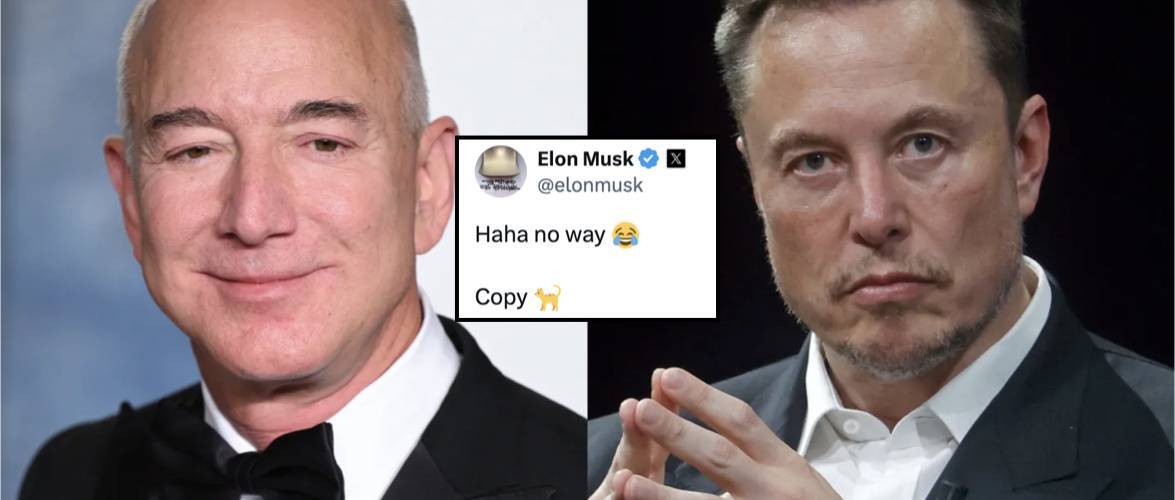
两个世界首富吵起来了!贝索斯融资447亿复出搞AI,马斯克:跟屁虫
创业邦· 2025-11-18 03:50
以下文章来源于APPSO ,作者发现明日产品的 APPSO . AI 第一新媒体,「超级个体」的灵感指南。 #AIGC #智能设备 #独特应用 #Generative AI 来源丨APPSO (ID: appsolution ) 图源丨Midjourney 本该是前世界首富杰夫·贝索斯的高光时刻,结果被一只猫咪表情包搅了局。 今天凌晨,当贝索斯要亲自下场做 AI 公司的消息刚在网上发酵,马斯克就火速转发推文,并附带一 句话: 哈哈,不可能。Copy cat(跟屁虫) 如果你关注科技圈,这剧情大概见怪不怪了。 从卫星到火箭,这两位科技圈的顶流已经互怼了整整二十年。只是,如今吵架的战场,变成了眼下最 火的物理 AI。 62 亿美元,贝索斯开启史上最壕创业 那让贝索斯选择二次创业的普罗米修斯到底要做什么? 简单说,就是让 AI 从虚拟世界走进现实世界。现在市面上的 AI 主要都是通过学习网上的文字、图片 来生成内容。它们很会写文章、画画、聊天,但有个致命问题,它们不懂物理世界。 2021 年贝索斯把亚马逊 CEO 的位置让给了安迪·贾西,本以为他要专心当富豪享受人生。结果四年 后,这位电商之王突然宣布:我要重返一线 ...

两个世界首富吵起来了!贝索斯融资 447 亿复出搞 AI,马斯克:跟屁虫
Sou Hu Cai Jing· 2025-11-18 02:43
今天凌晨,当贝索斯要亲自下场做 AI 公司的消息刚在网上发酵,马斯克就火速在 X 平台发了条推文,直接 @ 贝索斯,附带一句话: 「哈哈,不可能。Copy cat(跟屁虫)」 本该是杰夫·贝索斯的高光时刻,结果被一只猫咪表情包搅了局。 如果你关注科技圈,这剧情大概见怪不怪了。从卫星到火箭,这两位科技圈的顶流已经互怼了整整二十年。只是,如今吵架的战场,变成了眼下最火的物理 AI。 62 亿美元,贝索斯开启史上最壕创业 2021 年贝索斯把亚马逊 CEO 的位置让给了安迪·贾西,本以为他要专心当富豪享受人生。结果四年后,这位电商之王突然宣布:我要重返一线, 这次他瞄准的新项目,叫普罗米修斯计划(Project Prometheus)。 据纽约时报的报道,这个计划一出场就拿了 62 亿美元的融资启动资金,其中相当一部分是贝索斯自己掏的腰包。 凭借这笔巨款,普罗米修斯在硅谷展开了「人才大抢购」,已经挖来了近 100 名顶级研究员,这些人之前都在 OpenAI、Google DeepMind 和 Meta 工作。 那让贝索斯选择二次创业的普罗米修斯到底要做什么? 简单说,就是让 AI 从虚拟世界走进现实世界。现在市面上 ...