全球化

Search documents
百望股份陈杰:百望股份加速将中国已验证的数字治理模式推广至全球
Zheng Quan Ri Bao Wang· 2025-11-14 07:41
Core Insights - The 28th Beijing-Hong Kong Economic Cooperation Symposium focuses on digital economy and cross-border collaboration, aiming to enhance industrial synergy between Beijing and Hong Kong [1] - Baiwang Co., Ltd. is represented by its founder and chairman, Chen Jie, who emphasizes the company's strategy of leveraging AI for global standardization and replication of China's digital governance models [1][2] - The event highlights the importance of collaborative international expansion and the synergistic value of digital ecosystems between the two regions [1] Company Strategy - Baiwang's core overseas strategy is "model export," aiming to replicate the validated G2B2F digital tax management model through AI and data intelligence [2] - The company has expanded its overseas operations to over 20 countries and established three regional centers covering the Middle East, Africa, Southeast Asia, and Latin America [2] - Baiwang's AI business has seen significant growth, with revenue surpassing 60.86 million yuan in the first half of the year, driven by increased user engagement and high retention rates [2] Technological Advancements - Baiwang is committed to developing high-quality closed-source models and integrating complex capabilities such as multi-language invoice recognition and cross-border tax calculations into its global compliance solutions [2] - The company aims to create significant technological barriers and solution advantages in various markets [2] - As China transitions from a digital power to a digital stronghold, Baiwang plans to continue its "data intelligence + globalization" strategy to assist more Chinese enterprises in entering a new phase driven by AI and ecological frameworks [2]
美的核心业务换帅 人事调整现年轻化趋势
Nan Fang Du Shi Bao· 2025-11-13 23:08
Core Insights - Midea Group has undergone significant management changes within its smart home business unit, with key appointments including the transition of executives Zhao Lei and Bai Lin to new roles, reflecting a strategic focus on global expansion and operational efficiency [2][3][4]. Group 1: Management Changes - Bai Lin has been appointed as the President of the Americas region after stepping down from his previous roles as Vice President and China Regional President [2]. - Zhao Lei has been promoted to President of the Smart Home Business Group, while Cao Zhijie, a veteran with extensive experience in the air conditioning division, takes over as President of the Home Air Conditioning Division [3]. - Song Yao, a younger executive, has been appointed as the President of the Refrigerator Division, indicating a shift towards leveraging younger talent within the organization [3]. Group 2: Business Performance - Midea's smart home business generated revenue of 167.2 billion yuan in the first half of the year, marking a year-on-year growth of 13.31%, contributing to 66% of the total revenue [3]. - The company reported a third-quarter revenue of 111.93 billion yuan, a 10.06% increase year-on-year, and a net profit of 11.87 billion yuan, up 8.95% year-on-year [4]. Group 3: Market Challenges and Strategic Adjustments - The home appliance industry is experiencing significant changes, with challenges such as price wars and competition from new entrants like Xiaomi impacting traditional players [4]. - Midea is implementing organizational adjustments to enhance efficiency and accelerate globalization, aiming to replicate its successful supply chain and channel strategies from China to overseas markets [4][5]. - The company plans to invest at least 50 billion yuan in R&D over the next three years, focusing on AI and intelligent technologies, aligning its future direction with smart and global strategies [5].



何小鹏的“三种机器人”丨《封面》对话
凤凰网财经· 2025-11-13 13:33
Core Viewpoint - The company is positioning itself as a technology firm focused on exploring future mobility solutions, emphasizing the integration of hardware and software in the automotive industry [2][3][5]. Group 1: Vision and Strategy - The founder believes that the future of mobility involves not just cars but also flying vehicles and humanoid robots, viewing cars as "four-wheeled robots" [3][5]. - The company aims to expand its product offerings beyond traditional vehicles, with a focus on family-oriented designs and smart technology [11][14]. - The founder asserts that the integration of AI will lead to a transformation in the industry that is significantly greater than the shift from feature phones to smartphones [5][45]. Group 2: Product Development - The company is targeting the MPV market, which is expected to grow due to increasing demand for family-oriented vehicles [12][14]. - Plans for a humanoid robot are set for mass production by 2026, with the founder acknowledging the challenges in developing such technology [17][20]. - The company is also working on flying cars, with a vision of expanding the living radius to 150 kilometers, enhancing urban mobility [24][26]. Group 3: Globalization - Global expansion is viewed as essential for the company's survival, with a goal of achieving 50% of sales from international markets within the next decade [29][30]. - The founder emphasizes that globalization is not merely a strategic choice but a fundamental aspect of the company's DNA [29][30]. Group 4: Competition and Industry Dynamics - The company welcomes competition, viewing it as a natural part of the industry, and believes that collaboration among peers can lead to orderly competition [33][34]. - The founder expresses confidence that many domestic companies have a higher probability of succeeding in the global market compared to foreign firms [44]. Group 5: Future Outlook - The founder predicts that in the next decade, the number of strong automotive manufacturers in China may reduce to five, indicating a consolidation in the industry [43]. - The company is committed to leveraging AI to enhance its products and services, anticipating significant advancements in autonomous driving capabilities [45].


宇通客车(600066):宇通客车10月销量点评:季初销量偏平淡,公司完成全年目标信心充足
Changjiang Securities· 2025-11-13 12:44
Investment Rating - The investment rating for the company is "Buy" and is maintained [6]. Core Views - The company reported a total of 3,040 bus sales in October 2025, representing a year-on-year decrease of 5.6% and a month-on-month decrease of 36.1%. For the period from January to October 2025, total bus sales reached 37,000 units, an increase of 5.9% year-on-year [2][4]. - The company is recognized as a global leader in the bus industry, with strong long-term growth potential and a consistent high dividend payout capability, highlighting its investment value [2][10]. - The domestic market is experiencing growth in seated buses, supported by the "old-for-new" policy, which is boosting the demand for new energy buses. In the overseas market, the company's globalization and high-end strategy are advancing, with exports enhancing profitability and supporting continuous performance improvement [10]. Summary by Sections Sales Performance - In October 2025, the company sold 3,040 buses, down 5.6% year-on-year and down 36.1% month-on-month. The sales of medium and large buses were 2,462 units, down 11.5% year-on-year and down 37.3% month-on-month. Cumulatively, from January to October 2025, the company sold 37,000 buses, up 5.9% year-on-year, with medium and large bus sales at 30,000 units, down 1.6% year-on-year [2][4][10]. Market Strategy - The company is enhancing its direct sales and service model to improve service quality and efficiency. The "old-for-new" policy is expected to continue driving the recovery of the bus market domestically. Internationally, the company is accelerating its overseas expansion, with the first overseas new energy commercial vehicle factory in Qatar expected to be completed by the end of 2025, with an initial annual production capacity of 300 units, expandable to 1,000 units [10]. Financial Outlook - The company is projected to have a full-year dividend of 1.5 yuan per share (before tax) in 2024, with a total payout of 3.32 billion yuan and a dividend rate of 80.7%. The expected mid-year dividend for 2025 is 0.5 yuan per share, with a payout ratio of approximately 57.2%. The forecasted net profit attributable to the parent company for 2025 and 2026 is 4.82 billion yuan and 5.62 billion yuan, respectively, corresponding to PE ratios of 14.8X and 12.7X [10].

大摩重申美图“买入”评级,指其海外收入增长加速
Zheng Quan Shi Bao Wang· 2025-11-13 12:44
Core Viewpoint - Morgan Stanley's latest report indicates that Meitu's overseas revenue growth is accelerating, reaffirming a "buy" rating with a target price of HKD 15.7 [1] Group 1: Revenue Growth - According to SensorTower data, Meitu's overseas revenue year-on-year growth rate increased from 28% in September to 39% in October [1] - The report anticipates that the overseas market will gradually become Meitu's primary revenue source, supporting the company's long-term growth [1] Group 2: Market Expansion - Meitu's global expansion began in 2013, capitalizing on the rapid rise of mobile internet and smartphone penetration, as well as the growing demand for image recording and beautification [1] - The company has achieved significant user and technological experience domestically, recognizing the vast potential of overseas markets [1] Group 3: User Engagement - As of June 30, 2025, Meitu's global monthly active users reached 280 million, a year-on-year increase of 8.5%, with 98 million users outside mainland China, reflecting a 15.3% growth [2] - The introduction of the AI Agent product RoboNeo has led to significant rankings, achieving first place in the Chinese and Spanish App Store category charts and the Vietnamese Google Play category chart [2] Group 4: Product Innovation - Meitu's products have been iterated rapidly, adapting to local demands and cultural nuances, resulting in "phenomenal" applications [2] - The AI features, such as "AI dressing" in Thailand, have driven the beauty camera to the top of app store rankings in 12 countries, including Thailand, Vietnam, Japan, Singapore, and Malaysia [2]
汽车行业系列深度十二:2025Q3:盈利分化加剧,高端化、智能化亮眼
Minsheng Securities· 2025-11-13 12:30
Investment Rating - The report maintains a positive outlook on the automotive industry, particularly highlighting opportunities in high-end and intelligent vehicles, as well as the growth of new energy vehicles [4]. Core Insights - The automotive industry is experiencing a divergence in profitability, driven by scale effects and a shift towards high-end and intelligent products. The wholesale sales of passenger vehicles reached 7.686 million units in Q3 2025, up 14.7% year-on-year and 8.1% quarter-on-quarter. New energy vehicle sales were particularly strong, with 4.024 million units sold, reflecting a year-on-year increase of 24.2% [1][39]. - The report emphasizes the growth in the component sector, with revenues reaching 279.8 billion yuan in Q3 2025, a year-on-year increase of 17.9%. The profitability of intelligent components is notably strong, with a gross margin of 18.3% [2]. - In the commercial vehicle segment, heavy truck sales increased by 58.1% year-on-year, with revenues of 108 billion yuan, while bus profitability is also on the rise due to domestic and export demand [3]. - The motorcycle segment is seeing accelerated growth in mid-to-large displacement models, with sales of 259,000 units in Q3 2025, up 19.2% year-on-year [4]. Summary by Sections 1. Industry Overview - The automotive sector's fund holding ratio decreased to 6.00% in Q3 2025, reflecting a slight decline in investor confidence amid concerns over seasonal demand and competition [12]. 2. Passenger Vehicles - The report notes that the passenger vehicle market is being driven by policy support and the increasing penetration of new energy vehicles, with a total of 5.947 million units insured domestically in Q3 2025, up 2.6% year-on-year [39]. - The average selling price (ASP) is showing divergence, with some brands performing better than others, particularly in the new energy segment [39]. 3. Components - The component sector is benefiting from scale effects and a decrease in raw material costs, leading to a gross margin increase of 0.6 percentage points year-on-year [2][3]. - Key areas such as intelligent driving and lightweight components are outperforming the average growth rates in the industry [2]. 4. Commercial Vehicles - Heavy truck sales reached 282,000 units in Q3 2025, with a revenue increase of 26.9% year-on-year, while bus sales also showed positive growth [3]. 5. Motorcycles - The motorcycle segment is experiencing robust growth, particularly in exports, with total revenue reaching 15.41 billion yuan, a year-on-year increase of 25.4% [4]. 6. Investment Recommendations - The report recommends investing in high-quality autonomous brands such as Geely, Xpeng, BYD, and others, as well as in key component manufacturers in the intelligent driving and new energy sectors [4].






未来的世界会怎样?从风险预警到全球秩序重构丨两说
Di Yi Cai Jing Zi Xun· 2025-11-13 08:17
Group 1: Global Economic Trends - The current global economic landscape is characterized by significant challenges such as slowing growth, fiscal vulnerabilities, and increasing macro-financial risks due to geopolitical tensions, trade disputes, technological revolutions, and climate change [1][4] - The International Monetary Fund (IMF) forecasts a decline in global economic growth from 3.3% in 2024 to 3.2% in 2025 and 3.1% in 2026, indicating a cautious outlook despite being higher than previous predictions [4] Group 2: Systemic Risks in the Global Economy - Martin Wolf highlights three areas of vulnerability that require attention: the fragility of the financial system, the instability of political order, and ecological vulnerabilities, which together exacerbate systemic risks in the global economy [6][7] - The sustainability of U.S. government debt is a critical concern, with potential implications for market stability if debt levels rise to 140%-150% of GDP, which could lead to a crisis in the U.S. dollar system [7] Group 3: Political and Ecological Vulnerabilities - The long-term shift in U.S. policy towards protectionism and populism is seen as a permanent feature that will significantly impact global economic development, necessitating countries to devise their own strategies for cooperation [9] - Climate change remains a pressing global issue, with the need for international collaboration on technology sharing and funding to ensure progress in decarbonization efforts, particularly emphasizing China's role as the largest carbon emitter [11] Group 4: Globalization and Trade Dynamics - Despite facing setbacks, globalization is expected to continue progressing, albeit with a potential decline in commodity trade, and the global monetary landscape may shift towards a multipolar structure, diminishing the dominance of the U.S. dollar [14]

未来的世界会怎样?从风险预警到全球秩序重构丨两说
第一财经· 2025-11-13 08:06
Global Economic Development: Trends and Drivers - The current global economic landscape is characterized by political factors becoming more significant than economic ones [4] - The International Monetary Fund (IMF) forecasts a decline in global economic growth from 3.3% in 2024 to 3.2% in 2025 and 3.1% in 2026, indicating a challenging environment influenced by political uncertainties and U.S. trade policies [6] Systemic Risk Warnings in Global Economic Development - Three vulnerabilities in the global economy are highlighted: financial system fragility, political order instability, and ecological environment weakness [9] - Financial system risks include rising government debt levels, particularly in the U.S., which could reach 140%-150% of GDP, potentially leading to a debt crisis and market pressure [9] - Political vulnerabilities stem from the long-term nature of U.S. policy shifts and the failure of global governance systems, necessitating countries to strategize for cooperation [11] - Ecological vulnerabilities emphasize the importance of global collaboration on climate issues, with China playing a crucial role in technology sharing and funding allocation for decarbonization efforts [13] Reconstruction of Global Order - Concerns about maintaining peace are raised, particularly with the rise of far-right movements in the West, reminiscent of historical precedents that led to global conflict [14] - The global trade landscape is expected to shrink, yet globalization will continue to advance despite setbacks, with a shift towards a multipolar currency system diminishing the dominance of the U.S. dollar [15]

三一重工第三季度营收同比激增10.73% 三大转型战略驱动增长
Huan Qiu Wang· 2025-11-13 08:03
Core Insights - SANY Heavy Industry Co., Ltd. reported strong growth in key performance indicators for Q3 2025, with revenue reaching $2.96 billion, a year-on-year increase of 10.73%, and net profit attributable to shareholders at $270 million, a significant rise of 48.18% [6] Group 1: Strategic Focus - The impressive performance reflects SANY's successful implementation of its "three transformations" strategy, focusing on globalization, digitalization, and decarbonization [3] - The company has made substantial progress in its global expansion and sustainable development strategy, particularly in the African market with the successful grid connection of the solar project at the Chowa Mine in Zambia [4] Group 2: Digital Transformation - At the 2025 International Simulation Conference, SANY showcased innovative simulation technologies integrated with artificial intelligence, emphasizing real-time simulation, intelligent driving, operational simulation, and multi-machine collaboration [5] - The company aims to enhance its core competitiveness and drive digital transformation in the construction machinery industry through deepened collaboration in research and education [5] Group 3: Financial Performance - For the first three quarters of 2025, SANY's cumulative revenue reached $9.18 billion, reflecting a year-on-year growth of 13.56%, with net profit attributable to shareholders increasing to $1 billion, a growth of 46.58% [6] - The net cash flow generated from operating activities for the first three quarters was $2.03 billion, marking a year-on-year increase of 17.55%, indicating a significant improvement in profitability [6]


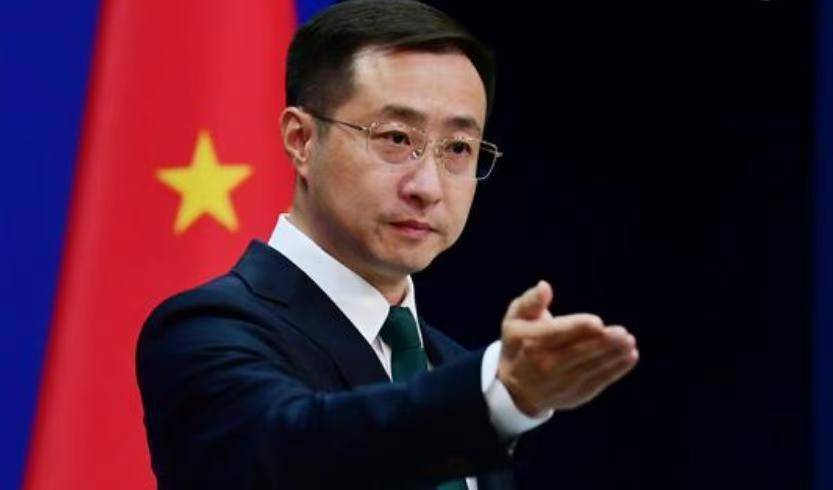
美方通告全球:暂停对华301调查措施,中方做出回应,引发国际关注
Sou Hu Cai Jing· 2025-11-13 07:25
Group 1 - The U.S. announced a one-year suspension of the "301 investigation" into China's shipbuilding and crane industries starting November 10, signaling a potential easing of U.S.-China trade tensions [1][4] - China's response was positive, describing the U.S. action as a "mutual effort" and indicating a suspension of its own countermeasures, which has been interpreted as a "breaking the ice" moment in U.S.-China economic relations [2][6] - The U.S. decision reflects economic pressures, as the shipbuilding and crane industries are crucial for global shipping and port operations, with Chinese cranes holding over 80% of the global market share [4][5] Group 2 - The U.S. is facing significant economic pressures, including high inflation, which could worsen if tariffs on Chinese equipment were imposed, leading to increased costs for U.S. port operators and consumers [4][5] - The importance of Chinese manufacturing in the global supply chain is highlighted, as over half of the world's ship orders come from China, making it impractical for the U.S. to replace this capacity quickly [5][12] - The suspension of the investigation is seen as a pragmatic move by the U.S. to mitigate losses from aggressive unilateral policies that have not yielded the desired outcomes [5][10] Group 3 - China's response emphasizes a strategy of "reciprocal action," advocating for equal dialogue rather than unilateral pressure, which has garnered positive international attention [6][8] - The suspension is viewed as a signal of the irreversible nature of globalization, indicating that unilateralism is ineffective and that both countries are recognizing the interconnectedness of their economies [10][12] - The easing of tensions provides a potential opportunity for smaller countries reliant on U.S.-China trade, such as Vietnam and South Korea, to stabilize their economies [15]