大规模设备更新

Search documents
今年前三季度全国社会物流总额为263.2万亿元,同比增长5.4%
Yang Shi Xin Wen· 2025-10-29 01:21
Core Insights - The logistics sector in China has shown a steady growth trend in the first three quarters of the year, with a total social logistics volume of 263.2 trillion yuan, reflecting a year-on-year increase of 5.4% [1] - Industrial logistics remains a key driver, contributing 81% to the overall growth, with a 5.6% increase in logistics volume [1] - The demand for logistics related to high-end manufacturing components and new energy products has surged, indicating a robust recovery in import logistics [2] Group 1: Overall Logistics Performance - The logistics operation in China is characterized by "steady acceleration and dual improvement in quality and efficiency" [1] - The total social logistics volume for the first three quarters reached 263.2 trillion yuan, marking a 5.4% year-on-year growth [1] - The resilience of the logistics sector continues to strengthen amid supportive macro policies [1] Group 2: Industrial Logistics - Industrial logistics volume increased by 5.6%, maintaining its core pillar status in the overall logistics growth [1] - Notable growth in logistics volume for products such as industrial control computers, 3D printing equipment, and industrial robots, all exceeding 30% [1] Group 3: Import Logistics and New Energy - Import logistics is experiencing a recovery, with high demand for high-end manufacturing components [2] - The logistics volume for machine tools and integrated circuits grew by 13% and 8.9%, respectively [2] - Logistics demand related to the new energy industry has seen significant growth, with production logistics for new energy vehicles, lithium-ion batteries, and solar cells increasing by 29.7%, 46.9%, and 14.0% respectively [2] Group 4: Consumer Logistics - The logistics volume for units and residents increased by 6.6% year-on-year, with a notable acceleration to 8.0% in the third quarter [2] - Online new consumption logistics demand is growing rapidly, contributing positively to the overall logistics performance [2]


四川前三季度GDP增长5.5%,汽车产量大增近四成
Di Yi Cai Jing· 2025-10-21 08:21
Economic Performance - The GDP of Sichuan province for the first three quarters of 2025 reached 49,322.2 billion yuan, with a year-on-year growth of 5.5% at constant prices [2] - The industrial production continues to provide strong support to the economy, with the added value of industrial enterprises above designated size growing by 7.1% [2] Sector Performance - The primary industry added value was 3,978.7 billion yuan, growing by 3.5%; the secondary industry added value was 16,966.4 billion yuan, growing by 5.2%; and the tertiary industry added value was 28,377.1 billion yuan, growing by 6.0% [2] - In the industrial sector, 35 out of 41 major industries achieved growth, indicating a growth coverage of over 85% [2] Key Industries - The automotive manufacturing industry and computer communication and other electronic equipment manufacturing saw significant growth, with added values increasing by 18.3% and 13.1% respectively [2] - Production of lithium-ion batteries surged by 59.4%, smartwatches by 54.3%, industrial robots by 48.1%, automobiles by 38.7%, liquid crystal displays by 24.8%, and integrated circuits by 12.9% [2] Demand and Investment - Market demand expanded steadily, with investments in the primary and secondary industries growing by 13.1% and 6.9% respectively [3] - Retail sales of 14 out of 18 categories of goods in the consumer market increased, with staple food retail sales growing by 12.4% [3] Policy Impact - Sichuan's government has implemented various policies to stabilize growth, resulting in noticeable effects on demand and production recovery [3] - Equipment and tool purchase investments and industrial investments grew by 11.9% and 8.7% respectively, driven by large-scale equipment renewal policies [3]
经济观察丨中国投资增长仍有多重支撑
Zhong Guo Xin Wen Wang· 2025-10-21 01:39
Core Viewpoint - China's fixed asset investment decreased by 0.5% year-on-year in the first three quarters of this year, primarily due to the impact of real estate development investment, but industrial investment and infrastructure projects showed strong growth, indicating significant investment potential and solid support for future growth [1][3]. Group 1: Investment Trends - Excluding real estate development, project investment increased by 3.0% year-on-year [1]. - Manufacturing investment grew by 4% year-on-year, while high-tech service industry investment rose by 6.1%, highlighting these sectors as core drivers of stable investment [1]. - Private capital is experiencing a "structural shift," with private investment in water management and air transport growing by 42.4% and 24.4% year-on-year, respectively, indicating a flow of capital towards policy-supported and stable return sectors [2]. Group 2: Positive Indicators - The "CCTV Finance Excavator Index" reported an average operating rate of 44.0% for construction machinery in the third quarter, with the total working hours of road rollers increasing by 10.24% year-on-year and 22.80% quarter-on-quarter, reflecting steady progress in infrastructure projects and continued expansion in manufacturing investment [2]. - The investment structure is improving, with equipment and tool purchases leading the way with a 14.0% year-on-year growth, effectively promoting "hardware upgrades" in the real economy [1][2]. Group 3: Future Outlook - Analysts predict that investment growth will continue to be supported by multiple factors, including an expected increase in funding for large-scale equipment updates and improvements in credit sources for real estate companies [3]. - The ongoing implementation of "two new" and "two heavy" policies, along with the development of green energy and new productive forces, is expected to further stimulate investment growth [3]. - Future investment growth will increasingly rely on new productive forces and addressing gaps in people's livelihoods, with significant investments anticipated in areas such as artificial intelligence chips and autonomous semiconductors [3].
中国投资增长仍有多重支撑
Zhong Guo Xin Wen Wang· 2025-10-20 12:41
Core Viewpoint - China's fixed asset investment decreased by 0.5% year-on-year in the first three quarters of this year, primarily influenced by real estate development investment, but industrial investment and infrastructure projects showed strong growth, indicating significant investment potential in the future [1][3]. Group 1: Investment Trends - Excluding real estate development, project investment increased by 3.0% year-on-year [1]. - Manufacturing investment grew by 4% year-on-year, while high-tech service industry investment rose by 6.1%, highlighting these sectors as core drivers of stable investment [1]. - Private capital is experiencing a "structural shift," with private investment in water management and air transport increasing by 42.4% and 24.4% year-on-year, respectively, indicating a flow of capital towards policy-supported and stable return sectors [2]. Group 2: Future Outlook - Analysts predict that investment growth will continue to be supported by multiple factors, including an expected increase in funding for large-scale equipment updates and improvements in credit sources for real estate companies [3]. - The ongoing implementation of "two new" and "two heavy" policies, along with the development of green energy, is expected to further stimulate investment growth [3]. - Future investment growth will rely on new productive forces and addressing gaps in people's livelihoods, with significant investments anticipated in areas like artificial intelligence chips and semiconductors [3]. Group 3: Economic Impact - Investment is expected to remain a crucial engine for economic growth, with anticipated stabilization and recovery in the fourth quarter, contributing to the optimization of supply structure and enhancing the quality of economic circulation [4].
(经济观察)中国投资增长仍有多重支撑
Zhong Guo Xin Wen Wang· 2025-10-20 12:33
Core Viewpoint - China's fixed asset investment decreased by 0.5% year-on-year in the first three quarters of this year, primarily due to the impact of real estate development investment, but industrial investment and infrastructure projects showed steady growth, indicating significant investment potential and solid support for future growth [1][3] Group 1: Investment Trends - Excluding real estate development investment, project investment increased by 3.0% year-on-year [1] - Manufacturing investment grew by 4% year-on-year, while high-tech service industry investment rose by 6.1%, becoming key drivers of stable investment [1] - Investment in information services and aerospace manufacturing increased by 33.1% and 20.6% year-on-year, respectively, reflecting a significant trend of technological empowerment in industrial development [1] Group 2: Structural Changes in Investment - Equipment and tool purchase investment led the overall growth with a 14.0% year-on-year increase, driven by large-scale equipment renewal policies [2] - Private capital is experiencing a "structural shift," with private investment in water management and air transport growing by 42.4% and 24.4% year-on-year, respectively, indicating a flow of capital towards policy-supported and stable return sectors [2] Group 3: Future Investment Outlook - Analysts predict that investment growth will continue to be supported by multiple factors, including increased funding for large-scale equipment updates and improved credit sources for real estate companies [3] - The ongoing implementation of "two new" and "two heavy" policies, along with the development of green energy, is expected to further stimulate investment growth [3] - Future investment growth will rely on new productive forces and addressing social needs, with significant investments in areas like artificial intelligence chips and semiconductors [3]
前三季度财政收入增幅逐季回升
Ren Min Ri Bao· 2025-10-17 19:58
Group 1 - The core viewpoint of the article highlights the recovery of fiscal revenue growth in China, with a total public budget revenue of 16.39 trillion yuan, reflecting a year-on-year increase of 0.5% [1] - Fiscal revenue growth has shown a quarterly improvement, with the first quarter experiencing a decline of 1.1%, the second quarter showing a growth of 0.6%, and the third quarter achieving a growth of 2.5% [1] - The Ministry of Finance indicates that the positive trend in fiscal revenue reflects a stable and improving economic operation [1] Group 2 - Tax revenue, as the main component of fiscal income, has steadily increased, with domestic value-added tax growing by 3.6%, significantly higher than the overall public budget revenue growth [1] - Corporate income tax has also seen a year-on-year increase of 0.8%, with an expansion of 2.7 percentage points compared to the first half of the year, indicating improved market vitality and industrial profits [1] - Local public budget revenue has increased by 1.8% year-on-year, with 27 out of 31 provinces maintaining positive growth [2] Group 3 - Total public budget expenditure reached 20.81 trillion yuan, marking a year-on-year increase of 3.1%, with significant growth in social security and employment expenditures by 10% [2] - Education expenditures grew by 5.4%, health expenditures by 4.7%, and science and technology expenditures by 6.5%, all reflecting the highest growth rates in the past three years [2] - The cultural, sports, and entertainment sectors have also benefited from consumption-boosting policies, with tax revenue in these areas increasing by 5.5% [2]
渤海证券研究所晨会纪要(2025.10.16)-20251016
BOHAI SECURITIES· 2025-10-16 02:58
Core Insights - The report indicates a significant recovery in the construction machinery sector, with excavator sales reaching 19,858 units in September, representing a year-on-year increase of 25.4% [2][3] - Loader sales also showed strong growth, with 10,530 units sold in September, marking a 30.5% year-on-year increase [2][3] - The average working hours for major construction machinery products in September was 78.1 hours, reflecting increased utilization [2] Industry News - The Ministry of Industry and Information Technology, along with five other departments, issued a "Work Plan for Stabilizing Growth in the Machinery Industry (2025-2026)", emphasizing the need to expand effective demand and enhance equipment updates [3] - The report highlights that downstream demand for construction machinery is expected to grow due to ongoing projects in hydropower and urban renewal, as well as reduced tariff disturbances in major global regions, enhancing the cost-performance advantage of domestic machinery [3] Company Announcements - Zongshen Power announced a profit forecast for the first three quarters of 2025, expecting a year-on-year increase in net profit of 70%-100% [2] - Inovance Technology reported a 40.19% year-on-year increase in revenue for the first three quarters of 2025 [2] Market Review - From October 8 to October 14, 2025, the CSI 300 Index fell by 2.19%, while the Shenwan Machinery Equipment Industry Index declined by 2.97%, underperforming the CSI 300 by 0.78 percentage points [2] - As of October 14, 2025, the price-to-earnings ratio (TTM) for the Shenwan Machinery Equipment Industry was 31.41 times, with a valuation premium of 135.85% relative to the CSI 300 [2] Future Outlook - The report maintains a "positive" rating for the industry, with a recommendation to continue monitoring investment opportunities in the supply chain, particularly in humanoid robotics, as the industry transitions from a technology race to a commercialization phase [3] - The report suggests that the ongoing large-scale equipment update policies will likely sustain the industry's recovery momentum [3]



经济观察|税收数据显示中国经济向好态势不断稳固
Zhong Guo Xin Wen Wang· 2025-10-14 08:21
Group 1 - The core viewpoint of the articles highlights a steady recovery in tax revenue and invoice sales in China, indicating a positive economic trend supported by various policies [1][2][3] - Tax revenue from the capital market has shown significant growth, with a year-on-year increase of 56.8%, particularly driven by a 110.5% rise in securities transaction stamp duty [3] - The manufacturing sector has demonstrated resilience, with tax revenue increasing by 5.4%, contributing to 31% of total tax revenue and accounting for 48% of the overall revenue increase [2] Group 2 - The implementation of consumption-boosting policies has led to a notable increase in the purchase of machinery and consumer goods, with a 9.7% rise in machinery equipment purchases and a 55.4% increase in retail sales of refrigerators [2] - The real estate sector has seen a reduction in tax revenue decline, attributed to effective policies aimed at stabilizing the market, with nearly 80 billion RMB in new tax reductions implemented this year [3] - The overall tax data reflects the effectiveness of incremental policies focused on stimulating consumption, stabilizing the real estate market, and activating the capital market, as indicated by the steady increase in invoice data and tax revenue [3]
瑞纳智能:除新疆外,公司正积极拓展西北其他省份及华北地区的业务与市场
Mei Ri Jing Ji Xin Wen· 2025-10-10 08:33
Core Viewpoint - The company emphasizes the significance of the Urumqi project in cultivating the Northwest region as a new growth point and is actively expanding its market presence in other Northwest provinces such as Shaanxi and Gansu [1] Group 1: Market Expansion Plans - The company is actively expanding its business and market in other Northwest provinces and North China, in addition to Xinjiang [1] - The company plans to increase its business layout in these regions due to the urgent winter heating demand and the potential for upgrading old heating systems [1] Group 2: Strategic Advantages - The company leverages its fully autonomous smart heating technology to deepen market penetration in the Northwest and North China regions [1] - The goal is to establish these areas as stable performance growth regions for the company [1]
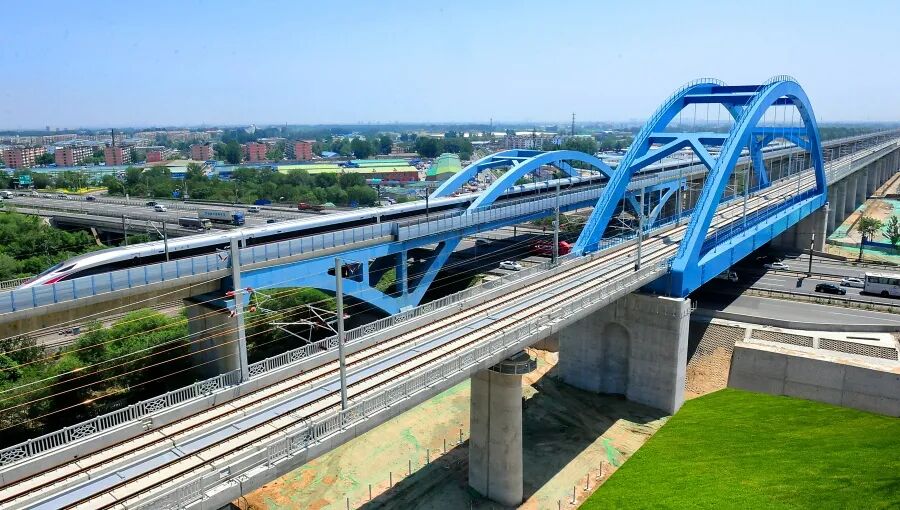
“我在‘十四五’这五年 上市公司在行动”系列报道 | 中国铁建:以“数智铁建”为战略引领,主动拥抱数
Zhong Guo Zheng Quan Bao· 2025-09-29 08:53
Core Viewpoint - China Railway Construction Corporation (CRCC) is actively embracing digital economy opportunities through its "Smart CRCC" strategy, integrating digital technologies into its operations to enhance efficiency, safety, and environmental standards [1][2]. Group 1: Digital Transformation and Innovation - CRCC is implementing a comprehensive digital transformation strategy, shifting from traditional labor-intensive methods to data-driven management, which aims to improve operational efficiency and safety [1][2]. - The company has established a "1+9+N" technology innovation system, focusing on strategic emerging industries and future industries, which includes the establishment of various research institutes to drive innovation [2][4]. - CRCC is concentrating on five new tracks: new infrastructure, new equipment, new materials, new energy, and new services, detailing eight strategic emerging industries and 24 key areas for long-term growth [4]. Group 2: Operational Strategies and Market Adaptation - In response to challenges in the real estate market, CRCC is optimizing resource allocation, enhancing management practices, and focusing on strategic new industries to ensure stable growth [2][3]. - The company is committed to expanding its overseas business, having established a presence in 150 countries and regions, with significant achievements in railway and infrastructure projects [6][7]. - CRCC's overseas operations have evolved from simple construction to a diversified business model that includes investment, operation, and equipment export, enhancing its profitability [7][8]. Group 3: Technological Advancements and Project Examples - CRCC has successfully developed advanced technologies, such as a smart control center for shield tunneling, which allows for real-time monitoring and guidance of tunneling operations [5]. - The company has implemented various digital platforms that streamline processes, such as reducing approval times for construction plans from two hours to eight minutes [5]. - CRCC is actively promoting Chinese standards internationally, facilitating the integration of Chinese technology and practices into global markets [8].