市场避险情绪

Search documents
IC平台:就业数据走弱影响市场,美债上涨美股回落
Sou Hu Cai Jing· 2026-02-06 02:48
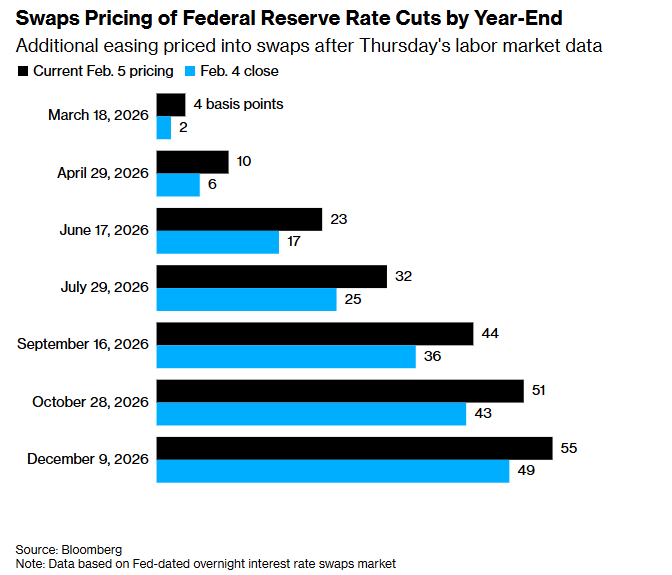
Group 1 - The U.S. job market shows signs of weakness, leading to a decline in U.S. stocks and commodities, while increasing bets on Federal Reserve policy easing [1] - Short-term U.S. Treasury yields saw significant drops, with the two-year yield falling 9 basis points to 3.46%, marking the lowest since January 8 and the largest single-day drop since October of the previous year [1] - The increase in risk-off sentiment has driven investors towards U.S. Treasuries, pushing their prices up and supporting the dollar, which is expected to achieve its first weekly gain in four weeks [4] Group 2 - Job data falling short of expectations is the core trigger for market volatility, with rising layoffs and initial jobless claims, leading traders to anticipate an earlier easing from the Federal Reserve [4] - In January, U.S. corporate layoffs reached 108,435, the highest for the same month since the 2009 financial crisis, with a year-on-year increase of 118% [5] - The market is adjusting its expectations for the upcoming non-farm payroll report, which has been delayed due to a brief government shutdown [5]

黄力晨:市场减少降息押注 美元上涨限制金价
Xin Lang Cai Jing· 2026-02-05 13:51
Core Viewpoint - Gold prices experienced significant fluctuations, reaching a weekly high of $5091 but failing to break the $5100 resistance level, leading to a decline and stabilization around $4878 [1][5][6]. Price Movements - On February 5, gold peaked at $5091 but fell below $5000, hitting a low of $4849 before rebounding to $4970. The following day, it opened higher at $5023 but faced resistance, dropping to $4790 and then rebounding to $4940, currently trading at $4878 [1][5]. - The price drop was attributed to profit-taking after a significant rise, geopolitical risk easing, and a decrease in market risk aversion, resulting in a nearly $1200 decline over three days [1][5][6]. Market Sentiment - The market's sentiment shifted following the nomination of a new Federal Reserve chair, leading to a reassessment of the Fed's monetary policy stance. This change reduced expectations for a mid-year interest rate cut, with the probability of a June rate cut now at 46% [2][6]. - The strengthening of the US dollar, which has rebounded from its lowest levels since March 2022, further limited gold's upward potential [2][6]. Technical Analysis - Key support levels for gold are identified at $4850, $4790, and $4700, while resistance levels are at $4950, $5030, and $5100 [3][7]. - Technical indicators suggest a potential for further declines, with the 5-day moving average and MACD showing bearish signals, while KDJ and RSI indicators indicate a downward trend [2][6].
暴跌之后又暴涨,买金卖金都大排长龙,有人透支年终奖赶紧“上车”
Mei Ri Jing Ji Xin Wen· 2026-02-03 11:47
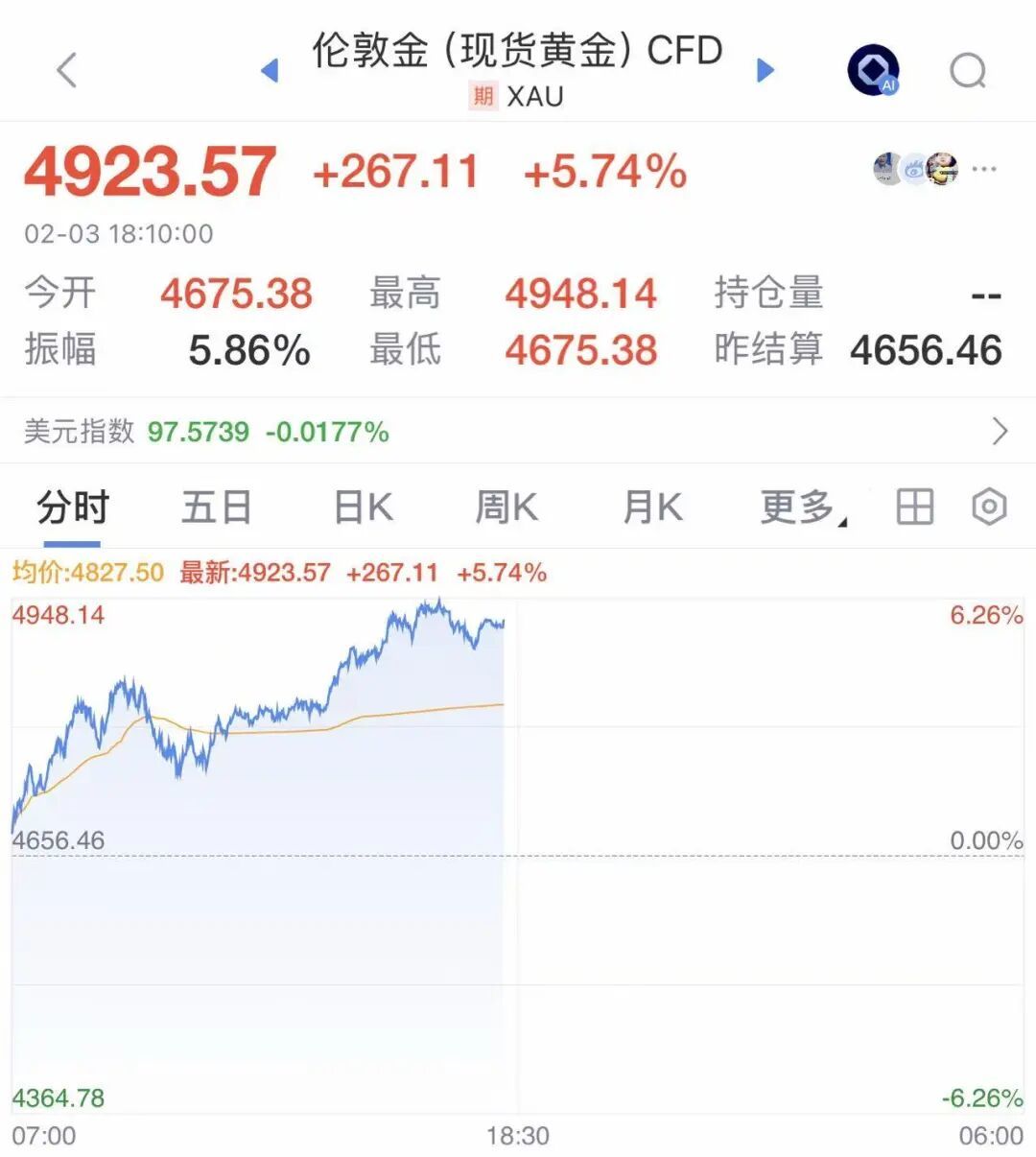
Core Viewpoint - After experiencing a significant drop, gold and silver prices rebounded strongly on February 3, with spot gold reaching $4923.57 per ounce, marking a nearly 6% increase, and spot silver rising over 10% to $87.15 [1] Market Dynamics - The recent volatility in gold prices has ignited both selling and buying interest among consumers, creating a unique market environment characterized by simultaneous "cash out" and "buy in" behaviors [4] - In Beijing, long queues were observed at gold buying and selling locations, indicating high consumer engagement in both selling gold for cash and purchasing new gold items [5][4] - Some investors are taking advantage of the price fluctuations to sell portions of their gold holdings for profit, while others are actively buying, anticipating further price increases [7][11] Investor Sentiment - The current market reflects differing consumer judgments on the value of gold assets, with some prioritizing short-term gains while others focus on long-term value retention [11] - Analysts suggest that the recent drop in gold prices is a result of multiple factors, including technical overbought conditions, increased leverage trading, and changes in U.S. economic indicators affecting market expectations [11][12] Supply and Demand - Due to high demand, certain models of investment gold bars have already sold out, prompting suppliers to expedite restocking efforts [9] - The Shanghai Gold Exchange has announced adjustments to margin levels and price limits for gold and silver contracts, indicating a response to the current market volatility [14][16]
黄力晨:黄金触底反弹 避险买盘推升金价
Xin Lang Cai Jing· 2026-02-03 11:07
Core Viewpoint - The recent decline in gold prices is attributed to reduced market risk appetite and profit-taking by investors, leading to increased selling pressure and a significant drop in gold prices over a short period [1][2][4]. Group 1: Market Dynamics - The market experienced a significant drop in gold prices, with a decline of nearly $1200 over three days due to profit-taking and increased selling pressure [2][5]. - Following the drop, gold attracted buying interest, resulting in a rebound of $200 to $300, with a further rebound of over $500 observed on Tuesday [2][5]. - The postponement of Russia-Ukraine talks and renewed risks of a U.S. government shutdown have contributed to increased safe-haven buying, pushing gold prices higher [2][6]. Group 2: Technical Analysis - Key support levels for gold are identified at $4850 and $4800, while resistance levels are noted at $5000 and $5050 [2][6]. - The daily chart indicates that gold's rebound on Monday and Tuesday has alleviated short-term downward pressure, with technical indicators suggesting a potential for correction after the recent decline [5][6]. - The 5-day moving average has shown a downward crossover, and MACD has formed a bearish crossover, while KDJ and RSI indicators are showing signs of upward movement, indicating a possible correction demand [5].
金价暴跌之后又暴涨!买金卖金都大排长龙,有人透支年终奖赶紧“上车”,金店员工:忙得没空吃饭!上金所紧急公告
Mei Ri Jing Ji Xin Wen· 2026-02-03 10:56
在经历了两天"史诗级"暴跌后,2月3日黄金和白银价格开始强力反弹。截至发稿,现货黄金报4923.57美元/盎司,重新站上4900美元关口,日内涨幅近 6%。现货白银报87.15美元,日内涨幅超10%。 卖金买金都大排长龙 有人"落袋为安",有人"抓紧上车" 近日剧烈波动的行情同时点燃了消费者的变现意愿与购金热情——"落袋为安"与"抓紧上车"两种心态交织,构成了当前黄金市场"回收热"与"抢购热"并存 的独特景象。 "现在金条回收的价格是多少?"在北京市丰台区一家黄金回收店内,一位女士盯着手机上的实时金价向店主询问,她身后还有不少市民排队等待;十几公 里外,朝阳区某商场内的老铺黄金柜台前,队伍蜿蜒曲折,有消费者苦笑道:"为了买一款金葫芦项链,已经排了3个小时的队。" "尽管年终奖还没发,但正好赶上金价跌了点,所以提前给自己安排上了'玫瑰花窗'吊坠。"一位在老铺黄金购买完饰品的女士告诉《证券日报》记者,"还 好今天来得早,不然还不一定能买上。" "忙得连吃饭的时间都没有。"北京房山区一家黄金回收门店的工作人员一边为顾客称重金饰,一边对记者感慨道。 据央视财经报道,2月2日,记者走访北京市场发现,投资金交投活跃,部分 ...
中东战云暂散,金油高台跳水惊动全球市场
Sou Hu Cai Jing· 2026-02-02 17:00
Group 1: Geopolitical Shift - The Trump administration has shifted its stance on Iran, indicating a preference for diplomacy over military action, which has led to a decrease in geopolitical risks and market volatility [1][3][4] - The U.S. faces significant challenges in military intervention against Iran due to its military capabilities and geographical factors, making military options more cautious [4] Group 2: Market Reaction - The easing of geopolitical tensions has resulted in a historic sell-off of traditional safe-haven assets, with COMEX gold futures dropping 11% and silver futures plummeting 31% on January 30 [6][8] - The market's reaction is also influenced by the nomination of Kevin Warsh as the new Fed chair, perceived as a hawkish choice, prompting a reassessment of the Fed's independence and the weak dollar trend [6] Group 3: Speculative Withdrawal - The shift in market sentiment is reflected in trading data, with speculative funds rapidly withdrawing from gold and silver as geopolitical tensions eased [8] - The RSI index for COMEX gold and silver futures remained above 70, indicating an overheated speculative trading environment prior to the sell-off [8] Group 4: Fundamental Return - As macro narratives stabilize, the focus is shifting back to micro fundamentals, with the U.S. monetary policy still favoring gold despite a decrease in bullish sentiment [10] - Iran's potential return to normal oil exports could stabilize global oil supply, but the market still faces structural challenges, with predictions of declining commodity prices in 2026 [10] Group 5: Future Outlook - Uncertainties remain regarding the Iranian situation, particularly if Iran makes significant advancements in nuclear and missile technology [12] - The market may enter a phase of "macro narrative oscillation," with short-term uncertainties influenced by Fed policies and geopolitical developments, while micro fundamentals may provide clearer market direction [12]
盘前:纳指期货跌0.66% 小摩与美银坚定6000美元金价信仰
Xin Lang Cai Jing· 2026-02-02 13:44
Market Overview - Global stock markets experienced a "collective retreat" with the S&P 500 futures indicating a fourth consecutive day of decline for U.S. stocks [2][27] - As of the latest update, Dow futures fell by 0.09%, S&P 500 futures dropped by 0.38%, and Nasdaq futures decreased by 0.66% [3][28] - Asian markets faced heavier declines, with the South Korean Kospi index plummeting by 5.3%, triggering a temporary trading halt [3][28] Commodity Market Volatility - Extreme volatility in the commodity market remains a focal point, with gold prices initially dropping by 10% before narrowing losses, and silver prices falling by 16% before recovering most of the decline [5][30] - The Chicago Mercantile Exchange raised margin requirements for precious metals futures, increasing holding costs for traders, which typically pressures prices and trading activity [5][30][31][32] Federal Reserve Leadership Impact - The nomination of Kevin Walsh as the next Federal Reserve Chair is shifting market expectations towards "less/fewer rate cuts," impacting precious metals prices [12][37] - Analysts suggest that Walsh's past criticisms of the Fed and focus on price stability may lead to a reassessment of the dollar's depreciation narrative, contributing to the recent drop in gold, silver, and copper prices [12][37] Upcoming Economic Data and Earnings Reports - Investors are focusing on the upcoming U.S. non-farm payroll report, expected to show an increase of 68,000 jobs, the largest gain in four months, scheduled for release on Friday [12][41] - A busy earnings week is anticipated, with major companies like Google and Amazon set to report their quarterly results [41][42] Individual Stock Movements - Energy stocks are experiencing pre-market declines, with Occidental Petroleum down 3.1% and ConocoPhillips down 2.6% [43] - Rare earth stocks surged in pre-market trading following President Trump's announcement of a $12 billion mineral reserve initiative [43] - Disney shares rose by 4% in pre-market trading after reporting quarterly revenue that exceeded expectations [44]




百利好晚盘分析:美伊可能和解 金银持续回落
Sou Hu Cai Jing· 2026-02-02 10:56
Gold Market - The market sentiment has eased due to potential reconciliation between the US and Iran, leading to a decline in gold and silver prices as profit-taking occurs [1] - Technically, gold prices have dropped to around $4500, with support at $4280 and resistance at $4620 [1] Oil Market - OPEC+ has agreed to maintain its current production levels, reaffirming its commitment to market stability amid a positive global economic outlook and relatively low oil inventory levels [2] - Geopolitical signals indicate a de-escalation in tensions between the US and Iran, contributing to a decrease in oil prices [2][3] - The technical outlook shows oil prices facing resistance around $66.20, with support at $60.20 [3] US Dollar Index - The nomination of Kevin Walsh as the new Federal Reserve Chair is interpreted as a potential shift towards tighter monetary policy, resulting in a strong rebound of the US dollar index [4] - The European Central Bank is expected to maintain current interest rates due to slow inflation and weak economic recovery in the Eurozone [4] Nasdaq Index - The Nasdaq index is currently consolidating within the range of 24600 to 26200, with a bearish trend indicated by the MACD [6] - Support is noted at 24600 and resistance at 25300 [6] Copper Market - Copper prices have shown a downward trend, with support at $5.46 and resistance at $5.70 [7]

创纪录暴跌!超16万人爆仓!
天天基金网· 2026-02-02 01:14
Group 1 - The article highlights a significant decline in precious metals, with gold dropping 3.61% to $4718 per ounce and silver falling nearly 8% to a low of $79 per ounce, marking a historic plunge in the market [2] - International oil prices also opened lower, with WTI and Brent crude both down over 2%, trading at $63 per barrel and $67 per barrel respectively, amid concerns of potential military action by the U.S. against Iran [2] - Major cryptocurrencies continued to decline, with Bitcoin falling below $77,000 to $76,459, and over 160,000 traders liquidated positions in the past 24 hours [2] Group 2 - The Indian stock market experienced a significant drop, with the Nifty 50 index falling over 700 points, nearly 3%, driven by a sell-off in metal stocks, which saw the NIFTY metal index decline by over 5% [3] - The Saudi stock market recorded its largest drop in nearly eight months, with the overall index falling nearly 2.6%, heavily impacted by a global sell-off in metals affecting local mining stocks [4] - U.S. President Trump expressed a desire to reach an agreement regarding Iran, responding to warnings from Iranian leaders about potential military conflict, while Iran's foreign minister indicated ongoing productive negotiations with the U.S. [4] Group 3 - The article discusses the importance of gold as a safe-haven asset, driven by rising geopolitical tensions and market risk aversion, which have been key factors in the increase of gold prices since 2026 [5] - Central banks globally are accelerating gold purchases to optimize foreign exchange reserves and hedge against geopolitical risks, contributing to the rising demand for gold [5] - The volatility in the gold market is noted, with rapid price increases often followed by sharp declines, influenced by both rational and irrational market factors, including technical sell-offs and leveraged positions [6]
贵金属早盘大跳水,白银暴跌8%,国际油价跌2%,加密货币超16万人爆仓
21世纪经济报道· 2026-02-01 23:37
Group 1 - The article highlights a significant decline in precious metals, with gold dropping 3.61% to $4718 per ounce and silver falling nearly 8% to a low of $79 per ounce, marking a historic plunge in the market [1][2] - International crude oil prices also opened lower, with WTI and Brent crude both falling over 2%, reported at $63 per barrel and $67 per barrel respectively, amid concerns of potential military action by the U.S. against Iran [2][3] - Major cryptocurrencies experienced a downturn, with Bitcoin falling below $77,000 to $76,459, and over 160,000 traders facing liquidation in the past 24 hours [2][4] Group 2 - The Indian stock market saw a significant drop, with the Nifty 50 index falling over 700 points, nearly 3%, driven by a sell-off in metal stocks, which saw the NIFTY metal index decline by over 5% [4][5] - The Saudi stock market recorded its largest drop in nearly eight months, with the overall index falling close to 2.6%, heavily impacted by a global sell-off in metals [5] - U.S. President Trump's comments regarding Iran indicated a potential for conflict, which may have contributed to market volatility, while Iranian officials expressed optimism about reaching an agreement with the U.S. on nuclear issues [5][6] Group 3 - The article discusses the role of gold as a safe-haven asset, driven by geopolitical tensions and market risk, which have historically pushed gold prices higher since 2026 [6] - Central banks globally are increasing their gold purchases to optimize foreign exchange reserves and hedge against geopolitical risks, contributing to the demand for gold [6] - The article notes that the gold market is characterized by volatility, with rapid price increases often followed by sharp declines due to technical sell-offs and leveraged positions [6]