日元套息交易

Search documents
本月将迎来日本加息、美国降息,全球金融风暴是否会重演?
Sou Hu Cai Jing· 2025-12-03 10:29
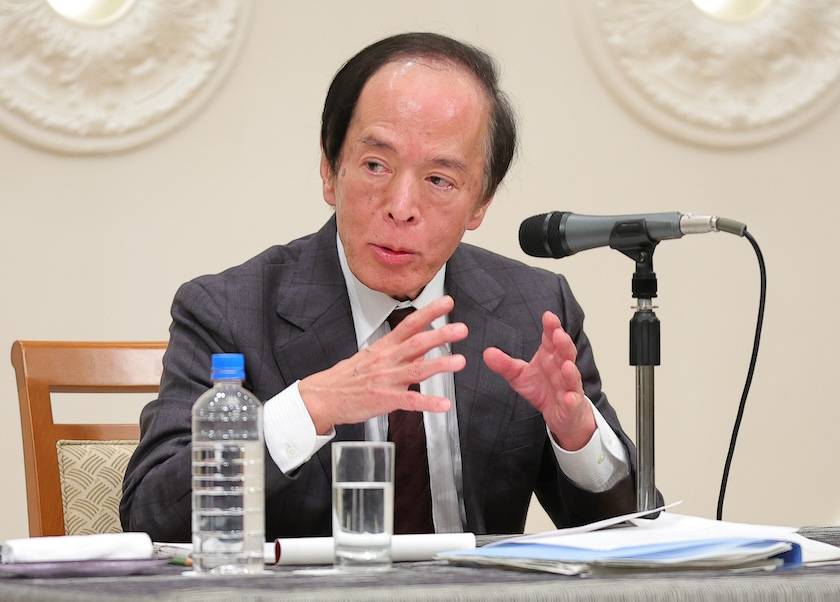
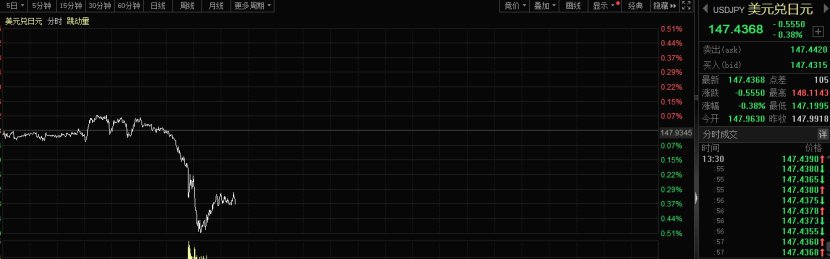
Core Viewpoint - The Bank of Japan (BOJ) is likely to resume its interest rate hike cycle after a 10-month pause, with a strong indication from Governor Kazuo Ueda that a rate increase may occur at the upcoming meeting on December 18-19, 2023, without causing significant global market turmoil [1][4]. Group 1: Economic Factors Supporting Rate Hike - External factors such as the significant reduction in uncertainty regarding U.S. tariff policies and the role of artificial intelligence in driving global economic recovery contribute to a more optimistic outlook for the BOJ [2]. - Internally, the political stability brought by Prime Minister Fumio Kishida's administration has reduced previous uncertainties, despite a contraction in Japan's GDP growth rate in Q3, which analysts attribute to temporary export adjustments rather than systemic risks [2][7]. Group 2: Market Reactions - Following Ueda's comments, Japan's 10-year government bond yield surged to 1.875%, the highest level since June 2008, while the Nikkei 225 index fell by 1.9% and the yen strengthened against the dollar to around 155.4 [1][4]. - The likelihood of a December rate hike has increased from approximately 50% to 70-80%, effectively bringing forward expectations for a potential rate increase that was initially anticipated for January 2024 [2]. Group 3: Implications for Global Markets - The divergence in monetary policy between Japan and the U.S. is expected to increase market volatility, particularly as Japan's anticipated rate hikes could lead to a rise in yen financing costs and a potential unwinding of carry trades [5][6]. - Japan remains the largest net creditor globally and the largest foreign holder of U.S. debt, with a total of $1.189 trillion in U.S. Treasury securities as of September, which may influence asset allocation strategies as Japanese bond yields rise [5]. Group 4: Future Rate Hike Expectations - Analysts predict that the BOJ's rate hikes will be moderate, with expectations of 1-2 hikes per year at 25 basis points each, due to pressures from Japan's substantial public debt and the government's fiscal policies [7]. - The upcoming rate increase is not expected to trigger a major global financial crisis, as the current market conditions are driven more by improving corporate earnings rather than valuation increases, suggesting continued resilience in global equity markets [7].


杠杆资金,清算时刻来临?
Ge Long Hui· 2025-12-02 09:27
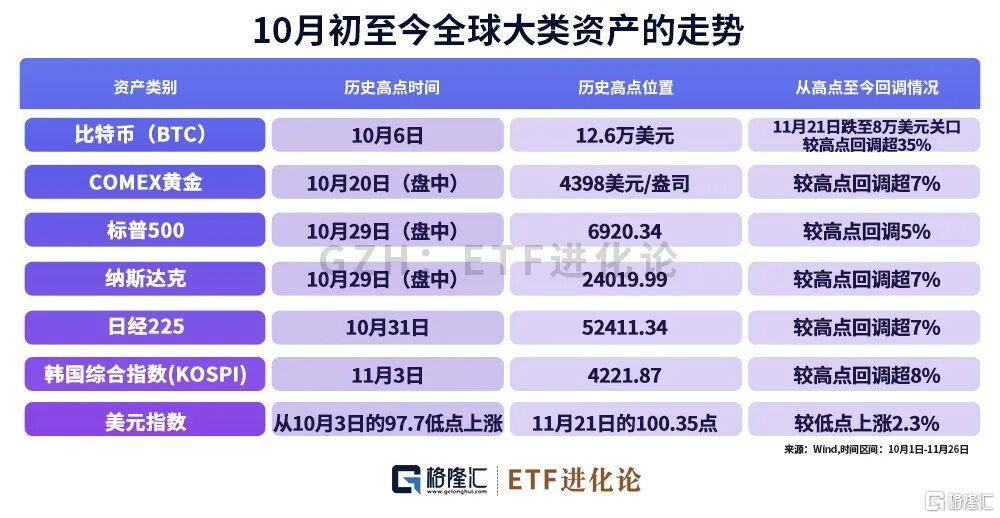
Core Viewpoint - The global asset market is experiencing a significant downturn, driven by actions from the US and Japanese central banks, leading to a renewed wave of selling in various asset classes, including stocks and cryptocurrencies [1][4]. Group 1: Market Performance - Hong Kong and A-shares are all in the red, with the Shenzhen Composite Index and ChiNext Index dropping over 1% in the afternoon session, and trading volume shrinking to 1.61 trillion yuan [1]. - The US stock market saw all three major indices decline, while the cryptocurrency market experienced a drop of over 6%, marking the largest single-day decline since March, with Bitcoin falling over 30% from its peak of over $126,000 on October 6 [1][2]. Group 2: Central Bank Actions - The recent market pullback is attributed to the Federal Reserve's strategy of "expectation management," where it aims to prevent the market from pricing in a December rate cut too early, thus allowing for a more substantial correction before potentially announcing a rate cut [1][4]. - The Bank of Japan's Governor has indicated a thorough discussion on the possibility of interest rate hikes in the upcoming December meeting, leading to a significant sell-off in Japanese stocks and bonds [4][5]. Group 3: Interest Rate and Yield Changes - Japanese two-year government bond yields have surged above 1% for the first time since 2008, while the 30-year yield reached 3.41%, the highest since 1999 [4]. - The US 10-year Treasury yield rose by 7.7 basis points to 4.096%, marking the largest single-day increase since mid-July [4]. Group 4: Market Sentiment and Investment Strategies - The reversal of the "yen carry trade" strategy, where investors borrow low-interest yen to invest in higher-yielding assets, is causing market panic, reminiscent of the significant market crash on August 5, 2024 [5][7]. - The current environment suggests a shift towards a low-interest-rate era, prompting a need for diversified asset allocation strategies to adapt to changing market conditions [11][12]. Group 5: Banking Sector Developments - Major Chinese banks have ceased offering five-year large-denomination certificates of deposit, indicating pressure on net interest margins and a scarcity of assets [11]. - The average interest rates for remaining three-year products have dropped to between 1.5% and 1.75%, reflecting the ongoing adjustments in the banking sector [11][12].
日本债汇遭抛售或触发全球债市风暴
2 1 Shi Ji Jing Ji Bao Dao· 2025-12-01 04:06
Core Viewpoint - The Japanese government plans to finance a new economic stimulus package through a significant increase in government bond issuance, raising concerns about the balance between economic stimulus and fiscal responsibility [1][4]. Group 1: Government Bond Issuance - The Japanese government intends to issue approximately 11.7 trillion yen (about 529.9 billion RMB) in new bonds to cover the funding gap from the recently announced economic measures [1]. - The total economic strategy amounts to about 21.3 trillion yen, with the supplementary budget for fiscal year 2025 expected to include general account expenditures of around 18.3 trillion yen, marking a 27% increase from the previous year [2]. - The scale of the new bond issuance significantly exceeds the 6.7 trillion yen issued by the previous administration, indicating a high reliance on debt financing [2]. Group 2: Market Reactions - The Japanese yen and long-term government bonds have been subject to continued selling, with the yen stabilizing around 156 against the dollar and long-term bond yields rising [3]. - As of November 29, the yield on 10-year Japanese government bonds rose to 1.814%, while 20-year and 30-year yields also increased, reflecting market concerns over fiscal deterioration [3]. - The rise in bond yields is attributed to investor demands for higher risk premiums due to expectations of increased bond supply and signals from the Bank of Japan regarding potential interest rate hikes [3]. Group 3: Economic and Fiscal Concerns - The current government faces challenges in balancing economic stimulus with fiscal discipline, as the debt-to-GDP ratio has exceeded 260% [5]. - The aging population in Japan exacerbates social security spending pressures, raising doubts about the sustainability of tax revenue growth [5]. - If the government continues to rely on debt issuance for economic stimulation, the trend of increasing debt could undermine market confidence in Japan's fiscal health [5]. Group 4: Potential Risks and Global Impact - There are concerns that the selling of Japanese assets may persist, with the potential for Japan's bond market to become a source of global risk [7]. - If the Bank of Japan delays interest rate hikes, it could further erode confidence in Japan's fiscal and monetary policies, leading to increased selling pressure on the yen and government bonds [6]. - The potential for a reversal in yen carry trades could impact global liquidity and emerging markets, as Japan is the largest creditor nation [7].
日本债汇遭抛售或触发全球债市风暴
21世纪经济报道· 2025-12-01 04:05
Core Viewpoint - The Japanese government is planning to issue approximately 11.7 trillion yen (about 529.9 billion RMB) in new bonds to finance a large-scale economic stimulus plan, which has raised concerns about the sustainability of Japan's fiscal health and the balance between economic stimulus and fiscal responsibility [1][4][7]. Group 1: Economic Stimulus Plan - The comprehensive economic strategy finalized by the Japanese government amounts to approximately 21.3 trillion yen, with general account expenditures expected to be around 18.3 trillion yen, marking a significant increase of 27% compared to the previous year [2]. - The economic measures included in this plan represent the largest stimulus since the pandemic began, with the costs associated with the economic strategy estimated at 17.7 trillion yen [2]. Group 2: Debt Issuance and Market Reaction - The scale of the new bond issuance far exceeds the 6.7 trillion yen bonds issued by the previous administration, indicating a high reliance on debt financing [4]. - Despite a record tax revenue forecast of 80.7 trillion yen for the current fiscal year, the new debt issuance reflects ongoing concerns about Japan's long-term fiscal outlook, leading to continued selling pressure on the yen and Japanese government bonds [1][5]. Group 3: Interest Rates and Currency Dynamics - The yield on Japan's 10-year government bonds has risen to approximately 1.814%, with long-term bond yields increasing due to market concerns over fiscal deterioration and expectations of interest rate hikes by the Bank of Japan [5][9]. - The yen has stabilized around 156 against the dollar, influenced by market expectations of a potential interest rate hike in December, which has mitigated some depreciation pressures [5][8]. Group 4: Risks and Future Outlook - There are rising concerns that the Japanese government's ability to balance economic stimulus with fiscal discipline is under scrutiny, especially as the debt-to-GDP ratio exceeds 260% [7]. - If the government continues to rely on debt issuance without implementing tax reforms or controlling social security expenditures, the long-term fiscal situation may worsen, leading to higher interest payments that could crowd out other budgetary needs [7][9]. - The potential for renewed selling pressure on the yen and Japanese bonds exists if the Bank of Japan delays interest rate hikes, which could further erode market confidence in Japan's fiscal and monetary policies [9][10].

日本增发巨额国债刺激经济,债汇遭抛售或触发全球债市风暴
2 1 Shi Ji Jing Ji Bao Dao· 2025-11-29 08:00
Core Viewpoint - The Japanese government is planning to finance a new round of economic stimulus through a significant increase in government bond issuance, amounting to approximately 11.7 trillion yen (about 529.9 billion RMB) to cover the spending gap from the recently announced economic measures [1][2]. Group 1: Economic Stimulus Plan - The 2025 supplementary budget is expected to have general account expenditures of about 18.3 trillion yen, with 17.7 trillion yen allocated for the implementation of the economic measures, marking a substantial 27% increase from the previous year's 13.9 trillion yen [2]. - The total scale of the comprehensive economic measures is approximately 21.3 trillion yen, indicating a significant commitment to economic stimulus despite the associated debt concerns [1][2]. Group 2: Debt Issuance and Market Reaction - The planned bond issuance significantly exceeds the 6.7 trillion yen in bonds issued by the previous administration, reflecting Japan's heavy reliance on debt financing [2]. - The Japanese yen and long-term government bonds have been under pressure, with the yen trading around 156 against the dollar and long-term bond yields rising, indicating market concerns over Japan's fiscal health [3][4]. Group 3: Fiscal Concerns and Future Outlook - Japan's debt-to-GDP ratio has surpassed 260%, raising questions about the government's ability to balance economic stimulus with fiscal responsibility [5]. - Analysts express concerns that continued reliance on debt issuance could exacerbate fiscal deterioration, especially given the pressures from an aging population and the sustainability of tax revenue growth [5][6]. - The potential for rising interest rates, coupled with high leverage, could increase interest expenditure as a proportion of fiscal spending, further straining the budget [5][6]. Group 4: Global Implications - The ongoing sell-off of Japanese assets may have broader implications for global markets, particularly if investors liquidate overseas assets to cover yen-denominated loans, potentially impacting U.S. Treasuries and equities [7]. - The risk of a liquidity crunch in global markets could arise if yen carry trades are unwound, leading to capital outflows from emerging markets [7].
日元套息交易浅析
Wu Kuang Qi Huo· 2025-11-26 02:50
Group 1: Report Summary - The report focuses on the analysis of yen carry trade and its potential impact on global liquidity [2][5] - With Japan's monetary policy moving towards limited normalization, yen carry trade may become an important disruptive factor for global liquidity in the future [2][5] - The future of yen carry trade is uncertain, and attention should be paid to the policy path of the yen and the structural changes in Japanese bond yields [2][14] Group 2: Typical Path of Yen Carry Trade - The typical path of yen carry trade is to borrow low - cost yen, convert it into high - yield currencies, and invest in bonds, stocks or structured products to earn interest rate differentials, and then convert the investment currency back to yen to repay the debt [6] - Yen carry trade has a risk structure highly sensitive to yen exchange - rate changes, and a unilateral appreciation of the yen may trigger a large - scale stop - loss chain [6] Group 3: Background of Yen Carry Trade - Japan's long - term low - growth, low - inflation and low - interest - rate environment since the 1990s bubble burst, along with the Bank of Japan's extremely loose monetary policy, made the yen the world's cheapest and most stable funding currency [7] - The interest rate differentials between the US and Japan during the US and European interest - rate hike cycles strengthened the incentive for yen carry trade, leading to large - scale international capital flowing into US and emerging - market assets [7] - Yen carry trade is closely related to global financial conditions. It expands during low - volatility and high - risk - appetite periods and reverses during high - volatility and risk - event periods, causing cross - asset fluctuations [8] Group 4: Market Outlook - Impact of "Takaichi Economics" - Since 2024, Japan's macro - environment for yen carry trade has undergone a structural change, with core inflation rising above 2% and the Bank of Japan gradually exiting ultra - loose policies [9] - After Takaichi Sanae took office, the Japanese government launched a fiscal stimulus package of over 21 trillion yen, increasing concerns about long - term debt sustainability and pushing up long - term interest rates [11] - The rise in long - term interest rates has increased the yen's internal rate of return and may lead to portfolio re - balancing by Japanese domestic long - term investors [11] - Currently, the systematic risk of yen carry trade reversal has not emerged as the real yield of Japanese 10 - year government bonds is still negative, but multiple factors need to be monitored in the future [14]
日本债市:会成为下一个全球风险源吗?
Jin Rong Shi Bao· 2025-11-24 09:59
Core Viewpoint - The Japanese bond market is experiencing significant volatility, raising concerns among global investors about its potential to become a focal point of market turbulence amid diplomatic crises, high inflation, and economic stagnation [1] Group 1: Economic Stimulus and Market Reaction - The Japanese government announced a massive stimulus plan of 21.3 trillion yen to alleviate public anxiety over inflation, but this has led to increased turmoil in the bond market [1] - The yield on 10-year Japanese government bonds recently approached 1.8%, the highest level since 2008, while the 30-year yield exceeded 3.3%, marking a significant shift for a country that has maintained a "zero interest rate" policy for decades [1] Group 2: Debt Levels and Fiscal Concerns - Japan's debt-to-GDP ratio has remained around 230%, and the new stimulus plan is expected to be accompanied by a large-scale bond issuance, potentially exceeding last year's borrowing of 6.69 trillion yen [2] - The total impact of the stimulus plan, including local government spending and private sector investment, could reach 42.8 trillion yen, surpassing last year's 39 trillion yen plan [2] Group 3: Interest Rate and Financial Health - The Bank of Japan's shift towards raising interest rates marks the end of decades of ultra-loose monetary policy, with rates now at their highest in over a decade [3] - Rising bond yields could create a vicious cycle, forcing the government to allocate more budget to interest payments, which may further increase the need for borrowing and push yields even higher [3] Group 4: Global Investment Implications - Japan is not only the world's most indebted nation but also the largest creditor, holding trillions of dollars in global assets, including U.S. Treasury bonds [3] - If Japanese bond yields continue to rise, it may lead to a reversal of yen carry trades, forcing investors to sell overseas assets to repay yen loans, potentially impacting global markets [3]
宏观经济深度研究:从安倍经济学到早苗经济学
工银国际· 2025-10-22 13:12
Economic Overview - On October 21, 2025, Sanna Marin became Japan's first female Prime Minister, coinciding with a critical phase of structural reform and cyclical adjustment in the Japanese economy[1] - Japan's inflation has gradually moved out of a long-term low range, with the monthly CPI maintaining a year-on-year growth of 2%-4% since April 2022[2] - Average wage growth from spring negotiations is expected to exceed 5% for two consecutive years in 2024 and 2025, marking the highest level in nearly 30 years[2] Inflation Dynamics - Current inflation is primarily driven by short-term factors such as rising food, energy, and import prices, with the CPI growth rate at 3.1% in July 2025, while excluding energy and food, the inflation rate is only 1.6%[2] - The wage-price interaction mechanism in Japan is still fragile, with potential disruptions from external shocks affecting corporate profits and investment willingness[2] Economic Policy Framework - Sanna Marin's economic policy, termed "Marin Economics," continues the legacy of Abenomics, emphasizing active policy intervention to address structural stagnation[1] - The policy framework retains Abenomics' "three arrows": accommodative monetary policy, expansionary fiscal policy, and structural reforms, but with a stronger focus on strategic investments and structural guidance[1][6] Market Implications - If Marin's policies are effectively implemented, fiscal expansion may increase government bond supply, potentially steepening the yield curve[1] - The normalization pace of Japan's monetary policy may slow, exerting short-term pressure on the yen, but medium-term support is expected as the U.S. enters a rate-cutting cycle[1] Regional Impact - Japanese asset performance has significant spillover effects on Asian markets, with structural trends in the Japanese stock market often signaling global capital reallocation towards Asian risk assets[1][6]
刚刚!“黑天鹅”突袭!崩了
Sou Hu Cai Jing· 2025-09-19 13:59
Core Viewpoint - The Japanese yen strengthened significantly on September 19, leading to a sharp decline in the Japanese stock market and a ripple effect across Asian markets, driven by the Bank of Japan's decision to begin selling its holdings of domestic exchange-traded funds [1][2]. Group 1: Bank of Japan's Policy Decision - The Bank of Japan maintained its benchmark interest rate at 0.5%, marking the fifth consecutive meeting without change, which was in line with market expectations [2]. - The announcement of gradually selling off its holdings in domestic exchange-traded funds caused market turbulence, with the Nikkei index dropping by 1.6% [2]. - Analysts interpret this move as a significant step away from the ultra-loose monetary policy of the Abe administration, indicating a potential tightening of policy [5]. Group 2: Economic Indicators and Market Reactions - Despite some signs of weakness, the Japanese economy is described as being on a path of moderate recovery, with stable private consumption and moderate growth in capital expenditure [5]. - A media survey indicated that most observers expect the Bank of Japan to raise the benchmark interest rate by January next year, with a 58% probability of a rate hike by the end of the year [5]. - The strengthening of the yen is expected to impact various markets, particularly through the reversal of carry trade positions, which could lead to significant market adjustments [5][6]. Group 3: Historical Context and Future Implications - Historical data shows that reversals in yen carry trade have occurred in specific periods, leading to yen appreciation and pressure on equity and commodity markets [6]. - Current carry trade volumes in yen are significantly lower than historical highs, suggesting a reduced scale of arbitrage trading due to narrowing interest rate differentials between the US and Japan [6].
日本央行货币正常化推动日债收益率上行
Xin Hua Cai Jing· 2025-08-22 16:29

Core Viewpoint - The Japanese bond market is undergoing significant changes as the Bank of Japan normalizes its monetary policy after decades of near-zero interest rates and aggressive quantitative easing, leading to a substantial rise in government bond yields [1][10][13] Group 1: Bond Yield Changes - The 10-year Japanese government bond yield reached 1.62%, an increase of 72 basis points year-on-year, while the 30-year yield surged to 3.236%, effectively doubling within a year [3][10] - The yield curve has steepened, indicating rising term premiums as investors seek compensation for duration risk [10][11] Group 2: Central Bank Actions - The Bank of Japan announced a slower pace of bond purchases, with a plan to reduce monthly purchases to approximately 3 trillion yen between January and March 2026, reflecting a cautious approach to tightening monetary policy [5][7] - As of August 8, the Bank of Japan held 561.73 trillion yen in Japanese government bonds, with over 78% in long-term and super-long-term bonds [5][6] Group 3: Debt Levels and Economic Impact - Japan's government debt is projected to reach 1,129 trillion yen by the end of the fiscal year 2025, with total central and local government long-term debt expected to hit 1,330 trillion yen, representing 211% of GDP [7][10] - The actual interest rates on government debt have been rising slowly but remain below inflation levels, supporting a decline in the debt-to-GDP ratio [1][10] Group 4: Market Reactions and Investor Behavior - Japanese investors are reallocating funds from foreign assets back to domestic bonds due to rising interest rates and changing global monetary policies, with a net reduction in overseas long-term bonds [10][11] - The bond market is no longer seen as a safe haven for global investors, with increased volatility prompting a preference for short-term bonds or high-quality corporate bonds [11][12] Group 5: Future Outlook - Market expectations indicate a 64% probability of a 25 basis point rate hike by the end of the year, with potential further hikes in 2026 [9][12] - The normalization of the Bank of Japan's monetary policy is viewed as a pivotal moment for global fixed income and foreign exchange markets, reshaping capital flows and investment strategies [12][13]