
渠道变革

Search documents
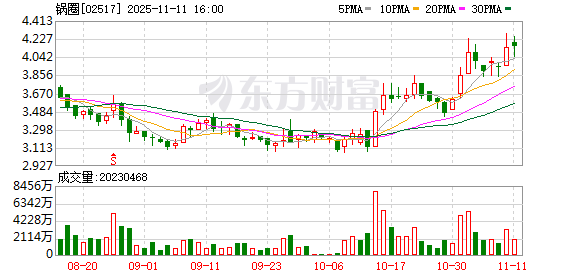
公司法定代表人变更 锅圈“接管”宋河酒业又进一步
Xin Jing Bao· 2025-11-11 17:12
Core Viewpoint - Recent leadership changes at Songhe Liquor Industry Co., Ltd. have raised industry concerns, with the new legal representative being Wang Shuiyun, indicating a potential takeover by Guoquan Industry [2][3][6] Group 1: Leadership Changes - The legal representative of Songhe Liquor was changed from Zhu Wenchen to Wang Shuiyun, alongside multiple executive departures and appointments [3][5] - Wang Shuiyun and Li Jinzhi, both key members of Guoquan's team, are now leading Songhe Liquor and its subsidiary, suggesting a shift in decision-making authority [6][7] Group 2: Financial Background - Songhe Liquor has faced significant financial difficulties since 2019, leading to bankruptcy restructuring in 2022 and 2023, with total liabilities reaching 11.586 billion [9] - The company's assets were valued at 969 million, with a liquidation value of 1.752 billion as of October 31, 2022 [9] Group 3: Strategic Changes - Guoquan's involvement has led to product and brand adjustments, including a focus on core products and high-end series, while reducing the number of offerings from 438 to a more streamlined selection [10][11] - The company is undergoing a digital transformation to enhance its marketing channels, leveraging Guoquan's extensive retail network to improve brand exposure and sales [7][10] Group 4: Market Outlook - There are mixed opinions on Guoquan's ability to enhance Songhe's market position, with some experts believing that the synergy between Guoquan's food-focused brand and Songhe's liquor products may be limited [11] - The ambitious goal of achieving 10 billion in revenue over the next decade is contingent on effective channel expansion and product optimization [11]

格力电器(000651):营收阶段阵痛,盈利能力稳健提升
Changjiang Securities· 2025-11-11 10:45
Investment Rating - The investment rating for the company is "Buy" and is maintained [7]. Core Views - The company experienced a revenue decline in the first three quarters of 2025, with total revenue of 137.18 billion yuan, a year-on-year decrease of 6.50%. The net profit attributable to shareholders was 21.46 billion yuan, down 2.27% year-on-year [2][4]. - In Q3 2025, the company reported revenue of 39.86 billion yuan, a significant year-on-year decline of 15.09%, with a net profit of 7.05 billion yuan, down 9.92% year-on-year [2][4]. - The company announced a mid-year profit distribution plan, proposing a cash dividend of 10 yuan per 10 shares (including tax), resulting in a dividend payout ratio of 26.02% [2][4]. Summary by Sections Revenue Performance - The company's revenue decline is attributed to several factors, including the transition from large to small distributors, a high-end brand positioning in a cautious consumer environment, and pressure on central air conditioning growth due to ongoing real estate downturns. The revenue growth rate for the company was lower than the overall industry expectation [10]. - The overall home air conditioning industry saw a total sales volume decline of 2.71%, with domestic sales increasing by 5.51% and exports decreasing by 12.94% [10]. Profitability - The gross margin decreased by 0.68 percentage points year-on-year in the first three quarters of 2025. However, the operating profit margin increased by 0.13 percentage points due to a reduction in asset impairment losses [10]. - In Q3 2025, the gross margin decreased by 0.27 percentage points, while the operating profit margin increased by 0.62 percentage points, indicating improved profitability despite revenue challenges [10]. Future Outlook - The company is expected to gradually recover from the operational pain caused by channel reforms, with improved terminal competitiveness anticipated. The projected net profits for 2025, 2026, and 2027 are 31.78 billion yuan, 33.53 billion yuan, and 35.71 billion yuan, respectively, with corresponding price-to-earnings ratios of 7.13, 6.76, and 6.35 [10].

大消费反攻!布局时点到了?丨每日研选
Sou Hu Cai Jing· 2025-11-11 01:05
Core Viewpoint - The consumer sector is showing signs of recovery, driven by favorable policies, rising CPI, and the imminent closure of Hainan Free Trade Port, leading to increased investment enthusiasm in the sector [2][4]. Group 1: Consumer Sector Analysis - The consumer sector is believed to be at the bottom, with fundamentals gradually improving, as indicated by the third-quarter reports [4]. - The "14th Five-Year Plan" emphasizes the importance of consumption, suggesting a positive outlook for the sector [4]. - Key investment opportunities include the restaurant chain sector, which is nearing the end of price wars, and companies like Anjiexin Foods and Lihai Foods are seeing improved net profit margins [4]. Group 2: Duty-Free Industry Insights - Hainan's duty-free sales data shows a significant recovery in Q3 2025, with a notable increase in average transaction value, and a stable outlook for Q4 [5]. - Continuous policy support, including a clear timeline for the island's closure and an expanded range of duty-free products, is expected to enhance the operational conditions for companies like China Duty Free Group and Hainan Development [5]. Group 3: Structural Upgrades in Consumption - The toy industry is evolving with IP incubation and category innovation, favoring leading companies with strong design and supply chain capabilities [6]. - The beauty industry is integrating medical, beauty, and health services, which is expected to enhance customer spending and repeat purchases [6]. - The consumer industry is transitioning from "functional supply" to "scenario value supply," indicating a structural upgrade in brand consumer goods [6]. Group 4: New Consumption Trends - Four new consumption themes are emerging: 1. Brand globalization 2.0, focusing on pricing power and emerging markets [7]. 2. Emotional value sectors like trendy toys and pet products are expected to benefit from rising GDP per capita [7]. 3. AI-driven consumption in service sectors is showing potential for profitability [7]. 4. Channel transformation emphasizing user experience and operational efficiency, particularly in instant retail and cost-effective dining [7]. Group 5: High-Growth Opportunities in Emotional Consumption - The gold and jewelry sector is undergoing significant changes, with rising gold prices and a shift towards emotional consumption, suggesting opportunities in high-end and trendy gold segments [8]. - Retail e-commerce is focusing on offline retail transformation and AI-enabled cross-border e-commerce leaders [8]. - The cosmetics sector is seeing growth in domestic brands that meet emotional value and safety ingredient innovation [8]. - The medical beauty sector remains resilient, with opportunities in differentiated products and mergers in downstream medical beauty institutions [8].



大消费集体爆发,港股沪上阿姨涨近16%,蜜雪集团涨超9%
2 1 Shi Ji Jing Ji Bao Dao· 2025-11-10 07:40
Market Overview - Major stock indices in the Asia-Pacific region rose as investor concerns over the "AI bubble" eased, with the Nikkei 225 index up 1.26% and the KOSPI index up 3.02% [1] - In the A-share market, the Shanghai Composite Index rose by 0.53%, the Shenzhen Component Index increased by 0.18%, while the ChiNext Index fell by 0.92% [1] - The total market turnover reached 2.19 trillion, with over 3,300 stocks rising [1] Consumer Sector Performance - The consumer sector showed strong performance in both A-shares and Hong Kong stocks, driven by multiple favorable policies [3] - Notable A-share stocks included Huifa Food and Kuaijishan, while in Hong Kong, stocks like Shàngshàng Āyí and Mìxuè Group saw significant gains [3] - The National Bureau of Statistics reported a 0.2% year-on-year increase in the Consumer Price Index (CPI), indicating a positive trend in consumer spending [3] New Consumption Trends - Four main consumption themes are emerging: 1. Brand globalization focusing on pricing power and emerging market opportunities [4] 2. Emotional value sectors such as trendy toys and pet products benefiting from rising GDP [4] 3. Functional value with profitable business models in AI-driven sectors like e-commerce and education [4] 4. Channel transformation emphasizing instant retail and cost-effective dining options [4] Market Outlook - The market is perceived to be in a bull phase, although it may enter a period of wide fluctuations [4] - Short-term focus is on defensive and consumer sectors, while mid-term attention remains on TMT and advanced manufacturing [4] - In the food and beverage sector, there is a recommendation to capitalize on low valuations in the liquor market, particularly for white liquor [5]
大消费集体爆发,港股沪上阿姨涨近16%,蜜雪集团涨超9%
21世纪经济报道· 2025-11-10 07:33
Market Overview - Major stock indices in the Asia-Pacific region rose, with Japan's Nikkei 225 up 1.26% and South Korea's KOSPI up 3.02% as investor concerns over the "AI bubble" eased [1] - A-shares showed mixed results, with the Shanghai Composite Index up 0.53% and the Shenzhen Component Index up 0.18%, while the ChiNext Index fell by 0.92% [1][2] - The total trading volume in the A-share market reached 2.19 trillion, with over 3,300 stocks rising [1] Sector Performance - The consumer sector performed well, with significant gains in A-shares for companies like Huifa Food and Kuaijishan, while in Hong Kong, stocks like Hushang Auntie rose nearly 16% [5] - Multiple favorable policies, including a report from the Ministry of Finance on consumption and a rise in the national Consumer Price Index (CPI) by 0.2%, contributed to the consumer sector's performance [5] Investment Insights - Guojin Securities identified four new consumption trends: 1. Brand globalization 2.0, focusing on pricing power and emerging market opportunities 2. Emotional value sectors such as trendy toys and pet products benefiting from rising GDP 3. Functional value with profitable AI applications in e-commerce and education 4. Channel transformation with a focus on instant retail and cost-effective dining [6] - According to Everbright Securities, the market may be in a bull phase but could experience short-term fluctuations, with a focus on defensive and consumer sectors in the near term [6] - CITIC Securities noted that the food and beverage industry is nearing a bottom, suggesting that current low prices in the liquor sector present a buying opportunity [7]

港股新消费概念走强,泡泡玛特涨超6%,机构看好四大主线
2 1 Shi Ji Jing Ji Bao Dao· 2025-11-10 06:43
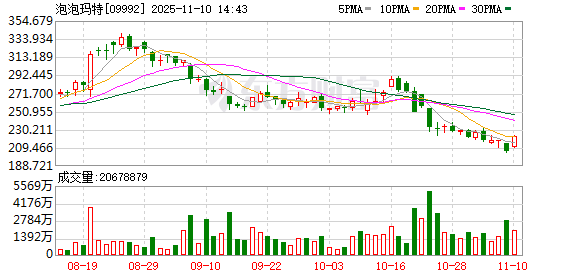
Group 1 - The core viewpoint of the news highlights a strong performance in the new consumption sector in Hong Kong and A-shares, driven by multiple favorable policies and market dynamics [2] - Key stocks in the Hong Kong market, such as "沪上阿姨" (Hushang Auntie) and "泡泡玛特" (Pop Mart), saw significant gains, with increases of over 16% and 6% respectively, indicating robust investor interest [2] - In the A-share market, the consumer sector also experienced a strong rally, with stocks like "欢乐家" (Huanle Jia) and "会稽山" (Kuaijishan) hitting the daily limit, reflecting a broad-based enthusiasm for consumer goods [2] Group 2 - Guojin Securities identifies four main themes in the new consumption sector: 1) Brand expansion into emerging markets, 2) Growth in emotional value sectors such as toys and pet products, 3) Functional value driven by AI applications in e-commerce and education, and 4) Channel transformation focusing on instant retail and cost-effective dining [3] - According to Everbright Securities, the market is likely in a bull phase but may enter a period of wide fluctuations, with a focus on defensive and consumer sectors in the short term, while maintaining interest in TMT and advanced manufacturing sectors for the medium term [3]


OPPO华北首家旗舰店落地 再探渠道变革新模式
Zheng Quan Ri Bao Wang· 2025-11-09 14:03
Core Insights - OPPO is launching its first flagship store in North China at the historic Shengxifu Building in Tianjin, marking a significant step in its strategy to establish 50 flagship stores nationwide [1][2] - The Tianjin flagship store aims to blend the cultural heritage of the century-old building with modern e-sports culture, creating a new consumer experience [1][4] Store Strategy - The opening of the Tianjin store is part of OPPO's broader strategy to expand its high-end retail network across key urban areas in China, with a focus on user-centric locations [2][3] - OPPO's retail strategy emphasizes the importance of location, with plans to open flagship stores in 50 cities, enhancing brand visibility and customer engagement [3][4] Performance Metrics - Previous flagship stores have shown strong performance, with the first store in Guangzhou achieving over 1,100 units sold in a month and sales exceeding 4.5 million yuan [5] - The largest flagship store in Guiyang generated over 600,000 yuan in sales on its opening day, indicating the effectiveness of OPPO's retail strategy [5] Store Design and Experience - The Tianjin flagship store features a two-level design, including product display areas, a leisure drink zone, and interactive gaming sections, aimed at creating a vibrant community space for young consumers [5][6] - The store's renovation preserved the historical aspects of the Shengxifu Building while integrating modern technology and art, reflecting OPPO's commitment to innovation [5][8] Retail Ecosystem - OPPO's flagship store strategy is part of a larger initiative to upgrade its extensive retail network, which currently includes over 8,500 stores across various formats [7][8] - The company plans to open at least 1,000 new stores annually, with a target of 3,500 shopping center stores by 2027, enhancing its market penetration [7][8] Strategic Partnerships - OPPO is forming strategic partnerships with leading commercial real estate brands to secure prime retail locations, which will enhance customer traffic and brand presence [7][8] - The focus on creating a user-centered retail ecosystem aims to transform stores into hubs for brand experience, service, and social interaction, thereby increasing customer lifetime value [8]
重庆啤酒20251106
2025-11-07 01:28
Summary of the Conference Call for Chongqing Beer Industry Overview - The beer industry is experiencing a slight decline in overall sales for 2025, but specific brands such as Carlsberg, Fenghua Xueyue, Lebao, and Wusu are showing growth [2][6] - The company is focusing on high-end product development, with a significant emphasis on products priced above 4 RMB [2][9] Key Points and Arguments Brand Performance - Carlsberg continues to grow in the South China market [2][6] - Fenghua Xueyue has achieved double-digit growth after nationwide promotion [2][6] - Lebao remains the company's second-largest product, continuing its growth trend [2][6] - Wusu brand is maintaining high-end pricing and positive growth both inside and outside Jiangsu, with an estimated sales volume of 730,000 to 740,000 tons in 2024 and expected growth in 2025 [2][7] Market Dynamics - The company is segmented by geographic latitude, with significant growth in Xinjiang, where market share exceeds 90% [10][11] - The South China region is outperforming the Central region [11] Cost and Margin Outlook - A decrease in costs is expected to significantly contribute to gross margins in 2025, although the rate of decline is anticipated to narrow in 2026 [2][13] - The company typically locks in pricing and volume for the next year by January, with preliminary indications suggesting continued cost reduction in 2026, albeit at a lower rate than in 2025 [13] Product Innovation and New Channels - The company is actively exploring new retail channels and product innovations, launching over 30 new products in 2025, including tea-flavored beer and low-alcohol variants [4][14] - The introduction of one-liter canned products is a key focus for 2026 [4][14] Consumer Trends and Challenges - The decline in the economy segment (priced below 4 RMB) is noted, but it represents a small portion of total sales (approximately 3%) [9] - The overall consumption environment is under pressure, impacting mainstream product categories [3][8] Financial Health and Dividend Policy - The company maintains a 100% dividend policy, with a strong cash flow position supporting this strategy [4][19] - The depreciation from the new Foshan factory, which began operations in August 2024, is expected to increase from 40 million RMB in 2024 to over 90 million RMB in 2025, impacting costs [4][19] Future Outlook - The company remains cautious about 2026, with no clear recovery signs yet, but anticipates potential adjustments based on demand recovery [5][14] - Despite concerns over profit declines, the company is viewed as having a strong defensive position in the A-share market, with expectations for gradual improvement in the dining scene [20] Additional Important Insights - The company is adapting to new retail trends, including instant retail and O2O models, to enhance marketing and brand development [3] - The impact of the recent alcohol regulations on sales has been managed effectively, with strategies in place to stabilize sales [17][18]

安井食品(603345):3季度经营改善 新渠道实现较快增长
Xin Lang Cai Jing· 2025-11-06 02:37
Core Viewpoint - Company reported a revenue of 11.37 billion yuan for the first three quarters of 2025, a year-on-year increase of 2.7%, while net profit attributable to shareholders was 950 million yuan, a year-on-year decrease of 9.3% [1] Group 1: Financial Performance - In Q3 2025, the company achieved a revenue of 3.77 billion yuan, a year-on-year increase of 6.6%, and a net profit of 270 million yuan, a year-on-year increase of 11.8% [1][2] - The revenue growth in Q3 2025 was supported by the performance of new channels and the contribution from the acquisition of Dingwei Tai [2] - The company’s gross margin in Q3 2025 was 20%, showing a year-on-year increase of 0.1 percentage points and a quarter-on-quarter increase of 2.0 percentage points [3] Group 2: Product and Channel Strategy - The company is focusing on product innovation and upgrading its product structure to meet consumer demands and adapt to channel changes [4] - In Q3 2025, revenue growth by product category included frozen prepared foods (+6.4%), cooked dishes (+8.8%), and frozen rice and noodle products (-9.1%) [2] - The company is enhancing collaboration with major supermarkets and new retail channels, focusing on customized products [4] Group 3: Future Outlook - The company expects performance to improve gradually in the fourth quarter, driven by seasonal demand and the introduction of new products [4] - The company maintains a strong market position and is well-equipped to respond to external changes, with anticipated net profits for 2025 to 2027 being 1.42 billion, 1.57 billion, and 1.71 billion yuan respectively [5]

食品饮料板块或迎中长期配置机会
Mei Ri Jing Ji Xin Wen· 2025-11-04 04:07
Group 1 - The food and beverage sector is experiencing downward pressure, with notable declines in popular stocks such as Dongpeng Beverage, Wuliangye, Haitian Flavoring, and Kweichow Moutai, leading to a 1.04% drop in the food and beverage ETF for the half-day session [1] - In Q3 2025, the beverage industry showed strong performance with revenue and net profit growth of 16.3% and 30.8% year-on-year, respectively, benefiting from lower raw material prices that offset the impact of price wars in the ready-to-drink category [1] - The frozen food sector is in a mild recovery phase, achieving a net profit growth of 13.5% through refined cost control amid a less competitive environment, indicating a steady improvement in profitability [1] Group 2 - The report from Guosheng Securities indicates that the liquor sector faced pressure on both volume and price due to tightening regulations on public consumption and business banquets, but has shown signs of improvement since Q3, with Kweichow Moutai stabilizing sales and benefiting from rigid demand in the wedding and family banquet segments [1] - Major liquor companies are stabilizing prices and markets while innovating products and channels to meet new demands, suggesting that the peak pressure on liquor sales has passed, with expectations for demand recovery in the future [1] - The long-term growth drivers for the food and beverage sector are clear, with consumption upgrades, product innovation, and channel transformation forming the core growth dynamics of the industry [2]
