
生育补贴

Search documents
5月29日早间新闻精选
news flash· 2025-05-29 00:02
Group 1 - China is committed to high-level opening-up and welcomes US financial institutions to participate in the development of its capital markets [1] - The Ministry of Commerce recently discussed the potential relaxation of export controls on rare earths to European chip companies during a meeting with semiconductor enterprises [4] - The Shenzhen government has released draft regulations for the management of affordable housing, emphasizing strict management to prevent conversion to commercial housing [8] Group 2 - Tianyuan Pet announced plans to acquire 89.71% of Taotong Technology for 688 million yuan [9] - China Energy Construction's subsidiary won a coal power project with a contract value of approximately 14.586 billion yuan [10] - Nvidia reported first-quarter revenue of $44.1 billion, a 69% year-over-year increase, and a net profit of $18.78 billion, up 26% year-over-year [18]
疫苗ETF(159643)涨超1%,创新药催化与CXO估值修复或成焦点
Mei Ri Jing Ji Xin Wen· 2025-05-27 06:37
Group 1 - The core viewpoint emphasizes the continuous catalysis in the innovative drug sector of the pharmaceutical and biotechnology industry, with a focus on areas such as anti-tumor, autoimmune, GLP-1, stem cells, and gene therapy [1] - The CXO sector is expected to see a valuation recovery due to supportive policies for innovative drug development in China and a reduction in overseas geopolitical risks [1] - In the blood products sector, there is an increasing demand for intravenous immunoglobulin (IVIG) in critical care, driven by an expanding market and a price increase in high-end chromatography IVIG, with a short-term shortage expected to persist [1] Group 2 - The vaccine sector is under pressure, but some key companies are showing marginal performance improvements, with attention on new areas such as shingles and the penetration potential of domestic high-cost performance HPV manufacturers [1] - In traditional Chinese medicine, it is recommended to focus on companies related to fertility subsidies [1] - The medical device sector is experiencing accelerated replacement due to centralized procurement, with a focus on the replacement potential in electrophysiology and neurointervention fields [1] Group 3 - The low-value consumables industry is gradually completing inventory destocking, with attention on cyclical upward opportunities and the potential of the GLP-1 industry chain [1] - The Vaccine ETF (159643) tracks the Vaccine Biotechnology Index (980015), which is compiled by China Securities Index Co., Ltd., selecting listed companies involved in vaccine research, production, and sales from the A-share market [1] - The Vaccine Biotechnology Index aims to reflect the overall performance of listed companies related to vaccines and biotechnology [1]
伊利金领冠进军香港,将加速在全球婴配粉市场布局
2 1 Shi Ji Jing Ji Bao Dao· 2025-05-22 10:48
Group 1 - Yili has launched three new infant formula products under the Jinlingguan brand in Hong Kong, marking its entry into the Hong Kong market and accelerating its global expansion strategy [1] - The infant formula and dairy products business, represented by Jinlingguan, has entered a steady expansion phase, achieving a revenue of 29.675 billion yuan, a year-on-year growth of 7.53%, with a gross margin of 41%, which is approximately 10 percentage points higher than the liquid milk business [1] - Jinlingguan's revenue has seen double-digit growth, with its retail market share increasing by two percentage points compared to the previous year [1] Group 2 - The declining birth rate in China presents challenges for the infant formula market, with expectations of further declines in the birth rate by 2025 [2] - Despite the challenges, there are structural opportunities in the market, and the infant formula industry is expected to enter a period of integration and structural adjustment by 2025 [2] - Yili will continue to focus on high-end positioning and innovation in its product offerings, responding to the increasing consumer demand for high-quality and scientifically formulated products [2] Group 3 - Yili has allocated a total subsidy of 1.6 billion yuan to provide at least 1,600 yuan in subsidies to eligible pregnant families across the country, including eight free nutritional products during pregnancy [3] - The subsidy program aims to support maternal and infant health, reflecting the company's commitment to social value and long-term brand investment [3] - The initiative is seen as a strategic investment in the future of maternal and infant health in China, benefiting many pregnant families in the short term while fostering a healthier environment for scientific parenting in the long term [3]

羊奶粉全球第一的澳优,为何撑不起伊利的“双降”困局?
3 6 Ke· 2025-05-12 00:17
Group 1 - The core viewpoint of the article highlights the financial struggles of Yili, which reported a revenue decline of 8.2% and a net profit drop of 18.9% in 2024, marking its first "double decline" since its listing, attributed to the high-cost acquisition of Ausnutria [1][2][4] - Yili's net profit, excluding goodwill impairment, would have shown a 12.2% increase, indicating that the financial results are a strategic cleanup following a failed investment [1][2] - Ausnutria's performance in 2024 showed a slight revenue increase of 0.28% to 7.402 billion yuan and a significant net profit growth of 35.32% to 236 million yuan, contrasting with Yili's decline [1][4] Group 2 - The acquisition of Ausnutria by Yili was marked by a high premium, with the acquisition cost amounting to 8.734 billion yuan, leading to a significant increase in goodwill from 3 million to 4.954 billion yuan [2][4] - Since Yili took over Ausnutria, there have been calls from shareholders for privatization due to perceived overvaluation, but Yili has maintained its commitment to the brand [5][6] - The management of Ausnutria has been fully integrated with Yili's team, aiming for better synergy across supply chains, channels, and branding [5][6] Group 3 - Despite Yili's overall revenue decline, its milk powder business has shown resilience, with a 7.5% revenue increase, contributing significantly to the overall performance [7] - Ausnutria's sheep milk powder business has gained traction, with a 68.2% increase in overseas revenue, although this still represents a small portion of total revenue [8][11] - The sheep milk powder market in China is growing rapidly, with a projected market size of 35 billion yuan by 2028, but Ausnutria's growth in this segment has not been as strong as expected [8][9] Group 4 - Ausnutria's reliance on sheep milk powder has led to a decline in its cow milk powder revenue, which fell by 17.8% in 2024, indicating a shift in its product focus [11][12] - The international market for dairy products presents significant challenges, with strong competition from established global players, making it difficult for Ausnutria to expand its market share [12][13] - Yili's marketing strategies have been criticized for lagging behind competitors, impacting its ability to capitalize on emerging market opportunities [13][14]
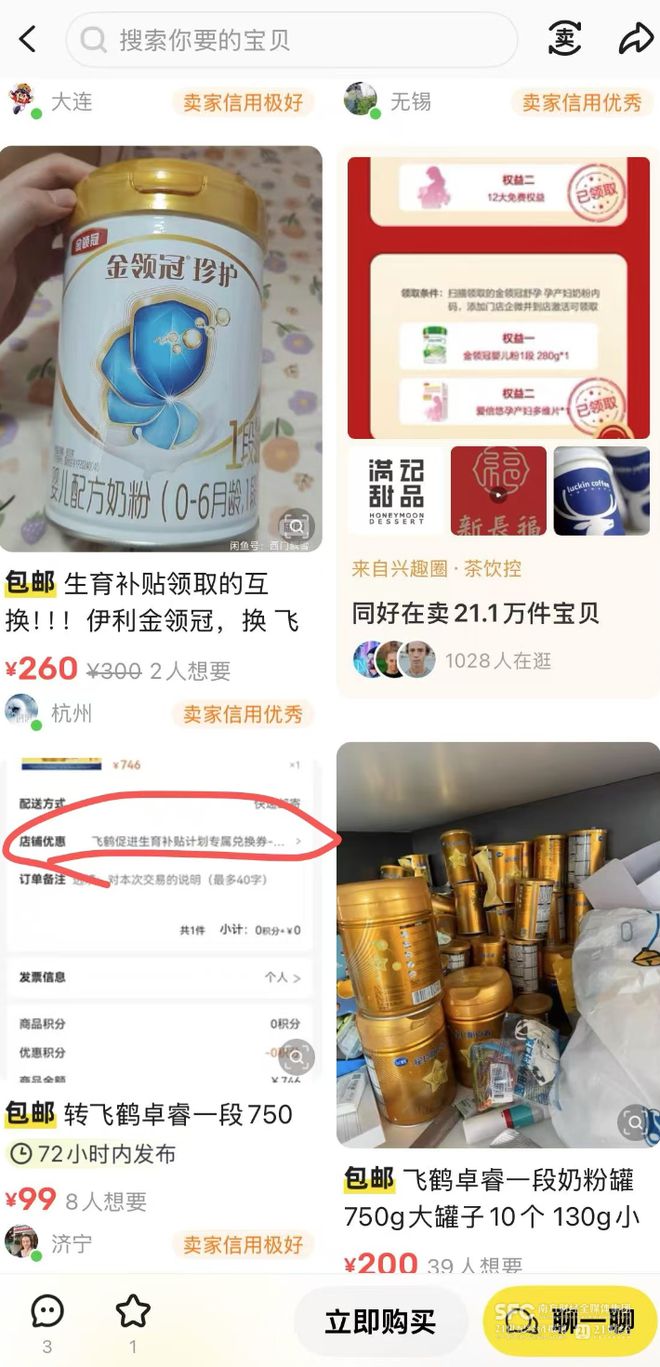
乳企“生育补贴”落地:伊利、飞鹤抢先,相关产品流入闲鱼丨消费现场
2 1 Shi Ji Jing Ji Bao Dao· 2025-05-09 13:01
Core Viewpoint - The infant formula market is entering a "fertility subsidy" phase, with major companies like Yili, Junlebao, and Feihe announcing substantial subsidies to support pregnant families [1][10]. Group 1: Subsidy Announcements - Yili has launched a 1.6 billion yuan fertility subsidy, providing eligible families with at least 1,600 yuan in benefits, including eight nutritional products and twelve parenting rights [1]. - Junlebao also announced a 1.6 billion yuan subsidy for eligible families, starting from May 15 [9]. - Feihe has committed 1.2 billion yuan in subsidies, with eligible families receiving at least 1,500 yuan starting from early April [1][5]. Group 2: Implementation Differences - Feihe's subsidy process is relatively straightforward, allowing families to receive products quickly after verification [5]. - Yili's process is more complex, requiring participation in offline classes and specific product selection based on timing, which may not meet the immediate needs of families [6][12]. Group 3: Market Dynamics - The infant formula market is experiencing a contraction, with Nielsen IQ reporting a 9.8% decline in offline sales in 2024 [11]. - Despite the overall market decline, Yili's infant formula segment has shown a double-digit revenue growth, with a 7.53% increase in total revenue [12]. - Feihe has also reported a 6% revenue growth in 2024, driven by high-end products, particularly the Star Flying series, which saw a 60% increase in sales [14]. Group 4: Competitive Landscape - The competition among dairy companies is intensifying, with many firms launching fertility subsidies as a promotional strategy [8][10]. - The high profit margins associated with infant formula make it a critical market for dairy companies, with Yili's infant formula segment achieving a gross margin of 41.02% in 2024 [15]. - Companies are expected to continue introducing high-end products to optimize their offerings in response to market conditions [15].

每日投行/机构观点梳理(2025-05-08)
Jin Shi Shu Ju· 2025-05-09 02:06
国外 1. 高盛:中国股市保持韧性,维持"增持"评级 高盛发布研报称,中国股市保持韧性,原因包括美元走弱、经济增长强劲以及国内政策支持。高盛维持 对中国股市的"增持"评级,并上调2025年每股收益预测,将MSCI中国指数和沪深300指数的12个月目标 点位分别上调至78点和4400点,这意味着其潜在回报率分别为7%和15%。近期,高盛还将全年南向资 金净买入额的预期从750亿美元上调至1100亿美元,原因包括资金从美国流向中国、H股的成长性与估 值优势,以及新股IPO和"回归"上市推动南向可投资范围扩大。 2. 高盛:提高MSCI中国及沪深300未来12个月目标值 花旗研究周四将布伦特原油三个月期预估从先前预估的每桶60美元下调至55美元,因美伊核协议谈判重 启,提高了最终达成协议的可能性。花旗表示,由于市场供应增加,美国和伊朗之间的协议可能会缓解 制裁,这可能会推动布伦特原油价格跌至每桶50美元。但如果没有达成协议,以及遏制伊朗核计划等可 能升级的行动,可能会将油价推高至每桶70美元或更高。花旗认为最终达成协议的可能性为60%。 7. 三菱日联:美联储对降息的谨慎态度不一定令美元走强 三菱日联银行分析师哈尔 ...
又新低了
猫笔刀· 2025-04-27 14:19
铁子们我回北京了,苏州北京来回都是4小时高铁,方便的。 昨天有人说我老婆录的演唱会视频音效很好,室内馆就是这样的,而且是馆子越小听的效果就越好。就像美味菜肴都是 小而精做出来的,大锅菜你就别指望能吃上好的。 5月底在昆山有张韶涵的演唱会,我本来有兴趣的,但老婆查了信息说是室外场,那我就不看了。那种几万人的体育场视 听效果很不好,经常是歌手唱的音响含糊不清,边上粉丝鬼哭狼嚎听三个小时,遭老罪了。 我说张韶涵现在火,先让她沉淀沉淀,等不火了就会开室内馆了。华语乐坛我唯一可以接受室外场的只有周杰伦,他就 算再沉淀10年20年,只要在内地也都是开室外场,除非去香港或者新加坡看。 这周末官方披露了一季度的结婚人数181万对,同比下跌8%,而且181万这是除了2020年一季度之外的历史最低值,2020 年一季度你们懂的,那个数据不正常,说白了一季度就是刷新史低了。 | | 季度结婚对数(万) | | | --- | --- | --- | | 2012年 | 347.00 2019年 | 281.50 | | 2013年 | 428.20 2020年 | 155.70 | | 2014年 | 412.80 2021年 | ...
三大品牌推出“生育补贴”,奶粉行业争夺新生儿市场
Bei Ke Cai Jing· 2025-04-18 11:26
Group 1 - The core viewpoint of the article highlights the introduction of "fertility subsidies" by major domestic milk powder brands, including Feihe, Yili, and Junlebao, as a response to declining birth rates and a strategy to attract new customers [1][2][4] - The fertility subsidies are seen as a social supplement to government policies aimed at encouraging childbirth, which have been included in the State Council's work report and the "Special Action Plan to Boost Consumption" [1][2][4] - The subsidies are expected to benefit brands, channels, and consumers, with an anticipated increase in the number of milk powder companies adopting similar subsidy strategies in the future [1][4][6] Group 2 - Junlebao announced a 1.6 billion yuan subsidy plan starting in May 2025, while Feihe and Yili have already initiated their subsidy programs, with Feihe committing 1.2 billion yuan and Yili also pledging 1.6 billion yuan [2][3] - The subsidies are designed to provide direct benefits to consumers, allowing eligible families to receive milk powder products, with Feihe's program already seeing over 50,000 successful applications [2][4] - The competition for new customers has intensified, with the cost of acquiring a new customer now estimated to be between 500 to 1,000 yuan, compared to 20 yuan before 2019 [4][5] Group 3 - The overall market for infant formula has faced challenges due to a decline in birth rates, leading to a double-digit decrease in industry scale since 2022, although the rate of decline is expected to slow in 2024 [4][6] - The introduction of fertility subsidies is viewed as a tactical response by leading brands to enhance customer loyalty and reduce the pressure on consumers regarding feeding choices [5][6] - The market is expected to see further differentiation, with leading brands likely to increase their market share, while smaller brands may struggle to implement similar subsidy strategies due to lower profit margins [6][7]
瑞银:乳业龙头宣布生育补贴计划 予中国飞鹤(06186)“买入”评级
智通财经网· 2025-04-15 09:50
Group 1 - The core viewpoint of UBS indicates a continuous decline in China's dairy cow inventory, with a year-on-year decrease of 5.7% and a month-on-month decrease of 0.5%, reaching 6.09 million heads as of March 2025 [1] - The profitability of dairy farming is under pressure, with approximately 93% of farming groups operating at a loss, an increase of 4 percentage points from the previous month, resulting in a milk production profit of -0.36 yuan per kilogram, which is a deterioration of 0.14 yuan month-on-month [1] - Major dairy companies, including Yili and Feihe, have announced fertility subsidy plans in response to national policies, with Yili providing 1.6 billion yuan and Feihe 1.2 billion yuan to support families preparing for childbirth [2] Group 2 - The demand for dairy products remains weak, with retail sales continuing to decline year-on-year in the first quarter of 2025 [2] - The price of raw milk has slightly decreased to 3.07 yuan per kilogram, reflecting a month-on-month decline of 0.3% and a year-on-year decline of 12% [3] - The cost pressures from soybean meal have eased due to sufficient supply from South America, although recent tariffs on U.S. agricultural imports may create upward pressure on soybean meal and alfalfa prices [3]


催生娃“无效”后,国家动真格了
商业洞察· 2025-04-01 09:29
以下文章来源于高牛探 ,作者农村娃高老师 高牛探 . 正能量房产博主。做过中学教师、记者,前世界500强TOP3房企管理,一线营销30亿+考察全国50+城市 和海外多国,看盘2000+ 专一地产16年,首创1分钟评估房子价值;分析楼市政策,房价涨跌规律;提 高卖买房认知。 作者:高牛探 来源:高牛探(ID:gaoniutan) 上周,佛山老城区禅城,一所办了 20 多年的幼儿园,正式宣布关门。 最近,各类与人口相关的新闻,让人惊掉下巴。 全国人口第一大省广东大市,尚且如此,那么人口稀疏的 东北 就更不必说了。 吉林 某县城幼儿园,因为招不到孩子,无奈转行卖包子 。 江苏某三甲医院,堂堂地区医疗界的 "扛把子",居然宣布关闭产科 。 一线城市那些曾经傲娇的 "高端私立园",即便降价 50% ,依旧 招不到生源 。 这些如同电影情节般的事件,就真实地发生在我们身边,撕开了中国人口危机的一角。 根据国家统计局数据,全年出生人口 954 万人,人口出生率为 6.77 ‰;死亡人口 1093 万 人,人口死亡率为 7.76 ‰ 。 中国去年 人口自然增长率为 -0.99 ‰,远低于国际公认维持人口世代更替水平的 2.1 ...