第一性原理

Search documents
金翼基金万成水: 锚定“颠覆性创新” 做中国资本出海“导航员”
Zhong Guo Zheng Quan Bao· 2025-12-28 21:27
Core Insights - The article highlights the journey of Wan Chengshui, a seasoned investment professional with over 20 years of experience in domestic and international securities markets, emphasizing the evolution of China's asset management industry from "bringing in" to "going out" [1][2][4] Group 1: Career Development - Wan Chengshui transitioned from being a teacher to a financial expert, starting his career in Shenzhen and gaining insights into the financial technology sector through roles in companies like Jinzheng Co. and Hengsheng Electronics [2] - His experience in both domestic and international financial markets has shaped his team's global perspective since their inception [2][4] - In 2010, he co-founded a company focusing on Hong Kong stock investments, later expanding to U.S. tech stocks, establishing a unique positioning as a global tech stock investment expert for ultra-high-net-worth individuals in China [2][3] Group 2: Company Growth and Strategy - The establishment of Jin Yi Private Fund Management in 2021 was a response to client demand for RMB funds investing in U.S. tech stocks, with the company managing nearly 2 billion RMB in assets [3] - The company has developed a robust investment methodology centered on disruptive innovation, focusing on long-term holdings and a concentrated portfolio strategy [5][6] - Jin Yi Fund has achieved significant performance, with its flagship fund outperforming major indices like the Dow Jones and S&P 500 over the past decade [2][3] Group 3: Investment Philosophy - The investment philosophy is built on four pillars: first principles, disruptive innovation theory, comparative advantage theory, and a strategy of relatively concentrated long-term holdings [5][6] - The team emphasizes the importance of understanding the essence of businesses and investing in companies with strong competitive advantages and clear growth trends [5][6] - The approach includes a focus on a limited number of stocks to enhance investment efficiency, with a preference for companies at the forefront of disruptive innovation [6] Group 4: Future Outlook - The company aims to evolve its research and investment framework, moving from a focus on foresight and steadfast holding to incorporating macroeconomic research and risk management tools [8] - The future investment landscape is expected to be heavily influenced by artificial intelligence, with opportunities across various sectors such as storage, chips, and intelligent robotics [8] - The company positions itself as a trusted partner for China's ultra-high-net-worth individuals, focusing on global tech growth stocks [8]
投资人眼中的「伟大生意」
投资界· 2025-12-25 08:29
以下文章来源于清科沙丘投研院 ,作者丁宝玉 清科沙丘投研院 . 沙丘投研院——中国投资界的黄埔军校,致力于培育新一代杰出企投家,塑造创投高端人才。我们不仅 分享体系化理论,积极实战,更构筑起"永不毕业"的创投社群,汇聚校友力量,在深度链接与互动中激 发合作,在持续共创与联投中携手向上,一同斩获更大成就。 不同行业,各有其独树一帜的发展脉络与特点。针对该行业的投资策略,也需要随之予以调整。企业 欲在商业世界的激烈角逐中脱颖而出,就必须具备独特的竞争优势,而投资的目标,则是找到这 些"别具一格"的企业。 在沙丘投研院黄埔15期课堂上, 同创伟业管理合伙人 丁宝玉导师 结合过往二十余年的投资经验成 果,分享道:一项投资的成功与否取决于三个关键因素—— 赛道、赛车、赛手 ,并强调 "制定投资 策略的前提,是学会思考底层逻辑" 。其中蕴藏的识人断事之道,往往也是指导经营与投资的关键心 法。 投资决策正确,结果也往往正确吗?什么才是投资人眼中伟大的生意?长期主义的 " 价值投资 " 究竟 要多长?怎样的创始人更容易获得资本青睐? …… 为回答这些问题,本文谨整理摘录 @同创伟业管 理合伙人、沙丘投研院导师 丁宝玉 课堂分 ...


混沌内部一个“背脊发凉”的共识:2026,“归纳法”失效了!
混沌学园· 2025-12-23 11:57
Core Viewpoint - The article emphasizes the need for a new operational framework in business as traditional methods based on induction have become ineffective in the face of rapid changes driven by AI and market dynamics [2][3]. Group 1: Survival Strategies - The first section focuses on practical survival strategies in a buyer's market, addressing concerns about selling and high traffic costs [6][7]. - The core logic is to move away from traffic anxiety and return to the fundamental principles of product and brand [7]. - Key courses include strategies for navigating market cycles, creating standout products, and building sustainable brands [8][9][10][12]. Group 2: Seeking Incremental Growth - The second section discusses finding new growth opportunities through hard technology and globalization [14]. - The focus is on looking beyond domestic competition to identify new spaces and time-based advantages [14]. - Courses cover brand building, understanding user needs, and constructing viable business systems [13][15][16]. Group 3: Individual Evolution - The third section highlights the importance of personal and organizational stability in uncertain times [17][18]. - It emphasizes that as external chaos increases, internal steadiness becomes crucial [18]. - Courses aim to enhance personal growth and organizational cohesion to withstand market pressures [19][20]. Group 4: Fundamental Restructuring - The final section addresses the fundamental restructuring required in the AI era, positioning it as the new infrastructure for the future [21][22]. - The core logic is to avoid applying outdated internet thinking to new AI technologies [23]. - Courses focus on redefining business strategies, product innovation, and organizational adaptation to leverage AI effectively [24][26][27].

账号与身份防线全面失守:黑灰产 Agent 化攻击下,如何用“第一性原理”重建防线?
AI前线· 2025-12-23 09:00
Core Insights - The article highlights the alarming rise of AI-driven cyberattacks, with a report from Anthropic indicating that AI has automated 90% of the hacking process, requiring minimal human intervention [1][3] - The evolution of black and gray market activities is marked by a significant shift towards AI agents, which enhances the efficiency and effectiveness of cybercriminal operations [4][5] Group 1: AI in Cybersecurity - Anthropic's report reveals that AI's capabilities in executing complex attacks have reached unprecedented levels, marking a turning point in cybersecurity [1][3] - The use of AI agents allows for autonomous operations with minimal human oversight, fundamentally changing the nature of digital warfare [4][5] Group 2: Evolution of Black and Gray Markets - The black market has transitioned from mechanical scripts to intelligent agents capable of generating realistic content, significantly lowering the barriers to entry for cybercriminals [5][6] - AI has enabled the mass production of high-quality fake accounts, which can pass Turing tests, thus complicating traditional risk control measures [5][6] Group 3: Defense Mechanisms - To counter the sophisticated AI-driven attacks, defense strategies must evolve to incorporate principles from the physical world and community behavior [9][10] - The "anti-fraud three laws" proposed by industry experts emphasize the importance of diversity, information consistency, and community detection in identifying fraudulent activities [9][10] Group 4: Challenges in AI Models - The introduction of "uncertainty labels" in AI models aims to address the issue of misjudgment caused by ambiguous samples, significantly improving accuracy rates [11][12] - Continuous feedback mechanisms are essential for enhancing the model's ability to recognize ambiguous cases, thereby reducing error rates [13] Group 5: New Paradigms in Risk Control - The traditional "machine review + human review" model is becoming obsolete, leading to the emergence of a new paradigm centered around AI-driven agents [16][17] - This new approach integrates AI machine review, agent-based review, and expert decision-making to enhance the assessment of complex risks [17][18]

美团龙珠合伙人王新宇:技术路线不是辩论出来的,是在不断试错中论证出来的
Cai Jing Wang· 2025-12-21 02:14
Core Insights - The conference "2026 Annual Dialogue and Global Wealth Management Forum" focuses on the theme "China's Determination in Changing Circumstances" and highlights the advancements in embodied intelligence as a means to liberate productivity and improve living standards [1][3] Group 1: Industry Trends - The embodied intelligence sector is rapidly evolving, transitioning from experimental phases to real-world applications in various settings such as hotels and factories [3] - There is a competitive dynamic between China and the U.S. in the field of embodied intelligence, with China aiming to lead rather than follow in technological advancements [5] - Concerns about potential market bubbles and overvaluation in the embodied intelligence sector have been raised, prompting discussions on regulatory measures [4][6] Group 2: Investment Perspectives - Investment in embodied intelligence is driven by the belief in human capital, with varying opinions on the timelines for technological advancements [2][9] - The importance of storytelling and imagination in technology development is emphasized, as successful companies often need to present compelling narratives to attract investment [7][8] - The investment strategy focuses on identifying companies that genuinely contribute to embodied intelligence rather than those merely adopting trendy labels [6][10] Group 3: Future Outlook - The development of embodied intelligence is viewed as a long-term journey, requiring patience and sustained investment in talent and resources [5][10] - The industry is expected to see significant advancements over the next decade, with the potential for China to emerge as a leader in various technological fields, including embodied intelligence [5][10]

中国商业航天迈入爆发期
21世纪经济报道· 2025-12-19 06:10
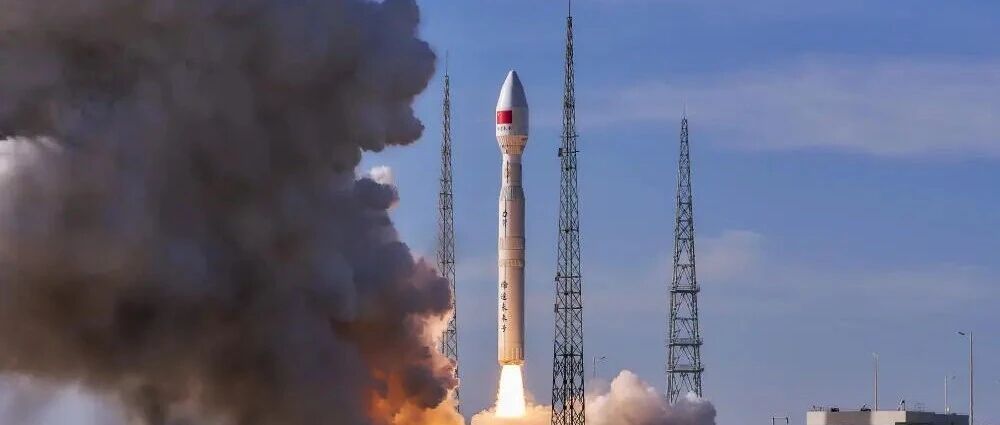
Core Viewpoint - 2025 is projected to be a pivotal year for China's commercial space industry, transitioning from technological accumulation to explosive growth, with multiple private aerospace companies completing rocket launch tests and accelerating satellite internet deployment [1] Group 1: Industry Developments - The Chinese government is providing strong support for commercial space through policies, including the "14th Five-Year Plan" emphasizing the construction of a "space power" and the establishment of a dedicated Commercial Space Administration [1] - Despite a promising outlook, the industry faces significant supply chain challenges, particularly in upstream infrastructure, with a consensus that the bottleneck is not in downstream applications but in launch capacity and costs [1] - The recent successful launch of the Zhuque-3 rocket and the upcoming maiden flight of the Long March 12甲 rocket are seen as significant milestones for China's commercial space sector, potentially reshaping market dynamics [3][4] Group 2: Technological Innovations - The Zhuque-3 rocket, developed by Blue Arrow Aerospace, is a new generation of low-cost, high-capacity, reusable rocket, utilizing a self-developed liquid oxygen-methane engine [3][7] - The Long March 12甲 rocket, developed by China Aerospace Science and Technology Corporation, emphasizes a stable supply chain by using a liquid oxygen-kerosene engine, reflecting a dual risk approach in China's aerospace strategy [8] - The ultimate goal of reusable rocket technology is to significantly reduce launch costs, with the Zhuque-3 aiming to lower the cost per kilogram to below 20,000 RMB, enhancing China's competitive edge in the global market [9][10] Group 3: Market Dynamics and Future Outlook - Predictions indicate that within three years, launch prices in China could approach those of SpaceX, with the potential to undercut SpaceX's Falcon 9 prices in about five years [11] - The competitive focus in the coming years will center on cost control, reliability, fulfillment capabilities, and service responsiveness, as companies strive to meet the growing demand for satellite deployment [11] - The challenges faced by Chinese rocket companies include not only technological hurdles but also the need for systematic engineering and industrialization to catch up with established players like SpaceX [11]
特斯拉发布人形机器人年度报告:Optimus已学会功夫与家务
Feng Huang Wang· 2025-12-19 02:52
Group 1 - Tesla released a video report detailing the technological evolution of its humanoid robot, Optimus, over the past year, showcasing its rapid development from basic motion control to complex scene interaction [1] - By May 2025, Optimus demonstrated initial coordination abilities, mastering dance moves while learning to perform daily human tasks such as organizing clothes and handling trash, indicating its algorithm's potential for general task adaptation [1] - In September, Optimus's design became more streamlined, and it began practical service tests at Tesla Diner, successfully making popcorn and interacting with children, validating its safety in human-robot interaction environments [1] Group 2 - Elon Musk reiterated the company's research approach based on "first principles," emphasizing the three major challenges in humanoid robot manufacturing: creating dexterous hands, developing an AI brain that understands the real world, and achieving large-scale production capabilities [2] - Musk claimed that Tesla is currently the only company capable of addressing all three challenges simultaneously [2] - The video concluded with a vision of a "sustainable prosperous era" through the integration of AI and robotics, suggesting that the product has the potential to fundamentally eliminate poverty, with expectations for significant technological advancements in 2026 [2]


中国可回收火箭蓄力突围
2 1 Shi Ji Jing Ji Bao Dao· 2025-12-18 23:43
Core Insights - 2025 is projected to be a pivotal year for China's commercial space industry, transitioning from technological accumulation to explosive growth, with multiple private aerospace companies completing rocket launch tests and accelerating satellite internet deployment [1][11] - Policy support is intensifying, with the "14th Five-Year Plan" emphasizing the construction of a "space power," and the establishment of a dedicated Commercial Space Administration by the National Space Administration [1][11] - Despite a promising outlook, supply chain weaknesses remain evident, particularly in upstream infrastructure, which is seen as a critical bottleneck for the industry [1][11] Industry Developments - December marked significant advancements in China's reusable rocket technology, highlighted by the launch of the Zhuque-3 rocket, which, despite a recovery failure, provided valuable experience for future developments [2][12] - The Zhuque-3 rocket, developed by Blue Arrow Aerospace, is a new generation of low-cost, high-capacity, reusable liquid oxygen-methane rocket, showcasing advanced features such as a reaction control system and landing legs [2][12] - Following Zhuque-3, the Long March 12甲 rocket, developed by China Aerospace Science and Technology Corporation, is set for its maiden flight, indicating a rapid progression in China's commercial space capabilities [2][12][13] Market Dynamics - Currently, only the United States has mastered reusable rocket technology, with SpaceX leading the way, having completed over 500 launches and capturing 86% of the global orbital payload market in 2023 [3][13] - In contrast, China's commercial launch capacity remains limited, with a market share in commercial payloads only in the single digits, insufficient to support the ambitious deployment of satellite constellations [3][14] - The urgency for breakthroughs in reusable rocket technology is underscored by the need to address the significant launch capacity gap in the market [4][15] Technological Innovations - The Zhuque-3 rocket's development process emphasized a unique engineering approach, integrating market demand insights and innovative materials like stainless steel to reduce production cycles [6][16] - The Long March 12甲 rocket adopts a different strategy, focusing on stable supply chains and leveraging domestic resources to ensure reliable operations [7][17] - The Tianlong-3 rocket, set for its first flight, aims for high reliability and low-cost delivery, utilizing advanced materials and 3D printing technology [7][17] Cost Reduction Strategies - The ultimate goal of reusable rocket technology is to significantly lower launch costs, with a focus on recovering the first stage of rockets, which constitutes the highest cost component [8][19] - The Zhuque-3 is designed for 20 reuses, with operational costs expected to decrease by approximately 45% after five uses, reflecting a model of high initial investment followed by diminishing marginal costs [8][19] - The target cost for launching per kilogram is set below 20,000 RMB, which would enhance China's competitive edge in the global market [20] Competitive Landscape - The future competition in the rocket market will center on cost control, reliability, fulfillment capabilities, and service responsiveness [10][20] - Chinese companies face significant challenges in catching up with established players like SpaceX, which has spent over a decade refining its technology [10][21] - The ongoing developments in China's commercial space sector indicate a gradual resolution of previously deemed insurmountable challenges, as companies continue to innovate and validate their technologies [21]
SpaceX很可能明年夏天上市!马斯克“投资知己”巴伦的最新对话,谈如何押注那些成功概率更高的“一把手”
Xin Lang Cai Jing· 2025-12-18 07:25
Core Insights - Ron Baron, founder of Baron Capital, discussed the potential IPO of SpaceX and its valuation during a CNBC interview, highlighting his long-term investment strategy in companies led by Elon Musk [3][59] - Baron has invested approximately $4 billion in Tesla from 2014 to 2016, yielding about $8 billion in returns, and believes Tesla could generate several times that amount in the next decade [3][59][69] - Baron started investing in SpaceX in 2017, with a total investment of around $1.5 billion, now valued at nearly $10 billion, making it his largest single holding [4][60][76] Investment in SpaceX - Baron predicts a high likelihood of SpaceX going public in summer 2024, possibly on June 28, coinciding with Musk's birthday [5][61][75] - Current valuation of SpaceX is approximately $800 billion, with media speculation suggesting it could double by the time of the IPO [13][76] - Baron holds a $10 billion position in SpaceX and a $5 billion position in Tesla, with Tesla's stock price currently between $460 and $480 [24][77] Management Philosophy - Baron emphasizes that Musk's companies have evolved from being "one-man shows" to organizations with a culture that fosters exponential growth [6][73] - Musk's management style involves empowering talented individuals and allowing for failure in pursuit of better solutions, which contributes to a replicable organizational culture [20][73] - Baron believes understanding a company's culture is crucial for investment decisions, focusing on the values instilled in employees [18][73] Investment Strategy - Baron Capital aims for a diversified portfolio, recognizing the current market focus on AI and technology while also identifying undervalued small-cap companies [82][83] - The firm has launched a small-cap growth portfolio, emphasizing the attractiveness of these companies in a declining interest rate environment [83] - Baron highlights two companies, Guidewire and Idexx, as examples of firms that are beginning to realize their potential after investing in their future [32][84] Future Outlook - Baron anticipates that Baron Capital could generate $250 billion in profits over the next decade, significantly increasing from the $57 billion generated in the past 40 years [90][91] - The firm maintains a portion of its portfolio in high-growth, high-risk companies (30-40%), alongside stable, double-digit growth companies (50-55%), and those with suppressed short-term profits (10-15%) [114][116] - Baron expresses excitement about the numerous overlooked companies in the market, indicating a strong belief in their potential for growth [92][113]

SpaceX很可能明年夏天上市!马斯克“投资知己”巴伦的最新对话,谈如何押注那些成功概率更高的“一把手”
聪明投资者· 2025-12-18 07:17
Core Viewpoint - The article discusses Ron Baron's insights on SpaceX's potential IPO and its valuation, emphasizing the long-term investment strategies and cultural aspects of companies led by Elon Musk [5][7][20]. Group 1: Investment in Tesla - Ron Baron invested approximately $400 million in Tesla between 2014 and 2016, yielding about $8 billion in returns to date [17]. - Baron Capital still holds a position in Tesla valued at around $5 billion, with expectations of potentially multiplying returns over the next decade [6]. Group 2: Investment in SpaceX - Baron Capital began investing in SpaceX in 2017, with a total investment of about $1.5 billion, now valued close to $10 billion, making it the largest single holding [7][20]. - There is a high likelihood that SpaceX will go public in the summer of next year, with media speculation suggesting a valuation could reach $1.5 trillion, up from the current $800 billion [20][34]. Group 3: Management Philosophy - The article highlights Musk's management style, which fosters a culture of innovation and accountability, allowing talented individuals to take responsibility and challenge existing ideas [28][30]. - Baron emphasizes the importance of understanding a company's culture and values when making investment decisions, noting that the risk associated with investing in Musk's companies has decreased as they have grown [24][26]. Group 4: Investment Strategy - Baron Capital is diversifying its portfolio, focusing on small-cap growth companies that are often overlooked by the market, especially in a declining interest rate environment [40][41]. - The firm is particularly interested in companies that are investing in their future growth, despite short-term profit pressures, as these present attractive investment opportunities [40][44]. Group 5: Specific Investment Cases - Two companies mentioned are Guidewire, which is transitioning clients to cloud-based solutions, and Idexx, which is expanding its pet diagnostic systems, both showing promising growth [42]. - Baron also discusses FactSet, which has a new CEO with a strong background, indicating potential for significant growth despite recent stock price declines [61][70].