统一大市场建设

Search documents
申万宏源:明年年中或迎全面行情,看好科技、制造业板块
Zhong Guo Zheng Quan Bao· 2025-11-18 12:47
Core Viewpoint - The 2026 Capital Market Investment Conference held by Shenwan Hongyuan suggests that 2026 will be a year of comprehensive reform and development, with a potential full-scale launch of the A-share market by mid-2026, driven by trends in the technology industry and the enhancement of manufacturing global influence [1][4]. Group 1: Economic Growth and New Drivers - New factors and assets are becoming the new drivers of economic growth, with knowledge, technology, data, computing power, and talent leading the way [2]. - The "14th Five-Year Plan" period is expected to be a critical phase for comprehensive reform, with 2026 marking the acceleration of these reforms [2][3]. - The nominal GDP recovery in 2026 is anticipated to improve corporate profitability, with service demand showing greater elasticity [2]. Group 2: Reform and Opportunities - The focus for 2026 will be on leveraging reforms for dividends, emphasizing systemic and effective reforms, particularly in the implementation of "Artificial Intelligence+" initiatives [3]. - Key areas for reform include the construction of a unified market, development of new productive forces, and reforms in social security and financial systems [3]. Group 3: A-share Market Outlook - The A-share market is expected to experience a significant rally by mid-2026, with a potential peak in the spring of 2026 [4]. - Factors supporting this rally include cyclical improvements in fundamentals, strengthening trends in emerging industries, and a shift in resident asset allocation towards equities [4][5]. - Investment focus areas for 2026 include basic chemicals, industrial metals, AI industry chains, and sectors related to manufacturing influence [5].

黄群慧:现代化产业体系要统筹好产业政策与竞争政策
Jing Ji Guan Cha Bao· 2025-11-18 11:57
Core Viewpoint - The article emphasizes the need to effectively integrate industrial policy and competition policy to build a modern industrial system, moving beyond the binary debate of whether to have industrial policy or not [2][4]. Group 1: Modern Industrial System - The construction of a modern industrial system should focus on advanced manufacturing as its backbone, reflecting a deeper understanding of economic development stages [4]. - The current manufacturing sector in China accounts for approximately 30% of GDP, and there is a need to maintain a reasonable proportion of manufacturing within the economy [4][5]. - The article highlights the issue of "premature de-manufacturing," where the domestic manufacturing share is declining, while China's global manufacturing share is increasing [5]. Group 2: Policy Coordination - The integration of industrial policy and competition policy should be based on the maturity of technology, with different focuses at various stages of industrialization [6]. - For emerging industries with unclear technological paths, competition policy should be emphasized to encourage innovation, while industrial policy can provide directional guidance [6]. - The article suggests that R&D investment should be significantly increased, with a target of 12% during the 14th Five-Year Plan, although achieving this may be challenging [7]. Group 3: Addressing "Involution Competition" - "Involution competition" is identified as a fundamental issue in building a unified market, affecting both micro and macroeconomic levels [9][10]. - The article discusses the need for unified government actions to enhance overall efficiency and facilitate the free flow of resources across regions [9]. - The emergence of platform economies is noted as a new characteristic of "involution competition," where platforms exert significant pricing power over the entire supply chain [10][11].
申万宏源赵伟:2026年要向“改革”要红利
Zhong Zheng Wang· 2025-11-18 11:41
Core Viewpoint - The 14th Five-Year Plan period is expected to be a critical phase for comprehensive deepening of reforms, with 2026 marking the beginning of accelerated reforms since the 20th Central Committee's third plenary session [1] Group 1: Economic Outlook - Continuous deepening of domestic demand expansion policies will lead to improvements in corporate profitability during the nominal GDP recovery process [1] - Service demand within consumption is more elastic, making investment growth likely to show a "front low, back high" trend [1] Group 2: Reform Opportunities - The acceleration of reform processes is creating significant opportunities, with short-term domestic demand policies expected to strengthen under a long-term reform framework [1] - The breadth, depth, and intensity of the "dividend" from the era are closely related to the ongoing reforms [1] Group 3: Focus Areas for 2026 - Key areas to focus on in 2026 include the construction of a unified national market, development of new productive forces, reforms related to social welfare, financial and tax system reforms, and accelerating green transformation [1]
申万宏源:2026年下半年可能启动“牛市2.0”,或将是一轮全面牛市
中国基金报· 2025-11-18 09:02
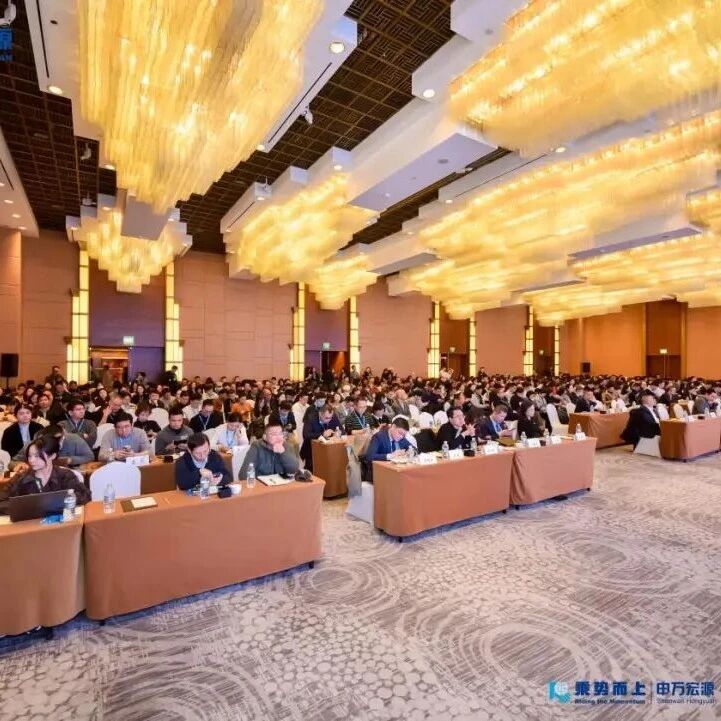
Core Insights - The 2026 Capital Market Investment Conference hosted by Shenwan Hongyuan emphasizes the theme "Ride the Momentum," covering various sectors including asset allocation, high-end manufacturing, artificial intelligence, consumption, and cyclical industries [2][3] Group 1: Economic and Technological Insights - Liu Jian, Chairman of Shenwan Hongyuan, highlighted the importance of technological innovation in the "14th Five-Year Plan," focusing on original innovation and breakthroughs in future industries such as AI, biomedicine, hydrogen energy, and sixth-generation mobile communication [5][6] - The "14th Five-Year Plan" identifies data elements as a new driving force for economic growth, with digital content services and emotional consumption leading new consumption patterns [5][6] - Liu Jian predicts that future economic growth in China will shift from old momentum to new factor-driven momentum, creating new investment opportunities in the capital market [6] Group 2: Market Strategy and Outlook - The research team at Shenwan Hongyuan proposes a "Two-Stage Bull Market" theory, suggesting that the technology-driven bull market will reach a peak in spring 2026, followed by a comprehensive bull market in the second half of 2026 [8] - The team believes that the shift of Chinese residents' asset allocation towards equity assets is still in its early stages, indicating that the A-share market's profit accumulation is undergoing a qualitative change [8] - Predictions for 2026 include significant improvements in A-share profitability, with expectations of the first effective rebound in non-profitability and double-digit growth in net profit for the first time in five years [8] Group 3: Macroeconomic and Bond Market Analysis - Chief Economist Zhao Wei notes that the reforms during the "14th Five-Year Plan" will emphasize systemic and effective governance, marking 2026 as a year of comprehensive reform and development [10] - The bond market is transitioning to a new phase where "prices + capital flows" are gaining attention, with the core variable for 2026 being inflation, which will impact the market throughout the year [10]

大摩闭门会:邢自强、Laura Wang:2026经济与市场展望 _ 纪要
2025-11-18 01:15
Summary of Key Points from Conference Call Records Industry or Company Involved - The conference call primarily discusses the macroeconomic outlook for the United States and China, along with insights into the Asian technology sector and investment opportunities. Core Insights and Arguments U.S. Economic Outlook - The U.S. economy may experience a slight slowdown in the first half of 2026, but AI investments are expected to provide support, leading to gradual recovery in the second half of the year [1][3][5] - The Federal Reserve is likely to adopt a dovish stance, with interest rates expected to be lowered to 3%-3.25% before entering a wait-and-see phase [1][3] - The U.S. government is implementing a high-growth, high-inflation strategy to address rising debt, similar to post-World War II approaches [1][5] - The S&P 500 index is projected to reach 7,800 points by the end of 2026, with an annualized earnings growth of 15% [1][9] Chinese Economic Outlook - China is expected to transition from deflation to low inflation between 2026 and 2027, with fiscal policies likely to be strengthened in response to real estate challenges [1][4][6] - The introduction of a "Chinese version" of mortgage rates through fiscal subsidies is anticipated to stimulate consumption and maintain financial stability [1][8] - The nominal GDP growth for China is projected to remain just above 4% for the third consecutive year, with a real growth rate of 4.8% in 2026 [1][4] Asian Technology Sector - The outlook for Asian technology exports remains optimistic, with growth expected to extend beyond the tech sector into investment and consumption [2][23] - Countries such as India, Japan, Malaysia, Singapore, and South Korea are highlighted as having strong growth potential due to non-tech export recovery [2][26] Investment Recommendations - Investors are advised to favor U.S. equities, followed by Japanese and European stocks, while maintaining a lower allocation to emerging markets [1][9] - The Chinese stock market is expected to maintain a price-to-earnings ratio of around 13, with a projected earnings growth of 6% for the Minsheng China Index in 2026 [1][10][12] Other Important but Possibly Overlooked Content - The potential for a significant wealth effect from the stock market recovery is noted, but the overall impact on consumer spending is limited due to the high proportion of wealth tied to real estate [1][18] - The challenges facing local government finances are highlighted as a key factor affecting overall investment levels in China [1][20] - The anticipated recovery in the Asian economy is expected to be gradual, with GDP growth projected to rise from 4.3% in Q4 2025 to 4.7% in Q4 2026 [2][25] This summary encapsulates the key points discussed in the conference call, providing a comprehensive overview of the economic outlook and investment strategies for the U.S., China, and the broader Asian region.
赵伟:向“改革”要红利——2026年宏观形势展望
Sou Hu Cai Jing· 2025-11-17 06:05
Group 1 - The core viewpoint emphasizes that by 2025, the domestic economic environment will experience significant changes, including the retreat of the "scar effect," the weakening impact of tariff conflicts, and the gradual formation of a new supply-side reform framework [1][8][30] - The "scar effect" is showing signs of retreat, with improvements in consumer behavior and a rapid decline in accounts receivable growth for enterprises, indicating a recovery in economic confidence [15][20] - The trade conflict's impact on the domestic economy is diminishing, with a shift in export structure towards high value-added products and a reduction in the proportion of exports to the US [20][21] Group 2 - The report suggests that the "anti-involution" measures and debt clearance policies are crucial for addressing the stagnation in economic circulation, with a focus on enhancing corporate profitability and revitalizing operations [2][50] - The economic forecast indicates a "non-typical recovery" driven by domestic demand policies, with expectations of improved corporate profitability and investment recovery by 2026 [4][6] - The emphasis on reform in 2026 is seen as a critical period for accelerating economic growth, with a focus on expanding domestic demand and enhancing the efficiency of the economic system [60][79] Group 3 - The report highlights the importance of a unified national market and systemic reforms to enhance economic resilience and competitiveness, particularly in the context of the "14th Five-Year Plan" [63][84] - The focus on service industry development and the acceleration of institutional opening-up are expected to create significant investment opportunities in the coming years [86][87] - The modernization of the industrial system is prioritized, with a clear strategy for upgrading traditional industries and fostering new and future industries [67][73]
“十五五”时期:以高质量发展保障国家长治久安
Jin Rong Shi Bao· 2025-11-17 01:42
Core Points - The 20th Central Committee's Fourth Plenary Session approved the "Suggestions on Formulating the 15th Five-Year Plan for National Economic and Social Development," which outlines the direction for China's development over the next five years, impacting the lives of 1.4 billion people [1][2] - The session emphasizes the importance of the "15th Five-Year" period as a critical phase in advancing Chinese-style modernization, linking it closely with the previous "14th Five-Year" plan [2][3] - The principle of "coordinating development and security" is highlighted as essential for economic and social development, indicating that security is a prerequisite for development [3][4] Economic Development - The session reiterates the focus on high-quality economic development, emphasizing economic construction as the central task and reform and innovation as fundamental drivers [2][3] - The plan aims to achieve a balance between qualitative improvements and reasonable quantitative growth, ensuring sustained economic growth while maintaining social stability [2][3] Financial Regulation - The "Suggestions" call for the modernization of the national governance system, which includes the establishment of a more modern financial regulatory framework to prevent systemic financial risks [5][6] - The focus will be on enhancing the financial system's ability to support high-quality development through improved regulatory practices and the promotion of various financial sectors [5][6] Social Welfare - The plan emphasizes the need for inclusive, foundational, and safety-net social welfare initiatives to address urgent public concerns and improve the quality of life for citizens [6][7] - Key strategies include promoting high-quality employment, improving income distribution, and addressing demographic challenges such as aging and declining birth rates [6][7] Government and Market Relations - The "Suggestions" advocate for a combination of effective markets and proactive government roles, aiming to create a market-oriented, law-based, and internationalized business environment [7][8] - The plan includes measures to enhance the confidence of private entrepreneurs and stimulate private investment, ensuring fair competition and protecting property rights [7][8] Implementation Challenges - The successful implementation of the "15th Five-Year Plan" will depend on overcoming challenges such as balancing development and security, ensuring effective governance, and addressing resource allocation issues [9][10] - There is a need for improved coordination among government levels and sectors to facilitate policy execution and enhance social governance capabilities [9][10]
向“改革”要红利——2026年宏观形势展望(申万宏观·赵伟团队)
赵伟宏观探索· 2025-11-16 16:03
Group 1 - The article emphasizes the importance of "reform" as a source of dividends for the economy, particularly in the context of the 14th Five-Year Plan, which is expected to accelerate reform processes and enhance domestic demand policies [3][67][83] - The domestic economic environment has undergone three significant changes: the retreat of the "scar effect," the weakening impact of tariff conflicts on the economy, and the gradual formation of a new supply-side reform framework [2][8][21] - The article discusses the "non-typical recovery" of the economy, driven by improved consumer confidence and the effects of ongoing domestic demand policies, which are expected to lead to a recovery in investment growth and corporate profitability [4][5][55] Group 2 - The article highlights the need for a clear industrial adjustment strategy, focusing on advanced manufacturing as a backbone while upgrading traditional sectors and accelerating the opening of the service industry [67][74] - It points out that the structural changes in exports are evident, with a shift towards high value-added products and a decrease in low value-added goods, indicating a robust export resilience [21][22] - The article stresses the importance of addressing the "internal competition" within industries, which has led to a decline in profit margins and necessitates policies aimed at enhancing corporate profitability and operational vitality [15][41][55]
向“改革”要红利——2026年宏观形势展望(申万宏观·赵伟团队)
申万宏源研究· 2025-11-16 12:00
Group 1 - The article highlights three significant changes in the domestic economic environment: the rapid retreat of the "scar effect," the weakening impact of tariff conflicts on the economy, and the gradual formation of a new phase of "supply-side reform" framework [2][8][21] - The "scar effect" is reflected in the improvement of consumer behavior and the rapid decline in accounts receivable growth among enterprises, indicating a recovery in economic confidence [15][16] - The article emphasizes the need for a rational understanding of the "macro-micro temperature difference," which has become a norm since 2022, affecting the economic transformation process in China [8][37] Group 2 - The year 2026 is positioned as a critical year for comprehensive reform and development, with an emphasis on accelerating reform processes to seize significant opportunities [3][67] - The article suggests that economic growth will require maintaining a basic growth rate and emphasizes the importance of advanced manufacturing and service industry development [3][74] - Key areas for investment opportunities include the construction of a unified market, reforms related to social welfare, and accelerating green transformation [3][83][84] Group 3 - The article predicts a non-typical economic recovery driven by internal demand policies, which will help improve consumer confidence and investment growth [4][5] - External demand remains resilient, with a shift in export structure towards high-value-added products, indicating a strong competitive advantage [5][21] - The overall economic recovery is expected to follow a "front low and back high" rhythm, supported by the retreat of the "scar effect" and ongoing internal demand policies [5][55]
向“改革”要红利——2026年宏观形势展望(申万宏观·赵伟团队)
申万宏源宏观· 2025-11-16 11:04
Group 1 - The core viewpoint emphasizes the need to "seek dividends from reform" as a significant opportunity for investment, particularly in the context of the 14th Five-Year Plan and the upcoming 15th Five-Year Plan [7][67] - The domestic economic environment has undergone three significant changes: the retreat of the "scar effect," the weakening impact of tariff conflicts on the economy, and the gradual formation of a new supply-side reform framework [2][8] - The "scar effect" is showing signs of retreat, evidenced by improvements in consumer behavior and a decrease in accounts receivable growth among enterprises [15][21] Group 2 - The economic recovery is characterized as "atypical," with a transition from "confidence building" to recovery, driven by deepening domestic demand policies and a reduction in the "crowding out effect" of debt [4][5] - Export resilience is expected to continue, with a shift in the structure of exports towards high-value-added products, despite a decrease in the share of exports to the US [21][22] - The focus on advanced manufacturing as a backbone and the upgrading of traditional sectors are highlighted as key strategies for economic adjustment [74][77] Group 3 - The 2026 year is anticipated to be a pivotal year for comprehensive reform and development, with significant opportunities arising from accelerated reform processes [3][67] - The emphasis on "self-reliance" and "extraordinary measures to seize high ground" in technology modernization is crucial for supporting China's modernization efforts [77][83] - Key areas for reform include the construction of a unified national market, social security system reforms, and financial and tax reforms, all aimed at enhancing economic resilience and sustainability [83][84]