转型牛

Search documents
AI产业链题材股集体调整,人工智能ETF(159819)半日净申购超1.5亿份
Sou Hu Cai Jing· 2025-11-21 05:11
截至午间收盘,中证人工智能主题指数下跌3.5%,上证科创板人工智能指数下跌2.1%,人工智能ETF(159819)半日净申购超1.5亿份。 国泰海通证券表示,中国"转型牛"内在趋势确定,从交易上来看,当前A股热门科技赛道调整幅度已接近历次科技牛情绪性调整的均值水平。因此,外部扰 动不会终结趋势,每一次回调都是增持中国的时机。 每日经济新闻 ...

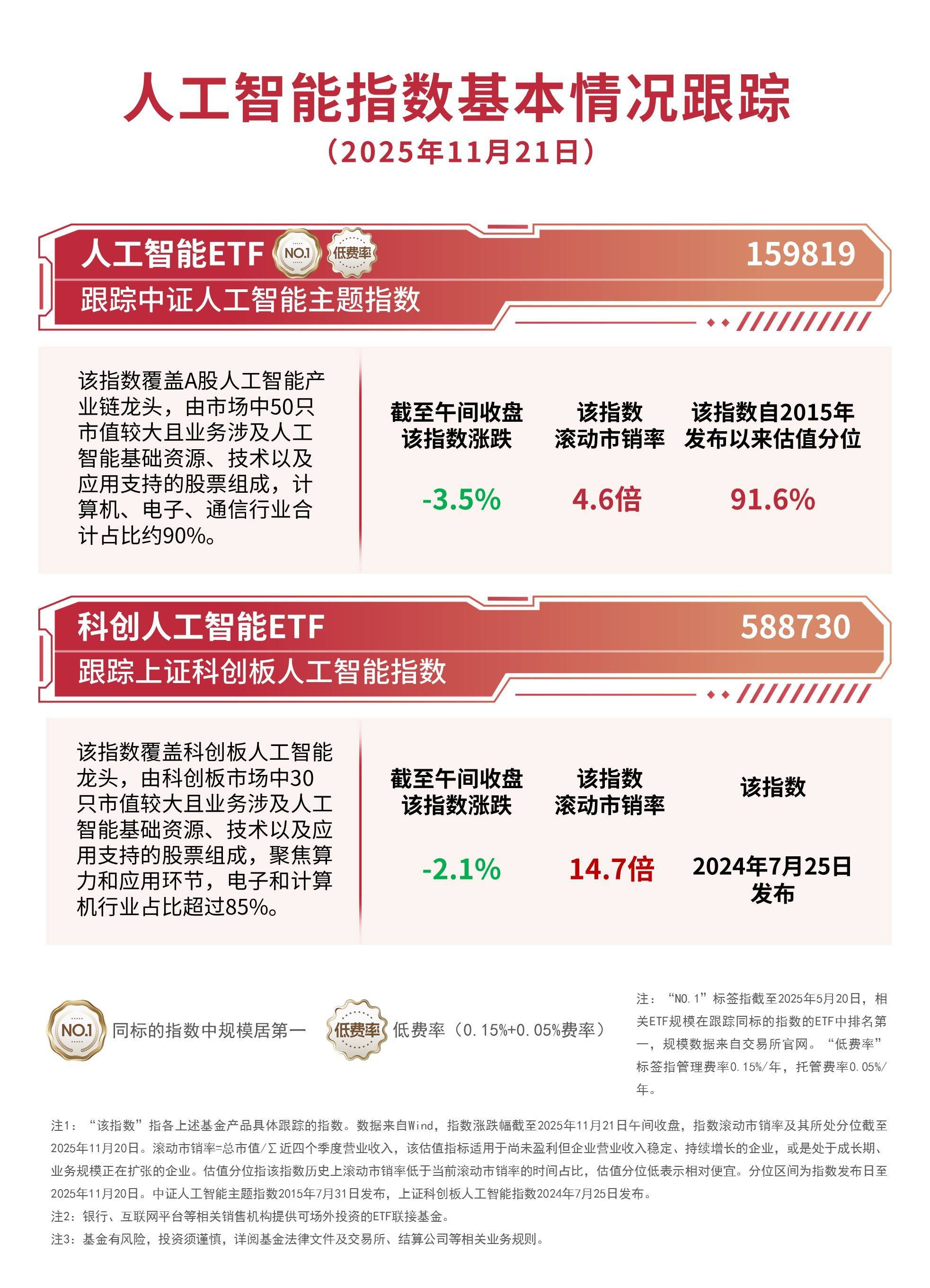
指数涨了,账户钱少了!指数继续探底,还有哪些投资机会?
Sou Hu Cai Jing· 2025-11-19 07:23
Group 1 - The core viewpoint is that China's economic transformation is accelerating, leading to a demand for quality assets, particularly in the technology sector, despite recent adjustments in the A-share market [1] - The light communication sector has shown strong performance, with over 70% of listed companies reporting earnings growth in the first three quarters, driven by expanding demand for AI computing power [3] - The storage sector is experiencing a significant economic turning point, with expectations of 300GWh of new installations next year, driven by marketization of renewable energy and capacity pricing [3] Group 2 - Gold prices have weakened following significant outflows from gold ETFs, indicating that the previous surge was largely speculative, with fundamental support for gold diminishing [5] - Recent changes in domestic gold policies, such as taxation on gold jewelry, are aimed at curbing speculation but are not expected to have a substantial impact on gold prices [5] - The short-term outlook for gold is influenced by easing geopolitical tensions and expectations of a Federal Reserve rate cut, although long-term support remains due to concerns over the dollar's creditworthiness [5] Group 3 - The short-term market trend is weak, with limited new capital entering the market and a lack of significant profit-making opportunities [7] - The Shanghai Composite Index has seen a rise in large-cap stocks, while the overall market remains cautious, indicating a mixed sentiment among investors [11] - The technology sector and value stocks are expected to be key focus areas, with strong performance in the computing power supply chain following recent adjustments [11]

现金流ETF(159399)近10日净流入超1.4亿元,自由现金流资产配置价值获关注
Mei Ri Jing Ji Xin Wen· 2025-11-17 03:45
Core Insights - The cash flow ETF (159399) has seen a net inflow of over 140 million yuan in the past 10 days, indicating strong investor interest in cash flow-focused investments [1] - The FTSE China A-Share Free Cash Flow industry is benefiting from the certainty of China's "transformation bull" trend, which includes accelerated transformation pace, risk-free yield decline, and capital market reforms [1] - Analysts suggest that there is a growing demand for high-quality assets with solid development logic, and companies with abundant free cash flow are likely to be favored by the market [1] Market Performance - The FTSE Cash Flow Index has outperformed the CSI Dividend Index and the CSI 300 Index for nine consecutive years from 2016 to 2024 [1] - The cash flow ETF (159399) focuses on large and mid-cap stocks, with a higher proportion of central state-owned enterprises compared to similar cash flow indices [1] - The ETF has consistently paid dividends for nine months since its listing, making it an attractive option for investors [1] Industry Trends - Industrial metals like copper are expected to see improved cash flow conditions due to demand driven by construction, power grids, and electric vehicles, alongside structural demand from AI computing expansion and grid modernization [1] - The marginal improvement in China-U.S. relations is also seen as beneficial for the overall performance of Chinese assets [1]
国泰海通吉林分公司走进上市公司长白山活动成功举办
Zhong Guo Jin Rong Xin Xi Wang· 2025-11-15 09:27
Group 1 - The event "Haina Capital, Ju Shi Changbai Mountain" showcased the resource advantages and future potential of Changbai Mountain, aiming to explore new paths for the deep integration of capital and the real economy [1][4] - Nearly 341 million visitors were received at the Changbai Mountain scenic area this year, with the self-operated Crown Hotel achieving an 80% occupancy rate during peak season, indicating continuous optimization of operational capabilities [3] - The opening of the Shenbai High-speed Railway is expected to further boost visitor traffic, enhancing the investment value of Changbai Mountain [1][3] Group 2 - Changbai Mountain Tourism Co., Ltd. has successfully established a multi-dimensional industrial structure focusing on "all-area tourism, four-season operation, and multi-industry collaboration" [3] - Future plans include leveraging the second phase of the hot spring project, developing ice and snow IP, and exploring new scenarios for cultural and tourism integration [3] - The event highlighted the importance of positive interaction between listed companies and the capital market, showcasing Changbai Mountain as a resilient growth entity in the ice and snow tourism sector [8]



券商密集召开2026年策略会!慢牛成关键词,细分行业现分化
Bei Jing Shang Bao· 2025-11-11 14:09
Group 1 - The core viewpoint from multiple brokerages is that the A-share market is expected to continue a slow bull market trend in 2026, with varying opinions on specific sectors [1][5] - The "New Four Bulls" concept is highlighted, which includes "capital inflow bull," "technology innovation bull," "institutional reform bull," and "consumption upgrade bull," all contributing to a long-term bullish outlook for the market [3][4] - The expectation is that the A-share market will experience a gradual upward trend, with the market's central tendency moving higher, driven by the aforementioned "New Four Bulls" [4][5] Group 2 - The "capital inflow bull" is supported by macro conditions that favor capital returning to A-shares and Hong Kong stocks, with long-term funds gradually increasing their market participation [3][4] - The "technology innovation bull" reflects China's ongoing advancements in technology and clear industrial upgrade strategies, indicating a long-term growth trajectory [4] - The "institutional reform bull" is characterized by effective policies from regulatory bodies that enhance investor confidence and shift the market from a "financing market" to an "investment market" [4] Group 3 - In terms of sector preferences, there is a divergence of opinions, with some analysts favoring technology and others leaning towards cyclical sectors like energy, consumption, and real estate [5][7] - The focus on "transformation bull" suggests that the Chinese stock market is entering a significant growth phase, driven by economic restructuring and capital market reforms [5][6] - Analysts recommend three main investment themes: self-reliance in technology, industrial upgrades, and strategic resources, indicating a broad re-evaluation of the market [4][7]




国泰海通|策略:11月超配AH股与工业商品
国泰海通证券研究· 2025-11-10 15:07
Core Viewpoint - The report suggests that the trend expectations in the AI industry may intensify fluctuations in the global equity market, presenting opportunities for Chinese equity assets and industrial commodities. It recommends an overweight position in Chinese A-shares and industrial commodities for November [1]. Group 1: Asset Allocation Framework - The company has developed an "all-weather" asset allocation framework consisting of Strategic Asset Allocation (SAA), Tactical Asset Allocation (TAA), and Major Event Review Adjustments to guide investment decisions [1]. - SAA aims to diversify macro risks and set long-term allocation benchmarks to ensure portfolio stability [1]. - TAA employs quantitative methods to identify assets with superior short-term risk-return characteristics and adjusts portfolio weights accordingly to enhance returns [1]. Group 2: Equity Market Outlook - The company maintains an optimistic view on Chinese equities, recommending a 45% allocation to equities in November, with specific overweight positions in A-shares (8.5%) and Hong Kong stocks (8.5%) [2]. - The improvement in China-U.S. bilateral relations is seen as beneficial for the performance of Chinese assets [2]. - Domestic financial conditions are stable, with fiscal and monetary policies having room for easing, which supports the capital market's role in the economy [2]. Group 3: Bond Market Outlook - The company holds a neutral stance on bonds, recommending a 45% allocation, including standard positions in long-term (10%) and short-term (12.5%) government bonds, as well as U.S. Treasury bonds [3]. - The bond market is supported by an imbalance in credit supply and demand, along with stable liquidity [3]. - Geopolitical uncertainties and rising risk aversion are expected to lead to fluctuations in domestic interest rates [3]. Group 4: Commodity Market Outlook - The company adopts a neutral to slightly optimistic view on commodities, recommending a 10% allocation, with standard positions in gold (5%) and industrial commodities (3.75%) [3]. - Industrial metals, particularly copper, may experience performance opportunities due to supply-demand imbalances driven by construction, electric grids, and electric vehicles [3]. - The expansion of AI computing power and modernization of the electric grid are expected to create additional structural demand for copper [3].


国泰海通首席方奕:2026中国股市还会再上一个台阶,5200点!
Ge Long Hui· 2025-11-10 11:26
Group 1 - The core viewpoint is that the Chinese stock market is expected to experience significant growth, with a target of 5200 points by 2026, following the achievement of 4000 points in 2023 [1] - The annual strategy report indicates that 2025 will mark a major development cycle for the Chinese stock market, characterized by capital market reforms and economic structural transformation, which is referred to as a "transformation bull" market [1] - The upward trend of the "transformation bull" market is anticipated to continue into 2026, with the potential for the market to exceed consensus expectations and challenge the historical high of 5178.19 points set in June 2015 [1]
开放式基金周报(20251109)-20251110
Haitong Securities International· 2025-11-10 09:09
Report Industry Investment Rating No relevant content provided. Core Viewpoints of the Report - The report recommends an equilibrium and growth - oriented style allocation, emphasizing technology and considering cyclical, consumer, and financial sectors. The "transformation bull" in the Chinese stock market is far from over, and the market is in a period of valuation repair and expansion. In the bond market, it is advisable to "emphasize the allocation rhythm and de - emphasize chasing information" [3][15]. Summary by Directory 1. Last Week's Market Review - **A - share Market**: In the week of 20251103 - 20251107, A - shares rose due to positive news from Sino - US negotiations and improved export data. The power equipment, coal, and petroleum and petrochemical industries performed well. The Shanghai Composite Index rose 1.08%, and the Shenzhen Component Index rose 0.19%. Among the 31 Shenwan primary industries, 19 rose and 12 fell [3][7]. - **Bond Market**: The bond market declined due to weak import and export data and tight capital sentiment. The yields of 1 - year and 10 - year treasury bonds and national development bonds increased, and the main bond indexes fell, while the CSI Convertible Bond Index rose 0.86% [3][8]. - **Overseas Market**: US stocks fell as private employment data showed a weak labor market. European markets generally declined, and Asian - Pacific markets showed mixed performance. The US dollar index fell 0.18%. Oil prices dropped as US EIA crude inventory increased more than expected, and gold prices fluctuated [3][9]. 2. Last Week's Fund Market Review - **Stock - type Funds**: Stock - type funds rose 0.25% overall, with index stock - type funds rising 0.31% and active stock - open funds falling 0.05%. Funds heavily invested in power equipment and some in basic chemicals performed well [3][10]. - **Hybrid Funds**: Active hybrid - open funds rose 0.12% [10]. - **Bond Funds**: Bond funds rose 0.2% overall, with index bond funds falling 0.05% and active bond - open funds rising 0.03%. Some partial - debt bond funds and convertible - bond funds with equity assets in power equipment and aviation performed well [3][11]. - **QDII Funds**: Equity - type QDII funds fell 0.73%, with Hong Kong stock dividend and Hong Kong state - owned enterprise theme funds performing well. QDII bond funds fell 0.02% [12]. - **Other Funds**: Gold ETFs and their linked funds fell 0.36%, and commodity - type funds fell 0.19% [13]. 3. Future Investment Strategy - **Macro - situation**: Consumption showed mixed trends, investment in infrastructure had sufficient funds but limited physical work progress, exports improved, production mostly recovered, prices rose slightly, and liquidity was generally loose [14]. - **Stock Market**: The "transformation bull" in the Chinese stock market will continue, and the underlying logic of the market is changing. The three core factors that previously led to market valuation discounts are being broken and reshaped [15]. - **Investment in Funds**: For stock - mixed funds, maintain an equilibrium and growth - oriented style allocation, focus on technology - themed funds, and consider structural opportunities in financial, cyclical, and consumer sectors. For bond funds, participate in the long - position market before mid - November and set profit - taking points in late November. For currency funds, there are no trend - based investment opportunities. For commodity funds, appropriately allocate gold ETFs [17]. 4. Latest Fund Market Developments - **Public Offering Benchmark Reform**: The public offering benchmark reform is accelerating. The benchmark library has been issued, including 69 indexes in the first - class library and 72 in the second - class library, applicable to active - management public - offering funds investing in A - shares and Hong Kong stocks [18]. - **Brazil ETFs**: Two Brazil ETFs were over - subscribed by more than 7 times, due to market recovery and some investors' arbitrage intentions [21]. - **Newly - issued Products**: 41 new funds were established last week, with an average subscription period of about 24 days and an average raised share of 6.46 billion, totaling 265 billion shares [22]. - **Fund Dividends**: 72 funds will conduct equity registration in the coming week, with E Fund Shenzhen 100 ETF being the most notable, distributing a dividend of 0.85 yuan per 10 shares [23].
近3000股上涨,食品饮料、免税概念多股涨停,合富中国10连板
2 1 Shi Ji Jing Ji Bao Dao· 2025-11-10 04:00
此外,11月7日,财政部发布2025年上半年中国财政政策执行情况报告,将继续实施好提振消费专项行 动,对重点领域的个人消费贷款和相关行业经营主体贷款给予财政贴息,激发养老、托育等服务消费潜 力。 热门个股方面值得关注的是,大牛股合富中国今日继续涨停,走出10连板,10天累计涨幅达159.73%。 但与火爆的股价表现形成鲜明对比的是合富中国疲软的业绩。当前合富中国的异常交易行为已引起监管 机构的高度关注。() 记者 | 金珊 孙永乐 编辑 | 曾静娇 11月10日,A股市场早盘震荡下跌,截至收盘,沪指跌0.03%,深成指跌0.59%,创业板指跌2.13%。市 场半日成交额1.45万亿,全市场近3000只个股上涨。热点板块方面,消费、化工等涨幅居前,CPO、人 形机器人等跌幅居前。 | 上证指数 | 深证成指 北证50 | | | --- | --- | --- | | 3996.26 | 13325.35 1515.68 | | | -1.29 -0.03% -78.70 -0.59% -7.06 -0.46% | | | | 科创50 | 万得全A 创业板指 | | | 1390.89 | 3139.88 6 ...


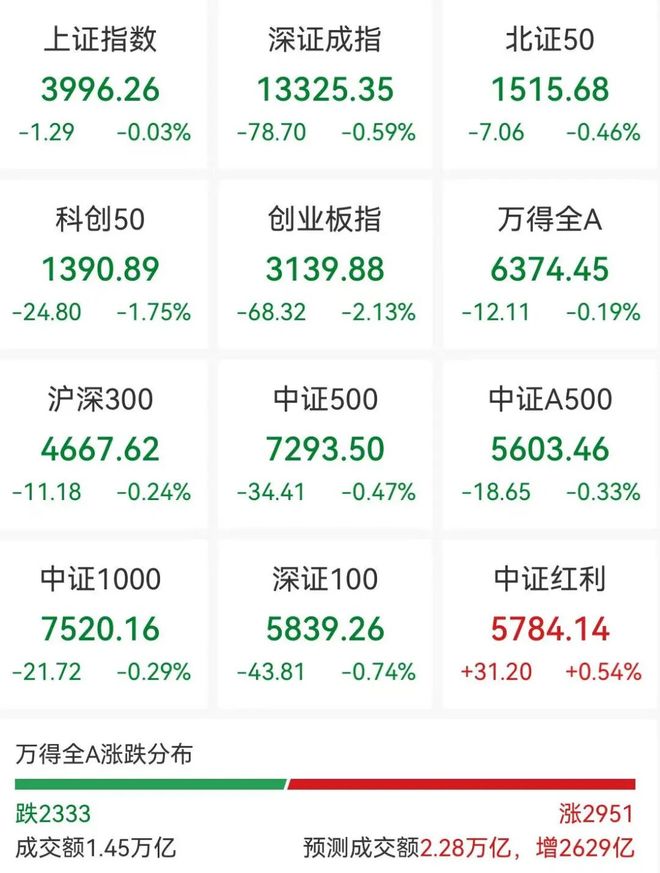
近3000股上涨,食品饮料、免税概念多股涨停,合富中国10连板
21世纪经济报道· 2025-11-10 03:53
Market Overview - The A-share market experienced a slight decline on November 10, with the Shanghai Composite Index down 0.03%, the Shenzhen Component down 0.59%, and the ChiNext Index down 2.13% [2][3] - The total market turnover was 1.45 trillion, with nearly 3,000 stocks rising [2][3] Sector Performance - Consumer and chemical sectors showed strong performance, while sectors like CPO and humanoid robots faced declines [2] - Notable stocks included China Duty Free, which hit a two-year high, and several other stocks such as Huanle Home and Kweichow Moutai also saw significant gains [2] Policy and Economic Indicators - The new duty-free shopping policy in Hainan saw a total shopping amount of 506 million with 72,900 shoppers in the first week, marking a year-on-year increase of 34.86% and 3.37% respectively [4] - The Ministry of Finance announced continued implementation of consumption-boosting policies, focusing on personal consumption loans and related industry support [5] Stock Highlights - The stock of HeFu China continued its upward trend, achieving a 10-day cumulative increase of 159.73%, despite weak performance in its earnings [5] - ST Zhongdi achieved a 17-day consecutive rise, but faces potential delisting risks if it fails to meet revenue and net asset requirements by year-end [7] Market Outlook - Analysts from Guotai Junan predict that the A-share market may challenge the 5,100-point mark, with expectations of significant growth in 2025 driven by capital market reforms and economic transformation [8] - The "transformation bull market" is anticipated to continue into 2026, with the potential for the market to exceed previous highs, particularly the 5,178.19 points reached in June 2015 [9]