高阶智驾

Search documents
规范“半固态电池”命名很有必要
Jing Ji Ri Bao· 2025-11-07 22:00
Core Viewpoint - The regulatory authorities are planning to standardize the naming of "semi-solid batteries" to "solid-liquid batteries" to prevent market confusion with solid-state batteries, which are considered the next generation of power batteries due to their high energy density and safety [1][2] Group 1: Battery Technology Distinction - Semi-solid batteries are still classified as liquid batteries, while solid-state batteries contain no liquid and are entirely solid, making them fundamentally different [2] - The key distinction lies in the electrolyte used; solid-state batteries utilize solid electrolytes, while semi-solid batteries are a mixture of solid and liquid electrolytes, typically with liquid content between 5% and 10% [2] - The current industry maturity level for solid-state batteries is around 4 on a scale of 1 to 9, indicating that while some prototypes exist, they are not yet ready for market application [2] Group 2: Recent Breakthroughs in Solid-State Battery Research - Recent advancements in solid-state battery research in China include reducing interface impedance to levels comparable to traditional liquid batteries and developing flexible batteries that can withstand 20,000 bends without degradation [3] - Innovations such as a special adhesive for solid-state lithium batteries have been developed to improve contact between the electrolyte and lithium electrode, facilitating practical applications [3] - The "Fluorine Reinforcement" research team at Tsinghua University has modified electrolytes to ensure both safety and endurance, addressing critical challenges in solid-state battery technology [3] Group 3: Market Implications and Consumer Awareness - The automotive market in China is highly competitive, with many companies misrepresenting future technologies as current realities, which misleads consumers and disrupts fair competition [4] - Standardizing the naming of semi-solid batteries will help eliminate cognitive biases among consumers and businesses, allowing for accurate product identification and reducing the risk of misleading marketing [4] - This regulatory move is expected to promote high-quality development in the industry by curbing false advertising and market speculation [4]
上汽、北汽“加持” 高阶智驾“黑马”天瞳威视开启港股之旅
2 1 Shi Ji Jing Ji Bao Dao· 2025-11-03 12:45
Core Viewpoint - The recent surge in Hong Kong's stock market for autonomous driving companies includes the listing application of Suzhou Tiantong Weishi Electronic Technology Co., Ltd. (hereinafter referred to as "Tiantong Weishi") on October 31, 2023, marking its entry into the market alongside other notable players [1][2]. Group 1: Company Overview - Tiantong Weishi, established in 2016, provides a full range of autonomous driving solutions from L2-L2+ to L4 levels, focusing on high-level autonomous driving through software [2][3]. - The company claims to be the second-largest provider of L2-L2+ solutions and the third-largest provider of Driver Monitoring Systems (DMS) based on installation volume in 2024 [2]. Group 2: Financial Performance - Tiantong Weishi's revenue for 2022, 2023, and 2024 is projected to be 172 million, 203 million, and 482 million RMB, respectively, with corresponding losses of 324 million, 231 million, and 462 million RMB [3]. - In the first half of 2025, the company expects to generate revenue of 157 million RMB with a loss of 192 million RMB [3]. Group 3: Business Development - The company has established L2-L2+ solutions for 144 vehicle models, with 50% of its revenue in 2024 expected to come from L4-level autonomous driving solutions, which have a compound annual growth rate of 82% from 2022 to 2024 [3]. - Tiantong Weishi has secured intention orders for L4 solutions covering over 2,500 vehicles, with a total contract value of approximately 1 billion RMB, expected to be delivered within three to five years [3]. Group 4: International Expansion - Tiantong Weishi has served 34 countries and regions, collaborating with international automotive giant ZF since 2021 to develop ADAS solutions, and has achieved EU DDAW certification for its CalmCockpit solution [4]. - The company has delivered autonomous driving solutions for VinFast vehicles in 2023 and deployed solutions for a premium electric vehicle brand in Sweden in 2024, marking its entry into the European market ahead of its Chinese counterparts [4][5]. Group 5: Strategic Partnerships - The company has a notable shareholder lineup, including SAIC Group, BAIC Group, and ZF, alongside strategic cooperation with Horizon Robotics, forming a close ecological alliance [5][6]. - Tiantong Weishi's recent shift to a "one-stage" architecture for autonomous driving has enhanced its capabilities, allowing it to collaborate with several leading automotive companies [7]. Group 6: Market Position and Future Potential - The autonomous driving industry is witnessing a consolidation of players, with Tiantong Weishi potentially benefiting from its latecomer advantage as it enhances its technology and market presence [6][7]. - The company's ability to leverage its partnerships and technological advancements raises questions about its potential to outperform established competitors in the market [8].
拒绝华为智驾? 零跑冲击30万市场:自信还是自嗨? | 次世代车研所
Xin Lang Cai Jing· 2025-10-28 00:48
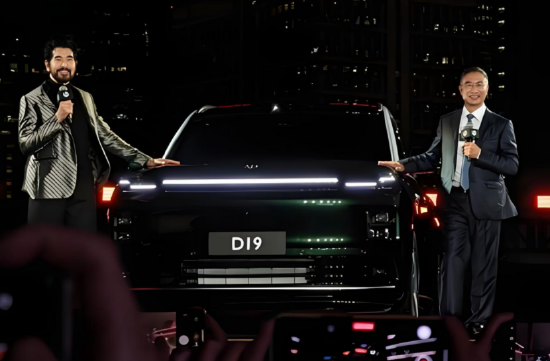
Core Viewpoint - Leap Motor has unveiled its flagship model, the D19, targeting the 300,000 yuan price segment, despite its average vehicle price being below 110,000 yuan [2][4][16]. Group 1: Product Launch and Positioning - The D19 is positioned as a high-tech luxury flagship SUV, built on Leap Motor's D platform, and is expected to be the first model to challenge the 300,000 yuan price point [4][12]. - The D19 is claimed to incorporate six industry-first technologies and features components from globally recognized suppliers, emphasizing a premium build quality [4][17]. - The vehicle is anticipated to be available for pre-sale in the first half of 2026, although specific pricing details have not yet been disclosed [4][12]. Group 2: Marketing and Brand Image - Leap Motor has appointed actor and singer Fei Xiang as the brand ambassador for the D series, which has sparked confusion among consumers due to a mismatch between his fan base and the brand's target demographic [3][5]. - The average price of Leap Motor vehicles is around 110,000 yuan, with the most expensive model priced at 180,000 yuan, indicating that the brand primarily appeals to lower-middle-class consumers [5][14]. Group 3: Technology and Development Strategy - Leap Motor's Vice President, Cao Li, stated that the company will not use Huawei's advanced driving system, opting instead to develop its own high-level autonomous driving technology [3][8]. - The company plans to invest over 50 billion yuan in research and development from 2025 to 2030, with more than 15% of its annual R&D budget allocated to smart technology [8][11]. - Leap Motor aims to achieve L4 level autonomous driving by 2026 and plans to launch its "Leap Smart Driving 4.0" system by 2028 [8][11]. Group 4: Market Challenges - Despite rising sales, Leap Motor's average vehicle price has been declining, with projections indicating a drop to 109,500 yuan in 2024 [16][17]. - Entering the 300,000 yuan market poses significant challenges, as the brand's established image as a value-for-money option may not resonate with high-end consumers [17]. - Leap Motor's self-research strategy faces risks, including the need for substantial upfront investment and the potential for technological advancements to lag behind competitors [11][17].

全球汽车零部件巨头新工厂在汉投产
Chang Jiang Ri Bao· 2025-10-19 01:20
Core Insights - ZF Group has officially launched its new factory in Wuhan, marking its third major project in the region within two years, demonstrating a strong commitment to the Chinese market [1][3] - The new factory is designed as a benchmark for sustainable development, featuring 100% energy consumption monitoring and advanced automation technologies [1][2] - The factory will primarily produce Electronic Parking Brakes (EPB) and plans to introduce next-generation Electro-Mechanical Brakes (EMB) to meet the growing demand in the electric vehicle market [1][2] Company Strategy - ZF Group views the Asia-Pacific region, particularly China, as a crucial strategic market and a core engine for global automotive technology innovation [2] - The company is increasing local R&D investments in smart chassis technology, with integrated hardware and software solutions being key drivers for the next generation of vehicles in China [2] - The rapid construction of the new factory, completed in less than a year, reflects ZF's commitment to enhancing its operational capabilities in the region [2] Industry Impact - The new factory strengthens ZF's strategic positioning in China and the Asia-Pacific region, injecting new momentum into the automotive supply chain in Wuhan [3] - Local authorities in Wuhan are committed to providing comprehensive support for enterprises, including R&D, talent, and marketing assistance, to foster sustainable growth in the region [3]
魔视智能港股IPO关乎生死存亡:12亿元赎回负债压顶连续多年资不抵债 产能利用率不足八成仍扩产
Xin Lang Cai Jing· 2025-10-16 10:20
Core Viewpoint - Magic View Intelligent Technology (Shanghai) Co., Ltd. is facing severe financial difficulties, including a cumulative loss of 760 million yuan over three and a half years, and is seeking to raise funds through an IPO on the Hong Kong Stock Exchange to address its critical financial situation [1][5]. Financial Performance - The company reported revenues of 118 million yuan in 2022, 147 million yuan in 2023, and projected 357 million yuan for 2024, but it has consistently incurred losses, with net profits of -199 million yuan, -224 million yuan, -232 million yuan, and -111 million yuan over the same periods, totaling a loss of 766 million yuan [4][9]. - Operating cash flows have been negative, with net cash flows from operating activities of -114 million yuan, -148 million yuan, -139 million yuan, and -73 million yuan for the respective years [4][9]. Debt Situation - The company has over 1.2 billion yuan in redeemable debt, which constitutes 76% of its total liabilities of 1.611 billion yuan, leading to an annual interest burden of approximately 60 million yuan [5][6]. - The debt has been accumulated through multiple rounds of financing, with varying interest rates ranging from 8% to 15% [6]. Market Position - As of 2024, Magic View ranks eighth among third-party intelligent driving solution providers in China, holding a market share of approximately 0.4% [3][4]. - The company is facing intense competition from automakers that are increasingly developing their own advanced driving systems, which puts pressure on third-party providers like Magic View [4][3]. Production Capacity - The company's production capacity utilization has been below 80%, with rates of 46.9%, 19.5%, 56.6%, and 79.7% for the years 2022 to the first half of 2025 [10][12]. - The company plans to use IPO proceeds to enhance R&D capabilities, expand production capacity, and improve delivery capabilities, despite the low utilization rates [10]. Customer and Supplier Dynamics - The revenue concentration from the top five customers has increased, accounting for 35.6%, 31.3%, 52.3%, and 65.9% of total revenue from 2022 to the first half of 2025 [12]. - There is a high overlap between customers and suppliers, raising concerns about potential conflicts of interest and the company's operational independence [13].

舜宇光学科技(02382.HK)9月数据点评:安卓备货旺季提前 手机摄像模组销量大增
Ge Long Hui· 2025-10-15 20:56
Company Overview - Sunny Optical Technology announced September shipment data: 1) Mobile optics: Camera module shipments reached 48.524 million units, up 32.0% YoY and 15.3% MoM, driven by increased customer demand. Lens shipments totaled 118 million units, down 1.0% YoY but up 1.9% MoM, mainly due to product structure adjustments. 2) Automotive-related products: Automotive lens shipments reached 11.66 million units, up 25.2% YoY and 15.8% MoM. 3) Other fields: Shipments of other lenses and optical products decreased by 20.6% YoY and 12.2% MoM, primarily related to VR demand [1]. Market Commentary - The upcoming Android stocking season has led to improved year-on-year trends in mobile optical product sales. The significant YoY increase of 32.0% in camera module shipments in September indicates a notable improvement compared to the first eight months of the year, attributed to a low base last year and earlier stocking schedules from Android customers, including Xiaomi's early launch of new models. Competitor Q Technology also reported a 40.5% YoY increase in shipments in September, likely influenced by similar factors. The YoY trend for lens shipments improved in September, mainly due to the Android stocking season and the launch of new Apple models, although the focus on high-end products has resulted in a slight YoY decline [1]. Product Strategy and Outlook - Given the company's ongoing product structure optimization strategy, it is expected that the average selling price (ASP) and gross margin for mobile optical products will improve YoY. The automotive optical market is steadily expanding, with a 23% YoY increase in automotive lens shipments from January to September, aligning with trends in the intelligent driving industry. The company is well-positioned to benefit from the increasing number of cameras per vehicle and enhanced specifications. In the AR sector, a partnership with GoerTek has been established, which, if completed, will make Shanghai Aolai a wholly-owned subsidiary of GoerTek Optical, with Ningbo Aolai holding a 31.31% stake in GoerTek Optical, making it the second-largest shareholder. This collaboration is expected to leverage resources and accelerate the mass production of etched diffraction waveguides [2]. Profit Forecast and Valuation - Due to better-than-expected sales of mobile optical products, the company's net profit forecasts for 2025 and 2026 have been raised by 4% and 6% to 3.77 billion and 4.50 billion CNY, respectively. The current stock price corresponds to a P/E ratio of 21.3x for 2025 and 17.6x for 2026. The company maintains an outperform rating with a target price of 99.2 HKD, which corresponds to a P/E of 26.4x and 21.8x for 2025 and 2026, indicating a potential upside of 24.1% from the current stock price [2].

紫牛后续︱陈震发文透露车祸原因,对劳斯莱斯闪灵辅助驾驶能力边界认知不够清晰
Yang Zi Wan Bao Wang· 2025-10-14 05:09
Group 1 - The core issue revolves around a traffic accident involving a well-known automotive blogger, Chen Zhen, who was driving a Rolls-Royce Cullinan and was found fully responsible for the incident due to improper use of the vehicle's advanced driver-assistance system (ADAS) [1][3] - The accident has sparked widespread discussion about the risks associated with the misuse of ADAS, highlighting that many drivers may not fully understand the limitations of these systems [1][3] - The Ministry of Public Security's Road Traffic Safety Research Center has issued warnings about the "high-level intelligent driving" traps, emphasizing that current mass-produced vehicles in China are equipped with Level 2 ADAS, where the driver remains the ultimate responsible party [3][6] Group 2 - Traffic police have reiterated the importance of drivers being the "first responsible person" for their safety, urging adherence to the Road Traffic Safety Law of the People's Republic of China while using ADAS [3][6] - The incident has led to increased scrutiny of driver behavior and the legal implications of misusing ADAS, which can result in administrative penalties and potential criminal liability [3]
汽车行业周报:特斯拉FSD大版本更新,高阶智驾发展加速-20251013
Shanghai Aijian Securities· 2025-10-13 08:39
Investment Rating - The automotive industry is rated as "Outperform" compared to the market index [3][11]. Core Insights - The automotive sector experienced a decline of 1.26% this week, ranking 26th out of 31 sectors, while the CSI 300 index fell by 0.51% [3][5]. - Tesla's strategic price reduction for its standard Model Y and Model 3 is expected to enhance market penetration, with potential prices for the domestic versions dropping to approximately 23.5 million and 20 million yuan respectively [3]. - Tesla's FSD V14 update significantly enhances autonomous driving capabilities, with improvements in model parameters and decision-making speed, which may impact the competitive landscape for autonomous driving technology [3]. Summary by Sections Industry Performance - The A-share automotive sector index closed at 8,141.2 points, with a weekly decline of 1.26% [3][5]. - The sub-sectors performed variably, with automotive services up by 1.70% and automotive parts down by 1.71% [7]. Stock Performance - Top-performing stocks in the A-share automotive sector included Meili Technology (+18.86%), Jinlong Automobile (+13.68%), and Kabeiyi (+13.23%) [8]. - In the Hong Kong market, China National Heavy Duty Truck (+3.50%) and Shou控 Group (+3.45%) were among the top gainers [9]. Tesla's Developments - Tesla's price adjustments and FSD V14 update are pivotal in reshaping its market strategy and enhancing its competitive edge in the autonomous driving sector [3]. - The FSD V14 update is expected to significantly increase user subscriptions and improve overall profitability due to its software margins being higher than hardware [3].

奇瑞终扬眉!上市首日港股沸腾,近2000亿市值狂欢盛宴
Sou Hu Cai Jing· 2025-10-01 03:01
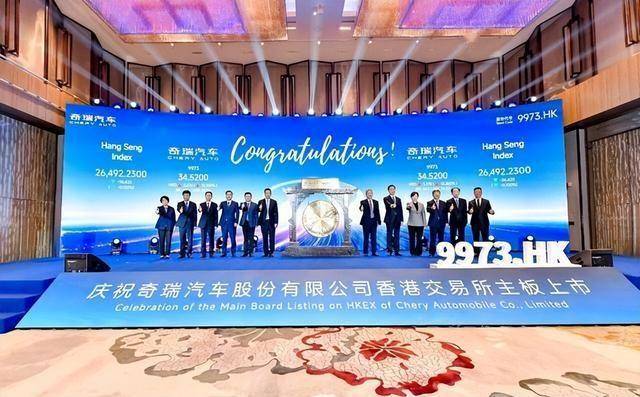
Core Insights - Chery has successfully launched its IPO on the Hong Kong Stock Exchange, achieving a market capitalization of HKD 184 billion, marking it as the largest IPO of a car company in Hong Kong for 2025 [1] - The company has transformed its image from being perceived as low-quality to a competitive player in the global automotive market, with products now recognized for their design and technology [1][3] Design and Aesthetics - Chery's recent models, such as the Starway and Arrizo 8, showcase significant improvements in design, moving from a previously unappealing aesthetic to a more modern and attractive look [1] - Compared to competitors like Geely and Changan, Chery's design transformation has been noted as particularly successful, appealing to younger consumers [1] Interior and Space - The interior of Chery vehicles has evolved, featuring high-quality materials, advanced technology like large central displays, and spacious seating arrangements, making them more family-friendly [3] - The introduction of the Lion Smart Cloud system enhances user experience with quick voice recognition and OTA updates, setting it apart from competitors [3][4] Powertrain and Performance - Chery's 1.6T engine has received accolades for its efficiency and performance, with the Arrizo 8 achieving a 0-100 km/h acceleration in just over 7 seconds [4] - The company is also advancing in hybrid technology, offering models with impressive fuel economy and electric range [4] Technology and Safety - Chery has integrated L2-level driver assistance features across its lineup, including adaptive cruise control and automatic parking, enhancing safety and user confidence [5][7] - The focus on practical and reliable technology implementation positions Chery as a mature player in the automotive industry [7] Global Expansion - Chery has maintained its position as the top Chinese brand in passenger car exports for 21 consecutive years, with plans to allocate 20% of its IPO proceeds to international markets [8] - The company's strategy emphasizes building a strong global presence based on product quality and service rather than resorting to price cuts [8] Market Reaction - The IPO has generated positive sentiment among investors, with the stock price surging on the first day, although some existing customers expressed frustration over the depreciation of older models [8][9] - The rapid product iteration and technological advancements have led to concerns about the resale value of older vehicles, highlighting the competitive nature of the automotive market [9] Conclusion - Chery has successfully navigated a challenging path to establish itself as a formidable player in the automotive industry, characterized by self-research, global expansion, and brand revitalization [11] - The company now boasts a strong portfolio of attractive, technologically advanced vehicles, positioning itself well against established competitors like BYD, Geely, and Changan [11]
醉酒司机深夜无人驾驶 "智驾神器”滥用风险引关注
Jing Ji Guan Cha Wang· 2025-09-27 22:54
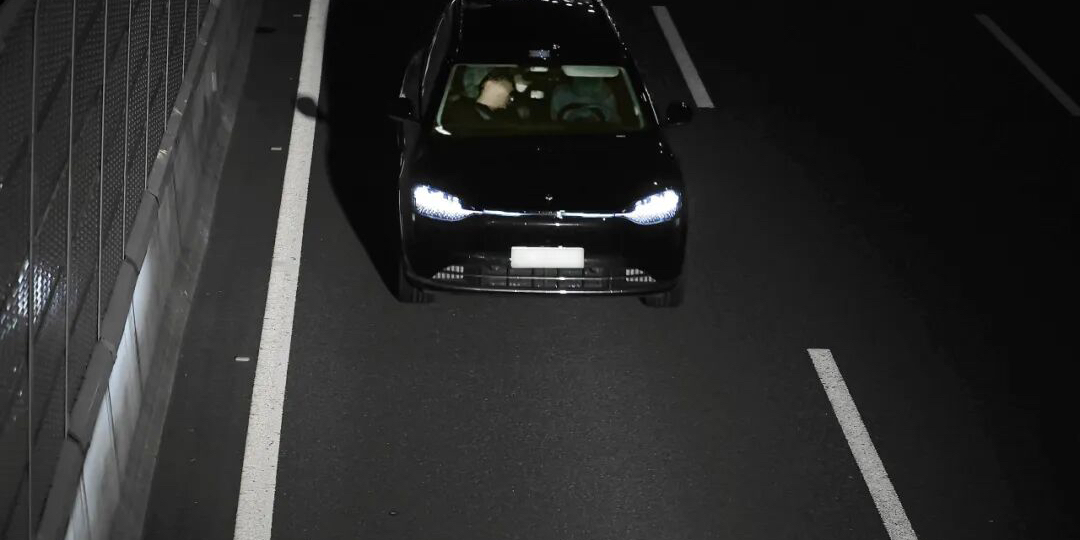
Core Viewpoint - The incident involving a drunk driver using a "smart driving device" to operate a vehicle autonomously highlights the risks associated with the misuse of intelligent driving assistance systems [3][4][5]. Group 1: Incident Details - On September 13, a driver in Hangzhou, under the influence of alcohol, used a device to trick the vehicle's intelligent driving system, allowing it to drive for 20 minutes without anyone in the driver's seat [4][5]. - The vehicle was equipped with an L2 level intelligent driving assistance system, which is designed to alert the driver if hands are removed from the steering wheel for more than two minutes [4][14]. - The driver, identified as Wang, had a history of drunk driving and was subsequently sentenced to 45 days in detention and fined 4,000 yuan for dangerous driving [5][15]. Group 2: Technology and Misuse - The "smart driving device," referred to as "智驾神器," has evolved from simple weighted accessories to more sophisticated electronic modules that can deceive the vehicle's monitoring systems [6][7]. - These devices are marketed online and are designed to bypass the driver monitoring systems, allowing for extended periods of hands-free driving [6][7]. - The rise of high-level intelligent driving systems has led to the development of customized "smart boxes" for specific vehicle brands, which can maintain autonomous driving without driver intervention [7][14]. Group 3: Regulatory and Safety Concerns - The incident underscores the need for stricter regulations and oversight regarding the production, sale, and use of such devices, as current laws do not adequately address the risks posed by external modifications to driving systems [14][15]. - Authorities emphasize that intelligent driving requires human oversight and should not be mistaken for full automation, warning against the dangers of using such devices [15].