
A股慢牛

Search documents
多利好共振助推市场上行 中国资产价值重估正当时
Zheng Quan Shi Bao· 2025-10-09 18:20
Group 1 - The 19th Annual Value Selection Expert Review Meeting was successfully held in Shenzhen, organized by the Securities Times, with participation from various experts and institutions [1] - The expert review meeting is a crucial part of the "Listed Company Value Selection," emphasizing scientific, professional, and credible evaluations of candidate companies based on multiple dimensions such as market capitalization, growth, investor returns, corporate governance, executive integrity, and public sentiment risk [1] - The value selection activity aims to identify high-quality companies with transparent governance, outstanding performance, efficient operations, and exceptional growth, providing investment references for investors and promoting the prosperity of the capital market [1] Group 2 - Experts discussed the core driving factors of the current market since the "9.24" event, the foundation of a "slow bull" market in A-shares, and how policy measures are reshaping the capital market ecosystem [2] - The Chief Economist of Zhongtai International, Li Xunlei, stated that the overall valuation of A-shares is currently reasonable, and a long-term bull market will depend on the continuous growth of listed company performance [2] - Multiple experts expressed optimism about the revaluation of Chinese assets, with Southern Fund's Vice President, Shi Bo, noting that the allocation of overseas medium- to long-term funds to Chinese assets is in its early stages, indicating significant room for increase [2]
A股市场运行周报第61期:偏多震荡相互拉扯,战略认慢牛、战术细操作-20251008
ZHESHANG SECURITIES· 2025-10-08 03:05
Core Viewpoints - The A-share market is expected to open in a volatile pattern after the National Day holiday, with two potential paths for the Shanghai Composite Index: either directly breaking through previous highs or undergoing a period of consolidation before a breakout [1][3][46] - The strategic outlook remains bullish on A-shares, with tactical execution focusing on detailed operations, particularly in sectors with rebound potential such as brokerage and real estate [1][4][46] Weekly Market Overview - Major indices mostly rose in the last week, with the Shanghai Composite, Shanghai 50, and CSI 300 increasing by 1.43%, 1.63%, and 1.99% respectively, while the ChiNext Index and STAR 50 rose by 2.75% and 3.06% [2][11][44] - The technology sector is showing strong performance, while the communication sector is lagging, with a notable decline in leading companies [2][14][45] - The average daily trading volume in the two markets decreased slightly to 2.17 trillion yuan, down from 2.30 trillion yuan the previous week [2][17] Market Attribution - Key events influencing the market include the Central Political Bureau's meeting on September 29, which discussed the 15th Five-Year Plan, and the continuous improvement in manufacturing sentiment as indicated by the PMI rising to 49.8% [2][42] Future Market Outlook - The market is anticipated to remain in a "slow bull" phase, with a focus on mid-term bullish strategies. The dual innovation index is under pressure for profit-taking, and the performance of key sectors like brokerage remains uncertain [3][46] - The brokerage sector is highlighted for its potential rebound, as it is currently about 6% away from its lower annual line and has a significant upside potential compared to last year's high [3][44][46] Sector Allocation - For absolute return funds, it is recommended to focus on the brokerage sector, especially those near the annual line, and to monitor the real estate sector for stable performance and positive news [4][46][47] - For relative return funds, three strategies are suggested: using upward trend lines or relevant moving averages as operational guidelines, differentiating between medium and short positions, and actively seeking rebound stocks within the technology sector [4][47]
刘纪鹏:A股慢牛面临最大考验,大股东全面减持潜在规模达15万亿
Xin Lang Zheng Quan· 2025-09-25 10:41
Core Viewpoint - The A-share market is gradually showing a slow bull trend one year after the "924" policy was introduced, but it remains in a value trap due to underlying economic challenges [1][2]. Economic Fundamentals - The current Chinese economy is in a downward cycle, with significant fiscal pressure on local governments and a severe employment situation, making it difficult for the fundamentals to provide effective support [1]. - The total social financing in China is heavily reliant on bank loans, which amount to approximately 36 trillion yuan, indicating a low proportion of direct financing from the capital market [1]. Market Liquidity - The coordination efficiency between the central bank and the securities regulatory commission has significantly improved, with the central financial committee playing a key role in injecting ample liquidity into the market [2]. - Despite a rebound of about 800 points from the market's low, systemic optimization of the institutional framework is necessary to avoid resistance to further market growth [2]. Institutional Reforms - The issue of major shareholder reductions is identified as a core bottleneck affecting market confidence and long-term healthy development [2]. - There are over 5,400 listed companies in the A-share market with a total share capital of approximately 77 trillion shares, of which over 90% are tradable [2]. Shareholder Behavior - Current major shareholders are criticized for focusing on reducing their holdings rather than improving company operations, which undermines the original intent of the capital market to serve the real economy [3]. - A warning is issued regarding the potential market crash if major shareholders are allowed to reduce their holdings indiscriminately, with an estimated funding requirement of about 15 trillion yuan for comprehensive reductions [3].


A股“长假定律”背后的秘密
和讯· 2025-09-24 09:55
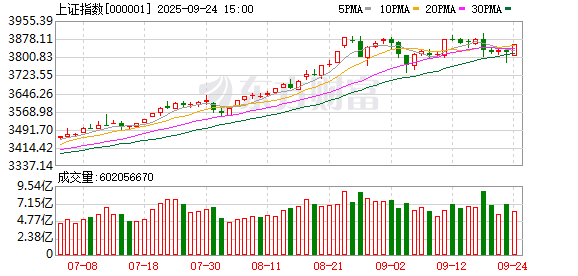
Core Viewpoint - The article discusses the performance of the A-share market around the National Day holiday, highlighting the historical "calendar effect" where the market typically experiences adjustments before the holiday and rebounds afterward [5][6][9]. Market Performance - On September 24, the market saw a strong performance with the ChiNext Index reaching a three-year high and the STAR 50 Index rising nearly 5%, with over 4,400 stocks increasing in value [2][3]. - The Shanghai Composite Index rose by 0.83%, the Shenzhen Component Index by 1.80%, and the ChiNext Index by 2.28% on the same day [3]. Calendar Effect - Historical data shows that in the past 10 years, the Shanghai Composite Index has had an 80% probability of declining in the five trading days before the National Day holiday, with a median drop of 1.45% [5][6]. - Conversely, the index has a 60% probability of rising in the five trading days following the holiday, with six out of ten years showing an increase [5][6]. Investment Strategy - Investors face a choice of holding stocks or cash during the holiday, with recommendations depending on the quality of the assets held. Good stocks and funds can be held, while those lacking fundamental support may be sold [6][9]. - The article emphasizes the importance of maintaining confidence and patience to capitalize on the ongoing bull market [6][9]. Long-term Market Outlook - The article notes that the A-share market has seen a significant increase over the past year, with the Shanghai Composite Index rising from 2,700 to around 3,900, a nearly 40% increase [7][8]. - The market's risk appetite has improved, with the risk premium narrowing from 4.6% to 2.6% since September 24 of the previous year [8]. - Despite short-term fluctuations, the long-term outlook remains optimistic, supported by strong performance in sectors like artificial intelligence, biomedicine, and high-end manufacturing [9][10].

“9·24”一周年 A股果然涨了!下一步怎么走?
Mei Ri Jing Ji Xin Wen· 2025-09-24 07:46
Market Overview - On September 24, the market opened lower but closed higher, with the ChiNext Index reaching a three-year high and the STAR 50 Index rising nearly 5% at one point [2] - The Shanghai Composite Index rose by 0.83%, the Shenzhen Component Index increased by 1.80%, and the ChiNext Index gained 2.28% [2] - Over 4,400 stocks in the market rose, while fewer than 900 declined, with a total trading volume of 2.33 trillion yuan, down 167.6 billion yuan from the previous trading day [2] Semiconductor Industry - The semiconductor industry is experiencing significant growth, with major breakthroughs in domestic photolithography machine production [7] - At the 25th China International Industry Fair, Chip-on-Micro showcased several new products and won top honors, while Shanghai Micro Electronics unveiled EUV lithography machine specifications [7] - The semiconductor sector saw strong performance, with notable increases in stocks related to national big fund holdings, electronic chemicals, and storage chips [7][11] Stock Performance - Key stocks such as SMIC, North Huachuang, and others reached historical highs, with North Huachuang's market cap nearing 333.6 billion yuan [9] - The semiconductor concept stocks saw significant gains, with SMIC concept stocks up 5.41% year-to-date, and storage chips up 57.71% [8] Market Trends - The market is characterized by a "slow bull" trend, with the Shanghai Composite Index now at 3,804 points compared to 2,770 points a year ago [7][12] - Analysts suggest that the current market adjustment presents opportunities, with expectations for continued growth in the A-share market [14]
美联储降息继续稳固A股慢牛趋势
Huajin Securities· 2025-09-18 06:24
Group 1 - The Federal Reserve's recent interest rate cut of 25 basis points is expected to prevent economic recession and aligns with historical patterns of preemptive rate cuts [1][7][6] - The U.S. job market shows signs of cooling, with the unemployment rate rising to 4.3% in August and non-farm payrolls being significantly revised downwards, indicating a potential economic slowdown [7][8][11] - A-share market is expected to maintain a strong slow bull trend in the short term, supported by the Fed's rate cut and domestic growth policies [13][19][20] Group 2 - The technology sector and certain core assets are likely to outperform following the Fed's rate cut, driven by liquidity easing and upward industry trends [19][20][21] - Historical data shows that after 18 rate cuts since 2005, sectors such as electronics, pharmaceuticals, and communications have frequently ranked among the top performers [19][22][27] - The easing of liquidity is expected to attract foreign capital into A-shares, with significant inflows observed during previous rate cut cycles [19][20][21]
居民储蓄入市、外资加仓,A 股港股行情火了!慢牛到底能撑多久?
Sou Hu Cai Jing· 2025-09-15 13:50
Core Viewpoint - The current market conditions in A-shares and Hong Kong stocks are characterized by increased participation from retail investors and foreign capital, with concerns about the sustainability of this "slow bull" market compared to past experiences like in 2015 [1] Group 1: Market Dynamics - Retail savings are gradually entering the market through funds, and foreign capital is flowing into A-shares and Hong Kong stocks, driven by the expectation of interest rate cuts by the Federal Reserve [1][8] - The Hong Kong stock market has surpassed 26,000 points, while A-shares are experiencing upward movement despite some volatility [1] - The current market is different from 2015 due to stricter regulations on margin trading, with the margin financing balance being significantly lower than in 2015 [3][4] Group 2: Investor Behavior - Investors have learned from past mistakes and are less likely to use excessive leverage, which reduces overall risk in the market [4] - The inflow of retail savings is gradual, akin to watering a plant slowly to avoid root rot, suggesting a more sustainable market growth compared to previous surges [4][6] Group 3: Fundraising and Investment Opportunities - Fundraising limits for most funds are between 1 billion to 5 billion yuan, indicating that the influx of retail savings is still in its early stages [6] - A-shares and Hong Kong stocks are currently undervalued, with many quality stocks offering dividend yields higher than bonds, presenting attractive investment opportunities [8] Group 4: Foreign Capital Inflow - Since the second half of last year, foreign capital has consistently flowed into Hong Kong stocks, with over 10 billion USD entering A-shares in the first half of this year, indicating a sustained interest rather than a fleeting trend [10] - The attractiveness of A-shares and Hong Kong stocks is enhanced by their relative undervaluation compared to the high valuations in the US market [10] Group 5: Economic Context and Investment Strategy - The anticipated interest rate cuts by the Federal Reserve may lead to lower borrowing costs, encouraging both corporate investment and individual investors to seek higher returns in the stock market [11] - A diversified investment strategy, including a 20% allocation to gold, is recommended to mitigate risks associated with market volatility while maintaining exposure to potential growth in equities [11][13]

凯丰投资王东洋:A股长期“慢牛”走势值得期待
Zheng Quan Shi Bao Wang· 2025-09-10 12:20
Core Viewpoint - The A-share market is experiencing complex fluctuations, with various sectors under scrutiny and expectations for recovery, driven by government policies and economic conditions [1][2]. Market Trends - Since September 24, 2022, there has been a significant policy shift in China from "tight fiscal + loose monetary" to "both monetary and fiscal easing," which has positively impacted market sentiment [1]. - The long-term outlook for A-shares is optimistic, with reasonable valuations and expected annualized growth for the CSI 300 index, despite some sectors showing high valuations and market fragmentation [2]. Investment Strategies - The company employs a diversified macro strategy across various asset classes (stocks, commodities, bonds) to manage risks effectively and control drawdowns [3]. - Advanced systematic risk control mechanisms are in place, including pre-warning and stop-loss indicators, ensuring timely risk management during market volatility [3]. Economic Recovery - There are notable signs of recovery in certain sectors post-pandemic, with strong export performance and increasing contributions from emerging industries like semiconductors and new energy vehicles [4]. - Consumer policies are being implemented to boost spending, although the impact may lag behind compared to developed countries [4]. Sector Focus - The semiconductor and biopharmaceutical sectors have seen significant price increases due to factors such as lower financing costs from interest rate cuts and strong innovation [4]. - The company plans to focus on the non-ferrous metals sector, anticipating increased demand and potential price rises if a global easing cycle occurs [5][6]. Interest Rate Impact - The anticipated interest rate cuts by the Federal Reserve are expected to have already been partially priced into the A-share market, with ongoing attention on future rate adjustments [6]. - The decline in risk-free asset yields presents opportunities for equities, as the current yield on China's ten-year government bonds is around 1.8%, indicating room for adjustment [6]. Investor Guidance - New investors are advised to temper their return expectations, adopt a systematic asset allocation approach, and continuously learn to develop a suitable investment methodology [6].
CPO光模块热度再起,“易中天”上涨,机构称A股慢牛主基调仍在
Mei Ri Jing Ji Xin Wen· 2025-09-10 07:05
Group 1 - A-shares experienced a collective rise on September 10, with the ChiNext Index increasing by over 1.5%, driven by strong performance in the tourism sector and active trading in computing hardware stocks [1] - The recent surge in the Sci-Tech Innovation and Entrepreneurship 50 ETF (159783) saw a rise of over 2%, with top-performing holdings including Zhongji Xuchuang, Xinyi Sheng, Lanke Technology, Haiguang Information, Tianfu Communication, and Cambrian [1] - Huaxi Securities believes that the expectation of monetary easing is re-emerging, maintaining a slow bull market trend for A-shares, supported by long-term funds such as insurance and pension funds increasing their market participation [1] Group 2 - The Sci-Tech Innovation and Entrepreneurship 50 ETF (159783) tracks the CSI Sci-Tech Innovation and Entrepreneurship 50 Index, which selects 50 leading companies with the largest market capitalization and pure technology attributes from the ChiNext and Sci-Tech boards [2] - This index combines the advantages of both boards, selecting high-tech attributes from the Sci-Tech board and growth and profitability from the ChiNext board, allowing investors without specific accounts to access core assets in these sectors [2]
CPO光模块热度再起 “易中天”上涨 机构称A股慢牛主基调仍在
Mei Ri Jing Ji Xin Wen· 2025-09-10 07:04
Group 1 - A-shares experienced a collective rise on September 10, with the ChiNext Index increasing by over 1.5%, driven by strong performance in the tourism sector and active trading in computing hardware stocks [1] - The recent surge in the Sci-Tech Innovation and Entrepreneurship 50 ETF (159783) saw a rise of over 2%, with top-performing holdings including Zhongji Xuchuang, Xinyi Sheng, Lanke Technology, Haiguang Information, Tianfu Communication, and Cambrian [1] - Huaxi Securities believes that the expectation of monetary easing is re-emerging, maintaining a slow bull market trend for A-shares, supported by strong policy backing for stabilizing the stock market and increased long-term capital inflow from insurance and pension funds [1] Group 2 - The Sci-Tech Innovation and Entrepreneurship 50 ETF (159783) tracks the CSI Sci-Tech Innovation and Entrepreneurship 50 Index, which selects 50 leading companies with the largest market capitalization and strong technology attributes from the ChiNext and Sci-Tech boards [2] - This index combines the advantages of both boards, selecting high-tech stocks from the Sci-Tech board and growth-oriented, profitable stocks from the ChiNext board, providing a one-click investment option for investors without direct access to these boards [2]