具身智能

Search documents
开特股份(920978):北交所信息更新:储能、数据中心、具身智能多线开花,2025预计全年营收+33%
KAIYUAN SECURITIES· 2026-03-13 08:13
Investment Rating - The report maintains an "Outperform" rating for the company [2][5] Core Insights - The company is expected to achieve a revenue of 1.095 billion yuan in 2025, representing a year-on-year growth of 32.67%, and a net profit attributable to the parent company of 172 million yuan, reflecting a growth of 24.54% [2] - The company is actively expanding its production capacity in the energy storage sector and has established strategic partnerships in the data center and robotics fields, indicating a diversified growth strategy [3][4] Financial Summary - Revenue projections for 2025-2027 are as follows: 1.095 billion yuan (2025), 1.310 billion yuan (2026), and 1.555 billion yuan (2027), with corresponding net profits of 172 million yuan, 226 million yuan, and 267 million yuan [7] - The company's gross margin is projected to be 30.4% in 2025, with a net margin of 15.7% [8] - The earnings per share (EPS) are forecasted to be 0.95 yuan for 2025, 1.26 yuan for 2026, and 1.48 yuan for 2027, with a price-to-earnings (P/E) ratio of 28.1 for 2025 [5][7]
净利暴跌86%,李想要把“增程神话”换成AI+机器人
阿尔法工场研究院· 2026-03-13 08:04
Core Viewpoint - Li Auto is facing significant challenges as its competitive advantage in range-extended technology diminishes, leading to a sharp decline in profits and revenues, while the market becomes increasingly saturated with competitors and pure electric vehicles [2][3][7]. Financial Performance - In 2025, Li Auto reported a net profit of 1.139 billion yuan, a staggering decline of 85.8% year-on-year, with revenue dropping 22.3% to 112.3 billion yuan [2][3]. - The total vehicle deliveries for 2025 were 406,300 units, down 18.8% from the previous year, failing to meet both the initial target of 700,000 and the revised target of 640,000 [3][4]. - The gross margin for 2025 fell to 18.7%, down from 20.5% in 2024, with vehicle gross margin decreasing from 19.8% to 17.9% [4]. Market Competition - The range-extended vehicle market has become increasingly competitive, with multiple automakers introducing similar technologies, diminishing Li Auto's previous advantage [7][8]. - In 2025, the sales of pure electric vehicles reached 7.877 million units, a 24.4% increase year-on-year, while range-extended vehicle sales only grew by 6% to 1.235 million units [8][9]. Internal Challenges - Li Auto has experienced significant management turnover, with several key executives leaving the company, raising concerns about operational stability [5]. - A recall of 11,000 units due to safety issues has negatively impacted the brand's image and consumer trust, further complicating its recovery efforts [5][6]. Strategic Initiatives - To combat declining sales, Li Auto aims to achieve a sales target of 500,000 units in 2026, focusing on both range-extended and pure electric vehicles [9][10]. - The company plans to launch a new range-extended model, the Li L9 series, in the second quarter of 2026, featuring advanced charging technology and improved electric range [10]. - Li Auto is heavily investing in AI technology, with 50% of its 11.3 billion yuan R&D budget in 2025 allocated to AI, indicating a strategic pivot towards integrating AI into its vehicle offerings [10][11].

养老院也要IPO了
投资界· 2026-03-13 07:09
Core Viewpoint - The article discusses the rise of the silver economy, highlighting the IPO submission of Jin Xin Kang Yang, a leading elderly care provider in the Sichuan-Chongqing region, which aims to capitalize on the growing demand for integrated medical and elderly care services in an aging society [5][6]. Company Overview - Jin Xin Kang Yang, part of Jin Xin Group, has evolved into the largest integrated medical and elderly care institution in the Sichuan-Chongqing area through multiple acquisitions and integrations [5][6]. - The company was founded in 2003 and has expanded its services to include medical, reproductive, and elderly care sectors, establishing a comprehensive service network [6][7]. Business Model and Services - The company targets elderly individuals, particularly those over 80 years old, offering a range of services including housing, professional nursing, nutritional management, social and cultural activities, medical services, rehabilitation, and on-demand services [10][11]. - Jin Xin Kang Yang operates a standardized chain model, with monthly fees for its services typically ranging from 4,500 to 5,500 yuan [13]. Financial Performance - The company reported revenues of 488.5 million yuan, 604.8 million yuan, and 547.2 million yuan for the years 2023, 2024, and the first nine months of 2025, respectively, with net profits of 27.1 million yuan, 40.3 million yuan, and 26.1 million yuan during the same periods [14]. - The revenue from self-operated integrated medical and elderly care facilities accounted for approximately 50% of total revenue, with an occupancy rate of 85%, significantly higher than the industry average of 50% [14][15]. Market Position and Growth Strategy - Jin Xin Kang Yang has established or acquired 38 care facilities, primarily in the Sichuan-Chongqing region, with a focus on expanding its network into the Yangtze River Delta and Greater Bay Area [15]. - The company has made strategic acquisitions, including a nearly 300 million yuan purchase of Shanghai Guosong Group, to enhance its market presence [8][15]. Future Outlook - The company aims to use the funds raised from its IPO to expand its elderly care facility network and improve operational efficiency and service quality [16]. - The aging population in China is projected to reach approximately 320 million by 2025, representing 23% of the total population, indicating a significant market opportunity for Jin Xin Kang Yang [17][18].

具身数据独角兽火了:上百家产业方找上门
投资界· 2026-03-13 07:09
Core Insights - The article highlights the emergence of embodied intelligence as a significant industry trend, with the recent financing of Guanglun Intelligent marking its entry into the unicorn club, becoming the first unicorn in the field of embodied data [2] - The focus of investment is shifting towards the foundational infrastructure of embodied data and simulation, indicating a new phase in the competition for data infrastructure in the robotics sector [2][4] Group 1: Investment and Market Dynamics - Guanglun Intelligent recently completed financing rounds totaling 1 billion RMB, attracting a diverse range of investors from both industry and financial sectors, signaling strong market interest [2] - The capital focus in the embodied intelligence sector has transitioned from hardware and model teams to the underlying data infrastructure necessary for training robots [4][5] - The competition is evolving from data route competition to data infrastructure construction, emphasizing the importance of a stable data supply system for future robotics capabilities [5][6] Group 2: Data Infrastructure Development - The article outlines a three-tiered infrastructure for physical AI: computing infrastructure, model infrastructure, and the currently scarce data and simulation infrastructure [6] - Guanglun Intelligent is building a comprehensive data engine that integrates simulation, behavior, and evaluation layers to create a sustainable data infrastructure for embodied intelligence [8][10] - The company has established the world's largest non-body data engine, generating over 50,000 hours of high-quality human behavior data weekly, which is utilized by over 80% of leading embodied intelligence teams [9][12] Group 3: Industry Implications and Future Outlook - The article suggests that real-world industrial scenarios are becoming valuable data mines, with companies seeking to secure data generation capabilities ahead of widespread robot deployment [14][19] - The anticipated year of 2026 is highlighted as a pivotal moment for the large-scale implementation of embodied data, driven by the increasing demand for high-quality training data from robotics manufacturers [17][19] - The competition in the robotics industry will increasingly hinge on who can effectively connect real-world scenarios with foundational model training, positioning Guanglun Intelligent at the center of this emerging infrastructure [19][20]

2026年人形机器人行业投资策略报告:聚焦量产新阶段,把握供应链机遇
Wanlian Securities· 2026-03-13 06:24
Investment Rating - The report maintains an "Outperform" rating for the humanoid robot industry, indicating a positive outlook for investment opportunities in this sector [5]. Core Insights - The humanoid robot industry is transitioning from technological breakthroughs to large-scale commercialization, with 2026 identified as a critical window for mass production and scenario validation. Supply-side advancements from leading overseas companies and accelerated iterations and price reductions from domestic manufacturers are driving the industry from prototypes to large-scale delivery. On the demand side, increasing aging populations and rising labor costs are creating long-term demand, supported by policy incentives and capital enthusiasm. The commercialization of humanoid robots is expected to achieve substantial breakthroughs, with a broad market space available [2][4]. Summary by Sections Market Performance - The humanoid robot index is characterized by high volatility and elasticity, outperforming the Wind All A index in 2025, with cumulative increases of 62.08% and 31.09% respectively. The index's excess return reached 30.99%, driven by technological iterations and mass production catalysts, alongside supportive policies creating a positive feedback loop of financing and orders [3][16]. Long-term Drivers - The global aging trend is intensifying, leading to a tightening labor market and increasing demand for robots to replace human labor. The market for elderly care robots is expanding, with the potential for the global humanoid robot market to reach $20 billion by 2030, indicating significant future market opportunities [4][32]. Supply-side Developments - The supply side of the humanoid robot industry is rapidly flourishing, with convergence in mass production schedules between overseas leaders and Chinese manufacturers. The focus is on industrial applications, with production capacities increasing from thousands to tens of thousands of units. Domestic products are becoming more competitive, with prices dropping from millions to tens of thousands, accelerating market education and application [5][9]. Investment Recommendations - The report suggests focusing on key supply chain opportunities, particularly companies involved in precision reducers, actuators, and sensors that are critical to the humanoid robot supply chain. The emphasis is on cost reduction and technological breakthroughs within the domestic supply chain, which is expected to transition from a replacement role to a leading position [10].

理想汽车冲上热搜!回应“关闭100家门店”传言
2 1 Shi Ji Jing Ji Bao Dao· 2026-03-13 06:09
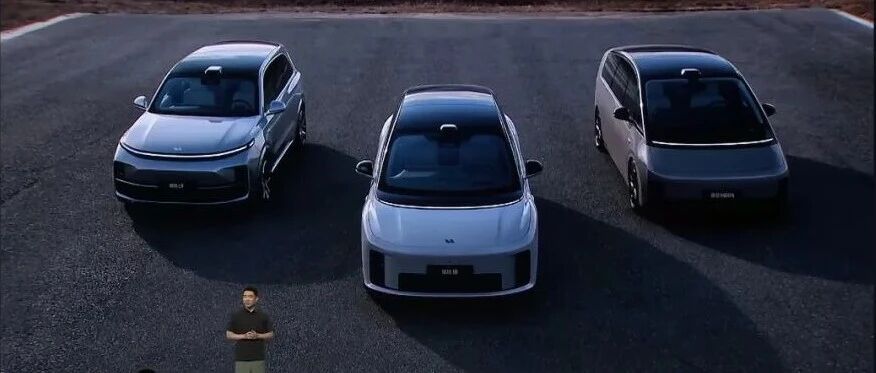
Core Viewpoint - Li Auto is set to launch the new flagship electric SUV, Li Auto i9, in the second half of 2026, while maintaining a cash reserve of over 100 billion yuan to support its strategic adjustments [1][3][4]. Financial Performance - In 2025, Li Auto reported a year-on-year decline in revenue and net profit but still achieved annual profitability, with cash reserves reaching 101.2 billion yuan [4]. - The delivery volume for 2025 was 406,300 units, with a target of over 487,600 units for 2026, reflecting a growth target of over 20% year-on-year [5]. Product Strategy - Li Auto plans to enhance its product lineup by focusing on both range-extended and pure electric vehicles, including the new Li Auto L9 and the upcoming i9 [5][6]. - The new Li Auto L9 is expected to establish a competitive edge through technological advancements, with a top configuration priced at 559,800 yuan [5]. Market Positioning - Li Auto aims to solidify its presence in the mid-to-high-end market for pure electric vehicles, with the i6 and i8 models laying a strong foundation despite facing initial market challenges [6]. - The company anticipates that the monthly delivery capacity for the i6 will reach 20,000 units, with orders expected to be fulfilled within 1-2 months [6]. Retail Strategy - Li Auto addressed rumors of closing 100 stores, clarifying that any closures are part of normal operational optimization to enhance efficiency [7]. - The company is shifting its focus towards quality over quantity in its retail strategy, with plans to open new stores in prime locations to improve brand influence and customer traffic [7][8]. Sales and Management - Li Auto is transitioning its store managers from traditional sales roles to business operators, aiming to cultivate managers with annual incomes exceeding 1 million yuan [9]. - The company has initiated a "store partner" program to empower store managers with decision-making and profit-sharing capabilities [8][9]. R&D and Technological Advancement - Li Auto is committed to evolving into a "embodied intelligence" enterprise, with 50% of its 2025 R&D budget of 11.3 billion yuan allocated to AI [10][11]. - For 2026, the planned R&D investment is approximately 12 billion yuan, with a continued focus on AI-related projects, including self-developed chip technology and intelligent driving systems [12].


对话星动纪元陈建宇:28 岁成为清华博导,想做万亿市值具身公司
晚点LatePost· 2026-03-13 06:06
Core Viewpoint - The company aims to achieve a trillion-dollar valuation by focusing on embodied intelligence and strategic partnerships, emphasizing that financing is not just about capital but also about acquiring resources and building competitive advantages [5][8][36]. Financing and Investment - In a span of three months, the company secured 20 billion RMB in financing, with two rounds of 10 billion RMB each, indicating a strong interest in the embodied intelligence sector [4][8]. - The CEO highlighted that many investors are now recognizing the potential of embodied intelligence, leading to increased competition for funding [9]. - The company is actively seeking strategic partners through financing, which can enhance its competitive position in the market [8][9]. Technology and Research - The company is focused on developing full-sized humanoid robots with dexterous hands and legs, aiming to enhance movement control and resource allocation for embodied intelligence models [7][21]. - The CEO believes that the industry is increasingly prioritizing the practical application of technology, moving from demonstrations to real-world tasks [11]. - The company is exploring the integration of VLA (Vision-Language-Action) and world models, which has shown to improve performance by approximately 40% [14][16]. Market Position and Strategy - The company is positioning itself as a leader in the embodied intelligence sector, with a focus on high-value market segments such as logistics and manufacturing, which have significant cost-saving potential [25][27]. - The CEO expressed that the company is not currently focused on consumer household robots, as the technology is not yet mature enough for widespread deployment [27][28]. - The company aims to achieve a sustainable high-value output rather than focusing on short-term sales volume, which is often driven by performance demonstrations [26][27]. Future Outlook - The CEO anticipates that the company will reach a trillion-dollar valuation within the next ten years, contingent on advancements in technology and market acceptance [36][38]. - The company is committed to addressing challenges in hardware durability, particularly in dexterous hands, to enhance the longevity and reliability of its products [25][37].

2026年人形机器人行业投资策略报告:聚焦量产新阶段,把握供应链机遇-20260313
Wanlian Securities· 2026-03-13 05:50
Industry Overview - The humanoid robot industry is at a pivotal moment, transitioning from technological breakthroughs to large-scale commercialization, with 2026 expected to be a key window for mass production and scenario validation [2] - Supply-side dynamics show clear mass production paths for overseas leaders, while domestic manufacturers are accelerating iterations and reducing prices, driving the industry from prototypes to large-scale delivery [2][4] - On the demand side, aging populations and rising labor costs create long-term demand, supported by policy incentives and capital enthusiasm [2][4] Investment Highlights - The humanoid robot index is characterized by high volatility and elasticity, outperforming the Wind All A index in 2025, with cumulative gains of 62.08% compared to 31.09% for the Wind All A index [3][15] - The index's excess return of 30.99% is attributed to continuous technological iterations, mass production catalysts, and a positive feedback loop from policies, financing, and orders [3][15] Long-term Drivers - Global aging trends are intensifying, leading to a tightening labor market and increasing demand for robots to replace human labor [4][24] - The market for elderly care robots is expanding, with "robot + elderly care" emerging as a viable solution to address aging issues [4][25] - The global humanoid robot market is projected to reach $20 billion by 2030, indicating significant future market potential [4][31] Supply-side Developments - The supply side of the humanoid robot industry is rapidly flourishing, with consensus on prioritizing industrial applications and scaling production from thousands to tens of thousands of units [5] - Domestic manufacturers are releasing numerous new products, showcasing strong competitiveness in key features like intelligence and motion control, while prices are rapidly decreasing from millions to tens of thousands [5][9] Policy Support - A series of favorable policies for the humanoid robot industry have been introduced at both national and local levels, marking the sector as a strategic focus for future industrial development [20][21] Market Dynamics - The dual pressures of demographic changes and rising labor costs are driving the trend of machine replacement for human labor, with significant implications for labor-intensive industries [24][28] - The humanoid robot market is expected to grow rapidly, with projections indicating a market size of $200 billion by 2030, driven by technological advancements and increasing social demand [31][32] Product Development and Iteration - Continuous product iterations and performance breakthroughs are evident, with both overseas leaders and domestic players accelerating their commercialization processes [33] - Tesla's humanoid robot, Optimus, is rapidly evolving, with significant upgrades in hardware and capabilities, indicating a clear path towards mass production [34][40] Investment Recommendations - The report suggests focusing on key supply chain opportunities, particularly in precision reducers, actuators, and sensors, as these components are critical for the humanoid robot industry [9] - Attention should also be given to domestic supply chain breakthroughs that can drive down costs and enhance competitiveness [9]

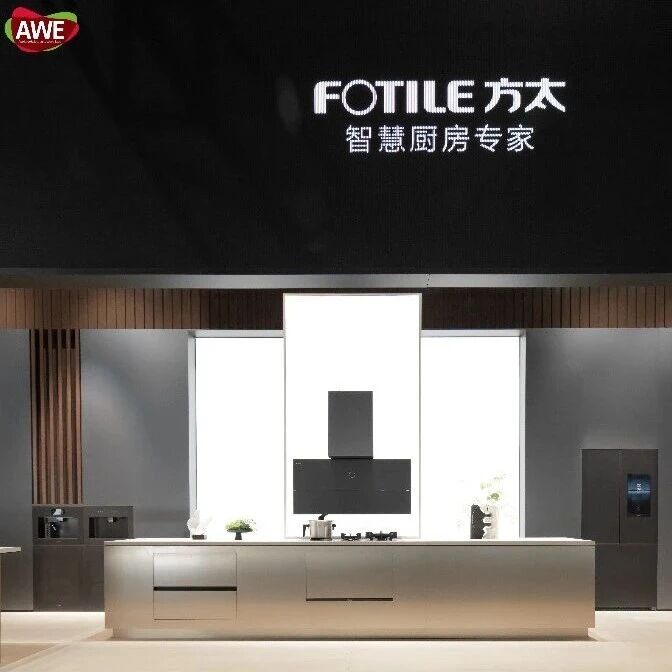
AI怎么下厨房?方太给了新解法
36氪未来消费· 2026-03-13 05:44
Core Viewpoint - The article emphasizes the need for a standardized capability grading system in the kitchen appliance industry to facilitate the evolution of smart kitchens, similar to the advancements seen in the automotive sector with autonomous driving standards [3][5]. Group 1: Industry Challenges - The kitchen is identified as a complex environment for AI implementation due to the interaction of various physical elements like water, electricity, and gas [3]. - The current state of the smart kitchen industry is characterized by fragmented technologies and unclear definitions, leading to consumer confusion between genuine smart solutions and marketing gimmicks [3][5]. Group 2: FOTILE's Innovations - FOTILE has introduced the world's first "growing" kitchen robot system, which utilizes a heterogeneous robot collaboration matrix to automate the entire cooking and cleaning process, making it accessible for novice cooks [5][7]. - The company has released the "Global Smart Kitchen Innovation Development White Paper," which outlines a clear progression from L0 (basic functionality) to L5 (full meal process automation) [5][8]. Group 3: Product Features - The FOTILE Yu Ying Series 2.0 integrates a proprietary cooking model that manages health aspects, such as purine reduction for high uric acid individuals, achieving a 46% reduction in storage, 30% in cleaning, and 37% in cooking [10]. - The series features a smart refrigerator that generates meal plans based on individual health metrics and preferences, enhancing the cooking experience [10][9]. Group 4: Ecosystem Development - FOTILE recognizes that advancing AI in kitchens requires collaboration across brands and categories, leading to the initiation of a global smart kitchen ecosystem to break down barriers and promote cross-category synergy [15]. - The ultimate goal is to create a human-centered, collaborative environment where technology seamlessly integrates into daily life, making it invisible yet highly functional [16].
理想汽车冲上热搜!
Zhong Guo Ji Jin Bao· 2026-03-13 05:35
Core Insights - Li Auto has announced the launch of the new model Li Auto i9 in the second half of 2026 and reported a cash reserve exceeding 100 billion yuan, which supports its strategic adjustments for 2025 [1][4] - The company aims for over 20% year-on-year growth in deliveries for 2026, with a target of at least 487,600 units based on the 2025 delivery volume of 406,300 units [5] - Li Auto is focusing on both range-extended and pure electric markets, with plans to enhance the L series and maintain stable growth in pure electric models [5][6] Financial Performance - In 2025, Li Auto's revenue and net profit showed a year-on-year decline, but the company still achieved annual profitability with cash reserves of 101.2 billion yuan [4] - The company’s delivery volume for 2025 was 406,300 units, and it aims to increase this to at least 487,600 units in 2026 [5] Product Strategy - Li Auto will introduce a new generation of the L9 model, which is expected to create a competitive edge through advanced technology [5] - The company plans to stabilize the growth of its pure electric models, including the Li i6, i8, and the upcoming i9, while addressing supply chain challenges [5][6] Sales and Distribution - Li Auto has addressed rumors of closing 100 stores, clarifying that optimizing underperforming stores is part of normal operations [7] - The company is shifting its focus to quality over quantity in its store openings, with plans to involve store managers in the selection process to enhance operational quality [7][8] Organizational Changes - Li Auto is implementing a "store partner" program to empower store managers with decision-making and profit-sharing capabilities, aiming to increase their annual income significantly [8] - The company is transitioning from a dealer-managed direct sales system to a more effective management approach focused on store performance [8] R&D and Technological Development - Li Auto is positioning 2026 as a pivotal year for evolving into an embodied intelligence enterprise, with a commitment to enhancing its technological "moat" [9] - The company plans to invest approximately 12 billion yuan in R&D for 2026, with half of that dedicated to AI-related projects, including self-developed chips and AI infrastructure [9]