
绿色转型

Search documents
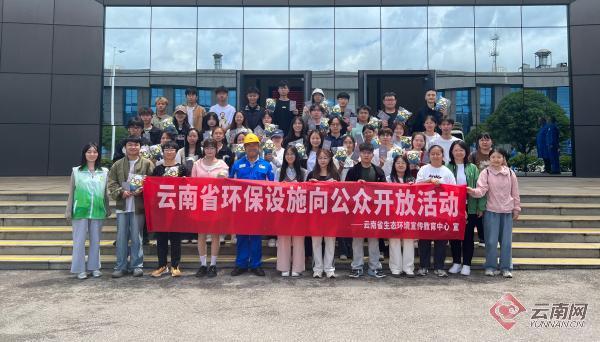
云南省持续推动环保设施向公众开放 打造公众参与生态环境治理新模式
Xin Lang Cai Jing· 2026-01-06 13:19
Core Viewpoint - Since 2025, public access to environmental protection facilities has been promoted in Yunnan Province, allowing families and students to experience the role of technology in pollution reduction and carbon neutrality, serving as a window to observe the achievements of building a beautiful China and a practical measure to strengthen ecological environment governance [1][5]. Group 1: Public Engagement and Education - Yunnan Province has included 100 units in the national public access list for environmental protection facilities, forming an open structure that includes both traditional and new categories of facilities [3][10]. - The integration of online and offline activities has created immersive participation experiences, such as university students observing wastewater treatment processes and thousands of online viewers interacting through live streaming platforms [3][5]. - Environmental education is emphasized to extend beyond classrooms into real-life experiences, allowing students to understand the significance of environmental protection through hands-on activities [7][12]. Group 2: Digital Transformation and Open Access - The province has been advancing public access to environmental facilities by innovating open formats and expanding participation scenarios, transitioning from passive acceptance to active experience [5][14]. - The implementation of a digital management system, including the use of a mini-program for public access, allows for integrated management of information dissemination, appointment scheduling, and data reporting [12][14]. - The expansion of open access to new categories of facilities, such as petrochemical and power industries, marks a shift from end-of-pipe treatment to comprehensive prevention, enabling the public to learn about low-carbon production processes [10][14].

市场监管总局:将持续增加绿色有机产品供给
Xin Lang Cai Jing· 2026-01-06 13:18
Group 1 - The core viewpoint is that the Chinese government aims to enhance the supply of green and organic products, facilitating consumer choices through "blind selection" and "preferred selection" [1] - China has become the world's third-largest organic consumption market, with the number of organic product certification marks expected to exceed 6.66 billion by 2025 [1] Group 2 - The market regulation authority will continue to improve policies supporting green transformation and establish market mechanisms to promote green consumption [2] - The authority plans to expand certification coverage, optimize product supply, and strengthen certification supervision to ensure effectiveness [2] Group 3 - In terms of green products, 122 types of products closely related to consumers, such as electronics, furniture, and building materials, have been certified, with nearly 40,000 valid certification certificates issued and over 8,000 certified enterprises [3] - For organic products, 47 categories including grains, vegetables, fruits, and dairy products have been certified, with over 32,000 valid certification certificates issued and 18,000 certified enterprises [3]
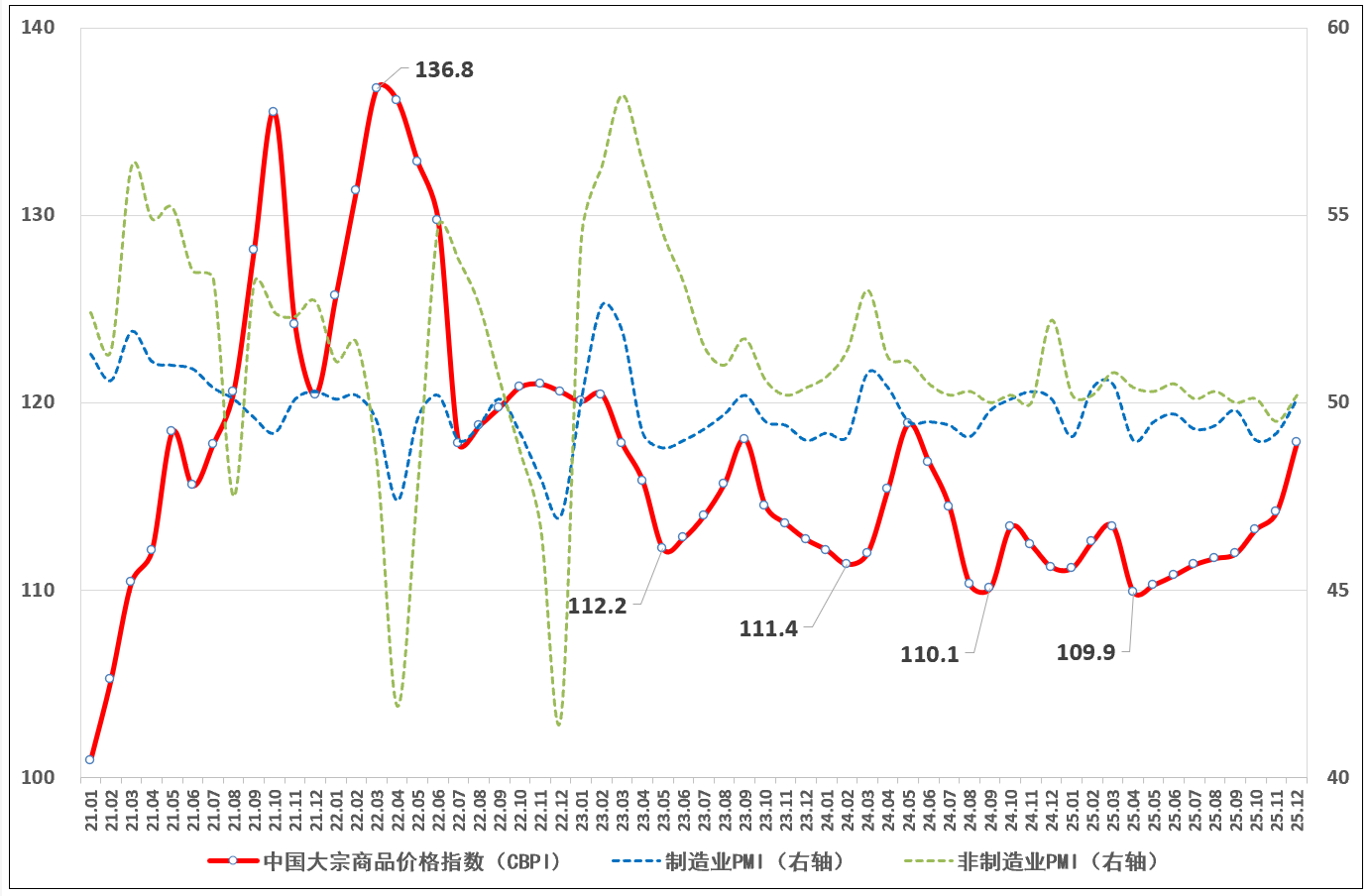
大宗商品价格指数连续8个月回升,市场预期向好
Di Yi Cai Jing· 2026-01-06 12:27
中国大宗商品价格指数连续8个月回升,并创下自2024年6月以来的新高。 中国物流与采购联合会发布的最新数据显示,2025年12月,中国大宗商品价格指数(CBPI)为117.9点,同比上涨6%,环比上涨3.2%,连续8个月实现环比 上升。 这一轮连续8个月的价格回升,不仅是周期性反弹,更是结构性优化的结果。 中物联大宗商品分会表示,这表明随着市场供需持续改善,企业对未来市场发展信心增强,预期向好,大宗商品市场景气水平继续回升,经济内生增长动能 进一步巩固。 中国物流与采购联合会大宗商品流通分会副会长周旭分析,这一轮连续8个月的价格回升,不仅是周期性反弹,更是结构性优化的结果。围绕"促消费、稳增 长、反内卷"出台的一系列政策正在显效,新质生产力加快培育,高技术产业对大宗商品的需求结构正在重塑传统供需格局。 碳酸锂领涨 大宗商品是指可进入流通领域,具有商品属性并用于工农业生产与消费使用的大批量买卖的物质商品。CBPI是一套立足于大宗商品生产、流通企业,通过 定量调查、网络直报、推送、抓取等多方式合成计算,综合反映我国大宗商品市场价格变化,以及资源供应、供需平衡、企业经营效益等发展运行态势的指 标体系。 数据来源:中 ...
全面绿色转型!江苏“十四五”能耗强度累计下降预计超14%
Yang Zi Wan Bao Wang· 2026-01-06 11:47
Core Viewpoint - Jiangsu Province is making significant strides in achieving high-quality development during the "14th Five-Year Plan" period, with a projected cumulative energy consumption intensity reduction rate exceeding 14%, surpassing national targets [1] Group 1: Low-Carbon Policy Implementation - A comprehensive carbon peak and carbon neutrality policy system has been established, with differentiated actions in key sectors such as energy, industry, and transportation [2] - Thirteen carbon peak action plans have been developed for various cities, along with policies to accelerate green transformation in economic and social development [2] Group 2: Industrial Green Transformation - High-tech industries now account for 51.8% of the province's industrial output, an increase of 5.3 percentage points over five years [2] - The province has created 439 national-level green factories and 51 green industrial parks, leading the nation in green manufacturing [2] Group 3: Clean and Low-Carbon Energy System - Installed capacity for solar and wind energy has increased by 421.7% and 55.5% respectively since the end of 2020, with renewable energy now surpassing traditional thermal power as the primary energy source [2] - By November 2025, the total installed capacity of renewable energy is expected to reach 119 million kilowatts, accounting for 48.2% of the total [2] Group 4: Carbon Reduction in Key Areas - The province has added 1.5 billion square meters of green buildings, the largest scale in the country, and has implemented energy-saving renovations on 58.67 million square meters of existing buildings [2] - The penetration rate of new energy vehicles reached 47.8% from January to November 2025 [2] Group 5: Pilot Demonstration Projects - Four cities have been selected as national carbon peak pilot projects, with 14 projects recognized as national green low-carbon advanced technology demonstration projects [2] - Jiangsu is pioneering zero-carbon park construction and has established standards for such developments [2] Group 6: New Carbon Control Mechanism - Policies linking green electricity certificates and energy-saving carbon reduction have been introduced to empower local development [2] - A product carbon footprint management system is being developed, along with a public service platform and local carbon footprint database [2] Future Goals - Jiangsu aims to achieve carbon peak by 2030, focusing on implementing a dual control system for carbon emissions and accelerating the establishment of a new energy system [3]
专访爱尔兰投资局张哲伟:爱尔兰可扮演中企走出去的“安全港”
2 1 Shi Ji Jing Ji Bao Dao· 2026-01-06 11:40
Group 1: Core Insights - Ireland is the only English-speaking country in the EU using the Euro, facilitating Chinese companies' access to the entire EU market [1] - The visit of Irish Prime Minister Martin to China from January 4 to 8 is significant for the future development of China-Ireland and China-EU relations [3][4] - The bilateral trade volume between China and Ireland has quadrupled since the establishment of a mutually beneficial strategic partnership in 2012, with a projected trade volume of $23.42 billion in 2024 [2] Group 2: Trade and Investment Dynamics - China is Ireland's fourth-largest trading partner, and Ireland has maintained a trade surplus with China for several years [5] - In 2023, China's direct investment in Ireland reached $380 million, with a total investment stock of $2.04 billion by the end of the year [6] - The trade structure between China and Ireland is highly complementary, with China importing high-value, knowledge-intensive products from Ireland and exporting machinery and textiles [2][5] Group 3: Opportunities and Challenges - The cooperation prospects between China and the EU are vast, particularly in green transition and digital governance, despite existing trade frictions [3][6] - Ireland's stable investment environment and favorable tax policies, including a corporate tax rate of 12.5%, make it an attractive destination for foreign investment [8] - The shift in Chinese investment in Ireland has diversified from primarily financial services to include high-tech, internet, pharmaceuticals, and aerospace sectors [7]
产业焕新|科技之梭织就绿色锦绣
Ke Ji Ri Bao· 2026-01-06 08:44
Core Insights - The article emphasizes the transformation and upgrading of traditional industries in Wujiang District, Suzhou, through technological innovation, aiming for high-quality development in the textile sector [1][8]. Group 1: Technological Innovation in Textile Industry - The introduction of autonomous delivery vehicles in Shengze Town has improved the efficiency of fabric transportation by 30% [1]. - The "Blackbird 31℃" product from Suzhou Xinmanfeng New Materials Technology Co., Ltd. features temperature-responsive fabric that changes color based on temperature, showcasing the integration of technology in textile products [2]. - Wujiang District has established a complete industrial chain with nearly 6,000 textile enterprises, focusing on technological innovation to elevate the textile industry from "fabric" to "materials" [2][3]. Group 2: Industry Collaboration and Innovation Centers - The National Advanced Functional Fiber Innovation Center, led by Shenghong Holding Group and Donghua University, includes over 170 member units and focuses on key technology research in functional fibers [3]. - The center has achieved international advanced levels in 17 key technology projects and has applied for 203 patents, indicating a strong emphasis on innovation and collaboration [3]. Group 3: Smart Manufacturing and Efficiency Gains - Jiangsu Hengli Chemical Fiber Co., Ltd. has become the world's largest producer of high-performance industrial silk through smart manufacturing technologies, including AI and IoT [5]. - Shenghong Holding Group's "Shenghong Smart Dyeing Industrial Internet Platform" has improved labor productivity by 14%-15% and reduced production costs by 6%-7% through intelligent manufacturing [5]. Group 4: Green Transformation Initiatives - Wujiang District is actively pursuing green transformation in the textile industry, with companies like Suzhou Oumengnia producing recycled polyester fabrics that significantly reduce environmental impact [7]. - Shenghong Holding Group has established the world's first production line for functional polyester fibers using CO2 capture technology, enhancing product value and achieving green certification [7]. - The district has launched a "dual carbon" action plan to promote green upgrades from raw materials to end products, aiming for a near-zero carbon textile industry [7][8].


研报掘金丨国投证券:首予山西焦煤“增持-A”评级,目标价6.51元
Ge Long Hui· 2026-01-06 08:43
格隆汇1月6日|国投证券研报指出,山西焦煤炼焦煤主业提质增效,电力业务严控成本。公司积极推进 绿色和智能化转型,在绿色转型方面,华晋焦煤完成了瓦斯发电一期提质增效改造和瓦斯抽采利用系统 优化,2025年上半年共利用抽采瓦斯7800万立方米,减排二氧化碳117万吨;智能化转型方面,累计建 成10座智能化矿山、21处智能化综采工作面 、30处智能化掘进工作面、75处井下无人值守变电所和37 处无人值守水泵房,转型发展成果丰硕。在电力市场化改革背景下,公司严控火力发电成本,及时关停 落后产能西山热电机组,并加强燃料管控,压降燃煤成本;同时优化电量营销策略,合理布局中长期电 量和现货交易市场,实现售电稳产增收。参考可比公司估值,给予公司2026年15倍PE,对应目标价6.51 元,首次覆盖,予以"增持-A"投资评级。 ...

武汉2025年全社会用电量公布 新能源与数字经济成增长双引擎
Ren Min Wang· 2026-01-06 02:13
2026年1月1日,国网武汉供电公司发布2025年全社会用电数据,全年累计用电量达857.12亿千瓦时,同比2024年 增长4.76%,展现出稳健韧性。 这些高技术制造业与现代服务业的用电增长,背后折射了武汉电网与行业区域发展同频共振。2025年,国网武汉 供电公司聚焦全面打造现代化用电营商环境,建立重大项目报装"双长制",推动项目"拿地即开工""摘牌即通 电"。同时,大电网建设持续推进,500千伏东新变电站、金银湖变电站接连投产送电,一年投运2座500千伏变电 站,为区域经济发展注入坚强动力。大力实施网架优化补强工程,投运220千伏舵落口、西边湾等重点工程20项, 按期投产165项主配网度夏重点工程。这些举措助力东湖实验室、湖北瑞达智能装备产业园等省市重点项目"早接 快用",助力武汉市牵住高质量发展的"牛鼻子",以科技创新引领现代化产业体系建设。 在产业用电亮眼的同时,武汉市用电结构亦呈现积极变化。城乡居民生活用电量增速达3.84%,低于全社会用电 量增速,而充换电服务业用电量增长17.4%,既反映市民绿色出行意愿提升,也是武汉城乡协调发展和绿色转型 的缩影。 2025年9月25日,华中地区首个进入城市腹地 ...
能耗、碳排放占全国1/3,GDP贡献近半 长江经济带绿色转型实现新突破
Zhong Guo Dian Li Bao· 2026-01-06 00:55
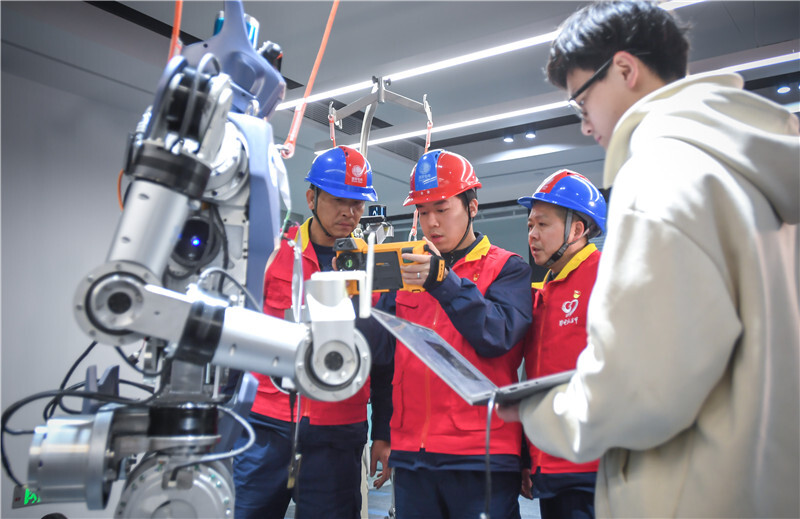
Core Insights - The Yangtze River Economic Belt has become a crucial area for ecological priority and green development, contributing nearly half of China's GDP while accounting for about one-third of the country's energy consumption and carbon emissions [1] Group 1: Green Transformation and Industrial Upgrading - Traditional industries such as steel, petrochemicals, and building materials in the Yangtze River Economic Belt have actively pursued green transformation, establishing 24 national carbon peak pilot cities and parks, along with 14 zero-carbon parks [1] - Approximately 10,000 old operating vessels have been scrapped and updated as part of the push for clean energy and new energy ship development [1] - The region has cultivated 41 national-level advanced manufacturing clusters and 30 strategic emerging industry clusters, representing 51% and 45% of the national totals, respectively [1] Group 2: Innovation and New Economic Drivers - The Yangtze River Economic Belt is accelerating the cultivation of new economic drivers, with 3 technology innovation centers and 8 national laboratories established in the region, achieving breakthroughs in key technologies in fields like artificial intelligence and quantum information [2] - The region is recognized as one of the most resource-rich and innovative areas in China, with ongoing efforts to enhance economic scale while focusing on green, high-end, and intelligent development [2] - Future initiatives will aim to further accelerate green transformation and develop low-carbon industries tailored to local conditions [2]
我国轻工制造业不断显现内生动力
Xiao Fei Ri Bao Wang· 2026-01-06 00:42
Core Insights - The light industry in China has achieved notable structural adjustments in 2025, with growth driven more by internal upgrades than external stimuli [1] - The overall economic performance of the light industry remains stable, with revenue and profit growth of 1.9% and 1.6% respectively in the first ten months of 2025 [1] - The focus of competition in light industry products is shifting from quantity to consumer experience and value [1] Demand Side Changes - The changes in demand are reflected more in the consumption structure rather than total consumption [1] - Specific sectors such as baked goods, daily chemical products, and home goods have shown more stable performance, indicating a shift towards emotional and daily consumption [1] Export Dynamics - The export growth of light industry products has shown significant differentiation, with traditional markets like Europe and the US slowing down while emerging markets such as ASEAN, the Middle East, and Latin America maintain rapid growth [2] - The reliance on low-price orders is decreasing, with an increase in brand-oriented, customized, and small-batch export models [2] Digital Transformation - The digital transformation of the light manufacturing industry has entered a practical phase, with a focus on specific sectors such as home appliances and furniture [2] - Policies aim for a 75% CNC rate in key processes of major light industry enterprises by 2027 [2] Green Transition - The green transition is becoming a prerequisite rather than an added benefit, with environmental standards increasingly included in procurement and cooperation agreements [3] - Companies are experiencing short-term cost increases but are gaining competitiveness in mid-to-high-end markets [3] Regional Policies - New regional policies and institutional environments are providing support for the light manufacturing industry, with free trade zones and cross-border e-commerce platforms enhancing attractiveness [4] - The light manufacturing industry is focusing on structural optimization rather than high-speed expansion, emphasizing long-term returns and comprehensive capabilities [4] Industry Outlook - The light industry is gradually moving away from the "low added value" label towards a more resilient and sustainable direction [4] - The key takeaway for the light industry in 2025 is that stability, quality, and patience are becoming new industry consensus as speed is no longer the sole objective [4]