产品创新

Search documents
蒙牛的中期答卷:以“创新求变”穿越行业周期,经营利润增长13.4%
Sou Hu Cai Jing· 2025-08-29 02:38
Core Viewpoint - Despite the slow recovery in terminal consumption and the continued low prices of raw milk, the company has maintained stable performance, achieving a revenue of 41.57 billion yuan and an operating profit of 3.54 billion yuan in the first half of the year, representing a year-on-year growth of 13.4% [2] Group 1: Financial Performance - The company reported a significant increase in operating cash flow, which grew by 46.2% to 2.81 billion yuan, and the operating profit margin improved by 1.5 percentage points to 8.5% [2] - The liquid milk segment remains the core pillar of the company, generating 32.1917 billion yuan in revenue, accounting for 77.4% of total revenue [2][3] Group 2: Product Innovation - The company launched over 100 new products in response to diverse consumer needs, covering a full range of categories from ambient milk to low-temperature yogurt and infant formula [3][4] - The fresh milk segment showed particularly strong performance, achieving double-digit growth and significantly increasing market share, with the high-end brand "Daily Fresh" leading the premium fresh milk market [3] Group 3: Channel Strategy - The company is accelerating channel upgrades to build a "full-channel ecosystem," effectively opening new growth spaces by optimizing both traditional and modern channel strategies [8] - Customized products have been launched in various e-commerce platforms, with the adult milk powder segment achieving the highest online market share [9] Group 4: Brand and Sustainability Initiatives - The company is focusing on sustainable development, having built 37 green factories and maintaining an MSCI ESG rating of AA for two consecutive years [15] - The company plans to initiate a new round of share buybacks to enhance shareholder value, reflecting confidence in its long-term development prospects [15]


宗馥莉:农夫山泉非常值得尊敬
Xin Lang Cai Jing· 2025-08-29 02:10
Core Viewpoint - The new leadership under Zong Fuli at Wahaha has faced significant challenges, including family disputes and the need for product innovation, while achieving a revenue rebound to 70 billion yuan in 2024, although this growth is seen as unsustainable in the long term [4][12]. Company Performance - Wahaha's revenue has returned to the peak of 70 billion yuan in 2024, attributed partly to emotional factors following the founder's passing [4]. - The company has not launched a new major product since 2005, relying heavily on existing products like AD Calcium Milk for sales [5][12]. Product Innovation - Zong Fuli emphasizes the need for product innovation, viewing it as essential for understanding consumer insights and market demands [5][12]. - The upcoming launch of the upgraded ice tea product is seen as a test of the company's innovation capabilities, with a focus on capturing consumer preferences for natural ingredients [6][12]. Distribution and Sales Strategy - Wahaha is optimizing its distribution channels, moving away from the traditional "joint sales system" to a more modern and diversified approach, including partnerships with convenience stores and online platforms [7][16]. - The company has significantly increased its investment in offline ice cream freezers, with plans to deploy 100,000 units by 2025, indicating a focus on enhancing product availability [7][12]. Management Changes - A board restructuring has introduced younger executives, reflecting a shift towards a more professional and market-oriented management style [8][12]. - Recent changes in labor contracts and factory operations have led to employee dissatisfaction, prompting the formation of a "rights protection committee" [8][12]. Market Positioning - Zong Fuli positions Wahaha as a "follower" in the competitive beverage market, acknowledging the need to learn from successful peers like Nongfu Spring and Master Kong [12][14]. - The company aims to maintain a balance between traditional values and modern market demands, focusing on quality and consumer trust [12][14].


张小泉2025年半年报:收入净利润双增长 核心业务持续巩固优势
Zheng Quan Shi Bao· 2025-08-28 15:40
Core Insights - Zhang Xiaoqin reported a revenue of 472 million yuan for the first half of 2025, representing a year-on-year growth of 9.80%, with a net profit of 27.50 million yuan, up 124.29%, indicating a significant improvement in profitability [1][4] Group 1: Business Performance - The core knife and scissors business generated revenue of 334 million yuan, a year-on-year increase of 10.54%, accounting for over 70% of total revenue, serving as the main driver for growth [2] - Online sales contributed 53.92% of the main business revenue, with Tmall platform sales reaching 60.17 million yuan, representing 12.82% of main business revenue [2] - The kitchen hardware segment achieved revenue of 92.63 million yuan, up 13.44%, while home hardware revenue was 43.03 million yuan, a slight increase of 0.98% [2] Group 2: Brand and Innovation - The company conducted over 90 user experience and product trial events nationwide, enhancing brand recognition and customer loyalty [3] - New product series such as "Huayao," "Heiyao," "Liuguang," and "Quantai" were launched, covering various categories to meet diverse consumer needs [3] - The company added one invention patent, two utility model patents, and seven design patents during the reporting period, reinforcing its technological and R&D advantages [3] Group 3: Manufacturing and Future Outlook - The company is advancing smart manufacturing, achieving automation in key processes, which significantly enhances production efficiency and transparency [3] - The overall strategy focuses on technological innovation, product upgrades, and channel expansion to establish itself as a leading national brand in quality lifestyle products [4]
调研速递|德尔玛接受开源证券等16家机构调研 上半年营收16.86亿元
Xin Lang Cai Jing· 2025-08-28 14:38
Group 1 - The company held a performance briefing on August 28, 2025, reporting a revenue of 1.686 billion yuan for the first half of 2025, a year-on-year increase of 3.99%, and a net profit attributable to shareholders of 69 million yuan, up 1.08% year-on-year [1] Group 2 - The company discussed the reasons for fluctuations in gross margin, attributing it to channel strategy adjustments but maintaining overall stability through product innovation and cost optimization [2] - The company is expanding its overseas market presence with a "multi-brand, multi-category, globalization" strategy, focusing on both mature and emerging markets [2] - The domestic small appliance market is experiencing a slowdown in growth, but government support for industry upgrades is expected to stimulate demand in the long term [2] - The personal care and health product sector is evolving towards higher-end and scenario-based consumption, with the company focusing on product differentiation through functional upgrades and user experience [2] - In response to intensified competition in the water purification business, the company plans to innovate products based on consumer needs and strengthen intellectual property protection [2]
德尔玛(301332) - 301332德尔玛投资者关系管理信息20250828
2025-08-28 14:06
Group 1: Financial Performance - In the first half of 2025, the company achieved a revenue of 1.686 billion CNY, representing a year-on-year growth of 3.99% [2] - The net profit attributable to the parent company was 69 million CNY, with a year-on-year increase of 1.08% [2] Group 2: Market Strategy - The company adheres to a "multi-brand, multi-category, globalization" development strategy, focusing on differentiated overseas market expansion strategies for different business segments [4] - In mature markets, the company leverages local teams and channel networks to promote brand and product establishment while steadily expanding cross-border e-commerce [4] Group 3: Industry Outlook - The small home appliance market is experiencing a slowdown in overall market growth, but government policies are expected to stimulate demand in the long term [5] - The industry is transitioning to a user-driven development phase, with product upgrades and replacement demand becoming core drivers of market scale [5] Group 4: Product Development - The company is focusing on high-end and scenario-based product development in the personal health category, emphasizing user experience and functional upgrades [6] - In the water purification business, the company plans to continuously innovate products based on consumer demand and maintain a stable market share [6]
Malibu Boats(MBUU) - 2025 Q4 - Earnings Call Transcript
2025-08-28 13:30
Financial Data and Key Metrics Changes - In Q4, net sales increased by 30.4% to $207 million, and unit volume increased by 16.8% to 1,221 boats [18] - Consolidated net sales per unit increased by 11.6% to $169,565, driven by inflation and a favorable model mix [19] - Gross profit increased by 162.1% to $32.7 million, with gross margin rising to 15.8% from 7.9% in the prior year [19] - For the full fiscal year 2025, net sales decreased by 2.6% to $807.6 million, and unit volume decreased by 9% to 4,898 boats [22] - Adjusted EBITDA decreased by 9.1% to $74.8 million, with adjusted EBITDA margin decreasing by 60 basis points to 9.3% [23] Business Line Data and Key Metrics Changes - The Malibu and Axis brands represented approximately 46.6% of unit sales, while Cobalt represented 26.9% and saltwater fishing represented 26.5% [19] - Adjusted EBITDA margin for the Malibu segment increased to 19.4% from 15.3% in the previous year, while the saltwater fishing segment decreased to 9.5% from 10.8% [24] Market Data and Key Metrics Changes - Initial market data indicated that fiscal Q4 was the weakest quarter of the year, with the broader market down mid-teens percentage points [9] - Elevated interest rates and macroeconomic uncertainty affected consumer sentiment, leading to softer industry retail data [9] Company Strategy and Development Direction - The company plans to introduce 11 new model year 26 boats while maintaining a commitment to quality and safety [7] - A focus on dealer health and inventory alignment is central to the company's strategy, with proactive steps taken to reduce dealer inventory [9][10] - The company aims to remain disciplined and aligned with market conditions while preparing for potential growth when the market normalizes [16][17] Management's Comments on Operating Environment and Future Outlook - Management acknowledged the challenging retail environment and macroeconomic uncertainties but expressed confidence in the company's ability to navigate these challenges [6][15] - The company anticipates a modest direct impact from tariffs on cost of sales, estimated between 1.5% to 3% [15] - For fiscal year 2026, the company expects net sales to be flat to down mid-single digits, with gradual improvement projected towards the back half of the year [28][29] Other Important Information - The company generated $29 million in free cash flow and returned $36 million to shareholders through share repurchases [8][25] - The balance sheet remains strong, with $19 million of net cash and over $300 million of untapped liquidity on the credit facility [25][26] Q&A Session Summary Question: Inventory levels and destocking expectations - Management indicated that elevated inventory levels are modest, around one to two weeks, and will be addressed in fiscal 2026 guidance [32][33] Question: Impact of tariffs on pricing - Management is exploring multiple mitigation strategies for tariffs, including supply chain adjustments, but has incorporated increased costs into guidance [34][35] Question: Retail outlook and interest rate cuts - Guidance does not assume any interest rate cuts, and management expects normalized promotions to drive market share during the boat show season [39][40] Question: Health of the dealer base and industry inventory levels - The dealer network is generally healthy, but there is a slight excess inventory due to softer retail in Q4; the industry is improving overall [56][58] Question: Pricing and cost mitigation strategies - Management has taken steps to mitigate costs through advanced purchases and expects some price increases to be necessary [60][61] Question: Long-term debt and capital expenditure plans - There is no change in capital strategy; the company maintains a strong net cash position while being disciplined in capital expenditures [66][67]

海天味业上半年营收同比增长7.6%,归母净利增长13.3% | 财报见闻
Hua Er Jie Jian Wen· 2025-08-28 12:32
Financial Performance - Company reported a revenue of 15.23 billion, representing a year-on-year growth of 7.6%, with the seasoning business contributing 14.56 billion and growing by 10.4% [5] - Gross margin improved significantly to 39.3%, an increase of 3.2 percentage points compared to the same period last year, driven by lower raw material prices and enhanced production efficiency [5] - Net profit attributable to shareholders reached 3.91 billion, reflecting a year-on-year increase of 13.3% [5] Core Business Progress - Traditional product lines remained stable, while health series products experienced accelerated growth [1] - Soy sauce business generated 7.93 billion in revenue, growing by 9.1%, with health-oriented products showing notable growth [5] - Oyster sauce revenue was 2.5 billion, growing by 7.7%, supported by product upgrades and channel penetration [2] Cost Control and Expenses - Sales cost was 9.25 billion, increasing by only 2.2%, significantly lower than revenue growth, attributed to reduced raw material prices and improved production efficiency [3] - Sales and marketing expenses rose to 970 million, a 14.4% increase, mainly due to team expansion and increased advertising [3] - Research and development expenses reached 410 million, growing by 8.2%, indicating the company's commitment to innovation [3] Cash Flow and Financial Health - Operating cash flow remained strong at 1.5 billion, although there is room for optimization relative to revenue scale [6] - The company holds nearly 30 billion in cash and bank deposits, reflecting robust operational performance but raising questions about capital efficiency [6] - The company plans to use raised funds for product R&D, capacity expansion, and internationalization, highlighting the need for careful investment to ensure returns [6]

海量财经丨青岛啤酒上半年净利39亿元增长7%,中高端产品销量增5.1%
Sou Hu Cai Jing· 2025-08-28 10:28
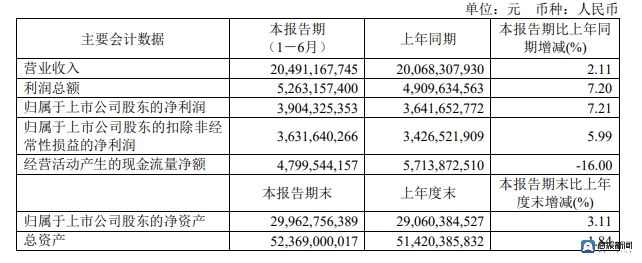
Company Performance - In the first half of 2025, the company achieved a product sales volume of 4.732 million kiloliters, a year-on-year increase of 2.3% [1] - The revenue for the same period was 20.491 billion yuan, reflecting a growth of 2.1% compared to the previous year [2] - The net profit attributable to shareholders was 3.904 billion yuan, marking a year-on-year increase of 7.21% [2] Product and Brand Strategy - The company continued to implement its brand strategy of "Qingdao Beer main brand + Laoshan Beer as a national second brand," focusing on sports and music marketing to enhance brand promotion [3] - The sales volume of the main brand reached 2.713 million kiloliters, with a growth of 3.9%, while the sales of mid-to-high-end products were 1.992 million kiloliters, up by 5.1% [3] Industry Context - The beer industry is currently undergoing a contraction phase, with a reported decline of 0.3% in production among major beer enterprises in China during the first half of 2025 [3] - In response to industry challenges, the company has accelerated product innovation, launching several new products such as "light dry, cherry-flavored white beer, hazy IPA, and whole wheat national trend" [3]

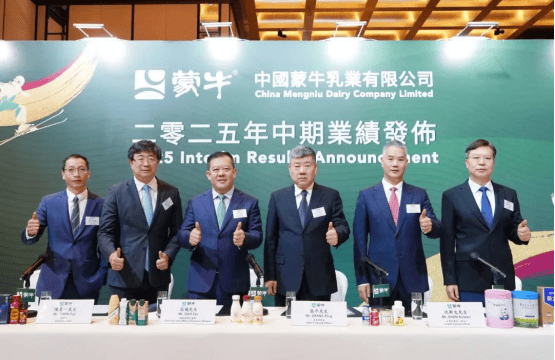
蒙牛2025年半年报:创新求变 让消费者喝上奶、喝好奶、喝对奶
和讯· 2025-08-28 10:21
Core Viewpoint - Mengniu Dairy (2319.HK) reported a revenue of 41.57 billion yuan and an operating profit of 3.54 billion yuan for the first half of 2025, achieving a year-on-year growth of 13.4% despite challenges in terminal consumption recovery and low raw milk prices [1][3]. Group 1: Financial Performance - The company achieved a significant increase in operating cash flow, which grew by 46.2% year-on-year, and improved its operating profit margin by 1.5 percentage points to 8.5% [3]. Group 2: Product Innovation - In response to homogenized competition in the dairy market, Mengniu launched over 100 new products in the first half of 2025, catering to diverse consumer needs across various age groups [5][6]. - The company introduced 72 new products in the ambient milk segment to enhance basic nutrition and improve cost-performance ratio [6]. - Mengniu's flagship brand, "TeLunSu," launched new products including A2β-casein milk and organic milk sourced from desert areas, while "GuanYiRu" introduced a health yogurt with a unique health label [6][8]. Group 3: Channel Upgrades - Mengniu accelerated channel upgrades through a new RTM model, enhancing both traditional and emerging channels, and achieving seamless integration between online and offline sales [13][15]. - The company launched customized products in membership stores and warehouse supermarkets, with the "GuanYiRu" early morning 8-ton bucket becoming a bestseller [13]. - In the live e-commerce sector, Mengniu leveraged consumer attention through live streaming and short videos, achieving significant market share in adult and infant formula segments [15][17]. Group 4: Innovation and Sustainability - Mengniu received the Silver Award at the 25th China Patent Awards for its invention patent related to DHA oil, marking a significant achievement in dairy innovation [11]. - The company is committed to sustainable practices, having built 37 green factories and maintaining an AA rating in MSCI ESG for two consecutive years [20]. Group 5: Strategic Vision - Mengniu aims to create new value through innovative business models and management practices, focusing on consumer needs and maintaining brand vitality without engaging in price wars [18][20]. - The company plans to continue its strategic focus on brand leadership, research and development, digital transformation, and channel upgrades to drive high-quality development across the dairy industry [20].
买蒙牛,不止在超市
虎嗅APP· 2025-08-28 10:15
Core Viewpoint - The article highlights how Mengniu Dairy has achieved a 13.4% increase in profit amidst a challenging consumer environment and low raw milk prices, showcasing its innovative strategies to navigate the industry downturn [2]. Product Innovation - Mengniu launched over 100 new products in the first half of 2025, addressing diverse consumer needs across various categories, including long-life milk, low-temperature yogurt, fresh milk, ice cream, functional milk, and infant formula [5][6]. - The company introduced 72 new products in the long-life milk segment to enhance basic nutrition and improve "quality-price ratio" [6]. - High-end fresh milk brand "Daily Fresh" incorporated self-developed HMO to cater to children’s nutritional needs, especially for lactose-intolerant consumers [6]. - The infant formula brand "Ruibaoen" utilized innovative MLCT technology to enhance DHA content by 48% and double absorption rates [10]. Channel Upgrade - Mengniu accelerated channel upgrades by restructuring its RTM model, integrating traditional and emerging channels, and enhancing online and offline synergy [13]. - The company launched customized products in membership stores and warehouse supermarkets, achieving significant sales, such as the "Cuan Yi Ru" early morning bucket becoming a bestseller [13]. - In the live-streaming e-commerce sector, Mengniu leveraged consumer attention through engaging content, leading to increased market share in various segments [15]. Sustainable Development - Mengniu's GREEN sustainable development strategy focuses on creating a low-carbon supply chain, establishing 37 green factories, and committing to "zero deforestation" [22]. - The company has maintained an AA rating in MSCI ESG for two consecutive years, demonstrating leadership in sustainable practices within the industry [22]. Financial Performance - In the first half of 2025, Mengniu reported revenues of 41.57 billion yuan and operating profits of 3.54 billion yuan, with a 46.2% increase in operating cash flow [2][10]. - The operating profit margin improved by 1.5 percentage points to 8.5% [2]. Brand Strategy - Mengniu's flagship brand "Te Long Su" maintained its market position by avoiding price wars and focusing on continuous innovation to sustain brand vitality [19]. - The brand's organic series experienced growth, particularly the newly launched "Sand Gold Set Sea Desert Organic Pure Milk," which has gained recognition among quality-conscious consumers [20].