
扩大内需

Search documents
2026年螺纹钢年报:出自幽谷迁于乔木
An Liang Qi Huo· 2026-01-07 01:52
Report Industry Investment Rating No information provided. Core Viewpoints of the Report - In 2026, the economy will continue to maintain a mild recovery trend. With the strengthening of counter - cyclical and cross - cyclical adjustments of macro policies, the overall market confidence will be boosted. The steel price will be jointly driven by the domestic macro - friendly market and the marginal improvement of fundamentals, showing a relatively strong oscillation. The annual steel price may first decline and then rise in an "N" shape, with the price fluctuating in the range of [2800, 3800] and the core critical point around 3200. The overall annual strategy is to buy on dips during peak seasons and policy windows [2][33]. Summary of Each Section 2025 Steel Market Review - The 2025 steel market was volatile, with the price center gradually declining. It showed an inverted "N" shape due to the alternation of strong policy stimulus and weak fundamentals. The rebar futures price went through three stages: a first - round decline from January to early June, a retaliatory rebound from June to July, and an oscillatory bottom - grinding from late August to December [4]. - In the first stage (January - early June 2025), weak fundamentals led to a unilateral decline. Slow post - holiday construction site resumption, poor funds, a deep - adjusted real - estate market, and US tariff increases hit the market, causing a 14.7% drop in the rebar futures index and a nearly 500 - point decline in the weighted index [7]. - In the second stage (June - July 2025), the "anti - involution" policy and coal production restrictions drove a 15.4% increase in the rebar futures index and a nearly 450 - point rise in the weighted index [8]. - In the third stage (late August - December 2025), the rebar futures index oscillated in the range of [3000, 3300] due to weak peak - season demand, policy fulfillment, and weak cost support [10]. Macro Analysis Macro Data Analysis - In December 2025, China's official manufacturing PMI was 50.1%, up 0.9 percentage points month - on - month, returning to the expansion range. The production index was 51.7%, the new order index was 50.8%, and the new export order index was 49%. The raw material purchase price index was 53.1%, and the ex - factory price index was 48.9% [12]. Central Economic Work Conference Direction Guidance - The 2026 economic work continues the "seeking progress while maintaining stability" principle but emphasizes "improving quality and efficiency". Fiscal and monetary policies are more refined and practical, focusing on expanding domestic demand, optimizing supply, and promoting economic growth through innovation and reform [15][16]. Fundamental Analysis Steel Supply - Side Analysis - Cost and profit: In 2025, the overall profitability of steel mills was better than in 2024, with an average annual profit of about 100 yuan/ton. The profit growth mainly came from raw material price drops. In 2026, the profit pressure may increase [19]. - Production: In 2026, steel supply is expected to run smoothly. By mid - December 2025, the iron - water output of 247 steel mills increased by 3.17% year - on - year, and the scrap steel daily consumption of 255 steel mills increased by 8.2% year - on - year. It is estimated that the total domestic crude steel demand in 2026 will decline by 0.13% year - on - year, and the crude steel and iron - water production will be basically the same as in 2025, at 102044.04 million tons and 87873.71 million tons respectively [22][23]. Steel Demand - Side Analysis - Real estate: Since 2025, the real - estate market has introduced favorable policies, but the data shows a decline. From January to October, real - estate development investment decreased by 14.7% year - on - year, and new housing construction area decreased by 19.8% year - on - year [26]. - Infrastructure: In 2025, infrastructure investment growth declined. The growth rates of broad and narrow infrastructure investment dropped from 9% and 4.4% in 2024 to 1.5% and - 0.1% respectively from January to October. In 2026, steel supply is expected to exceed demand, which may suppress the market price [29][31].
以实干实绩确保“十五五”开好局起好步
Liao Ning Ri Bao· 2026-01-07 01:00
Group 1 - The provincial development and reform commission aims to achieve the economic and social development goals for 2026, ensuring a strong start for the 14th Five-Year Plan [1] - The commission will implement the provincial planning suggestions and develop the "14th Five-Year" planning outline and special plans [1] - Emphasis will be placed on economic monitoring, policy coordination, and measures to stabilize the economy and boost social confidence [1] Group 2 - Investment and consumption are identified as the "two wings" for expanding domestic demand, with a focus on both material and human investment [2] - The province plans to implement major projects in key areas such as new industrialization and urbanization, while also promoting private investment in significant infrastructure [2] - Actions will be taken to enhance consumption, including plans to increase income for urban and rural residents and optimize policies to release consumption potential [2] Group 3 - The province will deepen reforms to optimize the business environment and integrate into the national unified market [3] - There will be a focus on developing the private economy and improving market access, alongside efforts to build a friendly government-business relationship [3] - A commitment to green transformation includes implementing dual control of carbon emissions and promoting renewable energy projects, aiming for an additional 4 million kilowatts of wind and solar capacity [3] Group 4 - The ultimate goal is to ensure that the revitalization benefits the people, with plans to improve public resource allocation and support flexible employment [3] - Efforts will be made to enhance healthcare resources and stabilize prices of essential goods, ensuring a better quality of life for the population [3]
“被延后”的修复
Sou Hu Cai Jing· 2026-01-06 23:57
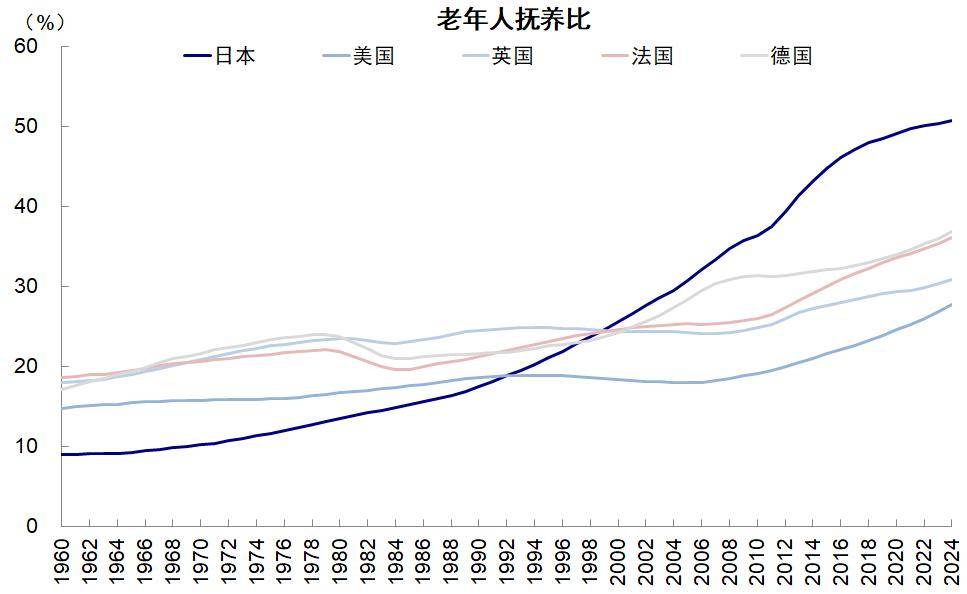
Core Viewpoint - The article discusses the potential for a sustainable revaluation of Chinese assets, drawing parallels with Japan's experience in the 1990s, emphasizing the importance of addressing structural issues alongside short-term stimulus measures [1][2]. Group 1: Japan's Structural Issues in the 1990s - Japan faced significant structural issues, including an aging population, which increased the elderly dependency ratio from 17.4% in 1990 to 25.6% in 2000, highlighting the aging problem [10]. - The public pension system was under pressure due to aging, with pension expenditures as a percentage of GDP increasing by 2.1 percentage points during the 1990s, raising concerns about sustainability [12]. - The real estate bubble burst in the early 1990s, leading to a prolonged decline in housing prices, with national residential land prices dropping by 52.8% over two decades [22]. - Employment challenges arose as the labor market faced oversupply, with university graduate employment rates falling from 81.3% in 1991 to 55.1% in 2003 [24]. - The financial system was strained as the real estate bubble's collapse weakened cash flows for real estate companies, increasing non-performing assets for banks [30]. Group 2: Policy Shortcomings in the 1990s - Japan's policies in the 1990s were inadequate, with a misalignment in technology direction and a reliance on short-term infrastructure investments, which did not lead to sustainable long-term growth [4]. - The government overly depended on quick-return infrastructure projects, which constituted nearly 20% of fiscal spending at times, delaying the resolution of structural issues [4]. - Real estate policies were slow and insufficient, with mortgage rate cuts lagging behind, leading to prolonged downward pressure on housing prices and damage to household balance sheets [53]. - The slow pace of debt resolution and a lenient approach to non-performing assets weakened the financial system's resilience, leading to higher costs during external shocks [56]. Group 3: Policy Awakening Post-2000 - After 2000, Japan shifted its policy focus towards social welfare, with social spending as a percentage of total fiscal expenditure rising from 21.4% in 2000 to 32.7% in 2015-2019 [65]. - The government implemented significant reforms to address non-performing assets, with the non-performing loan ratio dropping from 8.4% in 2001 to 2.9% in 2004, restoring bank credit functions [74]. - Technological policies became more aligned with market realities, focusing on key sectors and enhancing direct support for corporate R&D through revised tax incentives [78]. Group 4: Implications for China - China faces similar challenges with old growth drivers still weighing on the economy, particularly as real estate and domestic demand slow down [80]. - The importance of addressing old growth drivers is emphasized, as current policies like consumption subsidies may not suffice until structural issues in real estate and social welfare are resolved [82]. - The article suggests that timely and effective policy responses can mitigate the impact of external shocks and facilitate a smoother adjustment process for the economy [82].

2026年1月转债策略展望:共识凝聚,抢跑开局
GUOTAI HAITONG SECURITIES· 2026-01-06 13:10
Group 1 - The report maintains an optimistic outlook for the convertible bond market in January 2026, driven by policy expectations and seasonal capital inflows, which are expected to create a "good start" for the market [6][17] - The central economic work conference has identified "technological innovation" and "expanding domestic demand" as key policy focuses, with related industry policy benefits expected to continue, directly boosting market risk appetite [6][17] - The convertible bond market is experiencing a tight supply-demand balance, with the total size of publicly traded convertible bonds at approximately 527.1 billion yuan as of December 31, 2025, down 183.6 billion yuan from the beginning of 2025 [19] Group 2 - The report suggests focusing on growth styles in investment strategies, particularly in technology sectors such as aerospace, AI computing, semiconductor equipment, and innovative pharmaceuticals, which are expected to benefit from industry policy support [6][20] - The top ten convertible bond portfolio for January 2026 emphasizes aggressive and elastic sectors, with a focus on technology growth, cyclical recovery, and financial sectors [6][20] - Specific recommendations include increasing holdings in convertible bonds from companies like Yinbang, Zhenhua, and Yingliu in the technology sector, and focusing on cyclical sectors such as precious metals and chemicals [20][22]





央行:完善结构性货币政策工具体系,加强对扩大内需、科技创新、中小微企业等重点领域的金融支持
Sou Hu Cai Jing· 2026-01-06 10:21
Core Viewpoint - The People's Bank of China emphasizes enhancing financial services to support high-quality development of the real economy during the work conference held on January 5-6, 2026 [1] Group 1: Financial Policy Framework - The meeting highlighted the need to further improve the financial "five major articles" policy framework [1] - Implementation of assessment and evaluation systems for financial services was stressed to enhance service effectiveness [1] - There is a focus on optimizing the design and management of structural monetary policy tools [1] Group 2: Financial Support for Key Areas - The conference aims to strengthen financial support for key areas such as expanding domestic demand, technological innovation, and small and micro enterprises [1] - High-quality construction and development of the bond market "technology board" is a priority [1] - The use of re-loans for consumer services and elderly care is encouraged to boost credit investment in the consumer sector [1] Group 3: Support for Agriculture and Small Enterprises - The management of re-loans and rediscounting for agricultural and small enterprises will be optimized [1] - There is an emphasis on enhancing the financial service capabilities of financial institutions for small and micro enterprises [1] - Strengthening the regulatory oversight of key supply chain financing information service platforms is also highlighted [1]
专家团队研判宏观经济形势 预计2026年中国经济稳中有进
Sou Hu Cai Jing· 2026-01-06 08:07
Core Viewpoint - The macroeconomic analysis conference hosted by Peking University HSBC Business School focuses on the economic outlook for China and trade dynamics in Southeast Asia and the Middle East for the fourth quarter of 2025, aiming to provide forward-looking economic analysis and decision-making references [1]. Economic Outlook for China - The GDP growth rate for 2025 is projected to be 5.1%, with a slowdown in economic growth in the fourth quarter attributed to fluctuating fiscal spending [4]. - Exports in the fourth quarter exceeded expectations due to China's transition of electromechanical products to higher-end segments of the global value chain, indicating sustainable high growth in future exports [4]. - The outlook for 2026 includes the potential end of the inverted interest rate spread between China and the U.S., which could benefit domestic asset prices, and opportunities for revitalizing real estate and local state-owned assets [4]. Economic Situation in the Guangdong-Hong Kong-Macao Greater Bay Area - The economic situation in the Greater Bay Area is characterized by stable industrial production, moderate recovery in exports, and pressure on domestic investment, with an expected growth rate of about 4.0% in the fourth quarter of 2025 [5]. - External trade continues to grow, particularly in non-U.S. regions, although the decline in export price indices is squeezing profit margins for export companies [5]. - Fixed asset investment is expected to decline further, presenting a significant challenge, while strategies to expand domestic demand are anticipated to support consumption growth [5]. Southeast Asia Economic Dynamics - Private consumption in Southeast Asia remains robust, with moderate inflation and strong exports from countries like Vietnam and Singapore [5]. - The active trade between China and ASEAN, along with the signing of the upgraded version of the China-ASEAN Free Trade Area agreement, is expected to inject strong momentum into regional economic integration [5]. - The economic growth rate in ASEAN is projected to continue leading globally, benefiting from the restructuring of global supply chains and accelerating renewable energy transitions over the next five years [5]. Economic Dynamics with the Middle East - The Middle East economy is experiencing moderate recovery, with an expected GDP growth rate of 2.7% for the year, driven primarily by non-oil sectors [6]. - Bilateral trade shows divergence, with significant increases in exports from China to Qatar and imports from Egypt [6]. - Future strategies for Chinese enterprises should focus on a diversified competitive landscape that includes stable oil and gas sectors, non-oil growth, and high-tech projects [6]. General Economic Trends - China's economy has crossed the L-shaped inflection point, entering a stable growth phase that aligns with the 2035 development goals [8]. - The shift towards new and improved economic development is changing the dynamics of equity and debt markets, suggesting a growing emphasis on equity market opportunities [8]. - Structural issues in the economy include the need for improved domestic consumption and the urgency of upgrading traditional industries, with new growth drivers emerging in high-tech and digital sectors [9].

泓德基金:人民币走强有利于中国权益资产定价
Xin Lang Cai Jing· 2026-01-06 07:44
Market Performance - The domestic equity market continued to strengthen last week, with major broad-based indices generally rising around 3%, and both the Wind All A and CSI 2000 indices reached new highs for the year [1][5] - The average daily trading volume increased to a high level of 2.2 trillion yuan, driven primarily by the cyclical sector led by non-ferrous metals [1][5] - In the Hong Kong market, the Hang Seng Index and Hang Seng Technology rose by 0.5% and 0.4%, respectively [1][5] Currency Exchange Rate - The Chinese yuan has significantly appreciated against the US dollar this year, particularly after the Busan talks in late November, which eased bilateral relations [1][6] - The offshore yuan exchange rate even briefly surpassed the 7 yuan mark, attracting significant investor attention [1][6] - As of the end of November, China's official foreign exchange reserves were approximately 3.35 trillion USD, an increase of over 140 billion USD since the beginning of the year [6] Impact on Export and Import Companies - The appreciation of the yuan means that Chinese export goods have become more expensive in the international market, posing challenges for export-oriented companies, especially those in labor-intensive industries that rely on price advantages [2][6] - Export companies receiving payments in USD will find that converting to yuan results in lower amounts, potentially reducing profits, which raises concerns about exchange losses for companies with high export ratios in Q4 [2][6] - Conversely, companies that need to import raw materials, energy, components, and high-end equipment will benefit from a stronger yuan, as it reduces procurement costs and can enhance profit margins [2][6] Trade Balance and Economic Strategy - China's long-term trade surplus has been a source of friction with other economies, particularly the US and Europe [3][7] - The proactive balancing of trade is seen as beneficial for creating a more favorable international economic environment [3][7] - The central government's focus on domestic circulation and expanding domestic demand is a key task for high-quality economic development in the coming year [3][7] Bond Market Outlook - In the bond market, short- to medium-term interest rates declined while long-term rates saw slight increases, with secondary capital bonds showing little change [3][7] - The bond market is expected to remain within a narrow range, supported by stable year-end liquidity and potential new monetary policies from the central bank [3][7] - Despite current economic pressures, there is a possibility of a simultaneous bull market in both stocks and bonds in the near future [3][7]
开局之年看大势|内需主导 激发超大规模市场潜能
Jing Ji Ri Bao· 2026-01-06 06:56
Core Viewpoint - The year 2026 marks the beginning of the "15th Five-Year Plan," with a focus on expanding domestic demand and creating new investment opportunities in China's economy, which is supported by a large population and a growing middle-income group [1][2]. Group 1: Economic Growth and Domestic Demand - China's economy is supported by over 1.4 billion people and more than 400 million middle-income individuals, providing a solid foundation for domestic demand growth [2]. - The central economic work conference emphasizes the importance of expanding domestic demand as a primary task for 2026, highlighting the urgency of this strategy [1]. - The shift in consumption structure from goods to services presents significant potential for service consumption, which is crucial for meeting the growing needs of the population [2][4]. Group 2: Investment and Consumption - The government aims to enhance the adaptability of supply and demand by increasing the supply of quality goods and services, responding to changing consumer preferences [4]. - The "Two New" and "Two Heavy" policies are designed to stimulate effective investment and consumption, with significant financial allocations to support these initiatives [6][7]. - The "old-for-new" consumption policy has already driven over 2.5 trillion yuan in sales, benefiting more than 360 million people [6]. Group 3: New Consumption Trends - Emerging consumption growth points are expected in areas such as product quality enhancement, service expansion, digital upgrades, and green health [8]. - The implementation plan aims to establish three trillion-level consumption sectors and ten hundred-billion-level consumption hotspots by 2027, indicating a strategic focus on sectors like elderly products and smart connected vehicles [9]. - The market is witnessing a shift towards experience-based and personalized consumption, particularly among younger consumers, which is driving innovation and demand for new products [5][8].
开局之年看大势丨内需主导 激发超大规模市场潜能
Jing Ji Ri Bao· 2026-01-06 05:33
Group 1 - The core viewpoint emphasizes the importance of expanding domestic demand as a key strategy for economic growth in 2026, highlighting the need for a strong domestic market [1][2] - The article discusses the significant potential of China's consumer market, driven by a population of over 1.4 billion and a growing middle-income group, which lays a solid foundation for domestic demand growth [2][3] - It points out the shift in consumer behavior from goods consumption to a balanced focus on both goods and services, indicating a substantial opportunity in service consumption [2][4] Group 2 - The article outlines the government's plan to enhance supply-demand matching by increasing the supply of quality goods and services, aiming for a high-quality development pattern by 2030 [4][5] - It highlights the role of technology, particularly AI and big data, in capturing consumer demand and driving innovation in product offerings [5][6] - The focus on effective investment is crucial for stimulating domestic demand, with policies aimed at optimizing consumption and investment strategies to create a virtuous cycle [6][7] Group 3 - The article identifies new consumption growth points in areas such as product quality improvement, service expansion, digital upgrades, and green health, which are expected to drive market development [8][9] - It mentions specific sectors projected to become trillion-yuan markets, including elderly products and smart connected vehicles, as well as billion-yuan hotspots like children's products and fitness equipment [9][10] - The overall narrative suggests that as supply and demand achieve a higher level of dynamic balance, China's economy will transition from a "large market" to a "strong market" [10]
午评:沪指涨超1%再创10年新高 保险、有色等板块拉升
Zheng Quan Shi Bao Wang· 2026-01-06 04:11
盘面上看,保险、有色、券商、石油、化工、半导体等板块强势,人脑工程概念再度爆发,存储芯片、 黄金概念等活跃。 6日早盘,沪指强势拉升,突破前期高点,再创10年来新高;科创50指数涨近2%。 开源证券表示,当前A股市场已正式进入2026年"春季躁动"的预热与布局窗口。与过往普涨行情不同, 本轮躁动在宏观经济数据尚待验证、增量资金稳步入场的背景下,呈现出鲜明的"结构先行、机会轮 动"特征。整体布局思维仍建议围绕科技+PPI为主,但交易上可关注新的边际变化,其一为扩大内需的 政策表述不断强化下商贸、社服等消费出现局部热度,但整体的消费大beta或仍依赖数据的持续改善。 其二为岁末年初跨年强主题的机会,可重视商业航天与卫星产业链。 (文章来源:证券时报网) 截至午间收盘,沪指涨1.14%报4069.38点,深证成指涨0.81%,创业板指微跌0.04%,科创50指数涨 1.95%,上证50指数涨1.75%,沪深北三市合计成交17963亿元。 ...