
智能驾驶

Search documents
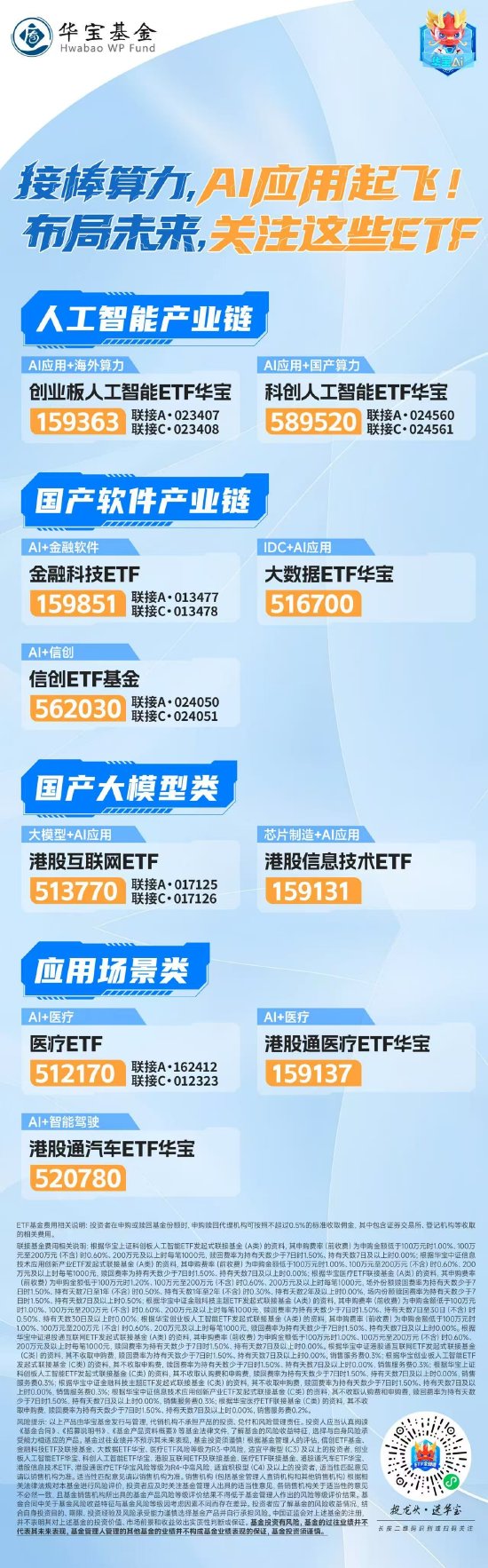
接棒算力,AI应用起飞!布局未来,关注这些ETF
Xin Lang Cai Jing· 2026-01-12 10:21
Group 1 - The article discusses the rise of artificial intelligence (AI) applications and the importance of computing power in the industry, highlighting various ETFs that focus on AI and related sectors [2][3][10] - It emphasizes the integration of AI with financial software and the development of domestic large models, indicating a growing trend in the AI industry [4][5][10] - The article lists specific ETFs related to AI applications, including those focused on healthcare, smart driving, and big data, showcasing a diverse range of investment opportunities [10] Group 2 - The article mentions the formation of MACD golden cross signals, suggesting positive momentum for certain stocks within the AI sector [8][11]

立昂微:公司暂无应用于车载4D毫米波雷达的产品
Ge Long Hui· 2026-01-12 10:12
Core Viewpoint - Lian Microelectronics (605358.SH) has successfully mass-produced automotive-grade VCSEL chips for laser radar applications in smart driving, becoming the first global manufacturer to achieve this milestone [1] Group 1: Product Development - Lian Microelectronics' VCSEL chip products are now utilized in laser radar for smart driving, humanoid robots, and lawnmowers, indicating a diverse application range [1] - The company has developed a 2D addressable high-power VCSEL technology, which is a significant advancement in the automotive radar sector [1] Group 2: Market Position - Lian Microelectronics is recognized as the first manufacturer to mass-produce automotive-grade laser radar VCSEL chips, highlighting its leadership in the industry [1] - The company currently does not have products for automotive 4D millimeter-wave radar, indicating a focused strategy on laser radar technology [1]

立昂微:暂无应用于车载4D毫米波雷达的产品
Ge Long Hui· 2026-01-12 10:05
Core Viewpoint - Lian Micro (605358.SH) has successfully mass-produced automotive-grade VCSEL chips for laser radar applications in smart driving, becoming the first global manufacturer to achieve this milestone [1] Group 1: Product Development - Lian Micro's VCSEL chip products are utilized in laser radar for smart driving and have achieved large-scale shipments [1] - The company has developed a 2D addressable high-power VCSEL technology, which is a significant advancement in the automotive radar sector [1] Group 2: Market Position - Lian Micro is recognized as the first manufacturer globally to mass-produce automotive-grade laser radar VCSEL chips [1] - The company's products are also applied in various fields, including humanoid robots and lawn mowing robots, indicating a diverse application range [1] Group 3: Technology Comparison - The company distinguishes between 4D millimeter-wave radar and laser radar, noting that they differ in principles, performance, application scenarios, and costs [1] - Currently, Lian Micro does not have products applied in automotive 4D millimeter-wave radar technology [1]
立昂微(605358.SH):公司暂无应用于车载4D毫米波雷达的产品
Ge Long Hui· 2026-01-12 10:01
Core Viewpoint - Lian Microelectronics (605358.SH) has successfully mass-produced automotive-grade VCSEL chips for laser radar applications in smart driving, becoming the first global manufacturer to achieve this milestone [1] Group 1: Product Development - Lian Microelectronics' VCSEL chip products are utilized in laser radar for smart driving and have achieved large-scale shipments [1] - The company has developed a two-dimensional addressable high-power VCSEL technology, which is a significant advancement in the automotive radar sector [1] Group 2: Market Applications - The VCSEL chips are applied in various fields, including smart driving, humanoid robots, and lawn mowing robots, showcasing the versatility of the technology [1] - The company currently does not have products for automotive 4D millimeter-wave radar, indicating a focus on laser radar technology [1]
立昂微(605358.SH):暂无应用于车载4D毫米波雷达的产品
Ge Long Hui· 2026-01-12 09:52
Core Viewpoint - Lian Microelectronics (605358.SH) has successfully mass-produced automotive-grade VCSEL chips for laser radar applications in smart driving, becoming the first global manufacturer to achieve this milestone [1] Group 1: Product Development - Lian Microelectronics' VCSEL chip products are utilized in laser radar for smart driving and have achieved large-scale shipments [1] - The company has developed a 2D addressable high-power VCSEL technology, which is a significant advancement in the automotive sector [1] Group 2: Market Applications - The VCSEL chips are applied in various fields, including smart driving, humanoid robots, and lawn mowing robots [1] - The company currently does not have products for automotive 4D millimeter-wave radar applications, indicating a focus on laser radar technology [1]
长安汽车发展大事记
Zhong Guo Jing Ying Bao· 2026-01-12 08:18
Core Insights - The company has a rich history in the automotive industry, starting from self-funding in the early 1980s to becoming a significant player in the market with various innovative products and initiatives. Group 1: Historical Milestones - In the early 1980s, the company self-funded 35 million yuan to enter the automotive sector, marking the beginning of its entrepreneurial journey [1] - In 1984, the company launched the first batch of microcars in China, including the SC1 12 micro van and SC1 10 micro truck [2] - The first "Aotu" model from Changan Suzuki was produced in 1995, becoming China's first national car due to its affordability and fuel efficiency [2] - In 1999, the Changan Star completed crash tests at Tsinghua University, significantly impacting the microcar market in China [3] Group 2: International Expansion and R&D - In 2001, the company began international R&D efforts by establishing a presence in Turin, Italy [4] - By 2003, it set up an overseas technology sub-center and representative office in Italy, laying the groundwork for global R&D [5] - In 2010, the first national key laboratory for automotive noise, vibration, and safety technology was established at the company [8] Group 3: Product Innovations - The first self-branded sedan, the Benben, was launched in 2006, creating a significant market impact [6] - In 2007, the company introduced its first hybrid vehicle, the "Changan Jiexun HEV" [7] - The first generation of the global strategic model, the Yidong, was launched in 2011, achieving over 100,000 sales in its first year [9] Group 4: Technological Advancements - In 2016, the company completed a 2000-kilometer autonomous driving test from Chongqing to Beijing, paving the way for smart driving technology [10] - In 2017, the company launched the "Shangri-La" plan to accelerate its layout in the new energy vehicle sector [11] - In 2018, the "Beidou Tianshu" plan was introduced, establishing three global smart new energy brands [12] Group 5: Future Plans and Achievements - In 2023, the company announced the "Haina Baichuan" plan for global expansion, targeting five overseas markets [13] - By 2024, the Blue Whale powertrain will be upgraded to New Blue Whale power, achieving international leading technology levels [14] - The company is set to reach a historic milestone of producing its 30 millionth vehicle by December 10, 2025, becoming the fastest Chinese automotive company to achieve this feat [14]

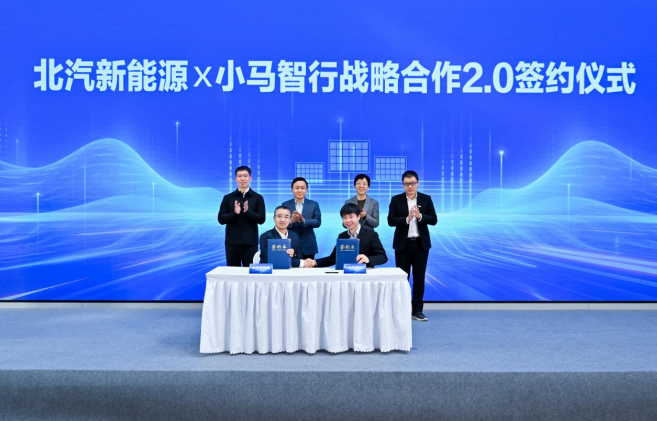
北汽新能源与小马智行战略合作步入2.0阶段,“五位一体”共拓全球智能出行版图
Jing Ji Wang· 2026-01-12 07:37
Core Insights - The strategic partnership between BAIC New Energy and Pony.ai aims to enhance the development of L4-level Robotaxi production and operations, establishing a benchmark for collaborative innovation in China's smart driving industry [1][3] Group 1: Partnership Details - The collaboration is characterized as entering a "2.0 era," focusing on creating a complete closed loop from technology development to commercial operation, rather than merely increasing vehicle production [3] - The partnership will leverage a ten billion investment to stimulate a trillion-level automotive intelligent driving industry collaboration [3] Group 2: Production Milestones - Since signing a technical cooperation agreement in November 2024, the partnership has achieved over 600 units of Robotaxi production, marking a significant milestone in the field [4] - The first mass-produced vehicle was launched in July 2025, with rapid delivery milestones: 100 units delivered within a month and 300 units within three months [4] - The Robotaxi operates in various complex driving scenarios, demonstrating a safety level exceeding human driving by over ten times [4] Group 3: Market Strategy - The Robotaxi sector is recognized for its clear commercialization path and substantial market potential, estimated in the hundreds of billions [6] - The partnership will focus on five dimensions: product co-creation, market expansion, supply chain integration, ecosystem development, and capital collaboration [6] Group 4: Global Competitiveness - The collaboration signifies a critical step for China's smart connected vehicle industry, transitioning from isolated technological breakthroughs to systematic ecological competition [7] - It aims to establish a sustainable smart mobility ecosystem, providing a replicable and sustainable "Chinese solution" for the global smart mobility market [7]

智能驾驶元年或开启!Robotaxi商业化进程加速,智能驾驶ETF(516520)开年首周强势吸金3.75亿元
Xin Lang Cai Jing· 2026-01-12 06:01
Group 1 - The year 2026 is widely regarded as the "year of commercialization for autonomous driving," driven by the implementation of L3-level autonomous driving regulations, a significant drop in hardware costs, and the empowerment of AI large models [1][5] - The smart driving ETF (516520) has attracted 375 million yuan in the first week of 2026, reaching a new high in fund size and shares at 1.067 billion yuan and 778 million shares, respectively [1][5] - Tesla's Robotaxi has recently launched operations without safety drivers, representing a significant advancement in L4/L5 level autonomous driving technology for shared mobility services [5][6] Group 2 - The smart driving ETF (516520) closely tracks the CSI Smart Car Theme Index, which includes companies providing terminal perception and platform applications for smart vehicles, reflecting the overall performance of the smart automotive industry [2][6] - The top five secondary industries represented in the index are automotive parts (24.0%), semiconductors (19.6%), passenger vehicles (14.4%), software development (11.3%), and communication equipment (7.1%), covering multiple segments of the smart automotive supply chain [2][6] - Huatai-PB Fund, the manager of the smart driving ETF, is one of the first ETF managers in China and has launched the Huatai-PB CSI 300 ETF (510300), which has a market size of 437.4 billion yuan and is highly active in the market [2][6] Group 3 - On January 11, Huatai-PB Fund announced a cash dividend for the Huatai-PB CSI 300 ETF (510300), distributing 1.23 yuan per 10 fund shares, with a total dividend amount close to 11 billion yuan, potentially setting a new record for single cash dividends in domestic ETFs [3][7]
中海达:目前公司向小鹏提供位置感知相关的硬件产品
Mei Ri Jing Ji Xin Wen· 2026-01-12 04:07
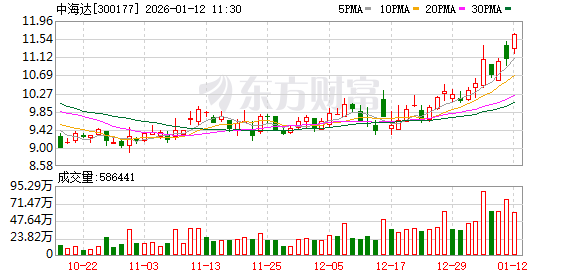
中海达(300177.SZ)1月12日在投资者互动平台表示,目前公司向小鹏提供位置感知相关的硬件产品, 主要应用在智能驾驶汽车、具身智能机器人和飞行器,相关业务详情请参阅公司过往定期报告及互动易 回复。 (文章来源:每日经济新闻) 每经AI快讯,有投资者在投资者互动平台提问:烦请详细介绍下公司与小鹏在智驾汽车、飞行汽车、 人形机器人、Robotaxi等领域的具体合作产品或为其提供了哪些技术服务。 ...

北汽新能源与小马智行开启合作2.0阶段 深耕Robotaxi赛道
Zheng Quan Ri Bao Wang· 2026-01-12 03:57
Core Insights - Beijing Electric Vehicle Co., Ltd. (BAIC New Energy) and Pony.ai have entered a comprehensive strategic cooperation to enhance the development of China's intelligent driving industry [1][2] - The partnership aims to create a complete closed-loop system from technology research and development to commercial operation, marking the transition to a new phase of collaboration [1] - The L4-level Robotaxi model, based on BAIC's redundant chassis architecture and Pony.ai's seventh-generation autonomous driving system, has achieved significant milestones in production and operation [1][2] Production and Operation - The first mass-produced L4-level Robotaxi model, the Arcfox Alpha T5, is set to roll off the production line in July 2025, with rapid delivery milestones achieved shortly thereafter [1] - By August 2025, 100 units were delivered, and within three months, 300 units were produced and put into trial operation, with total production exceeding 600 units to date [1] - The Robotaxi has been deployed in complex driving scenarios across various urban environments, achieving all-weather, all-scenario autonomous driving capabilities [1] Commercialization and Strategic Goals - Starting November 2025, the Arcfox Alpha T5 Robotaxi will operate in key areas of Beijing and Shenzhen, providing users with a fully autonomous travel experience [2] - The collaboration focuses on five key dimensions: product co-creation, market expansion, industry chain collaboration, ecosystem building, and capital integration [2] - BAIC New Energy plans to collaborate with more leading global internet and technology companies to explore innovative boundaries in smart vehicles and contribute to the transformation of the global mobility industry [2]