美元霸权

Search documents
从美元霸权到美元上链:稳定币如何重构全球资金路径?
李迅雷金融与投资· 2025-06-12 12:06
(转载请注明出处:微信公众号 lixunlei0722 ) 2025年5月21日,香港立法会全票通过《稳定币条例》,成为全球首个针对法币稳定币建立全面监管框架的 司法管辖区,引发市场普遍关注。 表面上,稳定币仍以美元为锚、以美债为储备,似乎在强化美元的全球地 位;但实质上,它正在将美元从传统的银行清算体系中"解绑",让全球资金得以绕过SWIFT网络和多层监管, 直接在链上完成跨境流动。 稳定币并未挑战美元的信用本体,却在悄然改写美元的流通路径、资金的落点选择与全球资本的定价方式—— 这是一场关于"路径"而非"货币"的革命。 本文以香港新规为起点,系统拆解稳定币背后的制度逻辑、对美元 及美债影响路径及真正受益的投资机会。 稳定币: "链上美元"的制度接口与信用映射 从本质来看,稳定币并非一种全新的货币形态,而是在数字技术条件下对现有货币体系的延伸。它 以"锚定真实资产、流通于区块链"为基础逻辑,把法定货币的价值通过技术手段映射到链上,形成一种 兼具数字传输效率和法币支付能力的金融工具。 稳定币的出现,填补了传统金融系统与加密资产体系之间缺乏连接通道的空白,使得数字资产具备更强 的交易稳定性和跨境支付能力。 在全 ...


从美元霸权到美元上链:稳定币如何重构全球资金路径?
李迅雷金融与投资· 2025-06-12 12:04
Core Viewpoint - The article discusses the implications of Hong Kong's Stablecoin Regulation, which establishes a comprehensive regulatory framework for fiat-backed stablecoins, marking a significant shift in the global financial landscape. It emphasizes that stablecoins are not challenging the dollar's credit but are altering the flow paths and pricing mechanisms of global capital, representing a revolution in "pathways" rather than "currency" [1][5][14]. Summary by Sections Stablecoins Overview - Stablecoins are extensions of the existing monetary system under digital technology, providing a bridge between traditional finance and crypto assets, enhancing transaction stability and cross-border payment capabilities [2]. - They are categorized into three types: fiat-backed, crypto-collateralized, and algorithmic stablecoins, each with distinct mechanisms and risk profiles [2][3][4]. Impact on the Dollar and U.S. Treasury Bonds - Stablecoins amplify the dollar's liquidity and provide a new channel for U.S. Treasury bonds, acting as new marginal buyers in the bond market, which could influence short-term interest rates [15][17]. - The relationship between stablecoin net purchases and U.S. Treasury yields indicates that significant inflows can lower yields, while outflows can increase them, highlighting the sensitivity of the bond market to stablecoin dynamics [19]. Regulatory Developments - Hong Kong's Stablecoin Regulation, effective from August 2025, mandates 100% fiat reserves for stablecoin issuers and prohibits anonymous transactions, establishing a legal framework for stablecoins in Asia [28][29]. - This regulation aims to create a compliant dollar channel in Asia, allowing stablecoins to operate within a regulated environment, thus enhancing their legitimacy and integration into the financial system [28][30]. Market Opportunities and Investment Strategies - The article suggests focusing on companies that can provide essential services for stablecoin compliance, such as payment interfaces and identity verification, as they are likely to benefit from the new regulatory landscape [36][37]. - It highlights the potential for the Chinese yuan stablecoin pilot in Hong Kong, which could create opportunities for firms involved in digital currency infrastructure [36]. - The strategic revaluation of Hong Kong dollar assets is also noted, as stablecoins may enhance the dollar's utility and the market value of related financial instruments [37]. Global Capital Flow and Financial System Transformation - Stablecoins are reshaping global capital flows by providing a decentralized, efficient alternative to traditional banking systems, allowing for real-time, low-cost cross-border transactions [22][25]. - The emergence of stablecoins challenges existing regulatory frameworks, necessitating a reevaluation of how capital flows are monitored and controlled [26][27]. Conclusion - The establishment of stablecoin regulations signifies a pivotal moment for the dollar's role in global finance, as it transitions from a state-controlled currency to a more market-driven instrument, potentially altering the dynamics of international capital flows and financial stability [21][34].

2400亿到2万亿!数字暗战打响,稳定币能解决美债危机?
Sou Hu Cai Jing· 2025-06-12 08:46
Group 1 - The core viewpoint is that stablecoins are not a solution to the U.S. debt crisis or the potential collapse of the dollar's hegemony, but they are significant in initiating a monetary revolution in the digital realm [1][8] - Stablecoins are digital currencies pegged 1:1 to the U.S. dollar, with their underlying assets primarily consisting of U.S. short-term government bonds and short-term loans secured by these bonds, leading to lower volatility compared to cryptocurrencies like Bitcoin [1][3] - As of May this year, the total scale of global stablecoins reached nearly $240 billion, accounting for 7% of the entire cryptocurrency market, with projections estimating that it could grow to $2 trillion in the next three years [3] Group 2 - The U.S. government's recognition of stablecoins serves multiple purposes, including finding new buyers for U.S. debt to alleviate pressure on the bond market, allowing both compliant and non-compliant funds to flow into U.S. Treasury markets through stablecoins [3][5] - The introduction of stablecoin legislation allows the U.S. government to bypass the Federal Reserve, creating an indirect financing channel that could influence monetary policy and decision-making [5] - The U.S. aims to use stablecoins as a strategic tool to maintain dominance in future financial orders, attempting to integrate digital currencies into the existing financial system to preserve the dollar's status as a global settlement currency [6] Group 3 - Stablecoins present inherent risks, including the potential for loss of control if their scale continues to grow and their ties to traditional finance deepen, which could destabilize the U.S. financial system [6][8] - The private nature of stablecoin issuers raises concerns about their influence on the supply and control of digital dollars, potentially undermining the Federal Reserve's authority [6] - If the U.S. debt situation deteriorates, stablecoins backed by U.S. debt may struggle to maintain their value, leading to a potential collapse that could exacerbate the debt crisis [8]
苏林离开前,连做两项承诺,人民币国际化再获突破,美企图落空
Sou Hu Cai Jing· 2025-06-12 04:23
那么,我国是否能够接受越南的善意表示呢?与此同时,越南的这一承诺将助力人民币国际化的进一步发展,美国无论如何也阻挡不了这一趋势。这一次, 若美国的算盘落空,必定会心情不爽吧。 苏林这次的行程从广州开始,之后一路向北,最终抵达北京。他在讲话中表示,"吃井不忘挖井人",表达了他对毛主席的深厚敬意,表露出他始终未曾改变 的感情。这一感情牌一打,接下来便进入了此次访问的重头戏。 苏林明确表示:越南坚定奉行一个中国政策,台湾是中国不可分割的一部分。这一承诺无疑深深触动了我国人民的心弦,尤其是对于"台湾独立"问题,一向 持坚定立场的美国无疑会感到不快。 中柬运河项目刚刚拉开帷幕,越南新任领导人苏林便迫不及待地来到我国进行访问,并针对我国最为关注的问题做出了两项重大的承诺。 如果美国能够推动越南的经济地位得到承认,越南在国际市场上的话语权将大幅提升,进而成为美国利用的筹码。这一策略,不仅能增强美元的国际地位, 挤压人民币的国际化空间,还能借助美元霸权更好地控制全球经济。然而,随着越南与我国合作的深化,美元霸权的压力无疑将逐渐增大,特别是越南开始 与我国在本币结算等领域展开合作时,美元的主导地位可能面临逐步瓦解的风险。 但为 ...
【今晚播出】90天缓冲倒计时:中美贸易战的"新棋局"即将揭晓 | 《两说》
第一财经· 2025-06-11 04:14
Core Viewpoint - The recent "Joint Statement" reached in Geneva between China and the U.S. has provided a temporary boost to global markets, but the underlying strategic considerations and potential risks remain significant [1]. Group 1: Economic Impact of Tariff Changes - The U.S. has canceled 91% of tariffs on Chinese goods and suspended 24% of "reciprocal tariffs" for 90 days, while China has reciprocated similarly, creating a temporary relief in trade tensions [1]. - High tariffs are projected to drag down U.S. GDP growth by 1-1.5 percentage points in 2025, likening the impact to a marathon runner being weighed down [1][3]. Group 2: Short-term Risks and Market Reactions - The 90-day buffer period presents both opportunities for reduced trade barriers and risks of escalation if no agreement is reached, indicating that this is not a permanent solution [2]. - The stock market's quick recovery from the "Liberation Day Shock" reflects an implicit expectation of policy intervention, reminiscent of past market responses to government actions [2]. Group 3: U.S. Economic Outlook - Following the Geneva talks, Goldman Sachs has reduced the probability of a U.S. recession from 45% to 35%, but this figure remains significantly above the long-term average of 15%, indicating ongoing economic challenges [3]. Group 4: Dollar Dominance and Future Predictions - The dollar's trade-weighted index has reached a 50-year high, with predictions of further depreciation due to historical patterns and the U.S. facing a substantial current account deficit equivalent to 4% of GDP [5][6]. - Historical analysis suggests that even if the dollar's strength diminishes, its status as a reserve currency may persist for years, similar to the pound's prolonged dominance despite the decline of the British economy [7]. Group 5: China's Economic Transition - China is transitioning from a "follower" to a "standard-setter" in technology, with significant improvements in supply-side performance, but it needs to seek greater balance in international trade [9]. - The importance of maintaining a diversified investment strategy is emphasized, as recent market trends have shown that other markets can outperform U.S. equities, highlighting the need for asset diversification [11].


研客专栏 | 沪银历史新高:上涨只需要一个理由?
对冲研投· 2025-06-10 10:57
以下文章来源于巴顿比格斯 ,作者巴顿比格斯 巴顿比格斯 . 历史不会重复,但是它自然成韵。 文 | 巴顿比格斯 来源 | 巴顿比格斯 编辑 | 杨兰 审核 | 浦电路交易员 近期沪银期货价格创上市以来新高,国际白银ETF连续增仓的情况下,欧美降息预期抬升、叠加宏观市场情绪转暖预期提振白银工业 属性,沪银表现强于黄金、金银比小幅修复。 此前黄金屡创新高,白银被低估,金银比一度逼近105(历史均值60-80),随着避险情绪升温,白银成为"价值洼地",资金涌入推动 其补涨,金银比回落至90。全球最大白银ETF持仓量持续增加,CFTC(美国商品期货交易委员会)净多头持仓攀升,显示出资金对 白银强烈的看涨情绪。 2025年全球货币体系发生深刻变化,美元霸权遭遇挑战。特朗普政府的一系列政策,如强推制造业回流、关税壁垒等,导致全球美元 回流美国,美元流动性减少,且面临 "特里芬难题" 升级版,即美联储在加息抑制通胀与降息刺激经济维持贸易逆差之间两难抉择, 这削弱了美元信用。 投资者对美元信心下降,转而寻求其他避险资产,白银作为传统的避险资产之一,受到投资者青睐。全球政治经济不确定性增加,如 地缘政治冲突、贸易政策不稳定等, ...

几乎不敢相信,特朗普对瓦解美国霸凌,竟有8大历史性贡献
Sou Hu Cai Jing· 2025-06-10 09:23
Group 1 - The article discusses the internal chaos in the U.S., particularly in Los Angeles and New York, as a result of the current administration's actions, which are turning communities into "war zones" and prompting military intervention [1][22][26] - The U.S. is facing a decline in its global dominance due to the current administration's policies, which are undermining the strength of the dollar and the military, leading to a loss of credibility and trust among allies [3][10][11] - The imposition of tariffs by the current administration has not only harmed international trade but has also negatively impacted the U.S. economy, with allies distancing themselves and the credibility of the U.S. being severely affected [5][9][10] Group 2 - The article highlights the ongoing conflict between state and federal authorities, exemplified by the protests in Los Angeles against immigration enforcement, which reflect deeper societal fractures in the U.S. [22][26][29] - The current administration's attacks on prestigious institutions like Harvard are seen as detrimental to the U.S.'s global competitiveness, as these institutions are crucial for innovation and talent acquisition [15][20] - The article suggests that the current administration's actions are leading to increased political division, particularly between the Democratic and Republican parties, exacerbating tensions within the country [28][29][31]

36万亿美债濒临崩盘!特朗普喊话中国,7天内必须见一面?
Sou Hu Cai Jing· 2025-06-09 06:52
Group 1 - The rise in the 10-year U.S. Treasury yield by over 6 basis points and the 30-year yield surpassing 5% signals a looming economic crisis in the U.S. with a staggering $36 trillion in debt at risk of collapse [1] - Major credit rating agencies have downgraded the U.S. credit rating, with Moody's lowering it from "Aaa" to "Aa1" in May 2024, citing excessive government debt and interest burdens [3] - The U.S. federal debt reached $36.2 trillion, accounting for 124% of GDP, with projections indicating it could rise to 134% by 2035, alongside a fiscal deficit of $2.1 trillion for the 2024 fiscal year [3] Group 2 - The downgrade of the U.S. credit rating triggered significant market reactions, with major stock indices falling, including a 1.49% drop in Nasdaq futures and a 4% pre-market decline for Tesla [4] - Investors reacted by selling off U.S. Treasuries, leading to a spike in the 30-year Treasury yield above 5% and the 10-year yield exceeding 4.5% [4] - The dollar index fell by 0.8%, while gold prices surged, with COMEX gold futures rising over 2% [4] Group 3 - Financial leaders, including JPMorgan's CEO Jamie Dimon, warned that extreme fiscal policies could lead to a crisis in the U.S. debt market, labeling the rising government debt as the "biggest risk" to the macroeconomy [6][7] - The potential collapse of U.S. Treasuries could create a dilemma for the government, as increasing taxes or cutting fiscal support would be challenging [7] - Trump's urgent desire to communicate with China is seen as an attempt to alleviate U.S. financial pressures, as China has been reducing its holdings of U.S. debt, now down to $765.4 billion [7][9] Group 4 - Despite some progress in U.S.-China negotiations, significant differences remain, with the U.S. imposing restrictions on China, complicating the potential for dialogue [9] - The crisis surrounding the $36 trillion U.S. debt is not only a domestic issue but poses a significant challenge to the global economy, indicating a potential shift in the global economic landscape [9]
中金缪延亮:国际货币体系的十个“未解之谜”
中金点睛· 2025-06-08 23:57
Core Viewpoint - The current international monetary system is undergoing profound changes due to the long-term disorderly expansion of U.S. public debt, the "weaponization" of the dollar during the Russia-Ukraine conflict, and various policy proposals during the Trump 2.0 era, which erode the credibility of the dollar as the world's reserve currency [2]. Group 1: Triffin Dilemma Misinterpretations - The "Triffin Dilemma" has evolved into two versions post-Bretton Woods: one concerning the current account and the other regarding "safe assets," both of which contain significant misunderstandings [4][13]. - Misconceptions include confusing net capital with total capital inflows, mixing "earned" and "borrowed" foreign exchange reserves, and conflating bilateral with multilateral capital flows [17][19][20]. - The supply of dollar liquidity is not necessarily linked to the U.S. current account deficit, as the U.S. maintained a current account surplus for about 30 years after becoming the primary reserve currency [14][21]. Group 2: U.S. Stocks as Safe Assets - Overseas funds have shifted from U.S. Treasury bonds to U.S. stocks, leading to the disappearance of the equity risk premium in the S&P 500, indicating that investors now view U.S. stocks as safe assets [5][23]. - This shift is driven by declining safety perceptions of U.S. debt and the stable long-term growth of U.S. stocks, with significant capital inflows into the U.S. stock market [26][30]. Group 3: U.S. Reserve Currency Status - The U.S. is unlikely to relinquish its status as the world's reserve currency due to the substantial benefits it provides, including the international seigniorage revenue [6][32]. - The unique asset-liability structure of the U.S. allows it to benefit from dollar depreciation, effectively transferring payment burdens globally [36][39]. Group 4: Declining Economic Share vs. Rising Financial Dominance - While the U.S. share of the real economy is declining, its share in international finance is increasing, primarily due to the offshore dollar being the most important financing currency and onshore dollars being viewed as safe assets [7][40][44]. - The expansion of cross-border capital flows has outpaced trade growth, reinforcing the dollar's financial position [46]. Group 5: Dollar Cycles - The dollar exhibits cyclical characteristics influenced by fundamentals, policies, and capital flows, with positive feedback mechanisms amplifying these cycles [8][48][52]. - The dollar's appreciation impacts global economies asymmetrically, benefiting the U.S. while constraining other economies [53]. Group 6: The Dollar's Global Impact - The U.S. often emerges unscathed from global crises, with the adverse effects disproportionately affecting non-U.S. economies due to the asymmetrical impact of U.S. monetary policy [56][58]. - The dollar's status as a reserve currency provides the U.S. with unique advantages, including lower financing costs and the ability to conduct fiscal stimulus without immediate repayment pressures [57]. Group 7: Need for an International Monetary System - The current trend towards a multi-polar world raises questions about the necessity of an international monetary system, with the dollar still playing a central role in global trade and finance [62][63]. - A multi-currency system may be preferable to a non-system, as it allows for currency competition and provides space for emerging currencies like the renminbi [64]. Group 8: Transitioning to a Multi-Currency System - Transitioning from a dollar-centric system to a multi-currency system requires policy coordination among major currency issuers and flexible exchange rate arrangements [11][65].

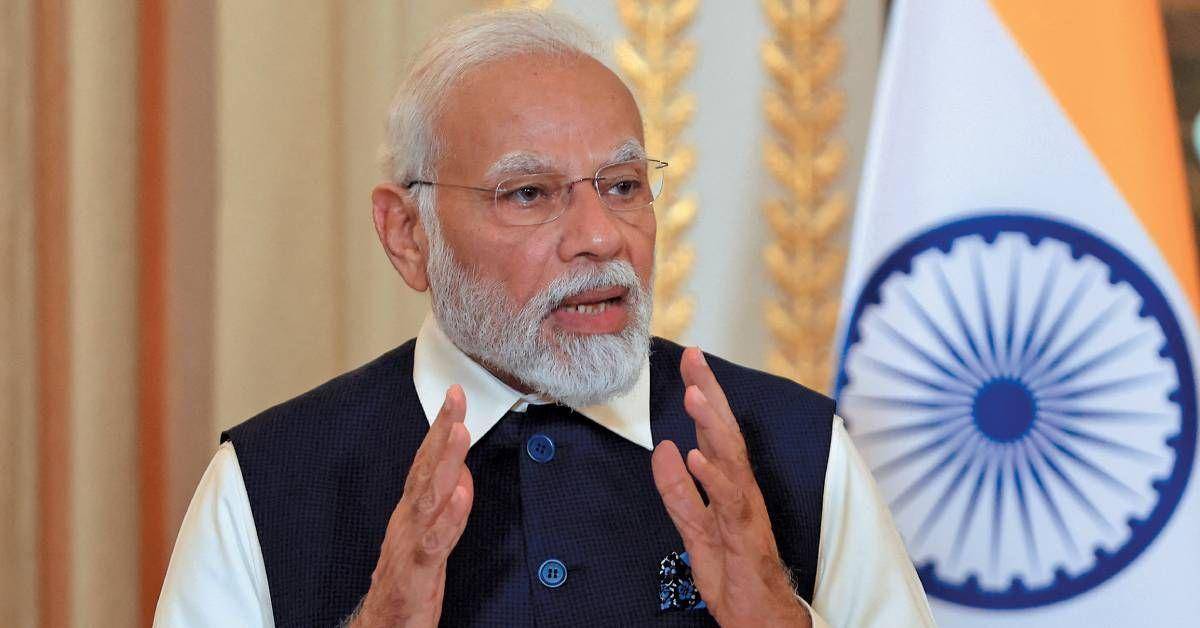
30天倒计时!特朗普逼印度“退群”金砖,莫迪沉默背后藏着大棋
Sou Hu Cai Jing· 2025-06-08 20:02
Core Points - The U.S. is pressuring India to distance itself from BRICS in exchange for a trade agreement, highlighting a shift in diplomatic tactics [1][3] - The U.S. sees India as a crucial player in its Indo-Pacific strategy, aiming to weaken China's influence by leveraging India's position [3][5] - India's reliance on Chinese manufacturing is significant, with a projected 37% increase in imports of Chinese machinery and electrical products in 2024 [5] - The U.S. demands include opening India's agricultural market to American soybeans and threatening military supply chains, particularly for F-21 fighter jet parts [7] - India is strategically delaying its response to U.S. demands while strengthening ties with Russia and exploring alternative currency agreements with the Middle East [9] - China's response to the situation has been measured, with support for India through infrastructure loans, contrasting with U.S. tactics [10] - Internal divisions in India are evident, with public sentiment largely against U.S. economic pressure and protests against American agricultural imports [12] - Global reactions to U.S. pressure include support for BRICS from other nations, indicating a broader resistance to U.S. hegemony [14] Summary by Sections U.S.-India Relations - The U.S. Commerce Secretary's visit to India was marked by a stark warning to sever ties with BRICS for a trade deal [1] - The U.S. initially expected compliance from 75 countries regarding tariffs but faced resistance, particularly from India [3] Economic Implications - The U.S. is pushing for India to open its agricultural market, which could significantly impact local farmers [7] - India's imports from China are expected to rise sharply, indicating a complex economic interdependence [5] Strategic Maneuvering - India is employing a strategy of delay while seeking to strengthen its energy ties with Russia and explore alternative economic frameworks [9] - China's support for India through financial means contrasts with U.S. pressure tactics, showcasing a different diplomatic approach [10] Domestic Sentiment - There is significant public backlash in India against U.S. economic policies, with protests emerging against American agricultural imports [12] - The internal political landscape in India is divided, with strong opposition to U.S. influence and calls for maintaining BRICS membership [12] Global Context - Other BRICS nations are rallying against U.S. pressure, indicating a potential shift in global power dynamics [14]