自由贸易

Search documents
经济史和实证证明,关税讹诈不会得逞
21世纪经济报道· 2025-04-13 00:10
Group 1 - The article argues that extreme tariff measures by the U.S. will ultimately harm both the U.S. and its trading partners, as supported by historical and empirical evidence [1][7] - Historical economists, from Bastiat to List, have emphasized the importance of moderate tariffs and free trade for economic development, indicating that excessive tariffs can weaken domestic production capacity [1][2] - A study by French economist Philippe Aghion and others found that tariffs do not correlate positively with total factor productivity, while fiscal subsidies and tax incentives do [2][3] Group 2 - The article highlights that prior to joining the WTO, high tariffs on imported cars did not lead to a strong domestic automotive industry in China, demonstrating that tariff protection does not foster industrial progress [3][4] - Post-WTO accession, China has gradually reduced its average tariff rate to 7.3% by 2023, indicating a shift towards lower trade barriers [4] - The development of industries in Shenzhen, such as mobile phones and renewable energy vehicles, is attributed to market competition rather than tariff protection [5][6]


评论| 经济史和实证证明,关税讹诈不会得逞
2 1 Shi Ji Jing Ji Bao Dao· 2025-04-12 13:48
Core Viewpoint - The article argues that extreme tariff measures employed by the U.S. since April 2023 will ultimately harm both the U.S. and its trading partners, contradicting historical and empirical evidence supporting free trade [1][2]. Group 1: Historical Context and Economic Theory - The article references the "ineffective railway theory" proposed by French economist Frédéric Bastiat, which illustrates that tariffs can negate the benefits of reduced trade costs [1]. - German economist Friedrich List emphasized the need for moderate tariffs to avoid harming domestic production capacity and tax revenue [1]. - The consensus among economists from Adam Smith to Paul Krugman highlights the importance of free trade for global economic development [1]. Group 2: Empirical Evidence - A study by Harvard professor Philippe Aghion and others analyzed data from 1.06 million Chinese enterprises from 1998 to 2007, concluding that fiscal subsidies and tax incentives positively correlate with total factor productivity, while tariffs do not [1][2]. - The article cites China's experience before and after joining the WTO, where high tariffs did not strengthen the domestic automotive industry, while subsequent tariff reductions led to growth in various sectors through market competition [2]. Group 3: Economic Implications - Warren Buffett's assertion that tariffs on imports will ultimately translate into domestic taxes suggests that such measures are contractionary and detrimental to economic growth [2]. - The article concludes that the U.S. government's tariff strategies will not yield positive outcomes for the economy or industry progress, reinforcing the idea that protectionist policies are counterproductive [2].
美国关税扰乱全球供应链 电子企业内外市场两手抓
Zheng Quan Shi Bao· 2025-04-10 18:05
尽管遭遇美国所谓"对等关税",但今年第十三届中国电子信息博览会(CITE 2025)在深圳如期召开。 证券时报记者在现场看到,相比往年,今年不同肤色的海外参展观众明显增加。本届展会还设置了出海 主题论坛活动,并首次开设了"中国台湾科技馆",展示了台企在AI智能驾驶辅助、创新半导体测试、AI 医疗系统、电子元器件等领域的最新成果和创新技术。 行业协会代表向证券时报记者表示,不看好美国所谓"对等关税"政策能长久实施,电子行业业内人士预 计,关税政策可能会影响全球供应链稳定,可能出现严重缺货。另外,有本土存储巨头表示将会坚定出 海战略,也有台商表示看好中国大陆供应链和市场前景,将继续推进在中国大陆设厂。 供应链稳定恐遭破坏 "我们相信自由贸易才能促进整个社会,甚至全球经济发展,(加征关税)绝对会受到大家的抵制,未 必能长久。"谈及美方实施的所谓"对等关税",深圳台商协会科技创新委员会副主委兼总企划黄衍豊向 证券时报记者表示,虽然美国政府税收可能会增加,但是普通民众将面临重要终端商品大幅涨价。 继宣布实施所谓"对等关税"后,美国宣布,对数十个国家暂停征收"对等关税"90天。黄衍豊介绍,面临 美国政府一再变动,很多厂商 ...
马斯克对美国关税也不满意
阿尔法工场研究院· 2025-04-08 13:33
Core Viewpoint - Elon Musk has expressed sharp criticism of the White House's trade agenda, highlighting internal divisions regarding President Trump's aggressive tariff policies [1][3]. Group 1: Musk's Criticism and Trade Policy - Musk shared a video of economist Milton Friedman emphasizing the importance of free trade, indicating his support for liberal trade policies [2]. - He criticized Trump's chief trade advisor, Peter Navarro, for promoting high tariffs, suggesting that such measures are a "wrong direction" [3]. - Musk's comments reflect a broader concern among some billionaires about the impact of Trump's tariffs on the U.S. economy and trade relationships [6][7]. Group 2: Market Reactions and Economic Concerns - Trump's new tariff policies have led to significant stock market declines and raised fears of a global economic slowdown [4]. - The imposition of widespread tariffs has created confusion about whether these measures are intended as long-term strategies or merely negotiation tactics [6]. - Bill Ackman, a hedge fund manager, warned that the tariffs could destroy confidence in the U.S. as a trade partner and investment market [7][8]. Group 3: Government Officials' Perspectives - White House officials have provided varying explanations for the tariffs, with some suggesting they are meant to create leverage for negotiations [10][11]. - In contrast, others have taken a more hardline stance, insisting on the need to prevent other countries from taking advantage of the U.S. [12]. - Musk proposed the idea of establishing a free trade zone between the U.S. and Europe, advocating for zero tariffs [12]. Group 4: Internal Disputes and Responses - Navarro downplayed Musk's criticisms, suggesting that Musk's views are limited to his role as an automaker [13][14]. - The ongoing tensions between Musk and the Trump administration highlight differing priorities and approaches to economic policy [15][17].

郁观海外系列之八:美国关税,或虎头蛇尾
HUAXI Securities· 2025-04-08 11:23
Tariff Overview - The U.S. implemented reciprocal tariffs with a baseline rate of 10% on April 3, 2025, affecting major economies such as Vietnam (46%), China (34%), and the EU (20%) among others[1][9]. - The tariffs are based on the IEEPA from 1977, declaring a national emergency to impose these tariffs[1][9]. Economic Impact - The tariffs are expected to increase U.S. inflation, with a potential price increase of approximately 2.9% if the full 20% tariff burden is passed to consumers[2][10]. - The short-term impact on China's exports to the U.S. could result in a decline of about 5% in overall exports, with a mid-term effect of approximately 7%[3][20][23]. GDP Effects - A 5% decline in exports could directly reduce the current GDP by about 0.9%, potentially exceeding 1% when considering downstream effects[3][20][23]. - The estimated impact on GDP from the tariffs could be lower than projected due to U.S. importers potentially underreporting import prices[24]. Market Reactions - The initial phase post-tariff implementation may see a decrease in market risk appetite, favoring bonds over equities[4][42]. - A second phase may involve domestic policy responses that could restore risk appetite, benefiting risk assets[4][43]. Trade Dynamics - The tariffs may disrupt re-export trade, with an estimated impact of around $40.68 billion, equivalent to 1.6% of total exports and about 0.3% of GDP[3][33]. - The U.S. trade deficit with China is projected to decrease by approximately $75.7 billion annually, while surpluses with other countries may increase by $365.1 billion[3][33]. Structural Industry Impact - Consumer goods and machinery exports from China are likely to face significant challenges due to the tariffs, with electronics and appliances being particularly affected[4][38]. - The automotive sector may experience limited direct impact, as the U.S. is not a primary export market for Chinese vehicles[4][39]. Risk Considerations - There are risks associated with unexpected domestic fiscal and monetary policies, as well as potential retaliatory measures from the U.S. trading partners[4][44].

周度经济观察:如何理解对等关税的影响?-2025-04-08
Guotou Securities· 2025-04-08 07:14
Group 1: Tariff Impact Analysis - The imposition of reciprocal tariffs has led to the highest U.S. import tax rate in nearly 100 years, raising concerns about a potential repeat of the global trade collapse seen during the Great Depression[2] - The effective tariff rate on U.S. imports is projected to reach 25%, exceeding levels during the Great Depression[4] - The impact of tariffs on the real economy is likely to be one-time, with countries able to counteract demand shocks through monetary, fiscal, and industrial policies[2][13] Group 2: Economic Resilience and Market Outlook - Unlike the Great Depression, the current global economic environment is stable, with no signs of widespread recession among major economies[6][10] - The recent tariff measures are expected to lead to a restructuring of the global trade system rather than its collapse, as major economies maintain commitments to free trade[10][11] - Following the panic sell-off triggered by the tariffs, there is potential for a rebound in China's equity markets[13] Group 3: Market Reactions and Future Considerations - Following the announcement of tariffs, global equity markets experienced significant declines, with the Wind All A Index dropping 9.3% in a single day[10] - The U.S. labor market remains resilient, with March non-farm payrolls increasing by 228,000, exceeding market expectations[20] - Market expectations for U.S. Federal Reserve rate cuts have increased, with projections now suggesting four rate cuts in 2025, totaling 100 basis points[24]
95年前,美国向全世界发动的那场贸易战
Hu Xiu· 2025-04-05 12:16
Core Points - The article discusses the Smoot-Hawley Tariff Act, which significantly raised tariffs on thousands of imported goods in the U.S. by over 50% [5][4] - The act is widely regarded as a major economic mistake that contributed to the onset of the Great Depression [6][7] Historical Context - The Smoot-Hawley Tariff Act was signed into law by President Herbert Hoover on June 17, 1930, amidst the economic turmoil following the stock market crash of 1929 [4][44] - The act was initially proposed to protect American farmers from foreign competition, but it expanded to include over 2,000 products due to political bargaining [29][25] Economic Impact - Following the implementation of the tariff, the U.S. stock market saw a significant decline, with the Dow Jones Industrial Average dropping from 250 points to 230 points, an 8% decrease [52] - U.S. imports from Europe fell from $1.334 billion in 1929 to $390 million in 1932, a 70% decline, while exports dropped from $2.341 billion to $784 million, a 66% decrease [52] - Unemployment rates surged from 7.8% in 1930 to 25.1% in 1933, marking the beginning of the Great Depression [53] Global Repercussions - The tariff prompted retaliatory measures from other countries, leading to a significant decline in global trade, with world trade levels in 1933 dropping to one-third of those in 1929 [55] - The act is seen as having undermined international trust and cooperation, accelerating the global economic downturn [58][64]
博鳌亚洲论坛今日开幕
证券时报· 2025-03-25 00:03
Group 1 - The Boao Forum for Asia 2025 Annual Conference will be held from March 25 to 28, focusing on the theme "Creating a Future for Asia in a Changing World" [1] - The conference will address four main topics: rebuilding trust and promoting cooperation, driving global economic rebalancing for inclusive development, accelerating the implementation of sustainable development goals, and enhancing AI applications and governance for innovative development [1] - Various formats will be utilized during the conference, including plenary sessions, roundtables, sub-forums, dialogues, and press conferences, allowing for diverse discussions and interactions [1] Group 2 - The conference preparations are complete, with 1,140 media reporters from 147 media organizations across 34 countries and regions registered to attend [2] - The Forum's mission is to promote economic integration and common development in Asia, supporting multilateralism, free trade, and globalization [2] - An upcoming report on the economic outlook for Asia will highlight that Asian countries, led by China, are at the forefront of growth, green development, energy transition, and innovation, serving as a significant support force for global development [2]

聚焦中发高|王一鸣:全球化并未停滞,要以服务业为重点推进制度型开放
Peng Pai Xin Wen· 2025-03-24 13:59
他认为,随着地缘政治冲突加剧、贸易保护主义抬头、资本跨境流动放缓等各种矛盾和问题集中暴露出 来,全球化出现了一些新特点。过去15年歧视性贸易政策或限制性贸易政策数量远远高于自由化(贸易) 政策。同时,全球产业链、供应链正在加快重构。 "全球化在促进贸易和投资繁荣的同时,客观上也带来了一种收益的不平衡、产业的空心化问题,所以 发达经济体、单边主义、保护主义有所抬头,长期处在主导地位的自由贸易的理念现在受到公平贸易、 对等关税这些理念新的挑战。"王一鸣说。 王一鸣还指出,"'全球南方'已成为推动全球化的重要力量。"2002年至2022年,发展中经济体占全球 GDP份额由接近20%提高到40.4%,差不多增加了一倍,出口占比由29.7%提升到45.1%。越来越多的新 兴市场参与全球生产价值链当中,在跨境贸易与投资中的地位不断提升。从投资来看,新兴市场的占比 从2002年的28%上升到2022年的70.8%,超过了发达经济体。 "中国过去的高速发展是在开放的条件下取得的,未来中国要推进现代化,也必然要在更加开放的条件 下来展开。而经济全球化进入调整期,确实也给中国带来了一些新的挑战。"王一鸣强调。 王一鸣强调,制度型 ...
中日韩接近背后是特朗普的影子
日经中文网· 2025-03-24 02:57
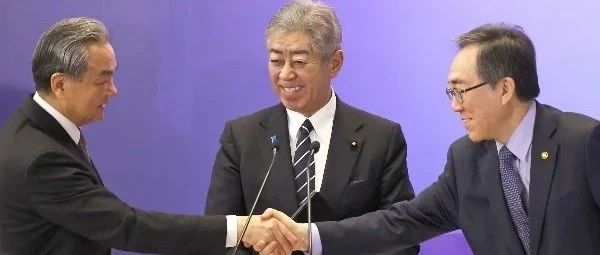
特朗普政府3月12日在不设定适用豁免的情况下,对钢铁和铝相关进口产品加征25%关税。4月还将公布 汽车等的加征关税措施。 中日韩外长会上确认推进自由贸易等以经济为核心深化合作。彼此接近的背景是美国特朗普 政府在国际社会造成的不确定性。中日韩还在制定年内在日本举行领导人会议的日程,但日 本和韩国的内政存在风险…… 日本在阁僚层面要求豁免关税,美方没有接受。美国总统特朗普公开表示,"日本在经济上从我们这里 获得了利益",对日本在安全上依赖美国军事力量、同时在经济上获得利益表示不满。 在 结束中日韩外长联合记者会后握手的王毅(左)和赵己淑。中间为岩屋(3月22日、东京都港区) 日本、中国和韩国三国在3月22日的外长会上确认推进自由贸易等以经济为核心深化合作。彼此接近的 背景是美国特朗普政府在国际社会造成的不确定性。将稳定三国的关系,以应对美国。中国方面可能认 为这是打破以美国为中心的同盟关系所形成的日美韩团结的好机会。 "面对世界经济格局深刻调整,单边保护主义甚嚣尘上",中国外交部部长王毅3月22日在与日本外相岩 屋毅担任联合主席的中日经济高层对话中,在考虑特朗普政府的情况下如此强调。 日本外务省透露,王毅在时隔5 ...