
智能化

Search documents
从资源大企迈向价值强企:中金岭南锚定“十五五”目标
Jing Ji Wang· 2026-01-09 07:57
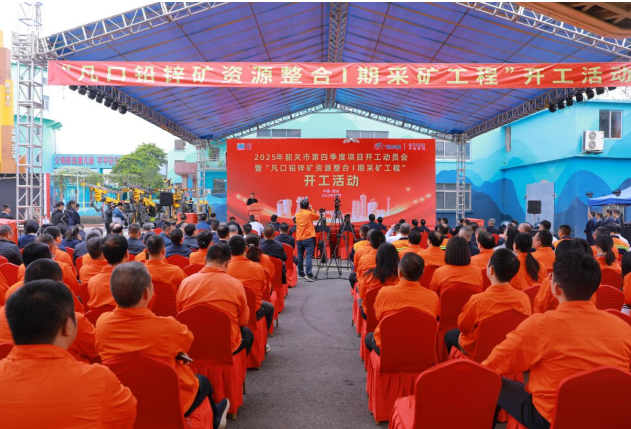
Core Insights - In 2025, Zhongjin Lingnan reported a total operating revenue of 48.505 billion yuan, a year-on-year increase of 11.81%, and a net profit attributable to shareholders of 841 million yuan, up 5.18% year-on-year, while also aiming to reduce costs and increase efficiency by approximately 200 million yuan for the year [1] - The company is undergoing a strategic transformation, focusing on enhancing quality and efficiency, and aims to lead in the comprehensive recycling of rare metals and the industrialization of new materials [1][4] Resource Security - The company emphasizes the importance of securing strategic mineral resources as a political responsibility and a foundation for survival and development, especially given the increasing global competition for resources [1] - Zhongjin Lingnan is actively working on domestic resource expansion and overseas diversification, with projects like the Fan口 lead-zinc mine resource integration and the expansion of the Guangxi mining project [3] New Materials Industry - The new materials industry is identified as a core engine for value enhancement, with a focus on transitioning from raw material sales to material production and solution provision [9] - Zhongjin Lingnan's subsidiary, Zhongjin Technology, has developed zinc-based battery storage materials that have entered the European and American supply chains, and is a leading supplier of mercury-free zinc alloy batteries in China [9][10] Innovation and R&D - The company has established a robust innovation system with 15 provincial-level R&D platforms and has signed 24 research projects with universities, resulting in 78 authorized patents in 2025 [10] - Zhongjin Lingnan aims to grow its new materials sector significantly by 2030, targeting over 10 billion yuan in revenue and focusing on high-end market breakthroughs [10] Green and Intelligent Development - The company has integrated carbon neutrality goals into its development strategy, aiming to peak carbon emissions by 2030 and implementing various low-carbon technologies [12] - Zhongjin Lingnan is advancing smart mining technologies, including autonomous systems for underground transport and intelligent production management [12] Reform and Talent Development - The company is implementing deep reforms, including competitive job placements and salary reforms, to enhance internal vitality [13] - Zhongjin Lingnan has introduced a talent development plan, recruiting industry experts and focusing on skill training, with several employees recognized for their excellence [13][14]


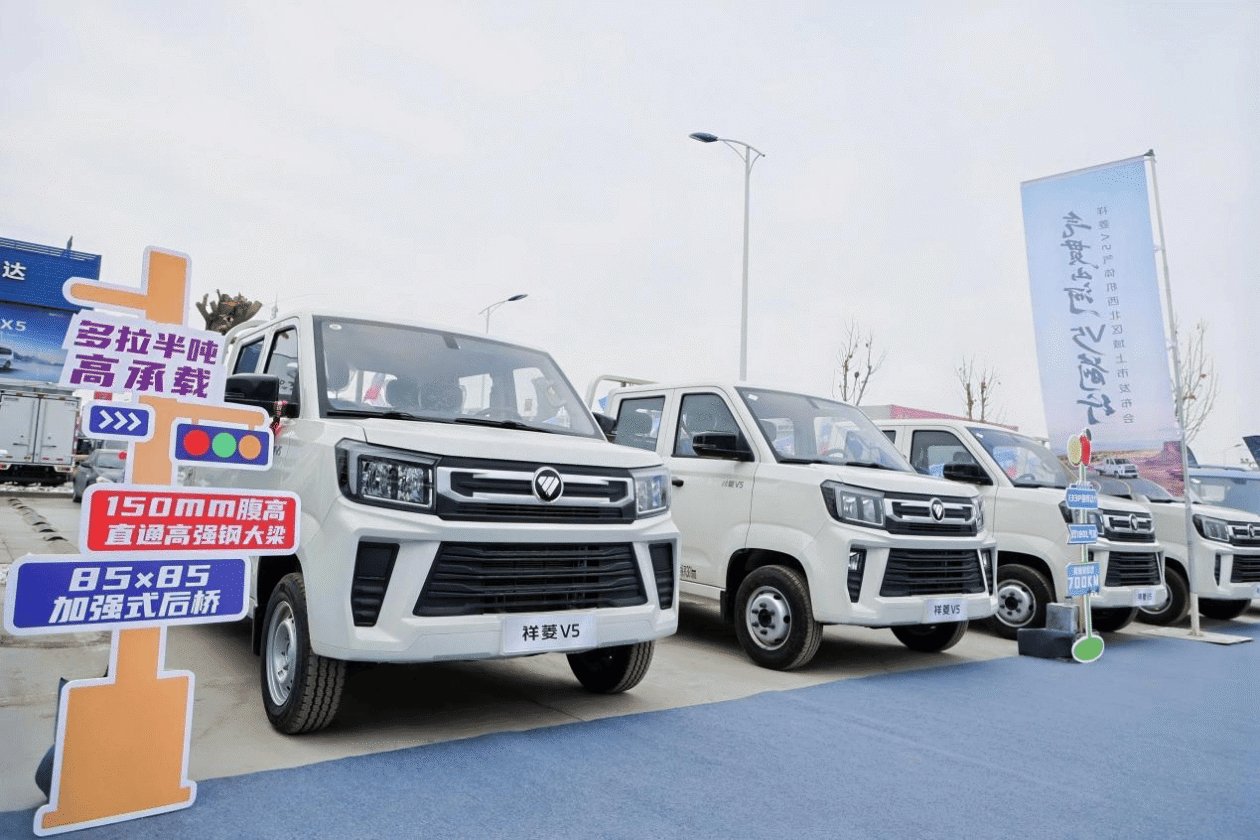
祥菱V5气体机产品西北首发
Huan Qiu Wang· 2026-01-09 02:50
Core Viewpoint - The global commercial vehicle industry is undergoing significant transformation driven by trends in electrification, intelligence, and scenario-based applications, with Xiangling positioning itself as a comprehensive solution provider for end logistics scenarios through innovation [2] Group 1: Product Features - The Xiangling V5 gas engine product features a 2.2L large displacement gas engine, providing 133 horsepower, which is a 10% improvement over mainstream models, enhancing performance without additional cost [2] - It is equipped with dual 180L large gas tanks, offering a comprehensive range of 700 kilometers [2] - The vehicle incorporates a "double wishbone independent suspension + P-EPS electric power steering" combination, improving handling performance by 10% and ride comfort by 15%, suitable for rugged roads and winding mountain routes [2] Group 2: Safety and Durability - The design includes a dual-cylinder brake caliper, enhancing braking force by 12.5%, ensuring safety in emergency situations [2] - A 150mm high-strength steel beam is used, increasing bending stiffness by 15% and torsional stiffness by 52%, making it capable of handling various heavy-load scenarios [2] Group 3: Versatility and Market Adaptation - The vehicle offers 90 different cargo box combinations to meet diverse logistical needs, including fruit transportation, agricultural trade, daily delivery, and building material transport [2] - The Xiangling V5 gas engine product aims to create an efficient and reliable "hard-core transportation tool" for end logistics users, driving the logistics industry towards greener, more specialized, and intelligent solutions [2]
锂钴镍需求2050年增超10倍!关键矿产告急,中国靠数字化找矿破局?
Zhong Guo Neng Yuan Wang· 2026-01-09 02:38
Core Viewpoint - The global political and economic landscape is undergoing profound adjustments, with energy and mineral resources becoming increasingly strategic for national economies. Experts at the recent high-end forum emphasized the need for technological innovation and structural optimization to enhance the supply security and resilience of energy and mineral resources in China [1]. Group 1: Demand for Key Minerals - The demand for strategic mineral resources is rapidly increasing due to advancements in artificial intelligence, quantum technology, new energy, and new materials. The overall demand for mineral resources is on the rise, particularly as traditional manufacturing transitions to intelligent manufacturing [2]. - The demand for lithium, cobalt, and nickel is expected to grow more than tenfold by 2050, while the demand for copper and aluminum will continue to rise until it peaks after 2040. The value of minerals required for intelligent manufacturing is projected to increase by 3 to 7 times by 2050 [2]. - The supply of major minerals is highly concentrated in a few countries, with 80% of iron ore licenses in Australia and Brazil, and over 90% of cobalt production in the Democratic Republic of Congo. This concentration poses significant risks to supply chain security [2]. Group 2: Digitalization and Technological Innovation - To address challenges, enhancing domestic resource self-sufficiency and industry chain resilience is essential. Experts agree on the need for technological leadership to explore resource potential and improve utilization efficiency [3]. - Since the 14th Five-Year Plan, the Ministry of Natural Resources has invested nearly 450 billion yuan in new exploration strategies, achieving significant breakthroughs in resource security and structural optimization [3]. - Advanced technologies such as big data, artificial intelligence, and quantum computing are providing new approaches for precise mineral exploration and resource resilience assessment [4]. Group 3: Building a Resilient Resource Security System - Experts propose constructing a high-resilience resource security system through policy mechanisms, international cooperation, and talent development. This includes simplifying approval processes and promoting social capital participation in resource development [5]. - The current global mineral issues have evolved into a systemic problem involving national security, industrial competition, and technological sovereignty. There is a need for a non-confrontational multi-cooperation network to enhance global supply chain resilience [5]. - By 2035, China's energy supply security is expected to improve, but challenges remain in green production and resource recycling. The future development of mineral resources is anticipated to be characterized by excess quantity, lagging quality, structural imbalance, and leading efficiency [6].
研判2025!中国网闸行业发展历程、市场现状及未来趋势分析:随着技术的深度融合,推动网闸向高效安全智能方向演进[图]
Chan Ye Xin Xi Wang· 2026-01-09 01:50
Industry Overview - The Chinese network isolation gateway (网闸) industry is transitioning from compliance-driven to value-driven, with a market size projected to reach approximately 213.5 billion yuan in 2024, reflecting a year-on-year growth of 7.39% [1][4][8] - The network isolation gateway is a network security device that enables high-security data exchange through physical isolation and data ferrying technology, ensuring complete physical separation of networks while allowing controlled data exchange [2][4] Industry Development History - The development of the Chinese network isolation gateway has evolved through three stages: 1. First generation: Single machine isolation card technology for basic network isolation and non-real-time data exchange 2. Second generation: Switch and shared storage architecture addressing real-time issues 3. Third generation: Dedicated switching channel technology providing high-performance secure tunnels [4][5] Industry Chain - The upstream of the network isolation gateway industry includes raw materials and components such as chips, PCBs, high-speed solid-state switches, and power modules, as well as software like operating systems and security algorithms [5][6] Market Size - The market for the network isolation gateway is expected to grow significantly, driven by increasing data value and stringent cybersecurity requirements, with a projected market size of 213.5 billion yuan in 2024 [1][4][8] Key Companies' Performance - The competitive landscape of the network isolation gateway industry is characterized by leading companies like Qihoo 360 and Venustech, which dominate the market due to their technological advantages and established presence in critical sectors [8][9] Industry Development Trends 1. The technology will evolve towards a hybrid architecture that combines software-defined and hardware-accelerated solutions, enabling dynamic network isolation strategies [11] 2. The core value of network isolation gateways is shifting from mere network isolation to becoming comprehensive data security exchange platforms, integrating data security capabilities throughout the data lifecycle [12] 3. Future competition will focus on ecosystem and system capabilities, with a need for deep industry-specific solutions and a shift towards domestic hardware and intelligent software integration [13]


奇骥进击 共赴新程,“一骑纵新途”2026奇家宴在京举行
Zhong Guo Qi Che Bao Wang· 2026-01-09 01:47
Core Insights - Chery Group held the "2026 Qijia Banquet" in Beijing, marking the beginning of a new year and discussing future development plans [1][3] - The company achieved significant milestones in 2025, including record sales and exports, and aims for further growth in 2026 [2][4] Sales Performance - Chery sold a total of 2,806,393 vehicles in 2025, representing a year-on-year increase of 7.8% [4] - The company exported 1,344,020 vehicles, a 17.4% increase, and has maintained its position as the top Chinese brand in passenger car exports for 23 consecutive years [4] - New energy vehicle (NEV) sales reached 903,847 units, showing a substantial growth of 54.9% year-on-year [4] Quality and Safety Achievements - Chery received a nomination for the "China Quality Award" and ranked first among domestic brands in five categories of J.D. Power evaluations [4] - The company has 60 models that have received five-star safety ratings globally, leading among Chinese automotive brands [4] Strategic Goals for 2026 - Chery aims to achieve a sales target of 3.2 million vehicles in 2026, a 14.03% increase from 2025, and plans to launch 17 key models [13] - The company is focusing on accelerating its transition towards electrification and intelligence [13] Brand Development - Chery's various brands, including Chery, Exeed, Jetour, iCAR, and Zongheng, are positioned to enhance user value and brand experience [10][11][12] - The company introduced a new year policy offering substantial subsidies for both fuel and new energy vehicles, with discounts up to 20,000 yuan [12] Commitment to Innovation - Chery emphasized its commitment to high-quality development and innovation, particularly in the fields of new energy and intelligent technology [5][9] - The company is enhancing its global presence and has entered several high-regulation European markets, receiving positive recognition [10]
研判2025!中国医疗污水处理设备行业政策汇总、产业链、市场规模、竞争格局和未来趋势分析:污水治理政策推动,医疗污水处理设备需求持续上涨[图]
Chan Ye Xin Xi Wang· 2026-01-09 01:37
Core Insights - The medical wastewater treatment equipment market in China is expected to grow from 2.85 billion yuan in 2015 to 4.8 billion yuan by 2024, indicating a strong growth trend driven by government support and technological advancements [1][5]. Industry Overview - Medical wastewater treatment equipment is specifically designed to handle various types of wastewater generated by hospitals, which contains pathogenic microorganisms and harmful pollutants [2]. - The treatment process typically involves a combination of physical, chemical, and biological methods to ensure effective purification [2]. Industry Policies - Recent government policies have emphasized the importance of improving wastewater treatment facilities in medical institutions, mandating the construction of adequate treatment systems to prevent untreated wastewater discharge [3][4]. Industry Chain - The industry chain consists of upstream raw materials (steel, plastic, electronic components), midstream manufacturing of treatment equipment, and downstream application in medical institutions [4]. Market Competition - The medical wastewater treatment equipment market is highly competitive, with numerous domestic and international companies offering various products and solutions [6]. - Key players include companies like Anhui Huaki Environmental Technology Co., Ltd. and Tianjin Chuangye Environmental Protection Co., Ltd., which are actively involved in the development and application of treatment technologies [6][7]. Industry Development Trends - The industry is witnessing trends towards smart, efficient, and resource-oriented wastewater treatment solutions, utilizing IoT and big data for remote monitoring and management [7]. - There is a growing focus on recycling treated wastewater for non-potable uses within hospitals, contributing to cost savings and environmental sustainability [7].



迈向“十五五”的美丽图景·一线见闻丨大船凭风好扬帆
Yang Guang Wang· 2026-01-09 01:33
Group 1 - The central economic work conference emphasizes the need for a "dual carbon" approach to promote comprehensive green transformation in industries [1] - The Huai Bin Center Port, located on the main channel of the Huai River, is the largest comprehensive inland port in Henan province, actively pushing for the upgrade of traditional shipbuilding towards high-end, intelligent, and green manufacturing [1] - The local shipbuilding industry is transitioning to produce high-value-added vessels, such as electric and natural gas ships, as well as workboats and law enforcement vessels for export [1] Group 2 - The shipbuilding industry in Xinyang is expanding beyond Huai Bin to surrounding counties, with several shipbuilding and repair projects accelerating, indicating a clustering effect in the industry [2] - A new green shipbuilding industrial park is set to be completed by 2027, which will consolidate all shipbuilding and supporting enterprises in Huai Bin [2] - The annual shipbuilding output in Huai Bin exceeds 600 vessels, generating over 4 billion yuan in production value, showcasing the shift from low-end to high-end intelligent manufacturing [2]
中经评论:“两新”激发中国制造新动能
Jing Ji Ri Bao· 2026-01-09 00:03
Group 1 - The "Two New" policy aims to optimize support for the manufacturing sector, enhancing investment growth in equipment manufacturing, consumer goods, and information technology, while promoting the transformation of Chinese manufacturing towards high-end, intelligent, and green development [1] - The demand for equipment updates is significant, with a 12.2% year-on-year increase in investment in equipment and tools from January to November 2025, contributing 1.8 percentage points to overall investment growth [1] - The first batch of 625 billion yuan in special bonds for consumer goods replacement has been allocated ahead of schedule, indicating strong governmental support for the initiative [1] Group 2 - The old-for-new consumption policy has opened new market opportunities for Chinese manufacturing, with sales of related products expected to exceed 2.6 trillion yuan in 2025, including over 11.5 million vehicles and 129 million home appliances [2] - The "Two New" policy not only stimulates investment and consumption but also drives quality upgrades in Chinese manufacturing, leading to improved production efficiency and profitability [2] - The shift towards smart and green products is evident, with nearly 60% of replaced vehicles being new energy vehicles and over 90% of replaced home appliances being energy-efficient [3] Group 3 - The optimization of the "Two New" policy is expected to invigorate small and medium-sized enterprises (SMEs) by lowering investment thresholds and streamlining application processes, thus enhancing their competitiveness [3] - The policy encourages a collaborative upgrade across the supply chain, fostering a virtuous cycle of demand and supply, which is essential for the sustainable growth of the manufacturing sector [3] - The dual focus on investment and consumption through the "Two New" policy is set to accelerate China's transition from a manufacturing power to a manufacturing stronghold [4]
广西做优做强工业经济 形成十大千亿元级支柱产业
Jing Ji Ri Bao· 2026-01-08 21:43
Group 1 - The core viewpoint of the articles highlights Guangxi's commitment to implementing the "Industrial Strong Guangxi" strategy, focusing on expanding investment, optimizing structure, and enhancing efficiency in the industrial economy [1][2] - During the "14th Five-Year Plan" period, Guangxi's industrial economy is expected to achieve significant growth, with the total industrial output value projected to reach 2.7 trillion yuan by 2025, an increase of 900 billion yuan over five years [1] - The industrial added value is anticipated to account for over 27% of the regional GDP, marking an increase of nearly 4 percentage points over five years, establishing the industrial sector as a cornerstone of economic development in the region [1] Group 2 - Guangxi has established ten pillar industries, with the non-ferrous metal industry expected to double its output value to over 450 billion yuan by 2025, while the steel and food industries are projected to exceed 300 billion yuan [1] - The region is also focusing on digital and green transformation, with over 5,000 enterprises implementing smart upgrades and nearly 10,000 completing digital diagnostics during the "14th Five-Year Plan" [1] - Guangxi aims to enhance high-quality industrial development by integrating artificial intelligence with manufacturing, promoting technological and industrial innovation, and improving the green low-carbon development system [2]
吴江智能创造再出发茧丝市场化身“数智工厂”
Xin Hua Ri Bao· 2026-01-08 21:33
Core Insights - The Taohuaxue Digital Future Factory has commenced construction, aiming to integrate traditional silk craftsmanship with modern technology, targeting an annual sales goal of 3 billion yuan [1][2] - The factory represents a significant investment of approximately 300 million yuan, positioning itself as a benchmark for digital and intelligent development in the silk industry [1] - The project will implement an intelligent production system and a smart logistics hub, enhancing efficiency and enabling global supply chain collaboration [1] Group 1 - The factory aims to produce 4 million silk products and 200,000 silk garments annually upon completion [1] - It will utilize digital technology to create a new consumer experience, allowing for deeper appreciation of product value [2] - The initiative is part of a broader strategy to elevate traditional industries in Wujiang to higher positions in the global value chain [2] Group 2 - The project emphasizes the fusion of culture, technology, and industry, enhancing the legacy of silk culture in Wujiang [2] - Wujiang's local government is committed to promoting innovation and upgrading traditional industries through this initiative [2] - The factory is expected to foster collaboration across the silk industry ecosystem, driving overall industry upgrades [2]