
物理AI

Search documents
小鹏AI日后,美银上调其目标价:看好“物理AI”战略和技术变现的能力
Hua Er Jie Jian Wen· 2025-11-07 02:56
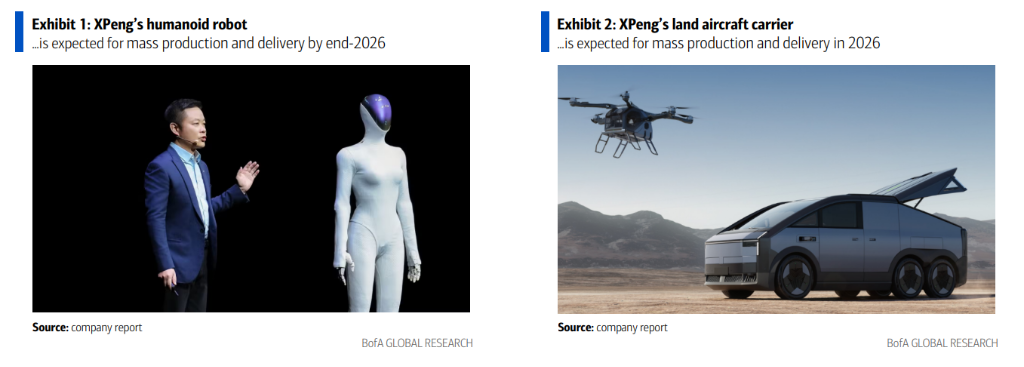
Core Viewpoint - XPeng Motors has gained further recognition from Wall Street following its AI Day, where it outlined its "Physical AI" vision and advancements in artificial intelligence, including the VLA 2.0 model and various innovative products [1][4]. Financial Outlook - Bank of America reiterated a "Buy" rating for XPeng Motors, raising the target price for its American Depositary Shares (ADS) from $26 to $27 and the Hong Kong stock target price from HKD 101 to HKD 105 [1]. - The report indicates a cautious adjustment to XPeng's short-term financial outlook, increasing the non-GAAP net loss forecast for 2025 by 36.7% and lowering profit expectations for 2026 and 2027 by 4.5% and 5.5%, respectively [4][7]. Product and Technology Developments - The highlight of the AI Day was the announcement that Volkswagen has become the first external customer for XPeng's VLA 2.0 model and has ordered its self-developed Turing AI chip, marking a significant step in the commercialization of XPeng's AI technology [4][5]. - XPeng's VLA 2.0 model is described as the operating system for controlling the "Physical AI" world, with applications across various products including Robotaxis, humanoid robots, and flying cars [5][8]. - The company plans to launch three Robotaxi models in 2026, powered by four Turing chips, and anticipates mass production of its humanoid robot by the end of 2026 [8]. Sales and Profit Projections - The report provides updated sales and profit forecasts for XPeng, with slight increases in unit volume and consolidated sales for 2025, 2026, and 2027, while gross profit expectations have been slightly reduced [9]. - The adjusted profit (loss) from operations for 2025 is expected to worsen, with a projected net loss of RMB 1.667 billion, reflecting a 21.4% increase from previous estimates [9].


交银国际每日晨报-20251107
BOCOM International· 2025-11-07 01:48
Group 1: AMD (Advanced Micro Devices) - AMD's Q3 2025 revenue reached $9.25 billion, exceeding both the firm's and market expectations, with a Non-GAAP gross margin of 54%, aligning with prior forecasts [1][2] - The company provided guidance for Q4 2025, projecting a median revenue of $9.6 billion (±$300 million) and a gross margin of approximately 54.5%, both surpassing previous estimates [1][2] - AMD's revenue forecasts for 2025, 2026, and 2027 have been raised to $33.99 billion, $44.69 billion, and $59.54 billion respectively, with Non-GAAP EPS estimates adjusted to $4.49, $6.51, and $9.23 [2] Group 2: Youdao (DAO US) - Youdao is expected to continue focusing on high school education, AI, and advertising, with ad revenue anticipated to accelerate due to AI technology and new customer expansion [3] - The company is adjusting its profit expectations for the year, as increased investments in advertising and high school business may impact short-term profit trends, but long-term growth potential remains strong [3] - The target price for Youdao is maintained at $12.00, indicating a potential upside of 14.3% from the current price of $10.50 [3] Group 3: XPeng Motors - XPeng Motors held its 2025 Technology Day, unveiling significant advancements in "physical AI," including the second-generation VLA model and Robotaxi initiatives [5][6] - The second-generation VLA is set to be implemented in the XPeng Ultra model by Q1 2026, with Volkswagen confirmed as the first customer [5] - XPeng plans to launch three Robotaxi models in 2026, collaborating with Gaode for global ecosystem partnerships [6] Group 4: Economic Data - Upcoming economic data releases include the Manufacturing Purchasing Managers' Index (PMI) for October in the US, with a market expectation of 52.20, and the ISM Non-Manufacturing PMI, expected at 50.00 [7] - The data will provide insights into the economic conditions and potential impacts on various sectors [7]


AI泡沫论调席卷全球之际 资金悄然回流苹果(AAPL.US)“安全避风港”
智通财经网· 2025-11-07 01:37
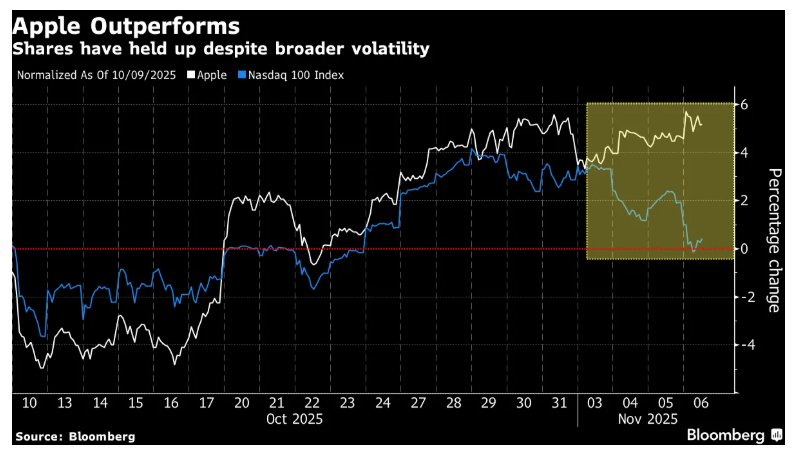
Core Viewpoint - A significant sell-off in tech stocks has impacted popular AI companies, but Apple has shown resilience, maintaining a stable stock price and market capitalization amidst market volatility [1][2]. Group 1: Apple’s Performance - Apple’s stock price has only decreased by 0.14% while the Nasdaq 100 index fell by 1.9%, indicating its relative strength during market downturns [1]. - Over the past month, Apple’s stock has increased by over 5%, contrasting with the Nasdaq 100 index's less than 1% increase [1]. - Apple’s market capitalization is approximately $4 trillion, making it the second-largest company after Nvidia, which recently surpassed $5 trillion [1]. Group 2: Market Sentiment and AI Bubble Concerns - The market is experiencing fears of an AI bubble, leading investors to retreat from speculative AI stocks, while Apple’s strong cash flow and stability are attracting attention [3][5]. - Analysts believe that the current market is in the early stages of a potential AI bubble, with valuations not reaching extreme levels seen during the 2000 internet bubble [5]. - Concerns about high leverage financing for AI data centers are prevalent, but analysts from UBS and Societe Generale suggest that significant risks are not imminent [5]. Group 3: Apple’s Strategic Positioning - Apple’s recent performance is partly due to its strong cash flow and a solid balance sheet, which have historically provided stability during market turbulence [2]. - Despite a lack of direct involvement in the AI investment frenzy, Apple’s stock has shown resilience, with a year-to-date increase of 8.4%, compared to the Nasdaq 100 index's nearly 20% rise [6]. - Apple is planning to invest approximately $1 billion annually to purchase an AI model from Google, which is seen as a strategic move to enhance its Siri voice assistant [7]. Group 4: Future Growth Opportunities - Analysts are optimistic about "physical AI" as a potential growth engine for Apple, with projections suggesting that its planned robotics series could generate around $130 billion in revenue by 2040 [8]. - The integration of AI and robotics could position Apple as a leading player in the physical AI market, leveraging its extensive device ecosystem and proprietary technology [8]. - The potential market share for Apple in the robotics sector could reach 22% by 2040, similar to its current share in the smartphone market, significantly impacting its future stock value [8].

小鹏汽车-W高开近5% 小鹏X9超级增程开启预售 何小鹏再自证机器人内部没人
Zhi Tong Cai Jing· 2025-11-07 01:36
Core Viewpoint - Xiaopeng Motors (09868) experienced a nearly 5% increase in stock price following the announcement of the pre-sale for the Xiaopeng X9 Super Extended Range model, indicating strong market interest and potential sales growth [1] Group 1: Product Launch and Sales - The Xiaopeng X9 Super Extended Range is available in two versions, with pre-sale prices starting at 350,000 yuan for the Max version and 370,000 yuan for the Ultra version [1] - As of November 6, 2023, the pre-sale orders for the Xiaopeng X9 have set a new record for the same period in its history [1] Group 2: Technological Advancements - During the Xiaopeng Technology Day held on November 5, the company showcased four significant applications under its "Physical AI" strategy, including the second-generation VLA, Robotaxi, the new generation of the humanoid robot IRON, and two flight systems [1] - The CEO of Xiaopeng Motors confirmed that the new generation humanoid robot IRON operates without human intervention, highlighting the company's advancements in robotics [1] Group 3: Market Position and Future Outlook - According to CMB International, Xiaopeng Motors has achieved its annual sales target within the first ten months of 2025, driven by its competitive pricing, level of intelligence, and diverse product matrix in the electric vehicle sector [1] - The company is expected to achieve breakthrough progress in mass production of its humanoid robots, Robotaxi, and low-altitude aircraft by 2026, indicating significant growth potential in the future [1]

港股异动 | 小鹏汽车-W(09868)高开近5% 小鹏X9超级增程开启预售 何小鹏再自证机器人内部没人
智通财经网· 2025-11-07 01:28
Core Viewpoint - Xiaopeng Motors (09868) saw a nearly 5% increase in stock price following the pre-sale announcement of the Xiaopeng X9 Super Range, indicating strong market interest and confidence in the company's product offerings [1] Group 1: Product Launch and Sales Performance - The Xiaopeng X9 Super Range has two versions, with pre-sale prices starting at 350,000 yuan for the Max version and 370,000 yuan for the Ultra version [1] - As of November 6, the pre-sale orders for the Xiaopeng X9 Super Range have set a new record for the X9 model during the same period [1] Group 2: Technological Advancements and Strategic Initiatives - On November 5, during the Xiaopeng Technology Day, the company showcased four significant applications under its "Physical AI" strategy, including the second-generation VLA, Robotaxi, the new generation of the humanoid robot IRON, and two flight systems [1] - The company aims for breakthroughs in mass production of its humanoid robot, Robotaxi, and low-altitude aircraft by 2026, highlighting its self-research capabilities and diversified product matrix [1] Group 3: Market Position and Future Outlook - According to CMB International, Xiaopeng Motors has achieved its annual sales target within the first ten months of 2025, driven by its competitive pricing, level of intelligence, and diverse product offerings in the electric vehicle sector [1] - The company's growth potential remains a focal point for investors, particularly in light of its advancements in technology and product development [1]
小鹏为什么选择物理AI这条路
雷峰网· 2025-11-07 00:43
Core Viewpoint - The future of automobiles is envisioned as four-wheeled robots, with intelligent driving becoming the core competitive point in the industry by 2025, as electric vehicle technology matures and becomes a basic threshold for entry [2][9]. Group 1: Industry Trends - The development of the new energy industry has shifted focus from electrification to intelligent driving, marking a new cycle of competition [2]. - Major tech companies are investing in physical AI, indicating a consensus that the next generation of human-machine interaction will be through robotics [2][9]. - The emergence of physical AI is expected to revolutionize various sectors, including automotive, robotics, and flying cars, creating a more integrated technological ecosystem [7][28]. Group 2: Company Developments - Xiaopeng Motors has been an early adopter of AI in the automotive sector, positioning itself in the first tier of intelligent driving companies in China [3]. - The company has achieved significant breakthroughs with its second-generation VLA model, which allows for autonomous understanding of physical laws, enhancing its intelligent driving capabilities [5][20]. - Xiaopeng's investment in AI infrastructure includes a 4.5 billion yuan annual investment in computing power, establishing a large-scale intelligent computing cluster to support its AI model training [16]. Group 3: Product Innovations - Xiaopeng plans to launch multiple products, including three Robotaxi models and a highly humanoid robot named IRON, aiming for mass production by the end of 2026 [22][30]. - The second-generation VLA model is designed to eliminate reliance on high-precision maps, enabling more flexible and cost-effective deployment of Robotaxi services [28]. - The company is also advancing in the flying car sector, with over 7,000 orders for its land carrier and ongoing flight verification for its multi-person tilt-rotor flying car [30]. Group 4: Competitive Landscape - The competition in the physical AI space is intensifying, with Xiaopeng and Tesla both recognizing the need for a combination of diverse hardware and unified software architecture to support AI's development in the physical world [12][17]. - Xiaopeng's approach to physical AI aims to create a synergistic effect across its various business lines, optimizing costs and enhancing overall competitiveness [26]. - The industry is witnessing a shift from a single-direction chase to a collaborative innovation model, where breakthroughs are achieved through the convergence of multiple fields [33].

银行配债有哪些指标约束
GOLDEN SUN SECURITIES· 2025-11-07 00:06
Group 1: Fixed Income and Banking - The report discusses the increasing mismatch in the duration of bank assets and liabilities, leading to pressure on liquidity indicators and constraints on asset allocation behavior [5] - It highlights that the increase in long-duration bond holdings raises interest rate risk indicators [5] Group 2: Beauty and Personal Care - The company, founded in 2001, has become the third-largest domestic cosmetics group in China, with flagship brand "Natural Hall" consistently ranking among the top two domestic brands from 2013 to 2024 [6] - Revenue has shown a steady growth trend, with figures of 4.29 billion, 4.44 billion, and 4.60 billion yuan for 2022, 2023, and 2024 respectively, and adjusted net profits of 139 million, 313 million, and 203 million yuan [6] - The company primarily relies on online channels, with 68.8% of revenue from online sales in the first half of 2025, and has over 37.7 million registered members [6] Group 3: Agriculture, Forestry, Animal Husbandry, and Fishery - As of the end of Q3 2025, the heavy allocation in agriculture, forestry, animal husbandry, and fishery stocks decreased to 0.78%, down 0.58 percentage points from the previous quarter [8] - The report indicates a significant reduction in allocations for the breeding and feed sectors, with breeding at 0.31% and feed at 0.40% [9] - Investment suggestions include focusing on leading companies in the breeding sector and stable profitability in the planting sector, with specific recommendations for stocks like Muyuan Foods and New Hope [10] Group 4: Light Industry Manufacturing - The company is recognized as a leader in the global consumer-grade 3D printing equipment market, with a strong competitive advantage through its product offerings and technology [12] - It has established a comprehensive sales system covering approximately 140 countries and regions, with a network of 2,163 distributors [12] Group 5: Electronics - The company has achieved significant revenue growth, with a reported revenue of 6.676 billion yuan in the first half of 2025, marking a 54.5% year-on-year increase [15] - The report emphasizes the explosive demand for AI computing power, predicting that the global AI chip market could reach $400 billion by 2027 [16]




人工智能行至中场,“物理AI”成关键赛点
3 6 Ke· 2025-11-06 23:41
Core Insights - The concept of "Physical AI" is emerging as a focal point in the global technology competition, with major tech companies investing heavily to secure their positions in this next technological era [1][19] - NVIDIA's CEO Jensen Huang has identified Physical AI as a core direction for AI development, emphasizing its potential to enhance physical interaction capabilities [3][19] - The competition spans from Silicon Valley to China, with companies making investments in the hundreds of billions to capture the narrative of the next technological age [1] Group 1: Physical AI Development - Physical AI is defined by the collaborative evolution of mechanics, control, and perception, moving from "digital understanding" to "physical interaction" [3] - The implementation of Physical AI relies on three key components: physical modeling and training in virtual environments, generation and reasoning of high-quality physical data, and the perception and decision-making loop in real-world scenarios [3][6][7] Group 2: Technological Innovations - Virtual modeling serves as the foundation of Physical AI, utilizing a combination of classical physics laws and deep learning to create highly accurate simulation environments [6] - High-quality data generation is crucial for Physical AI, employing a fusion of synthetic and real data to address the scarcity and labeling challenges of real physical data [6][7] - Major tech companies like NVIDIA are showcasing their Physical AI applications, integrating platforms that simulate real-world environments and generate synthetic data for training [8] Group 3: Industry Applications - In the automotive sector, companies like Tesla and Xpeng are leveraging Physical AI for advancements in autonomous vehicles and robotics, with Tesla's Optimus robot utilizing driving data for training [12][19] - Amazon is entering the Physical AI space with new robotic systems aimed at automating warehouse operations, planning to achieve 75% automation in logistics by 2027 [13][19] - Physical AI is expected to revolutionize productivity across various sectors, including manufacturing and transportation, by enabling autonomous decision-making and optimizing operational efficiency [14][16] Group 4: Future Outlook - Gartner predicts that by 2030, all IT work will be deeply integrated with AI, with 25% of IT tasks performed independently by robots [14] - The ultimate value of Physical AI lies in liberating humans from repetitive physical labor, allowing them to focus on higher-value activities [14][19] - The competition for dominance in Physical AI is not just a commercial battle but a critical measure of national technological competitiveness, influencing the future landscape of various trillion-dollar markets [19]

美股异动丨小鹏汽车大涨近13%创逾两个月新高,新一代人形机器人惊艳亮相
Ge Long Hui· 2025-11-06 14:54
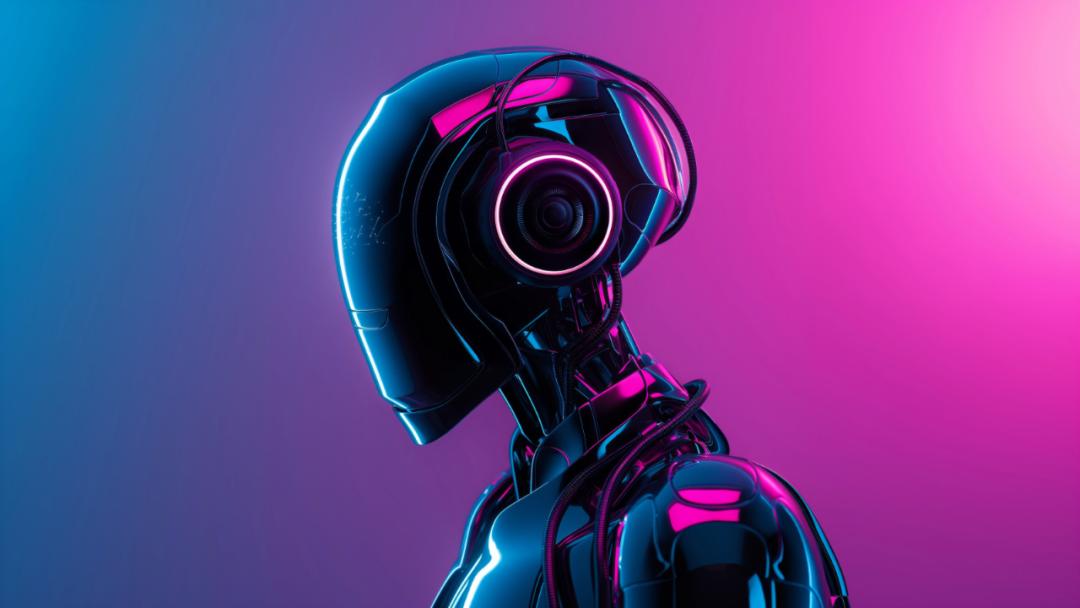
Core Viewpoint - XPeng Motors (XPEV.US) experienced a significant increase of nearly 13% in early trading, reaching a high of $24.6, marking a new high in over two months [1] Group 1: Product Launches and Innovations - During the recent XPeng Technology Day, the company unveiled four key applications centered around "Physical AI," including the second-generation VLA, Robotaxi, the new generation humanoid robot IRON, and two flight systems [1] - The humanoid robot IRON attracted considerable attention for its human-like walking demonstration, which was humorously referred to as "a real person walking the catwalk" by many online [1] - Currently, IRON is in the research phase, with plans for mass production of both hardware and software expected around April next year [1] Group 2: New Vehicle Pre-Sales - The XPeng X9 Super Extended Range model has commenced pre-sales, with the Max version starting at a price of 350,000 yuan and the Ultra version starting at 370,000 yuan [1] - The official launch of the X9 is scheduled for later this month [1]
美股异动 | 小鹏汽车(XPEV.US)盘前涨逾7% 小鹏X9超级增程开启预售
智通财经网· 2025-11-06 13:42
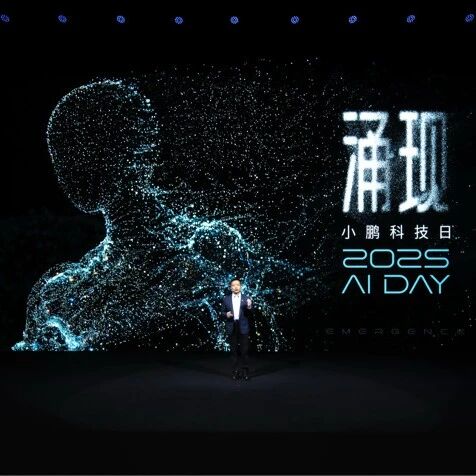
Core Viewpoint - Xiaopeng Motors (XPEV.US) saw a pre-market increase of over 7%, reaching $23.44, following the announcement of the pre-sale for the Xiaopeng X9 Super Range model on November 6 [1] Group 1: Product Launch - The Xiaopeng X9 Super Range will be available in two versions, with the Max version starting at 350,000 yuan and the Ultra version starting at 370,000 yuan [1] - The new model is set to officially launch this month, featuring a CLTC comprehensive range of 1,602 kilometers and a pure electric range of 452 kilometers, along with support for 5C fast charging [1] Group 2: Technology Day Announcement - On November 5, Xiaopeng held a "2025 Xiaopeng Technology Day" at its Guangzhou Technology Park, themed "Emergence" [1] - During the event, Xiaopeng announced four significant applications related to "Physical AI," including the second-generation VLA, Xiaopeng Robotaxi, the new generation IRON, and two flight systems from Huitian, all of which have clear mass production plans [1] - Xiaopeng's Chairman and CEO, He Xiaopeng, stated that the company's positioning has been upgraded to "explorers of mobility in the Physical AI world, a global embodied intelligence company" [1]