全球化

Search documents
山推股份(000680):公司简评报告:整机销量表现强劲,品牌全球影响力提升
Donghai Securities· 2026-03-16 12:52
Investment Rating - The investment rating for the company is "Buy" (maintained) [1] Core Insights - The company has shown strong performance in machinery sales, with a significant increase in global brand influence [1] - In 2025, the company achieved total revenue of 14,620.17 million yuan, a year-on-year increase of 2.82%, with overseas revenue reaching 8,741 million yuan, up 17.94% [5] - The company aims for a revenue target of 16,100 million yuan in 2026, with overseas revenue projected at 10,500 million yuan [5] - The company has maintained a strong market position, ranking among the top 50 global construction machinery manufacturers [5] Financial Performance Summary - **Revenue Forecasts**: - 2025A: 14,620.17 million yuan - 2026E: 16,227.19 million yuan (10.99% growth) - 2027E: 17,915.22 million yuan (10.40% growth) - 2028E: 19,734.10 million yuan (10.15% growth) [2] - **Net Profit Forecasts**: - 2025A: 1,210.98 million yuan - 2026E: 1,497.56 million yuan (23.67% growth) - 2027E: 1,833.13 million yuan (22.41% growth) - 2028E: 2,202.38 million yuan (20.14% growth) [2] - **Earnings Per Share (EPS)**: - 2025A: 0.81 yuan - 2026E: 1.00 yuan - 2027E: 1.22 yuan - 2028E: 1.47 yuan [2] - **Price-to-Earnings (P/E) Ratios**: - 2025A: 14.22 - 2026E: 11.50 - 2027E: 9.39 - 2028E: 7.82 [2] Market Position and Strategy - The company has a robust product lineup, including over 930 models across six major series, which enhances its competitive advantage [5] - The company is actively expanding its global presence, with 13 overseas subsidiaries and increasing participation in international exhibitions [5] - The overseas revenue accounted for 59.79% of total revenue in 2025, with a gross margin of 28.15% [5]

2026取暖电器行业简析报告
MCR嘉世咨询· 2026-03-16 01:40
Investment Rating - The report provides a positive investment outlook for the heating appliance industry, highlighting robust growth potential driven by policy support and consumer demand [4]. Core Insights - The heating appliance industry in China is projected to maintain steady growth from 2021 to 2025, with market size increasing from 328 billion to 770 billion yuan, reflecting a compound annual growth rate (CAGR) of approximately 29.1% [4][20]. - The industry has evolved through four stages: initial development, rapid growth, accelerated upgrading, and high-quality development, transitioning from basic heating functions to smart, energy-efficient, and scenario-based solutions [4][9]. - The market is increasingly driven by both policy initiatives promoting clean heating and rising consumer demand, particularly in non-central heating regions of southern China [4][21]. Market Overview - The heating appliance market is categorized into three main segments: electric heating, gas heating, and auxiliary integrated heating devices [4][8]. - Key product categories experiencing significant growth include baseboard/convection heaters, PTC heaters, and air-source heat pump heating machines, while traditional products like electric oil heaters are losing market share [4][20]. Industry Growth Drivers - Policy support for clean heating and energy efficiency standards, along with consumer demand awakening in southern regions, are key growth drivers [4][21]. - By 2025, smart heating products are expected to account for 47.6% of total sales, indicating a shift towards more advanced and user-friendly heating solutions [4][23]. Technological Innovations - The industry has seen a technological evolution from basic heating technologies to smart and green solutions, with AI control and IoT integration becoming mainstream [24][25]. - New materials like graphene and carbon fiber are being increasingly utilized, enhancing energy efficiency and reducing product weight [26][28]. Export Landscape - China is the largest exporter of heating appliances globally, with significant growth in exports to the EU, Japan, and ASEAN countries [32]. - In 2025, the export volume of electric heating appliances is expected to reach 10.615 million units, with a year-on-year growth of 6.18% [32]. Industry Structure - The industry value chain is characterized by a strong collaboration between upstream raw material suppliers, midstream manufacturers, and downstream sales channels, with profits skewed towards midstream brands and downstream channels [33][34]. - The market concentration is increasing, with the top five brands' market share rising from 58% in 2021 to 76% in 2025 [40]. Consumer Trends - Consumer preferences are shifting from basic heating needs to a demand for comfort, safety, and smart features, with a notable increase in the popularity of high-end and energy-efficient products [49]. - The market is witnessing a diversification of usage scenarios, with portable and waterproof products gaining traction in various environments [49].

东海证券晨会纪要-20260313
Donghai Securities· 2026-03-13 02:50
Group 1: Economic Overview - The U.S. CPI data for February 2026 shows a year-on-year increase of 2.4%, aligning with expectations, while the core CPI also increased by 2.5% year-on-year, consistent with forecasts [4][5] - The inflation data indicates that the overall inflation rate remained stable compared to January, primarily due to the continued weakness in used car prices, despite slight rebounds in food and energy prices [5][7] - The report suggests that the February inflation data is somewhat outdated, as it does not account for the recent surge in oil prices due to Middle Eastern conflicts, which may exacerbate concerns about stagflation in the U.S. economy [7][5] Group 2: Machinery Equipment Industry - In February 2026, excavator sales totaled 17,226 units, a year-on-year decline of 10.6%, with domestic sales dropping by 42% while exports increased by 37.2% [10][11] - The domestic demand for excavators is expected to recover due to upcoming major projects, while the export market continues to show strong growth, particularly in countries like Russia and Indonesia [11][10] - Loader sales in February 2026 reached 9,540 units, marking a year-on-year increase of 9.28%, with domestic sales declining by 14.3% but exports rising by 34.4% [12][10] Group 3: Company Developments - Zoomlion issued H-share convertible bonds totaling RMB 6 billion to support its globalization strategy and innovation initiatives, with half of the funds allocated for global development and the other half for high-quality development in new technologies [13][14] - The report highlights the importance of companies like SANY Heavy Industry, Zoomlion, and LiuGong, which are well-positioned for growth due to their strong brand recognition, efficient cost management, and robust R&D capabilities [14][13]
复星国际2025财年业绩预警:预计亏损超215亿元
Jing Ji Guan Cha Wang· 2026-03-12 12:40
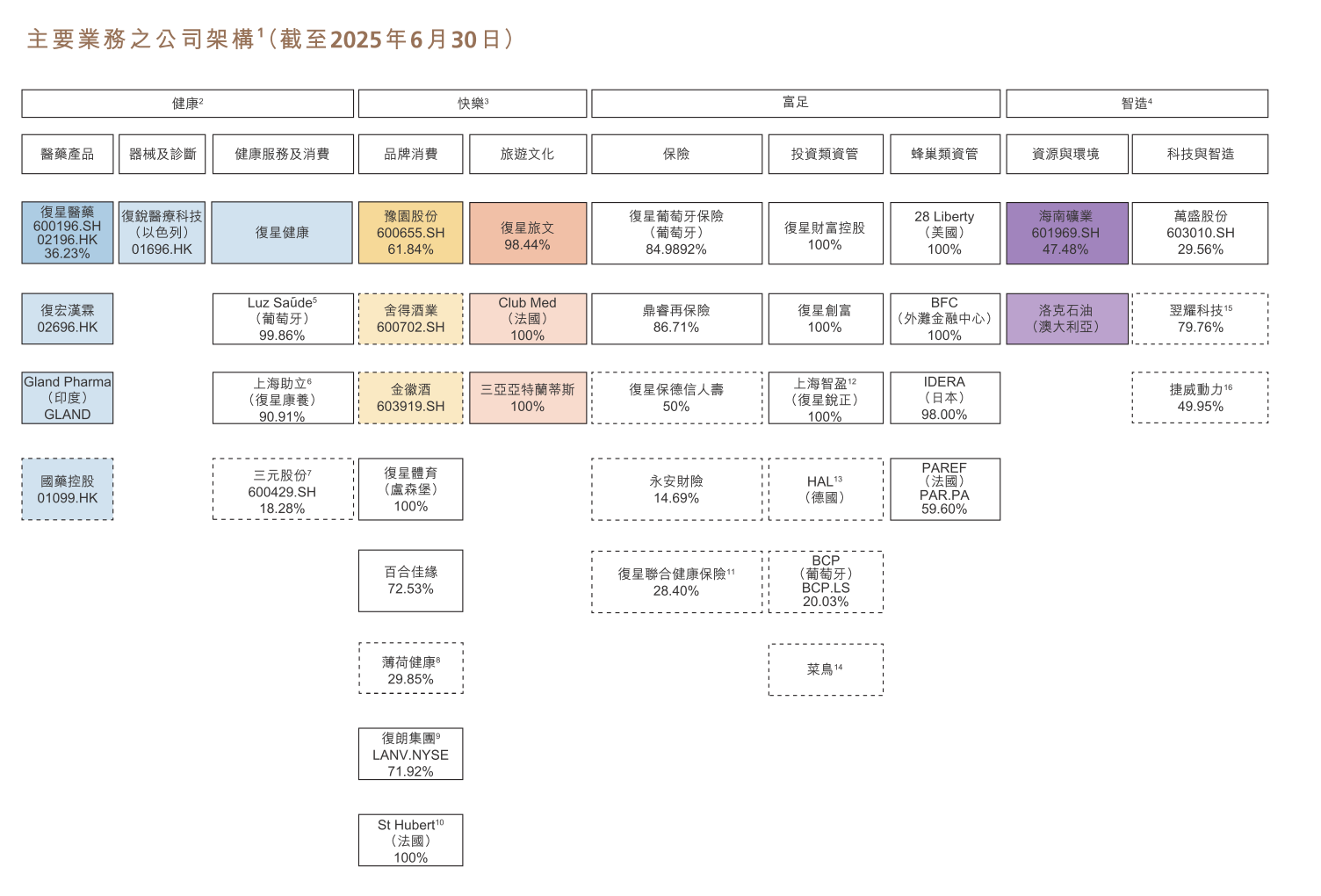
Company Dynamics - Fosun International has issued a profit warning for the fiscal year 2025, expecting a net loss of between 21.5 billion to 23.5 billion yuan, a significant increase from the previous year's loss of 4.35 billion yuan [1] - The primary reason for this loss is attributed to one-time impairment and revaluation of certain assets, particularly due to the ongoing downturn in the real estate market, which has led to substantial pressure on the group's real estate business [1] - The company has made large provisions for projects showing signs of impairment and has also impaired goodwill and intangible assets in non-core business segments to more accurately reflect asset values [1] Business Overview - As a diversified enterprise spanning pharmaceuticals, real estate, finance, and technology, Fosun International reported total assets exceeding 735.6 billion yuan as of the mid-2025 report, with its business divided into four strategic segments: "Health," "Happiness," "Wealth," and "Intelligent Manufacturing" [2] - The "Health" segment includes companies such as Fosun Pharma and Gland Pharma, while the "Happiness" segment focuses on consumer goods and tourism, featuring companies like Yuyuan and Club Med [2] - The "Wealth" segment encompasses insurance and asset management, including Fosun Portugal Insurance, and the "Intelligent Manufacturing" segment covers resources, manufacturing, and technology businesses [2] Financial Performance - According to disclosed data from Fosun International's listed companies, Yuyuan is expected to incur a loss of 4.8 billion yuan for the year 2025, making it one of the largest loss-makers within the Fosun system [3] - The anticipated loss for Yuyuan is primarily due to asset impairment provisions for real estate projects and goodwill, accelerated inventory liquidation, and structural changes in the consumer sector leading to decreased revenue and gross profit compared to the previous year [3] - On March 10, Guotai Junan Securities rated Fosun International as "Overweight," highlighting the company's efforts to reduce leverage and focus on core strategic businesses, which may enable it to navigate through cycles and achieve a recovery [3]

巨亏超215亿,复星国际“盘子”有多大?
Jing Ji Guan Cha Wang· 2026-03-12 11:40
Core Viewpoint - Fosun International (00656.HK) has issued a profit warning for the fiscal year 2025, expecting a loss of at least 21.5 billion RMB due to one-time asset impairment and value reassessment, significantly increasing from a loss of 4.35 billion RMB in 2024 [1] Group 1: Financial Performance - The expected loss for the fiscal year 2025 is projected to be between 21.5 billion and 23.5 billion RMB, a substantial increase compared to the previous year's loss of 4.35 billion RMB [1] - The primary reasons for the significant loss include impairment of real estate projects and the provision for goodwill and intangible assets [1] - Fosun International's total assets exceeded 735.6 billion RMB as of the mid-2025 report [2] Group 2: Business Segments - The company operates across four main segments: "Health," "Happiness," "Wealth," and "Intelligent Manufacturing" [2] - In the "Health" segment, Fosun Pharma reported a revenue of 29.39 billion RMB for the first three quarters of 2025, a decline compared to the previous year, while innovative drug revenue grew by 18.09% to over 6.7 billion RMB [5] - The "Happiness" segment, which includes consumer goods and tourism, saw a revenue drop of 21.33% to 28.4 billion RMB for the first three quarters of 2025, with a net loss of 0.953 billion RMB [5] - The "Wealth" segment, which includes insurance and asset management, reported a gross premium income of 3.271 billion euros for Fosun Portugal Insurance, a 16.5% increase year-on-year [6] - The "Intelligent Manufacturing" segment, focusing on resource and technology businesses, achieved a total revenue of 3.36 billion RMB, a 5.93% increase, but with a net profit decline of 42.84% [7] Group 3: Challenges and Outlook - Yuyuan Industrial Co., a subsidiary, is expected to incur a loss of 4.8 billion RMB in 2025, significantly impacting Fosun's overall performance [8] - The company emphasized that the large non-cash impairments and provisions are intended to accurately reflect financial information and do not affect overall operations and cash flow [9] - Analysts from Guotai Junan Securities have given a "Buy" rating, suggesting that the company is focusing on core strategic businesses and reducing debt, which may lead to a recovery [9]


水晶光电(002273) - 2026年3月11日投资者关系活动记录表附件之演示文稿
2026-03-12 05:24
Company Overview - Founded on August 2, 2002, and successfully listed in September 2008 [12] - Vision: To be a global one-stop optical solution and core component supplier [12] - Mission: To establish the largest R&D and industrialization base for precision optoelectronic thin-film devices globally [12] Financial Performance - Revenue for 2024 is projected at CNY 6.278 billion, a year-on-year increase of 23.67% [13] - Net profit attributable to shareholders is expected to reach CNY 1.03 billion, up 71.57% year-on-year [13] - Average R&D expenditure as a percentage of revenue from 2020 to 2024 is 7.11%, totaling CNY 1.618 billion [10] - Employee count stands at 8,180, with 1,213 dedicated to R&D [13] Strategic Guidelines - Globalization: Seven offices covering Mainland China, Pan Asia Pacific, and European and American markets [19] - Technology-focused: Self-development in thin film design and micro-nano design, with original cold processing techniques [19] - Open cooperation: Collaboration with top material suppliers, equipment manufacturers, and design firms [20] Growth Trajectories - First Growth Curve: Consumer electronics and automotive optics, focusing on stability and depth [29] - Second Growth Curve: AR optics, aiming for growth and height [29] - Third Growth Curve: AI optics, expanding space and breadth [29] Investor Protection - Commitment to compliance and transparency, with regular disclosures to eliminate information asymmetry [50] - Cash dividend policy prioritizing shareholder returns, with a proposed distribution of CNY 1 per 10 shares for 2025 [59] - Historical cash dividend payments have been consistent over the past decade [60] Awards and Recognition - Recognized in the 2024 Zhejiang Province Investor Return Excellence Case [67] - Selected as an outstanding case for sustainable development by the China Listed Companies Association in 2025 [68]

东海证券晨会纪要-20260312
Donghai Securities· 2026-03-12 03:22
Group 1: Excavator and Loader Industry Insights - Excavator exports continue to perform well, with a notable increase in overseas sales, which grew by 37.2% year-on-year in February 2026, despite a domestic sales decline of 42% due to the Chinese New Year holiday [5][6] - In the first two months of 2026, domestic excavator sales decreased by 9.19%, while exports surged by 38.8%, indicating a strong recovery in international demand [5][6] - Loader sales also saw a significant increase, with February 2026 sales up by 9.28% year-on-year, and exports rising by 34.4%, driven by infrastructure projects in emerging markets [7] Group 2: Company Developments - Zoomlion has issued RMB 6 billion in convertible bonds to support its globalization strategy and innovation transformation, with half of the funds allocated for global development and the other half for high-quality development initiatives [8] - The company aims to enhance its international competitiveness through investments in overseas manufacturing bases, logistics, R&D centers, and new technologies [8] Group 3: Food and Beverage Industry Insights - The government has prioritized expanding domestic demand, which is expected to stimulate consumption growth, particularly in the food and beverage sector, as indicated by the implementation of various consumer support policies [11][12] - The restaurant sector is anticipated to recover, with strong performance expected in early 2026, particularly for companies like Anjuke Foods, which is projected to see accelerated revenue growth [12] - The dairy and meat sectors are also showing signs of recovery, with rising prices for beef and milk expected to benefit upstream agricultural companies and leading dairy firms [12][15] Group 4: Market Trends and Recommendations - The report suggests focusing on companies with strong brand recognition, efficient cost structures, and robust R&D capabilities, such as SANY Heavy Industry, Zoomlion, and LiuGong, as they are well-positioned to capitalize on the recovery in both domestic and international markets [10] - The food and beverage sector is recommended for investment, particularly in companies that can leverage the policy-driven consumption growth and structural opportunities in the market [15]
机械设备行业简评:挖掘机出口持续向好,龙头募资投向全球化和智能化
Donghai Securities· 2026-03-10 14:12
Investment Rating - The industry investment rating is "Overweight" indicating that the industry index is expected to outperform the CSI 300 index by 10% or more over the next six months [7]. Core Insights - The report highlights a positive trend in excavator exports, with a year-on-year increase of 37.2% in February 2026, despite a domestic sales decline of 42% due to the Chinese New Year holiday affecting workdays [6]. - The domestic demand for excavators is anticipated to recover gradually, supported by major projects in sectors such as mining and water conservancy, which are expected to release demand dividends [6]. - The loader segment also shows growth, with domestic sales increasing by 11.5% in January-February 2026, driven by the commencement of significant domestic projects [6]. - The report emphasizes the importance of companies like Zoomlion, which raised RMB 60 billion through convertible bonds to support global expansion and innovation in technology [6]. - The report suggests focusing on leading companies with strong brand recognition and efficient cost structures, such as Sany Heavy Industry, Zoomlion, LiuGong, Shantui, and Hengli Hydraulic, as they are well-positioned for growth in both domestic and international markets [6]. Summary by Sections Excavator Market - In February 2026, a total of 17,226 excavators were sold, a decrease of 10.6% year-on-year, with domestic sales at 6,755 units, down 42% [6]. - Year-to-date (January-February) domestic sales were 15,478 units, down 9.19%, while exports reached 20,456 units, up 38.8% [6]. Loader Market - In February 2026, 9,540 loaders were sold, marking a year-on-year increase of 9.28%, with domestic sales at 3,863 units, down 14.3%, and exports at 5,677 units, up 34.4% [6]. - Year-to-date (January-February) domestic sales were 9,156 units, up 11.5%, and exports were 12,143 units, up 43.9% [6]. Company Developments - Zoomlion's issuance of convertible bonds aims to enhance its global competitiveness and support innovation in new technologies, with 50% of the funds allocated for global development and the other 50% for high-quality development strategies [6].




国泰海通证券:首予复星国际(00656)“增持”评级 核心保险赛道聚焦
智通财经网· 2026-03-10 01:51
Core Viewpoint - Cathay Securities initiates coverage on Fosun International (00656) with a "Buy" rating and a target price of HKD 7.24, indicating a significant upside potential based on the company's NAV of HKD 18.1 per share and total NAV of HKD 147.8 billion [1] Group 1: Business Structure and Performance - The company focuses on family users globally, providing services across four main sectors: health, happiness, wealth, and smart manufacturing [1] - The wealth sector, primarily through Fosun Portugal Insurance, contributes stable income with a leading market share in Portugal [1] - The happiness sector includes vacation, cultural consumption, and fashion brands, with Fosun Tourism achieving record revenue and ongoing cost reduction [1] - The health sector, centered on Fosun Pharma (02196), shows continuous improvement in innovative drug contributions and significant updates across multiple pipelines [1] - The smart manufacturing sector targets emerging industries, focusing on strategic resources and new materials to enable high-end, intelligent, and green transformations [1] Group 2: Financial Health and Strategy - Fosun International has effectively streamlined operations, focusing on debt reduction and exiting non-core assets for four consecutive years, leading to improved asset quality and reduced financial leverage [2] - The company has maintained a stable credit rating of BB- from S&P, indicating potential for recovery through strategic focus on market-leading core businesses and global operations [2] Group 3: Catalysts - The macroeconomic environment is showing signs of recovery, which could positively impact the company's performance [3] - Accelerated approval and market entry of innovative drugs may serve as a significant growth driver for the health sector [3]

对话李东生:想公开讲一些有建设性的真话
经济观察报· 2026-03-07 04:01
Core Viewpoint - The conversation emphasizes the need for the domestic business system to reduce unnecessary consumption and allow the market to function effectively [2] Group 1: Industry Challenges - In the past five years, nearly all new capacity in the photovoltaic industry has involved local capital participation [1][30] - The implementation of national subsidies for bulk consumer goods has led to local governments requiring companies to establish independent legal entities to qualify for these subsidies, resulting in TCL adding approximately 540 new legal entities [2][5][42] - The over-intervention of local funds in the market has distorted resource allocation, with local investment in photovoltaic projects often exceeding 50%, and in some cases, reaching 80% [7][30] Group 2: Financing Issues - The financing channels for large technology manufacturing are not smooth, with semiconductor display production lines requiring investments between 15 billion to 40 billion yuan, and financial institutions demanding that companies provide at least 40% of the total investment as their own capital [9][15] - The refinancing process is lengthy and complicated, making it difficult for companies to secure necessary funds for project investments [18][19] Group 3: Market Dynamics - The decline in television sales in China, with 32.9 million units sold in 2025, is attributed to a lack of attractive content rather than hardware issues, contrasting with the 49.9 million units sold in the U.S. [10][50] - The trade surplus of over 1.2 trillion USD in the previous year suggests a need for increased imports to stimulate domestic market demand [11][51] Group 4: Recommendations for Improvement - Local funds should have clear exit mechanisms and limited liability to prevent excessive market interference [8][39] - The government should consider special policies to support restructuring in the photovoltaic industry, including debt extension and waiving penalties for overdue loans [36][38] - To enhance service consumption, there should be a focus on differentiated service products that cater to various consumer needs [47][50] Group 5: Globalization and Strategic Partnerships - TCL's global revenue reached 356 billion yuan, with 170.1 billion yuan coming from overseas, indicating the importance of establishing local supply chains [62] - The joint venture with Sony aims to leverage both companies' strengths to enhance competitiveness in the television market [64][66]