内需主导

Search documents
沪铜产业日报-20251229
Rui Da Qi Huo· 2025-12-29 09:43
| 项目类别 | 数据指标 | 最新 | 环比 数据指标 | 最新 | 环比 | | --- | --- | --- | --- | --- | --- | | | 期货主力合约收盘价:沪铜(日,元/吨) | 98,860.00 | +140.00↑ LME3个月铜(日,美元/吨) | 12,534.00 | +371.50↑ | | 期货市场 | 主力合约隔月价差(日,元/吨) | -80.00 | +60.00↑ 主力合约持仓量:沪铜(日,手) | 235,503.00 | -16594.00↓ | | | 期货前20名持仓:沪铜(日,手) | -41,742.00 | -13656.00↓ LME铜:库存(日,吨) | 157,025.00 | -1550.00↓ | | | 上期所库存:阴极铜(周,吨) | 111,703.00 | +15898.00↑ LME铜:注销仓单(日,吨) | 48,875.00 | -2875.00↓ | | | 上期所仓单:阴极铜(日,吨) | 65,878.00 | -2856.00↓ | | | | | SMM1#铜现货(日,元/吨) | 100,740.00 | ...

明年“国补”继续!2026年财政工作,还有这些看点
Xin Hua She· 2025-12-29 00:12
Core Viewpoint - The central economic work conference emphasizes the continuation of a more proactive fiscal policy, focusing on both the scale of funding and the efficiency of fund utilization [1] Group 1: Fiscal Policy Focus - The fiscal work for 2026 will focus on five key areas: expanding the fiscal expenditure base, optimizing the government bond tool mix, enhancing the effectiveness of transfer payments, continuously optimizing expenditure structure, and strengthening fiscal-financial collaboration [1] - The six key tasks for next year's fiscal work include supporting domestic demand, promoting technological and industrial innovation, advancing urban-rural integration, reinforcing basic social security, facilitating green transformation, and enhancing international financial cooperation [2] Group 2: Social Welfare Initiatives - Initiatives to promote employment and income growth will involve coordinating various funds to support enterprises in maintaining and expanding jobs, as well as increasing residents' income through tax and social security adjustments [3] - Efforts to boost consumption will include implementing special actions to stimulate consumer spending, with funding allocated for programs like trade-in incentives for consumer goods [4] - Increased fiscal investment in education aims to establish a new funding distribution mechanism that adapts to changes in school-age population, support free preschool education, and enhance the quality of compulsory education [5] - Support for a people-centered new urbanization will involve improving the distribution mechanism of fiscal transfer payments to ensure public services are portable, addressing issues related to education and social insurance for migrant workers' children [6]
中国浦东干部学院经济高质量发展研究中心主任胡云超:重视以内生消费增长模式推动经济高质量发展
Shang Hai Zheng Quan Bao· 2025-12-28 19:10
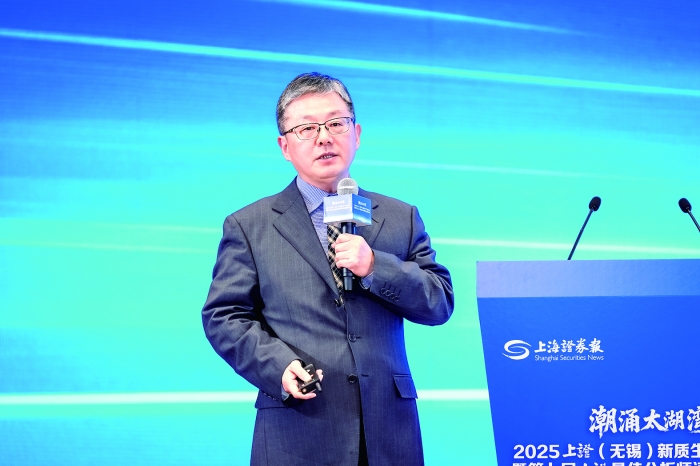
胡云超说,中国曾长期将经济发展重心偏向生产和投资,对消费重视度不够,近年来,这一点正在发生 改变。《中华人民共和国国民经济和社会发展第十四个五年规划和2035年远景目标纲要》提出,要依托 强大国内市场,贯通生产、分配、流通、消费各环节,形成需求牵引供给、供给创造需求的更高水平动 态平衡,促进国民经济良性循环。"十五五"规划建议强调"强大国内市场是中国式现代化的战略依托", 确立"内需主导、消费拉动、内生增长"的经济发展模式。2025年中央经济工作会议把扩大内需定为2026 年排在首位的重点任务,进一步引导提振国内消费。 胡云超说,改革开放以来,外向型经济发展战略是中国经济发展的重要支撑,中国出口规模及全球占比 节节攀升,为经济发展和人民富裕奠定基础。中国是全球第二大经济体,目前我国对外依存度在30%以 上,而发达国家在10%左右的平均水平,这种情况易引发各类经贸摩擦。 胡云超 中国浦东干部学院经济高质量发展研究中心主任胡云超: 重视以内生消费增长模式推动经济高质量发展 ◎记者 秦春刚 在12月26日举行的2025上证(无锡)新质生产力研讨会暨第七届上证最佳分析师评选颁奖仪式上,中国 浦东干部学院经济高质量发展 ...

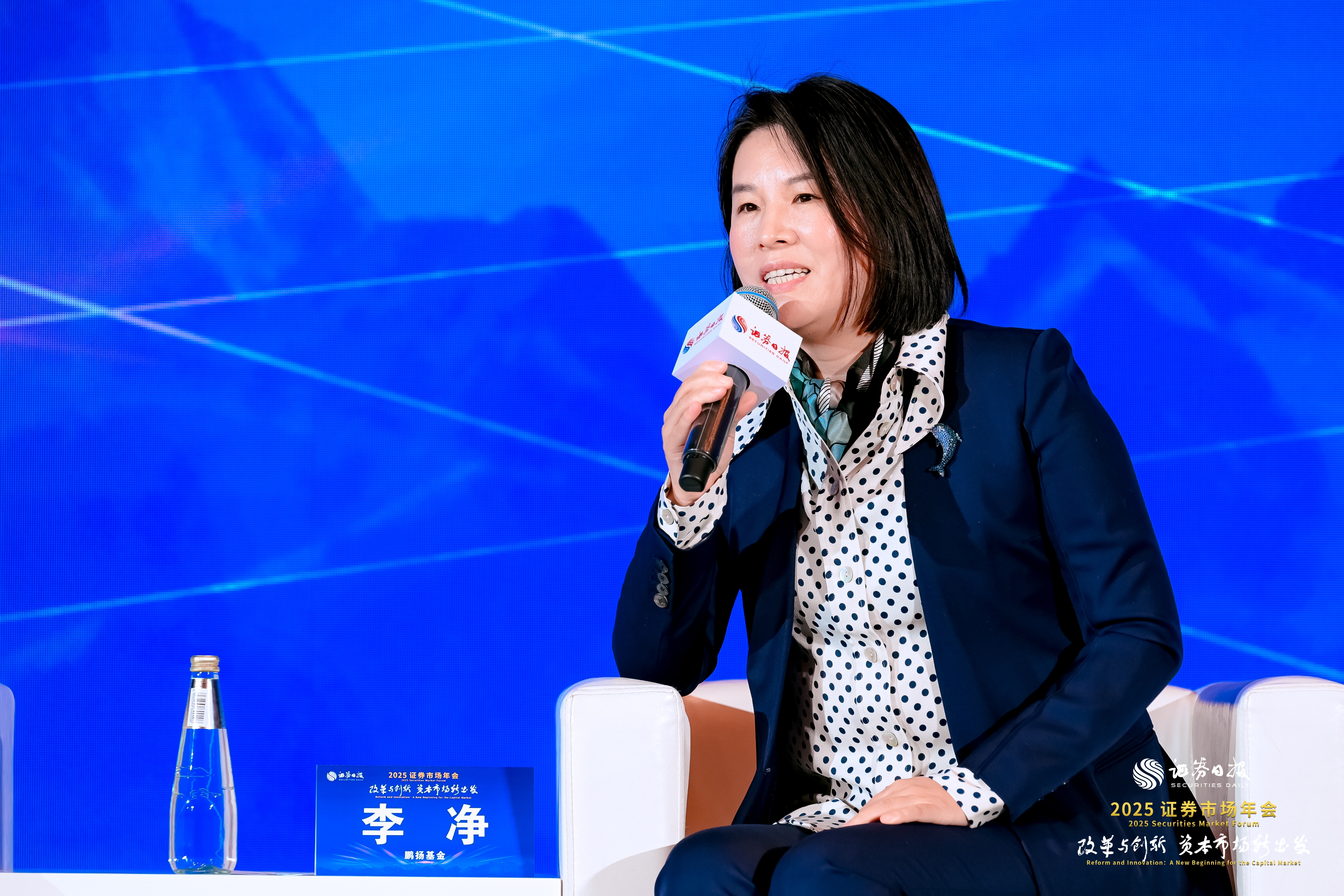
鹏扬基金副总经理李净:“长钱长投”需要创新服务 2026年策略聚焦“三束光”
Zheng Quan Ri Bao Wang· 2025-12-28 09:15
Core Insights - The discussion at the "2025 Securities Market Annual Conference" focused on the theme of "Wealth Protection Strategies for Asset Management Institutions" and shared insights on serving the "long money long investment" ecosystem and market outlook for 2026 [1][4] Group 1: Serving "Long Money" - In the current environment of "low interest rates and asset scarcity," serving "long money" requires meeting three key demands: obtaining elastic space for trading profits, providing low correlation and liquid tools to smooth portfolio volatility, and developing a more comprehensive ETF ecosystem based on major asset allocation concepts [5] - The bond ETF market is entering a new stage of scale, liquidity, and ecological development, reflecting the industry's response to investors' needs for long-term asset preservation and appreciation [5] - The public fund industry has expanded the coverage of services for individual investors through the exploration of separate account businesses, particularly by integrating "fixed income+" and derivative strategies [5] Group 2: Market Strategy for 2026 - The central economic work conference in December 2025 emphasized "demand-led growth" as the primary task for 2026, indicating a shift from "expectation adjustment" to "reality verification" in macroeconomic trends [6] - The economic structure will seek a new balance in high-quality development, with asset prices realigning to match this balance, leading to higher volatility and significant structural opportunities [6] - Investors are advised to focus on three key strategies for effective investment in 2026: 1. Targeting growth dividends from "new productive forces" with proven business models and substantial performance, such as advancements in artificial intelligence and high-end manufacturing [10] 2. Constructing stable "multi-asset portfolios" as single assets struggle to provide satisfactory absolute returns, with strategies including constant stock-bond ratios and macro-all-weather strategies [10] 3. Leveraging policy support to stimulate domestic demand and unlock growth potential in consumption and service industries, focusing on leading companies in niche markets [10]
2026年中国财政六项重点工作明确
Xin Lang Cai Jing· 2025-12-28 08:05
Group 1 - The Chinese National Financial Work Conference outlined six key priorities for fiscal policy by 2026, focusing on domestic demand and market development [1] - Emphasis on boosting consumption through special actions, including financial support for consumer goods replacement and optimizing personal consumption loan policies [1] - Increased investment in new productive forces and comprehensive human development, alongside the promotion of a unified national market and regulation of tax incentives and subsidies [1] Group 2 - Support for the deep integration of technological and industrial innovation, with plans to enhance fiscal investment in technology and improve management of technology funds [1] - Implementation of high-quality development actions for key manufacturing industry chains and pilot programs for new technological transformations in cities [1] - Promotion of rural revitalization and new urbanization focused on human-centered development, as well as regional coordinated development [1] Group 3 - Strengthening basic social safety nets and enhancing livelihood security, including support for employment, education, healthcare, and social security systems [1] - Commitment to a comprehensive green transformation of economic and social development, with initiatives for pollution prevention and ecosystem protection [2] - Enhancement of international financial cooperation and support for high-level openness, including reforms in global economic governance and trade partnerships [2]
长城证券汪毅入选新一届首席经济学家(发展战略)专业委员会并担任委员
Xin Lang Cai Jing· 2025-12-24 10:32
汪毅认为,本次中央经济工作会议的政策总基调在"稳中求进"的基础上增添了"提质增效"的取向。对于 明年的经济工作,本次会议仍然以"稳"字当头,但是更加强调"增强政策前瞻性针对性协同性,持续扩 大内需、优化供给,做优增量、盘活存量"。 近日,中国证券业协会组织召开新一届首席经济学家(发展战略)专业委员会全体会议暨2025年第四季 度证券基金行业首席经济学家例会。长城证券首席经济学家、产业金融研究院副院长汪毅入选新一届首 席经济学家(发展战略)专业委员会并担任委员。 近期观点 长城证券首席经济学家汪毅表示,2025年中央经济工作会议对2026年八大重点任务的部署,突出体现了 从"短期稳增长"向"长期建机制"的战略升级: 政策重心不依赖大规模刺激,而是聚焦制度性改革与结构性优化,强调"内需主导""创新驱动"和"安全 底线"三位一体;突出问题精准施策,如激发民间投资、清理拖欠账款、严控地方隐性债务;同时强化 法治保障(如统一大市场条例)、系统协同(城乡、产业、开放联动)和多元安全(经济、民生、生 态、人口),彰显以高质量制度供给激活内生动力、夯实"十五五"开局的发展新逻辑。 长城证券首席经济学家汪毅表示,2025年中央 ...

明年经济工作为何要将“坚持内需主导”置顶?
Xin Lang Cai Jing· 2025-12-24 06:29
Core Viewpoint - The article emphasizes the strategic shift from "expanding domestic demand" to "demand-led growth," highlighting the importance of internal demand as a primary driver of economic growth in China, especially in the context of increasing external uncertainties [3][4][5]. Group 1: Strategic Shift - The transition from "expanding domestic demand" to "demand-led growth" signifies a profound change in China's economic development logic, moving from reliance on external demand to a focus on internal demand as the main engine of growth [3][4]. - This strategic upgrade reflects a recognition of the need for a robust domestic market, emphasizing the importance of a comprehensive system that includes consumption environment, distribution systems, quality standards, and income distribution [4][5]. - The shift is also seen as a proactive choice to create a growth model based on internal demand, rather than merely responding to demand contractions [4][5]. Group 2: Consumption and Investment Dynamics - Consumption and investment are interdependent, forming a complete economic cycle where investment creates supply and future growth capacity, while consumption defines investment directions [10][12]. - The article advocates for a new dynamic balance where "demand drives investment, and investment creates demand," moving away from the previous model that prioritized investment over consumption [10][12]. - Effective investment should focus on enhancing consumption potential, with an emphasis on sectors like healthcare, education, and emerging industries to create new consumer demands [10][12]. Group 3: Consumption Structure Upgrade - The article discusses the need for a shift in consumption from "survival-type" to "development-type," indicating a transition towards higher quality and more diverse consumption patterns [7][8]. - It highlights the importance of enhancing service consumption and targeting key demographics, such as rural residents and young consumers, to unlock potential in the market [7][8]. - The role of technology and innovation in driving consumption upgrades is emphasized, suggesting that digital transformation and green products can align with evolving consumer demands [7][8]. Group 4: Policy and Institutional Support - The article stresses the necessity of building a long-term mechanism that encourages consumption through income growth and reduced financial burdens on consumers [8][9]. - It calls for systemic reforms to eliminate barriers to consumption and enhance consumer protection, thereby increasing consumer confidence [8][9]. - The importance of optimizing supply and innovating consumption scenarios is highlighted as essential for stimulating consumption growth [8][9].
消费市场持续扩容提质创新升级
Jing Ji Wang· 2025-12-24 01:59
Core Insights - The 2025 Central Economic Work Conference emphasized the importance of "domestic demand as the main driver" for economic growth, marking a strategic shift in focus from merely stimulating consumption to prioritizing it as a long-term economic engine [2][3]. Group 1: Economic Performance - In 2025, the retail sales of consumer goods showed a steady increase, with a year-on-year growth of 4% from January to November, surpassing both the previous year's growth and the overall annual level [3]. - The contribution rate of final consumption expenditure to economic growth reached 53.5% in the first three quarters of 2025, an increase of 9 percentage points compared to the previous year, solidifying consumption's role as the primary driver of economic growth [3]. Group 2: Policy Initiatives - The government implemented a comprehensive set of policies to boost consumption, including initiatives for replacing old consumer goods and expanding service consumption, which collectively injected significant momentum into the market [4]. - The "old-for-new" policy for consumer goods was expanded to cover various sectors, leading to over 2.5 trillion yuan in sales and benefiting more than 360 million people [4]. Group 3: Consumption Trends - There was a notable shift in consumer behavior towards experience-based consumption, with a blend of online and offline shopping environments enhancing market vitality [5][6]. - New consumption models, such as instant retail and live-streaming e-commerce, gained traction, with online retail sales of physical goods increasing by 5.7% year-on-year, accounting for 25.9% of total retail sales [7]. Group 4: Future Outlook - Experts predict that with ongoing employment stabilization and income growth measures, along with an expanding supply of quality goods, the potential of China's consumption market will continue to be unleashed, supporting sustained economic progress [8].
国家综合立体交通网主骨架基本贯通
Ren Min Ri Bao· 2025-12-24 01:07
Core Insights - The transportation sector in China has achieved significant milestones during the "14th Five-Year Plan" period, with fixed asset investment reaching 18.8 trillion yuan, and the main framework of the national comprehensive transportation network is largely completed [1][6]. Investment and Economic Performance - In 2023, the total fixed asset investment in transportation is expected to exceed 3.6 trillion yuan, maintaining a high operational level [2]. - The total freight volume is projected to surpass 580 billion tons, reflecting a year-on-year growth of approximately 3.5% [2]. - Port foreign trade container throughput has increased by about 9.6%, while international air freight has surged by 20% [2]. Service Capacity and Infrastructure Development - The nationwide cross-regional personnel flow is expected to exceed 660 million people, indicating a robust service capacity [2]. - Urban rail transit service capacity has significantly improved, with 54 cities operating over 11,000 kilometers of rail, and an average daily passenger volume exceeding 90 million [2]. - Approximately 1,700 kilometers of expressways and over 2,200 road and waterway auxiliary facilities have undergone digital transformation [2]. Safety and Risk Management - The number of railway traffic accidents has decreased by 18.4% year-on-year, while accidents in the road and waterway sectors have dropped by 25.8% [2]. Future Development Plans - The focus for the "15th Five-Year Plan" will include accelerating the completion of the national comprehensive transportation network, enhancing cross-regional and cross-basin corridors, and developing multi-level, integrated transportation hubs [3]. - Key projects such as the Lion's Mouth Channel and the Pinglu Canal are set to be completed, contributing to the modernization of the transportation infrastructure [6]. Consumer Services and Market Expansion - The cruise passenger transport volume has reached 1.265 million, marking a year-on-year increase of 27.8% [4]. - The small and micro car rental market is expected to grow at an annual rate of around 15% during the "15th Five-Year Plan" period [4]. - The development of self-driving tourism routes is being promoted to enhance consumer experiences and drive economic growth [5]. Equipment Modernization - The transportation sector is undergoing significant equipment updates, with over 450 old railway diesel locomotives replaced by new models, and 114,000 old city buses and power batteries being retired [7]. - The sector is also focusing on the green and intelligent upgrade of transportation equipment to better serve consumer demand and stimulate domestic consumption [6][7].
2026河南经济咋发展?这些提法划重点 | 极刻
Sou Hu Cai Jing· 2025-12-23 23:10
Core Insights - The Henan Provincial Economic Work Conference outlined key economic priorities for 2026, focusing on enhancing internal demand, improving infrastructure, and fostering innovation to achieve quality economic growth and reasonable quantitative expansion [1][4][5]. Economic Performance and Goals - The economic performance in 2025 is expected to show a stable and improving trend, with major goals nearing completion, indicating the overall success of the 14th Five-Year Plan [2][3]. Key Focus Areas for 2026 - The conference identified ten key areas for economic work in 2026, emphasizing the importance of internal demand, competition regulation, infrastructure improvement, innovation, and ecological protection [4][5]. - Specific strategies include enhancing consumer and investment potential, addressing "involution" in competition, and improving transportation networks [4][5]. Internal Demand as a Priority - Internal demand is highlighted as a crucial driver for economic development, with policies aimed at stimulating consumption and investment to support economic growth [7][8]. - From January to November, the total retail sales of consumer goods reached 26,415.15 billion yuan, growing by 5.8% [7]. Investment and Project Development - The conference emphasized the need to stimulate private investment and accelerate project implementation, aligning with national goals for 2026 [8]. Cultural and Tourism Industry Development - The conference proposed accelerating the development of the cultural and tourism industry as a pillar industry, leveraging Henan's rich historical and cultural resources [9]. Urban Development Strategy - The concept of "in-depth urban development" was introduced, focusing on optimizing internal structures and enhancing quality rather than mere expansion [10][11]. - The proposed urban development framework includes "one main city, two vice cities, one circle, two belts, and four regions," aimed at promoting regional collaboration and economic growth [11][12][13].