
关税

Search documents
美联储威廉姆斯表示,关税对经济的影响小于预期。
Sou Hu Cai Jing· 2025-09-04 18:25
Core Viewpoint - The impact of tariffs on the economy is less than expected according to Federal Reserve's Williams [1] Group 1 - Federal Reserve's Williams provides insights on the economic implications of tariffs [1]
美联储威廉姆斯:预计关税不会引发持续通胀。
Sou Hu Cai Jing· 2025-09-04 16:41
Core Viewpoint - The Federal Reserve's Williams anticipates that tariffs will not lead to sustained inflation [1] Group 1 - Williams expressed confidence that the current tariff measures will not have a long-term impact on inflation rates [1] - The statement suggests a stable outlook for inflation despite ongoing trade tensions [1]
Oshkosh (OSK) 2025 Conference Transcript
2025-09-04 13:12
Summary of Oshkosh (OSK) 2025 Conference Call Company Overview - Oshkosh is a global industrial technology company with approximately $11 billion in revenue and around 18,000 employees [3][4] - The company focuses on providing machinery for challenging jobs, with a strategy centered on innovation, service, and advancement [4][10] Key Segments 1. **Access Segment** - Produces equipment for working at heights, including booms and telehandlers [5] - Revenue guidance for this segment is projected at $4.4 billion, down about 15% from the previous year [39] - Demand is mixed due to construction market uncertainties, with strong demand from data centers and mega projects but weakness in non-residential construction [20][39] 2. **Vocational Segment** - Includes fire trucks, refuse vehicles, and airport products [6] - Strong demand driven by aging fleets and funding from the CARES Act, leading to a significant backlog [23][24] - Capacity expansions are focused on intelligent manufacturing improvements to address backlog [29] 3. **Transport Segment** - Involves vehicles for the US Postal Service and the Department of Defense [7] - Margin expansion expected due to new contracts with economic price adjustment clauses, improving from a 2.5% margin in 2024 to a projected 10% by 2028 [59][61] Financial Projections - Oshkosh anticipates a 7-10% annual compound growth rate for revenue from now until 2028 [8] - Operating income is expected to increase from 10% to 14%, and EPS is projected to rise from $11 to between $18 and $22 per share [9][10] - Cash conversion is targeted to exceed 90% through the cycle from 2025 to 2028 [9] Tariffs and Economic Impact - Recent tariffs on steel components are expected to have a delayed impact, with no material effect anticipated in Q3 but potential effects in Q4 [14][15] - Demand across segments is affected differently by tariffs, with the transport and vocational segments showing resilience [16][18] Capacity and Production - The company is investing in capacity expansions to meet increased demand, particularly in the vocational segment [29] - Intelligent capacity actions include automation and ergonomic improvements to enhance production efficiency [29][33] Market Dynamics - The fire truck market is experiencing a peak due to increased orders and funding, with lead times extending to 2028 for custom orders [26][32] - The refuse vehicle market is also growing due to aging fleets and technological upgrades [35][37] Strategic Acquisitions - The acquisition of AeroTech is seen as a strategic move to expand into the airport machinery market, with potential for international growth [73][78] - The integration of AeroTech is expected to yield operational efficiencies and cost savings [77][78] Conclusion - Oshkosh presents a compelling investment thesis with strong growth prospects across its segments, driven by strategic initiatives, market demand, and operational efficiencies [10][11]

美股业绩跟踪系列之二:美股二季报:AI软硬件内部分化,关税影响尚未扩散
Shenwan Hongyuan Securities· 2025-09-04 12:43
Overall Performance - In Q2 2025, the S&P 500, Nasdaq, and Dow Jones reported TTM revenue growth of 5.18%, 9.80%, and 7.49% respectively, with Nasdaq showing the highest growth[3] - The proportion of companies exceeding revenue expectations was 91.1% for Nasdaq and 80.5% for S&P 500, significantly above historical averages[24] - EPS growth for S&P 500, Nasdaq, and Dow Jones was 7.25%, 16.28%, and 0.48% respectively, indicating a slowdown in growth for S&P 500 and Nasdaq[3] Industry Insights - The top three sectors for revenue growth were light industry manufacturing (29.0%), electronics (20.7%), and non-ferrous metals (16.9%) in Q2 2025[16] - Profit growth leaders included media (115.8%), non-ferrous metals (84.1%), and pharmaceutical biology (33.3%) in Q2 2025[16] - Technology sector outperformed others, with high revenue and profit exceeding expectations, particularly in electronics and media[25][26] Economic Indicators - Consumer spending showed signs of slowing, with commercial and residential delinquency rates rising to 0.47% and 1.38% respectively in Q2 2025[3] - Manufacturing investment showed marginal improvement, with energy and industrial revenue growth at 0.2% and 3.2% respectively[3] - The overall gross margin for S&P 500 remained stable at 34.4%, with some sectors like utilities and real estate showing significant improvements[3] AI Impact - AI's influence on revenue growth was mixed, with hardware sectors lagging while software sectors, particularly AI solutions, saw significant growth[3] - Employment data indicated a decline in white-collar job growth in sectors like IT and finance post-AI adoption, while productivity in non-financial sectors improved[3] Risks - Short-term asset price volatility may not reflect long-term trends, and potential economic downturns could exceed expectations[3]
iPhone 17难免迎来涨价风暴?库克送奖牌也难挡关税冲击
Jin Shi Shu Ju· 2025-09-04 09:59
Core Viewpoint - Apple is set to hold its fall product launch event on September 10, introducing a range of new products including the iPhone 17 series, various Apple Watch models, iPad Pro, Vision Pro, Apple TV 4K, HomePod mini, AirTag, AirPods Pro, and Studio Display, with a focus on performance upgrades and design improvements [1][2] Product Launch Details - The event will feature 10 new products across multiple categories, including smartwatches, headphones, TVs, and displays, emphasizing performance upgrades and design enhancements [1] - Analysts predict that Apple may increase product prices, particularly for the iPhone 17, as the company has successfully navigated tariff threats in the past [1][2] Price Predictions - Jefferies analyst Edison Lee forecasts an average price increase of $50 for the iPhone 17 [2] - The current iPhone 16 series prices are $829 for the base model, $899 for the 16 Plus, $999 for the 16 Pro, and $1199 for the 16 Pro Max [2] Market Trends - Analysts note that while smartphone prices have not significantly increased, other consumer goods have seen price hikes due to tariffs, with gaming consoles from Sony, Microsoft, and Nintendo already raising prices [2][3] - Goldman Sachs analysts suggest that the potential for price increases could elevate the average selling price of Apple devices, as the product lineup shifts towards higher-end models [2] Product Strategy - Apple is expected to eliminate the underperforming Plus model in favor of a thinner device, which may compromise some camera features for a lighter design [3] - The new model is anticipated to be priced around $899, similar to the iPhone 16 Plus, but could see a slight increase [3] Pricing Adjustments - Apple has historically been cautious with hardware price adjustments, maintaining the price of smaller Pro models at $999 since 2017, while also increasing entry-level model prices over the years [3][4] - Analysts predict that Apple may implement a strategy of "hidden price increases" by removing entry-level models, compelling users to opt for higher storage versions at a higher price [4] Tariff Impact - Despite the potential for price changes, analysts believe that Apple's recent investments in the U.S. may shield the company from significant tariff impacts [5] - Apple's CEO Tim Cook has been praised for effectively managing the company's relationship with the White House, which has helped mitigate the worst effects of tariffs on Apple's business [5]
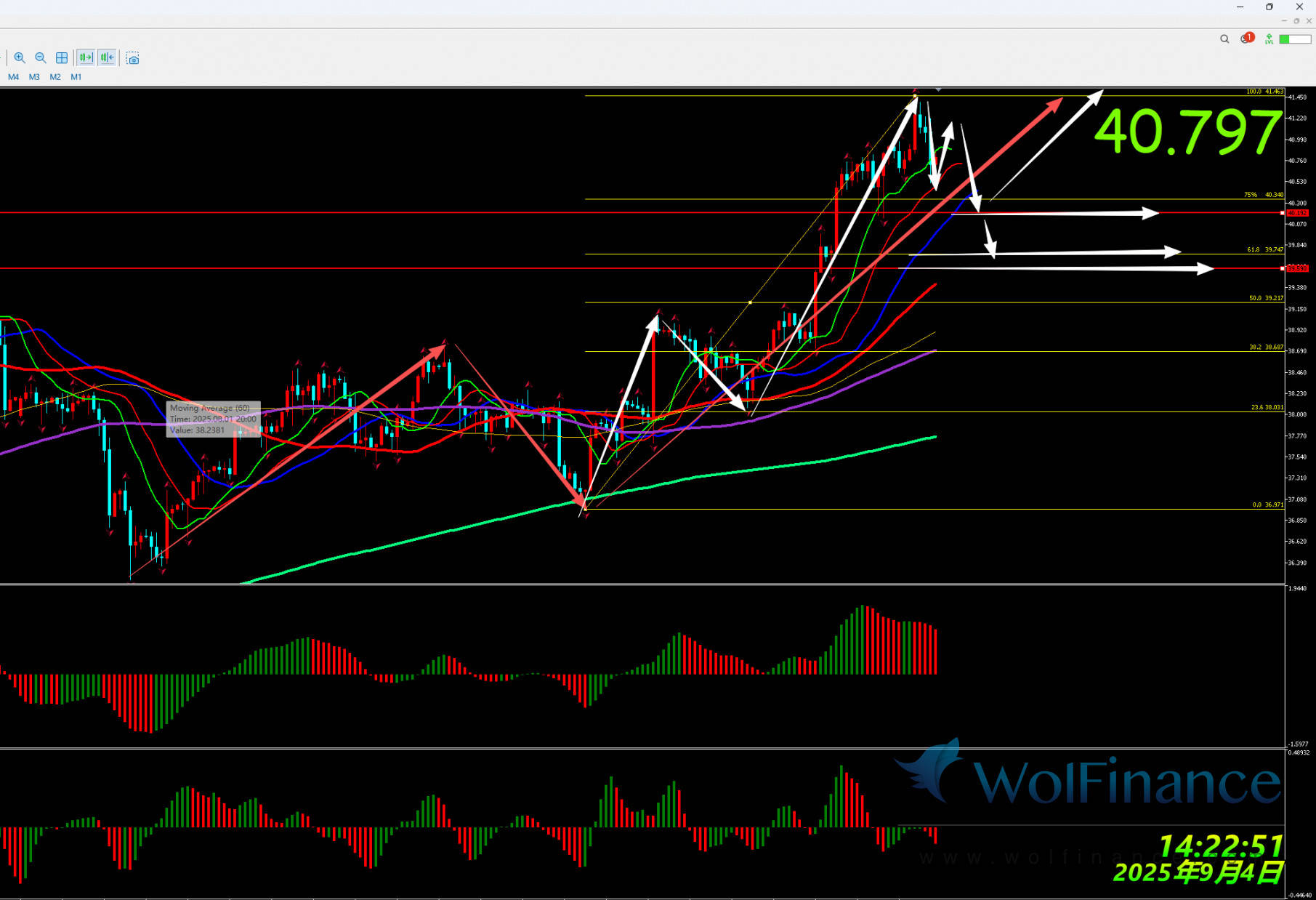
银价高位回落日内关注下方40.20-39.56一带支撑预期
Sou Hu Cai Jing· 2025-09-04 09:30
Market Overview - Silver opened at $40.843 on September 3, reached a high of $41.461, a low of $40.622, and closed at $41.1260. On September 4, silver opened at $41.270, peaked at $41.382, dipped to $40.957, and closed at $41.010 [1]. Key Economic Data - U.S. July JOLTs job openings were reported at 718.1 thousand, lower than the expected 737.8 thousand and previous 743.7 thousand [2]. - U.S. July factory orders decreased by 1.3%, slightly better than the expected decline of 1.4% and a previous drop of 4.8% [2]. - U.S. August ISM Manufacturing PMI was 48.7, below the expected 49 and previous 48 [2]. - U.S. August Consumer Confidence Index was reported at 97.4, exceeding the expected 96.2 and revised previous value of 98.7 [2]. - U.S. July Core PCE Price Index year-on-year was 2.9%, matching expectations and slightly above the previous 2.8% [2]. Federal Reserve Policies and Events - Federal Reserve officials expressed differing views on interest rate cuts, with some suggesting potential cuts depending on economic data [2]. - The Federal Reserve will hold a payment innovation meeting on October 21 to discuss stablecoins, AI, and tokenization [2]. Precious Metals Market Dynamics - The largest gold ETF, SPDR Gold Trust, saw a decrease in holdings by 6.3 tons, bringing the total to 984.26 tons [2]. - The largest silver ETF, iShares Silver Trust, reported a reduction of 85.08 tons in holdings, now totaling 15,281.4 tons [2]. Technical Analysis - The silver price is currently in an upward trend, with potential targets set at $41.03, $42.00, and $43.56 based on recent price movements [5]. - The analysis indicates that as long as silver does not fall below the 60-minute moving average, there is an expectation for continued upward movement [5]. Trading Strategies - Aggressive traders are advised to short between $40.90 and $41.30, while conservative traders may consider shorting between $42.80 and $43.16, with a stop loss of $0.35 [6]. - For long positions, aggressive traders may enter between $40.15 and $39.70, with strict stop losses, while conservative traders may look to enter between $39.70 and $39.50 [7].

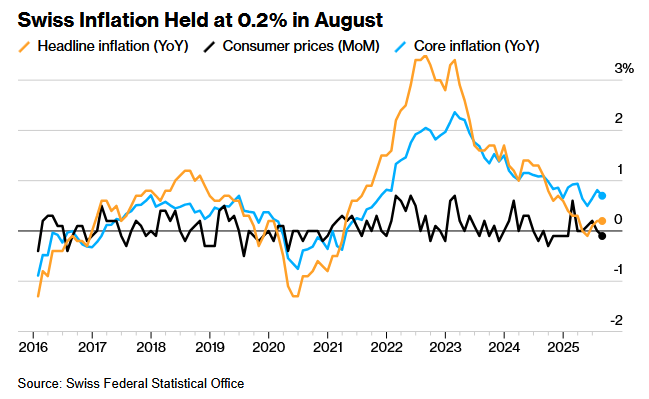
瑞士8月通胀温和增长缓解央行决策压力 关税冲击下9月或按兵不动
智通财经网· 2025-09-04 08:17
Group 1 - Switzerland's inflation has shown positive growth for the third consecutive month, with the August CPI rising by 0.2% year-on-year, consistent with previous values [1][3] - The core CPI, excluding volatile items like energy, increased by 0.7% year-on-year, slightly lower than the previous 0.8% [1][3] - August is a critical month for rent adjustments in Switzerland, contributing to the overall inflation rate increase [3] Group 2 - The recent inflation data may alleviate pressure on the Swiss National Bank (SNB) to cut interest rates again, especially amid threats of high tariffs from the U.S. [3] - The SNB's Deputy Governor indicated that there are no signs of deflation risks at this stage, and inflation is expected to rise in the coming quarters [3] - Economists predict a slight rebound in overall inflation in Switzerland, hovering around 0.5% in the coming months, while still within the SNB's target range of 0-2% [3] Group 3 - The SNB has lowered interest rates by 25 basis points to 0% in June, marking the sixth consecutive rate cut since March 2024 [4] - The current zero interest rate level complicates the SNB's decision-making, with officials indicating that reintroducing negative rates would require a higher threshold than normal rate cuts [4] - Market pricing suggests that the SNB will maintain the policy rate at the current level until next year [4]
美联储报告:关税重压下,美国经济的两大支柱正双双承压
Sou Hu Cai Jing· 2025-09-04 07:39
Group 1 - The latest Federal Reserve "Beige Book" indicates that both employment and consumer spending in the U.S. are under pressure due to tariffs, leading to a slowdown in hiring and investment by businesses [1][2] - The report highlights that all Federal Reserve districts have experienced price increases related to tariffs, raising production costs for companies and living expenses for consumers [1][2] - Many businesses express concerns about the economic outlook, with worries about trade policy changes, high interest rates, and stricter immigration policies affecting their confidence [1] Group 2 - Consumers are facing a dual challenge of rising prices and reduced employment, with wage growth not keeping pace with inflation, particularly as companies adjust labor and pricing strategies in response to tariffs [2] - The "Beige Book" reveals increasing economic uncertainty, with the term "uncertainty" mentioned 80 times, reflecting a more cautious decision-making environment for both businesses and consumers [2]
美联储褐皮书:关税导致物价全面上涨,美国经济陷入停滞
Ge Long Hui· 2025-09-04 07:09
当地时间周三,美联储发布了最新的经济状况"褐皮书"。 褐皮书显示,自7月中旬到8月底,许多联邦储备区报告关税对投入价格的影响尤其明显,多个地区报告 保险、公用事业和技术服务价格上涨。 一些公司也将所有成本上涨转嫁给了客户,美联储所联系的企业广泛预期未来几个月价格将继续上涨。 此外,由于经济不确定性增大和关税税率升高,许多家庭工资增长未能跟上物价上涨的步伐,导致所有 联邦储备区消费者支出持平或下降。 关于整体经济活动 自上一个褐皮书时期以来,12个联邦储备区中的大多数报告经济活动几乎没有变化——不同的四个区报 告了温和增长。 在各个地区,消费者支出持平至下降,因为对于许多家庭来说,工资跟不上物价上涨。 报告指出,消费者正受到保险、水电费和其他费用上涨的挤压。 具体来看,零售和酒店业提供优惠和促销活动,以帮助对价格敏感的消费者节省资金,以支持国内休闲 游客的稳定需求,但不能抵消国际游客需求的下降。 汽车行业的销量持平至略有增长,但消费者对维修旧车的零件和服务的需求有所增加。 亚特兰大和堪萨斯城报告指出,数据中心所在地区的能源需求有所增加。 关于劳动力市场 有时是由于重返办公室政策的鼓励,有时是由于更高的自动化程度 ...
铝:区间震荡氧化铝:重心下移铸造铝合金:跟随电解铝
Guo Tai Jun An Qi Huo· 2025-09-04 05:50
Report Industry Investment Rating - Aluminum: Range-bound oscillation [1] - Alumina: Moving downward [1] - Cast aluminum alloy: Following electrolytic aluminum [1] Core Viewpoints of the Report - The report provides updated fundamental data for aluminum, alumina, and cast aluminum alloy, including prices, trading volumes, open interests, spreads, and inventory levels [1]. - It also mentions the trend strength for aluminum, alumina, and aluminum alloy, with aluminum and alloy at 0 (neutral) and alumina at -1 (weakly bearish) [3]. Summary by Relevant Catalogs Futures Market - **Aluminum**: The closing price of the Shanghai aluminum main contract was 20,710, down 10 from T - 1, with a trading volume of 135,601 and an open interest of 4,092. The LME aluminum 3M closing price was 2,614, down 8 from T - 1 [1]. - **Alumina**: The closing price of the Shanghai alumina main contract was 2,992, down 251 from T - 1, with a trading volume of 244,775 and an open interest of 248,040 [1]. - **Aluminum Alloy**: The closing price of the aluminum alloy main contract was 20,285, down 15 from T - 22, with a trading volume of 2,789 and an open interest of 8,016 [1]. Spot Market - **Aluminum**: The spot premium was -30, the Shanghai bonded area premium was 8, and the EU Rotterdam aluminum ingot premium was 222.5 [1]. - **Alumina**: The domestic average price of alumina was 3,204, down 8 from T - 1, and the alumina Lianyungang CIF price was 3,255 [1]. - **Aluminum Alloy**: The theoretical profit of ADC12 was 309, and the price of Baotai ADC12 was 20,300 [1]. Inventory - **Aluminum**: The domestic social inventory of aluminum ingots was 1.30 million tons, and the LME aluminum ingot inventory was 47.96 million tons [1]. - **Aluminum Alloy**: The total inventory of three locations was 33,928 [1].