
脑机接口

Search documents
给动物装上“脑机接口”
Ke Ji Ri Bao· 2026-01-29 00:58
Core Insights - The article highlights the advancements in animal robotics, particularly focusing on the development of the "robotic cockroach" by Shandong University of Science and Technology, showcasing its potential applications in various fields [1][3]. Group 1: Development of Animal Robotics - Shandong University of Science and Technology has been pioneering in the field of animal robotics for over 20 years, achieving significant breakthroughs that contribute to the evolution of intelligent robotic technology [1]. - The first flying-controlled animal robot, the "robotic bird," was developed in 2007, laying the groundwork for future animal robotics research through brain-machine interface technology [1][2]. - The research on animal robots began in the late 1990s, initiated by Professor Su Xuecheng, who aimed to overcome limitations faced by traditional electromechanical robots by using animals instead [1][2]. Group 2: Innovations in Robotic Cockroach - The "robotic cockroach" represents a significant advancement with its highly integrated biological neural control system, allowing for direct manipulation of the cockroach's movements through a micro "electronic backpack" [3]. - The team has improved the efficiency of the surgical preparation for the cockroach, achieving a sixfold increase in efficiency and a success rate of 99% [3]. - The cost to produce a "robotic cockroach" is approximately 45 yuan, with a single operational duration of 50 minutes and a lifespan of up to three months [3]. Group 3: Future Prospects and Applications - The "robotic cockroach" has shown stable performance in tests and is recognized for its potential in narrow space exploration and covert reconnaissance [3]. - The university plans to integrate key technologies like brain-machine interfaces with artificial intelligence to create a new generation of intelligent entities capable of autonomous perception, decision-making, and task execution in complex environments [4].
浙商证券浙商早知道-20260129
ZHESHANG SECURITIES· 2026-01-28 23:30
Market Overview - On January 28, the Shanghai Composite Index rose by 0.27%, the CSI 300 increased by 0.26%, the STAR Market 50 fell by 0.08%, the CSI 1000 rose by 0.21%, the ChiNext Index decreased by 0.57%, and the Hang Seng Index increased by 2.58% [3]. - The best-performing sectors on January 28 were non-ferrous metals (+5.92%), oil and petrochemicals (+3.54%), coal (+3.42%), building materials (+2.18%), and steel (+2.16%). The worst-performing sectors were comprehensive (-2.53%), media (-1.77%), national defense and military industry (-1.68%), beauty and personal care (-1.65%), and pharmaceuticals and biology (-1.56%) [3]. - The total trading volume of the A-share market on January 28 was 29,922.89 billion yuan, with a net outflow of 3.427 billion Hong Kong dollars from southbound funds [3]. Key Insights - The report discusses a strategy focused on Elon Musk's concept stocks and thematic index, highlighting that 2026 is seen as a pivotal year for the commercialization of Musk's technological ventures [4]. - Musk's companies, including Tesla, xAI, SpaceX, and Neuralink, are positioned in six key technology areas: AI, robotics, autonomous driving, commercial space, brain-computer interfaces, and new energy [4]. - The market's perspective is shifting from long-term valuation to actual considerations of order flow, revenue realization, and market penetration for Musk's business landscape [4]. - The investment theme is scored based on eight dimensions, with Musk's concept theme receiving a score of 95, indicating high ratings in all areas except valuation level [4]. - A stock pool of 78 beneficiaries related to AI, robotics, autonomous driving, commercial space, brain-computer interfaces, and new energy has been created, with a back-tested excess return of 127.44% compared to the Wind All A Index from early 2025 to the present, and 157.35% from April 9, 2025, to January 23, 2026 [4].


探访全国首家人形机器人7S店(奋进“十五五”·一线见闻)
Ren Min Ri Bao· 2026-01-28 22:05
Group 1 - The article discusses the development and commercialization of humanoid robots in Wuhan, highlighting the establishment of the first humanoid robot 7S store in the country, which offers various humanoid robots priced between 7,999 yuan and 700,000 yuan for multiple applications [2][4] - The humanoid robot "Yuan You," developed in Wuhan, is designed for various services, including guidance and health care, and has been operational in a local hospital for nine months [2][3] - The production of humanoid robots in Wuhan is supported by a robust supply chain, with over 20 core suppliers and nearly 1,000 related enterprises, enabling efficient manufacturing and assembly of components [3] Group 2 - The Wuhan government has launched a three-year action plan and policy measures to promote the application of humanoid robots across various sectors, offering financial incentives for both application and product development [4] - The 7S store has generated over 600,000 yuan in revenue from experiences, sales, and rentals, indicating a growing market for humanoid robots in the region [4] - The establishment of the Humanoid Robot Innovation Center aims to enhance the training and data collection for humanoid robots, facilitating their evolution and integration into various industries [3][4]

马斯克:新一代神经链接脑机接口增强版的性能将提升至三倍
Jin Rong Jie· 2026-01-28 18:52
马斯克发帖称,新一代神经链接 脑机接口增强版的性能将提升至三倍,将于今年晚些时候面市。待监 管部门批准后,Neuralink准备推出首款盲视增强技术,使那些完全失明的人能够以低分辨率视觉方式进 行感知。 ...
北京脑科学与类脑研究所所长、神经生物学家罗敏敏:建议建立侵入式脑机接口技术高标准监管体系
Zheng Quan Ri Bao· 2026-01-28 16:11
Core Insights - Brain-computer interface (BCI) technology has emerged as a focal point in global technological competition, with significant investments and policy support driving its development [1][2] - Zhejiang Qiangnao Technology Co., Ltd. completed a C-round financing of approximately 2 billion yuan, marking the second-largest single financing record in the BCI sector globally, excluding Neuralink [1] - The Chinese government is actively promoting BCI technology through various policies aimed at fostering innovation and addressing key technological challenges [2][3] Industry Development - There is a recognized gap between China's BCI technology and that of other countries in areas such as theoretical principles, technical accumulation, system integration, and clinical applications, but this gap is narrowing [2] - The Chinese government has outlined plans to advance BCI technology as part of its economic growth strategy, with specific goals set for 2027 to achieve significant breakthroughs in core technologies [2][3] Technological Challenges - Key challenges in the BCI industry include the need for self-optimized core chips, continuous iteration in system integration, and the development of high-performance algorithms to meet real-time decoding demands [3] - The number of channels in BCI devices directly impacts the amount of information that can be processed, with advancements in channel numbers leading to improved control and efficiency [3] Product Development - The "North Brain No. 2" prototype has been developed with 512 channels and is undergoing rapid iteration, with plans for clinical validation in 2026 [3] - The development of a 1024-channel BCI device is also underway, showcasing the potential for significant advancements in performance [3] Market Potential - The BCI sector is viewed as both a medical and technological investment opportunity, with the potential to unlock a market space worth trillions if integrated with AI and robotics [3] Regulatory Considerations - There is a call for establishing high standards and strict regulatory frameworks for invasive BCI technologies to ensure safety and efficacy before widespread adoption [4] Broader Applications - BCI technology is part of a larger field of brain science, which also shows promise in treating mental health conditions such as depression, with recent breakthroughs in understanding the mechanisms of treatment [5][6] - The development of non-drug therapies and advanced treatment methods for depression is being explored, indicating a multifaceted approach to mental health care [5][6] Entrepreneurial Landscape - The intersection of scientific research and entrepreneurship is highlighted, with successful transitions from laboratory research to market applications being emphasized [7][8] - Capital investment is deemed crucial for the advancement of BCI technology, with a call for sustained support from investors [7]
面向康养场景,机器人厂商出招
Shang Hai Zheng Quan Bao· 2026-01-28 15:13
Core Insights - Fourier has launched a smart rehabilitation solution called "Brain-Machine Embodied Rehabilitation Port" aimed at improving patient rehabilitation by utilizing brain-machine interface technology to assist patients in executing their intended movements [1][3]. Group 1: Market Potential - The rehabilitation and elder care market is projected to become a trillion-dollar industry, driven by an increasing demand for rehabilitation therapists and the aging population in China [4][6]. - The development path for this market includes initial applications in rehabilitation hospitals, followed by expansion into nursing homes, and ultimately into family settings [6]. Group 2: Technological Integration - The integration of brain-machine interfaces with robotics allows for advanced rehabilitation techniques, such as enabling stroke patients to perform movements based on their brain's intent [5]. - Recent advancements in brain-machine hardware and large models have significantly improved the precision of intent recognition from brain signals, facilitating the practical application of these technologies [7]. Group 3: Industry Trends - The industry is experiencing a trend towards technological convergence, with a consensus emerging on the strategic aspects of embodied intelligence, similar to early automotive industry debates [9]. - The robotics industry, particularly in the field of embodied intelligence, is currently in an accelerated growth phase, attracting a new generation of passionate talent [10]. Group 4: Future Outlook - The next two years are seen as a critical period for the industry, with expectations of rapid development and the establishment of successful application scenarios in various fields, including elder care and industrial empowerment [11].

开源证券晨会纪要-20260128
KAIYUAN SECURITIES· 2026-01-28 14:46
Group 1: Macro Economic Insights - The profits of industrial enterprises ended a three-year decline, with a cumulative year-on-year growth of 0.6% in 2025, compared to a previous value of 0.1% [4] - December 2025 saw a significant improvement in profit year-on-year, rising by 18.4 percentage points to 5.3%, despite a revenue decline of approximately 3.2% [5][6] - The profit margin for industrial enterprises showed a recovery, with contributions from various factors indicating a positive trend in profitability [7] Group 2: Industry Trends and Recommendations - The heavy truck sales in 2025 exceeded one million units, marking a year-on-year growth of approximately 27%, driven by policies encouraging vehicle replacement [59] - The domestic market for new energy heavy trucks saw explosive growth, with sales reaching 231,100 units in 2025, a year-on-year increase of 182% [60] - The report highlights the potential for investment opportunities in the heavy truck sector, particularly with companies like China National Heavy Duty Truck Group and Foton Motor showing strong performance [62] Group 3: Sector-Specific Insights - The food and beverage sector, particularly companies like Gan Yuan Foods, is expected to see significant growth in Q1 2026 due to seasonal stocking and favorable comparisons to low base figures [16] - The communication sector is poised for growth, with companies like Guanghui New Network benefiting from increased demand for data center services driven by AI developments [17] - The semiconductor industry, represented by companies like Zhongwei Company, is experiencing strong growth in specific segments, such as integrated circuit manufacturing, with year-on-year increases of 172.6% [7] Group 4: Investment Strategies - The report suggests a focus on technology and cyclical sectors, with recommendations for investments in industries such as military, media, AI applications, and renewable energy [10] - The potential for theme-based investments in 2026 is highlighted, with key themes including AI, embodied intelligence, nuclear fusion energy, quantum technology, and brain-computer interfaces [23][25] - The report emphasizes the importance of selecting new themes over old ones to avoid value traps and to capitalize on emerging trends [24]
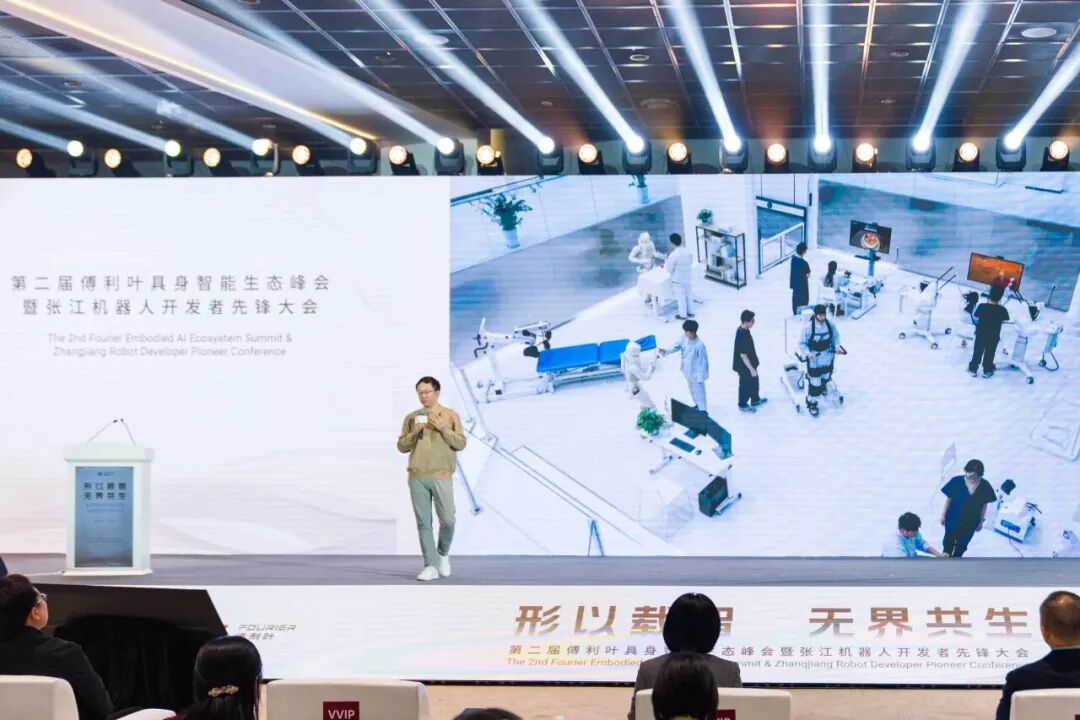
傅利叶:未来1-2年将脑机接口引入机器人康复训练,提升治疗效率
Xin Lang Cai Jing· 2026-01-28 14:43
Core Insights - Fourier Exploration aims to integrate embodied intelligence technology with brain-machine interface (BMI) technology to enhance rehabilitation efficiency and improve patient quality of life [1][4] - The CEO, Gu Jie, announced plans to scale the introduction of BMI technology in robotic rehabilitation training within the next 1-2 years, emphasizing the importance of recognizing patient intent during training [1][3] Group 1: Technology Integration - The combination of BMI and robotic systems allows for real-time recognition of patient intentions, enabling robots to provide appropriate assistance during rehabilitation [3][4] - Traditional rehabilitation methods often lead to passive training, while the new approach encourages active participation from patients, resulting in better rehabilitation outcomes [3][4] Group 2: Development Challenges - There is a lack of large-scale datasets and necessary hardware and software infrastructure for BMI and embodied intelligence technologies globally [1][6] - The company has initiated a collaborative project with several academic institutions to enhance interdisciplinary cooperation and support the exploration of BMI and embodied intelligence integration [6] Group 3: Technological Advancements - Recent advancements in BMI hardware have led to lighter, modular devices, and the transition from single EEG systems to multi-modal signal acquisition methods has improved accuracy and reliability [5][6] - The development of large models has transformed the processing of EEG signals, allowing for more effective classification and interpretation of complex brain signals [5]
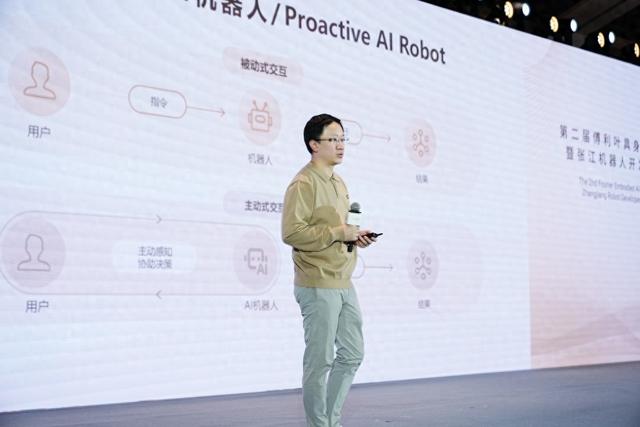
傅利叶:未来1—2年将脑机接口引入机器人康复训练
Xin Lang Cai Jing· 2026-01-28 14:43
Core Viewpoint - Fourier plans to introduce brain-computer interface technology into robotic rehabilitation training within the next 1-2 years to enhance treatment efficiency [1] Group 1: Company Developments - The founder and CEO of Fourier, Gu Jie, announced the intention to scale the implementation of brain-computer interface technology in rehabilitation robots [1] - The technology aims to assist patients who have the intention to move but are unable to do so at the muscular level, creating a complete feedback loop from the central nervous system to the periphery [1]
旋极信息(300324.SZ):目前未在脑机方面进行布局
Ge Long Hui· 2026-01-28 13:39
Group 1 - The company, Xuanji Information (300324.SZ), has stated that it is currently not engaged in brain-computer interface (BCI) development [1] - The company possesses technical capabilities in investment, construction, and operation related to inference chips and computing power centers [1]
