滞胀

Search documents
下周是关键!美股风向可能要变了
Jin Shi Shu Ju· 2025-05-09 14:09
Group 1 - Investors are observing a potential shift from defensive sectors like consumer staples and utilities, which have seen gains of 5% and 5.6% respectively, to more economically sensitive sectors such as technology, industrials, and discretionary consumer goods, indicating an increase in risk appetite [1] - The upcoming economic data, including April CPI and retail sales reports, will provide critical insights into inflation trends and consumer spending, which are essential for understanding market sentiment [2] - Concerns about the economic impact of tariffs persist, with fears that higher import tariffs could lead to increased prices and slower growth, potentially raising worries about "stagflation" if CPI exceeds expectations while retail sales fall short [3] Group 2 - The Federal Reserve's recent decision to maintain interest rates and its acknowledgment of rising risks related to inflation and unemployment suggest a cautious outlook for the economy [3] - The announcement of a trade agreement between Trump and UK Prime Minister Starmer has led to a positive market response, marking the first agreement since the onset of the trade war initiated by tariffs [3] - Optimism is growing regarding potential trade negotiations, with expectations that more agreements could be reached before the end of the tariff suspension period [3]
美联储理事巴尔喊话特朗普:关税可能推动通胀与失业率齐升
智通财经网· 2025-05-09 13:26
Core Viewpoint - The aggressive trade policies of the Trump administration may create long-term inflationary pressures and higher unemployment rates, complicating the Federal Reserve's monetary policy decisions [1][2][3] Group 1: Federal Reserve's Current Stance - The Federal Reserve's current benchmark interest rate is set between 4.25% and 4.50%, which is considered appropriate for the time being [1][2] - Federal Reserve officials, including Chairman Jerome Powell, have indicated that there is no urgency to adjust interest rates, allowing time to assess the impact of tariff policies [1][2] - The Federal Open Market Committee (FOMC) has maintained the interest rate unchanged for three consecutive meetings, reflecting market expectations [1][2] Group 2: Economic Impact of Tariffs - The scale and scope of recent tariff increases are unprecedented in modern history, and their ultimate impact on the economy remains unclear [2][3] - It is anticipated that the tariffs will lead to accelerated inflation and a slowdown in GDP growth for both the U.S. and significant global economies starting later this year [2][3] - Concerns over tariffs have already resulted in a sharp decline in consumer and business confidence, alongside a surge in import volumes [2][3] Group 3: Employment and Inflation Concerns - The potential for tariffs to disrupt global supply chains could create persistent upward pressure on U.S. inflation while also increasing unemployment rates [3][4] - The current labor market remains resilient, with April's non-farm payrolls adding 177,000 jobs, exceeding market expectations [2][4] - However, "soft data" indicators, such as consumer confidence surveys, show increasing pessimism about future economic conditions [4] Group 4: Future Considerations - The Federal Reserve is cautious about the dual challenge of managing inflation and unemployment simultaneously, which could complicate monetary policy decisions [3][4] - The impact of artificial intelligence on the labor market is also a topic of discussion, with potential for significant improvements in living standards but also challenges for workers [4] - Michael Barr, a Federal Reserve Governor, has emphasized the importance of avoiding distractions that could detract from the Fed's core responsibilities [4]
美国GDP现负增长,美经济真已陷入滞胀困境?消费驱动模式还能支撑多久?点击查看详细解读!
news flash· 2025-05-09 12:49
Core Insights - The article discusses the recent negative growth in the U.S. GDP, raising concerns about whether the economy has entered a state of stagflation [1] - It questions the sustainability of the consumer-driven economic model in light of these developments [1] Economic Growth - The U.S. economy has reported negative GDP growth, indicating potential stagnation [1] - This negative growth raises alarms about the overall economic health and future prospects [1] Consumer-Driven Model - The article explores how long the consumer-driven model can continue to support economic growth amidst rising inflation and negative GDP [1] - There is skepticism regarding the ability of consumer spending to sustain the economy in the current environment [1]
观点|为什么近期亚洲货币升值?
Sou Hu Cai Jing· 2025-05-09 12:00
Group 1 - The core viewpoint of the articles highlights the collective appreciation of Asian currencies against the US dollar, driven primarily by the rapid appreciation of the New Taiwan Dollar, influenced by foreign capital inflows and concerns over currency stability [1] - The appreciation of the New Taiwan Dollar is attributed to several factors, including a rebound in the Taiwan stock market, significant foreign investment converting dollars to New Taiwan Dollars, and Taiwanese exporters selling dollars out of fear of further appreciation [1] - The US long-term bond yields experienced a rapid increase, initially thought to be due to hedge fund activities, but later investigations by US regulators denied this, indicating a loss of confidence in the stability of US assets [1] Group 2 - The uncertainty surrounding the US dollar stems from two main factors: rising recession risks due to US tariff policies and increasing inflation expectations, leading to a decoupling of the dollar from US bond yields [2] - The negative correlation between the dollar and US bond yields suggests that as more bonds are sold, yields rise while the dollar index declines, with Morgan Stanley predicting a potential further decline of 6% in the dollar index [2] - Concerns over the US government's trade policies, particularly the attempt to eliminate trade deficits through tariffs, may disrupt the existing dollar liquidity cycle, prompting fears of a collective appreciation of Asian currencies as a response to these pressures [3]
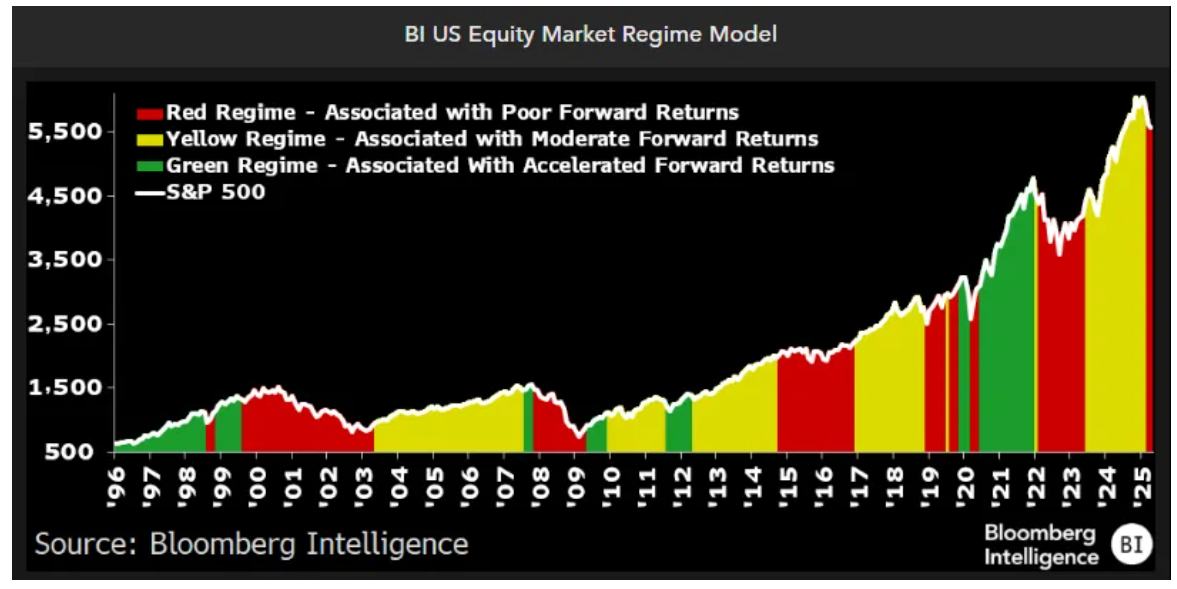
标普500浮现红色预警 关税阴霾下或开启历史最差回报周期
智通财经网· 2025-05-09 11:16
Core Insights - A stock market indicator has entered a historical phase associated with poor return prospects for the S&P 500 index, influenced by trade tensions that have weakened U.S. corporate earnings growth [1] - The Bloomberg industry research stock market cycle model has categorized the market into three phases: accelerating growth, moderate growth, and decline, with the current model indicating a bearish signal for the first time since February 2022 [1][3] Group 1: Market Cycle and Indicators - The stock market cycle model has entered a warning red zone, with the S&P 500 index having dropped below its 200-day moving average for the first time since November 2023, currently about 1% below long-term support [3] - The average decline for the S&P 500 during previous red cycles has been 5.6% over the following 12 months, with the current cycle being the first bearish signal since the onset of concerns over the Federal Reserve's interest rate path [1][5] - The model is based on six factors, including the correlation of component stock returns and the annual change in the benchmark index's price-to-book ratio [3] Group 2: Economic and Policy Context - The recent red cycle is characterized by a significant drop in the S&P 500 index and a decline in its price-to-book ratio growth rate, aligning with historical red cycle patterns [3][5] - Federal Reserve Chairman Jerome Powell has indicated that interest rate cuts will not occur until there is clarity on trade policy from the White House, despite acknowledging a decline in consumer and business confidence [3] - Analysts suggest that a shift towards a more optimistic outlook may require the White House to ease its protectionist stance, which could alleviate stagflation concerns and improve corporate earnings prospects [5]

国泰海通|宏观:关税加剧滞胀担忧,通胀压力掣肘降息——2025年5月美联储议息会议点评
国泰海通证券研究· 2025-05-09 10:40
风险提示: 特朗普关税持续导致美国经济下行和通胀上行超预期。 文章来源 本文摘自:2025年5月8日发布的 关税加剧滞胀担忧,通胀压力掣肘降息——2025年5月美联储议息会议点评 梁中华 ,资格证书编号: S0880525040019 汪 浩 ,资格证书编号: S0880521120002 报告导读: 2025 年 5 月美联储按兵不动,但是强化了对经济和通胀不确定性的担忧,关 税加剧了美国滞胀风险,后续通胀压力可能持续掣肘降息,警惕从衰退交易走向滞胀交 易。 美东时间 2025 年 5 月 7 日,美联储发布议息会议声明,随后鲍威尔例行召开新闻发布会,从议息会议 声明和鲍威尔发言中,我们认为主要有五处边际变化: 一是美联储按兵不动,但是滞胀预期加剧;二是鲍 威尔不断强调经济前景的不确定性,并认为其与关税前景密切相关;三是鲍威尔认为当前通胀压力主要来 自于关税,而关税谈判存在不确定性;四是鲍威尔给出模糊化的前瞻性指引,维持一如既往偏"鹰"的表 态,但也传递了未来降息的可能性;五是鲍威尔重申美联储的独立性,部分缓解市场担忧。总体来看,本 次美联储议息会议的关键词就是"不确定性",无论是经济前景、通胀前景,还是降 ...

恐慌被夸大?华尔街出现异议:美国经济可以承受关税冲击
Jin Shi Shu Ju· 2025-05-09 09:45
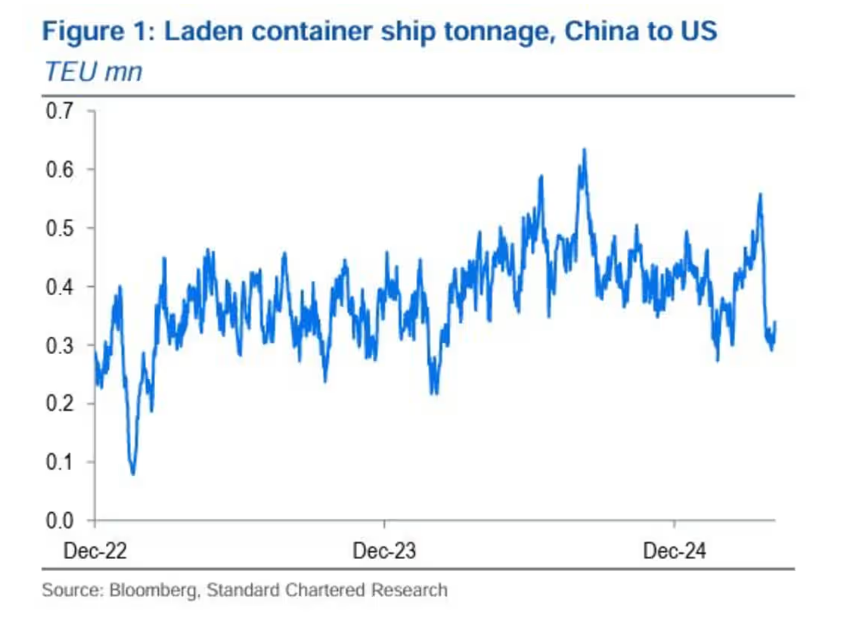
渣打银行(Standard Chartered)全球十国集团(G-10)外汇研究主管兼北美宏观经济策略主管史蒂夫・英格兰德(Steve Englander)和丹・潘(Dan Pan)在报告中写道:"我们认为,市场可能夸大了关税对美国经济增长的风险。" 首先,特朗普政府豁免了对22%中国商品(大概是最重要的商品)征收的关税。一些中国商品即使有关税也可能仍具竞争 力。而其他商品或许能很容易地从其他地方采购。 此外,关税的征收并非完全出乎意料,美国进口商有足够的时间做准备。进口数据显示,美国公司在第一季度末之前已经积 累了大量的货物库存。这种库存缓冲应该能让他们有足够的时间来应对可能出现的任何冲击。 特朗普团队目前避免了真正的末日情景 华尔街的一些人士指出,中国运往美国的集装箱货运量急剧下降,这证明特朗普的关税将很快导致物资短缺。 最近,华尔街充斥着关于经济的不祥警告:特朗普的关税势必会引发经济下滑,甚至可能导致经济衰退。 阿波罗全球管理公司(Apollo Global Management)的经济学家托尔斯滕・斯洛科(Torsten Slok)认为,2025年经济衰退的概 率为90%,同时他警告称,美国人可能很快 ...

机构:滞胀冲击令美联储陷入双重使命困境
news flash· 2025-05-09 07:34
Core Viewpoint - The new tariff policy has placed the Federal Reserve in a challenging position, with both inflation and unemployment rates expected to rise simultaneously, indicating a stagflation scenario [1] Group 1 - Torsten Slok, Chief Economist at Apollo Global Management, warns that the current trade policies could lead to a "proactive trade reset recession" in the U.S. economy [1] - The combination of rising prices and weak sales due to the trade war is severely impacting the U.S. economy [1] - Typically, rising inflation is accompanied by falling unemployment, but the current situation reflects a unique stagflation impact [1]
“谁为关税买单”?美媒给出答案
Yang Shi Xin Wen· 2025-05-09 07:05
美国投资咨询公司"风险逆转"负责人丹·内森近日表示,在当前美国关税政策下,美国小企业主和消费 者的信心正在下降。 美媒主持人:不只是大企业感受到贸易战的压力,最近对小企业的调查发现,近80%的小企业主对关税 感到很担忧。 美国投资咨询公司"风险逆转"负责人丹·内森:我认为小企业这个方面很重要,更重要的是小企业雇佣 了美国三分之二的劳动力。如果小企业,如果你是一个小企业主,你丢了你的生意,也许就没有多少办 法渡过难关,所以我认为对小企业的关注非常重要,还有对消费者的关注。小企业主和消费者的信心现 在正在下降,对吗?而对通货膨胀的预期正在上升,对吗?所以你想想看,更弱的经济增长、更高的价 格,我们把这种情况叫"滞胀"。 (文章来源:央视新闻) 美国滥施关税不仅给世界经济带来不确定性,也让美国面临物价上涨、通胀加剧。对于到底谁要为美国 加征关税买单,美国哥伦比亚电视台一档节目就这个问题做出了回答。 美国哥伦比亚广播公司主持人约翰·迪克森:谁为关税买单?5月6日,美国财政部长在国会就被问到过 这个问题。就在同一天的早上,我们从阿里·霍尔那里,得到了一个更简单的答案。她给我们看了她装 运材料的费用,阿里·霍尔做儿童服装 ...
三大宏观引擎火力全开,哪些品种将迎流畅行情?
Sou Hu Cai Jing· 2025-05-09 03:37
Group 1: Macroeconomic Drivers - The article discusses three macroeconomic drivers impacting the market: geopolitical tensions, domestic support policies, and the Federal Reserve's interest rate stance [2][5][7] - Geopolitical tensions are heightened due to conflicts in Gaza, Ukraine, and India-Pakistan, which may affect global oil supply [3] - OPEC+ plans to increase production by 411,000 barrels per day starting June, which could influence oil prices amidst geopolitical uncertainties [3] Group 2: Domestic Financial Policies - A comprehensive financial policy package was introduced in China, focusing on "total easing + structural optimization + expectation management" to support economic development [5] - The policy includes a 0.5% reduction in the reserve requirement ratio, releasing 1 trillion yuan in long-term liquidity, and targeted support for small and medium enterprises [5] - Additional measures include lowering housing loan rates and increasing funding for technology innovation and consumer services [5] Group 3: Federal Reserve's Position - The Federal Reserve maintained the federal funds rate at 4.25%-4.50%, marking the third consecutive pause in rate cuts, while expressing concerns over economic uncertainties [7] - The Fed's cautious stance reflects a shift towards balancing risks, with market expectations for rate cuts being pushed to July [7] - Current probabilities indicate an 80.2% chance of maintaining rates in June and a 59.1% chance of a 25 basis point cut in July [7] Group 4: Market Trading Logic - Oil prices are under pressure from OPEC+ production increases and economic uncertainties, yet geopolitical disturbances support bullish sentiment in the oil market [9] - The article suggests monitoring the inflow of short positions into fundamentally weak commodities following the implementation of supportive policies [9]