资产配置

Search documents
一线基金投顾岁末谋新篇: 配置走向科学 主线精耕细作
Zhong Guo Zheng Quan Bao· 2025-12-21 22:13
Core Insights - The market is entering a critical phase for fund managers as they prepare for 2026, focusing on systematic adjustments and strategic asset allocation [1][2] - The approach to asset allocation is evolving, moving away from simple stock-bond diversification to a more scientific and dynamic configuration that emphasizes risk parity and global perspectives [1][5] Tactical Adjustments - Fund managers are engaged in structural optimization of their portfolios, with a focus on sectors that are undervalued or cyclical, such as real estate and traditional industries [2][3] - Specific adjustments include increasing exposure to traditional sectors while balancing the portfolio to avoid over-reliance on technology stocks [2][3] Forward-Looking Strategies - Some institutions are adopting a proactive stance, aiming for left-side positioning in anticipation of economic recovery and favorable policies, with a focus on innovative technology and strategic assets [3][4] - The emphasis is on dynamic optimization of portfolios, ensuring core holdings are robust while adjusting satellite positions to capture cyclical opportunities [3][4] Asset Allocation Evolution - The concept of asset allocation is shifting from mere diversification to a more nuanced approach that considers macroeconomic cycles and risk management [5][6] - Institutions are developing all-weather strategies that cater to varying risk appetites, emphasizing a dynamic framework for asset allocation [5][6] Investment Themes for 2026 - Three main investment themes have emerged: technological innovation, "anti-involution" benefits, and the recovery of new consumption [7][8] - Institutions are focusing on specific sectors within these themes, such as AI hardware, renewable energy, and consumer services, anticipating a shift in market dynamics [7][8] Core-Satellite Strategy - The "core-satellite" strategy is widely adopted among fund managers, with variations in execution based on individual institutional preferences [9] - Emphasis is placed on selecting core funds with strong long-term performance while using satellite funds to enhance returns and manage volatility [9]
陈雪:以专业为桥 奔赴事业新征程
Xin Lang Cai Jing· 2025-12-21 21:43
Core Insights - The article highlights the career transition of Chen Xue, who joined Taikang in July 2023 as a Health Wealth Planner (HWP), emphasizing her commitment to the health and retirement planning sector [3][4]. Group 1: Career Transition - Chen Xue's decision to join Taikang reflects her deep consideration of professional value and a strong belief in retirement security [3]. - Her background in the banking system provided her with essential skills in asset allocation and risk management, which she now applies in her new role [3][4]. - The encounter with Taikang's health industry model was pivotal for her career shift, as it aligns with her desire to offer comprehensive and empathetic service solutions [4]. Group 2: Professional Development - The transition to HWP necessitated a comprehensive upgrade of Chen's skills, integrating her financial expertise with Taikang's high-quality, full-lifecycle health and wellness service system [4]. - Chen has evolved into a professional capable of providing a one-stop service for retirement, health, and wealth management, addressing clients' needs throughout their entire lifecycle [4]. Group 3: Vision and Mission - Chen emphasizes the importance of Taikang's ecosystem in the longevity era, which aims to create a closed loop of longevity, health, and wealth [5]. - Her professional mission is to make insurance accessible, convenient, and affordable, contributing to people's longevity, health, and wealth, while positioning Taikang as a part of their happy lives [5].


配置走向科学 主线精耕细作
Zhong Guo Zheng Quan Bao· 2025-12-21 20:13
Core Insights - The market is entering the year-end phase, with fund managers preparing for the "sowing season" of 2026, focusing on systematic engineering for future investments [1] - Tactical adjustments are being made, reflecting a profound evolution in asset allocation philosophy, moving away from simple "stock-bond diversification" to a more scientific and dynamic allocation system [1][6] - Fund managers are focusing on three main investment themes: "technological innovation," "anti-involution dividends," and "new consumption recovery," employing a "core-satellite" strategy for asset allocation [1][7] Tactical Adjustments - Fund managers are engaged in structural optimization rather than short-term ranking pursuits, with strategies like increasing exposure to traditional industries at low valuation levels [2] - Specific adjustments include increasing positions in cyclical sectors and optimizing portfolios to enhance balance and reduce risk [2][3] - Some institutions view year-end adjustments as a systematic "health check" and renewal process, focusing on dynamic optimization and risk management [3] Dynamic Asset Allocation - The concept of asset allocation has evolved from simple diversification to a dynamic management framework that emphasizes risk parity and tactical adjustments [6] - Institutions are developing all-weather strategies tailored to client risk preferences, focusing on macroeconomic cycles and industry rotations [6][7] - The emphasis is on a dual approach: maintaining diversified asset allocation while deepening granularity to identify opportunities in undervalued traditional sectors [6] Investment Themes for 2026 - The investment outlook for 2026 is characterized by a cautious yet optimistic approach, with a focus on "technological innovation," "anti-involution," and "new consumption recovery" [7][8] - Specific sectors of interest include AI hardware, semiconductor equipment, and traditional industries benefiting from policy support [7] - The consumer sector, particularly in services and new consumption trends, is expected to see a rebound, with potential for significant investment opportunities [8] Core-Satellite Strategy Implementation - The "core-satellite" strategy is widely adopted, with variations in execution among institutions, focusing on long-term performance and risk management [9] - Institutions emphasize the importance of selecting core funds based on comprehensive assessments of fund managers and their investment frameworks [9] - The approach includes balancing growth and value-oriented funds to enhance returns while managing volatility [9]
银行理财年末蓄势待发
Bei Jing Ri Bao Ke Hu Duan· 2025-12-21 16:34
Core Viewpoint - The year-end bonus has become a focal point for banks' marketing strategies, with various banks launching specialized financial products to attract customers looking to invest their bonuses [1][6]. Group 1: Bank Marketing Strategies - Multiple banks have initiated year-end bonus exclusive financial activities through online channels, offering a range of products including wealth management, funds, and precious metals [1][3]. - Postal Savings Bank has launched a campaign featuring low-risk financial products with attractive yields, such as "天天盈" with a maximum annualized yield of 1.52% and "优盛·鸿锦" with a yield of 4.76% [3]. - Traffic Bank's promotional activities cover a wide array of products, emphasizing low-risk financial products with annualized yields above 4.9% for certain offerings [4]. Group 2: Product Characteristics - The core focus of the promoted financial products is on low to medium risk, aligning with the general market trend towards stable investment options [6][7]. - The financial products are primarily invested in fixed-income assets such as government bonds, financial bonds, and corporate bonds, with some higher-risk products including stocks and funds for enhanced returns [6][7]. - Banks are encouraging a tiered asset allocation strategy, suggesting a mix of conservative, stable, and aggressive investments based on individual risk tolerance [5][6]. Group 3: Investor Guidance - Investors are advised to assess their risk tolerance and investment goals before selecting financial products, with recommendations for low-risk options if the bonus is needed for short-term expenses [7]. - The importance of understanding the performance benchmarks of financial products is emphasized, as actual returns may vary due to market conditions [7].



“新三金”:低利率时代下的“防御性理财进化”
Xin Lang Cai Jing· 2025-12-21 14:32
Core Insights - The traditional savings appeal is rapidly diminishing due to near-zero interest rates on demand deposits and the removal of five-year large time deposits by major banks, prompting young investors to explore new asset allocation strategies [1][2][3] Group 1: Interest Rate Environment - The interest rate for demand deposits has dropped to 0.05%, approaching zero, while the one-year fixed deposit rate is below 1% [2] - Major state-owned banks have collectively removed five-year large time deposits, and three-year large time deposit rates have been adjusted to a range of 1.5% to 1.75% [2] Group 2: Shift in Investment Preferences - There is a notable shift in investment behavior among young investors, with a decrease in the proportion of savers preferring to save more (62.3%, down 1.5 percentage points) and an increase in those inclined to invest more (18.5%, up 5.6 percentage points) [2] - The top five preferred investment methods among residents are "non-principal guaranteed bank wealth management," "funds and trust products," "stocks," "bonds," and "non-consumption insurance" [2] Group 3: Emergence of "New Three Golds" - The "New Three Golds" investment strategy, which includes money market funds, bond funds, and gold funds, is gaining popularity among young investors as a way to diversify and mitigate risks [3][4] - Data from Ant Financial shows that by April 2025, 9.37 million individuals from the "90s" and "00s" generations have adopted the "New Three Golds" strategy on Alipay [3] Group 4: Wealth Management Strategies - The "New Three Golds" concept emphasizes a balanced approach to wealth management, with different financial instruments serving distinct roles: money market funds as a liquid asset, bond funds for stable growth, and gold funds for risk hedging [4][5] - The annualized return for bond funds is maintained in the range of 3% to 4%, making them suitable for idle funds not needed for 1-3 years [4] Group 5: Personalized Investment Approaches - Experts suggest that investors should tailor their "New Three Golds" allocation based on individual financial goals, income structure, and risk tolerance [5] - For short-term liquidity needs, a focus on money market funds supplemented by bond funds is recommended, while long-term investors may increase their allocation to bond and gold funds [5]
4点几星级,我们应该怎样做资产配置呢?|投资小知识
银行螺丝钉· 2025-12-21 13:51
Group 1 - The article discusses the potential for stock assets to experience a decline of 30%-40% even when reaching a 4-star rating [3] - It emphasizes the importance of determining the stock-bond allocation ratio, suggesting a maximum allocation of "100-age" for long-term unused funds, which means a 40-year-old should allocate approximately 60% to stocks and 40% to bonds [4] - The article mentions that at a 4.2-star rating, there are still undervalued stocks available, particularly in value-style indices, and suggests considering "fixed income +" products like monthly salary treasure and 360-day advisory combinations [6] Group 2 - The article outlines five advisory combinations available, including index enhancement, active selection, 365-day, 90-day, and monthly salary treasure advisory combinations, which can assist in asset allocation [7]

盯上年终奖,银行理财蓄势待发,这类产品成“香饽饽”
Bei Jing Shang Bao· 2025-12-21 12:51
Core Insights - The year-end bonus has become a focal point for banks' marketing strategies, with various institutions launching dedicated financial products to attract customers [1][5] - Banks are primarily promoting low to medium-risk financial products, aligning with the conservative investment preferences of the general public [1][5] Group 1: Bank Marketing Strategies - Multiple banks have initiated year-end bonus exclusive financial activities through online channels, offering a one-stop investment solution that includes wealth management, funds, and precious metals [1][3] - Postal Savings Bank has introduced products like "天天盈" with a maximum annualized yield of 1.52% and "优盛·鸿锦最短持有7天15号薪享C" with a yield of 4.76%, targeting different investor needs [3] - The marketing campaigns by banks not only aim to increase sales of financial products but also enhance customer loyalty and overall contribution [5] Group 2: Product Offerings and Risk Assessment - The financial products being marketed are primarily low to medium-risk, focusing on fixed-income assets such as government bonds and corporate bonds, which are consistent with the broader market trends [5] - Traffic Bank's offerings include products with annualized yields above 4.9%, catering to various investment horizons from short-term to annual investments [4] - Investors are advised to assess their risk tolerance and investment goals, with recommendations for low-risk products for those with lower risk capacity and higher-risk options for more aggressive investors [6]

球友直接问,方丈现场答:从电动车、人形机器人、白酒股、AI自动驾驶,到资产配置...
雪球· 2025-12-21 11:25
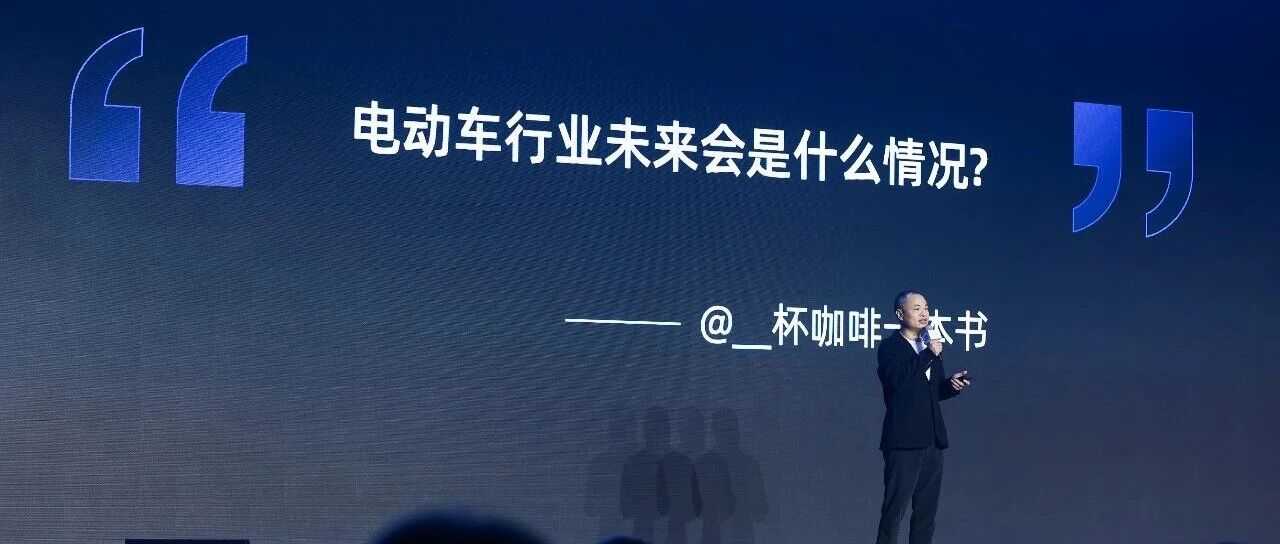
在"破局重构·2025雪球嘉年华"的现场,雪球创始人、董事长方三文坐在台上,连续回答了来自球友的十余个真实问题: 从电动车、人形机器人、AI自动驾驶,到资产配置、私募基金、A 股与海外资产比例,再到普通人如何构建一个真正"拿得住"的投资组合。 与许多人期待的"判断"不同,这场对话中最频繁出现的词,并不是结论,而是 "不知道"、"搞不清楚"、"没必要预测" 。 但正是在这些看似"退一步"的回答里,方三文反复指向了一个更重要的方向:当我们承认认知的边界,用结构替代预测、用分散对抗不确定性,普 通投资者反而更有可能走得更远。 以下,是这场高密度问答的完整实录。 方三文 :各位上午好!我来搞搞气氛,这些问题是之前雪球上搜集的,现在通过滚动的方法把问题抽出来,给大家回答。 问题1:电动车行业未来会是什么情况? 方三文:"一杯咖啡一本书"用户问的。第一,电动车相对于传统燃油车有非常大的体验提升,所以它会是替代,对燃油车替代,但替代比例多高, 现在说不好。总的来说,中国是电动车对燃油车替代程度最高的国家。 第二,电动车行业还属于汽车行业,电动车之间的竞争依然会非常剧烈,和传统的燃油车时代竞争格局变化没有那么大,可能只是换成 ...
干货满满!专业“基金买手”2026投资“藏宝图”出炉
Zhong Guo Zheng Quan Bao - Zhong Zheng Wang· 2025-12-21 10:09
Core Insights - The article emphasizes that professional fund managers are proactively preparing for investment opportunities in 2026 by focusing on strategic adjustments, planning, and direction selection [1][3] Group 1: Investment Strategies - Fund managers are moving away from simple "stock-bond pairing" to embrace a more diversified, dynamic, and global asset allocation strategy [1][7] - The focus is on three main themes: "technology, cycles, and consumption," with a "core-satellite" strategy being employed to optimize portfolios [1][9] - The approach to year-end adjustments is characterized as a structural optimization aimed at long-term gains rather than short-term rankings [3][4] Group 2: Specific Adjustments and Trends - Recent adjustments include increasing exposure to traditional industries that are undervalued and cyclical, such as real estate, while reducing positions in high-performing tech stocks [3][4] - Some institutions are adopting a more aggressive stance by increasing allocations to innovative technology and pharmaceuticals, focusing on "computing power + application" as key areas for future performance [4][9] - The adjustments are seen as a systematic "check-up" process, ensuring core holdings are robust while optimizing satellite positions to benefit from global recovery and domestic policy support [4][5] Group 3: Market Outlook for 2026 - The investment outlook for 2026 is cautious yet optimistic, with expectations of a shift from liquidity-driven markets to a focus on fundamental performance [9] - Key investment opportunities are identified in technology innovation, "anti-involution" policies, and the recovery of consumer spending, particularly in sectors like travel, healthcare, and new consumption trends [9][10] - The anticipated recovery in upstream resource products is linked to "anti-involution" policies, which are expected to improve supply-demand dynamics and profitability in various sectors [10]
黄金暴涨,个人存款30万以上的家庭,或将面临这3大难题
Sou Hu Cai Jing· 2025-12-20 06:41
我的一个朋友最近特别纠结。他前段时间在看新闻的时候,突然发现黄金价格在大幅上升。他说,他十年前曾经买过一些黄金饰品和金条,那时候没花多少 钱。现在看新闻说黄金价格涨到了历史新高,他开始后悔怎么当初没多买一些。同时,他也开始担忧起来。他现在的存款有30多万,他在思考,在黄金暴涨 的这样一个时代背景下,他这些存款应该怎么样去打理。是存在银行里保险,还是去买黄金投资,还是做其他的投资?这个问题让他很困扰。 有人会说,你可以去买其他的投资产品,比如说基金、股票等等。这些产品的收益可能会比银行利息更高。但问题是,这些投资产品的风险也更高。如果市 场不好,你的投资可能就会出现亏损。这对于很多普通家庭来说,是不能承受的。 这个困扰,我觉得不只是他一个人的问题。很多存款在30万以上的家庭,现在可能都在经历同样的纠结。黄金价格的上升,让很多人开始思考资产配置的问 题。他们开始想,是不是应该把手里的钱去投资黄金,或者说投资其他更能保值和增值的资产。在这样的思考过程中,他们会遇到各种各样的困难和困境。 让我说一下黄金暴涨这个现象的背景。为什么会出现黄金价格大幅上升的情况呢?这有很多原因。全球经济形势的不确定性,各种地缘政治的风险, ...