大模型

Search documents
广东省政协常委陆海:绘制“大湾区产业地图”,杜绝同质竞争
Nan Fang Du Shi Bao· 2026-01-28 06:43
Core Viewpoint - The global technology industry competition has evolved into a comprehensive contest of innovation ecosystems and urban clusters, with the Guangdong-Hong Kong-Macao Greater Bay Area being a crucial strategic force for China's technological self-reliance and global competitiveness [1] Group 1: Importance of Technological Innovation - The deep integration of technological innovation and industrial innovation is vital for the Greater Bay Area to become a world-class bay area and urban cluster, fostering new productive forces and solidifying the foundation for high-quality development [1] - Talent is identified as the primary resource for innovation, with a particular emphasis on the shortage of strategic scientists and top-tier technological talents [1] Group 2: Recommendations for Development - It is suggested that leading enterprises should establish basic research funds and explore new models of "application-driven basic research" to facilitate the initial link from basic research to industrial application [2] - Concentrating resources to cultivate international leading enterprises in fields such as large models, advanced computing power, artificial intelligence, and quantum information is recommended to create globally influential benchmark application scenarios [2] Group 3: Efficient Cross-Border Flow of Resources - The key to ensuring efficient cross-border flow of resources lies in collaboration and connectivity, with a proposal to create a "Bay Area Industrial Collaborative Development Map" to clarify industrial positioning and collaboration priorities among cities [3] - Suggestions include promoting soft connectivity of rules, achieving breakthroughs in areas such as research project management, intellectual property recognition, tax incentives, and talent evaluation standards [3] - Recommendations for optimizing collaborative decision-making mechanisms include delegating authority for clearly defined matters and simplifying approval processes to significantly enhance the efficiency of decision-making and implementation of major issues [3]
中国团队引领太空算力:首次太空在轨部署通用大模型,发2800颗卫星服务数亿硅基智能体
3 6 Ke· 2026-01-28 06:39
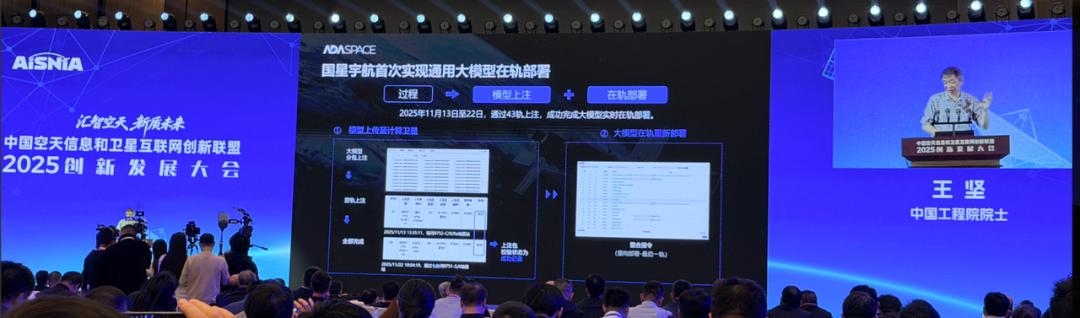
Core Insights - The global competition in AI is shifting focus to space computing power, with both the US and China making significant advancements in this area [1][2][8] Group 1: Developments in Space Computing Power - Starcloud, backed by Nvidia, has successfully run a large model in space using Nvidia H100, marking a significant technical validation [3][5] - Guoxing Aerospace plans to launch 2,800 satellites, with 2,400 dedicated to inference computing power reaching a total of 100,000 P-level, and 400 for training with a capacity of 1 million P-level [2][8] - Guoxing Aerospace has already completed key technology validations with its first group of space computing centers launched last year, and aims for commercial deployment by 2030 [2][8] Group 2: Differences in Approaches - Starcloud's approach involves deploying large models on the ground before sending them to space, while Guoxing Aerospace can deploy general large models in orbit and update them online as needed [5][6] - The difference in methodologies is likened to single-player versus online gaming, highlighting the advanced capabilities of Guoxing Aerospace [6] Group 3: Advantages of Space Computing Power - Space computing power can significantly reduce costs and energy consumption compared to traditional data centers, which are projected to consume 1 trillion kWh by 2026 [8][10] - The ability to provide real-time services from space can enhance the performance of silicon-based intelligent systems, such as Robotaxis and drones, by reducing latency [8][10] - Space computing power can also democratize AI access, providing infrastructure to remote areas lacking computational resources [10] Group 4: Technical Challenges and Innovations - The rapid evolution of AI computing chips poses challenges for maintaining up-to-date hardware in space, necessitating a hardware replacement mechanism [12][13] - Unique challenges in the space environment, such as heat management and protection against high-energy particles, require innovative solutions to ensure the reliability of space computing systems [14][15]

汽车视点丨盈利压力未减 汽车行业如何走出利润率低位区间?
Xin Hua Cai Jing· 2026-01-28 05:39
新华财经上海1月28日电(记者王鹤)国家统计局27日发布的2025年工业企业利润数据显示,全年工业 企业利润实现增长,扭转了连续三年下降态势,但汽车行业盈利表现仍显乏力,利润率持续处于历史低 位,下行压力凸显。 汽车行业利润率持续处于历史低位 国家统计局数据显示,2025年1-12月,汽车行业实现收入111796亿元,同比增长7.1%;成本98498亿 元,同比增长8.1%;利润总额4610亿元,同比仅增长0.6%;行业利润率为4.1%,显著低于下游工业企 业5.9%的平均利润率水平。 12月单月数据表现更为严峻,汽车行业收入11573亿元,同比下降0.8%;成本10093亿元,同比增长 0.8%;利润仅207亿元,同比大幅下降57.4%;利润率进一步跌至1.8%,环比11月明显下滑,较2024年 12月4.1%的利润率也出现大幅回落。 乘用车市场信息联席分会秘书长崔东树表示,从历年销售利润率走势来看,2024年汽车行业利润表现已 显疲软,销售利润率仅4.3%,较历史正常水平下降;2025年1-12月行业销售利润率进一步降至4.1%,处 于历史低位,其中12月1.8%的利润率更是创下近期低点,盈利下行压力持续 ...
云知声高开逾10% 预计年度实现大模型相关业务收入同比增长约1057%至1095%
Zhi Tong Cai Jing· 2026-01-28 02:59
Core Viewpoint - Company Yunzhisheng (09678) experienced a significant stock price increase of over 10%, reaching HKD 243, with a trading volume of HKD 3.5867 million following the announcement of substantial revenue growth in its large model-related business for the fiscal year ending December 31, 2025 [1] Group 1: Revenue Growth - The company anticipates achieving revenue from large model-related businesses between RMB 600 million to RMB 620 million for the fiscal year ending December 31, 2025, representing a year-on-year increase of approximately 1057% to 1095% compared to RMB 51.87 million for the fiscal year ending December 31, 2024 [1] - This significant revenue growth is attributed to the company's sustained industry-leading core technology capabilities and accelerated commercialization processes [1] Group 2: Model Development - The company has developed a comprehensive model matrix, including the "Shan Hai" series large language models, multi-modal large models, and specialized industry large models, addressing both general and industry-specific application needs [1] - The company has established sustainable systemic advantages in key dimensions such as model architecture design, underlying algorithm capabilities, engineering delivery, and industry adaptability [1] Group 3: Intelligent Agent Deployment - Utilizing a unified intelligent agent platform, the company has encapsulated the aforementioned model capabilities into various intelligent agents, covering typical business scenarios such as smart customer service, smart marketing, and document review [1]
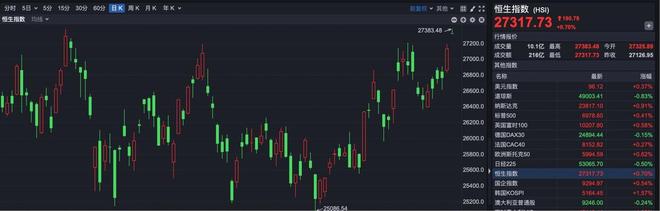
港股速报|港股高开 恒指突破去年高点 创近4年半来新高
Mei Ri Jing Ji Xin Wen· 2026-01-28 02:53
1月28日,港股市场小幅高开。 新股方面,鸣鸣很忙(HK01768)上市首日高开超88%,股价报445港元,总市值达959亿港元。 | 鸣鸣很忙 (01768) CAS | | | | | | | --- | --- | --- | --- | --- | --- | | 445 01010 1208.400 | | +88.08% | | + @ | | | 行情报价 | | | | | | | 成交量 | 300万股 | 最高 | 445.000 今开 | | 445.000 | | 成交额 | 12.9亿 | 最低 | 445.000 昨收 | | 236.600 | | 买量 | 200股 | 振幅 | 0.00% 换手 | | 1.40% | | 变量 | 12600股 | 均价 | 430.674 | | | | 每股收益TTM 9.561 | | 市盈率TM | 46.54 | 每股净资产 36.706 | | | 总股本 总市值 959亿港元 | 2.16亿 | | 市净率 | | 12.123 | | 港股股本 2.14亿 港股市值 950亿港元 | | | | | | 鸣鸣很忙是一家成熟且 ...
港股异动|云知声大涨近30%,预期去年大模型相关业务收入同比大增超10倍
Ge Long Hui· 2026-01-28 02:32
Core Viewpoint - Yunzhisheng (9678.HK) experienced a significant surge of nearly 30%, reaching a peak of 285 HKD, following the announcement of projected revenue from large model-related businesses for the fiscal year ending December 31, 2025, estimated at approximately 600 million to 620 million HKD, representing a year-on-year growth of about 1057% to 1095% [1] Group 1 - The company anticipates substantial growth in revenue from large model-related businesses, driven by its leading core technology capabilities and accelerated commercialization processes [1] - The company has developed a comprehensive model matrix, including the "Shan Hai" series large language model, multi-modal large model, and specialized industry large model, addressing both general and industry-specific application needs [1] - The company has created various intelligent agents based on a unified intelligent platform, encapsulating the capabilities of the aforementioned models to cover typical business scenarios such as smart customer service, smart marketing, and document review [1]
大模型六小龙告别青春期
3 6 Ke· 2026-01-28 02:28
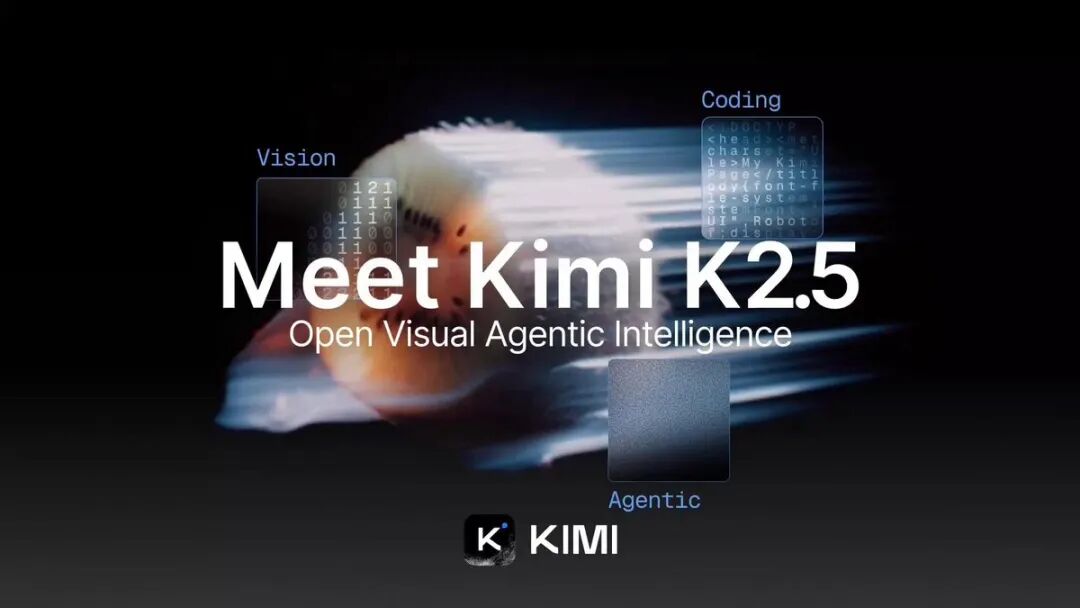
Core Insights - The year 2026 is seen as a pivotal growth point for the "Six Little Dragons" of large models, influenced by technology, scenarios, and capital [1] - A recent wave of strategic announcements from five of the six companies indicates a shift towards more defined paths as they transition from their formative stages [3][4] - The competitive landscape has intensified, with larger companies increasing their investment in AI, thereby squeezing the growth potential of the Six Little Dragons [8][9] Group 1: Company Developments - "Yue Zhi An Mian" announced a new model, Kimi2.5, and completed a $500 million financing round, aiming to create a unique large language model [1] - "Jie Yue Xing Chen" secured over 5 billion in financing and appointed a new chairman, focusing on the integration of AI and smart terminals [1] - "Bai Chuan Zhi Neng" launched the Baichuan-M3 medical model and has a funding reserve of 3 billion, planning to release AI medical products in the first half of 2026 [3] Group 2: Market Dynamics - The recent IPOs of "Zhi Pu" and "MiniMax" have triggered a competitive response from the other companies, emphasizing the need to demonstrate their market viability [3][4] - The emergence of "DeepSeek" has disrupted the valuation anchors for the Six Little Dragons, highlighting the challenges they face in maintaining their competitive edge [6][9] - The capital environment has shifted, with investors now favoring consumer applications and AI infrastructure over foundational models, impacting the funding strategies of the Six Little Dragons [9][19] Group 3: Strategic Adjustments - Companies are recalibrating their strategies between pursuing technological ideals and achieving commercial viability, with some focusing on vertical markets while others aim for broader applications [4][10] - "Yue Zhi An Mian" has decided to halt large-scale brand advertising to concentrate on foundational model development, while "Zhi Pu" and "MiniMax" are pushing for IPOs to facilitate business adjustments [11][13] - "Ling Yi Wan Wu" and "Bai Chuan Zhi Neng" have chosen to abandon general large model training in favor of focusing on specific verticals, such as healthcare [14] Group 4: Future Outlook - The success of "DeepSeek" and the potential for new technological paradigms suggest that the AI industry is still evolving, with opportunities for breakthroughs remaining [16][17] - The Six Little Dragons are expected to find their unique paths in 2026, with technology, scenarios, and capital playing crucial roles in their future trajectories [16][19] - The ongoing competition with larger firms will require the Six Little Dragons to continuously adapt their strategies and secure sufficient capital to sustain their growth [20][21]
环球市场动态:特朗普访华的可能性与潜在影响
citic securities· 2026-01-28 02:15
Market Overview - A-shares experienced slight gains with the Shanghai Composite Index up 0.18% to 4,139.90 points, while the Shenzhen Component rose 0.09%[15] - The S&P 500 index reached a new high, increasing by 0.41% to 6,978 points, supported by a strong performance in technology stocks[9] - European markets showed moderate gains, with the Euro Stoxx 600 up 0.6% and the UK FTSE 100 rising 0.58%[9] Currency and Commodity Trends - The US dollar index fell by 0.8%, leading to the euro surpassing 1.2 against the dollar[26] - Gold prices exceeded $5,100, and silver prices crossed the $110 mark, both reaching record highs[26] - Oil futures rose to their highest levels since October 2022, with NY crude oil up 2.9% to $62.39 per barrel[26] Economic Indicators - The US consumer confidence index dropped to its lowest level in over 11.5 years, impacting market sentiment[9] - The US Treasury yield curve steepened, with the 10-year yield rising to 4.24% and the 30-year yield reaching 4.86%[29] Corporate Highlights - Mobileye reported a decline in revenue due to low customer inventory but anticipates a rebound in Q1 2026 as customers restock[7] - Vale's iron ore production reached 336.1 million tons in 2025, the highest since the 2019 dam disaster, maintaining production guidance for 2026 at 335-345 million tons[7] Geopolitical Developments - Trump's potential visit to China in April 2026 could focus on US manufacturing investment, impacting China's manufacturing sector and pricing power[5] - The EU and India finalized a free trade agreement after nearly 20 years of negotiations, which may influence market dynamics[5]
未知机构:宏景科技千问最强推理模型maxthinking发布应用板块-20260128
未知机构· 2026-01-28 02:10
Summary of Conference Call Notes Company and Industry Involved - **Company**: Alibaba Group - **Industry**: Artificial Intelligence (AI) and Technology Core Points and Arguments - **Launch of Qwen3-Max-Thinking Model**: Alibaba officially released its flagship reasoning model, Qwen3-Max-Thinking, which has over 1 trillion parameters and a pre-training data volume of 36 trillion tokens, making it the largest and most capable model from Alibaba to date [1][2] - **Performance Improvements**: The new model has achieved significant performance leaps, setting global records in multiple key performance benchmarks through extreme scale expansion in total parameters, reinforcement learning, and reasoning computation [2] - **Enhanced Native Agent Capabilities**: The model features a new testing time expansion mechanism that improves reasoning performance while being more economical, significantly enhancing the native agent's ability to autonomously call tools during conversations [2] Key Applications and Collaborations - **AI Applications in Specific Industries**: Alibaba is positioned as the core of an AI ecosystem, focusing on vertical industry AI transformations and scenario implementations. Key collaborations include: - **Damai Entertainment**: Optimizing promotional strategies in the entertainment ticketing scene using large models [2] - **Hang Seng Electronics**: A leader in financial technology, collaborating with Alibaba on financial vertical large models [2] - **Shiji Information**: Covering hotel and retail scenarios, facilitating industry digitization based on Alibaba's ecosystem [2] - **Computing Power for Large Models**: Alibaba's infrastructure supports the training of large models, with key partners including: - **Data Port**: Core IDC supplier for high concurrency computing needs [3] - **Hangzhou Steel**: Important computing power node in the Yangtze River Delta through the "Zhejiang Cloud" project [3] - **Runjian Co.**: Supports Alibaba's AI expansion and regional computing power through the "China-ASEAN Smart Computing Cloud" [3] - **AI Healthcare Applications**: The Alibaba Health model, "Afu," connects the entire medical chain, with key partners including: - **Alibaba Health**: Core entity responsible for the full chain of pharmaceutical e-commerce and intelligent diagnosis [3] - **Weining Health**: Provides necessary IT support for hospital system integration with Afu [3] - **Meinian Health**: Strategic partner offering extensive health check data for model calibration and AI report interpretation [3] - **Huaren Health**: Offline retail touchpoint for Afu health services [3] - **Sichuang Medical**: Supplies smart medical IoT hardware and system support for Afu's implementation in hospitals [3] Important but Overlooked Content - **Risk Factors**: There are potential risks associated with the new model's capabilities not meeting expectations, the commercialization of AI applications falling short, and stock price volatility for certain targeted companies [4]

【看新股】极视角港股IPO:营收稳步增长,盈利波动承压
Sou Hu Cai Jing· 2026-01-28 01:39
Group 1 - The core viewpoint of the article is that Jishi Jiao has submitted an IPO application to the Hong Kong Stock Exchange, with CITIC Securities as the sole sponsor, highlighting its growth in AI computer vision solutions despite challenges in profitability and cash flow [1][6]. - Jishi Jiao's revenue for the first three quarters of 2025 reached 136 million RMB, a year-on-year increase of 71.6%, while the net loss expanded to 36.3 million RMB, a 33.73% increase compared to the previous year [1][6]. - The company has completed 11 rounds of financing, raising over 380 million RMB, with a post-financing valuation of approximately 2.31 billion RMB after the D round in November 2024 [1][11]. Group 2 - Jishi Jiao's core business includes AI computer vision solutions and large model solutions, with the latter accounting for over 20% of revenue in its first year [2]. - The company has developed infrastructure such as the Jixing algorithm inference and deployment platform, showcasing over 1,500 algorithms and serving more than 3,000 clients [4]. - In 2023, all revenue came from AI computer vision solutions, with software-defined integrated AI solutions accounting for 81.5% of total revenue [4]. Group 3 - From 2022 to 2024, Jishi Jiao's revenue grew from 102 million RMB to 257 million RMB, with a compound annual growth rate of 59.2% and a year-on-year increase of 101.5% in 2024 [6]. - The company's gross margin improved from 30.6% in 2022 to 44.9% in the first three quarters of 2025, with a year-on-year gross margin increase of 96.2% [9]. - Research and development expenses have been significant, with amounts of 35.2 million RMB, 36.6 million RMB, 44.8 million RMB, and 46.9 million RMB for the respective years, representing 34.7%, 28.6%, 17.4%, and 34.4% of revenue [10]. Group 4 - The company's accounts receivable risk has increased, with trade receivables rising from 42.0 million RMB at the end of 2022 to 181 million RMB by the third quarter of 2025, and the collection period extending from 99 days to 379 days [10]. - Jishi Jiao's ownership structure shows that the founding team and related parties hold a combined 29.84% voting rights, making them the largest shareholder group [12]. - The funds raised from the IPO will be allocated to enhancing R&D capabilities, improving commercialization efforts, and supplementing working capital [14].