自动驾驶

Search documents
马斯克的声量增高 特斯拉却交出最惨财报
Zhong Guo Qi Che Bao Wang· 2026-01-29 10:35
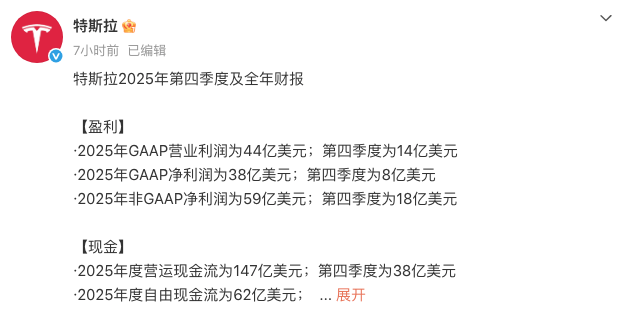
Core Viewpoint - Tesla's 2025 financial report reveals a significant decline in revenue and profit, indicating ongoing challenges in the automotive market while the company shifts focus towards humanoid robots and AI technology [2][10]. Financial Performance - Tesla's total revenue for 2025 was $94.827 billion, a year-on-year decrease of 2.93% - The net profit attributable to shareholders was $3.794 billion, down 46.79% year-on-year - Global vehicle deliveries totaled 1.6361 million units, reflecting an 8.6% decline compared to the previous year, marking the second consecutive year of delivery decreases [2]. Market Trends - UBS had previously lowered Tesla's fourth-quarter delivery forecast for 2025 from 435,000 to 415,000 units, indicating a 16% year-on-year drop and a 17% quarter-on-quarter decline [3]. - Tesla's delivery volumes have fluctuated across major markets, including the U.S., Europe, and China, with significant declines noted [4][5]. - In China, retail sales fell by 4.8% year-on-year, while in Europe, market share dropped from 1.8% to 1.2%, with sales in key markets like Germany and France plummeting by over one-third [5]. Strategic Shifts - Tesla is transitioning its core business from vehicle sales to "Transportation as a Service" (TaaS), with plans to launch autonomous taxi services and a platform for vehicle owners to monetize their cars [10]. - The production of Model S and Model X will be phased out, with the Fremont factory being repurposed for humanoid robot production, targeting an annual capacity of 1 million units [10]. Technological Investments - Tesla's R&D expenditures have increased significantly, particularly for Full Self-Driving (FSD) technology, which is expected to impact short-term profits [6]. - The company anticipates capital expenditures exceeding $20 billion in 2026, far surpassing the $1.4 billion in free cash flow for 2025, indicating a "burn cash for future" strategy [6]. Future Outlook - Elon Musk predicts that Tesla's humanoid robots will outperform human surgeons within three years and emphasizes the potential for AI to revolutionize various sectors, including healthcare and education [8][12]. - The success of Tesla's upcoming projects, including CyberCab and Optimus, will be crucial for the company's future, with the potential to significantly impact the U.S. GDP [12].


马斯克宣布:自建晶圆厂
半导体芯闻· 2026-01-29 10:10
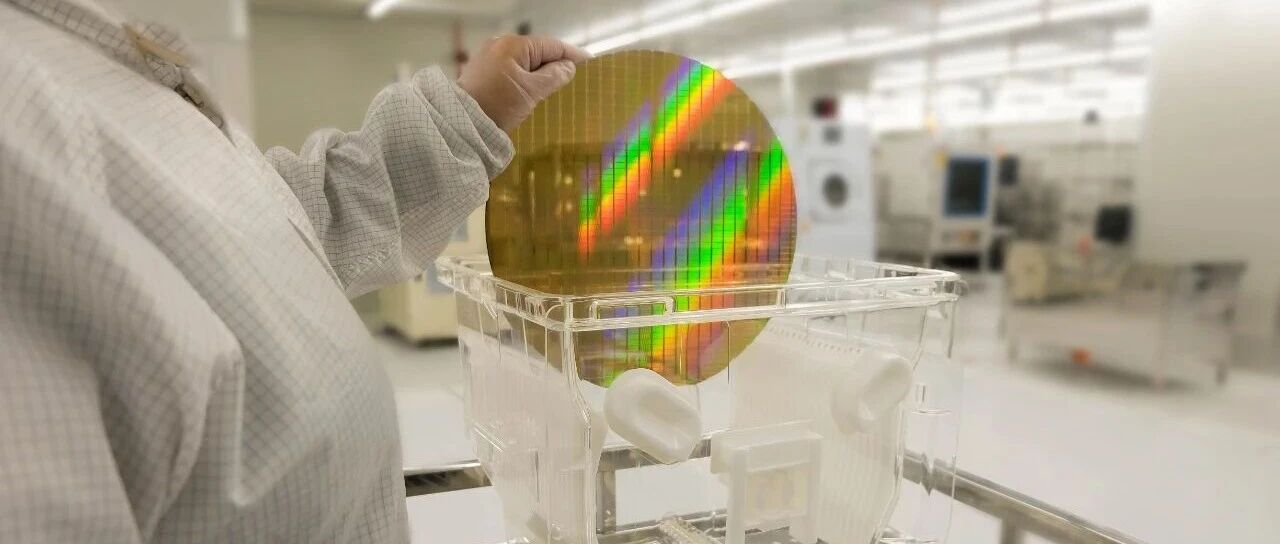
Core Viewpoint - Elon Musk announced that Tesla plans to build and operate a semiconductor manufacturing facility called "TeraFab," which will require billions of dollars in investment and signifies an expansion beyond its core electric vehicle business [1][5]. Group 1: TeraFab Project - The TeraFab will be a large-scale factory covering various aspects of semiconductor production, including logic circuits, memory, and packaging, with production based in the United States [1]. - Musk emphasized the necessity of TeraFab to avoid potential capacity bottlenecks in the next three to four years, as existing suppliers like TSMC and Samsung cannot meet Tesla's demand [1][2]. - The factory is expected to have a production capacity that exceeds 100,000 wafers per month, positioning Tesla among the largest semiconductor manufacturers globally [5]. Group 2: Financial Considerations - Tesla is projected to spend over $20 billion on capital expenditures this year, with funding sources for the TeraFab and other infrastructure projects still under consideration [3]. - The company has over $44 billion in cash and investments, which will be utilized alongside other financing options, including potential bank loans [3]. Group 3: Industry Challenges - Building a semiconductor factory involves significant economic costs, with advanced facilities requiring hundreds of billions in fixed costs and a lengthy timeline from construction to full operation [2][6]. - The complexity of semiconductor manufacturing is often underestimated, as it requires extensive engineering expertise and a deep understanding of various processes [6][7]. - The industry faces challenges in achieving high yield rates for new manufacturing processes, which are critical for market stability and profitability [8].
特斯拉加码押注AI与机器人领域
Guo Ji Jin Rong Bao· 2026-01-29 09:55
押注AI与自动驾驶 当地时间1月28日,特斯拉最新披露,受电动车市场竞争加剧及自身优势减弱影响,公司2025年第四季 度利润同比下降61%。 与此同时,特斯拉宣布将向埃隆·马斯克的私人人工智能公司xAI投资20亿美元,引发市场对其战略重心 转移的关注。 电动车销量下滑 财报显示,特斯拉2025年第四季度营收同比下降3%,至249亿美元;2025年全年营收为948亿美元,同 比下降3%。销量方面,第四季度电动车销量同比下滑16%;全年共售出164万辆汽车,同比下降9%,明 显落后于中国车企比亚迪(002594)去年约226万辆的电动车销量。 随着在美国、中国等核心市场面临日益激烈的竞争,特斯拉在全球电动车市场的主导地位正在被削弱。 产品结构老化和政策环境变化又进一步放大了压力。 多国政府逐步减少电动车补贴,削弱了消费者购车动力。去年秋季,特斯拉宣传多年的低成本新车型仅 推出了"减配版"的Model Y和Model 3。尽管取消了部分配置,但售价降幅有限,在缺乏补贴的情况下竞 争力受到质疑。 此外,马斯克还宣布将逐步结束高端车型Model S和Model X的生产。这两款车型销量长期低迷,其位于 加州弗里蒙特的工 ...

绝版了!马斯克确认两款车型将停产
Sou Hu Cai Jing· 2026-01-29 09:34
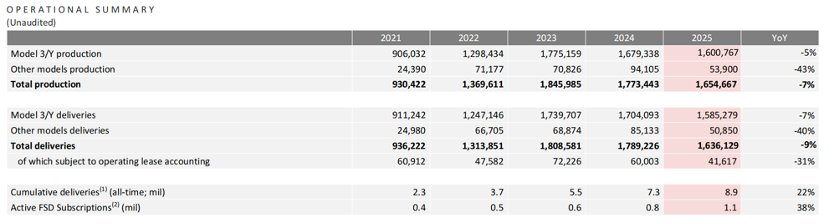
Core Viewpoint - Tesla reported a decline in revenue for both Q4 2025 and the entire year, marking the first annual revenue drop in the company's history, attributed to a decrease in vehicle deliveries and production adjustments [1][2]. Financial Performance - In Q4 2025, Tesla's revenue was $24.9 billion, a year-over-year decrease of 3.1% - Operating profit for Q4 was $1.41 billion, down 11% year-over-year - Free cash flow for Q4 was $1.42 billion, a decline of 30% - For the full year 2025, total revenue was $94.8 billion, down 3% from $97.7 billion in 2024, marking the first annual revenue decline in Tesla's history [1][2]. Vehicle Deliveries and Production - In 2025, Tesla delivered a total of 1.636 million vehicles, an 8.6% decrease from 1.789 million in 2024, falling short of market expectations [2]. - The production figures for 2025 included 1,600,767 units of Model 3/Y and 53,900 units of other models, totaling 1,654,667 vehicles produced [3]. Model Lineup Changes - Tesla CEO Elon Musk announced the discontinuation of Model S and Model X production to repurpose the Fremont factory for producing Optimus humanoid robots, aiming for an annual production capacity of one million units [8]. - The decision to stop production of Model S and Model X is not expected to significantly impact overall sales, as Model 3 and Model Y accounted for 96.89% of total deliveries in 2025 [8]. Market and Strategic Focus - The discontinuation of Model S and Model X in the Chinese market was influenced by increased tariffs on imported vehicles, which made these models less competitive [5]. - Tesla plans to invest $20 billion in 2026 to pivot towards robotics and autonomous driving technologies, alongside expanding production capacity for clean energy and battery manufacturing [9].
11.77亿元!自动驾驶新能源重卡赛道历史最大单笔融资!DeepWay深向完成Pre-IPO轮融资
机器人圈· 2026-01-29 09:33
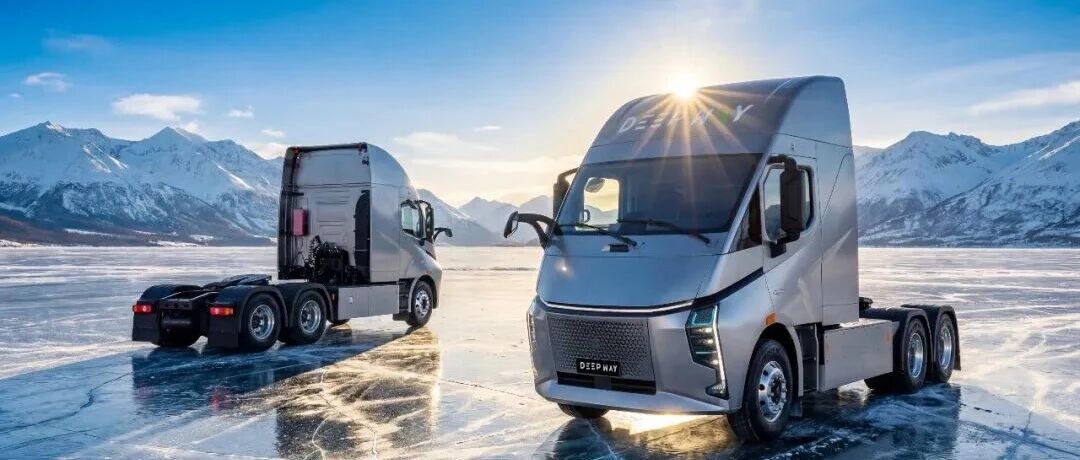
Core Insights - DeepWay has completed a Pre-IPO financing round, raising 1.177 billion yuan, marking the largest single financing in the history of the autonomous driving new energy heavy truck sector [1] - The funds will primarily be used for the operation and development of the company's core business, reinforcing its leading position in the smart new energy heavy truck market [1] Group 1: Company Overview - DeepWay is the world's first company to create smart new energy heavy truck solutions through a forward definition approach, achieving mass delivery [3] - The company employs a dual-driven development strategy of "self-owned vehicles + self-researched intelligent driving technology," redefining product and R&D architecture outside the traditional fuel vehicle technology system [3] - As of June 2025, DeepWay has delivered approximately 6,400 new energy heavy trucks, ranking first in the global forward-defined new energy heavy truck market [3] Group 2: Development Strategy - DeepWay adopts a pragmatic and gradual development path, prioritizing resources for commercializable directions [3] - The company initially focused on creating vehicles through forward definition, achieving self-research in core components, and completing the electrification of new energy heavy trucks [3] - The strategy includes promoting the large-scale application of combined auxiliary driving systems and deploying human-machine co-driving models, laying the foundation for the eventual large-scale implementation of fully autonomous driving [3] Group 3: Commercialization and Market Focus - DeepWay is at the forefront of the commercialization of intelligent driving, having standardized the combined auxiliary driving system across its latest models, with a continuously increasing subscription rate for intelligent driving features [4] - The company focuses on the substantial fixed-route short-distance bulk transportation market within China's logistics system, which accounts for approximately 40% to 50% of total road freight demand [5] - DeepWay is accelerating the application of intelligent platooning, currently conducting tests and cargo operations in regions such as Xinjiang, Inner Mongolia, and Sichuan, with initial customer deliveries of platooning vehicles [5] Group 4: Future Outlook - With a clear strategic path, ongoing technological investment, and solid commercial progress, DeepWay is steadily advancing the implementation of autonomous driving in freight transport [5] - The company aims to continue focusing on technological and product innovation, accelerating the large-scale application of autonomous driving in road freight scenarios, and driving the industry towards a more intelligent, efficient, and green direction [5]
特斯拉停产,Model S/X全力转向AI,将发布第三代人形机器人Optimus
华尔街见闻· 2026-01-29 09:29
马斯克表示,特斯拉最早推出的两款高端车型将在下一季度结束生产,获得"光荣退役"。此举意在腾出加州弗里蒙特工厂的产能,转而用于建立一条年产能达 100万台的人形机器人Optimus生产线。 马斯克直言,公司正在迈向一个"基于自动驾驶的未来",并强调现在是预订这两款绝版车型的最后时机。 除了产品线的重大调整,特斯拉进一步深化了与马斯克旗下另一家公司xAI的绑定。除了确认20亿美元的投资外,双方还达成了一项"框架协议",旨在探索更深 层次的合作。特斯拉表示,这一合作将有助于提升其自动驾驶技术、车载娱乐体验以及制造机器人的研发能力。 与此同时,公司披露2026年将是"巨大的投资年",资本支出(Capex)预计将超过200亿美元,主要用于算力基础设施、电池供应链及AI芯片的建设。 特斯拉正在加速剥离传统汽车制造商的身份,全力押注自动驾驶与人形机器人业务。 特斯拉周三盘后公布的第四季度财报电话会议透露出激进的战略转型信号,马斯克宣布将 永久停产旗舰车型Model S和Model X ,并确认了向人工智能(AI) 公司xAI投资20亿美元的计划。 数据显示,去年这两款车型仅占特斯拉159万辆总交付量的3%。马斯克表示,尽管 ...
特斯拉停产Model S和Model X,转产人形机器人
Xin Lang Cai Jing· 2026-01-29 09:29
Core Viewpoint - Tesla is experiencing a significant decline in both profits and vehicle sales, leading to the decision to halt production of its highest-priced models, the Model S and Model X, to reallocate factory capacity towards humanoid robots and autonomous taxi services [2][3][10]. Financial Performance - In Q4 2025, Tesla reported a 16% year-over-year decline in adjusted earnings, with net profits plummeting by 61% in a single quarter and an annual decrease of 46%, amounting to a reduction of $3.3 billion [3][10]. - Over the past 10 quarters, Tesla has seen revenue decline in 9 of those quarters, with annual revenue in 2025 only reaching 30% of its peak in 2022, which was $12.6 billion [5][12]. Market Challenges - Tesla's brand reputation has suffered due to CEO Elon Musk's political activities and the cancellation of a $7,500 electric vehicle tax credit by the U.S. government, contributing to a decline in electric vehicle sales across the country [5][12]. - The company faces intense competition from other automakers, particularly in China, where it has lost its title as the largest electric vehicle manufacturer to BYD [5][12]. Production Changes - The decision to stop production of the Model S and Model X is expected to have a limited impact on overall sales, as these models account for only 3% of Tesla's global deliveries [5][12]. - The production halt is set to begin in the next quarter [5][12]. Future Plans - Tesla plans to invest $2 billion in xAI, an artificial intelligence company founded by Musk, which also holds stakes in Musk's social media platform X [5][12]. - The company aims to expand its robotaxi service to 7 new markets in the first half of this year, in addition to the 2 markets currently operational, with a goal to cover half of the U.S. population by the end of 2025 [6][13].
氪星晚报|马斯克:人形机器人领域最大竞争对手将来自中国;黄仁勋:英伟达正与英特尔合作开发一款定制的X86处理器
3 6 Ke· 2026-01-29 09:17
Group 1: Company Developments - Geely Auto has established a new company in Shenyang with a registered capital of 100 million yuan, focusing on automotive parts manufacturing and information technology consulting [1] - Efort Robotics announced a price adjustment for some industrial robot products, with a range of 5% to 12%, due to rising costs of raw materials and components [2] - Modern Auto reported a record high sales revenue of 186.25 trillion won (approximately 906.5 billion yuan) for the previous year, marking a 6.3% year-on-year increase, despite a 19.5% decline in operating profit [3] - BMW will implement a new brand logo across all models starting February 2026, having successfully registered multiple "BMW" trademarks [4] - VF Corporation reported third-quarter revenue of $2.876 billion for fiscal year 2026, reflecting a 1% year-on-year increase [6] Group 2: Market Trends and Consumer Behavior - Cainiao's global supply chain for the food industry saw a year-on-year order volume increase of over 35% as the Spring Festival approaches, driven by significant demand for various food brands [5] - Deutsche Bank approved a €1 billion stock buyback plan following a fourth-quarter net profit of €1.3 billion, exceeding market expectations [8] Group 3: Strategic Partnerships and Mergers - Alibaba plans to merge its autonomous driving business with Zelos, acquiring shares in the process [7] - TTC completed a new round of financing worth millions, led by Houxue Capital, to enhance AI model development and improve its recruitment product experience [7] Group 4: Economic Outlook - The German government has revised its 2026 economic growth forecast down to 1%, a decrease of 0.3 percentage points from previous estimates, citing weaker-than-expected recovery in late 2025 [14]
营收、利润大跌,股价却上涨,市场对特斯拉为何如此宽容?
Xin Lang Cai Jing· 2026-01-29 08:54
Core Viewpoint - Despite a disappointing financial report, Tesla received a positive market response, indicating that investors are willing to look beyond current challenges and focus on future potential [1][16]. Financial Performance - In 2025, Tesla's total revenue was $94.827 billion, a 3% year-over-year decline, marking the first annual revenue drop in the company's history [1][16]. - Net profit attributable to common shareholders was $3.794 billion, down 46% year-over-year, with fourth-quarter net profit at $840 million, a significant 61% decline [1][16]. - The overall gross margin and energy business revenue exceeded market expectations, despite the declines in revenue and profit [1][16]. Automotive Business Challenges - Tesla's automotive deliveries for 2025 were approximately 1.636 million units, a decrease of 9% year-over-year, with fourth-quarter deliveries at about 418,000 units, down 16% [2][17]. - Automotive revenue for the year was around $69.5 billion, a decline of about 10%, continuing to decrease as a percentage of total revenue [2][17]. - Factors contributing to the automotive business decline included reduced delivery volumes, lower fixed cost absorption for certain models, and increased tariffs raising average costs per vehicle [2][17]. Competitive Landscape - Tesla faces unprecedented competition, particularly in China, where local brands like BYD surpassed Tesla with 2.26 million units sold in 2025, becoming the global leader in electric vehicle sales [3][18]. - In Europe and the U.S., the reduction of electric vehicle subsidies and slowing demand pose additional challenges for Tesla [3][18]. Strategic Shifts - Tesla is shifting its focus from traditional automotive business to new areas, including robotics and AI, as indicated by plans to cease production of the Model S and X by mid-2026 [7][22]. - The company is also introducing a lower-cost version of the Model 3/Y to boost sales in Asia, reducing the starting price by $5,000 to $5,500 [7][21]. Future Outlook - Tesla's energy storage segment showed significant growth, with a total installation of 46.7 GWh in 2025, a 48.7% increase year-over-year, and a record gross margin of $1.1 billion [9][23]. - The company is transitioning to a subscription model for its Full Self-Driving (FSD) software, aiming to create a stable revenue stream and reduce sales volatility [11][25]. - Plans for 2026 include the production of a new Cybercab without a steering wheel or pedals, and advancements in humanoid robots and AI capabilities [12][27]. Mission Statement Update - Tesla updated its mission statement from "accelerating the world's transition to sustainable energy" to "building an amazing, abundant world," reflecting a broader vision that includes robotics and AI [15][29].
【快讯】每日快讯(2026年1月29日)
乘联分会· 2026-01-29 08:51
Domestic News - The first mandatory national standard for automotive driving assistance systems has been officially released, set to be implemented on January 1, 2028. This standard mandates that automatic emergency braking systems (AEB) become standard equipment in light vehicles, with a projected AEB system installation rate exceeding 60% for new passenger cars by 2025 [3] - During the "14th Five-Year Plan" period, the manufacturing and sales revenue of new energy vehicles is expected to grow at an annual rate of 49.5%. In 2025, the manufacturing of new energy vehicles is projected to increase by 14.3%, while the clean energy power generation sector is expected to see a 17.3% revenue growth, accounting for 38.5% of total electricity production revenue, an increase of 6.9 percentage points from 2021 [4] - Xi'an has opened applications for a vehicle replacement subsidy for 2026, offering a maximum subsidy of 15,000 yuan for eligible consumers replacing old vehicles with new energy or fuel vehicles. The subsidy is set at 8% of the new vehicle sales price for new energy vehicles and 6% for fuel vehicles, with a cap of 15,000 yuan and 13,000 yuan respectively [5] - Lantu has announced its product plan for 2026, which includes four new models, all equipped with L3 autonomous driving capabilities. The first model, Lantu Taishan Ultra, is expected to be delivered in March 2026 [6][7] - BYD has launched the 5.0 version of its "Tianshen Eye" driving assistance system, featuring advanced reinforcement learning capabilities. By the end of last year, BYD had over 2.56 million vehicles equipped with this system, generating over 160 million kilometers of data daily [8] - Dongfeng's overseas version of the Nano 06 has been launched in Costa Rica, with 270 orders received during the launch event [9] - NIO has officially pushed the new version of its World Model (NWM), which includes a new urban navigation battery swap feature, supporting over 2,000 battery swap stations nationwide [10] - Alipay has partnered with Xiaomi to introduce a smart parking payment feature in Xiaomi's smart glasses, allowing users to pay for parking with voice commands or by scanning a parking code [11][12] International News - Malaysia has announced a vehicle scrappage subsidy program for cars older than 20 years, allowing owners to receive up to 8,000 ringgit in total for purchasing new vehicles after scrapping their old ones [13] - Thailand's automotive sales reached a two-year high in 2025, with total sales of 621,166 vehicles, an 8.5% increase from 2024. Electric vehicle sales accounted for 276,697 units, representing 45% of total sales [14] - Uber has established the AVLabs team to leverage its extensive real-world data from ride-hailing services to support the development of autonomous driving technology [15] - Volvo Financial Services has extended its partnership with Bank of America until 2030 to continue providing financing and leasing services to Volvo customers and dealers in the U.S. [16] Commercial Vehicles - The largest new energy heavy truck supercharging station in Hainan has been put into operation, with a total installed capacity of 8,000 kilowatts, enhancing the reliability and efficiency of the new energy heavy truck charging network in the province [18] - DAF has launched the XG Electric and XG+ Electric models, targeting the high-end transport market with spacious cabins designed for long-haul operations [19] - SANY Heavy Truck has partnered with Longxin Technology to create a comprehensive energy ecosystem for heavy trucks, aiming to alleviate long-distance charging anxiety [20] - BYD's T4 electric truck has surpassed 1,000 units in cumulative sales, gaining popularity in various urban distribution markets due to its low energy consumption and high reliability [21]