债市调整

Search documents
方正富邦区德成:8月债市不应过分悲观的五大理由
Zhong Guo Jing Ji Wang· 2025-08-13 06:15
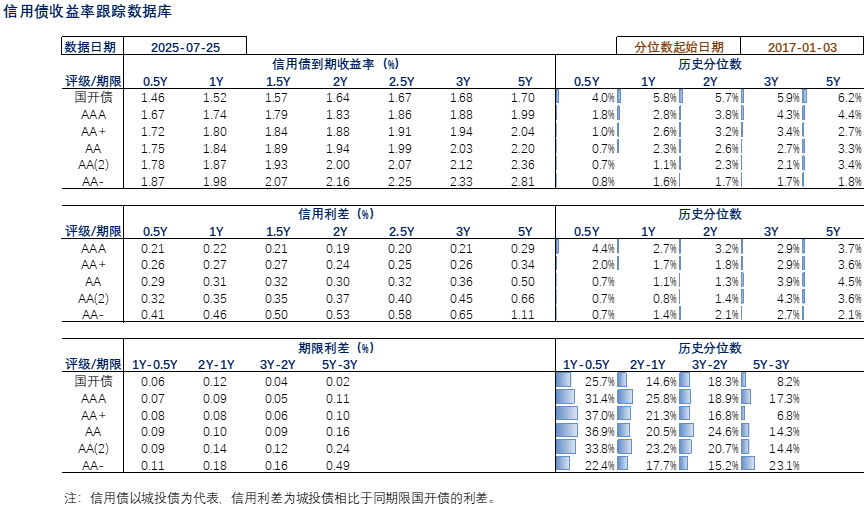
Group 1 - The bond market has experienced a correction from mid to late July, with the 10-year government bond yield rising from 1.66% to 1.72% and the 30-year bond yield increasing from 1.87% to 1.99% during the period from July 16 to August 11 [1] - In contrast to the bond market's decline, the stock market and commodities have shown strong performance, driven by supply reduction policies, economic recovery expectations, and global liquidity easing, leading to a significant rise in commodity prices and a rebound in the A-share market [1] - The adjustment in the bond market is attributed to three main factors: tight funding conditions, inflation expectations raised by "anti-involution" policies, and the impact of rising equity markets on the bond market [1] Group 2 - Recent PMI data indicates a marginal pressure scenario for the second half of the year, with production, domestic and external demand orders, and inventory indicators showing varying degrees of decline, suggesting that inflation expectations may not persist for long [2] - The commodity market is cooling down, which is favorable for the bond market, as the first phase of significant price increases in commodities may have passed, leading to a more rational market risk appetite [2] - Historically, August sees stable funding conditions, with funding rates typically rising before month-end; recent data shows overnight and 7-day funding rates declining to 1.35% and 1.49% respectively, indicating liquidity easing [2] Group 3 - The current adjustment in the bond market is driven more by sentiment and trading factors rather than a fundamental reversal of the bond market's core logic, suggesting that the long-term bullish outlook for the bond market remains unchanged [3] - The recent phase of decline in the bond market presents a more attractive opportunity for rational investors to position themselves [3]
平安公司债ETF(511030)回撤可控稳定,备受市场关注
Sou Hu Cai Jing· 2025-08-13 02:06
Group 1 - The core viewpoint of the article highlights that Ping An's bond ETF (511030) has the best performance in terms of controlling drawdown during the recent bond market adjustment, maintaining a relatively stable net value and manageable drawdown [1] - Since the bond market adjustment began on February 10, 2025, the market has gradually digested the impact of VAT adjustments, with a cautious market sentiment awaiting the issuance of local and national bonds on Friday [1] - The 10-year government bond yield has hovered around 1.685%, indicating a resilient bond market under the influence of easing liquidity [1] Group 2 - The bond market experienced fluctuations throughout the week, with long-term bonds outperforming short-term ones, reflecting a mixed performance on Tuesday [1] - The market showed a lack of clear direction on Wednesday, with long bond yields fluctuating, while Thursday saw a continuation of the oscillating trend with long bond yields stabilizing at low levels [1] - On Friday, the issuance of national and local bonds led to an initial rise in bond market yields, followed by a subsequent decline [1]
净值相对稳健且回撤可控,平安公司债ETF(511030)备受关注
Sou Hu Cai Jing· 2025-08-12 02:06
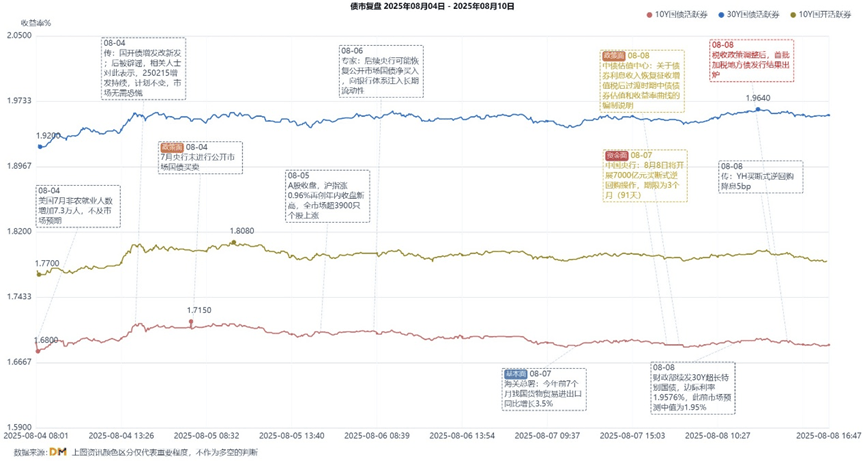
(数据来源: DM终端,截至20250808) 以上内容与数据,与有连云立场无关,不构成投资建议。据此操作,风险自担。 上周来看,债市逐步消化增值税调整影响,周内股债跷跷板效应仍存,但影响逐步钝化,资金宽松下行债市积蓄韧性, 10Y国债低点徘徊1.685%附近,市场情绪谨慎等待周五地方债及国债发行落地。具体而言,周一债市在上周五晚的大起大 落后回归震荡趋势;周二日内债市涨跌互现,长债表现优于短端;周三债市主线缺乏今日继续震荡行情,长债收益率上下 反复;周四债市延续震荡态势,行情较前期有所走强,长债收益率低位横盘;周五国债及地方债一级发行落地,债市收益 率先上后下。全周走势如下图所示。 本轮债市调整以来平安公司债ETF(511030)回撤控制排名第一,净值相对稳健且回撤可控,可参考下表(本轮债市调整 自2025年2月10日起算): (数据来源:WIND资讯,平安基金整理,截至20250808) ...

8月固定收益线上策略会
2025-08-11 14:06
Summary of Key Points from Conference Call Records Industry Overview - The conference call primarily discusses the bond market dynamics in China, focusing on fixed income strategies and the impact of macroeconomic factors on various asset classes, including stocks and commodities. Core Insights and Arguments 1. **Market Sentiment and Performance** - In July, the bond market faced pressure from risk appetite, leading to rising interest rates, although the fundamentals and liquidity remained supportive. The overall sentiment in the bond market stabilized quickly despite the adjustments, with credit bonds showing relatively minor adjustment pressure [1][4][8]. 2. **Government Policies and Market Reactions** - The introduction of the 924 policy in September led to a "see-saw" effect between the stock and bond markets, causing significant redemption pressures on bond funds and wealth management products [10][20]. The policy aimed at stabilizing growth and capital markets had a notable impact on market dynamics. 3. **Yield Curve Dynamics** - The current yield curve is characterized by a bear steepening pattern, with short-term rates rising less than medium to long-term rates. This reflects the influence of growth stabilization and inflation expectations [6][12]. 4. **Credit Bonds Performance** - Credit bonds exhibited less adjustment pressure compared to interest rate bonds, indicating investor confidence in credit products despite rising yields [8][19]. 5. **Economic Fundamentals and Policy Effects** - The basic economic fundamentals are weak, with a notable decline in domestic demand since June. However, the anti-involution policies may provide some support to nominal prices, albeit with a lag in their effects on actual GDP growth [13][15][16]. 6. **Market Risks and Adjustments** - The current economic downturn and rising unemployment pose risks of negative feedback loops, particularly affecting the real estate market and potentially leading to price increases [15]. The anticipated impact on PPI is estimated to be around 2-3 percentage points, while the effect on CPI is less pronounced [15]. 7. **Valuation of Convertible Bonds** - The convertible bond market is currently at historical high valuations, with new bond pricing being expensive. The performance of convertible bonds is closely tied to the Shanghai Composite Index, which is approaching a critical resistance level of 3,700 points [22][25]. 8. **Investment Strategies and Recommendations** - For August, the overall market adjustment risk is deemed controllable, with recommendations to adopt a tactical approach focusing on trading opportunities and maintaining a cautious stance on long-duration assets [20][21]. The emphasis is on a "yield strategy" and monitoring the performance of high-grade bonds [21]. 9. **Impact of Tax Adjustments** - The implementation of VAT adjustments has created pricing discrepancies between new and old bonds, but the overall impact on long-term bonds is expected to be minimal [18]. 10. **Future Market Outlook** - The outlook for the bond market remains cautious, with expectations of potential upward pressure on yields in the coming months. The focus should be on maintaining a yield strategy while being wary of capital loss risks associated with long-duration bonds [48]. Additional Important Insights - The bond market's response to regulatory changes and macroeconomic policies is critical for understanding future trends. The interplay between fiscal policies in the U.S. and global asset pricing is also highlighted, indicating a need for vigilance regarding potential impacts on investment strategies [2][39][45]. - The performance of the newly launched science and technology bonds ETFs is noted, with a significant increase in scale despite recent market adjustments, indicating a growing interest in this segment [50][57][64]. This summary encapsulates the key points discussed in the conference call, providing a comprehensive overview of the current state and outlook of the bond market and related investment strategies.
债市调整引发关注 理财投资者何以获得稳稳的幸福
Zhong Guo Zheng Quan Bao· 2025-08-08 07:31
Core Viewpoint - The recent volatility in the bond market has significantly impacted bank wealth management products, leading to concerns among investors regarding the stability and returns of these products amid the market adjustments [1][2]. Group 1: Market Volatility and Investor Concerns - The bond market experienced substantial adjustments in late April, causing bank wealth management product net values to decline, with some products showing negative daily returns for the first time since the beginning of the year [2][3]. - Investors are worried about the implications of bond market fluctuations on the returns of low-risk bank wealth management products, which primarily invest in deposits and bonds [1][2]. - Analysts indicate that the current bond market adjustment is expected and will not lead to a repeat of the "breaking net value" phenomenon seen in 2022, as the products mainly hold short-term bonds, which have a more controlled volatility [1][4]. Group 2: Industry Response and Resilience - Industry experts believe that the wealth management sector has improved its resilience to market fluctuations due to past experiences, with better liquidity reserves and strategies in place to handle bond market adjustments [4][5]. - The current market environment is characterized by a supply-demand mismatch, with limited bond supply and high demand, which is expected to persist [6]. - Analysts emphasize the importance of adapting investment strategies to focus on liquidity risks and managing leverage duration to mitigate potential market adjustment risks [5][6]. Group 3: Future Outlook - The economic recovery is expected to be gradual, and the prevailing "asset shortage" in the bond market remains unchanged, making it challenging to achieve higher returns in the current market environment [6][7]. - Wealth management companies are encouraged to enhance their product development and risk management capabilities to better navigate market conditions and improve product yields [6][7].
30年国债ETF(511090)红盘蓄势,最新资金净流入1.17亿元
Sou Hu Cai Jing· 2025-08-07 07:16
Core Insights - The 30-year Treasury ETF (511090) has seen a slight increase of 0.06%, with the latest price at 123.52 yuan, indicating active market trading [1] - The ETF has a recent trading volume of 75.70 billion yuan, with a turnover rate of 33.88%, reflecting strong liquidity [1] - The total size of the 30-year Treasury ETF has reached 222.96 billion yuan, with a net inflow of 1.17 billion yuan recently [1] - Over the past 10 trading days, there have been 8 days of net inflows totaling 25.27 billion yuan, suggesting a positive trend in investor interest [1] Market Analysis - According to the chief fixed income analyst at招商证券, the current bond market adjustment reflects two key characteristics: a rise in risk appetite due to stock market gains, which puts pressure on the bond market, particularly long-term bonds, and historically low credit spreads, making the bond market structurally fragile and sensitive to negative factors [1] - In the short term, a defensive strategy is recommended, while opportunities for allocation in long-term bonds should be considered during adjustments, avoiding chasing prices and controlling duration appropriately [1]
债市收益率回调 理财公司发“定心丸”
Bei Jing Shang Bao· 2025-07-31 16:47
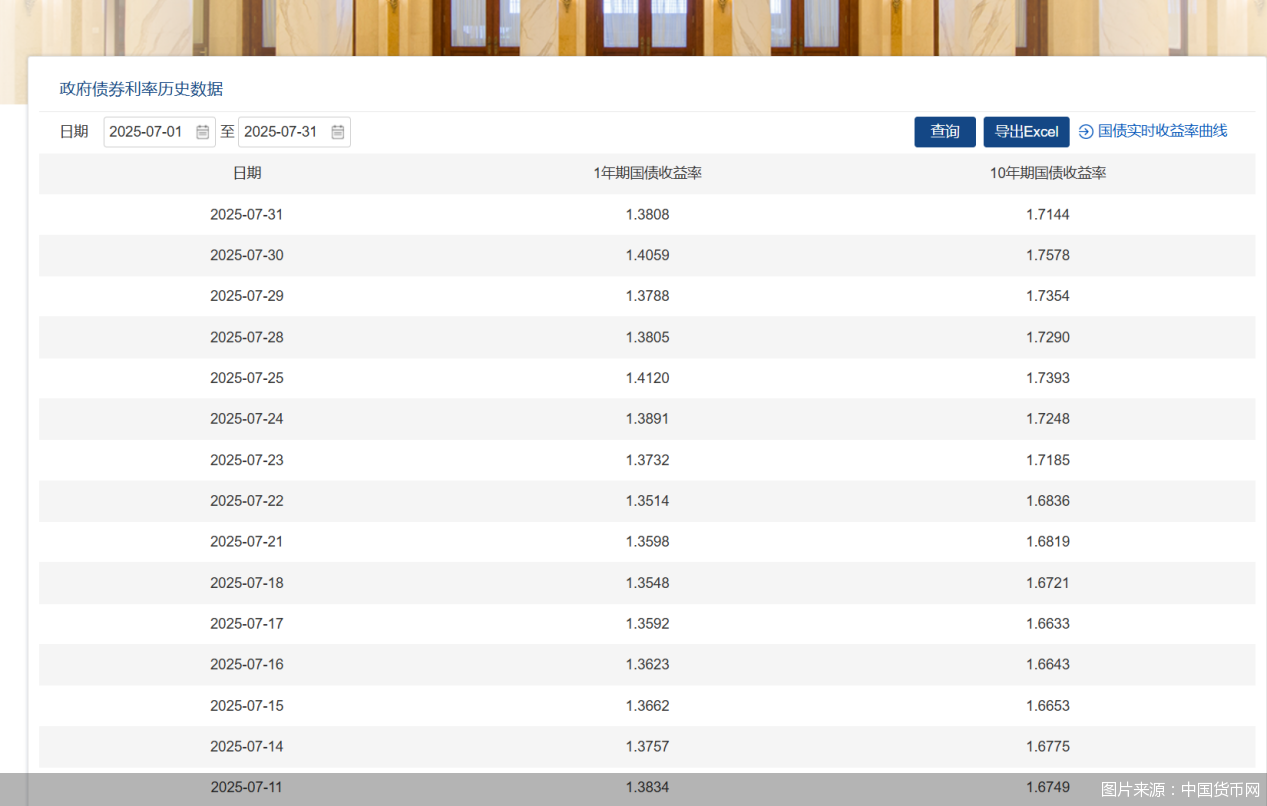
Core Viewpoint - The bond market has entered an adjustment phase, with the 10-year government bond yield rising from 1.6653% on July 15 to 1.7578% on July 30, before retreating to 1.7144% on July 31. This adjustment has impacted fixed-income wealth management products, leading to a decrease in their yields [3][4][5]. Market Adjustment Impact - The adjustment in the bond market has led to a decline in the average annualized yield of open-ended fixed-income wealth management products to 2.81%, a decrease of 0.23 percentage points compared to the previous month [3][4]. - As of July 21-27, the number of existing wealth management products increased by 245 to a total of 27,803, accounting for 68.45% of the market [3]. Investor Sentiment and Reactions - Many investors have expressed concerns over declining yields, with some considering redeeming their products due to perceived losses [3][4]. - Wealth management companies have emphasized that the current market adjustment is within a reasonable range and advised investors to remain calm and avoid panic selling [4][7]. Economic and Policy Context - The adjustment is attributed to multiple factors, including the unexpected introduction of "anti-involution" policies and the launch of major infrastructure projects, which have shifted market sentiment towards higher-risk assets [4][5]. - The People's Bank of China has taken measures to support market liquidity, including a significant reverse repo operation, which is seen as a positive factor for bond market stability [7]. Long-term Outlook - Despite the current pressures, several wealth management firms maintain a positive outlook for the medium to long-term bond market, citing ongoing economic recovery and the fundamental support for bond pricing [5][6]. - Historical data suggests that a majority of wealth management products tend to recover their net value within one to two months following a market adjustment [7][8]. Investment Strategy Recommendations - Wealth management firms recommend a balanced investment approach, suggesting that investors allocate smaller amounts for higher returns while keeping larger amounts in stable assets to mitigate risks [8]. - The current market conditions are viewed as an opportunity to invest in high-quality assets, with the overall redemption pressure on bank wealth management products remaining relatively low compared to previous years [8].

收益率回调别慌!理财公司齐发“定心丸” 债市调整下投资者如何布局
Bei Jing Shang Bao· 2025-07-31 15:40
Group 1: Market Overview - The bond market has experienced adjustments since July, with the 10-year government bond yield rising to around 1.75%, impacting fixed-income products [1][3] - As of July 31, the 10-year government bond yield was reported at 1.7144%, having increased from 1.6653% on July 15 and peaked at 1.7578% on July 30 [3][2] - The average annualized yield of open-ended fixed-income wealth management products decreased by 0.23 percentage points to 2.81% during the last month [3] Group 2: Investor Sentiment and Reactions - Many investors have felt the impact of declining yields, with some considering redeeming their fixed-income products due to lower returns [3][4] - Financial institutions have collectively emphasized that the current market adjustments are within a reasonable range and investors should not panic [4][6] Group 3: Economic and Policy Factors - The adjustment in the bond market is attributed to multiple factors, including the unexpected introduction of "anti-involution" policies and the launch of major infrastructure projects, which have shifted market sentiment towards riskier assets [4][5] - The People's Bank of China conducted a reverse repurchase operation of 789.3 billion yuan on July 25, indicating a proactive monetary policy to support market liquidity [6][7] Group 4: Long-term Outlook - Despite short-term pressures, several financial institutions maintain confidence in the medium to long-term outlook for the bond market, citing ongoing economic recovery and fundamental support [5][8] - Historical data suggests that over 70% of fixed-income products that experienced a decline in net value have recovered within two months, indicating resilience in the market [7][8]
收益率回调别慌!理财公司齐发“定心丸”,债市调整下投资者如何布局
Bei Jing Shang Bao· 2025-07-31 11:23
近期,债券市场开启调整进程,特别是利率债长端,10年国债收益率从7月15日的1.6653%上行至7月30日的1.7578%,后又于7月31日回落至1.7144%。 债市的调整也传导至投资端,尤其是那些多以债券为打底资产的固收类理财产品。据普益标准监测数据,截至7月21日—27日,理财公司存续理财产品27803 款,环比增加245款,占全市场存续理财产品的68.45%。理财公司存续开放式固收类理财产品(不含现金管理类产品)的近1个月年化收益率的平均水平为 2.81%,环比下跌0.23个百分点。不少投资者切实感受了到收益下滑带来的影响,有的晒出自己持有的固收类理财产品收益截图,感叹收益跌了不少;有的 已经开始考虑要不要赎回产品。 7月以来,债券市场迎来调整,10年国债收益率一路上行至1.75%附近,这一波动传导至以债券为主要底层资产的理财产品,部分固收类产品收益率出现下 调。7月31日,北京商报记者注意到,为帮助投资者客观理解市场变化、理性应对短期波动,多家理财公司集体发声就市场变化作出解读,机构普遍认为, 此轮债市整体波动处于合理范围,无须过度恐慌,从长期来看,经济基本面仍为债市提供支撑,中长期债市的配置价值并 ...
债市回调整固,公司债ETF(511030)回撤可控、净值稳定、流动性好备受关注
Sou Hu Cai Jing· 2025-07-30 02:42
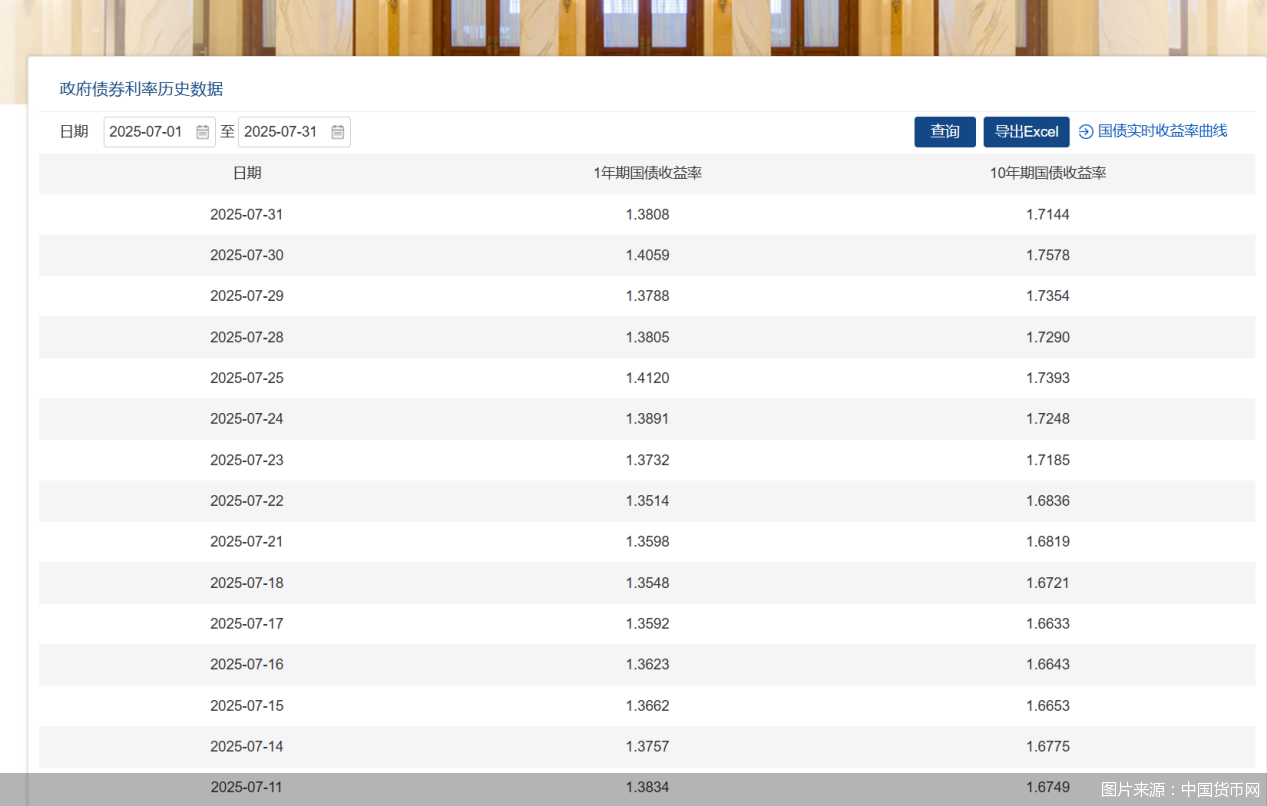
Core Viewpoint - The bond market experienced adjustments last week, with spreads widening, particularly in the 1-3 year segment, which returned to historical levels below 3%, indicating potential for further adjustments [1] Group 1: Market Adjustments - The ordinary commercial bond spreads have also widened, with the 1-5 year segment within the 20% historical percentile [1] - The secondary and perpetual credit spreads have shown some recovery, with the 3-year segment returning to approximately 15% of its historical percentile, highlighting improved value [1] Group 2: Yield and Spread Data - As of July 25, 2025, the yield data for various credit ratings and maturities shows the following: - National Development Bonds yield ranges from 1.46% (0.5Y) to 1.70% (5Y) with historical percentiles of 4.0% to 6.2% [2] - AAA-rated bonds yield ranges from 1.67% (0.5Y) to 1.88% (3Y) with historical percentiles of 1.8% to 4.4% [2] - AA-rated bonds yield ranges from 1.75% (0.5Y) to 2.20% (5Y) with historical percentiles of 0.7% to 3.3% [2] Group 3: Economic Indicators - The recent bond market pullback is attributed to inflation logic following previous stock market gains and rapid commodity price increases, indicating a short-term adjustment [4] - The June profits of large industrial enterprises have declined for two consecutive months, but the rate of decline has narrowed, suggesting limited upward space for the stock market and downward space for the bond market [4] - Key indicators to monitor include the central bank's support for liquidity and the Shanghai Composite Index's performance above 3600, which would reduce negative impacts on the bond market [4] Group 4: Credit Market Insights - The credit market has shown slow valuation adjustments, indicating a resilient nature, but the credit spreads remain low, suggesting a need to monitor opportunities in the technology innovation bond ETF market [4]