全栈自研

Search documents
关于抗老这一终极命题,谷雨找到了前沿答案
Jing Ji Guan Cha Wang· 2025-10-13 04:37
Core Insights - Gu Yu Biotechnology Group has developed a proprietary anti-aging ingredient, "Human-like Extracellular Vesicle HME," addressing the challenge of applying human-derived exosomes in cosmetics [1][2] - The new ingredient is a significant innovation in the industry, enhancing Gu Yu's portfolio alongside existing key ingredients like Aurora Licorice and Rare Ginseng Saponin CK [1][2] Industry Context - Exosomes have become a focal point for major international cosmetic brands due to their proven anti-aging, antioxidant, and repair properties [2] - The aging process is linked to the inability of the body to maintain normal cell renewal and homeostasis, which is closely regulated by intercellular communication involving exosomes [2] Technological Breakthrough - The Human-like Extracellular Vesicle HME is synthesized using biomimetic methods, accurately simulating the structure of exosomes to encapsulate and deliver key active components like miRNA and siRNA [3] - Gu Yu's research has overcome traditional challenges associated with stem cell-derived exosomes, such as aging, mutation, and contamination risks [3] Scientific Validation - The exploration of exosomes has led to significant theoretical breakthroughs, including four Nobel Prizes in the last 20 years, validating their role as effective signaling molecules [4] AI Integration - Gu Yu leverages AI technology to accelerate the analysis and selection of high-activity target genes from thousands of candidates, ensuring the efficacy of the new ingredient [5][6] - The company has achieved stable and scalable production of the Human-like Extracellular Vesicle HME, ensuring consistency across batches [6] Competitive Advantage - Gu Yu's founder defines the Human-like Extracellular Vesicle HME as a groundbreaking "cell gene-level anti-aging" ingredient, positioning it as a leading solution in the next generation of anti-aging skincare [7] - The company has established a comprehensive self-research model, controlling the entire supply chain from raw material development to production [7][8] Future Outlook - With the introduction of the Human-like Extracellular Vesicle HME, Gu Yu has launched three core self-developed ingredients within its first decade, creating a competitive barrier that is difficult for others to replicate [9] - The company plans to invest 2 billion yuan in research and development over the next decade, reflecting its commitment to scientific innovation and market differentiation [9]
独立融资已超100亿,滴滴继续豪赌自动驾驶
3 6 Ke· 2025-10-12 23:58
Core Viewpoint - Didi Autonomous Driving has secured a new round of financing amounting to 2 billion yuan, aimed at enhancing AI research and development and promoting the application of L4 autonomous driving, thereby contributing to the high-quality development of the transportation industry [1][12]. Financing and Investment - The recent D round financing of 2 billion yuan includes investments from various government-backed funds and automotive companies, providing strong governmental endorsement for Didi's technology and business model [1][12]. - Didi has raised over 10 billion yuan across five financing rounds, with the latest round potentially valuing the company at over 5 billion USD [12][24]. Strategic Shift - Didi has shifted its focus from vehicle manufacturing to autonomous driving, particularly in the areas of Robotaxi and autonomous trucks, following the sale of its smart electric vehicle assets to XPeng Motors [3][12]. - The company has established a joint venture with GAC Group to develop L4 autonomous vehicles, addressing manufacturing qualifications while ensuring deep integration of technology and vehicles [23][24]. Technological Development - Didi has launched the RoboTaxi concept car, DiDi NEURON, featuring advanced sensor technology and a unique design aimed at maximizing passenger space [6][9]. - The company has developed an advanced hardware platform for autonomous driving, boasting significant improvements in performance and efficiency compared to previous generations [9][11]. Operational Advancements - Didi has established a 24-hour automated operation center for autonomous driving services, achieving a 90% automation rate in vehicle operations [11][12]. - The company is expanding its L4 autonomous driving technology into freight logistics through its subsidiary, Karl Power, which has already begun regular operations [11][12]. Competitive Landscape - Didi's approach to autonomous driving is distinct from competitors like Uber and Lyft, which have opted for a lighter asset model by partnering with third-party autonomous driving companies [19][20]. - Didi's full-stack self-research model allows it to maintain control over core technologies, creating a competitive edge in the rapidly evolving autonomous driving market [21][24].



从岚图汽车递表港交所,看新能源汽车估值逻辑之变
Ge Long Hui· 2025-10-10 09:09
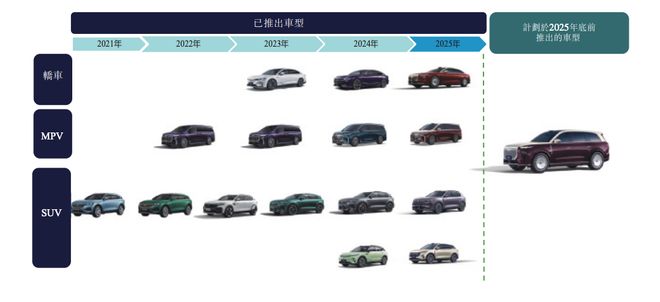
Core Viewpoint - The electric vehicle (EV) sector is experiencing a fundamental shift in valuation logic, moving from a focus on scale to a focus on quality, which is reflected in the stock performance of various companies despite solid sales and earnings [1][14]. Group 1: Performance and Growth - Lantu Automotive has demonstrated impressive sales growth, with a compound annual growth rate (CAGR) of 103.2% from 2022 to 2024, increasing sales from 19,409 units to 80,116 units [1][8]. - In September 2025, Lantu achieved a monthly delivery of 15,224 units, marking a 52% year-on-year increase, and cumulative deliveries for the first nine months of 2025 reached 96,992 units, up 85% year-on-year [1][2]. - The company has diversified its product offerings across sedans, SUVs, and MPVs, eliminating reliance on a single model and enhancing its market presence [4][7]. Group 2: Financial Performance - Lantu's revenue is projected to grow significantly, with expected revenues of 60.52 billion yuan, 127.49 billion yuan, and 193.61 billion yuan from 2022 to 2024, reflecting a CAGR of 78.9% [8][12]. - The gross margin for Lantu reached 21.3% in the first seven months of 2025, positioning it as the second highest in the industry [8][12]. - The company is on track to achieve quarterly profitability by Q4 2024, with continued profitability in the first seven months of 2025 [8][12]. Group 3: Technological Edge - Lantu's competitive advantage lies in its fully self-developed technology system, which creates a robust technological moat and supports long-term profitability [9][10]. - The ESSA platform architecture allows for the simultaneous production of electric, hybrid, and range-extended vehicles, enhancing cost control and efficiency [9][10]. - Lantu has a strong patent portfolio, with 1,519 granted patents and 4,783 pending applications, indicating rapid technological advancement in the EV sector [13]. Group 4: Market Position and Future Outlook - Lantu's upcoming IPO in Hong Kong is expected to reshape the valuation framework for high-end EVs, filling a gap in the market for a "national team" brand [14][15]. - The company plans to launch 1-3 new models annually, aiming to have 6-9 models by the end of 2026, which will drive sales and revenue growth [16]. - Lantu is also focusing on expanding its domestic and international market presence, enhancing brand value and market penetration [16][17].
从岚图汽车递表港交所,看新能源汽车估值逻辑之变
格隆汇APP· 2025-10-10 09:01
Core Viewpoint - The article highlights a significant shift in the valuation logic of the new energy vehicle (NEV) sector, moving from a focus on "scale" to "quality" as companies like Lantu Automotive demonstrate strong sales and performance despite stagnant stock prices [2][3]. Group 1: Lantu Automotive's Performance - Lantu Automotive has shown impressive sales growth, with a compound annual growth rate (CAGR) of 103.2% from 2022 to 2024, increasing sales from 19,409 units to 80,116 units [4][6]. - In September 2025, Lantu achieved a monthly delivery of 15,224 units, a year-on-year increase of 52%, and cumulative deliveries for the first nine months of 2025 reached 96,992 units, up 85% [6]. - The company has diversified its product offerings across sedans, SUVs, and MPVs, eliminating reliance on a single model and enhancing its market presence [8][10]. Group 2: Financial Growth and Profitability - Lantu's revenue is projected to grow significantly, with expected revenues of 60.52 billion yuan, 127.49 billion yuan, and 193.61 billion yuan from 2022 to 2024, reflecting a CAGR of 78.9% [12]. - The gross margin for Lantu reached 21.3% in the first seven months of 2025, ranking second in the industry, indicating improved profitability [12]. - The company is expected to maintain profitability, having achieved its first quarterly profit in Q4 2024 and continuing to show positive results in 2025 [12]. Group 3: Technological Advantages - Lantu's competitive edge lies in its full-stack self-research capabilities, which create a technological moat and support long-term profitability [13][20]. - The ESSA architecture allows for the production of various vehicle types on a single platform, enhancing cost control and efficiency [14][19]. - Lantu's focus on R&D has resulted in a significant patent portfolio, with 1,519 granted patents and 4,783 pending, showcasing its innovation in smart connectivity and safety [19][20]. Group 4: Market Position and Future Outlook - Lantu's upcoming IPO in Hong Kong is expected to reshape the valuation landscape for high-end NEV companies, filling a gap in the market for a "national team" brand [22][24]. - The company plans to launch 1-3 new models annually, aiming to have 6-9 models by the end of 2026, which will drive further sales and revenue growth [25]. - Lantu is also focusing on expanding its domestic and international market presence, enhancing brand value and competitiveness against traditional luxury brands [26][27].
聚力创新融合 以前瞻科技解锁未来出行新想象
Zhong Guo Qi Che Bao Wang· 2025-09-29 01:25
Group 1 - The 2025 World New Energy Vehicle Conference (WNEVC) was held in Haikou, Hainan, focusing on the integration of advanced technologies and innovation in the automotive industry [1] - Global sales of new energy vehicles reached 9.75 million units in the first half of the year, marking a 31.3% year-on-year increase and achieving a market penetration rate of 21.4% [3] - China's new energy vehicle sales accounted for 44.3% of total new car sales in the country during the same period, driven by technological breakthroughs and an improving industrial chain [5] Group 2 - The automotive industry is undergoing a significant transformation, with AI, big data, and advanced materials reshaping the sector [5][7] - The integration of AI in vehicles is expected to lead to exponential growth in smart driving capabilities, with predictions that by 2025, Level 3 automation will enter trial commercial use [10] - The future of the automotive industry will see a shift towards a "2:8" model, where approximately 20% of companies will adopt a full-stack self-research strategy, while the majority will rely on ecosystem collaboration [14] Group 3 - The conference highlighted the importance of collaboration between China and Europe in the automotive sector, emphasizing mutual advantages in technology and market access [6] - Thailand is positioned as a key automotive manufacturing hub in ASEAN, with a significant presence of Chinese automotive brands, which are expected to dominate the electric vehicle market there [6] - Nine innovative technologies were recognized at the conference, showcasing advancements in battery technology, intelligent driving systems, and AI integration in vehicles [15]


魔视智能招股书解读:营收增长74%,净亏损率65.4%
Xin Lang Cai Jing· 2025-09-28 00:33
Core Insights - Magic View Intelligent is a smart driving solution provider that has shown significant revenue growth but continues to face persistent net losses, indicating challenges in market competition, technology development, and operational management [1] Business and Financial Performance - The company focuses on self-developed full-stack technology to provide L0 to L4 level smart driving solutions, with major products including Magic Drive, Magic Parking, and Magic Safety. Revenue is generated through direct sales and sales via first-tier suppliers, with Magic Drive accounting for 61.8% of total revenue in the first half of 2025 [2] - Revenue has increased from 117.8 million RMB in 2022 to 146.5 million RMB in 2023, and is projected to reach 356.8 million RMB in 2024, resulting in a compound annual growth rate (CAGR) of 74.0% from 2022 to 2024. The first half of 2025 saw revenue of 188.6 million RMB, a 76.4% increase from the same period in 2024 [3] - Despite revenue growth, the company has recorded net losses of 200.4 million RMB in 2022, 228 million RMB in 2023, and 233.5 million RMB in 2024, with net loss rates of 170.1%, 155.6%, and 65.4% respectively [3][4] Gross Margin and Profitability - The gross margin has fluctuated, with rates of 25.6%, 13.7%, and 14.2% from 2022 to 2024, and a notable increase to 20.1% in the first half of 2025. The gross margin for Magic Drive is relatively high, while Magic Parking has shown significant improvement due to economies of scale [4] - The company has consistently negative net margins, with rates of -170.1%, -155.6%, and -65.4% from 2022 to 2024, indicating ongoing challenges in cost control and profitability [5] Solution Segmentation - Revenue is primarily derived from three solutions: Magic Drive, Magic Parking, and Magic Safety. Magic Drive has the highest revenue share, accounting for 60.3% in 2022, 47.6% in 2023, and 63.6% in 2024, while Magic Parking's share has increased significantly [5][6] Management and Governance - The company is led by Dr. Yu Zhenghua, who has over 20 years of experience in AI algorithms and product development. The management team possesses substantial industry experience, which supports the company's growth [17] - The company's shareholding structure is relatively concentrated, with Dr. Yu controlling 29.65% of the voting rights, which may lead to strong influence over decision-making processes [13]
魔视智能正式递表港交所,将募资加码智驾方案迭代
Ju Chao Zi Xun· 2025-09-27 02:50
Core Viewpoint - Magic View Intelligent Technology (Shanghai) Co., Ltd. has submitted its listing application to the Hong Kong Stock Exchange, aiming to raise funds to enhance its R&D capabilities and focus on the continuous iteration and upgrading of intelligent driving solutions [2] Group 1: Company Overview - The company is an AI-driven provider of intelligent driving solutions, committed to empowering future mobility and achieving "intelligent driving equality" [2] - Magic View is one of the few suppliers in the industry with a fully self-developed technology stack, covering core technologies in algorithms, models, data governance, and intelligent driving hardware and software [2][6] - The company has delivered over 3.3 million sets of solutions across 92 vehicle models, validating its technical strength [3] Group 2: Technology and Solutions - The technology is based on a fully self-developed AI algorithm engine, capable of accurate environmental perception, vehicle positioning, path planning, and driving decision-making [5] - The company provides integrated hardware and software solutions with L0 to L4 intelligent driving functions, supporting the intelligent transformation of OEMs [3][6] - Solutions include driving solutions, automatic parking solutions, and active safety solutions, delivered in various forms such as domain controllers, smart front-view camera modules, software licenses, and sensors [6] Group 3: Market Position and Competitive Advantage - According to revenue from L0 to L2+ solutions, the company ranks third among third-party providers in China [7] - It is one of the first companies in China to achieve mass production of passenger car intelligent driving solutions using self-developed AI models [7] - The company has a broad market coverage, including regions such as the Americas, Europe, Southeast Asia, the Middle East, and Oceania [7] - The platform is compatible with over 10 major international and domestic intelligent driving chip platforms, significantly reducing the time required to adapt and deploy new algorithms [7]
智能驾驶解决方案提供商魔视智能递表港交所
Xin Lang Cai Jing· 2025-09-26 17:05
Core Viewpoint - Magic View Intelligent Technology (Shanghai) Co., Ltd. has submitted its listing application to the Hong Kong Stock Exchange, aiming to empower future mobility through AI-driven intelligent driving solutions [1][2]. Group 1: Company Overview - The company is a provider of intelligent driving solutions driven by AI innovation, focusing on creating a safe and user-friendly experience while advancing towards higher-level intelligent driving modes [1]. - It is one of the few suppliers with a fully self-developed technology stack, covering core technologies in algorithms, models, data governance, and intelligent driving hardware and software [1][3]. - The company has provided integrated hardware and software solutions with L0 to L4 intelligent driving capabilities to OEMs and tier-one suppliers, contributing to the popularization of intelligent driving [2]. Group 2: Financial Performance - The company's revenue for the years 2022, 2023, 2024, and the first half of 2025 is projected to be RMB 118 million, RMB 147 million, RMB 357 million, and RMB 189 million, respectively [3]. - The net losses for the same periods are expected to be RMB 200 million, RMB 228 million, RMB 233 million, and RMB 112 million [3]. - The company has served all top ten automotive OEMs in China by sales volume for 2024 [3]. Group 3: Research and Development - The company's R&D capabilities span from basic algorithms to embedded engineering, ensuring deep software and hardware collaboration without technical gaps [3]. - R&D expenditures for 2022, 2023, 2024, and the first half of 2025 are projected to be RMB 128 million, RMB 143 million, RMB 160 million, RMB 66.9 million, and RMB 83.9 million, respectively [3]. Group 4: Use of Proceeds - The funds raised from the listing are expected to enhance the company's R&D capabilities, expand production capacity, upgrade technology, and improve delivery capabilities [4]. - The proceeds will also support the deepening of the sales and marketing network and general corporate purposes [4].
价格战逼近,华为智驾也要“放下身段”了
Xin Lang Cai Jing· 2025-09-22 09:40
Core Insights - Huawei is advancing its high-level autonomous driving technology with the launch of the QianKun ADS 4.0 system, which supports commercial use of high-speed L3 driving [1] - The company is exploring new collaboration models with automakers, named "HI PLUS," which involves ceding data and algorithm sovereignty to partners while moving away from brand co-construction and channel control [1][2] - The competitive landscape is intensifying, with other automakers like BYD adopting aggressive pricing strategies for autonomous driving features, prompting Huawei to rethink its pricing and sales models [3][5] Group 1: Business Model Evolution - Huawei's previous business models included component sales, full-stack solutions (HI model), and a more consumer-oriented approach (Smart Selection model) [1][2] - The new "HI PLUS" model allows for collaborative development with automakers from the product design stage without entering Huawei's sales channels, increasing automaker autonomy [2] - The shift aims to break the limitations of the Smart Selection model and provide more open cooperation options to automakers [2] Group 2: Market Dynamics and Competition - The autonomous driving market is experiencing a price war, with competitors like BYD offering advanced features at lower prices, leading to a significant drop in market prices [3][4] - Huawei's high-end positioning is being challenged as it faces pressure to lower prices while maintaining quality, similar to the competition between Apple and Android ecosystems [4][5] - The company has been reducing prices for its autonomous driving service packages to attract more users and build a larger data pool, indicating a shift in focus from immediate revenue to long-term user engagement [5][6] Group 3: Sales and Performance Metrics - In the first half of 2025, the domestic automotive market saw a total sales volume of 15.653 million units, with a year-on-year growth of 11.4% [7] - Huawei's smart automotive solutions business reported a revenue of 26.353 billion yuan, a staggering year-on-year increase of 474.4%, marking its first profitable year [8] - Despite strong sales of the AITO series, other models under Huawei's brand are struggling to maintain momentum, highlighting the need for increased sales volume to offset high R&D costs [8][9] Group 4: Strategic Adjustments - Huawei is expanding its partnerships with various automakers, indicating a growing acceptance of its autonomous driving technology across the industry [10] - The company is facing challenges in its current business model, necessitating a shift towards a more flexible approach that allows for greater collaboration and data sharing with automakers [12][13] - The introduction of the "HI PLUS" model reflects Huawei's intent to foster a win-win ecosystem rather than exerting deep control over its partners [13]
全球AI云竞赛,阿里靠什么打?
虎嗅APP· 2025-09-21 02:50
Core Viewpoint - Alibaba is undergoing a self-revolution similar to historical examples like IBM and Microsoft, with a recent stock price surge reflecting market optimism about its AI strategy and cloud business performance [2] Group 1: Alibaba's Position in the AI Cloud Market - Alibaba is the only Chinese company among the world's four "super AI clouds," pursuing a full-stack self-research approach in AI chips, cloud computing, and foundational models, aligning strategically with Google [2][3] - The company has announced a significant investment of 380 billion yuan (approximately 53.5 billion USD) over the next three years for cloud and AI infrastructure, surpassing its total investment over the past decade [11] Group 2: AI Competition Dynamics - The AI competition has shifted from a "model race" to a focus on building a robust AI full-stack technology system, which includes capital investment, cloud computing capacity, foundational models, and self-developed AI chips [4][7] - The success in AI is determined by two core variables: iteration speed and cost efficiency, which require a vertically integrated AI full-stack technology system [7][8] Group 3: Comparison of Strategic Paths - Two distinct strategic paths have emerged: the "cloud + ecosystem" model represented by Microsoft and Amazon, and the "full-stack self-research" model represented by Google and Alibaba [15][17] - The "full-stack self-research" model allows for faster iteration and better cost efficiency, as seen in the recent revenue growth of both Google Cloud and Alibaba Cloud [17] Group 4: Open Source and Global Impact - The open-source model has gained traction, with Chinese models like DeepSeek and Alibaba's Tongyi Qwen influencing global AI paradigms, highlighting the importance of a complete "full-stack AI capability" for long-term competitive advantage [19] - The shift towards open-source by OpenAI is seen as a response to the growing influence of Chinese open-source capabilities, emphasizing the need for a comprehensive industrial system to convert advanced designs into scalable products [19][20]