
双碳

Search documents
中国铜业:向“城市矿山”挖富矿
Xin Hua Cai Jing· 2026-02-11 11:32
Core Viewpoint - Under the "dual carbon" goals, China Copper Corporation is leveraging the large-scale consumption of recycled copper as a key engine for its green transformation, establishing a sustainable development model of "resource recycling - energy conservation and carbon reduction - green production" [1] Group 1: Green Supply Chain - China Copper has implemented a "1+N" procurement system through its trading platform, Zhong Copper International Trade, forming a strong collaborative network with core suppliers [2] - The establishment of regional recycling centers in Yunnan, Hubei, and Henan has significantly reduced carbon emissions from raw material transportation [2] - The company is actively expanding channels for high-quality recycled copper resources that meet international environmental standards, leading to a notable decrease in unit transportation energy consumption [2] Group 2: Circular Economy and Production Innovation - A unique "customer old material closed-loop recycling" mechanism is in operation, allowing for the recycling of copper scrap from downstream customers, which has significantly reduced raw material costs and resource consumption [3] - Innovations in technology, such as the use of floating magnetic separation to extract valuable metals from smelting waste, are central to driving green circular processes [3] - Collaborative research with academic institutions is ongoing to tackle key technologies in recycled copper purification and dioxin prevention [3] Group 3: Value Addition and Product Development - Recycled copper is being transformed into high-end green products, such as electronic copper strips with low impurity content, which are supplied to leading consumer electronics companies [4] - High-performance alloy materials developed from recycled copper are being produced for use in emerging green industries like electric vehicle charging stations and photovoltaic components [4] - The quality of recycled cathode copper produced meets national standards and is applied in essential sectors like electricity and construction [4] Group 4: Integrated Green Development - The green transformation of China Copper is characterized by collaborative progress across the entire industry chain, optimizing procurement, enhancing smelting efficiency, and innovating product development [5] - Digitalization is injecting new momentum into the green industry chain, enabling real-time tracking of raw material sources, energy consumption, and carbon emissions [5] - Energy-saving measures in copper smelting and processing are expected to significantly reduce carbon emission intensity by 2025 [5] Group 5: Policy Support and Future Goals - The company is leveraging favorable policies, such as "reverse invoicing," to promote the large-scale and standardized development of the recycled copper industry [6] - The annual consumption target for recycled copper set during the 14th Five-Year Plan has been exceeded, leading to substantial savings in mineral resources and reductions in energy consumption and carbon emissions [6] - China Copper aims to continue its focus on green development, maximizing the potential of "urban mines" and contributing to the high-quality transformation of the non-ferrous metal industry [6]
光大永明人寿投资端以专业投资能力服务国家战略
Zhong Guo Jing Ji Wang· 2026-02-11 09:03
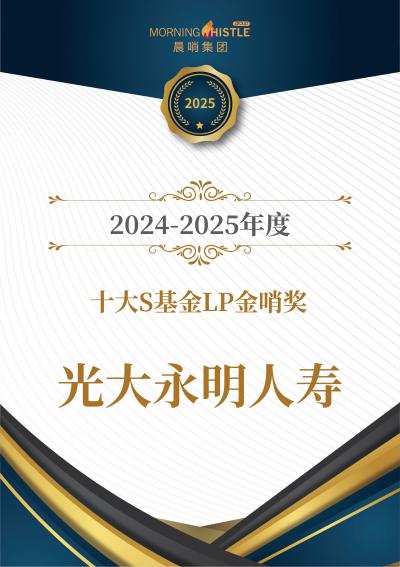
2026年开局,光大永明人寿投资端捷报频传,接连斩获四项重要荣誉:荣膺2024-2025年度"十大S基金 LP金哨奖",在同花顺(300033)财经评选中获评 "金融'五篇大文章'卓越实践" 与 "保险资管卓越机构" 两项大奖,并获颁 "2025 Qeubee资金市场最具影响力交易团队奖"。 | 光大永明资产 ( 精品 | 专业 | 教授 | 简单 光大永明资产 荣获同花顺财经 iFinD "同花顺2025年度评选" ( 金融 "五篇大文章" 卓越实践 ) ( 保险资管卓越机构 ) iFinD COSIEM iFinD 005年18 立足保险、重在资管 可公集团组织院品保险资产会公司 践行国家战略,服务实体经济 2025年,光大永明人寿投资业务始终秉持服务实体经济、聚焦主责主业的根本宗旨,重点围绕新一代信 息技术、新能源、先进制造、物流及消费基础设施等领域进行战略布局。 支持制造业升级:通过中国保险投资基金,公司参与了富岭科技股份有限公司在深交所主板首发上市的 战略配售。富岭科技是一家专注环保餐饮具研发生产的浙江省民营制造业领军企业,提供一站式食品包 材解决方案,产品覆盖全降解PLA系列及可循环产品,曾获评制 ...

华蓝集团股价短期反弹,主力资金持续流出
Jing Ji Guan Cha Wang· 2026-02-11 08:01
Group 1 - The stock price of Hualan Group (301027) closed at 18.92 yuan on February 11, 2026, with a daily increase of 0.58% and a trading volume of 44.7 million yuan, reflecting a turnover rate of 2.00% [1] - Over the past 7 days, the stock price has shown significant volatility, with a slight decline of 0.11% to 18.81 yuan on February 10, accompanied by a net outflow of 6.4264 million yuan from main funds, accounting for 8.14% of the total trading volume [1] - The stock price has cumulatively increased by 2.10% over the last 5 days, but has experienced a decline of 5.16% over the past 20 days, indicating a coexistence of short-term rebounds and medium-term pressures [1] - Retail investor funds saw a net inflow of 6.2761 million yuan on February 10, while main funds continued to flow out, suggesting a divergence in market sentiment [1] Group 2 - On February 6, 2026, Hualan Group released its 2024 Social Responsibility and ESG report, highlighting the company's accelerated digital transformation and the completion of its AI computing power center [2] - The report emphasizes the company's development of photovoltaic power generation and other businesses in line with its "dual carbon" strategy, showcasing its commitment to sustainable development and technological upgrades [2] - The short-term impact of these developments on the stock price is expected to be limited [2]

推动更多温室气体减排项目落地见效
Ke Ji Ri Bao· 2026-02-11 03:06
全国温室气体自愿减排交易市场(简称"CCER市场")建设迈入快速发展新阶段。近日,生态环境部会 同自然资源部、水利部、农业农村部等部门,发布了油气田回收利用、盐沼和海草床植被修复、农业废 弃物资源化利用、新能源利用等领域的12项温室气体自愿减排项目方法学。 自2024年1月重启以来,CCER市场有序运行,在推动降碳增汇、引导绿色投资方面的作用初步显现。 此次12项温室气体自愿减排项目方法学的发布,对CCER市场来说有何意义?对企业等CCER市场相关 主体有何影响?在方法学的指导下,相关主体如何高质量参与自愿减排市场?针对这些问题,科技日报 记者采访了有关专家。 既是"法官"又是"尺子" 据统计,截至目前,我国共发布温室气体自愿减排项目方法学18个,其中2023年发布4个,2024年发布2 个,2025年发布12个。 保障碳信用"含金量" 温室气体自愿减排项目方法学是核证项目设计与实施的技术准则,其科学性至关重要,直接关系到交易 主体的收益、整个市场的信誉度和生命力。吴宏杰说,温室气体自愿减排项目方法学通过项目实施及监 测数据管理要求、第三方项目审定与核查要点,以及项目监测数据与全国碳市场管理平台联网等方式, ...
宏观金融类:文字早评2026/02/11-20260211
Wu Kuang Qi Huo· 2026-02-11 02:45
Report Summary 1. Investment Rating The report does not provide an overall investment rating for the industries. 2. Core Views - **Macro - financial**: In the short - term, the divergence in US monetary policy expectations and the approaching Chinese Spring Festival have affected the market. But in the long - term, policy support for the capital market remains unchanged. For stocks, it is recommended to buy on dips; for bonds, the market is expected to continue to fluctuate; for precious metals, maintain a wait - and - see attitude [4][6][9]. - **Non - ferrous metals**: Most non - ferrous metals are expected to fluctuate. Factors such as policy expectations, supply and demand, and inventory levels affect their prices. For example, copper is affected by reserve policies and supply - demand patterns; aluminum is supported by low LME inventory; zinc may be affected by macro sentiment; lead's price stability depends on post - holiday downstream restocking; nickel is under fundamental pressure; tin has supply - demand marginal relaxation; lithium carbonate has uncertain supply - demand after the holiday; alumina is affected by mine strikes and supply overcapacity; stainless steel is supported by fundamentals; and cast aluminum alloy is supported by cost and supply - side factors [12][14][17][18][20][21][22][24][26][28]. - **Black building materials**: The black building materials sector is in a bottom - game stage with multiple factors. Steel products are affected by domestic real - estate policies and overseas monetary policies, and are expected to fluctuate weakly. Iron ore is expected to fluctuate weakly due to supply and demand and inventory factors. Coking coal and coke may face short - term price pressure and potential long - term upward trends. Glass and soda ash are expected to continue to fluctuate, with glass lacking demand support and soda ash having weak demand. Manganese - silicon and silicon - iron are affected by market sentiment and cost factors. Industrial silicon and polysilicon are in a supply - demand double - weak situation [31][33][36][37][40][42][45][49][51]. - **Energy and chemicals**: For rubber, it is recommended to reduce risks before the Spring Festival. Crude oil should be taken profit at high prices and mid - term layout should be the main strategy. Methanol should be observed in the short - term. Urea should be short - sold. For pure benzene and styrene, profits can be gradually taken. PVC has a poor fundamental situation. Ethylene glycol has a high inventory pressure. PTA and p - xylene have good mid - term prospects. Polyethylene and polypropylene are affected by supply and demand and cost factors [56][58][61][63][65][68][70][73][75]. - **Agricultural products**: For live pigs, short - term selling on rebounds is recommended, while long - term support should be noted. For eggs, short - term short - selling is recommended, and the long - term situation depends on capacity reduction. For soybean and rapeseed meal, prices are expected to fluctuate. For oils and fats, mid - term bullishness is expected, and buying on dips is recommended. For sugar, wait for the international price to rebound after the northern hemisphere's harvest. For cotton, there is potential for long - term price increase, and low - buying opportunities before the Spring Festival should be considered [83][85][88][90][94][97]. 3. Summary by Industry Macro - financial - **Stock Index** - **Market Information**: The central bank will continue the moderately loose monetary policy. SMC's Q4 revenue increased by 4.5% quarter - on - quarter, with a gross margin of 19.2% and a capacity utilization rate of 95.7%. Byte released a new image - generation model. The National Development and Reform Commission promotes the integration of bidding and AI [2]. - **Strategy**: Due to the divergence in US monetary policy expectations and the approaching Spring Festival, the market risk appetite is suppressed. In the long - term, policy support remains, so the strategy is to buy on dips [4]. - **Treasury Bonds** - **Market Information**: On Tuesday, the main contracts of TL, T, TF, and TS had different changes. The central bank will continue the moderately loose monetary policy and conducted a net injection of 2059 billion yuan through reverse repurchase [5]. - **Strategy**: The central bank's policy indicates a loose capital situation. However, the economic recovery foundation is not solid, and the demand is weak. The bond market is expected to continue to fluctuate [6]. - **Precious Metals** - **Market Information**: Gold and silver prices in domestic and international markets declined. The inflation expectations in the US decreased, and the retail sales were stagnant. COMEX silver inventory decreased [7][8]. - **Strategy**: The market sentiment is cautious, and prices are expected to fluctuate. Fundamentals support the price of gold, and the tight inventory supports the near - month price of silver. It is recommended to wait and see [9]. Non - ferrous metals - **Copper** - **Market Information**: US retail sales data affected copper prices. LME and domestic copper inventories changed, and the import was at a loss [11]. - **Strategy**: Policies and economic data support the sentiment. The supply of copper ore is tight, but the short - term supply is sufficient. Copper prices are expected to fluctuate [12]. - **Aluminum** - **Market Information**: The market volatility decreased before the holiday. Aluminum prices adjusted due to production cuts in Mozambique. Domestic and LME aluminum inventories changed [13]. - **Strategy**: Domestic inventory accumulates, but LME inventory is low. Aluminum prices are expected to fluctuate [14]. - **Zinc** - **Market Information**: The prices of zinc futures and spot changed. The inventory increased, and the import was at a loss [15][16]. - **Strategy**: The inventory accumulation of zinc ore slows down, and the domestic zinc ingot inventory accumulates. The industry is weak, but macro sentiment may drive the price up [17]. - **Lead** - **Market Information**: The prices of lead futures and spot changed. The inventory increased, and the import had a profit [18]. - **Strategy**: The lead ore inventory is high, and the smelter's operating rate decreases seasonally. The price stability depends on post - holiday restocking [18]. - **Nickel** - **Market Information**: Nickel prices declined slightly. The spot premium and cost remained stable [19]. - **Strategy**: There is a short - term rebound demand, but the fundamentals are under pressure. Nickel prices are expected to fluctuate widely [20]. - **Tin** - **Market Information**: Tin prices fluctuated narrowly. The supply was restricted by raw materials, and the demand was weak [21]. - **Strategy**: Tin prices may rebound with precious metals, but the short - term supply - demand is loose. It is recommended to wait and see [21]. - **Lithium Carbonate** - **Market Information**: The spot and futures prices of lithium carbonate increased slightly [22]. - **Strategy**: The pre - holiday capital is cautious. The future supply - demand is uncertain. Lithium prices are expected to fluctuate within a range [22]. - **Alumina** - **Market Information**: The alumina index declined. The basis and inventory changed [23]. - **Strategy**: The mine strike in Guinea needs attention, and the supply overcapacity persists. It is recommended to wait and see [24]. - **Stainless Steel** - **Market Information**: The price of stainless - steel futures increased slightly. The spot price remained stable, and the inventory increased [26]. - **Strategy**: The supply pressure is controllable, and the fundamentals are supported. It is recommended to buy on dips [26]. - **Cast Aluminum Alloy** - **Market Information**: The price of cast aluminum alloy futures declined slightly. The inventory decreased [27]. - **Strategy**: The cost increases, and the supply - side factors support the price [28]. Black building materials - **Steel** - **Market Information**: The prices of rebar and hot - rolled coil futures declined. The inventory and position changed [30]. - **Strategy**: The market is in a bottom - game stage, affected by domestic and overseas factors. Steel prices are expected to fluctuate weakly [31]. - **Iron Ore** - **Market Information**: The price of iron - ore futures remained unchanged. The spot price and basis were reported [32]. - **Strategy**: The overseas shipment decreased, the demand was affected by equipment failure, and the inventory was high. Iron - ore prices are expected to fluctuate weakly [33]. - **Coking Coal and Coke** - **Market Information**: The prices of coking coal and coke futures declined. The spot prices and basis were reported [34]. - **Strategy**: Overseas coal disturbances affect sentiment, and the short - term price upward drive is weak. There may be a long - term upward trend, but beware of post - holiday price corrections [36][37][39]. - **Glass and Soda Ash** - **Market Information**: The prices of glass and soda ash futures declined. The inventory and position changed [40][41]. - **Strategy**: Glass lacks demand support, and soda ash has weak demand. Both are expected to continue to fluctuate [40][42]. - **Manganese - silicon and Silicon - iron** - **Market Information**: The price of manganese - silicon futures increased slightly, and that of silicon - iron futures decreased slightly [43]. - **Strategy**: The market sentiment and cost factors affect the prices. Pay attention to potential cost - driven events [44][45]. - **Industrial Silicon and Polysilicon** - **Market Information**: The prices of industrial silicon and polysilicon futures declined. The supply and demand changed [46][50]. - **Strategy**: Both are in a supply - demand double - weak situation. Industrial silicon prices are expected to fluctuate weakly, and polysilicon prices are expected to fluctuate [49][51]. Energy and chemicals - **Rubber** - **Market Information**: Rubber prices followed the market to rebound. The tire - enterprise operating rate decreased, and the inventory increased [53][54]. - **Strategy**: Reduce risks before the Spring Festival. Trade short - term on the disk and set stop - losses [56]. - **Crude Oil** - **Market Information**: The prices of crude - oil and refined - oil futures increased. The inventory of crude oil and refined oil changed [57]. - **Strategy**: Take profit at high prices and focus on mid - term layout [58]. - **Methanol** - **Market Information**: The regional spot and futures prices of methanol changed slightly [59]. - **Strategy**: The current price has factored in many negative factors. Observe in the short - term [61]. - **Urea** - **Market Information**: The regional spot and futures prices of urea changed [62]. - **Strategy**: The import window is open, and the fundamentals are bearish. Short - sell [63]. - **Pure Benzene and Styrene** - **Market Information**: The prices of pure benzene and styrene changed. The supply, demand, and inventory changed [64]. - **Strategy**: The non - integrated profit of styrene has been repaired. Gradually take profits [65]. - **PVC** - **Market Information**: The price of PVC futures declined. The cost, supply, demand, and inventory changed [66][67]. - **Strategy**: The fundamentals are poor, with strong supply and weak demand. Pay attention to the changes in capacity and operation [68]. - **Ethylene Glycol** - **Market Information**: The price of ethylene - glycol futures declined. The supply, demand, and inventory changed [69]. - **Strategy**: The inventory pressure is high, and there is a need for production reduction. There is a risk of rebound [70]. - **PTA** - **Market Information**: The price of PTA futures increased. The supply, demand, and inventory changed [71]. - **Strategy**: Enter the inventory - accumulation stage during the Spring Festival. Pay attention to mid - term buying opportunities [73]. - **p - Xylene** - **Market Information**: The price of p - xylene futures increased. The supply, demand, and inventory changed [74]. - **Strategy**: The inventory is expected to increase before the maintenance season. Pay attention to mid - term buying opportunities following crude oil [75]. - **Polyethylene (PE) and Polypropylene (PP)** - **Market Information**: The prices of PE and PP futures increased. The supply, demand, and inventory changed [76][78]. - **Strategy**: PE's valuation has room to decline, and PP's price may bottom out. For PP, buy on dips for the 5 - 9 spread [77][80]. Agricultural products - **Live Pigs** - **Market Information**: The domestic pig prices continued to decline [82]. - **Strategy**: Short - term selling on rebounds, and note the long - term support [83]. - **Eggs** - **Market Information**: The national egg prices were mostly stable with a few declines [84]. - **Strategy**: Short - term short - selling, and the long - term depends on capacity reduction [85]. - **Soybean and Rapeseed Meal** - **Market Information**: The prices of soybean and rapeseed meal futures increased slightly. The supply and demand situation changed [86][87]. - **Strategy**: The prices are expected to fluctuate [88]. - **Oils and Fats** - **Market Information**: The prices of oil futures declined. The supply, demand, and inventory changed [89][90]. - **Strategy**: Mid - term bullish, buy on dips [90]. - **Sugar** - **Market Information**: The price of sugar futures increased slightly. The supply and demand situation changed [91][93]. - **Strategy**: Wait for the international price to rebound after the northern hemisphere's harvest. Observe domestically [94]. - **Cotton** - **Market Information**: The price of cotton futures increased slightly. The supply, demand, and inventory changed [95][96]. - **Strategy**: Short - term high - level fluctuations, long - term potential for increase. Look for low - buying opportunities before the Spring Festival [97].
黑色建材日报-20260211
Wu Kuang Qi Huo· 2026-02-11 01:45
Report Industry Investment Rating No relevant content provided. Core Viewpoints - The current black series is in a bottom - game stage with a mix of long and short factors. In the short term, it will mainly operate in a weak range - bound oscillation, and the trend opportunity is not clear. Attention should be paid to inventory changes around the Spring Festival, the recovery of plate demand, and possible marginal adjustments to "dual - carbon" policies [2]. - For iron ore, it is expected to oscillate weakly before the festival. Attention should be paid to overseas ore shipments and the domestic hot - metal production rhythm [5]. - For manganese silicon and ferrosilicon, in the long - term, the bullish trend of commodities may continue, but short - term market sentiment is affected by the adjustment of precious metals. The future market is mainly affected by the overall market sentiment and cost - supply factors. Attention should be paid to possible changes in manganese ore and "dual - carbon" policies [9][10]. - For coking coal and coke, in the long - term, the bullish trend of commodities may continue, but in the short term, the market is affected by precious metals. The short - term upward catalytic force is not strong, and there may be a risk of price correction after the Spring Festival. It is expected to rise smoothly from June to October [15][16]. - For industrial silicon, it shows a pattern of weak supply and demand in February. It is expected to be weakly oscillating before the festival, and attention should be paid to market sentiment [19][20]. - For polysilicon, the supply is decreasing, the demand is stable, and the high inventory is expected to be slightly reduced. The futures are expected to oscillate, and attention should be paid to post - festival demand and spot prices [22]. - For glass, it is expected to continue to oscillate in the short term, with the reference range of the main contract being 1030 - 1120 yuan/ton [25]. - For soda ash, it is expected to continue to operate weakly, with the reference range of the main contract being 1140 - 1200 yuan/ton [27]. Summary by Directory Steel Products 1. Rebar - **Market Information**: The closing price of the rebar main contract was 3052 yuan/ton, down 12 yuan/ton (- 0.39%) from the previous trading day. The registered warehouse receipts were 15710 tons, with no change from the previous day. The position of the main contract was 2.0655 million lots, an increase of 60036 lots. The Tianjin aggregated price was 3150 yuan/ton, and the Shanghai aggregated price was 3220 yuan/ton, both with no change [1]. - **Strategy Viewpoint**: Near the Spring Festival, both the supply and demand of rebar have shown obvious seasonal declines, and the inventory has entered the accumulation stage, but the overall inventory accumulation range is still controllable [2]. 2. Hot - Rolled Coil - **Market Information**: The closing price of the hot - rolled coil main contract was 3220 yuan/ton, down 19 yuan/ton (- 0.58%) from the previous trading day. The registered warehouse receipts were 253200 tons, an increase of 9424 tons. The position of the main contract was 1.5428 million lots, an increase of 43035 lots. The Lecong aggregated price was 3260 yuan/ton, and the Shanghai aggregated price was 3240 yuan/ton, both with no change [1]. - **Strategy Viewpoint**: The demand for hot - rolled coils is relatively stable, the output has decreased slightly, the inventory has accumulated slightly, and the supply - demand structure is generally neutral [2]. Iron Ore - **Market Information**: The main contract (I2605) of iron ore closed at 761.50 yuan/ton, with a change of + 0.00% (+ 0.00). The position changed by + 556 lots to 513900 lots. The weighted position was 878500 lots. The spot price of PB powder at Qingdao Port was 767 yuan/wet ton, with a basis of 52.70 yuan/ton and a basis rate of 6.47% [4]. - **Strategy Viewpoint**: The overseas iron ore shipments have decreased significantly. The near - end arrivals have decreased. The daily hot - metal output is lower than expected, and the port inventory is at the highest level in the same period in the past five years. It is expected to oscillate weakly before the festival, and attention should be paid to overseas ore shipments and the domestic hot - metal production rhythm [5]. Manganese Silicon and Ferrosilicon - **Market Information**: On February 10, the main contract of manganese silicon (SM605) closed up 0.10% at 5818 yuan/ton. The spot price of 6517 manganese silicon in Tianjin was 5720 yuan/ton, with a basis of 92 yuan/ton. The main contract of ferrosilicon (SF605) closed down 0.25% at 5580 yuan/ton. The spot price of 72 ferrosilicon in Tianjin was 5700 yuan/ton, with a basis of 120 yuan/ton [8]. - **Strategy Viewpoint**: In the long - term, the bullish trend of commodities may continue, but short - term market sentiment is affected by the adjustment of precious metals. The supply - demand pattern of manganese silicon is still not ideal, and that of ferrosilicon is basically balanced. The future market is mainly affected by the overall market sentiment and cost - supply factors. Attention should be paid to possible changes in manganese ore and "dual - carbon" policies [9][10]. Coking Coal and Coke - **Market Information**: On February 10, the main contract of coking coal (JM2605) closed down 2.445% at 1119.0 yuan/ton. The spot price of low - sulfur main coking coal in Shanxi was 1550.6 yuan/ton, with a basis of 241 yuan/ton; the medium - sulfur main coking coal was 1270 yuan/ton, with a basis of 134 yuan/ton; the Mongolian 5 clean coal in Wubulangjinquan Industrial Park was 1227 yuan/ton, with a basis of 83 yuan/ton. The main contract of coke (J2605) closed down 2.26% at 1665.0 yuan/ton. The spot price of quasi - first - grade wet - quenched coke at Rizhao Port was 1470 yuan/ton, with a basis of 60.5 yuan/ton; the quasi - first - grade dry - quenched coke in Lvliang was 1550 yuan/ton, with a basis of 101 yuan/ton [12]. - **Strategy Viewpoint**: In the long - term, the bullish trend of commodities may continue, but in the short term, the market is affected by precious metals. The short - term upward catalytic force is not strong, and there may be a risk of price correction after the Spring Festival. It is expected to rise smoothly from June to October [15][16]. Industrial Silicon and Polysilicon 1. Industrial Silicon - **Market Information**: The closing price of the main contract of industrial silicon (SI2605) was 8375 yuan/ton, down 0.89% (- 75). The weighted contract position increased by 12176 lots to 418432 lots. The spot price of 553 non - oxygen - passed industrial silicon in East China was 9200 yuan/ton, with a basis of 825 yuan/ton; the 421 was 9650 yuan/ton, with a basis of 475 yuan/ton [18]. - **Strategy Viewpoint**: It shows a pattern of weak supply and demand in February. It is expected to be weakly oscillating before the festival, and attention should be paid to market sentiment [19][20]. 2. Polysilicon - **Market Information**: The closing price of the main contract of polysilicon (PS2605) was 48950 yuan/ton, down 0.85% (- 420). The weighted contract position decreased by 183 lots to 65828 lots. The average price of N - type granular silicon was 50 yuan/kg, the N - type dense material was 52.75 yuan/kg, and the N - type re - feeding material was 53.65 yuan/kg, all with no change. The basis was 4700 yuan/ton [21]. - **Strategy Viewpoint**: The supply is decreasing, the demand is stable, and the high inventory is expected to be slightly reduced. The futures are expected to oscillate, and attention should be paid to post - festival demand and spot prices [22]. Glass and Soda Ash 1. Glass - **Market Information**: On Tuesday at 15:00, the main contract of glass closed at 1070 yuan/ton, down 0.74% (- 8). The North China large - plate price was 1030 yuan, and the Central China price was 1110 yuan, both with no change. On February 5, the weekly inventory of float glass sample enterprises was 53.064 million boxes, an increase of 0.5 million boxes (+ 0.95%). The top 20 long - position holders reduced 20888 long positions, and the top 20 short - position holders reduced 612 short positions [24]. - **Strategy Viewpoint**: It is expected to continue to oscillate in the short term, with the reference range of the main contract being 1030 - 1120 yuan/ton [25]. 2. Soda Ash - **Market Information**: On Tuesday at 15:00, the main contract of soda ash closed at 1171 yuan/ton, down 0.85% (- 10). The price of heavy soda ash in Shahe was 1121 yuan, a decrease of 9 yuan. On February 5, the weekly inventory of soda ash sample enterprises was 1.5811 million tons, an increase of 36900 tons (+ 0.95%), including 746100 tons of heavy soda ash, an increase of 30000 tons, and 835000 tons of light soda ash, an increase of 6900 tons. The top 20 long - position holders increased 10237 long positions, and the top 20 short - position holders increased 28617 short positions [26]. - **Strategy Viewpoint**: It is expected to continue to operate weakly, with the reference range of the main contract being 1140 - 1200 yuan/ton [27].
建材行业2025年信用回顾与2026年展望
新世纪评级· 2026-02-11 01:19
新世纪评级 建材行业 2025 年信用回顾与 2026 年展望 建材 水泥:(弱)稳定 建筑玻璃:负面 建材行业 2025 年信用回顾与 2026 年展望 工商企业评级部 杨亿 袁诗怡 摘要 建材行业所涉范围广泛,本文着重就水泥及建筑玻璃行业展开分析。建材 行业系典型的投资拉动型行业,2025 年前三季度下游房地产行业持续低 迷,投资降幅走阔,基建投资则因财政支出重心转移及重大项目投资不利 而增长放缓,建材需求缺乏实质性提振。(水泥)2025 年以来,主要因我 国房地产市场深度调整,加之交通运输和公共建筑等领域投资情况不济, 水泥需求持续收缩。水泥行业错峰生产常态化开展,执行力度有所加强, 2025 年前三季度我国水泥产量同比有所下降,但需求跌幅超预期下,价 格中枢下移。2025 年煤炭价格先跌后涨,前三季度成本压力减轻下,行 业盈利状况有所改善,第四季度成本转嫁压力虽有所加大,但估计行业全 年利润总额仍同比小幅增长。(建筑玻璃)2025 年前三季度,房地产竣工 规模同比降幅较大,建筑玻璃需求持续收缩。2025 年以来行业产能开工 率波动相对较大,玻璃供给量同比小幅收缩,但远不及需求降幅,玻璃库 存维持高位, ...
生态筑基 “绿”动三秦
Shan Xi Ri Bao· 2026-02-11 00:49
生态文明建设功在当代、利在千秋。良好生态环境是最公平的公共产品,是最普惠的民生福祉。 2020年4月,习近平总书记在陕西考察时强调,陕西生态环境保护,不仅关系自身发展质量和可持 续发展,而且关系全国生态环境大局。 陕西全面落实习近平生态文明思想和习近平总书记历次来陕考察重要讲话重要指示精神,统筹推进 高水平保护和高质量发展,努力推动发展方式绿色低碳转型,全力推进美丽陕西建设。 "十四五"时期是陕西生态环境质量改善成效最大、绿色低碳转型发展步伐最大的时期,秦岭生态环 境质量稳居一类水平,黄河干流陕西段连续4年达到Ⅱ类水质,2025年空气优良天数超过300天…… 筑牢生态屏障 绘就美丽画卷 2023年5月,习近平总书记在听取陕西省委和省政府工作汇报时指出,要着力推动发展方式绿色低 碳转型,提升生态文明建设水平。牢固树立和践行绿水青山就是金山银山的理念,继续打好蓝天碧水净 土保卫战。 谆谆教诲,言犹在耳。陕西以高度的政治责任感,筑牢黄河流域、秦岭区域、南水北调中线工程水 源地三大屏障。 秦岭和合南北、泽被天下,是我国的中央水塔,是中华民族的祖脉和中华文化的重要象征。观察陕 西生态文明建设,秦岭是一个切入口。 在陕西 ...
中自科技董事长陈启章:以科技创新为钥 解锁零碳发展未来
Zheng Quan Ri Bao· 2026-02-10 15:46
本报记者 舒娅疆 零碳园区建设正成为推动区域乃至国家低碳转型的关键路径与重要方式。陈启章表示,宜宾临港经济技术开发区东部产业 园成功入选国家级零碳园区建设名单,成为四川省唯一的首批建设单位,这标志着四川在推动产业绿色转型、探索园区低碳发 展新路径上迈出了重要一步。 在陈启章看来,发展零碳园区和零碳工厂对地方和企业的意义深远。在推进四川"双碳"目标落地与本土产业体系升级的进 程中,中自科技将致力于扮演三个角色:一是零碳解决方案的提供商,为四川零碳园区、绿色工厂、低碳交通等场景提供涵盖 减污、节能、降碳等多个维度的系统性解决方案;二是绿色产业链的参与者与赋能者,积极对接四川省在清洁能源、先进材料 等优势产业和新兴领域低碳转型升级的需求,提供高性能产品与技术支撑;三是"川企创新共同体"的推动者,深化与本土高 校、科研院所及产业链伙伴的协同创新,共同攻关关键共性技术,推动创新成果在四川优先转化和产业化,吸引并带动产业链 相关企业在川集聚,为四川经济发展贡献力量。 在2026年四川省两会的会场内外,"绿色低碳""零碳园区""零碳工厂""零碳转型"成为热议关键词。四川省政协委员、中自 科技股份有限公司(以下简称"中自科技 ...

华丰股份投资SOFC领域 加速布局新型能源赛道
Zheng Quan Ri Bao Wang· 2026-02-10 11:41
Group 1 - The core viewpoint of the article is that Huafeng Power Co., Ltd. has officially announced a strategic investment cooperation with Pan Hydrogen (Shanghai) Technology Co., Ltd. to collaborate on solid oxide fuel cell (SOFC) technology development and market expansion [1] - The partnership aims to leverage both companies' strengths in technology research and development, engineering manufacturing, and market application to accelerate the industrialization of SOFC technology [1][2] - Huafeng Power has a strong background in high-end equipment manufacturing, global supply chain management, and large power generation system integration, which will support its transition towards green low-carbon and high value-added business [1] Group 2 - The collaboration will start with the research and manufacturing of SOFC battery cells and will gradually extend to higher-level components such as stacks and system integration [1] - The SOFC technology is expected to find applications in various scenarios, including data center backup/main power sources, distributed energy, industrial combined heat and power, and overseas markets [1] - Analysts note that under the "dual carbon" goals, SOFC technology is approaching a commercialization turning point, and domestic companies are likely to accelerate breakthroughs in cost and reliability through a "technology provider + manufacturer" collaborative model [2]
