
AI基建

Search documents
高盛:新款折叠手机带动比亚迪电子(00285)增长 重申“买入”评级
智通财经网· 2026-01-20 09:49
Core Viewpoint - Goldman Sachs reports that BYD Electronics (00285) management anticipates higher unit value from upcoming foldable smartphones from major brand clients, which is expected to support future growth [1] Group 1: Business Outlook - Management remains optimistic about the AI infrastructure cycle and is seeking opportunities among global and local clients [1] - BYD Electronics expects an increase in automotive parts business shipments by 2026, with a faster rise in suspension system shipments and greater penetration of ADAS systems into more economical models [1] Group 2: Strategic Focus - The company maintains a positive view on its strategy of focusing on leading clients and expanding its product line into AI infrastructure [1] - Goldman Sachs reiterates a "Buy" rating for BYD Electronics with a target price of HKD 53.08 [1]

高盛:新款折叠手机带动比亚迪电子增长 重申“买入”评级
Jin Rong Jie· 2026-01-20 03:20
Group 1 - Goldman Sachs reports that BYD Electronic (00285.HK) management anticipates higher unit value from new foldable phones launched by major brand clients, which is expected to support future growth [1] - Management remains optimistic about the AI infrastructure cycle and is seeking opportunities among global and local clients [1] - BYD Electronic expects an increase in automotive parts shipment volume by 2026, with a faster rise in suspension system shipments and greater penetration of ADAS systems into more economical models [1] Group 2 - The firm maintains a positive view on BYD Electronic's strategy of focusing on leading clients and expanding its product line into AI infrastructure initiatives [1] - Goldman Sachs reiterates a "Buy" rating for BYD Electronic with a target price of HKD 53.08 [1]
大行评级|高盛:主要客户的新款折叠手机料将带动比亚迪电子增长,重申“买入”评级
Ge Long Hui· 2026-01-20 03:08
Core Viewpoint - Goldman Sachs reports that BYD Electronics' management anticipates higher unit value from new foldable phones launched by major brand clients, which is expected to support future growth [1] Group 1: Business Outlook - Management remains optimistic about the AI infrastructure cycle and is actively seeking opportunities among global and local clients [1] - The company expects an increase in automotive parts shipment volume by 2026, with a notable acceleration in suspension system shipments and greater penetration of ADAS systems into more economical models [1] Group 2: Investment Rating - Goldman Sachs maintains a positive view on BYD Electronics' strategy of focusing on leading clients and expanding its product line into AI infrastructure, reiterating a "Buy" rating with a target price of HKD 53.08 [1]
2026年01月20日:期货市场交易指引-20260120
Chang Jiang Qi Huo· 2026-01-20 02:48
Report Industry Investment Ratings - **Macro Finance**: Long - term bullish on stock indices, suggesting buying on dips; government bonds expected to trade sideways [1][5][6] - **Black Building Materials**: Short - term trading for coking coal; range trading for rebar; selling on rallies for glass [1][8][9] - **Non - ferrous Metals**: Exiting long positions on copper on rallies; strengthening observation on aluminum; observing nickel; range trading or taking profit on previous long positions for tin; range trading for gold; bullish sideways for silver; range - bound for lithium carbonate [1][11][13][17][19] - **Energy and Chemicals**: Buying on dips for PVC; temporary observation for caustic soda and soda ash; range trading for styrene, rubber, urea, and methanol; bearish sideways for polyolefins [1][20][22][23][28][30] - **Cotton and Textile Industry Chain**: Sideways adjustment for cotton and cotton yarn; bearish sideways for apples and jujubes [1][30][31][32] - **Agriculture and Animal Husbandry**: Short - term selling on rallies for near - term hog contracts, cautiously bullish on far - term contracts; hedging post - holiday 02 and 03 egg contracts on rallies; short - term cautious about chasing high for corn, hedging on rallies for grain holders; bullish on near - term soybean meal contracts, bearish on far - term contracts; bearish sideways for fats and oils [1][33][37][39][41] Core Views - Global geopolitical events, such as Trump's tariff policies and military threat to Iran, along with changes in Fed chairmanship expectations, impact market sentiment and asset prices [5][12][13][17][19] - Central bank policies, like interest rate adjustments, influence the performance of stocks, bonds, and other financial products [5][6] - Supply and demand fundamentals, including production, inventory, and consumption, are the main factors determining the price trends of various commodities [8][9][11][12][14][15][17][19][22][23][26][27][35][36][38][39][40][41][43][44][46] Summary by Directory Macro Finance - **Stock Indices**: Affected by geopolitical events and central bank policies, expected to trade sideways in the short - term and be bullish in the long - term, suggesting buying on dips [5] - **Government Bonds**: After the central bank's interest rate adjustment, the bond market shows a deep "V" trend, expected to trade sideways [6] Black Building Materials - **Coking Coal**: Due to weak demand and high inventory, prices are under pressure, suggesting short - term trading [8] - **Rebar**: With neutral valuation and short - term balanced supply and demand, it is expected to trade sideways in the short - term, with range trading as the main strategy [8] - **Glass**: With weak demand and increasing mid - stream inventory, it is expected to trade bearishly sideways, suggesting selling on rallies [9] Non - ferrous Metals - **Copper**: Affected by geopolitical events and supply - demand expectations, it is expected to trade sideways at a high level, suggesting exiting long positions on rallies [11][12][13] - **Aluminum**: With stable supply and weakening demand, it is expected to trade sideways at a high level, suggesting strengthening observation [14] - **Nickel**: Affected by Indonesian policies and supply - demand fundamentals, it is expected to trade sideways, suggesting observation [15] - **Tin**: With tight supply and stable demand, it is expected to trade sideways, suggesting range trading or taking profit on previous long positions [16][17] - **Silver and Gold**: Affected by geopolitical events and Fed policies, they are expected to trade sideways with a bullish bias, suggesting holding long positions for silver and range trading for gold [17][19] - **Lithium Carbonate**: With supply - demand balance and cost factors, it is expected to trade range - bound [19] Energy and Chemicals - **PVC**: With low valuation and potential policy support, the bottom may have been reached, suggesting buying on dips [20][22] - **Caustic Soda**: With weak demand and high supply, it is expected to trade sideways at a low level, suggesting temporary observation [23] - **Soda Ash**: With supply - demand imbalance and cost support, it is suggested to temporarily exit and observe [30] - **Styrene, Rubber, Urea, and Methanol**: All expected to trade sideways, with range trading as the main strategy [22][24][26][27] - **Polyolefins**: With weakening demand and cost support, they are expected to trade bearishly sideways [28] Cotton and Textile Industry Chain - **Cotton and Cotton Yarn**: After a long - term uptrend, they are expected to adjust sideways in the short - term, with a bullish long - term outlook [30] - **Apples and Jujubes**: With slow sales in the market, they are expected to trade bearishly sideways [31][32] Agriculture and Animal Husbandry - **Hogs**: With high supply pressure in the short - term and potential capacity reduction in the long - term, short - term selling on rallies for near - term contracts and cautious bullishness on far - term contracts are suggested [33][36] - **Eggs**: With high valuation in the short - term and potential supply reduction in the long - term, hedging post - holiday contracts on rallies is suggested [37][39] - **Corn**: With balanced short - term supply and demand and a looser long - term supply - demand pattern, short - term caution about chasing high and hedging on rallies for grain holders are suggested [39][40] - **Soybean Meal**: With a bearish long - term outlook and a relatively tight near - term supply - demand situation, different trading strategies for near - term and far - term contracts are suggested [41] - **Fats and Oils**: Expected to open lower and trade bearishly sideways, suggesting observing the narrowing spread strategies for rapeseed - palm and rapeseed - soybean 05 contracts [41][47]
万和财富早班车-20260119
Vanho Securities· 2026-01-19 01:43
Core Insights - The report emphasizes the importance of identifying investment opportunities and risks in the current market landscape, particularly focusing on sectors poised for growth such as AI, energy transition, and semiconductor industries [1]. Domestic Financial Market - The Shanghai Composite Index closed at 4101.91, down by 0.26%, while the Shenzhen Component Index closed at 14281.08, down by 0.18%. The ChiNext Index also saw a decline of 0.20%, closing at 3361.02 [2]. Macro News Summary - The State Council is reviewing measures to boost consumer spending and is focusing on new growth points in service consumption [4]. - The China Securities Regulatory Commission has initiated an investigation into Rongbai Technology for misleading statements regarding a major contract [4]. Industry Dynamics - The energy storage industry is entering a new growth phase driven by AI infrastructure, energy transition, and grid congestion, with related stocks such as Kelon Electronics and Jinrong Tianyu highlighted [5]. - Elon Musk has announced plans to produce 10,000 Starship rockets annually, indicating significant long-term growth potential in the commercial space sector, with stocks like Guoji Jinggong and Aerospace Morning Light being relevant [5]. - TSMC's financial report has led to a surge in US semiconductor stocks, suggesting a new growth opportunity for the semiconductor supply chain, with companies like Jingce Electronics and Zhongwei Company being mentioned [5]. Company Focus - Time Space Technology (605178) is strategically enhancing its semiconductor storage capabilities by leveraging the Shenzhen industrial ecosystem [6]. - Yanjing Co., Ltd. (300658) plans to acquire 98.54% of Yongqiang Technology, marking its entry into the integrated circuit interconnect materials sector [6]. - Jing Shan Light Machinery (000821) is addressing historical issues and has initiated a comprehensive internal control system upgrade [6]. - Starry Sky Technology (002439) has signed a framework agreement with Hong Kong Broadband to provide network security products and solutions [6]. Market Review and Outlook - On January 16, the market opened high but closed lower, with a total trading volume of 3.03 trillion, an increase of 120.8 billion from the previous trading day. Over 2900 stocks declined [7]. - The semiconductor supply chain showed strong performance, with stocks like Changdian Technology hitting a five-year high. Storage chip concepts also saw significant gains, with companies like Baiwei Storage reaching historical highs [7]. - The report maintains a positive outlook on AI investments and the recovery of global manufacturing, particularly in industrial commodities such as copper, aluminum, tin, lithium, crude oil, and oil transportation [7].
铜周报:铜价延续上涨趋势-20260118
Dong Ya Qi Huo· 2026-01-18 05:09
Group 1: Report's Core View - The copper market is influenced by both bullish and bearish factors, with copper prices oscillating at a high level. Tightness at the mine end and strong overseas fundamentals provide support, but domestic inventory build - up and policy risks limit the upside potential [2][3] - Bullish factors include supply - side issues such as strikes in Chile, mining accidents in Indonesia, and low annual copper processing fees, which put pressure on global smelting capacity and support copper prices; the cooling of US inflation strengthens the expectation of interest rate cuts, and long - term demand from new energy and AI infrastructure boosts copper consumption [2] - Bearish factors are that the continuous build - up of copper social inventory and the expansion of spot discounts reflect low acceptance of high prices by downstream users; the US plan to impose a 25% tariff on countries trading with Iran raises concerns about disruptions to copper trade flows and a decline in demand [2] Group 2: Copper Futures Market Data - **Weekly Futures Price Changes**: The latest price of SHFE Copper Main Contract is 100,770 yuan/ton, with a weekly decline of 0.63%; SHFE Copper Index - weighted is at 100,799 yuan/ton, down 0.64% weekly. International Copper is at 91,520 yuan/ton, with a 1.52% weekly increase. LME Copper 3 - month is at 13,148.5 dollars/ton, up 3.52% weekly. COMEX Copper is at 599.15 dollars/pound, with a 3.19% weekly increase [4] - **Weekly Changes in Futures Positions and Trading Volume**: The position of SHFE Copper Main Contract increased by 37,259 to 225,933, and the trading volume was 322,422. The position of SHFE Copper Index - weighted decreased by 7,461 to 683,376, and the trading volume was 643,234. The position of International Copper decreased by 267 to 7,136, and the trading volume was 12,196. The position of LME Copper 3 - month decreased by 38,282 to 239,014, and the trading volume was 65,624. The position of COMEX Copper decreased by 2,004 to 141,386, and the trading volume was 58,290 [4] Group 3: Copper Spot Market Data - **Weekly Spot Price Changes**: The latest price of Shanghai Non - ferrous 1 copper is 102,575 yuan/ton, up 490 yuan (0.48%) weekly. Shanghai Wumaom is at 102,170 yuan/ton, down 360 yuan (- 0.35%) weekly. Guangdong Southern Reserve is at 102,640 yuan/ton, up 80 yuan (0.08%) weekly. Yangtze Non - ferrous is at 102,940 yuan/ton, up 320 yuan (0.31%) weekly [8][10] - **Weekly Changes in Spot Premiums and Discounts**: Shanghai Non - ferrous premium/discount is - 125 yuan/ton, with a weekly change of - 80 yuan (177.78%). Shanghai Wumaom premium/discount is - 120 yuan/ton, with a weekly change of - 70 yuan (140%). Guangdong Southern Reserve premium/discount is 160 yuan/ton, with a weekly change of 180 yuan (- 900%). Yangtze Non - ferrous premium/discount is - 70 yuan/ton, with a weekly change of - 75 yuan (- 1500%). LME Copper (spot/3 - month) premium is 37.6 dollars/ton, up 20.85 dollars (124.48%) weekly. LME Copper (3 - month/15 - month) premium is 83.5 dollars/ton, down 17.96 dollars (- 17.7%) weekly [10] Group 4: Copper Advanced Data - The copper import profit is - 1,465.85 yuan/ton, with a weekly decline of 677.34 yuan (85.9%) - The copper concentrate TC is - 46 dollars/ton, with a weekly decline of 1.24 dollars (2.77%) - The copper - aluminum ratio is 4.1989, with a weekly decline of 0.0567 (- 1.33%) - The refined - scrap copper price difference is 3,258.63 yuan/ton, with a weekly decline of 1,575.77 yuan (- 32.59%) [11] Group 5: Copper Inventory Data - **Warehouse Receipt and Inventory Changes**: SHFE Copper warehouse receipts total 160,417 tons, up 49,201 tons (44.24%) weekly. International Copper warehouse receipts total 11,286 tons, up 10,233 tons (971.79%) weekly. SHFE Copper inventory is 180,543 tons, up 35,201 tons (24.22%) weekly. LME Copper registered warehouse receipts are 91,025 tons, down 24,125 tons (- 20.95%) weekly. LME Copper cancelled warehouse receipts are 50,100 tons, up 24,175 tons (93.25%) weekly [15] - **Other Inventory Changes**: LME Copper inventory is 141,125 tons, up 50 tons (0.04%) weekly. COMEX Copper registered warehouse receipts are 331,096 tons, up 9,989 tons (3.11%) weekly. COMEX Copper unregistered warehouse receipts are 207,621 tons, up 13,771 tons (7.1%) weekly. COMEX Copper inventory is 538,717 tons, up 23,760 tons (4.61%) weekly. Copper mine port inventory is 428,000 tons, down 68,000 tons (- 13.71%) weekly. Social inventory is 418,200 tons, up 4,300 tons (1.04%) weekly [17] Group 6: Copper Midstream Production - In November 2025, the monthly refined copper production was 1.236 million tons, with a year - on - year increase of 11.9%. The cumulative production from January to November was 13.323 million tons, with a year - on - year increase of 9.8% - In November 2025, the monthly copper product production was 2.226 million tons, with a year - on - year decrease of 0.8%. The cumulative production from January to November was 22.593 million tons, with a year - on - year increase of 4.9% [19] Group 7: Copper Midstream Capacity Utilization - In December 2025, the capacity utilization rate of refined copper rods was 51.1%, with a month - on - month decrease of 12.21 percentage points and a year - on - year decrease of 15.06 percentage points - In December 2025, the capacity utilization rate of scrap copper rods was 20.59%, with a month - on - month decrease of 3 percentage points and a year - on - year decrease of 6.9 percentage points - In December 2025, the capacity utilization rate of copper strips was 64.48%, with a month - on - month decrease of 1.96 percentage points and a year - on - year decrease of 9.8 percentage points - In December 2025, the capacity utilization rate of copper bars was 56.72%, with a month - on - month increase of 2.64 percentage points and a year - on - year decrease of 0.46 percentage points - In December 2025, the capacity utilization rate of copper tubes was 61.59%, with a month - on - month increase of 1.9 percentage points and a year - on - year decrease of 18.99 percentage points [21][22] Group 8: Copper Element Imports - In December 2025, the monthly import of copper concentrates was 2.704298 million tons, with a year - on - year increase of 7%. The cumulative import from January to December was 30.319797 million tons, with a year - on - year increase of 8% - In November 2025, the monthly import of anode copper was 58,333 tons, with a year - on - year decrease of 16%. The cumulative import from January to November was 688,621 tons, with a year - on - year decrease of 15% - In November 2025, the monthly import of cathode copper was 269,205 tons, with a year - on - year decrease of 25%. The cumulative import from January to November was 3,085,712 tons, with a year - on - year decrease of 8% - In November 2025, the monthly import of scrap copper was 208,143 tons, with a year - on - year increase of 20%. The cumulative import from January to November was 2,103,603 tons, with a year - on - year increase of 4% - In December 2025, the monthly import of copper products was 437,408.903 tons, with a year - on - year decrease of 19%. The cumulative import from January to December was 5,320,669.5 tons, with a year - on - year decrease of 6.4% [24]
兆易创新盘中涨超5% 内存市场已进入“超级牛市”阶段
Xin Lang Cai Jing· 2026-01-16 02:32
Group 1 - The core viewpoint of the article indicates that the memory market has entered a "super bull market" phase, surpassing the historical highs of 2018, with expectations of a further increase of 40%-50% by Q1 2026 [1][5] - Company stock of兆易创新 (GigaDevice) rose over 5% during trading, with a current price of 242 HKD and a trading volume of 193 million HKD [1][5] - The company anticipates that the niche DRAM market will remain in a relatively tight supply environment for the next two years, with prices expected to rise further and maintain a good level in 2026 [1][5] Group 2 - The demand for storage is significantly increasing due to positive changes in the demand side and the push for AI infrastructure by overseas tech giants, which is expected to enhance computing power requirements [1][5] - The company aims to capture at least one-third of the domestic niche DRAM market, valued at 3-4 billion USD, over the next five years [1][5]


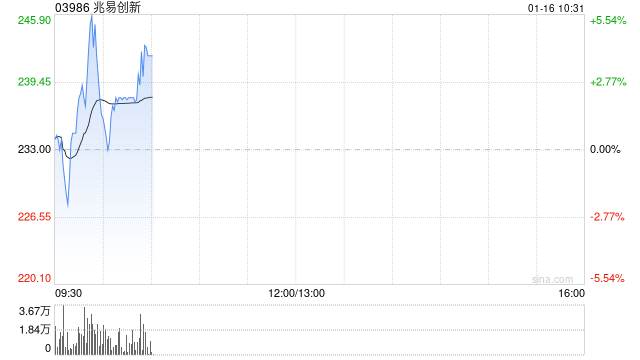
兆易创新涨超5% 内存行情火热 公司计划未来五年取得1/3利基DRAM市场份额
Zhi Tong Cai Jing· 2026-01-16 02:06
在此背景下,兆易创新预期未来2年左右利基型DRAM市场仍将处于供应相对紧张的环境,价格有望进 一步上行,并在2026年维持相对较好的水平。公司表示,展望未来5年,对于国内30亿-40亿美金的利基 DRAM市场,其目标是取得至少三分之一的份额。 兆易创新(603986)(03986)涨超5%,截至发稿,涨4.55%,报243港元,成交额9860.01万港元。 消息面上,据Counterpoint Research最新报告指出,内存市场已进入"超级牛市"阶段,当前行情甚至超 越了2018年的历史高点。预计2026年Q1还将再涨40%–50%。兆易创新在2025年第四季度举行的机构调 研中表示,由于2025年需求端进一步出现积极变化,海外科技巨头推动AI基建,算力增长对存储的需 求量进一步显著提升,且科技巨头所宣布的产能需求相较于主要存储厂商实际计划增加的量还要大。 ...
独家对话王康曼:唯一同时出现在Cerebras和Groq股东名册上的华人VC
Tai Mei Ti A P P· 2026-01-15 18:47
Core Insights - A Chinese VC firm, 3C AGI Partners, has made significant investments in AI infrastructure, focusing on redefining AI factories and has successfully backed two prominent Silicon Valley startups, Cerebras and Groq, achieving substantial returns within two years [2][5][29] Investment Strategy - 3C AGI Partners aims to optimize AI factory computing power, focusing on inference chips, optical modules, and network interconnections, with Cerebras and Groq as key projects [23] - The firm is also exploring innovative solutions for AI factory infrastructure, including relocating data centers to space, exemplified by their investment in Starcloud, the first space-based data center company [23][24] - Additionally, 3C is seeking new energy sources for AI factories, investing in Type One Energy, a commercial nuclear fusion power plant [24] Notable Investments - Cerebras has partnered with OpenAI to provide 750 MW of computing power, with a contract value of $10 billion, and is planning to raise $1 billion at a valuation of $22 billion ahead of its anticipated IPO in 2026 [2][9] - Groq is expected to be acquired by NVIDIA for $20 billion, highlighting its value in the inference chip market [2][11] Founder's Background - Esther Wong, the founder of 3C AGI Partners, has a diverse background with 20 years of experience in investment banking and a significant role in the financing of SenseTime, leading to a deep understanding of the AI industry [4][18] - Wong emphasizes the importance of practical experience in investment, advocating for a focus on technology and market dynamics rather than just financial metrics [21][28] Market Trends - The AI chip market is evolving, with a shift towards specialized chips for training and inference, as demonstrated by the contrasting approaches of Cerebras and Groq compared to traditional GPU manufacturers like NVIDIA [8][15] - The acquisition of Groq by NVIDIA signifies a strategic move to enhance its capabilities in inference, indicating a growing recognition of the importance of specialized architectures in AI applications [14][17] Future Outlook - The potential for AI infrastructure investment remains significant, with ongoing developments in technology and market needs suggesting a long investment window [25] - The transition from AI 1.0 to AI 3.0 is anticipated to reshape application investments, with future applications likely to be driven by AI itself rather than human design [26][27]


小摩研判中国股市一季度行情:春季攻势12月提前启动,从结构性行情向全面性行情推进
Zhi Tong Cai Jing· 2026-01-15 14:08
Group 1 - The core viewpoint of the articles indicates that the A-share and Hong Kong stock markets are experiencing a significant turning point, with a shift from value/defensive stocks to growth and cyclical sectors, driven by macroeconomic recovery, policy support, improved liquidity, and easing geopolitical tensions [1][10] - Morgan Stanley maintains its core index target for MSCI China at 100 points (17% upside) and an optimistic target of 120 points (41% upside), while the CSI 300 index targets are set at 5200 points (10% upside) and 6000 points (27% upside) [2] - The shift in market style has been validated, with growth sectors such as communication services, information technology, and healthcare showing strong performance since mid-December, while A-share market turnover increased by 0.9 percentage points from November to December [2][3] Group 2 - Morgan Stanley upgraded its investment rating for consumer discretionary and healthcare sectors from "neutral" to "overweight," alongside previously upgraded sectors like communication services and information technology, forming a clear growth and cyclical allocation strategy [3][4] - The logic behind the overweight sectors includes recovery in consumer demand driven by policy implementation and rising income expectations, as well as the acceleration of innovative drug development in healthcare [4] - Key recommended stocks include leading companies across various sectors, such as NetEase, Baidu, and Pinduoduo in internet technology, Kweichow Moutai and Haitian Flavoring in consumer, and CATL and Zijin Mining in cyclical growth [4] Group 3 - The "4+1" thematic trading framework is expected to gain momentum in the first quarter of 2026, with multiple catalysts [5][6] - Key areas of focus include stable U.S.-China relations benefiting leading exporters, accelerated AI infrastructure and energy storage demand, and recovery in industries affected by overcapacity [6] - The real estate sector is expected to stabilize due to comprehensive support policies, with measures like lower mortgage rates and funding for project completion driving supply-demand balance [6] Group 4 - Morgan Stanley identifies two main sources of capital inflow supporting the Chinese stock market: the maturity of approximately 57% of onshore deposits in 2026 and the expanding trade surplus, which is projected to reach $1.1 trillion in 2025 [7][8] - The macroeconomic outlook is positive, with GDP growth rates expected to be 5.0% in 2025 and 4.5% in 2026, alongside the best earnings growth cycle since 2020 for MXCN and CSI 300 [8] - The easing of geopolitical tensions and the commencement of a U.S. interest rate cut cycle are anticipated to attract foreign capital inflows, with $27 billion in foreign net inflows recorded in December 2025 [8]