
高端化

Search documents
三峡新材: 湖北三峡新型建材股份有限公司2025年半年度报告
Zheng Quan Zhi Xing· 2025-08-17 16:11
Core Viewpoint - The report highlights the significant decline in the company's financial performance in the first half of 2025, with a notable drop in revenue and profits due to industry challenges and market conditions [2][3]. Company Overview and Financial Indicators - Company Name: Hubei Sanxia New Building Materials Co., Ltd [2] - Stock Code: 600293 [2] - Major Financial Data for H1 2025: - Revenue: 625.46 million yuan, down 28.01% from the previous year [2] - Total Profit: -25.23 million yuan, a decrease of 168.45% [2] - Net Profit attributable to shareholders: -26.99 million yuan, down 182.33% [2] - Net cash flow from operating activities: -68.99 million yuan, a decline of 270.27% [2] - Total assets: 3.30 billion yuan, down 1.29% from the end of the previous year [2] Industry and Main Business Analysis - The company operates in the non-metallic mineral products industry, specifically in glass manufacturing, which is characterized by structural overcapacity and supply-demand imbalance [3][4]. - The glass industry is facing challenges due to a decline in real estate investment, with a 11.2% year-on-year decrease in real estate development investment in H1 2025 [3]. - The company focuses on producing flat glass and special functional glass, with a goal to expand into high-end products such as ultra-thin and ultra-white glass [4][12]. Production and Sales Performance - In H1 2025, the company produced 12.29 million heavy boxes of flat glass, with a sales volume of 10.85 million heavy boxes, achieving a sales rate of 88.28% [12]. - The company also produced 7.5 million square meters of LOW-E glass, with a sales rate of 97.44% [12]. Strategic Directions and Future Outlook - The company aims to enhance its product structure by developing new products like European gray glass and expanding into high-value sectors such as electronic glass and photovoltaic glass [12][16]. - The company is implementing a "small line merging into large line" strategy to optimize cost structures and improve production efficiency [12][14]. - The focus is on technological innovation and enhancing the supply chain to maintain competitive advantages in the market [19].

送“米粉”2000份芯片,雷军和小米要证明什么
Mei Ri Jing Ji Xin Wen· 2025-08-17 13:14
Core Insights - Xiaomi is aiming to reshape its brand image from a "manufacturer" to a "hardcore technology" company, emphasizing the importance of self-developed chips in this transformation [1][2][3] - The launch of the玄戒O1 chip, China's first 3nm chip, represents a significant milestone for Xiaomi, showcasing its commitment to technological innovation and self-reliance [2][5] - The company is under pressure to overcome public skepticism and redefine its identity, especially following a recent public relations crisis [3][4] Financial and Investment Highlights - Xiaomi has invested 135 billion yuan in the development of the玄戒O1 chip over four years, employing a team of 2,500 people [2] - The company plans to increase its R&D investment to over 300 billion yuan by 2025 and aims for a total of 2 trillion yuan in R&D over the next five years [4] - Xiaomi's strategy includes a long-term investment of 500 billion yuan in chip development over the next decade [4] Market Positioning and Strategy - The introduction of the玄戒O1 chip is part of Xiaomi's broader strategy to penetrate the high-end market, with the Xiaomi 15S Pro priced above 5,500 yuan, leveraging self-developed chips to support premium pricing [6] - The company aims to create an interconnected ecosystem across devices, enhancing user experience and establishing a competitive edge in the market [6] - Xiaomi's approach to high-end positioning is not solely based on price but on technological innovation, aiming to rebuild trust with consumers [6]

8元啤酒卖不动?重庆啤酒上半年业绩失速
凤凰网财经· 2025-08-17 12:44
Core Viewpoint - Chongqing Brewery's performance in the first half of 2025 was under pressure due to weak on-premise consumption channels, with revenue declining by 0.24% to 8.839 billion yuan and net profit down by 4.03% to 865 million yuan despite a slight increase in sales volume [2][3]. Group 1: Product Innovation and Market Strategy - The company has focused on launching new products and expanding its presence in the western market, responding to competition from both beer and liquor companies [5][6]. - New product launches include various beer flavors and non-alcoholic beverages, with the energy drink and fruit soda performing well in targeted markets [9]. - The strategy of cross-industry expansion aims to attract younger consumers and adapt to health trends, with a focus on diversifying product offerings [9]. Group 2: Sales Performance and Channel Analysis - In the second quarter, the company experienced a decline in revenue and net profit, with high-end product sales showing almost no growth [10][12]. - The revenue from high-end products (priced above 8 yuan) grew by only 0.04%, while mainstream products (priced between 4-8 yuan) saw a decline of 0.92% [11]. - The company is shifting focus to non-on-premise channels, which are expected to grow as consumer preferences change, with a nearly 29% increase in canning rates for certain products [12][13]. Group 3: Regional Market Challenges - The southern market, a key area for the company, saw a revenue decline of 1.47% to 2.479 billion yuan, highlighting competitive pressures from other major brands [15][17]. - To address these challenges, the company announced a 600 million yuan investment in its subsidiary in Foshan to enhance operational capabilities and market competitiveness [17].



白酒、食品品牌企业扎堆切入精酿啤酒赛道 高端啤酒竞争更激烈
Zheng Quan Ri Bao· 2025-08-16 01:32
Core Insights - The craft beer sector is witnessing an influx of brands from various industries, including major liquor and food companies, as they seek growth opportunities amid a competitive landscape in the high-end liquor market [1][4]. Group 1: Market Entry and Strategy - Wuliangye's subsidiary launched a craft beer named "Fenghuolun," priced at 19.5 yuan per can, targeting consumers aged 25 to 49 and aiming to capture the mid-to-high-end beer market [1][2]. - Other companies like Zhenjiu Lidu and Luzhou Laojiao have also entered the craft beer market, with Zhenjiu Lidu's "Niushi News" priced at 88 yuan per bottle, emphasizing a new consumer experience [2][3]. - The entry of food companies like Haoxiangni and Three Squirrels into the craft beer market reflects a broader trend of diversification among brands seeking new revenue streams [1][4]. Group 2: Industry Trends and Growth - The Chinese craft beer market is projected to grow from 428 billion yuan in 2022 to 680 billion yuan by 2024, with a compound annual growth rate of 26.7%, and is expected to exceed 1 trillion yuan by 2025 [6]. - The craft beer segment is attractive due to its high gross margins, typically ranging from 55% to 65%, which are significantly higher than those of industrial beers [6]. - The shift in consumer preferences towards higher-quality and premium experiences is driving the growth of craft beer, as companies leverage existing distribution networks and brand equity to support higher price points [4][6]. Group 3: Competitive Landscape - Major players like China Resources Beer, Qingdao Beer, and Budweiser APAC dominate over 90% of the market, while craft beer brands and regional players compete for the remaining share [5]. - The overall beer production in China has been declining since reaching a peak of 50.62 million kiloliters in 2013, with a projected production of 35.21 million kiloliters in 2024 [5]. - The high-end beer segment has shown robust growth since 2020, contributing significantly to the profits of leading beer companies [5][6]. Group 4: Future Outlook - Experts predict that the trend of cross-industry collaboration in the alcoholic beverage sector will intensify, with a focus on quality enhancement and brand development [7][8]. - The high-end beer market is expected to continue evolving, with an emphasis on product innovation and meeting the diverse needs of consumers [7].




全产业链布阵,构建交流合作枢纽 山东加速打造国际铸造产业集群
Qi Lu Wan Bao· 2025-08-15 14:34
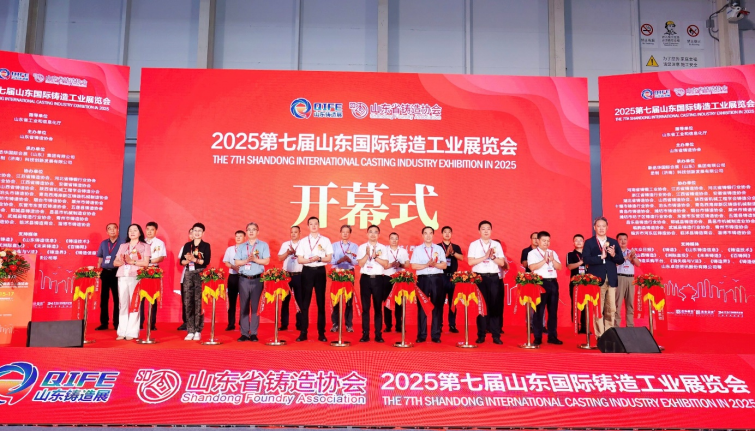
Core Insights - The 7th Shandong International Foundry Industry Exhibition commenced in Qingdao, focusing on "global vision and precise positioning" to enhance cooperation and technological upgrades in the foundry sector [1] - The exhibition aims to promote high-end, diversified development in the foundry industry, establishing a high-standard communication hub for global foundry enterprises [1] Group 1: Exhibition Highlights - The exhibition showcased advanced products such as high-temperature alloy castings favored in the low-altitude economy due to their high strength and lightweight properties [3] - Intelligent defect detection systems for castings achieved millisecond-level recognition, while fully automated casting compression equipment improved production efficiency of aluminum alloy wheels by 40% [3] - Eco-friendly innovations like biodegradable sand castings and water-based coating castings are reducing pollution at the source, aligning with the mainstream trend of green foundry practices [3] Group 2: Supporting Activities - Various forums and training sessions were held, including an economic analysis forum and a forum on lightweight components for new energy vehicles, focusing on technology innovation and industry collaboration [4] - The "Casting Supermarket" was launched to provide a one-stop procurement channel with a wide range of quality products at lower prices, effectively reducing procurement costs for businesses [3][4] - The exhibition also included awards for exemplary foundry areas in Shandong, promoting quality upgrades and establishing industry benchmarks to drive regional development [4] Group 3: Industry Development Focus - The exhibition emphasizes the importance of intelligent, green, and high-end development directions, guiding enterprises to seize transformation opportunities [4] - It aims to foster collaborative innovation across the industry chain, injecting new momentum into the high-quality development of China's foundry industry [4] - The event supports Shandong's goal of building a globally competitive foundry industry cluster, contributing to sustainable development in the global foundry sector [4]
吉利用比亚迪的方式打比亚迪
虎嗅APP· 2025-08-15 10:18
Core Viewpoint - The Chinese electric vehicle market is experiencing rapid growth, with Geely emerging as a strong competitor to BYD, significantly increasing its market share and sales figures in the first half of the year [2][4]. Group 1: Sales Performance - Geely's sales reached 1.409 million units in the first half of the year, a year-on-year increase of 47%, with revenue of 150.28 billion yuan, up 27% [2][6]. - Geely's market share in the new energy vehicle sector has risen to 11.44%, narrowing the gap with BYD to less than 18 percentage points [2][4]. - Geely has revised its annual sales target from 2.71 million to 3 million units, indicating confidence in its growth trajectory [2][6]. Group 2: Product Strategy - The Geely Galaxy brand has been pivotal in driving growth, selling 548,400 vehicles in the first half, accounting for over 70% of Geely's new energy sales, with a staggering 232% year-on-year increase [4][5]. - Geely's strategy involves targeting various vehicle segments, with new models like the Galaxy L7, L6, and E8 launched to compete directly with BYD [5][8]. - The Galaxy A7 has entered the market at competitive prices, undercutting BYD's models, which has helped Geely capture market share rapidly [7][8]. Group 3: Future Plans and Challenges - Geely aims to fill market gaps in the new energy sector, with plans for additional model launches in the second half of the year [8][12]. - Despite current successes, Geely faces challenges in surpassing BYD, particularly in cost control and high-end market positioning [10][11]. - Geely's global expansion is crucial, with plans to enter multiple international markets, although its export volume has seen a decline [12][13]. Group 4: Technological Advancements - Geely is focusing on enhancing its smart driving capabilities by integrating various teams and resources to improve its technological edge [15][17]. - The competition in the electric vehicle market is shifting towards high-end products, global reach, and advanced technology, necessitating Geely to innovate beyond just cost-effectiveness [17].



振华重工:公司参与了全球约70%的自动化码头和智慧港口建造,产品现已进入全球110个国家和地区
Mei Ri Jing Ji Xin Wen· 2025-08-15 09:50
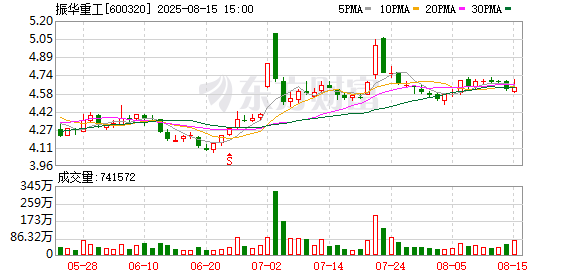
Core Viewpoint - ZPMC (Zhenhua Heavy Industries) emphasizes its competitive advantages in the global market for port machinery, highlighting its strong industry influence and integrated competitive edge in various operational aspects [2]. Group 1: Global Market Presence - ZPMC's products are now present in 110 countries and regions worldwide, participating in approximately 70% of automated terminal and smart port constructions globally [2]. Group 2: Competitive Advantages - The company boasts an integrated competitive advantage in global market development, research and development, design, supply chain management, manufacturing, transportation, and customer service [2]. Group 3: Technological Innovation - ZPMC is focused on the trends of "high-end, intelligent, and green" development in the equipment manufacturing industry, enhancing its technological innovation leadership [2]. - The company is committed to tackling key core technologies and continuously improving its technological innovation system [2]. Group 4: Product Development - ZPMC has successfully developed core technologies for large, efficient, and green low-carbon port machinery, continuously upgrading its automated terminal-related products [2]. - New models such as the full-truss beam quay crane and fully electric rubber-tired gantry cranes have been introduced, creating a diverse product matrix [2]. Group 5: Brand Influence - The company is strengthening its domestic and international regional headquarters, enhancing its global network layout, and optimizing its customer service system to continuously elevate the ZPMC brand influence through high-quality products and services [2].

高端厨电新势力火星人以创新驱动行业前行
Xin Lang Cai Jing· 2025-08-15 07:45
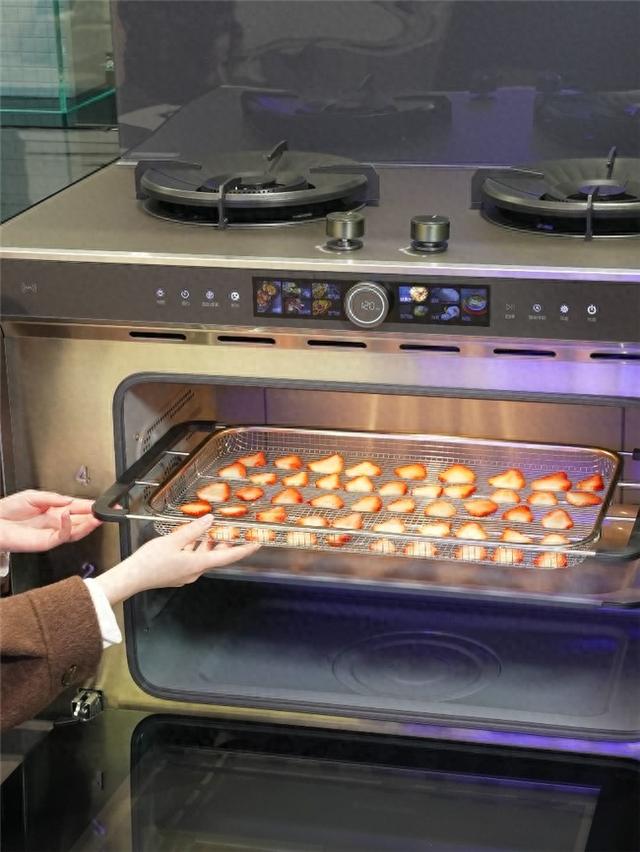
Group 1 - The kitchen is evolving from a simple cooking space to an important area for emotional connection and relaxation, leading to increased demand for high-quality kitchen appliances [2] - Mars has positioned itself as a leading brand in high-end kitchen appliances, focusing on integrated stoves and dishwashers [2][7] - The Mars Q60 integrated stove features unique technology for oil fume control, combining low air intake design with high airflow hardware [2] Group 2 - The Q60 integrated stove integrates multiple cooking functions such as steaming, baking, frying, and stewing into one device, catering to modern cooking needs [2] - The oil fume handling technology of the Q60 is inspired by the feeding patterns of whales, effectively capturing and removing oil fumes from cooking [2] - The Mars D75 integrated dishwasher addresses the need for large capacity cleaning and high-temperature sterilization, accommodating up to 109 standard dishes [5] Group 3 - The D75 dishwasher features a flat-layer design and is capable of deep cleaning fruits and vegetables, utilizing 16 directional spray nozzles for gentle yet effective cleaning [5] - The kitchen appliance industry is trending towards high-end and smart solutions, with Mars gaining a competitive advantage in this evolving market [7] - The Q60 integrated stove and D75 integrated dishwasher have become trusted companions for many households, enhancing the overall kitchen experience [7]
聚碳酸酯行业破局“内卷”剑指高端 要从“价格竞争”到“价值竞争”
Zhong Guo Hua Gong Bao· 2025-08-15 00:57
Core Viewpoint - The polycarbonate (PC) industry is at a critical stage of "climbing over hurdles," emphasizing the need for high-end, differentiated, and green development to transition from price competition to value competition [1][2]. Industry Overview - China's PC production capacity has significantly increased from 1.66 million tons in 2019 to 3.81 million tons in 2024, accounting for 48% of global capacity, with a compound annual growth rate of 15.5% over five years [1]. - The apparent demand for PC in 2024 is projected to reach 3.6 million tons, approximately half of the global demand [1]. Structural Challenges - The PC industry faces structural contradictions, with low-end capacity surplus and insufficient high-end supply. The self-sufficiency rate for general-grade products exceeds 100%, while the domestic production rate for high-end grades like medical and optical grades is below 30% [2]. - Since 2021, China's PC production capacity has surpassed apparent consumption, leading to an average capacity utilization rate of only 65% over the past five years [2]. Financial Performance - The average gross profit margin for the industry fell to negative values in the first quarter of 2025, indicating challenges from price competition and cost pressures [2]. Growth Opportunities - The decline in PC prices and its superior performance have spurred rapid growth in emerging sectors such as new energy vehicles and high-end medical applications, presenting new growth opportunities for the PC industry [2]. Strategic Recommendations - The industry should focus on technological advancements to achieve product high-endization, aiming to increase the proportion of high-end grades to over 40% [2]. - Embracing green transformation in line with the "dual carbon" goals by developing recycling systems for waste PC and bio-based PC is essential for promoting a circular economy [2]. - Collaborative efforts along the industrial chain are necessary to mitigate risks, with a focus on establishing application standards in high-end fields like aerospace and neurosurgery [2].
比亚迪(002594):技术塑造核心产品力 改革加速高端化新里程
Xin Lang Cai Jing· 2025-08-15 00:35
Core Viewpoint - The company is redefining luxury in the automotive sector through a multi-brand strategy, focusing on high-end market segments and leveraging technological advancements to enhance brand value and sales performance [1][2]. Group 1: Brand Development and Sales Performance - BYD's high-end strategy began in 2010 with the establishment of the Tengshi brand in collaboration with Daimler, which saw limited sales until 2022 when the company accelerated its high-end brand and product line development [1] - As of the first half of 2025, total sales of high-end brands reached 141,000 units, a year-on-year increase of 69.7%, accounting for 6.60% of BYD's total sales, up from 4.45% in 2024 [1] - The sales structure is evolving from reliance on the Tengshi brand to a dual-support model with Tengshi and Fangchengbao, with respective sales of 79,800 and 60,700 units in 2025H1, representing 56% and 43% of high-end brand sales [1] Group 2: Technological Advancements - Tengshi models are equipped with BYD's self-developed technologies, with the Tengshi D9 leading MPV sales for two consecutive years, and the Tengshi N9 expected to be a new growth point with sales of 16,000 units in 2025H1 [2] - Fangchengbao's sales increased by 232.3% in 2025H1, supported by the DMO platform and cloud technology, with the first mass-produced vehicle, the Titanium 7, expected to contribute to further sales growth [2] - The company emphasizes the integration of electrification and intelligence, with advanced driving technologies and self-developed platforms enhancing driving experience and performance [3] Group 3: Marketing and Brand Positioning - The marketing strategy has evolved from a focus on technology to conveying brand value through various methods, including emotional storytelling and celebrity endorsements [4] - The company is investing 5 billion yuan to build the world's first all-terrain professional racetracks, enhancing high-end experience and promoting technology validation and cultural dissemination [4] Group 4: Financial Projections - Revenue projections for 2025-2027 are estimated at 1,001.83 billion, 1,208.55 billion, and 1,367.87 billion yuan, with net profits of 55 billion, 68 billion, and 81 billion yuan respectively, indicating a strong growth outlook [4]
