
消费升级

Search documents
广东海关今年离境退税商品达17.5亿元
Shen Zhen Shang Bao· 2025-12-13 21:30
Core Insights - The Guangdong customs authority reported a significant increase in tax refund applications and amounts for goods leaving the country, with 93,000 applications and a total value of 1.75 billion yuan, marking a 7.5-fold and 2-fold increase compared to the same period last year [1][2] Group 1: Consumption and Tax Refunds - The introduction of three new verification points after April has allowed international travelers to choose their departure ports and modes of transport for tax refund services [1] - Daily average verification of tax refund applications increased from 58 to 684, indicating effective measures to boost consumer willingness [1] Group 2: Economic Impact of Events - The 15th National Games and the Special Olympics have activated consumer spending, with a notable increase in international flight volumes and passenger numbers at Guangzhou Baiyun Airport, which saw a 102% increase in international flights and a 16.7% increase in passenger traffic from October 1 to November 10 [2] - The influx of visitors during these events has led to a 63% year-on-year increase in the restaurant and accommodation sectors in Guangzhou for October [2] Group 3: Import Growth - Guangdong's consumer goods imports reached 21.41 billion yuan in October, reflecting an 11.3% year-on-year growth, which is 10 percentage points higher than the national average [2] - Significant growth was observed in imports of seafood, cooking oil, and sports equipment, highlighting their importance in supporting the consumer market [2]

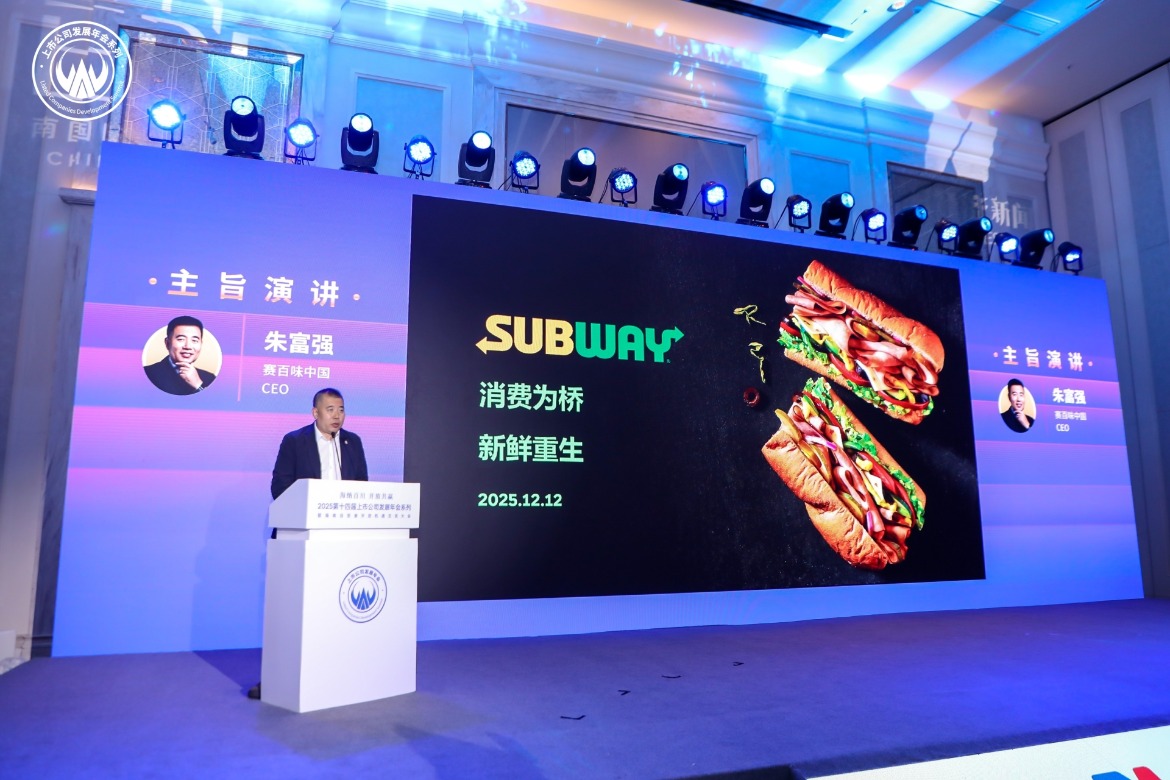
赛百味中国CEO朱富强:外资品牌扎根中国的核心不是卖全球产品,而是服务本土需求
Mei Ri Jing Ji Xin Wen· 2025-12-13 13:53
Core Insights - The core argument presented by the CEO of Subway China, Zhu Fuqiang, emphasizes the evolution of China's dining consumption from "eating enough" to "eating well" and now to "eating healthily," which is the fundamental logic behind foreign brands establishing a presence in China [1][2] Group 1: Market Evolution - The transformation in consumer behavior is attributed to the rapid economic development in China, leading to a dual upgrade in consumption capacity and demand, shifting from survival needs to health and emotional value [2][3] - The dining consumption landscape has changed significantly over the past 30 years, with the average cost of a meal for one person now being around 50 yuan, compared to 10 yuan for a family meal in the 1990s [1][2] Group 2: Consumer Demographics - The pursuit of health is not limited to the younger "Z generation"; older generations, including those over 60, are also increasingly prioritizing health in their food choices, indicating a broader demographic shift in consumer preferences [3] - Key indicators for assessing the potential of a dining sector include the continuous expansion of the target audience and the frequency of consumption, with high-frequency demand being crucial for market growth [3] Group 3: Competitive Strategy - Zhu Fuqiang highlights the importance of differentiation for foreign brands in China, noting that early market entry timing has shaped the competitive landscape, with brands like KFC and McDonald's entering the market before Subway [4] - The previous franchise model adopted by Subway led to a diluted brand image due to poor location choices by franchisees, which is a common pitfall for foreign brands in localizing their operations [4] Group 4: Product and Operational Innovation - To succeed, foreign brands must move beyond price competition and focus on genuine freshness and quality, as the market is saturated with "pseudo-health" concepts [4][5] - Subway's strategy includes not selling bread that has been produced for more than 24 hours, ensuring that most sandwiches are made with bread baked within 8 to 10 hours, appealing to a wide range of consumers [5] Group 5: Value Proposition - The shift from "cost-effectiveness" to "value perception" is essential for restaurant brands, with the ultimate goal being to serve Chinese consumer needs using global resources rather than merely selling global products in China [7]

中产羽绒服,2000元起步
Sou Hu Cai Jing· 2025-12-13 13:09
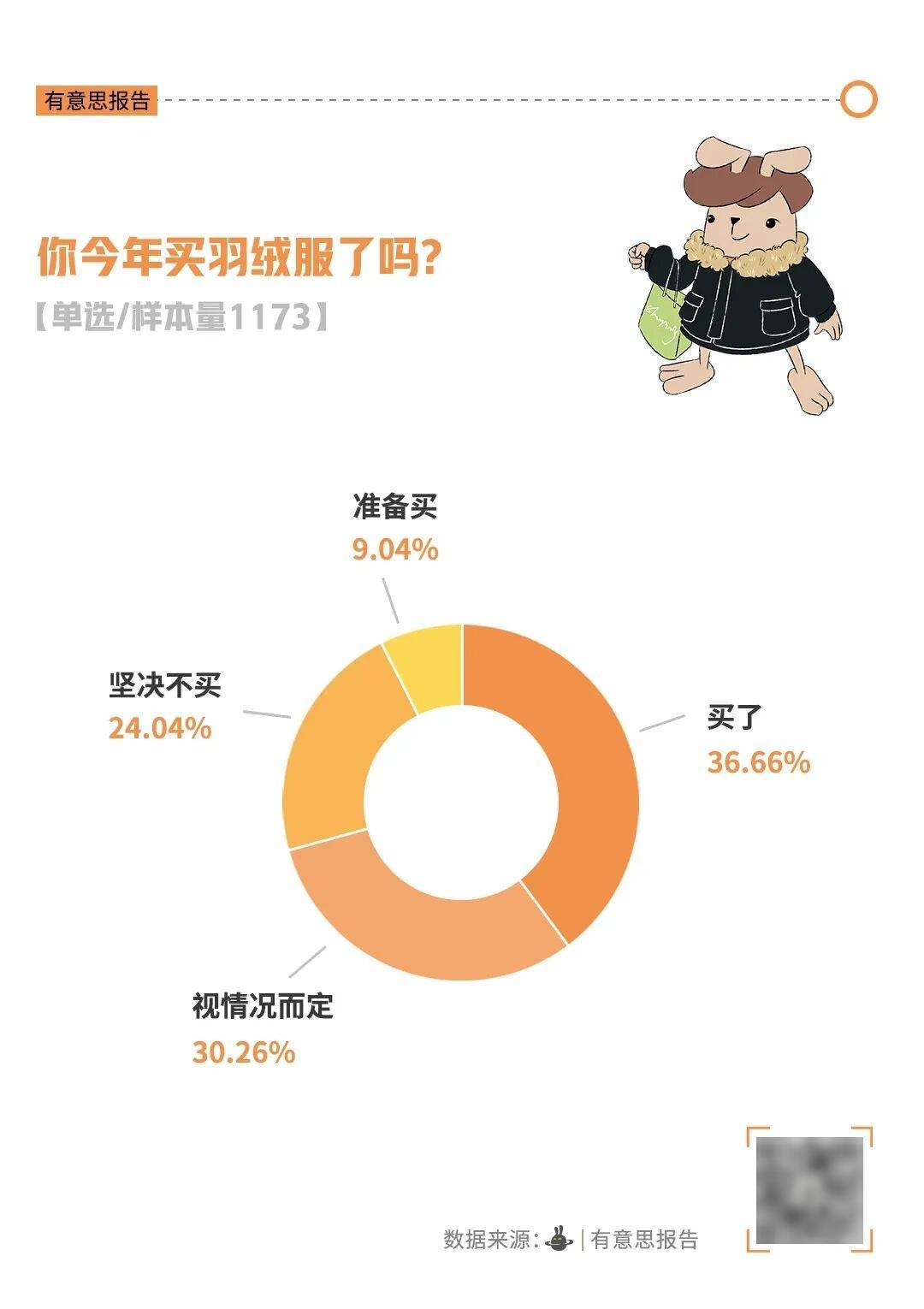
一轮接一轮的降温,羽绒服"热"起来了。 而今年对羽绒服的热议中,离不开一个"贵"字。许多人明显感受到,多个知名品牌的羽绒服价格已普遍进入"2000元时代"。 与价格相关的话题也频登热搜,浏览量均超千万。 谁在涨价?消费者是否埋单?越来越贵的羽绒服究竟值不值这个价?今年的羽绒服又有哪些新趋势? 近期,有意思报告对"2025羽绒服趋势"展开问卷调查,共收到1173份有效样本。其中,85后—95后是受访主要群体,占比约七成;一线及新一线城市受访 者占比过半;六成受访者年收入在10万元以上。这份来自消费主力人群的样本,或许能为上述问题提供一些真实的注脚。 2000元成羽绒服消费新门槛 调查显示,今年消费者购买羽绒服的热情高涨。近四成受访者购买了羽绒服,较去年同期的两成增长近乎翻倍。 为什么变化这么大?去年是买与不买都看价格,今年变了——为"喜欢"买单成主流,想要而非需要。 映射到数据,在"买羽绒服的原因"中,近半数消费者将"有喜欢的风格/款式"列为购买首要原因,其占比超"刚需"和"促销优惠",而后者在去年曾是影响决 策的首要因素。此外,今年新增选项"想买件品质各方面更好的"也获得了超三成人的选择。 这标志着羽绒服正从 ...
中央财办韩文秀,重磅发声!
Zhong Guo Ji Jin Bao· 2025-12-13 08:27
Core Viewpoint - The Chinese economy is expected to perform better than anticipated, with a projected GDP of approximately 140 trillion yuan in 2025, and the implementation of incremental policies in 2026 to support economic stability and growth [1][3][4]. Economic Performance - Major economic indicators have exceeded expectations, with a predicted annual growth rate of around 5% for this year, positioning China as the largest engine of global economic growth [3][4]. - The economy has shown resilience and vitality, with stable employment, rapid growth in foreign trade, and significant advancements in modern industrial systems, particularly in AI, biomedicine, and robotics [3][4]. Policy Implementation - The government plans to implement a series of incremental policies in 2026 based on evolving circumstances, aiming to enhance macroeconomic governance and maintain economic stability [5][6]. - A more proactive fiscal policy will be adopted, maintaining necessary fiscal deficits and total debt levels while optimizing expenditure structures to support major national strategies [6][7]. Five Musts for Economic Work - The central government emphasizes five essential strategies for economic work: 1. Fully explore economic potential by expanding consumption and investment [9]. 2. Combine policy support with reform innovation to address intertwined economic issues [10]. 3. Balance deregulation with effective management to enhance productivity [10]. 4. Integrate investments in physical and human capital to promote overall development [10]. 5. Strengthen internal capabilities to face external challenges and enhance self-reliance [10]. Trade and Market Development - The government aims to deepen the construction of a unified national market and address issues like corporate debt [12]. - There is a commitment to expand both exports and imports, promoting sustainable foreign trade development and enhancing the resilience of international trade [13]. Income and Consumption Growth - The focus for 2026 includes synchronizing income growth with economic growth, enhancing consumer spending through targeted policies, and improving the quality of employment [15]. - Initiatives will be taken to boost consumption, particularly in sectors like new energy vehicles and tourism, while optimizing the environment for inbound consumption [15]. Green Development - Green development is highlighted as a cornerstone of high-quality growth, with plans to advance energy transition and carbon emission control measures [16].
重磅会议定调!外资机构:坚定看好
Zhong Guo Ji Jin Bao· 2025-12-13 06:31
Group 1 - The core message of the Central Economic Work Conference emphasizes a proactive and forward-looking macro policy framework to foster a positive economic environment for the "14th Five-Year Plan" [1] - The conference outlines a three-dimensional policy framework of "income increase - deregulation - quality enhancement" aimed at boosting consumption and addressing core issues related to consumer capacity and willingness [2][3] - The focus on enhancing domestic demand is deemed necessary in light of potential external demand weaknesses, with a commitment to implement special actions to stimulate consumption [2][3] Group 2 - The emphasis on hard technology innovation is identified as a key link connecting consumption upgrades, effective investment, and combating "involution," making it a priority for foreign investment in the Chinese market [4] - The support for hard technology is expected to increase, providing foreign investors with strong, long-term investment opportunities as the "14th Five-Year Plan" approaches [5] - The conference's focus on innovation-driven growth aligns with the goal of "self-reliance and strength in technology," highlighting the importance of technological innovation in enhancing national competitiveness [6]
重磅会议定调!外资机构:坚定看好
中国基金报· 2025-12-13 06:30
Core Viewpoint - The Central Economic Work Conference outlines proactive and forward-looking macroeconomic policies to create a positive policy environment for the "14th Five-Year Plan" [1] Group 1: Economic Policy Direction - The conference emphasizes "domestic demand as the main driver" and aims to build a strong domestic market, focusing on increasing urban and rural residents' income, addressing consumption barriers, stabilizing investment expectations, and rectifying "involution" competition [3] - The meeting's framework of "income increase - deregulation - quality improvement" targets the core issues of insufficient consumer capacity and willingness, aiming for sustainable consumption recovery [3][4] Group 2: Investment Opportunities - The conference's signals are viewed positively, likely to restore market expectations and optimize resource allocation, creating structural opportunities in the intersection of consumption upgrade, effective investment, and industrial upgrade [3][4] - The focus on hard technology innovation is seen as a key growth engine, linking consumption upgrade, effective investment, and "involution" [7][9] Group 3: Foreign Investment Perspective - The support for hard technology is expected to provide strong long-term investment targets for foreign capital, with China having structural advantages in R&D, talent, and data in this sector [8][9] - The proactive macro policies and emphasis on innovation-driven growth reflect a shift from short-term stability to long-term structural optimization, fostering a positive policy atmosphere for the "14th Five-Year Plan" [9]
蜜雪集团(02097.HK):雪王驾到-“饮”领全球 成本优势铸就核心竞争力
Ge Long Hui· 2025-12-13 05:13
Core Insights - Mixue Group is the largest fresh beverage chain in China and a global leader, with 53,014 stores worldwide as of 1H25, including 48,281 in China and 4,733 overseas [1] - The fresh beverage market is experiencing significant growth, driven by consumer demand for upgraded ready-to-drink options, with a market share of 2.2% for Mixue Group, ranking it fourth globally by GMV in 2023 [1] Group 1: Business Model and Competitive Advantage - Mixue Group aims to achieve a "trinity total cost leadership" by focusing on supply chain, brand IP, and store operations [2] - The company has established a digital end-to-end supply chain and a procurement network covering 38 countries, with five major production bases [2] - The unique brand IP "Xue Wang" attracts a large consumer base, enhancing brand loyalty [2] Group 2: Expansion Strategy - The company plans to continue expanding in both domestic and international markets, targeting lower-tier cities in China and optimizing operations in Southeast Asia while exploring new markets in Central Asia and the Americas [2] - The introduction of sub-brands, such as Lucky Coffee and the recently acquired Fresh Beer brand, is expected to enhance the company's presence in the fresh beverage sector [2] Group 3: Financial Forecast and Valuation - Revenue projections for 2025-2027 are estimated at 33 billion, 38.4 billion, and 42.2 billion CNY, with net profits of 5.8 billion, 6.74 billion, and 7.5 billion CNY respectively [3] - The company is assigned a 25x PE valuation for 2026, leading to a target price of 482 HKD, reflecting its leading position in the global fresh beverage market [3]
中国经济今年有哪些亮眼表现
Sou Hu Cai Jing· 2025-12-13 02:08
Group 1: Industrial Upgrade - The most significant change in China's economy in 2024 comes from industrial structure, with exports of new energy vehicles, lithium batteries, and photovoltaic products growing by 23.6% year-on-year in the first ten months, becoming a key driver of foreign trade [2] - The first fully automated "photovoltaic + energy storage + charging" integrated smart factory has been established in Hefei, producing one new energy vehicle every 2.5 minutes, showcasing advancements in manufacturing automation across various industrial hubs in China [2] - By the end of September, over 3,800 digital workshops and smart factories have been built in China, with average product development cycles shortened by 25.2% and production efficiency improved by 34.8% [2] Group 2: Consumer Recovery - Consumption is showing structural recovery and upgrade characteristics in 2024, with total retail sales of consumer goods increasing by 6.8% year-on-year in the first ten months, particularly strong in service consumption [3] - Domestic tourism during the "May Day" holiday saw a 7.6% increase in the number of travelers and a 12.7% increase in tourism revenue, highlighting the depth and breadth of the Chinese consumer market [3] - Online retail sales grew by 11.2% in the first three quarters, with physical goods online retail accounting for 26.4% of total retail sales, driven by new models like live-streaming e-commerce and instant retail [3] Group 3: Innovation Drive - R&D expenditure in China continues to grow rapidly, with a year-on-year increase of 11.4% in the first nine months, and corporate R&D investment accounting for over 78% of total R&D spending [4] - Significant breakthroughs have been made in quantum computing, artificial intelligence, and biomanufacturing, with some technologies reaching internationally advanced levels [4] - China ranks 12th in the 2024 Global Innovation Index, being the only middle-income economy in the top 30, with over 460,000 high-tech enterprises and a growing number of innovative small and medium-sized enterprises [4] Group 4: Green Transition - The green and low-carbon development has become a prominent feature of China's economy in 2024, with production and sales of new energy vehicles reaching 7.31 million and 7.28 million units respectively, marking year-on-year increases of 33.2% and 37.5% [5] - The installed capacity of renewable energy generation exceeded 1.5 billion kilowatts by the end of October, accounting for 51.9% of the total installed capacity in the country [6] - The carbon emissions trading market has seen stable operations, with a total of 320 million tons of allowances traded and a transaction value of 17.6 billion yuan in the first ten months [6] Group 5: Open and Win-Win - Despite a complex global trade environment, China's actual use of foreign capital reached 1.1 trillion yuan in the first ten months of 2024, with a 12.4% increase in high-tech manufacturing foreign investment [7] - The construction of free trade pilot zones has led to the replication and promotion of 302 institutional innovation achievements nationwide [7] - The cumulative operation of the China-Europe Railway Express has exceeded 18,000 trains, with a 13.4% year-on-year increase in container shipments via the new western land-sea corridor [7] Group 6: Livelihood Security - In the first three quarters, 10.22 million new urban jobs were created, achieving 85% of the annual target, with an average urban unemployment rate of 5.2% [8] - The per capita disposable income of residents reached 30,713 yuan, with a nominal year-on-year growth of 6.5%, and a real growth of 6.0% after accounting for price factors [8] - The number of people covered by basic pension insurance reached 1.08 billion, with the basic medical insurance coverage rate stable above 95% [8]
从“吃饱”到“吃好”!广东猪业谋新篇,30余位大咖共探优质猪肉发展路径
Nan Fang Nong Cun Bao· 2025-12-13 02:03
Core Insights - The Guangdong pig industry is transitioning from a focus on quantity ("eating enough") to quality ("eating well"), emphasizing the development of high-quality pork [2][35]. Group 1: Event Overview - The 12th Pig Industry Conference was held in Guangzhou, featuring a salon focused on the quality of Guangdong pork [2][3]. - Over 30 industry experts, association representatives, and business leaders participated in discussions on breed selection, disease management, and the relationship between quality pork and pricing trends [6][7]. Group 2: Industry Trends and Insights - The black pig sector has gained significant attention, with prices consistently higher than white pigs since 2022, attracting major players to the market [12][13]. - Recommendations for the industry include aligning scale expansion with company capabilities, maintaining quality standards, and avoiding pitfalls in brand management [14][15][16]. Group 3: Quality Standards and Practices - Quality pork must meet three core demands: health, safety, and taste, with an emphasis on disease management and improved animal welfare [21][23]. - The use of effective disease detection tools and practices is becoming essential for the development of the local pig industry [25][27]. Group 4: Consumer Behavior and Market Dynamics - Changing consumer perceptions are crucial for the development of the local pig industry, necessitating efforts to communicate the health benefits of fat and promote a shift from "eating enough" to "eating well" [34][35]. - The demand for high-quality pork is increasing, with consumers willing to pay for better taste and quality at reasonable prices [49][51]. Group 5: Collaborative Efforts and Future Directions - The salon provided a platform for effective communication and collaboration within the Guangdong pork industry, aiming to address challenges in breeding, sales, and production [61][62]. - The consensus formed during the event is expected to guide companies in optimizing their production and operational strategies, promoting high-quality development in the local pig industry [62][63].

坚持内需主导 夯实经济增长压舱石
Zheng Quan Ri Bao· 2025-12-12 16:25
Group 1 - The central economic work conference emphasized "demand-led growth" and the construction of a strong domestic market as the top priority for next year's economic tasks [1] - The conference proposed to implement special actions to boost consumption and develop urban and rural residents' income plans, aiming to enhance consumer capacity and willingness [1][2] - The focus on supply-side improvements includes expanding the supply of quality goods and services, optimizing the implementation of the "two new" policies, and removing unreasonable restrictions in the consumption sector [1][3] Group 2 - The chief economist from CITIC Securities highlighted that the emphasis on demand-side measures will be crucial for stabilizing growth, with a focus on enhancing residents' consumption capacity and willingness [2] - Data from the Ministry of Commerce indicated that from January to November this year, the trade-in of consumer goods generated over 2.5 trillion yuan in sales, benefiting more than 360 million people [2] - The macro analyst from Dongfang Jincheng noted that the "two new" policies are expected to expand in scope, with increased fiscal support for consumption, particularly in the service sector [2][3]